Spiders
Araneae (Order)
Spiders can be difficult to control due to their varied entry points and behaviors. Most spiders are harmless predators that feed on insects, but some species like black widows and brown recluses can deliver venomous bites.
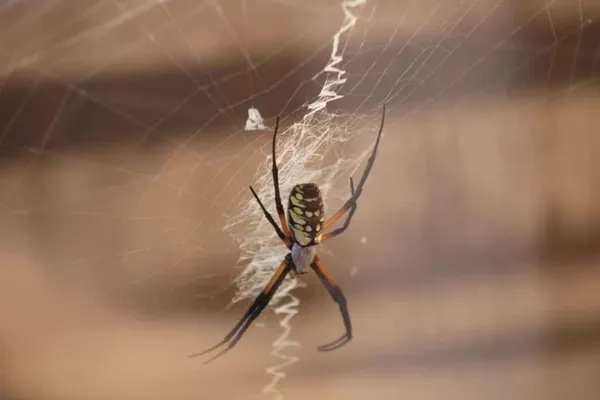
Spiders Identification Guide
Physical Characteristics
Spiders come in many sizes, colors, and appearances. They have eight legs, two body parts (the head-chest area and the abdomen), and fangs that inject venom. Most spiders have multiple eyes in distinct patterns. Wolf spiders have thick, hairy legs for hunting. Orb-weavers have thin legs for building webs.
Common Species
-
House Spider (Parasteatoda tepidariorum)
-
Wolf Spider (Lycosidae family)
-
Cellar Spider (Pholcidae family)
-
Orb-Weaver Spider (Araneidae family)
-
Black Widow (Latrodectus mactans)
-
Brown Recluse (Loxosceles reclusa) - Rare but possible
Spiders Behavior and Biology
Spiders are predators that eat insects and other small bugs. Most use venom to catch their prey, but only a few can harm humans. Web-building spiders create traps to catch food. Hunting spiders chase and pounce on their prey. For help identifying common species, see our guide on spider names or learn how to get rid of spiders. Female spiders lay eggs in silk sacs. Some species guard their young until they can survive on their own.
How We Treat for Spiders
Spiders need a different approach than other crawling insects. They enter homes in many ways, which is why our La Plata pest control technicians focus on web removal and entry points rather than sprays alone. Most homes end up on our regular spider control service because the webs come back faster than a one-time spray can keep up with. Our process includes:
-
Inspection. We check for spider activity inside and outside your home.
-
Treatment. We apply a non-repellent product to exterior areas where spiders gather. This includes windows, doorways, and corners. We also treat high-activity areas inside.
-
De-webbing. We remove reachable webs (up to 6-8 feet high) to reduce spider numbers.
-
Ongoing Control. Our seasonal plan includes regular visits. We also share tips on reducing attractants like bright lights and moisture.
Types of Spiders
Click on any species below to learn more about identification, behavior, and control methods.
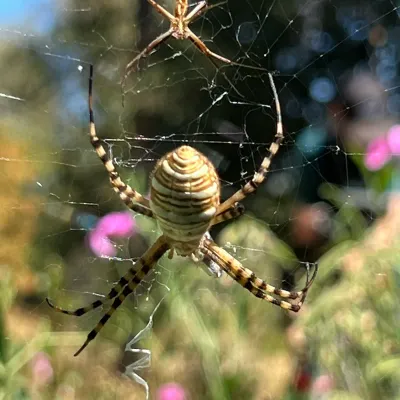
Banded Garden Spiders
Argiope trifasciata
Banded garden spiders are large orb-weaving spiders known for their yellow and black banded abdomens. They build large webs in gardens and around homes across North America.
View identification guide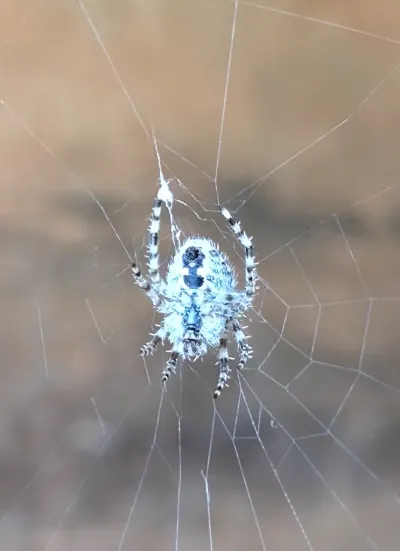
Barn Spiders
Araneus cavaticus
Barn spiders are orb-weaving spiders famous for building large, wheel-shaped webs in barns, sheds, and around homes. This nocturnal species inspired the character Charlotte in Charlotte's Web.
View identification guide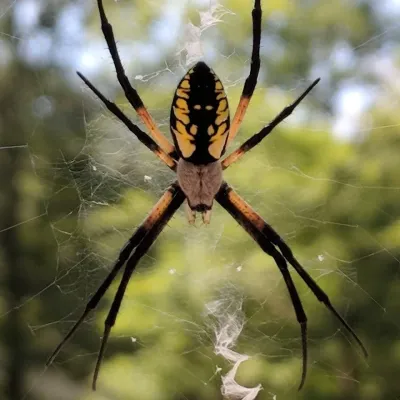
Black and Yellow Garden Spiders
Argiope aurantia
Black and yellow garden spiders are large orb-weavers known for their bold coloring and distinctive zig-zag web pattern. These common spiders are found across North America in gardens, fields, and around homes.
View identification guide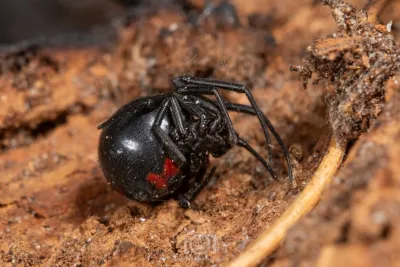
Black Widow Spiders
Latrodectus spp.
Venomous spiders recognized by their glossy black bodies and distinctive red hourglass marking. Black widows are reclusive but can deliver medically significant bites when disturbed, making professional identification and control important.
View identification guide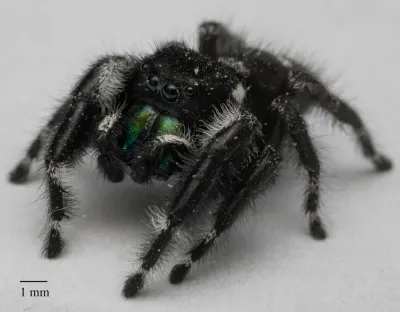
Bold Jumping Spider
Phidippus audax
The bold jumping spider is a common spider in North America. It has a black body with white spots and shiny green or blue jaws. These harmless spiders are often found on walls, fences, and sometimes inside homes.
View identification guide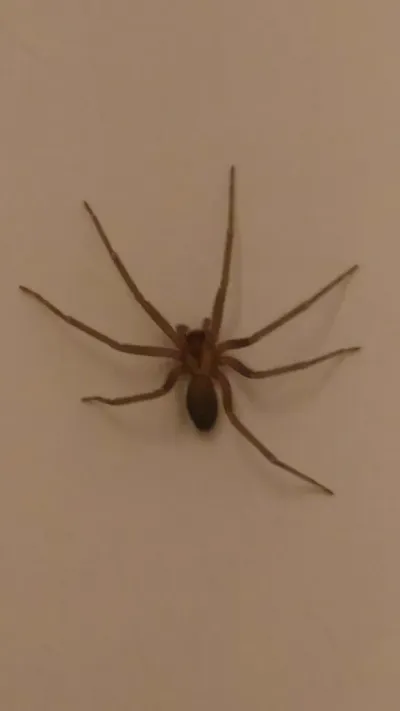
Brown Recluse Spiders
Loxosceles reclusa
Venomous spiders recognized by their distinctive violin-shaped marking and six eyes arranged in pairs. Brown recluse spiders prefer dark, undisturbed areas and can cause medically significant bites that may result in tissue damage.
View identification guide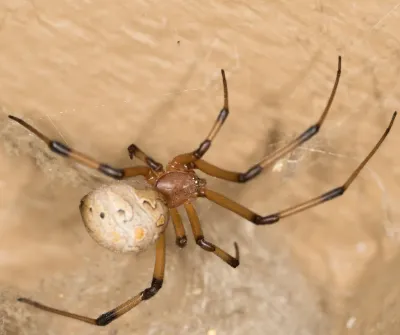
Brown Widow Spiders
Latrodectus geometricus
An invasive relative of the black widow, the brown widow spider is recognizable by its tan-to-brown coloring, orange hourglass marking, and distinctive spiky egg sacs. While venomous, brown widows are generally considered less dangerous than black widows and are increasingly common around homes in the southern United States.
View identification guide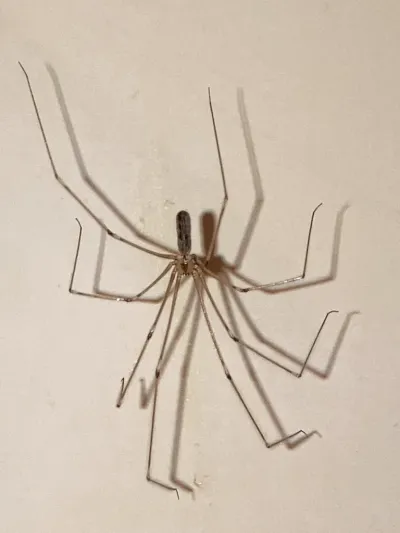
Cellar Spiders
Pholcus phalangioides
Cellar spiders, often called daddy longlegs spiders, are harmless arachnids commonly found in dark, quiet areas of homes. With their extremely long, thin legs and small bodies, they are frequently mistaken for harvestmen but are true web-building spiders.
View identification guide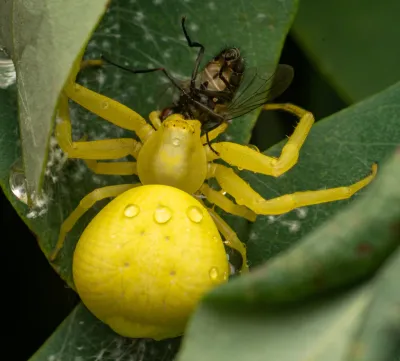
Crab Spiders
Thomisidae
Crab spiders are ambush predators found throughout North America that get their name from their crab-like appearance and sideways movement. These colorful spiders wait on flowers and foliage to capture pollinating insects without building webs.
View identification guide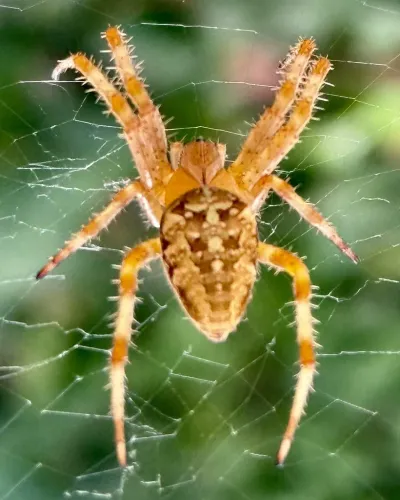
Cross Orbweavers
Araneus diadematus
Cross orbweavers, also called European garden spiders or diadem spiders, are orb-weaving spiders recognized by the distinctive white cross-shaped pattern on their abdomen. They build large vertical webs in gardens, porches, and around home exteriors during late summer and fall.
View identification guide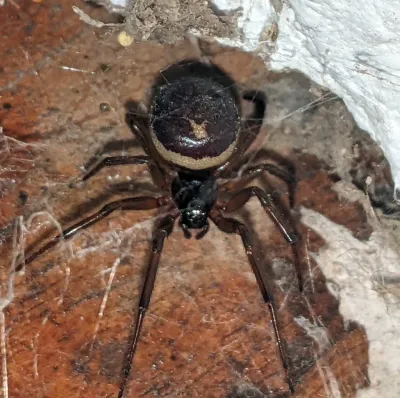
False Black Widows
Steatoda grossa
False black widows are dark, bulbous-bodied spiders often mistaken for true black widows. They build messy cobwebs in quiet indoor spaces and are one of the most common house spiders across North America.
View identification guide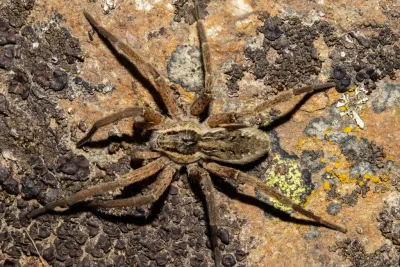
Fishing Spiders
Dolomedes spp.
Fishing spiders are large spiders that live near water in North America. They can walk on water and catch small fish, tadpoles, and insects. Though they look scary, they are harmless to humans.
View identification guide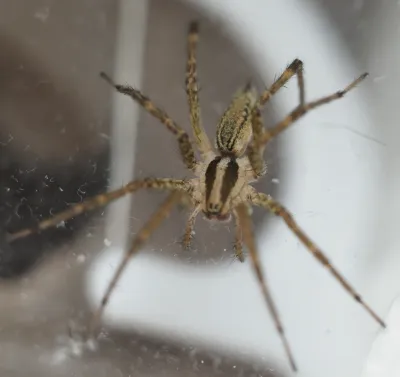
Funnel Weaver Spiders
Agelenidae
Funnel weaver spiders are common household spiders known for their distinctive sheet-like webs with tubular retreats. These fast-moving, harmless spiders include the barn funnel weaver and domestic house spider, often found in basements, garages, and dark corners of buildings throughout North America.
View identification guide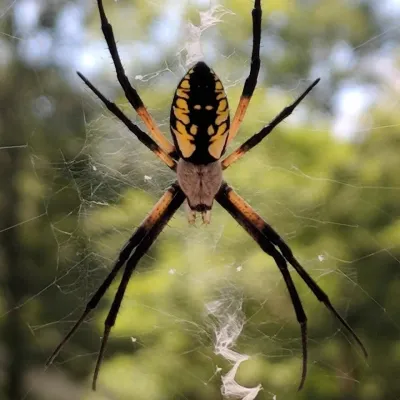
Garden Spiders
Argiope aurantia
Garden spiders, also known as yellow garden spiders or writing spiders, are large orb-weaving spiders recognized by their striking black and yellow markings. These spiders build circular webs in gardens and around homes, catching flies, mosquitoes, and other pest insects.
View identification guide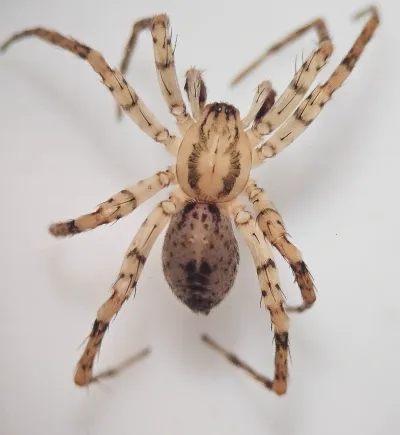
Ghost Spiders
Anyphaenidae
Ghost spiders are pale, fast-moving hunting spiders found throughout North America. Named for their translucent appearance and nocturnal habits, these agile predators do not build webs to catch prey. Instead, they actively stalk insects on plants and inside homes.
View identification guide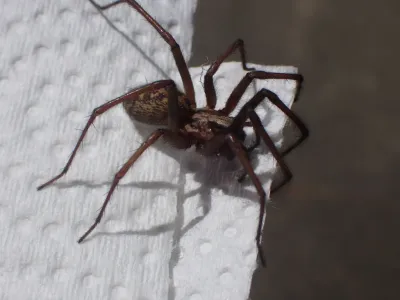
Giant House Spiders
Eratigena atrica
Giant house spiders are some of the largest spiders found in homes, with leg spans up to 4 inches. Despite their size, these fast spiders are harmless to humans and even help control hobo spider populations.
View identification guide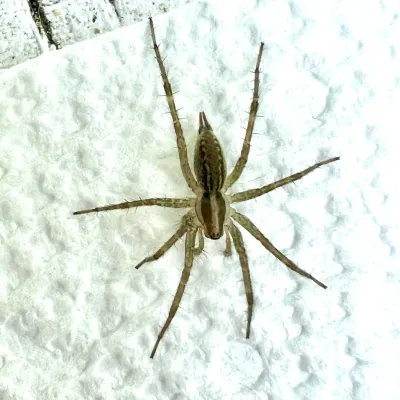
Grass Spiders
Agelenopsis spp.
Grass spiders are common funnel-web building spiders found throughout North America. Known for their distinctive sheet webs with funnel-shaped retreats, these fast-moving predators are frequently seen in lawns, gardens, and around home foundations. Despite their intimidating appearance, grass spiders are harmless to humans.
View identification guide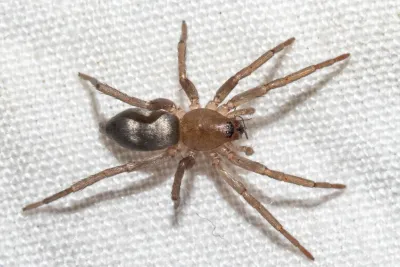
Ground Spiders
Gnaphosidae
Ground spiders are night-hunting spiders often found at ground level in homes and gardens. Unlike web-builders, they chase prey at night and hide in silk retreats during the day.
View identification guide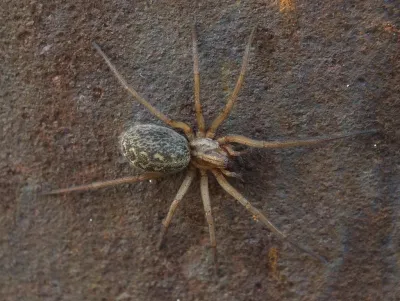
Hobo Spiders
Eratigena agrestis
Hobo spiders are medium-sized funnel web spiders native to Europe that have become established in the Pacific Northwest region of North America. Despite past concerns, current research indicates they are not medically significant to humans.
View identification guide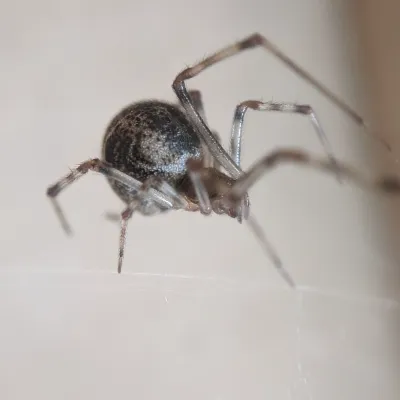
House Spiders
Parasteatoda tepidariorum
The common house spider is one of the most frequently encountered spiders in North American homes. These cobweb-building arachnids are harmless to humans and actually help control household insects, though their webs can become a nuisance.
View identification guide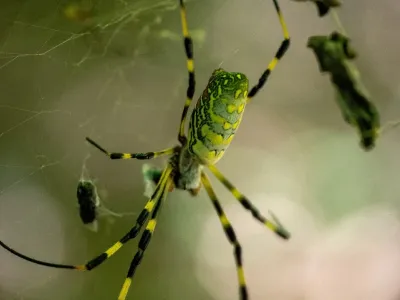
Joro Spiders
Trichonephila clavata
Joro spiders are large, yellow and blue-gray orb weavers from East Asia that have spread from Georgia across the Southeast and into Maryland and Virginia. They build huge golden webs but are shy and not considered a medical concern.
View identification guide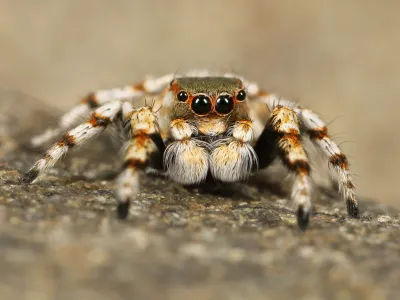
Jumping Spiders
Salticidae (Family)
Jumping spiders are compact, agile hunters known for their exceptional vision and ability to leap many times their body length. With their large, forward-facing eyes and curious behavior, they are among the most recognizable spiders found in and around North American homes.
View identification guide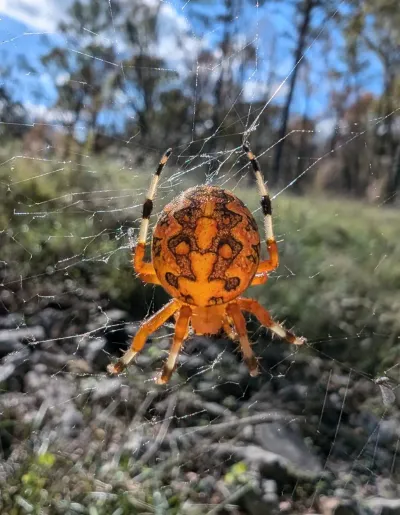
Marbled Orbweavers
Araneus marmoreus
Marbled orbweavers are colorful orb-weaving spiders known for their large, rounded abdomens with distinctive marbled patterns. Often called pumpkin spiders due to their orange coloring, they build vertical wheel-shaped webs in gardens and wooded areas across North America.
View identification guide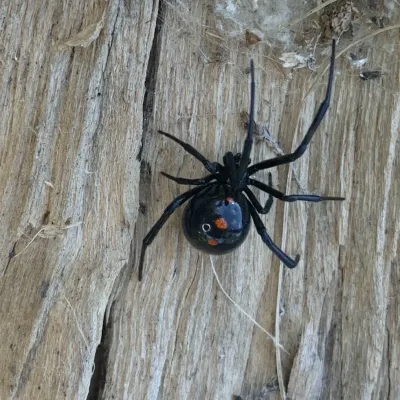
Northern Black Widow Spiders
Latrodectus variolus
A venomous spider found throughout the eastern United States and southern Canada, distinguished from other black widows by its broken or divided red hourglass marking and dorsal red spots on the abdomen.
View identification guide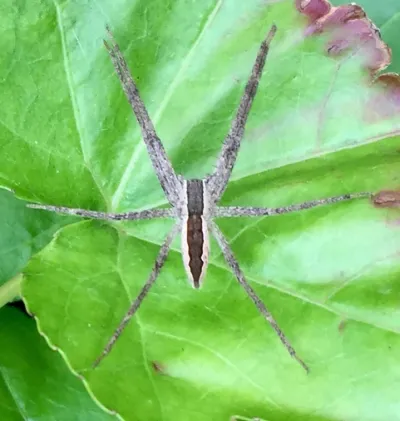
Nursery Web Spiders
Pisaurina mira
Nursery web spiders are large, long-legged hunting spiders found throughout eastern North America. Named for the protective silk nursery they build for their young, these spiders are harmless to humans.
View identification guide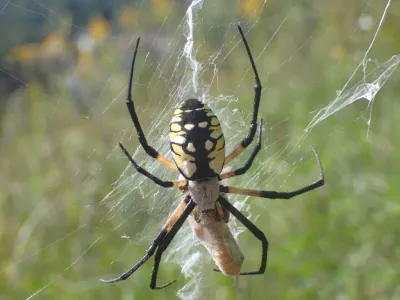
Orb Weaver Spiders
Araneidae (family)
Orb weaver spiders are master web builders known for their large, circular webs. These spiders are common in gardens and around homes throughout North America.
View identification guide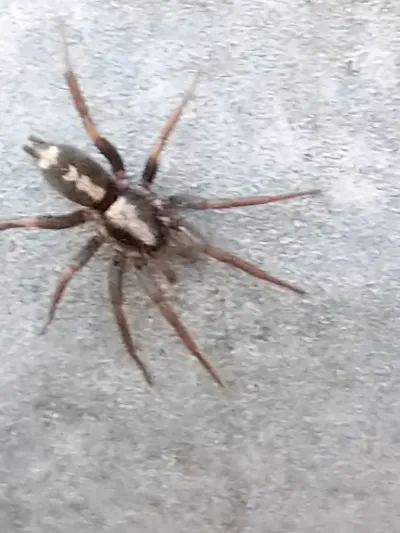
Parson Spiders
Herpyllus ecclesiasticus
Parson spiders are fast-moving, nocturnal ground spiders commonly found in homes across eastern North America. Named for the distinctive white marking on their abdomen that resembles a clerical collar, these active hunters chase down prey rather than building webs.
View identification guide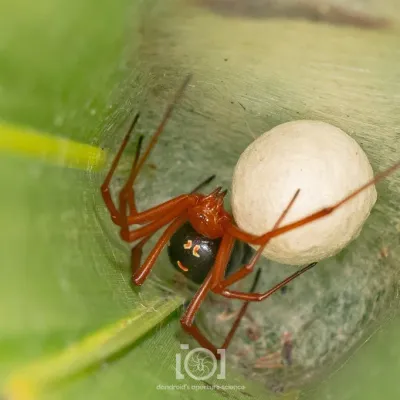
Red Widow Spiders
Latrodectus bishopi
A rare widow spider found only in the sand-pine scrub of central and southern Florida. Red widows stand out with their bright red-orange head, legs, and a black abdomen marked with rows of red spots.
View identification guide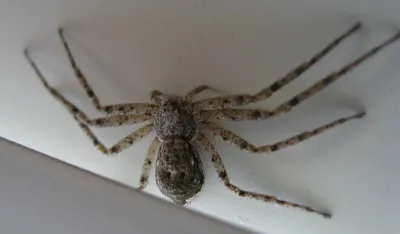
Running Crab Spiders
Philodromidae
Running crab spiders are fast-moving hunting spiders found throughout North America that catch prey by chasing it down rather than building webs. These agile spiders live on trees, shrubs, and low vegetation where they actively pursue insects.
View identification guide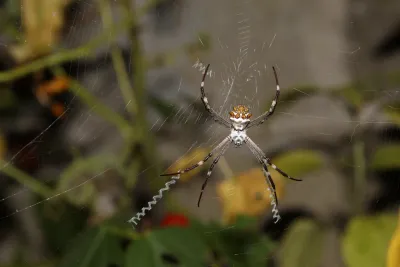
Silver Garden Spiders
Argiope argentata
Silver garden spiders are orb-weaving spiders recognized by their reflective silvery cephalothorax and patterned abdomen. Found primarily in the southern United States and Mexico, these beneficial predators build large circular webs in gardens and shrubby areas to catch flying insects.
View identification guide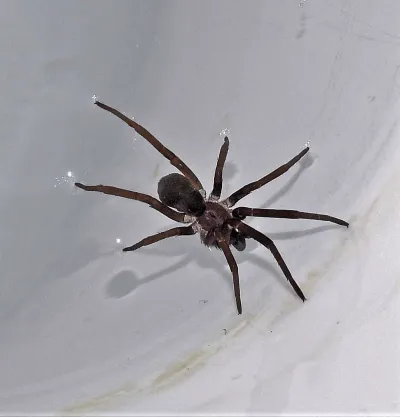
Southern House Spiders
Kukulcania hibernalis
The southern house spider is a common spider found in and around homes throughout the southern United States. Often mistaken for the brown recluse due to its similar coloration, this harmless spider builds distinctive tubular webs in cracks and crevices.
View identification guide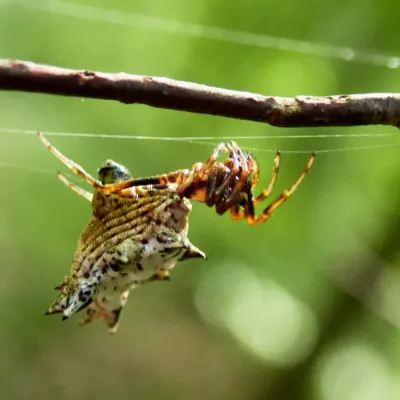
Spined Micrathena
Micrathena gracilis
The spined micrathena is a small orb-weaving spider easily recognized by the prominent spines on its abdomen. Common in eastern North American woodlands, it builds webs across trails and pathways at face height during summer and fall.
View identification guide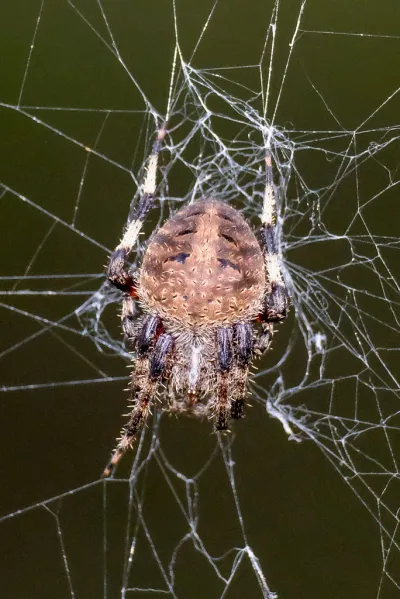
Spotted Orbweavers
Neoscona crucifera
Spotted orbweavers are large nocturnal orb-weaving spiders recognized by their tan to reddish-brown abdomens covered in darker spots. Also called Hentz orbweavers, they build sizable wheel-shaped webs on porches, eaves, and between plants during late summer and fall across much of North America.
View identification guide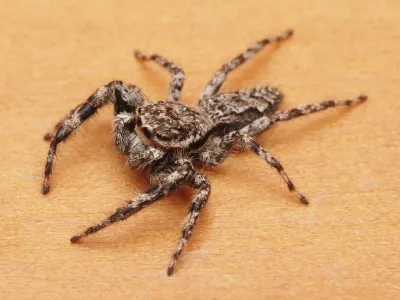
Tan Jumping Spider
Platycryptus undatus
The tan jumping spider is a common North American spider found on tree bark and building walls. It has a flattened, mottled tan body with wavy markings on its abdomen. These harmless spiders are skilled hunters often seen indoors.
View identification guide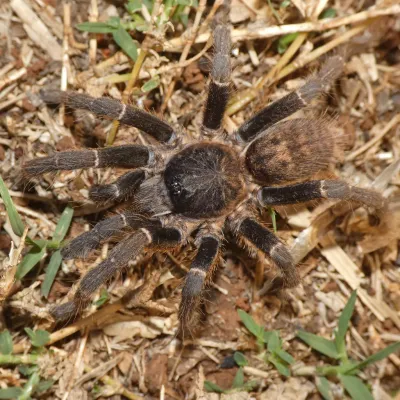
Tarantulas
Theraphosidae
Large, hairy spiders belonging to the family Theraphosidae. Tarantulas are ground-dwelling ambush predators that live in silk-lined burrows and are found primarily in the southern and southwestern United States and Mexico.
View identification guide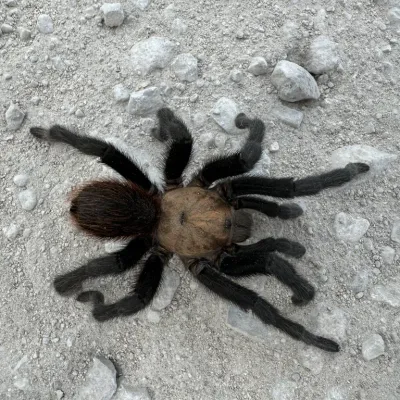
Texas Brown Tarantulas
Aphonopelma hentzi
Large, hairy, ground-dwelling spiders found across the south-central United States. Texas brown tarantulas are the most widely distributed tarantula species in the U.S. and are best known for the dramatic fall migration of males searching for mates.
View identification guide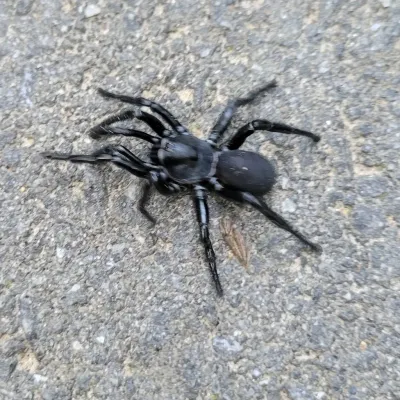
Trapdoor Spiders
Infraorder Mygalomorphae (multiple families)
Burrowing spiders that build silk-lined underground tunnels fitted with hinged lids. Trapdoor spiders ambush prey from their hidden burrows and are found across the southern and western United States.
View identification guide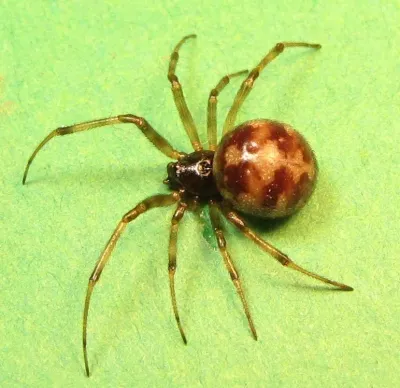
Triangulate Cobweb Spider
Steatoda triangulosa
The triangulate cobweb spider is one of the most common house spiders in North America. Named for the triangular zigzag pattern on its abdomen, this small, harmless spider builds messy cobwebs in corners, basements, and garages.
View identification guide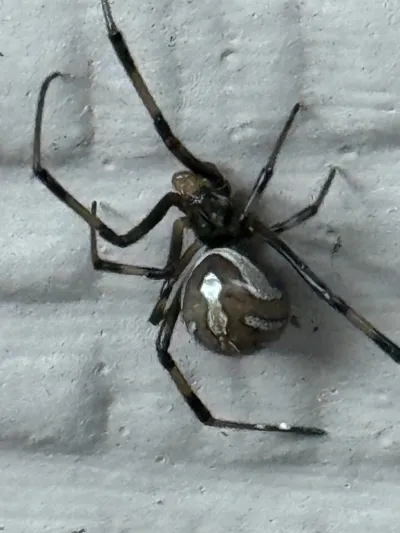
Western Black Widow
Latrodectus hesperus
The western black widow is a venomous spider found throughout western North America. Recognized by its glossy black body and red hourglass marking, it builds irregular webs in sheltered, low-lying areas and delivers medically significant bites when disturbed.
View identification guide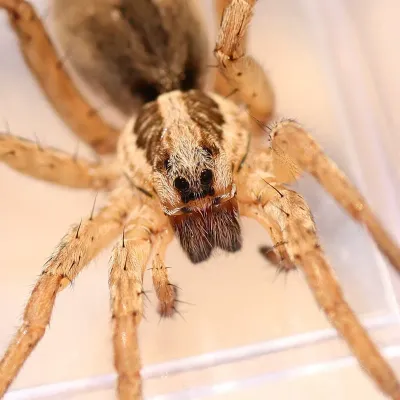
Wolf Spiders
Lycosidae
Wolf spiders are large, ground-dwelling hunting spiders found throughout North America. Unlike web-building spiders, these fast-moving predators actively chase and ambush their prey. While their size can be intimidating, wolf spiders are not aggressive toward humans.
View identification guide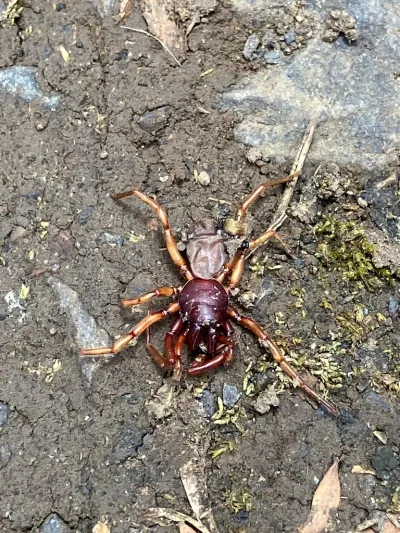
Woodlouse Spiders
Dysdera crocata
Woodlouse spiders are distinctive hunting spiders with large fangs specifically adapted for preying on woodlice (pill bugs and sow bugs). These reddish-brown spiders with cream-colored abdomens are commonly found in damp areas around homes throughout North America.
View identification guide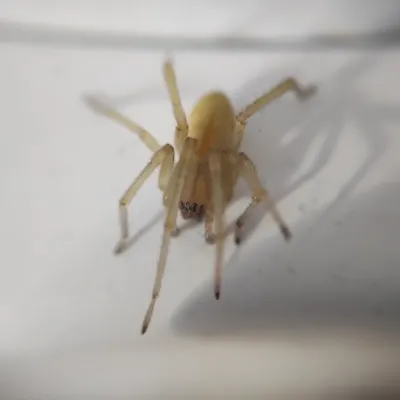
Yellow Sac Spiders
Cheiracanthium spp.
Yellow sac spiders are pale, night-active hunting spiders found in homes across North America. These small spiders build silk sacs in upper corners of rooms. They cause more indoor spider bites than most other species, but their venom rarely causes serious harm.
View identification guide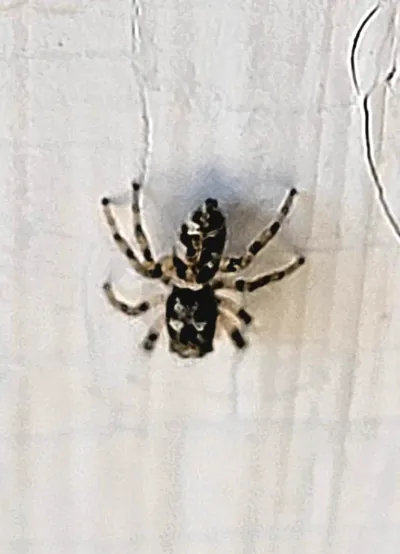
Zebra Jumping Spider
Salticus scenicus
The zebra jumping spider is a small, striped spider found throughout North America. Named for its black and white banding, this harmless spider is often spotted on sunny walls, fences, and window frames where it hunts small insects.
View identification guideCommon Questions about Spiders
How do spiders get inside my home?
+
Spiders enter homes through cracks, gaps in doors and windows, vents, and utility openings. Some are carried in on firewood, boxes, or plants.
Are spiders dangerous?
+
Most spiders are harmless, but some, like black widows and brown recluses, can deliver venomous bites. These bites are rare and usually occur when the spider is disturbed.
Will spraying for spiders eliminate them completely?
+
Spider treatments reduce their presence but do not create an instant eradication. Since they do not groom themselves like insects, direct contact with treated surfaces is necessary for control. Regular service is key to long-term results.
Do you remove spider webs?
+
Yes, we remove reachable spider webs (up to 6-8 feet high) during service visits. However, customers are encouraged to vacuum webs inside their homes for additional control.
What can I do to reduce spider problems?
+
Reducing exterior lighting, sealing entry points, managing moisture, and removing clutter can help deter spiders. Regular pest control treatments further reduce food sources and spider activity.
How often should I have my home treated for spiders?
+
We recommend tri-annual treatments (three times per year) to maintain a protective barrier and prevent re-infestations. This schedule also helps with other common household pests.
Will this treatment affect other pests?
+
Yes, our spider treatment plan also helps control other insects that serve as a food source for spiders, making it a comprehensive pest management solution.
Do you use strong chemicals to treat for spiders?
+
We have removed 9 of the harshest chemicals commonly used in the industry and instead use reduced-risk products like Essentria, Alpine, and Borate-based solutions. Our treatments are designed to be effective while considering environmental impact.
Can I cancel my spider treatment plan at any time?
+
Yes, we do not lock customers into contracts. You can cancel with 30 days' notice if you're not happy with the results.
More Resources About Spiders
Explore our guides and articles for more information about spiders.
- ›House Spider vs Wolf Spider: Which One Is in Your Home?
- ›Should I Kill a Black Widow Spider or Leave It Alone?
- ›Grass Spider vs Brown Recluse: Key Differences Explained
- ›Spider Mating Season Explained: Why Spiders Enter Your Home
- ›Brown Recluse vs House Spider: How to Tell Them Apart
- ›Poisonous Spiders in Virginia: The 2 That Actually Matter
- ›Hobo Spider vs Wolf Spider: Key Differences Explained
- ›Hobo Spider vs Brown Recluse: Key Differences Explained
- ›Brown Recluse vs Wolf Spider: Full ID and Bite Guide
- ›Virginia Jumping Spiders: 8 Common Species and How to Identify Them
- ›How To Get Rid of Spiders in House: No More Webs & Crawlers
- ›How to Get Rid of Spiders: Easy Steps for Homeowners
- ›Biggest Spiders in Virginia: The 7 Largest Species (With Pictures)
- ›Spiders in Virginia Beach: 12 Species and Where You'll Find Them
- ›Yellow Spiders in Maryland: How to Identify 6 Common Species
- ›Orange Spiders in Virginia: How to Identify 6 Common Species
- ›Common Virginia Spiders: 14 Species You'll Actually See (With Pictures)
- ›Virginia House Spiders: 7 Species You Actually Find Indoors
- ›Black Spiders in Virginia: How to Identify 8 Common Species
- ›Spiders in Basement: Why They're There & How to Remove Them
- ›Are The Tiny Red Spiders Dangerous? How To Spot And Treat Them
- ›Cellar Spider vs Daddy Long Legs: 5 Key Differences
- ›Spiders in Maryland: Types, Habits & Control Tips
- ›Spider Names Guide: Unique Species Identification Ideas
- ›Is a Spider a Bug? Clearing Up a Common Confusion
- ›Fishing Spider vs Wolf Spider: A Complete Comparison Guide
- ›Black Widow vs Brown Recluse: Spot the Deadly Differences
- ›Why Are There Millipedes in My House? Causes, Prevention, and Solutions
- ›Are Centipedes Dangerous? What Homeowners Need to Know
- ›Are Millipedes Poisonous? What DC Area Homeowners Need to Know
- ›What Do Millipedes Eat? A Licensed Technician Explains Their Diet
- ›How to Get Rid of House Centipedes: A Complete Guide
- ›House Centipede Eggs: Facts Every Homeowner Should Know
- ›Is Pest Control Worth It? DIY vs Professional Service
- ›Wasps in Maryland: Types, Nests & How to Handle Them
- ›Sow Bug vs Pill Bug: Identification Guide for Homeowners
- ›House Centipede vs Silverfish: 5 Key Differences Explained
- ›Mud Dauber vs Wasp: Key Differences You Should Know
- ›Cricket Life Cycle: Identify and Control These Noisy Pests
- ›Picture of a Tick: Identify, Treat, and Prevent Infestations
- ›What Does a Tick Look Like? How to Spot Ticks & Tick Bites
- ›How To Kill Earwigs and Get Rid of Them for Good
- ›Why Are Stink Bugs Called Stink Bugs? Mystery Solved!
- ›Concrete Mites: Identification Tips and Treatment Options
- ›Termite Tunnels 101: What These Mud Tubes Mean for Your Home
- ›Are Arachnids Insects? The Key Differences Explained
- ›Hornet vs Wasp: How to Identify Common DC Area Species
- ›What Attracts Clover Mites to DC Homes: Causes Explained
Explore Other Pest Categories
Browse our comprehensive pest library for identification guides and control information.



With five years of hands-on experience in the pest control industry, George Schulz is a registered technician with the Virginia Pest Management Association and a proud third-generation professional in a family business that's been protecting homes for over 58 years.
Find Local Spider Control Services
We provide professional spiders control throughout Virginia, Maryland, and the DC Metro area.
Local Spiders Help
Dealing with spiders at home? Our licensed technicians provide pest control across Northern Virginia and Maryland.
 Our serviceSpider Control
See Spider Control
Our serviceSpider Control
See Spider ControlPest Control near you
- Alexandria Pest Control
- Annandale Pest Control
- Arlington Pest Control
- Ashburn Pest Control
- Bethesda Pest Control
- Bowie Pest Control
- Burke Pest Control
- Centreville Pest Control
- Chantilly Pest Control
- Chevy Chase Pest Control
- Clinton Pest Control
- College Park Pest Control
- Columbia Pest Control
- Crofton Pest Control
- Ellicott City Pest Control
- Fairfax Pest Control
- Fairfax Station Pest Control
- Falls Church Pest Control
- Fort Washington Pest Control
- Frederick Pest Control
- Fredericksburg Pest Control
- Gainesville Pest Control
- Gaithersburg Pest Control
- Germantown Pest Control
- Glen Burnie Pest Control
- Great Falls Pest Control
- Greenbelt Pest Control
- Herndon Pest Control
- Hyattsville Pest Control
- Kensington Pest Control
- Laurel Pest Control
- Leesburg Pest Control
- Lorton Pest Control
- Manassas Pest Control
- McLean Pest Control
- Oakton Pest Control
- Olney Pest Control
- Oxon Hill Pest Control
- Potomac Pest Control
- Reston Pest Control
- Rockville Pest Control
- Silver Spring Pest Control
- South Riding Pest Control
- Springfield Pest Control
- Stafford Pest Control
- Sterling Pest Control
- Takoma Park Pest Control
- Upper Marlboro Pest Control
- Vienna Pest Control
- Waldorf Pest Control
- Warrenton Pest Control
- Winchester Pest Control
- Woodbridge Pest Control
- All service areas →