
TLDR: If you find a black widow in a living area, play area, or anywhere people or pets spend time, remove it right away. Use a long-handled tool or vacuum from a distance. For multiple black widows or egg sacs, call a pro. Prevent them by sealing entry points, clearing clutter, and keeping firewood away from your house.
Finding a black widow spider in your home is alarming. These venomous spiders are easy to spot with their shiny black bodies and red hourglass marking. But should you kill it on the spot, or is there a better way to handle it?
The answer depends on where you find the spider and who might come in contact with it. I’m a licensed tech and the third generation of my family at Better Termite, and black widows are a regular spider call for us across the DMV. Here’s what I tell homeowners.
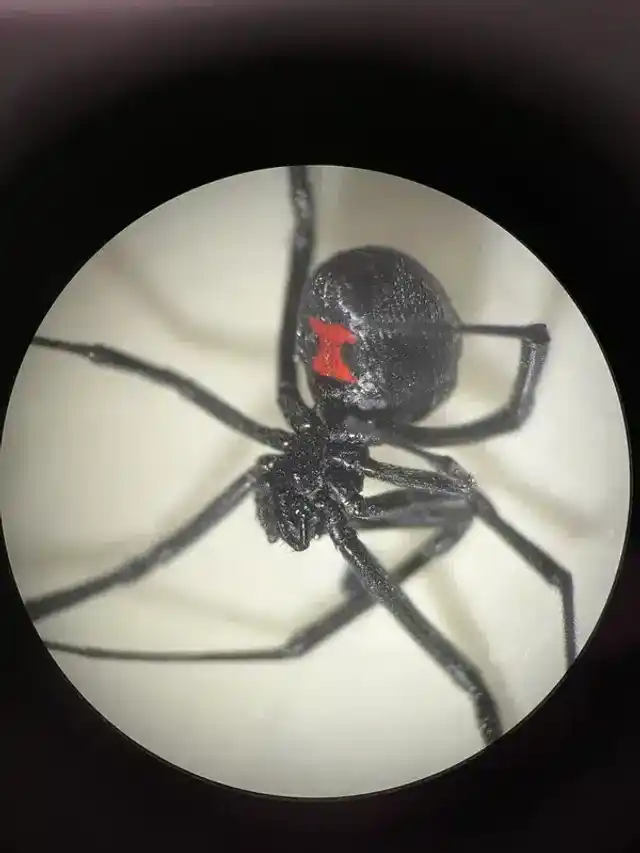
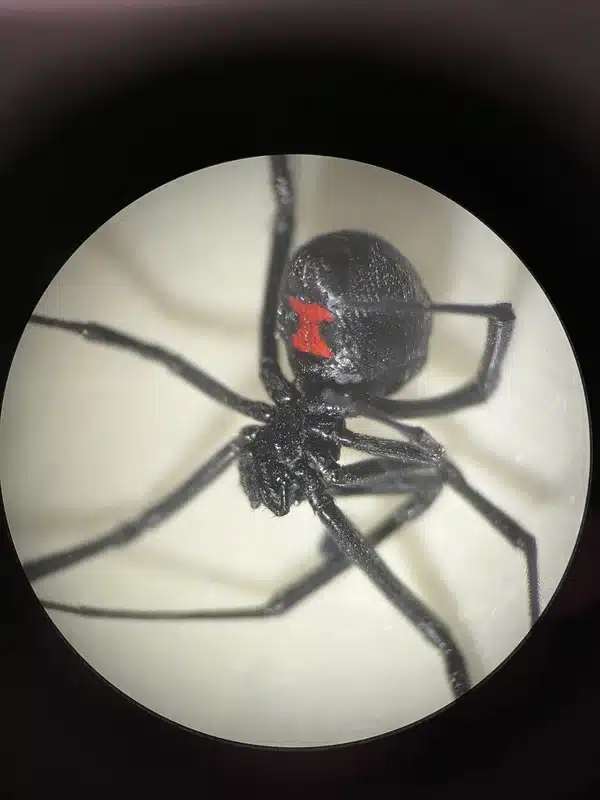
How to Identify a Black Widow
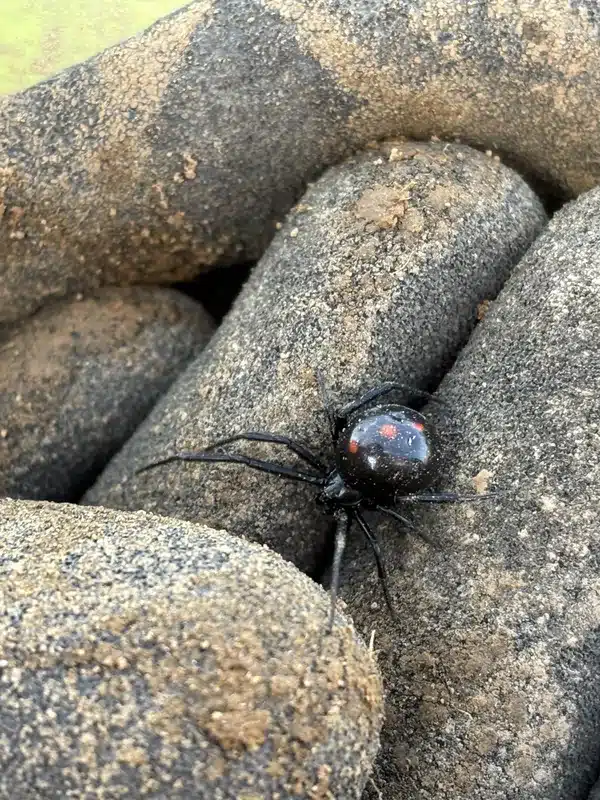
Before you act, make sure you’re actually dealing with a black widow. Many harmless black spiders get mistaken for them, especially the false black widow, which has no red hourglass.
What to look for:
- Shiny black body with a round, bulb-shaped belly
- Red hourglass marking on the underside of the belly
- Female body about 1/2 inch long, leg span around 1.5 inches
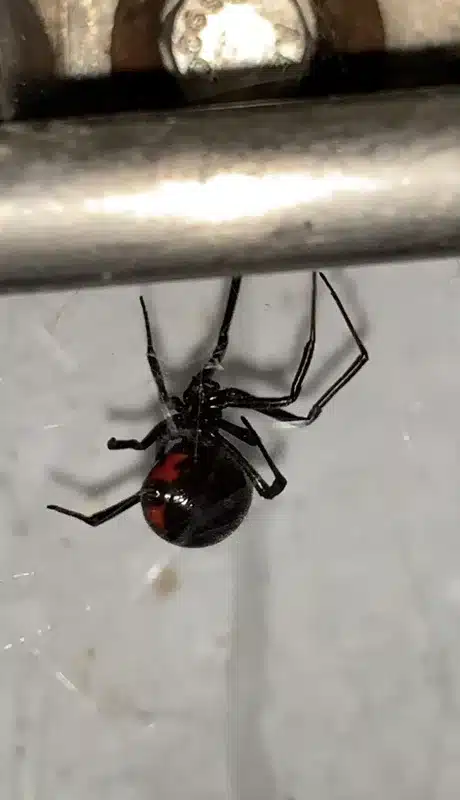
- Messy, irregular sticky webs in dark corners
- Hangs upside down in the web
Males are much smaller and rarely bite. The female is the one with the strong venom and the red marking.

When to Remove a Black Widow
Remove a black widow right away if you find one in any of these spots:
- Living spaces: Bedrooms, kitchens, bathrooms, family rooms
- Play areas: Near swing sets, sandboxes, or outdoor toys
- High-traffic areas: Patios, doorways, porches, garages
- Pet areas: Anywhere dogs or cats spend time
Black widows don’t go after people on purpose. They bite when they feel trapped or pressed against skin. Most bites happen when someone reaches into a dark spot without looking first.
If You See One Black Widow, Are There More?
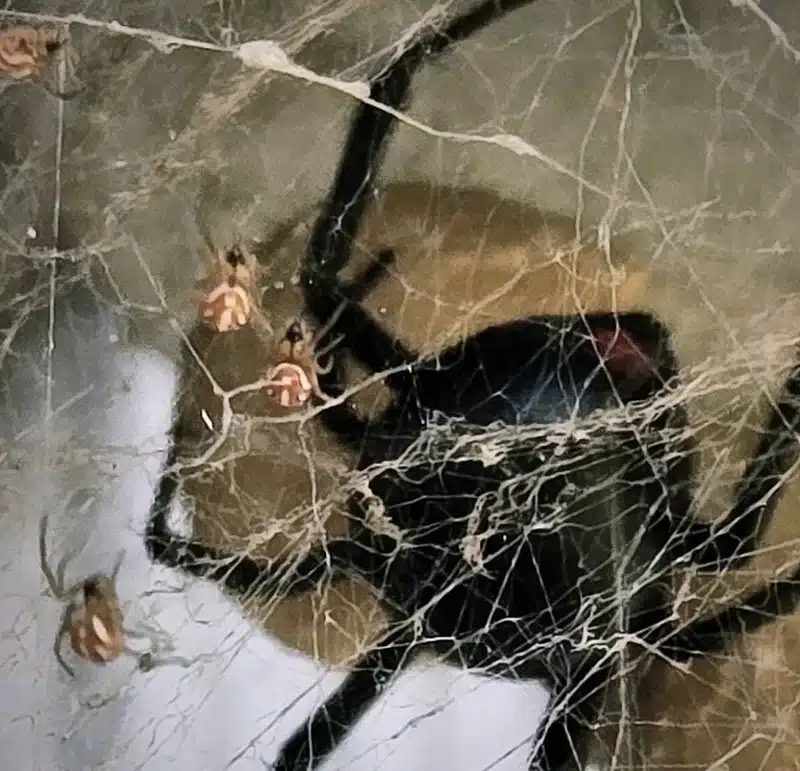
Often, yes. Black widows live alone in their own webs, but a spot that suits one usually suits a few. A woodpile, a cluttered garage corner, a crawl space vent, or the inside of a water meter box all give them the same dark, still shelter and a steady supply of insects.
So when you find one, check the similar spots nearby with a flashlight. Look for:
- More messy, tangled webs close to the ground
- Tan, papery egg sacs about 1/2 inch long. Virginia Tech notes they hold anywhere from 25 to 900 or more eggs.
- Young widows, which are often brownish with red or orange marks on top of the belly
One adult with no egg sac is a remove-and-watch situation. Two or more spiders, or any egg sac, means there’s a breeding spot nearby and it’s worth having a pro look.
Black Widow Behavior
Black widows are shy and prefer to stay hidden. They build webs in dark, quiet spots like woodpiles, garages, basements, crawl spaces, and storage areas. They also set up under outdoor furniture, in meter boxes, and around foundations.
These spiders are most active at night and come out mainly to hunt. They are found in both cities and rural areas throughout the Mid-Atlantic region and adapt well to spaces around homes.
Black widows can be found throughout Virginia and Maryland, especially in wooded areas. In my experience working in places like Mt. Vernon, spider activity builds up fast in areas with lots of trees and moisture. The eaves of homes and crawl spaces are common spots for black widow webs.
How to Kill or Get Rid of a Black Widow Yourself
Black widows die from direct contact: a firm hit, a vacuum, or an insecticide sprayed right on the spider. Bug bombs are the popular option that doesn’t work. Montana State University Extension says foggers are not effective against spiders in the home and does not recommend them.
If you decide to handle a single black widow on your own, pick one of the methods below and take precautions.
The fastest way to remove a black widow is with a vacuum. Use a hose attachment and keep a few feet of distance. After you vacuum the spider and web, seal the bag and throw it away in an outdoor trash can right away.
What to wear: Long sleeves, pants, closed-toe shoes, and thick gloves (leather or heavy gardening gloves).
What you need: Flashlight to spot the spider, vacuum with hose attachment.
Virginia Tech’s black widow fact sheet tells homeowners to knock down the webs, spiders, and egg sacs with a stick and crush them underfoot. Use a broom handle or a long stick so your hand stays well away from the web, and wear sturdy shoes, not sandals.
An aerosol spray labeled for spiders also kills on contact. Spray the spider directly from the distance the label lists, then knock the web down once it stops moving. Follow the label, and keep kids and pets away until it dries.
What to wear: Long sleeves, pants, closed-toe shoes, and thick gloves.
Use a glass jar and a stiff piece of cardboard. Slowly place the jar over the spider, then slide the cardboard under the opening. Move the spider at least 50 feet from your home and release it.
This method works for single spiders in spots you can reach without risk. Don’t try this on spiders in tight corners or overhead spaces.
What to wear: Long sleeves, pants, closed-toe shoes, and thick gloves.
Whichever method you choose, always wear protective clothing and work slowly. Rushing increases the chance of an accidental bite.
Getting Rid of Black Widows in the House
Indoors, black widows turn up in the quiet places: basements, garages, crawl spaces, and the back of storage closets. Vacuum the spider and web, then clear out what it was hiding behind. Move stored items up onto shelves or into sealed plastic bins so there’s no dark, untouched corner to rebuild in.
Getting Rid of Black Widows Outside
Outside, the job is about their shelter and their food. Knock down webs under deck rails, in meter boxes, and around foundation vents. Move firewood away from the house and up off the ground. Bright white lights by your doors pull in the insects widows eat, so switch those to yellow bulbs.
If you’re not comfortable removing a black widow yourself, or if you find more than one, a pro can handle it quickly.
How Dangerous Is a Black Widow Bite?
Black widow bites can cause serious symptoms, but deaths are very rare with modern medical care.
The CDC describes black widow venom as a neurotoxin. Pain starts at the bite and can spread to the chest, the belly, or the whole body.
A review of U.S. poison center records counted 23,409 black widow exposures from 2000 to 2008. Of the 9,872 people who had symptoms, 65% had minor effects, 33.5% had moderate effects, and 1.4% had major effects. There were no deaths.
A newer University of Virginia study of 15,299 cases from 2012 to 2022 found that almost half were managed without a trip to a hospital or clinic. About 10% needed a hospital stay, and only 3.4% received antivenom.
Symptoms to watch for:
- Severe muscle cramps that spread from the bite
- Belly pain and cramping
- Nausea, sweating, and raised blood pressure
- Tremors and muscle stiffness
Children, elderly people, and those with weak immune systems face higher risk. If someone gets bitten, call Poison Control at 1-800-222-1222 or seek medical help right away. Try to catch or photograph the spider for ID if you can do so without extra risk. Not sure which spider it was? Our black widow vs brown recluse guide compares the two bites side by side.
DIY vs Professional Removal
| DIY Removal | Professional Treatment | |
|---|---|---|
| Best for | Single spider in an easy-to-reach spot | Multiple spiders, egg sacs, hard-to-reach areas |
| Risk level | Higher | Lower |
| What’s needed | Gloves, flashlight, vacuum or jar | Pro-grade tools and products |
| Long-term results | Fixes the immediate problem | Prevention and ongoing monitoring |
Professional Black Widow Control
Sometimes calling a pro is the smartest move. This is true when you find multiple spiders, egg sacs, or webs in hard-to-reach places. That’s usually when I’d have a spider exterminator walk the property, because one visit turns up the webs tucked behind meter boxes and crawl space vents that you’d never spot from the yard.
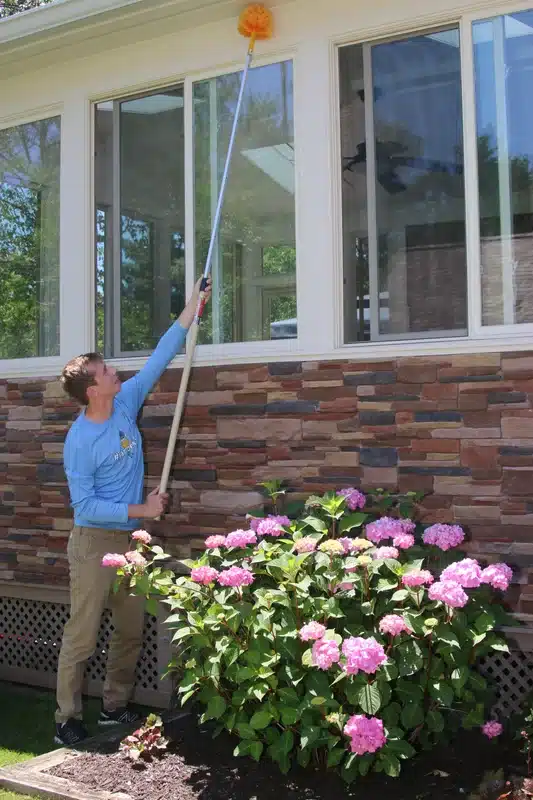
Our approach to black widow control has two steps. First, we remove existing webs and spiders using a webster tool. Then we apply a non-repellent treatment along the exterior foundation to stop spiders from coming back.
Pro treatment also includes finding the conditions that draw black widows in, like moisture problems, excess lighting that attracts bugs, and gaps in your foundation.
Daren, one of our registered technicians, says spiders are “best treated on contact,” and no product makes them vanish overnight. The lasting fix is cutting down the insects they feed on. Light shining out of windows at night, or a porch light left on, pulls in flying insects, and the spiders follow the food.
Preventing Black Widows
Stopping black widows from setting up around your home is better than dealing with them after they arrive.
- Firewood: Store it at least 20 feet from your house, elevated off the ground
- Seal gaps: Caulk cracks around your foundation, windows, and doors
- Clear clutter: Clean basements, garages, and storage areas regularly
- Outdoor lighting: Switch to yellow or orange bulbs, or move lights away from doors
- Landscaping: Keep an 18-inch clear zone between plants and your foundation
- Web removal: Knock down webs as soon as you see them to force spiders to move
Regular inspection of hiding spots helps you catch problems early. Check woodpiles, under decks, and around outdoor furniture often during warm months.
Common Myths About Black Widows
Myth: All black spiders are black widows. Many harmless species look similar. The red hourglass is the key identifier.
Myth: Black widows are aggressive. They are shy and prefer to hide. Montana State University Extension calls them very timid and more likely to escape than bite. They bite when trapped or pressed against skin.
Myth: Killing one attracts more. This isn’t true. Removing spiders and their webs actually cuts down on future activity.
Myth: Black widow bites are always fatal. Deaths are extremely rare with modern medical care. Most people recover fully with proper treatment.
When to Call a Pro
Call a pro for black widow problems when:
- You find more than one black widow
- You spot egg sacs in or around your home
- Spiders are in hard-to-reach spots like crawl spaces or high eaves
- You’re not comfortable handling venomous spiders
- DIY removal hasn’t stopped them from coming back
At Better Termite & Pest Control, our licensed techs, including our Sterling pest control team, can remove black widows, treat your foundation, and set up prevention that keeps them out. With 58+ years in the DC metro area and 1,800+ reviews, we know how to handle venomous spiders.
We’ve removed nine of the harshest chemicals from our programs and use products we’d use in our own homes.
If you’re dealing with black widows in your Virginia, Maryland, or DC area home, call us at 703-683-2000 or email info@bettertermite.com. We’ll assess the situation and get rid of the problem.