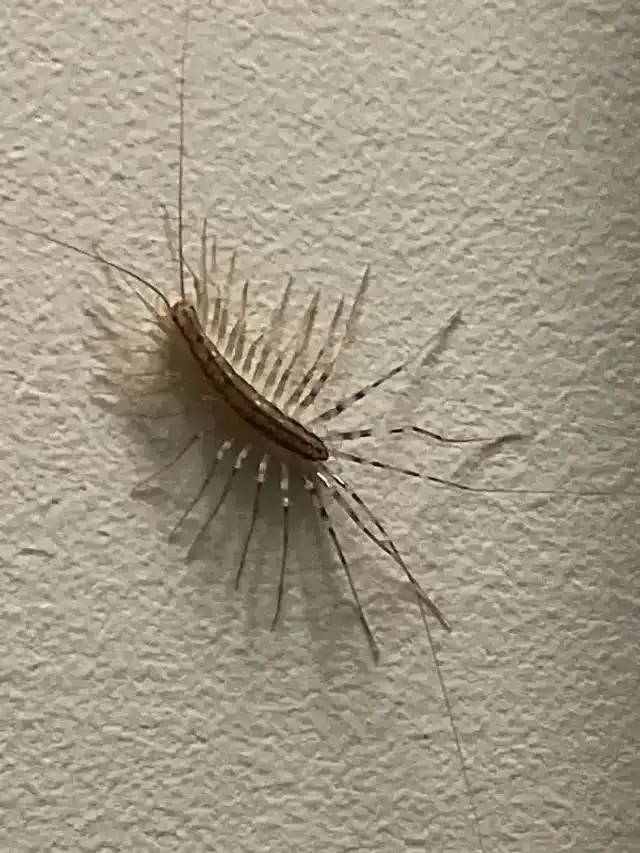

TLDR: Centipedes come indoors because of moisture. The best way to get rid of them is to lower humidity below 50%, fix leaks, and seal entry points. House centipedes are the only species that breeds indoors. Dehumidifiers, caulking cracks, and removing outdoor debris near your foundation are the most effective steps. Chemical treatments alone give only short-term results without fixing moisture.
Finding centipedes on your bathroom floor at 2 AM is startling. These many-legged creatures seem to show up out of nowhere, especially during humid summer months in the DMV area. They look scary with their long legs and fast movements, but they feed on other bugs in your home.
Most of the centipedes we’re called about in Northern Virginia, DC, and Maryland homes are house centipedes, and getting rid of them is doable once you know what draws them in.
How to Get Rid of House Centipedes: The Short Version
Killing one centipede at a time won’t fix the problem. You need to change the conditions that bring them in:
- Lower humidity to 30-50% with a dehumidifier in the basement or crawl space, and fix leaks (details below).
- Seal entry points: foundation cracks, pipe gaps, basement windows, door thresholds, and the rim joist.
- Cut off their food. Centipedes eat spiders, silverfish, cockroaches, and ants. Sticky traps along baseboards catch centipedes and show you which of their prey is around.
- Clean up outside: clear leaf litter, swap wood mulch for gravel, and slope soil and downspouts away from the foundation.
- Treat where they hide: cracks, crevices, and behind baseboards, plus a perimeter treatment in late summer or early fall.
Fixing one problem but not the other usually means the centipedes come back: finding house centipedes almost always signals both a moisture issue and another pest problem.
What You’re Dealing With
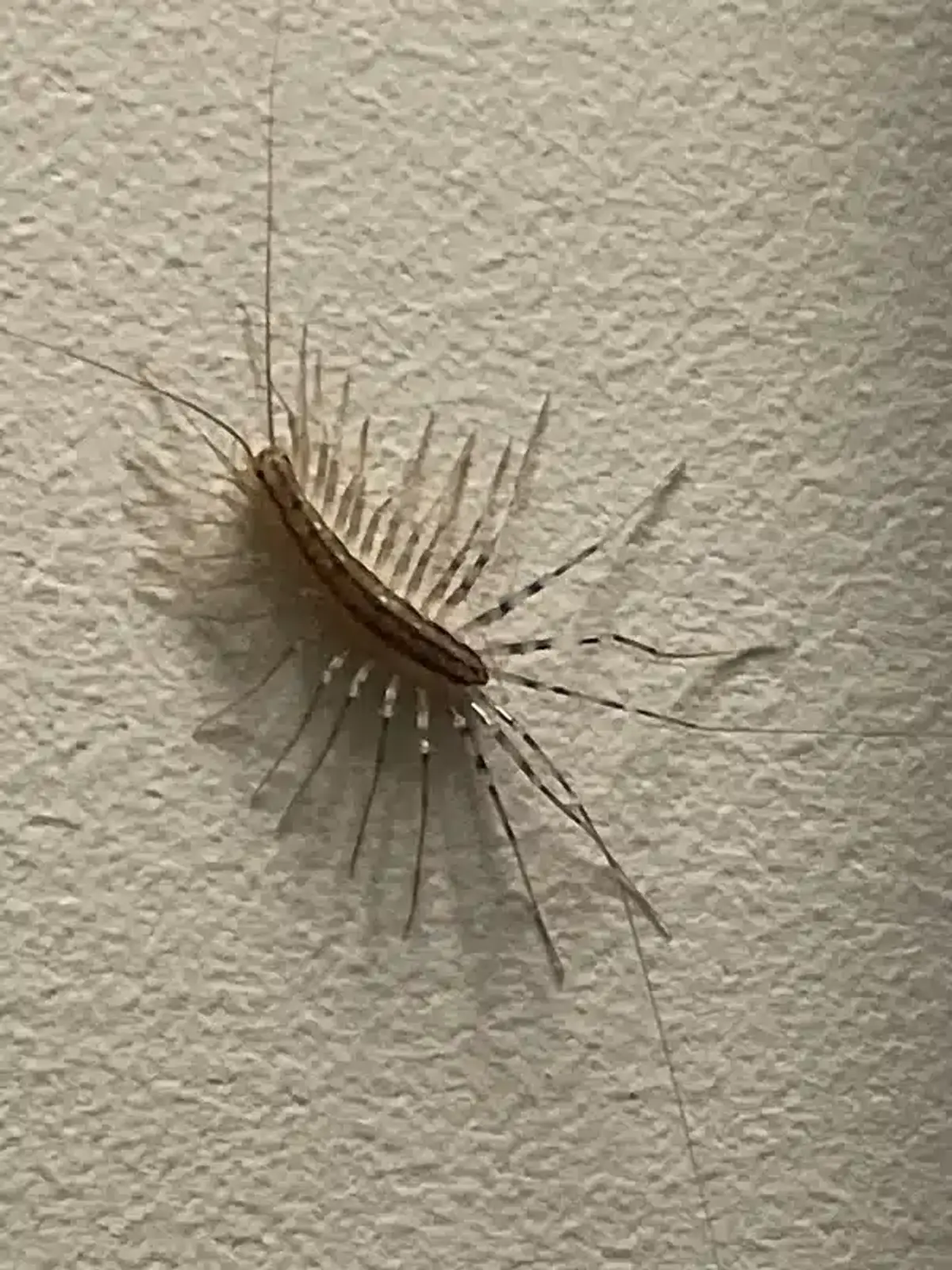
Centipedes have one pair of legs per body segment. They hunt silverfish, cockroaches, spiders, and other insects. Knowing what centipedes eat helps explain why they show up indoors.
The key thing to know is that centipedes need moisture to survive. Their breathing system requires high humidity, which is why you find them in basements, bathrooms, and other damp areas.
What House Centipedes Look Like
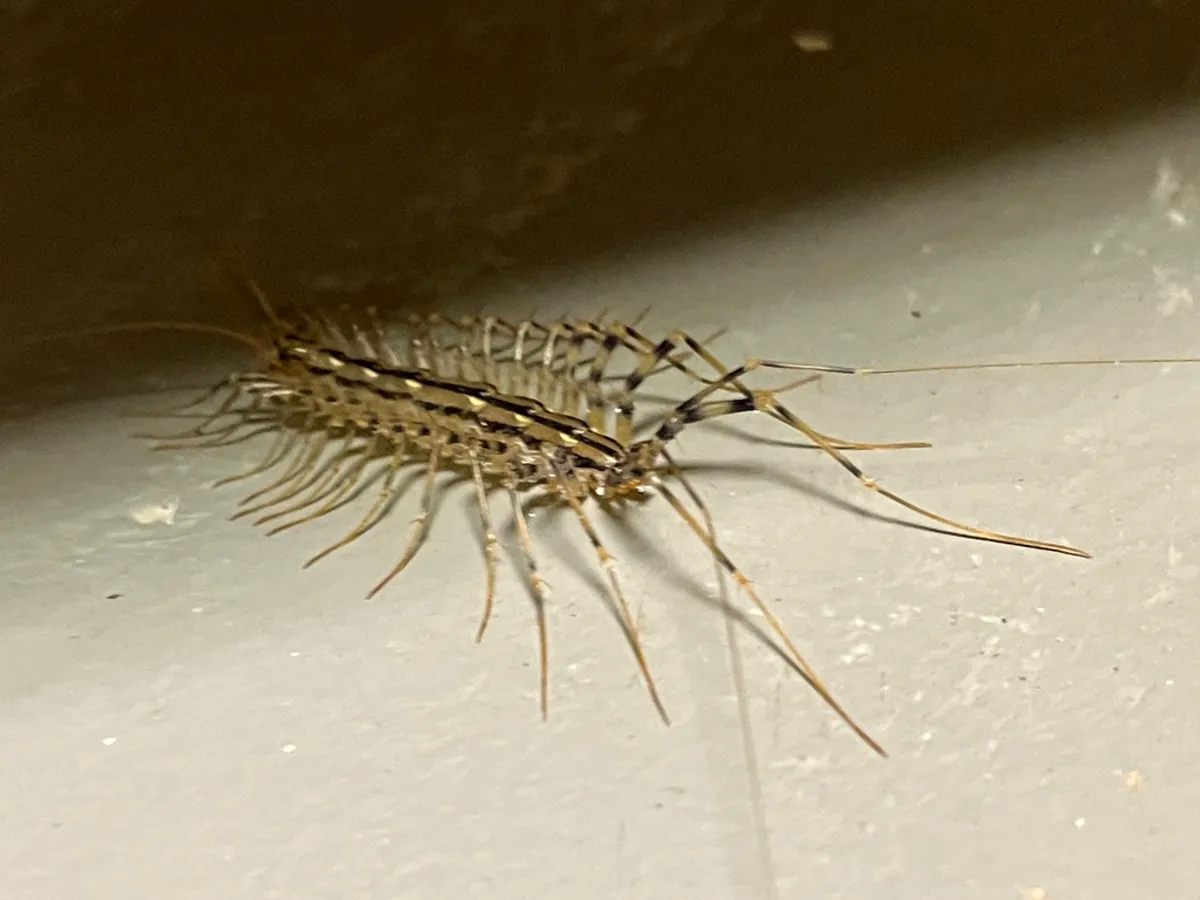
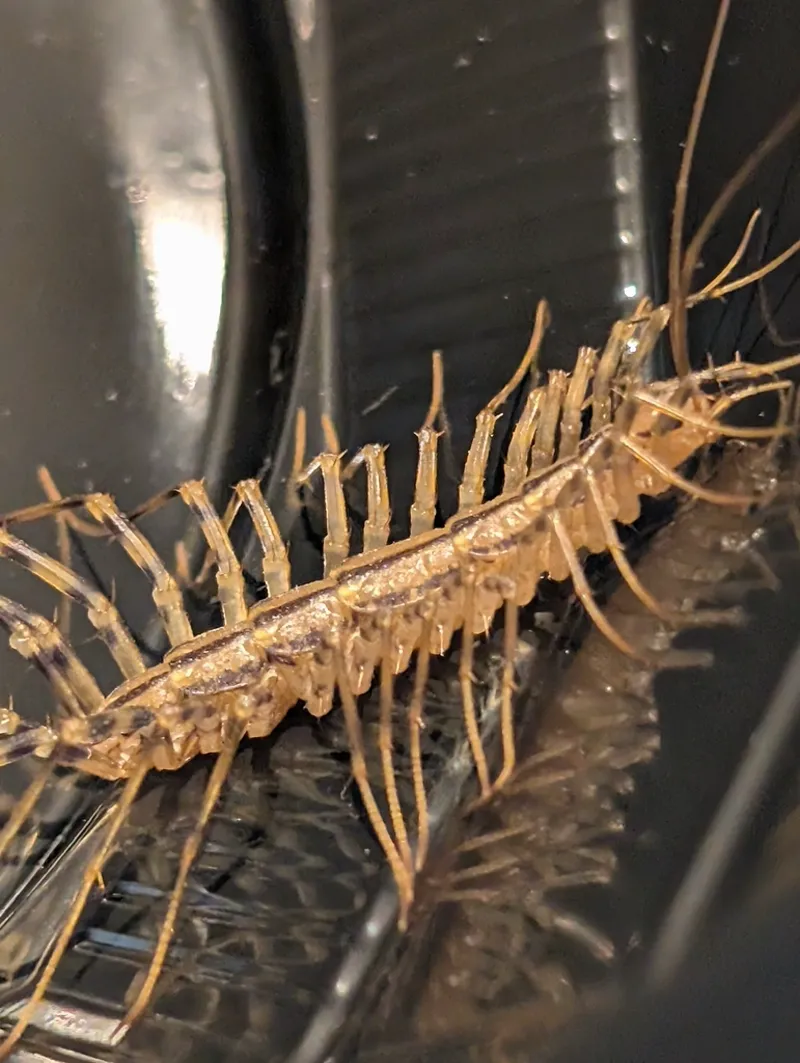
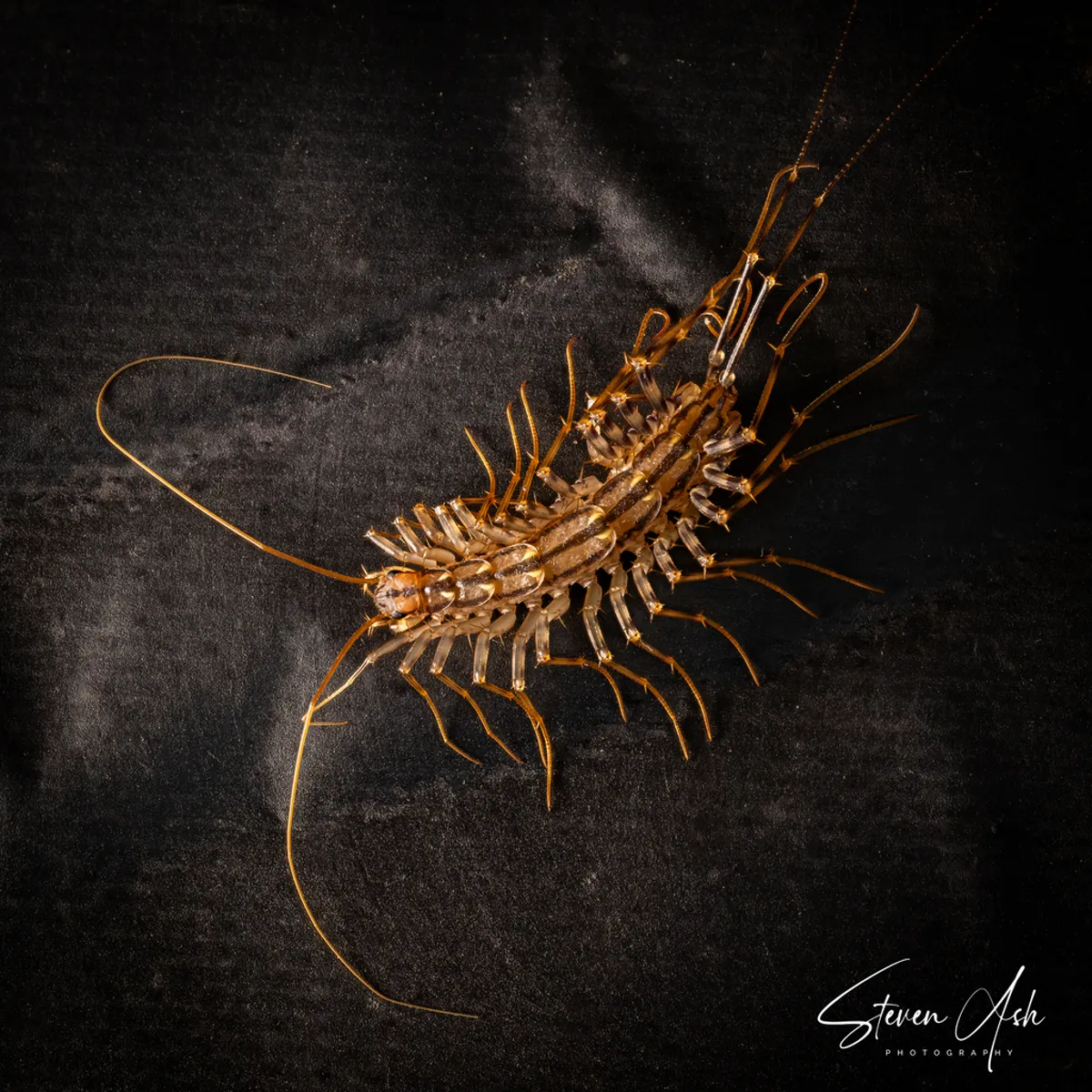
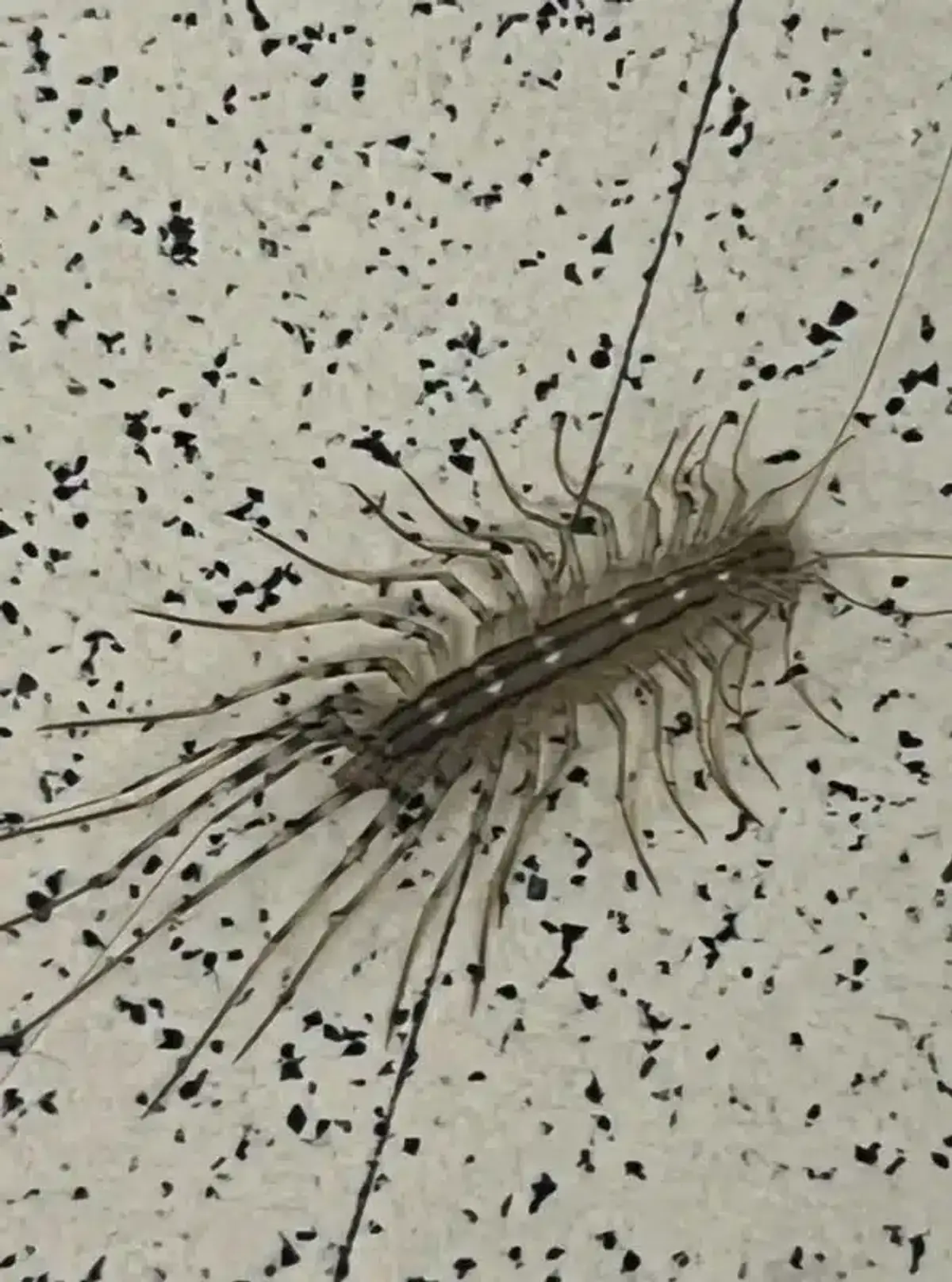
House centipedes (Scutigera coleoptrata) have a yellowish-gray body with three dark stripes down the back and 15 pairs of long, banded legs. Penn State Extension puts the adult body at about 1 to 1.5 inches long, but with legs and antennae they can look 3 to 4 inches across, which is why they seem bigger than they are. They also have large compound eyes, and their long back legs look so much like antennae that it’s hard to tell which end is which.

House Centipedes vs Other Types
In the Virginia, Maryland, and DC area, you’re most likely dealing with the house centipede. These have 15 pairs of very long, banded legs and can complete their whole life cycle indoors. They’re the only centipede species that truly thrives inside homes.
Other types like stone centipedes and bark centipedes usually wander in from outside briefly. Only house centipedes set up breeding groups indoors, as covered in our guide on house centipede eggs.
Why Centipedes Come Inside
Knowing why centipedes show up is key to getting rid of them. In our family business, we’ve served the DMV area for over 50 years, and I’ve noticed centipede complaints spike during certain conditions.
Moisture Problems
Too much moisture is the biggest reason centipedes come inside. Learning what attracts centipedes is key to stopping them. When indoor humidity stays above 50%, or when you have leaks, you’re making your home perfect for them.
Food Sources
Centipedes follow their food. They eat spiders, cockroaches, silverfish, ants, carpet beetle larvae, and pillbugs. If you’re seeing centipedes often, it usually means other bugs in the house are feeding them, which is why fixing your overall pest situation matters when trying to get rid of centipedes.
Shelter and Darkness
House centipedes hunt at night and hide during the day. Cluttered basements, stacked boxes, and storage areas give them cover. They also tuck behind baseboards, in floor drains, and inside wall voids.
Seasonal Factors
Fall cooling and midsummer droughts push centipedes toward the comfort of your home. Outdoor hiding spots like leaf piles and mulch beds right against your foundation act as stepping stones that make indoor entry easier.
Moisture Control: Your Best Tool
The most effective way to get rid of centipedes starts with controlling moisture. This fixes the root cause, not just the symptom.
Indoor Moisture Fixes
Start by fixing plumbing leaks and wrapping cold-water pipes that sweat in humid weather. Run bathroom fans for at least 20 minutes after showers. Make sure they vent outside, not into your attic.
Use dehumidifiers to keep indoor humidity between 30-50%, especially in basements and crawl spaces.
The EPA’s moisture control guidance states that keeping indoor humidity between 30-50% is critical for preventing pest problems. Levels above 50% create conditions that favor centipedes, which need high moisture to survive. The Virginia Cooperative Extension confirms that only house centipedes can complete their life cycle indoors, making dehumidification a proven control method.
Fix Outdoor Drainage
Grade soil so it slopes away from your foundation for at least 10 feet. Extend downspouts well away from the house and keep gutters clean. These steps stop water from pooling near your foundation where centipedes hide.
Create a 3-foot plant-free zone around your home. Replace wood mulch with gravel or stone, which stays drier and offers fewer hiding spots.
Sealing Entry Points
While moisture control removes the main draw, sealing entry points stops centipedes from getting inside.
Where to Seal
Check around basement windows, pipe holes, and door thresholds. The junction where your rim joist meets the sill plate is often missed but gives centipedes easy access.
Use quality exterior caulk for cracks under 1/4 inch and low-expansion foam for bigger gaps. Install brush-type door sweeps and make sure foundation vents have 20-mesh screens.
The Department of Energy’s air sealing guidelines provide great techniques that work for pest exclusion while also saving energy.
Natural Removal Methods
Once you’ve fixed moisture and entry points, several low-risk options can help clear out remaining centipedes.
Desiccant Dusts
Diatomaceous earth and silica gel dusts work by drying out centipedes that crawl through treated areas. Apply thin films in wall voids, around sill plates, and in pipe chases.
Physical Removal
Vacuum up centipedes when you see them. They dry out fast indoors when humidity drops below 40%. Sticky traps along baseboards help you find activity hot spots while also catching centipedes.
Habitat Changes
Remove leaf litter, grass thatch, and decorative timbers from around your foundation. Keep shrub canopies pruned at least 12 inches from your walls. These changes clear out outdoor hiding spots that support centipede numbers.
Treatment Comparison
| Natural Methods | Chemical Treatments | |
|---|---|---|
| Speed | 2-4 weeks | 1-2 weeks |
| Risk Level | Very low | Needs precautions |
| Long-term Results | Excellent (fixes root cause) | Short-term without moisture control |
| Best For | Prevention and lasting control | Heavy infestations |
Chemical Treatment Options
For stubborn centipede problems, targeted chemical treatments can add extra control when used alongside moisture management and sealing.
Crack and Crevice Work
Iowa State University Extension recommends treating behind baseboards and in cracks and crevices where house centipedes hide. Boric acid dust applied to wall voids and entry points gives long-term control. This material has low risk to humans and pets while working well against centipedes. Always follow label directions.
Perimeter Treatments
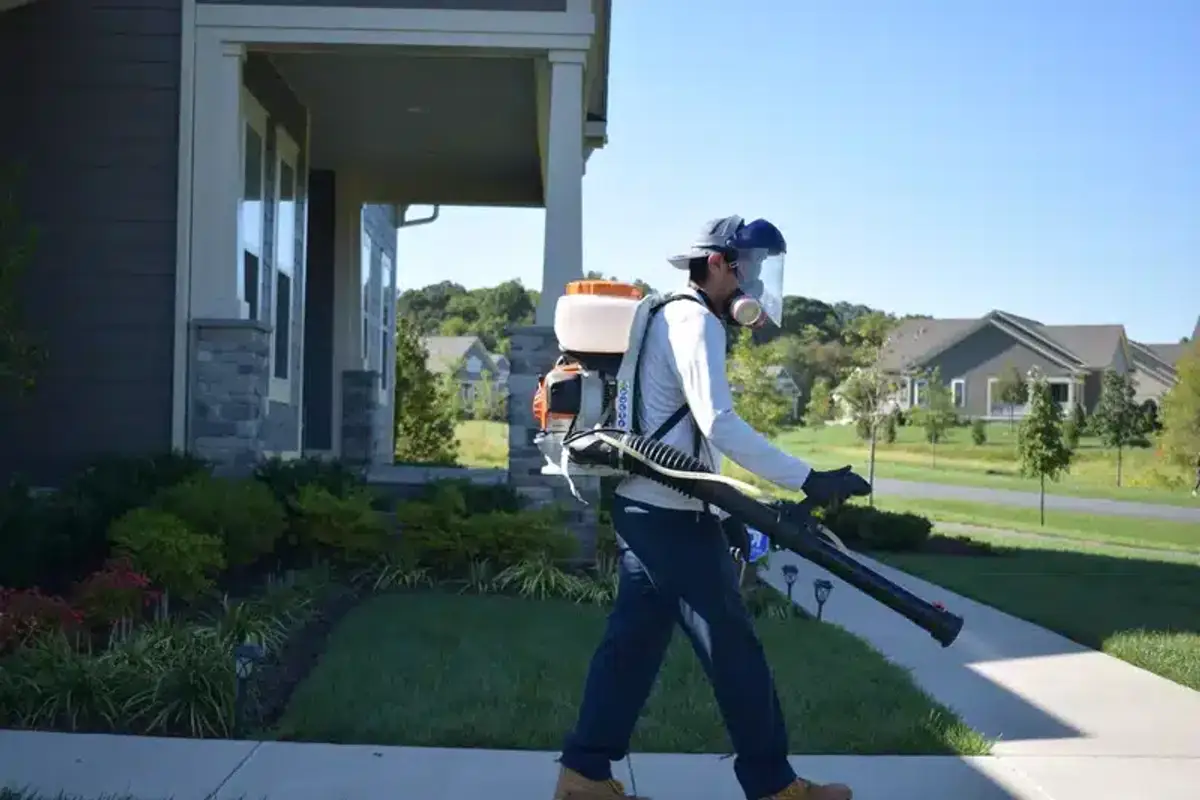
Products like cyfluthrin or deltamethrin can be applied around your home’s exterior. Focus on areas where centipedes are active rather than spraying over large areas. A perimeter treatment in late summer or early fall, before they move indoors, does the most good.
Chemical treatments alone give only short-term relief. You must combine them with moisture control and sealing for lasting results. Similar approaches work for other household pests that prefer damp conditions.
For best results, combine targeted treatments with the moisture control and sealing steps above.
Are House Centipedes Dangerous?
House centipedes look scary but pose very little risk to people. They have venom for catching prey, but Poison Control says their bite is mostly harmless to humans. Bites are rare because they would rather run than fight. If one does bite, expect mild pain like a bee sting and some redness that fades within a day or two. See a doctor for fever, signs of infection, or trouble breathing. Our guide on whether centipedes are dangerous covers bites, pets, and the larger outdoor species in detail.
Professional Centipede Control
Sometimes the best approach involves calling in professionals, especially for recurring problems or hard-to-reach areas.
When to Call a Pro
Get professional help when centipedes keep showing up after you’ve fixed moisture and sealed entry points, or when problems involve areas like crawl space voids. If you’re finding larger species like bark centipedes indoors, professional ID and treatment becomes more important. That’s usually the point where professional centipede control pays off, because we can treat the crawl space and wall gaps that store-bought sprays don’t reach.
What We Do
Our registered technicians start with a thorough inspection to find moisture sources, entry points, and centipede activity areas. We’ve removed 9 of the harshest chemicals from our options, focusing on products we’d use in our own homes.
Our approach includes interior treatment of baseboards and active areas, exterior perimeter work, and detailed advice for moisture control and sealing. We use non-repellent products that centipedes walk through without knowing, which works better than repellent sprays that just push them to other spots.
- Arlington and Alexandria: Older homes with foundation moisture issues are most common
- Brambleton and newer areas: Construction disturbs ecosystems, pushing pests indoors
- Areas near waterways: Properties with poor drainage need extra moisture management
- Seasonal patterns: Complaints spike during humid summers and when fall cooling drives centipedes inside
This regional knowledge lets us tailor our approach to local conditions for better long-term results.
Preventing Centipedes Long-Term
The best strategy is stopping centipedes from becoming a problem in the first place.
- Moisture Control: Keep indoor humidity below 50%, fix plumbing leaks fast, and ensure good airflow in basements and crawl spaces
- Seal Entry Points: Caulk cracks around basement windows, pipe holes, and door thresholds
- Outdoor Management: Keep a 3-foot plant-free zone around your foundation and use gravel instead of wood mulch
- Regular Upkeep: Clean gutters twice a year, check for new moisture sources, and monitor humidity in problem areas
Seasonal Upkeep
Before fall arrives, clear leaf litter from around your foundation and check door seals and window caulking. Keep firewood far from your house and check it before bringing pieces indoors.
Spring is a great time to review your outdoor drainage and make fixes before summer humidity peaks. These same steps help prevent other moisture-loving pests like termites and silverfish.
What to Expect
Be patient when working to get rid of centipedes. They’re great at finding tiny gaps and moisture sources you might miss.
Full removal might take weeks to months, especially with a large group. The key is sticking with moisture control, sealing, and treatments. Don’t expect instant results from sprays alone.
Seeing an occasional centipede doesn’t always mean a major problem. These solitary hunters often wander in from outside and may not have a breeding group in your home.
If you’re dealing with ongoing centipede problems, our team can help. Call us at 703-683-2000 or email info@bettertermite.com for expert guidance.