Cockroaches
Blattodea (Order)
Cockroaches are resilient, nocturnal insects that thrive in warm, humid environments. As one of the most common household pests, they contaminate food, spread bacteria, and trigger allergies and asthma in sensitive individuals.
Cockroach Identification Guide
Physical Characteristics
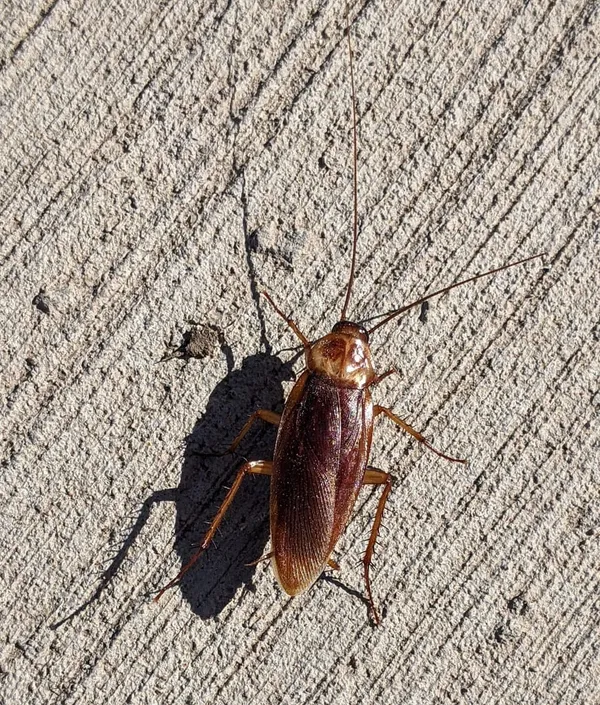
Cockroaches are flat, oval-shaped insects. They have long antennae and six spiny legs. Their size ranges from 1/2 inch to over 2 inches depending on the species. Most have wings, but not all species can fly. A waxy coating covers their bodies. This coating helps them resist many pesticides.
Common Species
-
German Cockroaches: Small, tan roaches with two dark parallel stripes behind the head. They are the most common indoor species.
-
American Cockroaches: Large, reddish-brown roaches that prefer warm, damp areas. You often find them in basements and sewers.
-
Oriental Cockroaches: Dark, glossy roaches often called “water bugs.” They prefer damp locations.
-
Brown-Banded Cockroaches: Small, light brown roaches with banding across their wings. A related species, Brown-Banded Roaches, shares similar characteristics.
Cockroach Behavior and Biology
A related species, Palmetto Bugs, shares similar characteristics. Cockroaches are active at night and will eat almost anything. They feed on food, paper, glue, and even soap. They reproduce quickly. Some species produce hundreds of offspring per year. A related species, American Roaches, shares similar characteristics.
These pests prefer warm, humid places. You often find them near water sources. They can survive for weeks without food and days without water. This makes them very hard to get rid of. A related species, Lobster Cockroaches, shares similar characteristics.
Health Concerns
A related species, Oriental Roaches, shares similar characteristics. Cockroaches carry bacteria like Salmonella and E. coli. They contaminate food and surfaces as they crawl around. Their droppings, shed skins, and saliva can trigger allergies and asthma attacks. Children are especially at risk. A related species, Asian Cockroaches, shares similar characteristics.
Note: This information is for educational purposes only. It is not medical advice. If you have health concerns related to pest exposure, please consult a doctor. A related species, Australian Cockroaches, shares similar characteristics.
How We Treat for Cockroaches
A related species, Spotted Mediterranean Cockroach, shares similar characteristics. We use a complete approach to eliminate cockroaches at every life stage. A related species, Florida Woods Cockroach, shares similar characteristics.
Initial Treatment
A thorough inspection finds where roaches hide in kitchens, bathrooms, and basements. It’s the first step on every job our Hyattsville pest control team runs. We apply gel baits in cracks and crevices. We use dust in wall voids and residual treatments in problem areas. These products work together to eliminate the entire population.
Ongoing Maintenance
We return for follow-up treatments to ensure complete elimination. This prevents new roaches from moving in. For severe infestations, we may recommend more frequent visits at first. How many follow-ups a job needs comes down to the species, so our cockroach pest control plan schedules return visits at one and three weeks for German roaches and leans on exterior perimeter work for the American and Oriental roaches coming in from outside. Our ongoing pest control plans keep cockroaches out year-round.
References
- Environmental Protection Agency. “Cockroaches.” EPA Pest Control. https://www.epa.gov/cockroaches
- Centers for Disease Control and Prevention. “Cockroaches and Your Health.” https://www.cdc.gov/healthyhousing/pests/cockroaches.html
- University of Kentucky Entomology. “Cockroach Control.” https://entomology.ca.uky.edu/ef614
Types of Cockroaches
Click on any species below to learn more about identification, behavior, and control methods.
American Roaches
Periplaneta americana
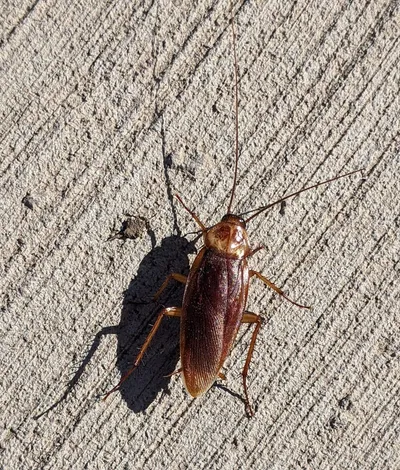
American roaches are the largest roaches found in homes, growing up to 2 inches long. They are reddish-brown with a yellowish pattern behind the head. They like warm, damp places like basements and crawl spaces.
View identification guide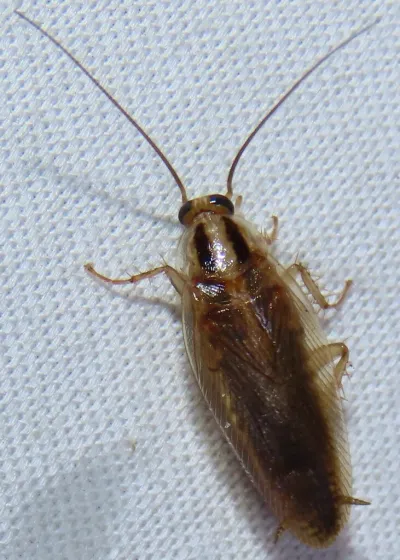
Asian Cockroaches
Blattella asahinai
Asian cockroaches are outdoor-dwelling roaches that closely resemble German cockroaches but are strong fliers attracted to lights at dusk, often entering homes through windows and doorways.
View identification guide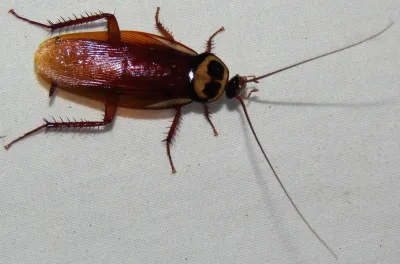
Australian Cockroaches
Periplaneta australasiae
Australian cockroaches are large, reddish-brown cockroaches with distinctive yellow markings on their pronotum and wing margins. Despite their name, they likely originated in Africa and are common in warm, humid areas of the southeastern United States.
View identification guide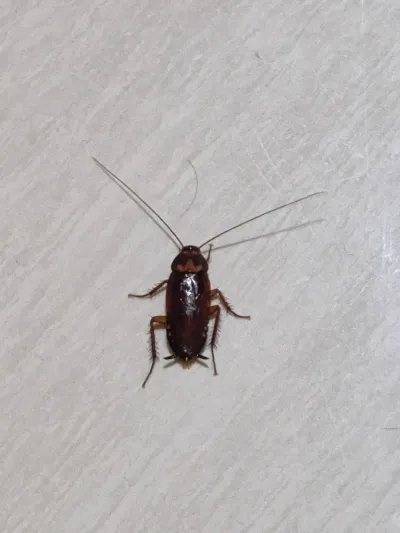
Brown Roaches
Periplaneta brunnea
Brown roaches are large cockroaches that closely resemble American roaches. They are reddish-brown, grow up to 1.5 inches long, and thrive in warm, humid environments like crawl spaces, basements, and attics.
View identification guide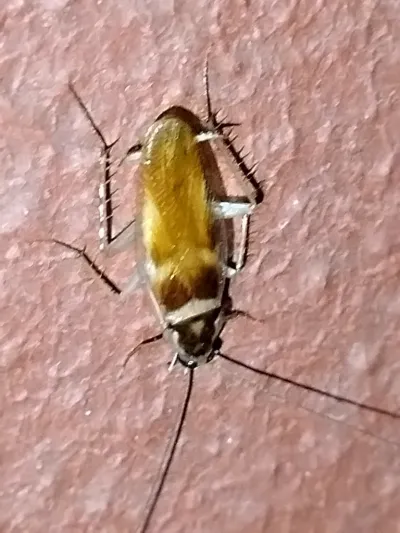
Brown-Banded Roaches
Supella longipalpa
Brown-banded cockroaches are small indoor roaches distinguished by the two light-colored bands across their wings and abdomen. Unlike German roaches, they prefer warm, dry locations throughout the home rather than just kitchens and bathrooms.
View identification guide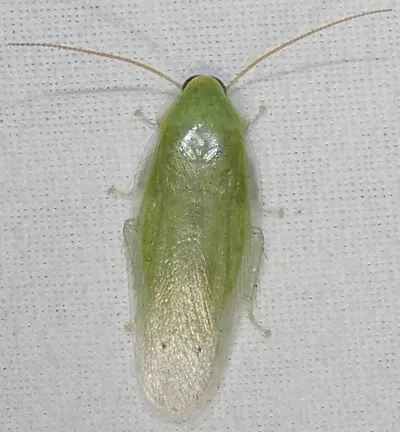
Cuban Cockroaches
Panchlora nivea
Cuban cockroaches are bright green, flying cockroaches also known as green banana roaches. They are primarily outdoor pests attracted to lights at night and rarely infest homes. Native to the Caribbean, they are now found throughout the Gulf Coast region.
View identification guide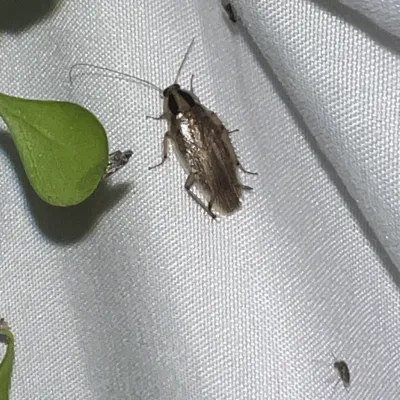
Field Cockroaches
Blattella vaga
Field cockroaches are outdoor roaches native to central Asia that have established populations in the southwestern United States. Often mistaken for German cockroaches, they enter homes seeking moisture during dry periods.
View identification guide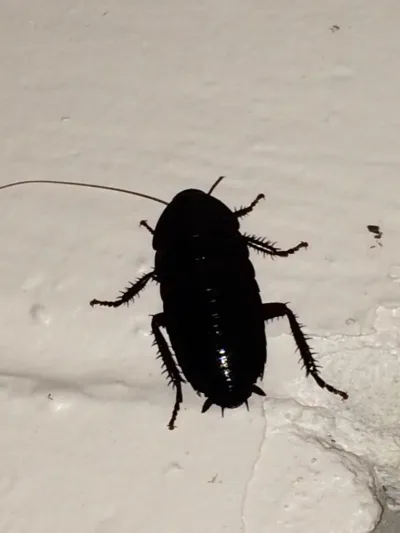
Florida Woods Cockroach
Eurycotis floridana
The Florida woods cockroach is a large, slow-moving roach known for its defensive spray that produces a foul odor. Also called the palmetto bug or stink roach, it lives outdoors in humid environments across the southeastern United States.
View identification guide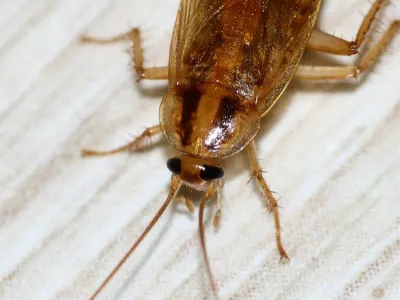
German Roaches
Blattella germanica
German cockroaches are the most common indoor roach species in the United States, known for their rapid reproduction and preference for warm, humid environments like kitchens and bathrooms.
View identification guide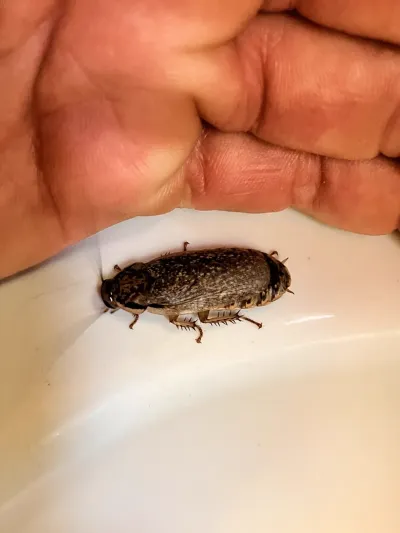
Lobster Cockroaches
Nauphoeta cinerea
Lobster cockroaches, also called cinereous or speckled cockroaches, are medium-sized roaches native to northeastern Africa. They have mottled gray-brown coloring and are sometimes found in warm buildings, warehouses, and food storage facilities across North America.
View identification guide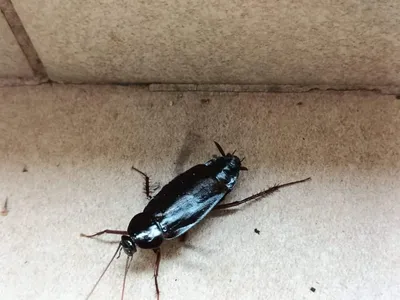
Oriental Roaches
Blatta orientalis
Oriental cockroaches, also known as water bugs or black cockroaches, are large, dark, glossy roaches that prefer cool, damp environments like basements, sewers, and crawl spaces.
View identification guide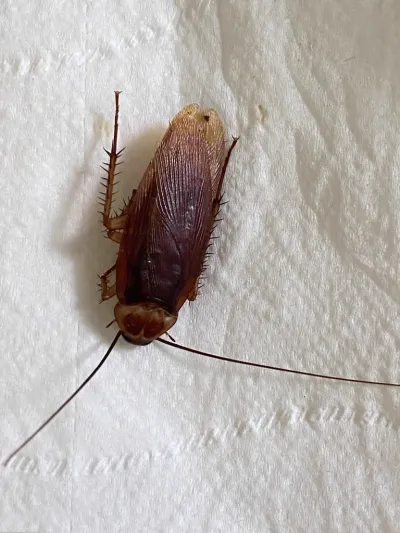
Palmetto Bugs
Periplaneta americana
Palmetto bug is a regional name for large cockroaches, most commonly the American cockroach. These reddish-brown pests thrive in warm, humid environments and often invade homes through drains, cracks, and gaps around doors.
View identification guide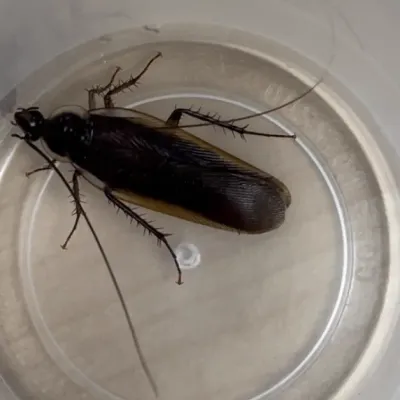
Pennsylvania Wood Roaches
Parcoblatta pennsylvanica
Pennsylvania wood roaches are outdoor cockroaches found in wooded areas of eastern North America. They rarely survive indoors and enter homes by accident on firewood or when flying toward lights.
View identification guide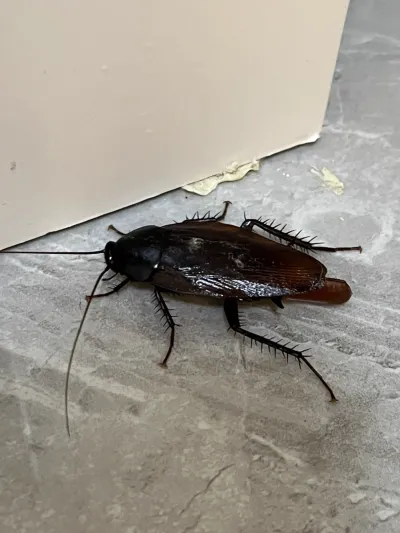
Smokybrown Roaches
Periplaneta fuliginosa
Smokybrown roaches are large, strong-flying cockroaches with a uniform dark mahogany color. They thrive in warm, humid environments and are common in the southeastern United States, often found in attics, crawl spaces, and around landscaping.
View identification guide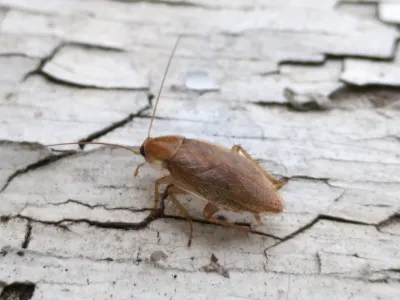
Spotted Mediterranean Cockroach
Ectobius pallidus
The spotted Mediterranean cockroach is a small, pale outdoor cockroach native to Europe that has spread to parts of North America. Unlike pest cockroaches, it lives outdoors and rarely survives inside homes.
View identification guide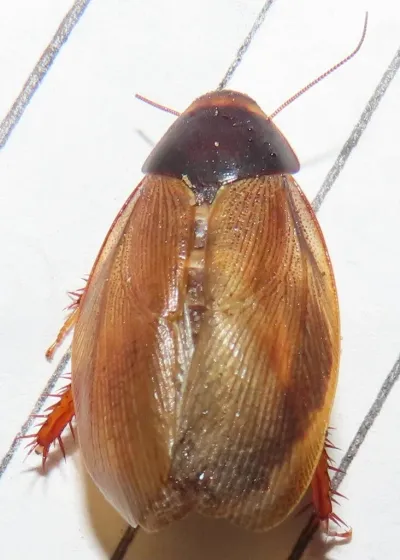
Surinam Cockroach
Pycnoscelus surinamensis
The Surinam cockroach is a burrowing, soil-dwelling roach known for its shiny dark body and unique all-female reproduction. Often found in greenhouses, potted plants, and warm tropical regions.
View identification guide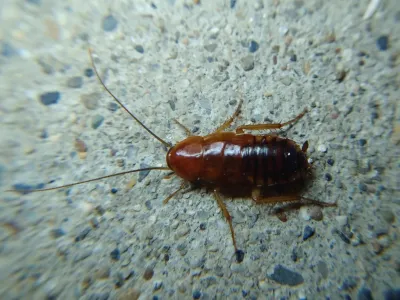
Turkestan Cockroaches
Blatta lateralis
Turkestan cockroaches are outdoor-dwelling roaches that have become one of the most common peridomestic cockroach species in the southwestern United States. Also known as red runner roaches, they prefer dark, moist outdoor habitats like water meter boxes and irrigation systems.
View identification guideCommon Questions about Cockroaches
How do I know if I have cockroaches?
+
Look for live or dead roaches, droppings that look like coffee grounds, and egg cases. You may also notice a musty odor or smear marks on walls. Cockroaches come out at night. If you see one during the day, you likely have a large infestation.
Are cockroaches dangerous?
+
Yes, cockroaches pose health risks. They carry bacteria like Salmonella and E. coli. They contaminate food and surfaces. Their droppings, shed skins, and saliva can trigger allergies and asthma, especially in children.
Why do I have cockroaches if my house is clean?
+
Even clean homes can attract cockroaches. They enter through cracks, pipes, or hitchhike in boxes and bags. They seek warmth, moisture, and any food source. This includes pet food, crumbs, glue, and paper.
What's the difference between German and American cockroaches?
+
German cockroaches are smaller, about 1/2 to 5/8 inch. They are tan with two dark stripes and live indoors near kitchens and bathrooms. American cockroaches are much larger, up to 2 inches. They are reddish-brown and often enter from sewers or basements.
Can I get rid of cockroaches myself?
+
DIY treatments rarely work because cockroaches hide in hard-to-reach areas and reproduce quickly. Store-bought sprays may kill visible roaches but miss the source. Professional treatment targets the entire population.
How long does cockroach treatment take?
+
You will see results within days. Complete elimination typically takes 2-4 weeks as the treatment works through the population. Severe infestations may require multiple visits.
Explore Other Pest Categories
Browse our comprehensive pest library for identification guides and control information.



With five years of hands-on experience in the pest control industry, George Schulz is a registered technician with the Virginia Pest Management Association and a proud third-generation professional in a family business that's been protecting homes for over 58 years.
Find Local Cockroache Control Services
We provide professional cockroaches control throughout Virginia, Maryland, and the DC Metro area.
Local Cockroaches Help
Dealing with cockroaches at home? Our licensed technicians provide pest control across Northern Virginia and Maryland.
 Our serviceRoach Control
See Roach Control
Our serviceRoach Control
See Roach ControlPest Control near you
- Alexandria Pest Control
- Annandale Pest Control
- Arlington Pest Control
- Ashburn Pest Control
- Bethesda Pest Control
- Bowie Pest Control
- Burke Pest Control
- Centreville Pest Control
- Chantilly Pest Control
- Chevy Chase Pest Control
- Clinton Pest Control
- College Park Pest Control
- Columbia Pest Control
- Crofton Pest Control
- Ellicott City Pest Control
- Fairfax Pest Control
- Fairfax Station Pest Control
- Falls Church Pest Control
- Fort Washington Pest Control
- Frederick Pest Control
- Fredericksburg Pest Control
- Gainesville Pest Control
- Gaithersburg Pest Control
- Germantown Pest Control
- Glen Burnie Pest Control
- Great Falls Pest Control
- Greenbelt Pest Control
- Herndon Pest Control
- Hyattsville Pest Control
- Kensington Pest Control
- Laurel Pest Control
- Leesburg Pest Control
- Lorton Pest Control
- Manassas Pest Control
- McLean Pest Control
- Oakton Pest Control
- Olney Pest Control
- Oxon Hill Pest Control
- Potomac Pest Control
- Reston Pest Control
- Rockville Pest Control
- Silver Spring Pest Control
- South Riding Pest Control
- Springfield Pest Control
- Stafford Pest Control
- Sterling Pest Control
- Takoma Park Pest Control
- Upper Marlboro Pest Control
- Vienna Pest Control
- Waldorf Pest Control
- Warrenton Pest Control
- Winchester Pest Control
- Woodbridge Pest Control
- All service areas →