
Knowing the difference between a brown recluse vs wolf spider can save Northern Virginia homeowners from panic. Searchers ask it both ways — wolf spider vs brown recluse, or simply “is this one or the other” — and this guide answers it in both directions. After years in pest control across the DC metro area, I’ve seen many spider misidentifications that cause needless fear.
Most suspected brown recluse sightings in our region turn out to be harmless wolf spiders. Knowing the key differences helps you figure out which spider you have and whether you need pest control help.
During hundreds of home inspections across the DC area, I’ve found many wolf spiders but never a confirmed brown recluse. This makes correct identification even more important.
Overview: Two Very Different Spiders
Brown recluse spiders belong to the family Sicariidae. They’re known for their potentially harmful venom and shy behavior.
Wolf spiders belong to the family Lycosidae. They’re active hunters with great vision and unique maternal behavior (mothers carry babies on their backs).
These two families are very different in how they look, where they live, and how they act.
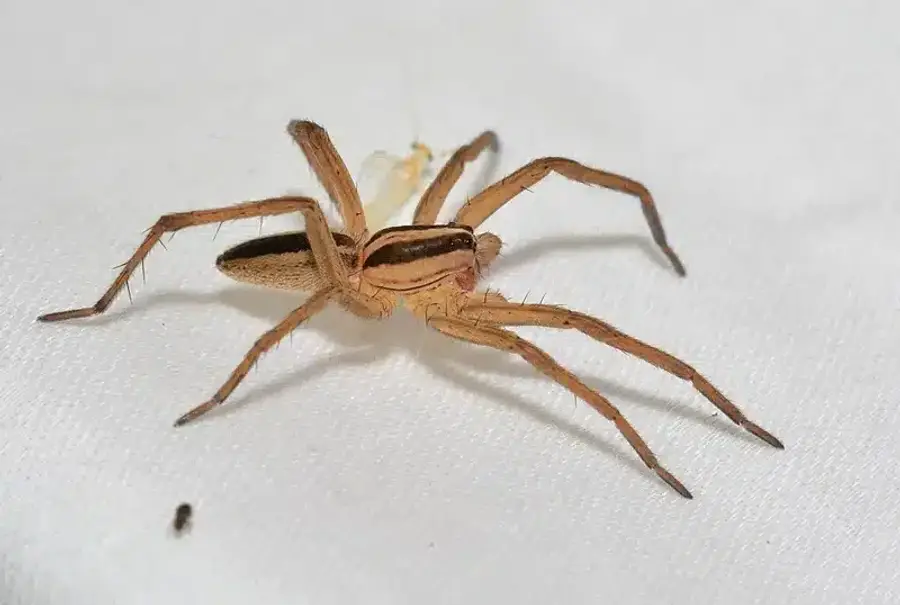
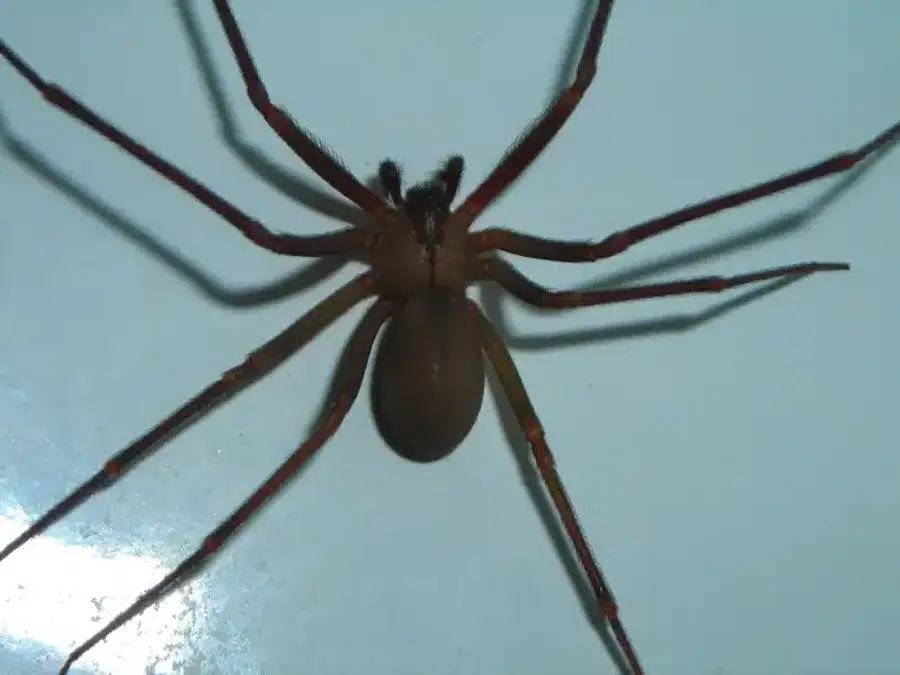
Here’s a quick breakdown of the key traits for each species.
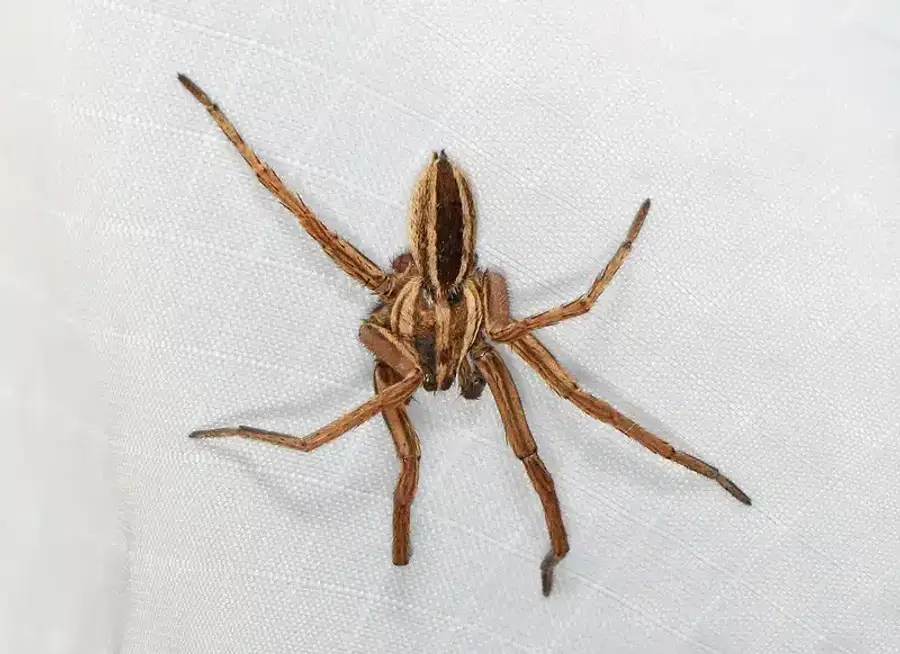
Eyes: 8 eyes in 3 rows (look like headlamps). Body: 13-38mm, hairy, striped or banded. Behavior: Active hunter, doesn’t build webs to catch prey. Bite: Like a bee sting, heals in days. In our area: Very common throughout Virginia, Maryland, and DC.
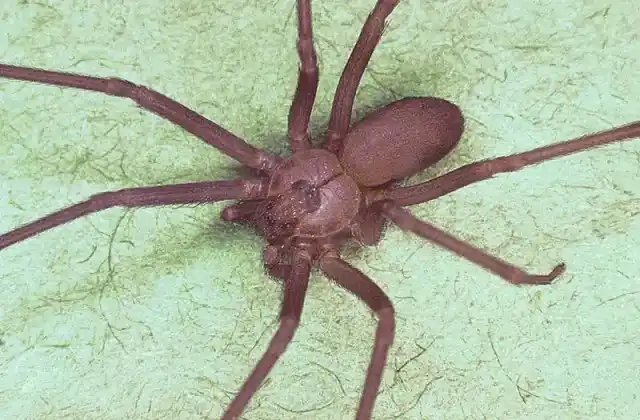
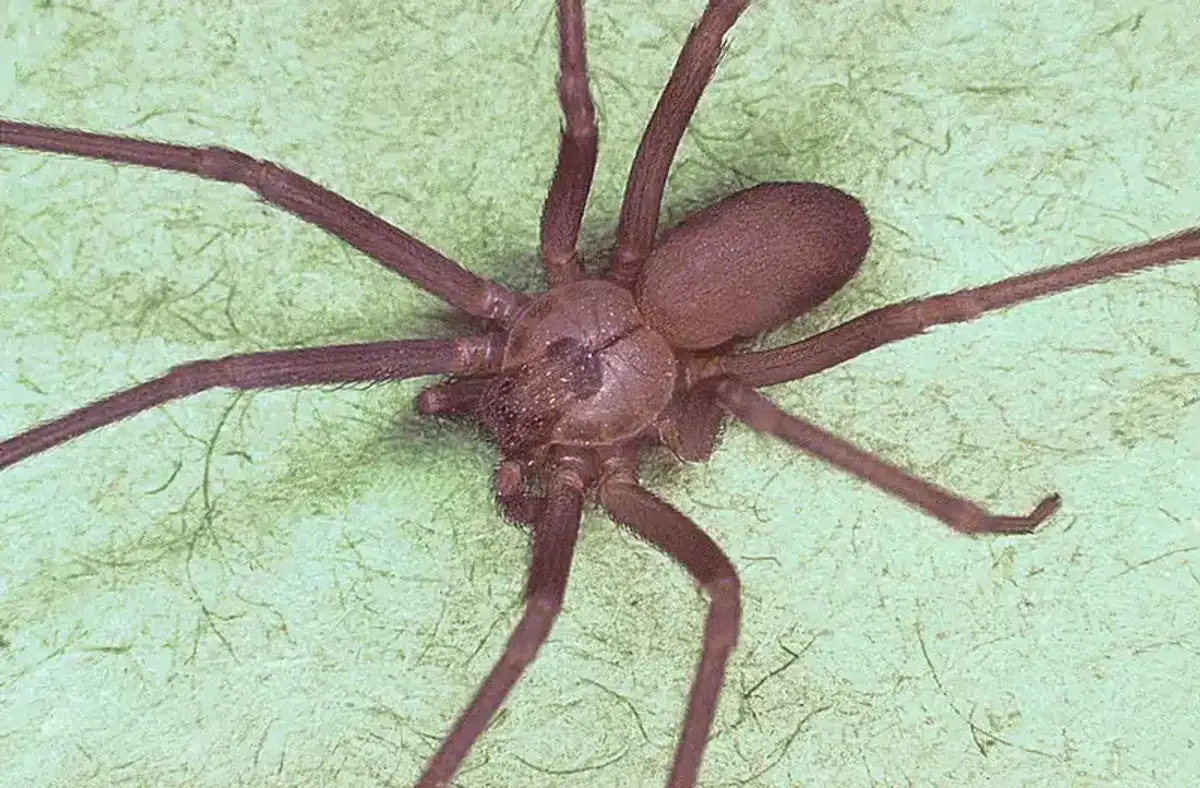
Eyes: 6 eyes in 3 pairs (U-shape pattern). Body: 8-10mm, smooth, uniform tan to brown, possible violin mark. Behavior: Shy, hides in dark undisturbed areas. Bite: Usually painless at first, can rarely cause tissue damage. In our area: Extremely rare, almost never found in Northern Virginia.
Difference Between a Wolf Spider and a Brown Recluse: Side-by-Side Table
If you only have a few seconds with the spider, this table is the fastest way to settle it.
| Wolf Spider | Brown Recluse | |
|---|---|---|
| Eyes | 8 (two large, glow at night) | 6 (three pairs in a U) |
| Markings | Banded or striped legs, no violin | Uniform color, possible violin mark |
| Hair | Very hairy, thick leg spines | Smooth, fine hairs |
| Size | 13-38mm body | 8-10mm body |
| Web | No capture web | Small irregular web (not for prey) |
| Bite | Mild pain and swelling | Can cause tissue damage (about 10% of cases) |
| In VA, MD and DC | Very common | Not established; far SW Virginia only |
Where Each Species Lives
According to Virginia Tech Extension, the brown recluse’s natural range barely touches the far southwestern tip of Virginia. Their main habitat is in south-central and midwestern states.
Wolf spiders live worldwide and thrive all across Virginia, Maryland, and DC. Chesapeake Bay Program confirms they’re found throughout our entire area.
This means any spider you spot in Northern Virginia is almost certainly a wolf spider. The rare brown recluse finding in our region would be a hitchhiker that rode in on household goods or firewood, not part of a local population.
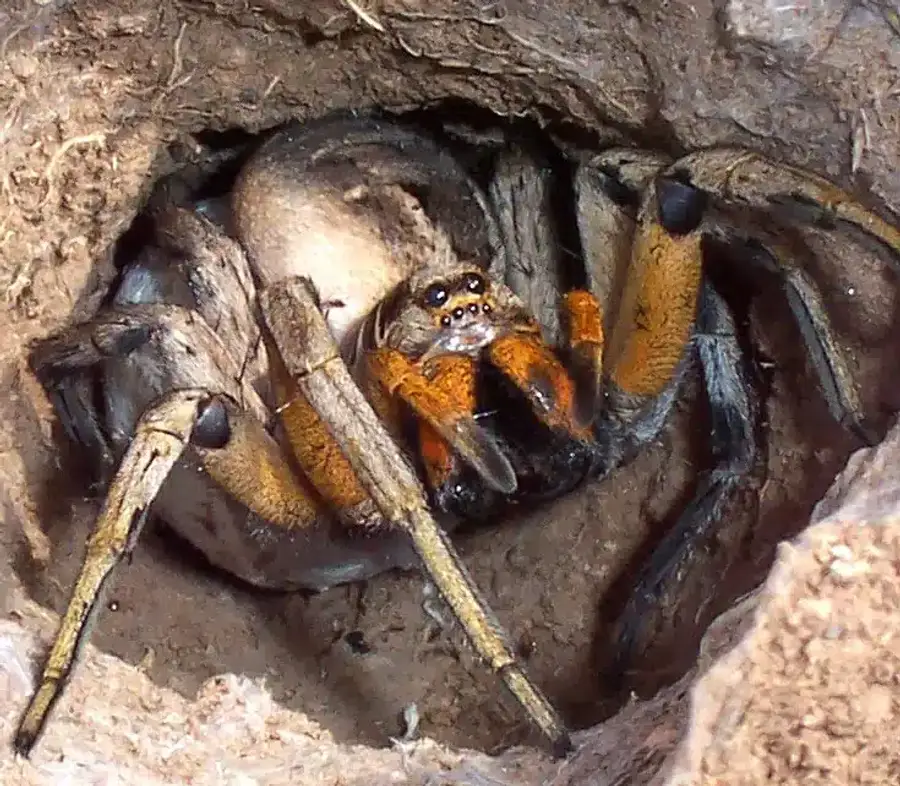
Indoors, the two use completely different spaces. Wolf spiders turn up in lawns, gardens, basements and garages, and you’ll often see one running across a floor at night. Brown recluses, where they do exist, stay behind stored boxes, under loose bark, in joists and in wall voids, and they spin small messy webs they never use to catch prey. If you find a brown spider in the open, in the DC metro region, it is almost certainly a wolf spider or a house spider.
Eye Pattern: The Best Way to Tell Them Apart
The most reliable ID method is the eye pattern. This takes a close look, ideally with a magnifying glass or phone camera zoom.
Wolf Spider Eyes
Wolf spiders have eight eyes in three rows. The bottom row has four small eyes, the middle row has two large eyes, and the top row has two medium eyes. This gives them a “headlamp” look. The two large middle eyes carry a reflective layer, so they shine green when you point a flashlight at them at night.
Brown Recluse Eyes
Brown recluses have six eyes in three pairs forming a U-shape. This includes one front pair and two side pairs. University of California Riverside notes that only about 1% of U.S. spider species have this six-eye setup, which makes it a very reliable identifier.
Body Markings
Body markings give another clear way to tell these spiders apart. Wolf spiders have obvious stripes or chevron patterns on their bodies and legs.
The brown recluse may have a dark violin-shaped mark on its front body section, with the “neck” pointing toward the rear. But Burke Museum warns that many spiders have violin-like marks, so this alone isn’t enough for ID.
The key rule: brown recluses never have stripes or banding on their legs or body. Their color stays uniform tan to dark brown all over, and their legs are plain and light-colored. Any stripes automatically rules out a brown recluse.
Size Comparison
Size differences are easy to spot when you know what to expect. Brown recluse bodies measure about 8-10mm (about 3/8 inch) with a leg span about the size of a quarter coin.
Wolf spiders are much bigger and bulkier. Their bodies range from 13-38mm (0.5-1.5 inches) with leg spans reaching 3-4 inches in larger species.
Wolf spiders also look noticeably hairy with thick spines on their legs. Brown recluses have fine hairs and look smoother.
How They Behave
Wolf spiders are active hunters that roam around looking for prey instead of building webs. This hunting style often brings them near people, especially around outdoor lights that draw insects.
Brown recluses are very shy and avoid people whenever they can. They prefer hiding in quiet, undisturbed spots and only come out when they have to.
Neither spider is aggressive toward people. Both will only bite when directly threatened or accidentally pressed against skin.
When Each Spider Shows Up: Seasonal Patterns
Wolf spider activity peaks in late summer and fall, when cooling temperatures push them indoors. Sightings climb noticeably through September and October, which is when most of our spider calls come in.
Brown recluses stay active year-round inside heated structures. Encounters with them rise from July through September, as rising heat drives them out of hiding spots and into living areas.
The practical takeaway for our region: a fall spider sighting is far more likely to be a wolf spider than a recluse.
If you’re still not sure what spider you’re looking at, our team can help with a quick ID.
Wolf Spider Bite vs Brown Recluse Bite
This is the biggest concern for most homeowners, and it is where the two species genuinely differ.
Brown Recluse Bites
Cleveland Clinic describes brown recluse bites as usually painless at first. Redness and burning develop 2-8 hours later. About 10% of cases may show tissue damage. Most bites heal without treatment, though bad cases can take months. Systemic effects are possible, especially in children and the elderly. There is no antivenom available in the U.S., so treatment focuses on wound care.
Wolf Spider Bites
Wolf spider bites are not dangerous. The venom causes localized pain and swelling similar to a bee sting. Clean the wound and apply a cold pack; it clears up within a few days with no lasting effects.
A Note on Misdiagnosed Bites
Many skin conditions, MRSA infections in particular, get wrongly blamed on brown recluse bites, especially in places where the spider does not live. If a skin lesion appears in Virginia, Maryland or DC and nobody saw a spider, other causes are far more likely than a recluse bite.
Why Brown Recluses Are So Rare in Virginia, Maryland and DC
Maryland DNR confirms that brown recluses can’t survive our regional winters and that there are no native Maryland populations. Most reported sightings turn out to be misidentified native species or rare hitchhikers that arrived in boxes or shipments.
The UVA Poison Center has never treated a confirmed brown recluse bite despite serving areas closest to the species’ native range. This medical fact shows how rare actual encounters are in Virginia.
Key Differences at a Glance
- Eye pattern: Wolf spiders have 8 eyes in 3 rows. Brown recluses have 6 eyes in 3 pairs.
- Body markings: Wolf spiders show stripes or chevrons. Brown recluses have uniform coloring.
- Size: Wolf spiders are bigger and hairier.
- Behavior: Wolf spiders roam and hunt. Brown recluses hide in quiet spots.
- Season: Wolf spiders peak in fall. Brown recluses peak July through September, indoors.
- Local presence: Wolf spiders are common here. Brown recluses are extremely rare.
How to Keep Spiders Out
Stopping spiders from getting into your home takes habitat changes and targeted treatments. Seal cracks around foundations, cut down clutter, and fix moisture problems.
Reduce exterior lighting that pulls in flying insects (spider food). Treating for other pest issues also makes your property less appealing to spiders.
- Seal entry points: Caulk cracks around foundations, windows, and doors, and weatherstrip doors
- Cut exterior lighting: Switch to yellow bulbs or motion sensors to reduce insect attraction
- Remove clutter: Clear storage areas, basements and garages where spiders like to hide
- Trim plants and move wood: Keep branches off the siding and store firewood 20+ feet from the house
- Fix moisture: Repair leaks and improve ventilation in basements and crawl spaces
- Regular cleaning: Vacuum webs, egg sacs and the spiders themselves, and empty the bag outside
Professional Treatment: What We Actually Do
Our spider work is two steps that depend on each other.
Step 1: Dewebbing. We use a webster tool to strip visible webs off eaves, porches, entry points and other spots where spiders set up. That removes the current population along with its egg sacs.
Step 2: Perimeter treatment. We apply non-repellent products along the foundation and key entry areas, creating a barrier that catches spiders on their way in. For brown recluses in wall voids — rare here, but it happens with hitchhikers — dust treatments are the right tool.
Our tri-annual programs (three times per year) keep that barrier active through the seasonal spider peaks, with fresh dewebbing and reapplication at every visit.
When to Call a Professional
Call for help when:
- You’re finding spiders regularly despite prevention efforts
- You need help confirming the species
- You’re seeing spiders in wall voids or hard-to-reach areas
- Multiple pest species are active at the same time
Proper ID matters because the treatment changes with the species. Whether you’re dealing with common wolf spiders or want a recluse ruled out, our licensed technicians provide expert ID and effective treatment for homeowners in Arlington, Alexandria, Bethesda, Reston, and across the Virginia-Maryland region, including pest control in Warrenton. Call us at 703-683-2000 or email info@bettertermite.com for a consultation.