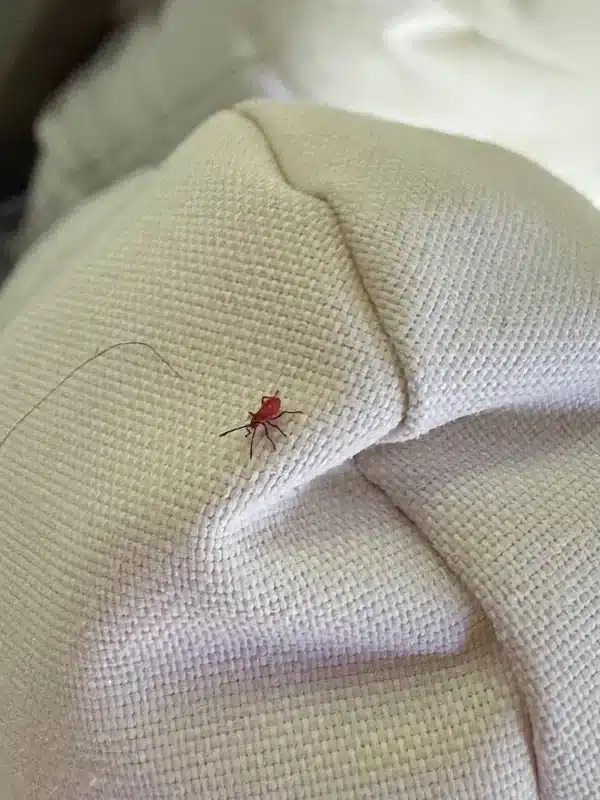
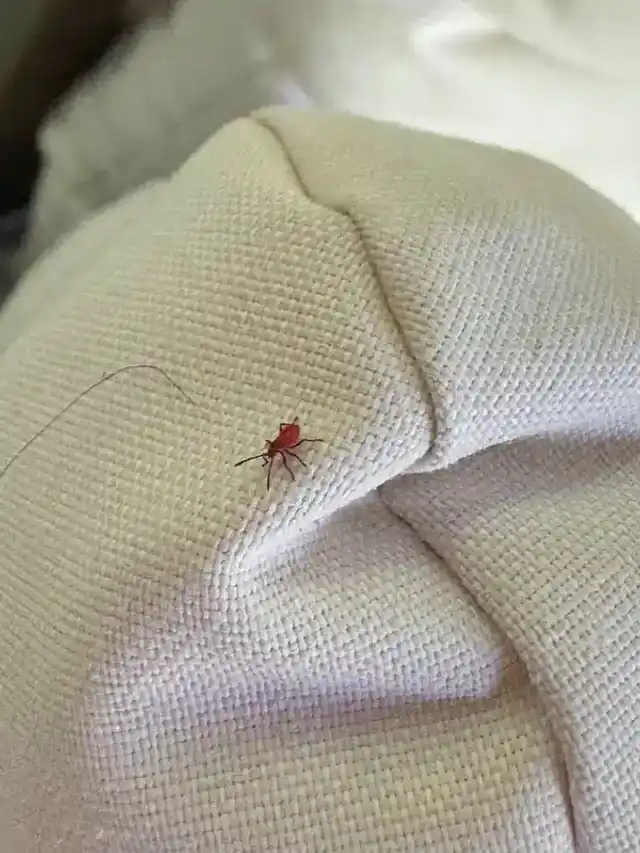

If you’ve spotted tiny red bugs crawling around your home, you’re probably wondering if they’re dangerous. The short answer: most are harmless. What homeowners call “tiny red spiders” are usually clover mites, not spiders at all.
In my years as a licensed tech in the DC metro area, I’ve seen clover mites show up in huge waves during spring and fall, especially on the sunny sides of homes. One customer put it well: they’re easily crushed and leave a red smear when you step on them. That staining is actually the biggest problem they cause.
What Are These Tiny Red Bugs?
Most tiny red bugs around your home fall into one of four types. Knowing which one you have tells you whether they’re a threat and how to handle them.
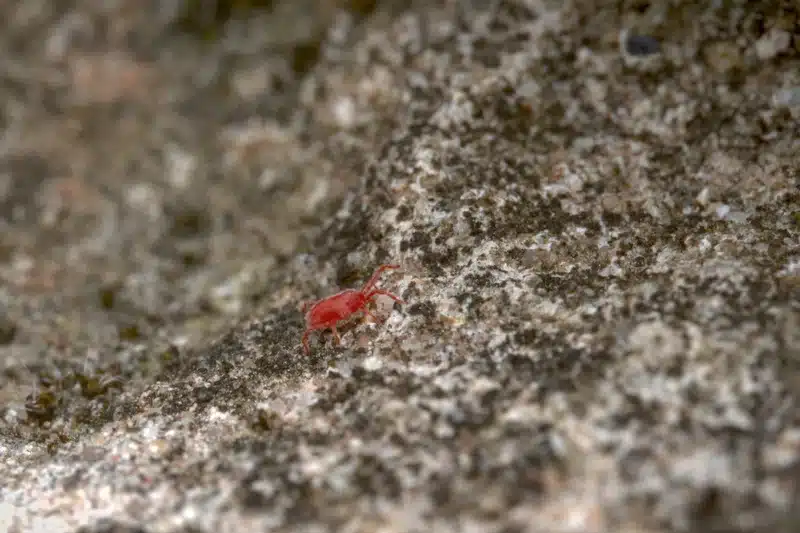
Clover mites are the most likely culprit. They measure about 0.75 mm and have long front legs that extend well past their body. They don’t bite, sting, or spread disease.
They gather in large numbers on outside walls and windowsills, especially on sunny, south-facing surfaces. They’re drawn to thick, well-fed grass growing close to foundations.
Spider mites are even smaller at 0.4-0.5 mm. The twospotted spider mite can look brick-red at certain stages. These pests focus on your plants, not your home.
You’ll find them on the undersides of leaves, often with fine webbing around them. They cause spots and yellowing on plants but pose no threat to people or pets.
Chiggers are the only common red mites in our area that actually bite. These tiny larvae attach to skin and feed on digested skin cells, causing itchy welts that can last 1-2 weeks. However, chiggers don’t spread disease in the Mid-Atlantic area.
Unlike clover mites that cluster on buildings, chiggers live in tall grass and weedy areas. They’re more of a hiking concern than a home problem.
Red velvet mites are much larger at 2-4 mm and easy to tell apart by their fuzzy, velvety look. They show up most often after spring rains on patios and soil. They rarely sting and mostly keep to themselves.
Here’s a quick comparison to help you figure out which type you have.
| Clover Mites | Spider Mites | Chiggers | Velvet Mites | |
|---|---|---|---|---|
| Size | 0.75 mm | 0.4-0.5 mm | 0.2 mm | 2-4 mm |
| Where Found | Walls, windowsills | Plant leaves | Tall grass | Soil, patios |
| Bites? | No | No | Yes | No |
| Treatment | Exclusion | Plant care | Avoidance | Usually none |
Small Red Spider or Mite? Start With Size
If you can barely see it, it’s a mite. If you can clearly see eight legs and a two-part body, it’s a true spider (covered below). Under a magnifying glass, a clover mite’s front pair of legs is much longer than the rest, per Penn State Extension. According to the University of Florida, all clover mite adults reproduce without mating, which is how a lawn goes from a few mites to thousands so fast.
Are They Dangerous?
Most tiny red bugs pose little risk to your family.
Clover mites can’t bite, sting, or make you sick. Their only real problem is staining. They leave red marks on paint, curtains, and papers when crushed.
Spider mites are harmless to people and pets. So if you’re asking whether red spider mites are harmful to humans, the answer is no. They only damage plants, where they can cause real problems for gardens if left alone.
Chiggers cause the most trouble with itchy bites that last 1-2 weeks. Scratching can lead to infection, but they don’t carry disease in our area.
University of Maryland Extension confirms that clover mites are plant-feeding mites that can’t bite or sting people. They pose no direct health threat and don’t spread disease.
Are Red Spiders Poisonous?
Strictly speaking, no spider is poisonous. Some are venomous, which means they inject venom with a bite. The real red spiders you might meet here are big enough to see eight legs and a two-part body, so you won’t mix them up with a pinhead-sized mite for long.
- Woodlouse spider (Dysdera crocata). This is the red spider we find most in Northern Virginia and Maryland homes. It has a dark red front half, red legs, a shiny tan belly, and large fangs. It hunts pill bugs in damp basements, garages, and under mulch. It will bite if you pick it up, but the bite is mild. See our woodlouse spider guide for photos.
- Red house spider (Nesticodes rufipes). Females are 1/5 to 1/3 inch with a round red belly and reddish legs, per BugGuide. It lives in warm climates and builds messy webs in dark corners and under furniture, which is why so many “tiny red spider Florida” searches turn up this one. It isn’t considered harmful.
- Red widow (Latrodectus bishopi). It’s a true widow, a close cousin of the black widow, but it lives only in the sand pine scrub of central and south Florida. You won’t find one in a DC-area home. Our red widow page covers its range.
A review of 16 confirmed woodlouse spider bites in the journal Toxicon called the bites “virtually innocuous.” The main symptom was minor pain that usually lasted less than an hour. The authors think most of that pain comes from the fangs piercing the skin, not the venom.
For the spiders in our area that do deserve respect, see our list of poisonous spiders in Virginia.
Tiny Red Spiders in the House: What It Means
A tiny red spider in the house is almost always a clover mite that wandered in from the lawn. They come through gaps around windows and siding on the sunny side of the house. Once inside they don’t feed. Penn State Extension notes they die within a few days from drying out, so the ones on your sill are strays, not a nest.
Red “Baby Spiders” on Your Wall
A lot of people search for “red baby spiders” because the bugs are so small and move in a crowd. Young clover mites are bright red and come off the lawn by the hundreds. Baby spiders don’t march across a sunny brick wall in a group like that. If the “babies” are on a warm wall in April or October, you’re looking at clover mites.
Daren, one of our technicians, runs a lot of these calls every spring. He says nine times out of ten the customer thinks the red specks are ticks, because both are arachnids and look alike at a glance. The tell is where they are. Ticks wait on grass tips and try to attach to skin. Clover mites crawl by the hundreds across a warm wall or patio and ignore you. Daren also points people back to the yard. The waves really pop after a lawn crew puts down nitrogen fertilizer, so he asks customers to have their lawn company treat the grass where the mites are breeding.
If the red mites are fast, bright red, and running across your patio or sidewalk in spring, they may be concrete mites instead. NC State Extension notes these feed on pollen and small insects. Like clover mites, they stain when you crush them.
How to Tell Them Apart
Where you find these bugs is the biggest clue for ID.
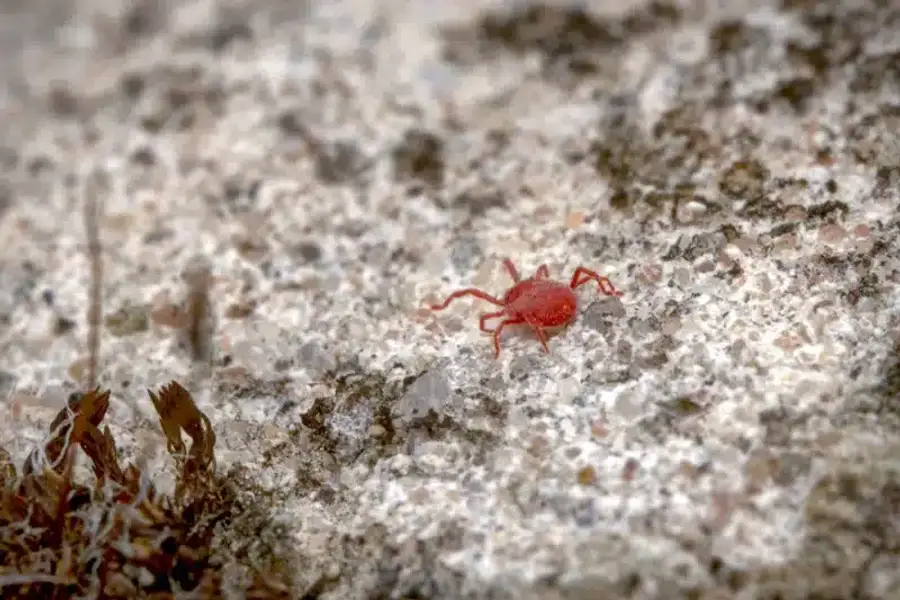
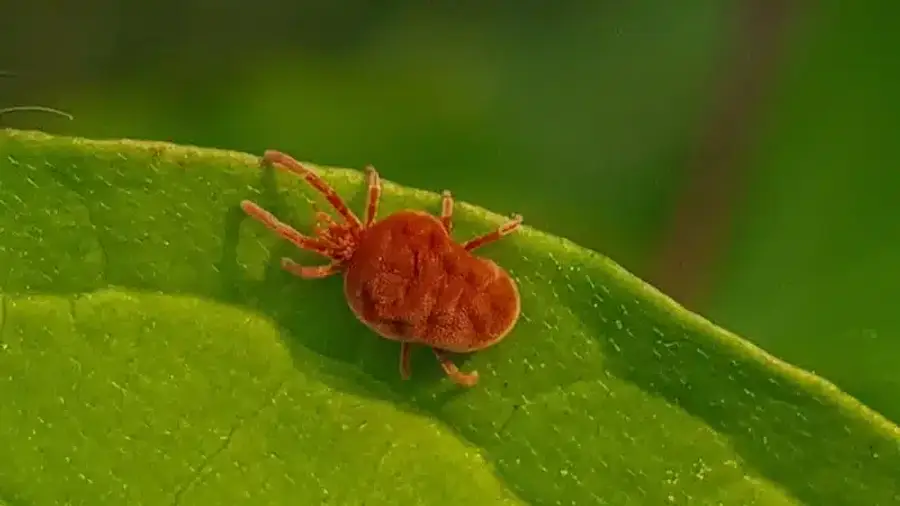
Clover mites gather on outside walls, especially on sunny south-facing surfaces where grass meets the foundation. Their long front legs, about twice their body length, are the key feature. No actual spider has legs like this.
Spider mites stay on plants. Look for fine webbing and tiny spots on the undersides of leaves. They often show two dark spots on their sides.
Chiggers are almost too small to see at 0.2 mm. You’ll feel their bites before you spot them, usually around ankles, waistlines, and other spots where clothing fits tight.
When They’re Most Active
In the DC metro area, these mites follow clear seasonal patterns.
March through May brings the first big wave of clover mites as temps warm up. Their eggs spend the winter in concrete cracks, under tree bark, and in gaps in building walls, then hatch once temperatures pass about 45°F, per Penn State Extension. Females can lay over 70 eggs at a time along foundations and in lawn thatch, leading to sudden population spikes. Spider mite and chigger activity stays low during cool spring weather.
Hot summer weather above 85 degrees pushes clover mites into dormancy. But this is peak season for spider mites on dry, stressed plants and for chiggers in outdoor areas. Spider mite numbers can double every week during hot, dry stretches.
September and October trigger a second wave of clover mites as temps cool. This fall surge is often when homeowners notice the worst invasions. Chigger and spider mite activity drops off with cooler nights.
How to Get Rid of Them
Treatment depends on which type you’re dealing with.
Indoors: Vacuum with a HEPA bag or blot with a damp cloth. Don’t crush them because they’ll stain. Seal cracks around foundations, windows, and doors with caulk. Install or fix window screens.
Outdoors: The best long-term fix is an 18-24 inch plant-free strip between grass and your foundation, using mulch or gravel. This removes the moist habitat clover mites need. Avoid over-fertilizing lawn areas near the house: outbreaks often follow heavy lawn fertilization, notes the University of Missouri Extension, and heavy feeding can leave grass blades silvered or bronzed.
Not sure they’re clover mites? Press clear tape on a few and look with a magnifying glass. Tiny red bodies with extra-long front legs confirm it.
Plant care first: Keep plants watered during dry spells and avoid too much nitrogen fertilizer. Strong water sprays under leaves knock many mites off and raise humidity, which slows them down.
When sprays are needed: Insecticidal soaps or miticides work better than broad-spectrum products, which can actually make spider mite problems worse by killing the bugs that eat them.
For both types, research backs up these approaches.
University of Kentucky research found that female clover mites can lay over 70 eggs per cycle, placing them in sheltered spots along foundations. Virginia Tech Extension shows that forceful water sprays can knock spider mites off plants while raising humidity that slows their growth.
Prevention Tips
Stopping mites before they move in is easier than treating them after.
- Foundation strip: Keep an 18-24 inch plant-free zone using mulch or gravel
- Lawn care: Don’t over-fertilize grass near the house
- Seal gaps: Caulk cracks around foundations, windows, and doors
- Screens: Install or repair window screens to block entry
- Drainage: Fix moisture problems that draw mites to the area
For spider mites on plants, water well during dry spells and keep good air flow around plants. Mowing regularly and clearing leaf litter reduces humidity that supports mite numbers.
Common Myths About Tiny Red Bugs
Myth: They’re baby black widows. Most aren’t even spiders. Dangerous spider species don’t look red as juveniles.
Myth: Large numbers mean a major problem. Clover mites often show up in big waves that pass on their own as weather changes.
Myth: You always need chemicals. Many tiny red bug problems clear up with habitat fixes and sealing entry points. No spray needed.
When to Call a Pro
Most tiny red mite problems can be handled on your own. But call a licensed tech when:
- Large numbers keep getting inside despite sealing and exclusion work
- You’re not sure what type of mite you have
- Spider mites are hurting valuable landscaping
- The problem keeps coming back season after season
The worst clover mite house Daren has seen had an off-white stone patio so covered it looked like a moving sea of red, with the customer’s daughter’s wedding coming up. Treating around the house wasn’t enough. He went back week after week for three or four weeks and treated the whole yard the way he would for a mosquito job to bring the numbers down. If you’re vacuuming mites every day for more than a week or two, the lawn is still feeding new ones onto the walls.
Our approach starts with ID of the exact mite type, then targeted treatment where they gather. We focus on long-term fixes rather than just knocking down what you see today. It’s the same approach our Fairfax Station pest control team uses on the sunny brick foundations clover mites love.
At Better Termite & Pest Control, we’ve served the DC metro area for over 58 years with more than 1,800 reviews. Call us at 703-683-2000 or email info@bettertermite.com for a free check.
Here’s what these tiny red bugs look like up close so you can compare them to what you’re seeing at home.