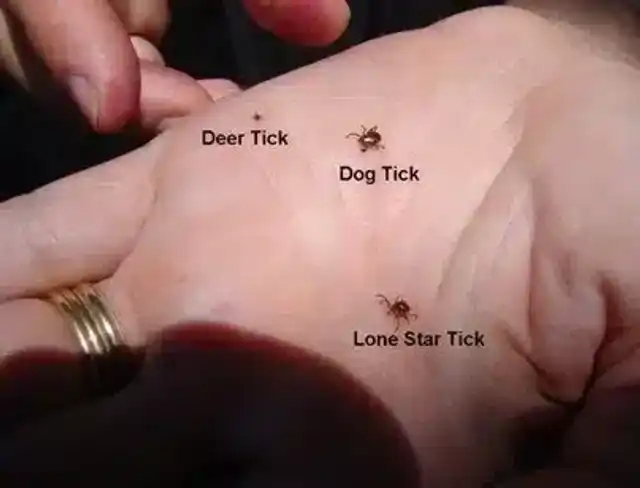

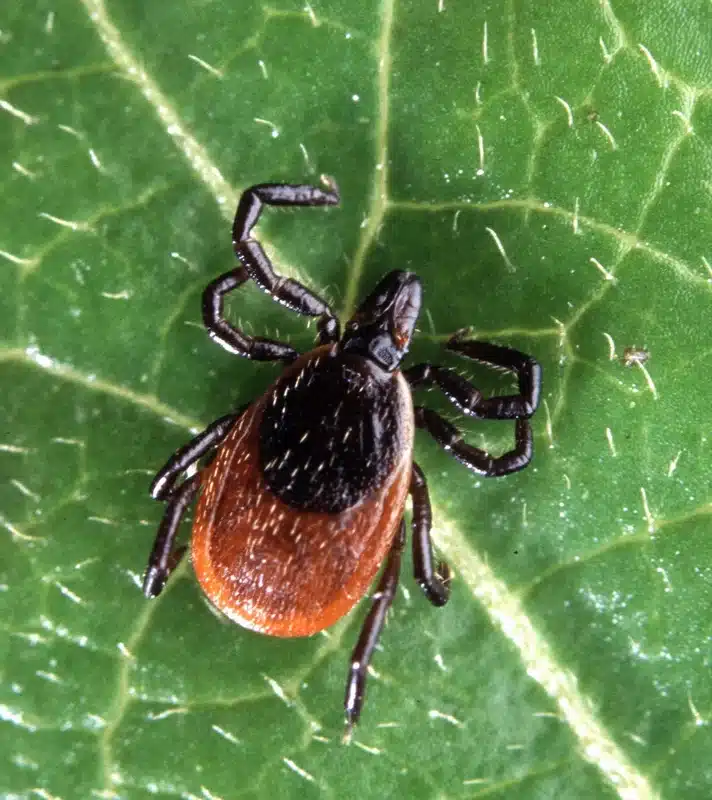
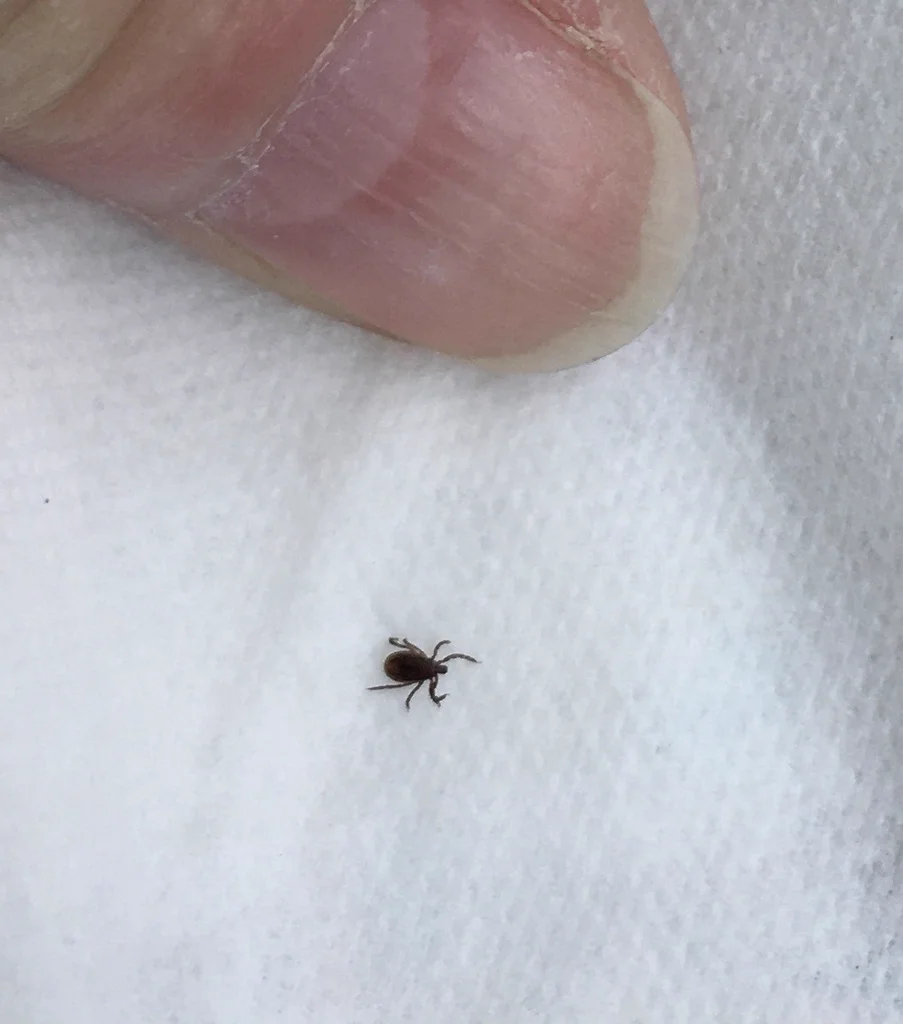
Below are labeled pictures of the ticks we actually find around Northern Virginia and Maryland, pictures of a tick in skin, and tick bite pictures from the first day to the rash you’d want a doctor to see. Use them side by side with whatever you just pulled off your leg or your dog.
I learned how easy ticks are to miss on a road trip. I stepped into what looked like an ordinary field for a minute, and by the time I got back to the car I had four ticks crawling up my leg. None of them felt like anything.
This part of the country is Lyme country. CDC surveillance data shows 2,470 Lyme disease cases reported in Maryland and 1,747 in Virginia in 2023, up from 2,035 and 1,403 the year before. I have family who have dealt with Lyme for years, so this isn’t abstract for me.
Pictures of Ticks Found in Virginia and Maryland
These are the four ticks people around here find most, plus the invasive one that’s spreading. Scroll through the photos, then use the table to match what you see.
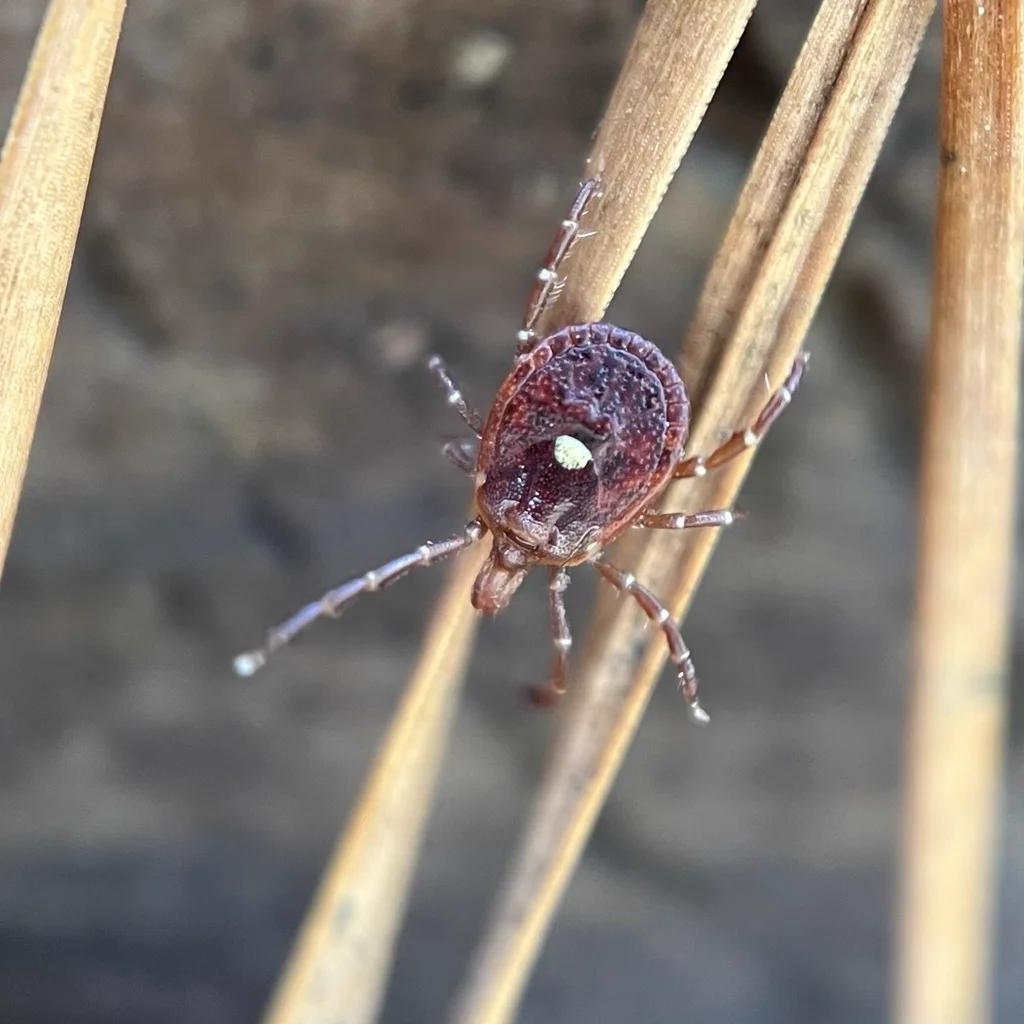
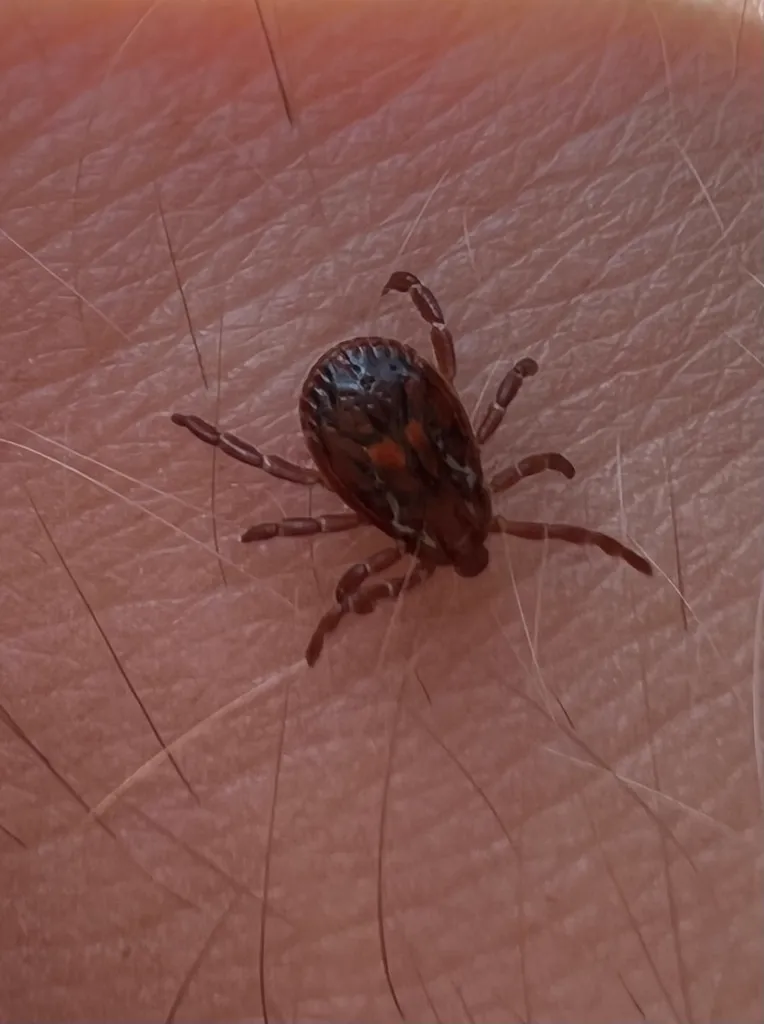
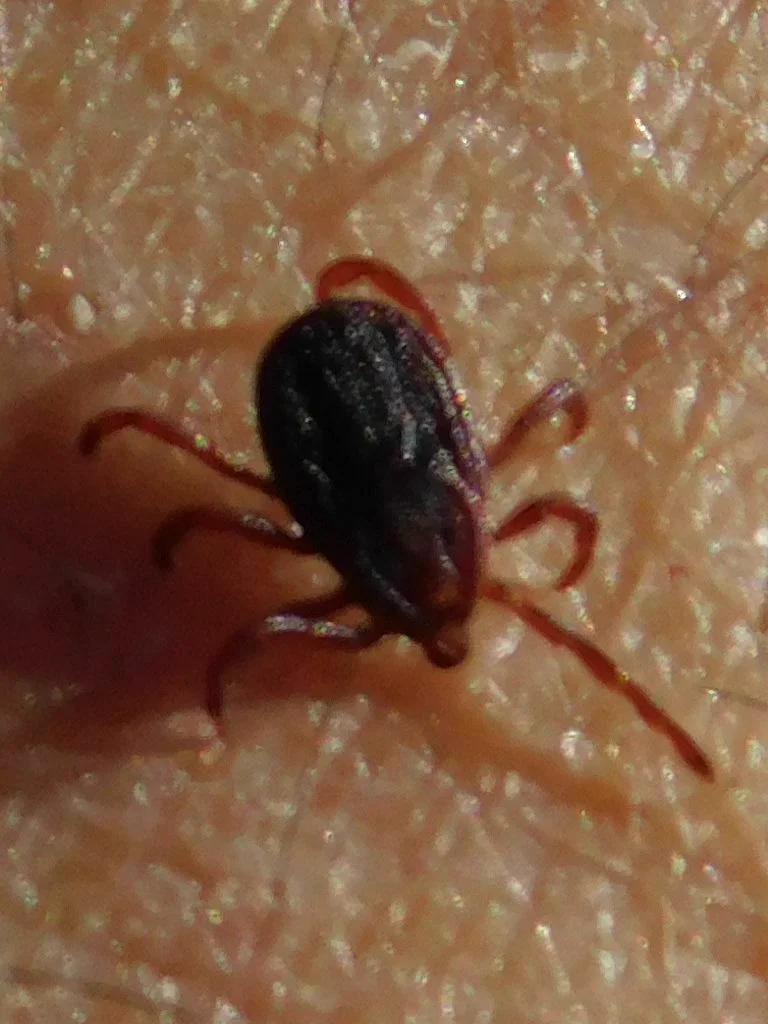

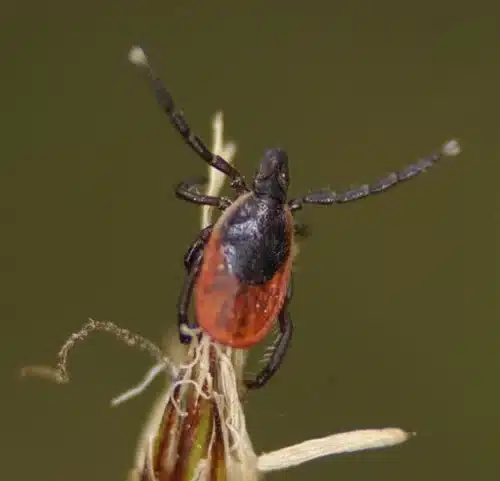

| Tick | What to look for in a photo | Where you pick it up |
|---|---|---|
| Black-legged (deer) tick | Female: orange-red body, black shield. Male: all dark. Black legs. | Wooded edges, leaf litter |
| Lone star tick | Female has one white dot on her back. Long mouthparts. | Shady lawns, brush, trail edges |
| American dog tick | Larger, brown, with whitish marbling on the shield | Tall grass, open fields, leaf piles |
| Brown dog tick | Plain reddish-brown, no markings, narrow body | On dogs, in kennels and homes |
| Asian longhorned tick | Small, plain tan-brown, no markings, often many at once | Pastures, tall grass |
If you need size charts and a species-by-species breakdown, our tick identification chart goes deeper. If you’re trying to tell a tick from a flea in a picture, see flea vs. tick.
Why a Clear Picture of a Tick Matters
Most people can’t identify a tick without seeing one first. That matters because different tick species carry different diseases. Something that looks like a tiny spider or beetle can be a tick, and a lot of “ticks” on windowsills turn out to be red clover mites.
Ticks also aren’t only a summer thing. The University of Maryland Extension lists adult black-legged ticks as active all year, including mild winter days.
A good picture of a tick shows you size, color, and body shape. Those three clues tell you whether you’re looking at a harmless bug or one worth watching.
Pictures of a Tick in Skin
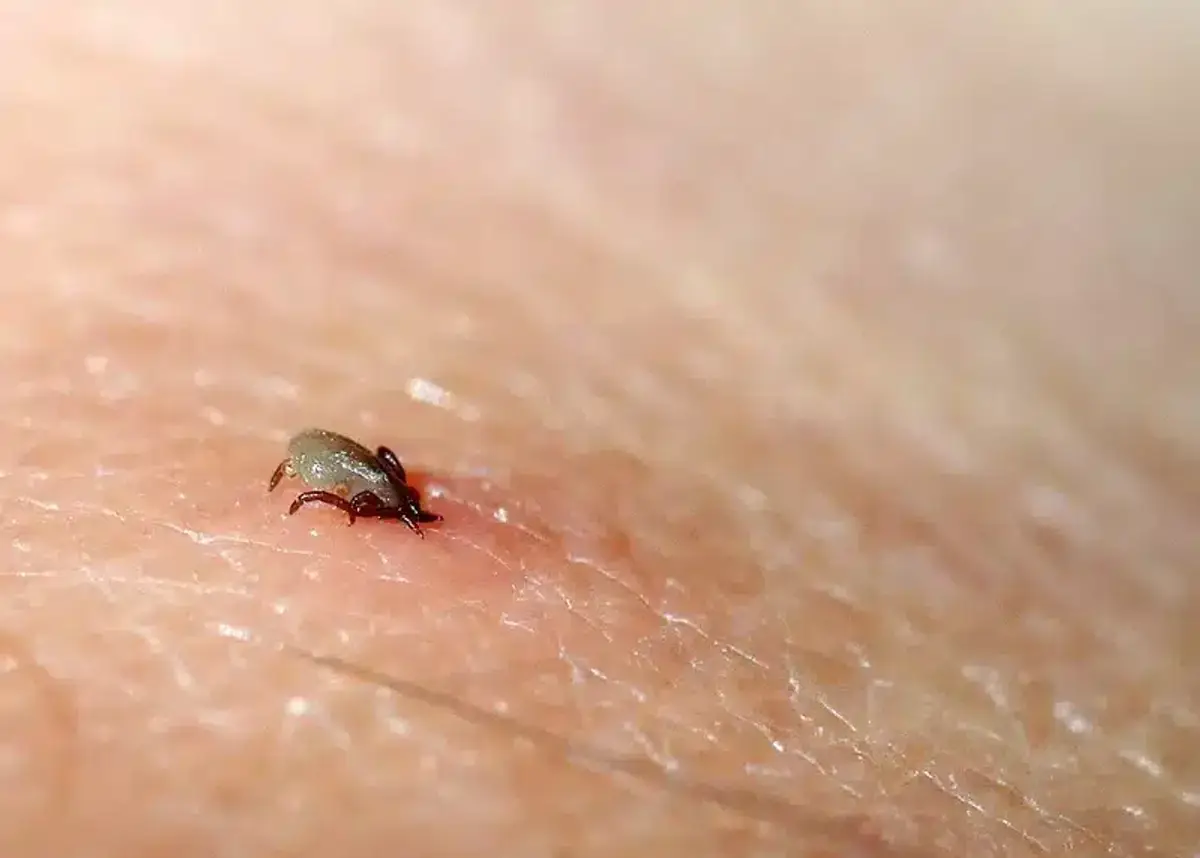
A tick that’s attached looks different from one that’s crawling. Crawling, you see the legs moving and the whole body sitting on top of the skin. Once it bites, the head is buried and only the body sticks up, so it can look like a scab, a mole, or a small dark seed.
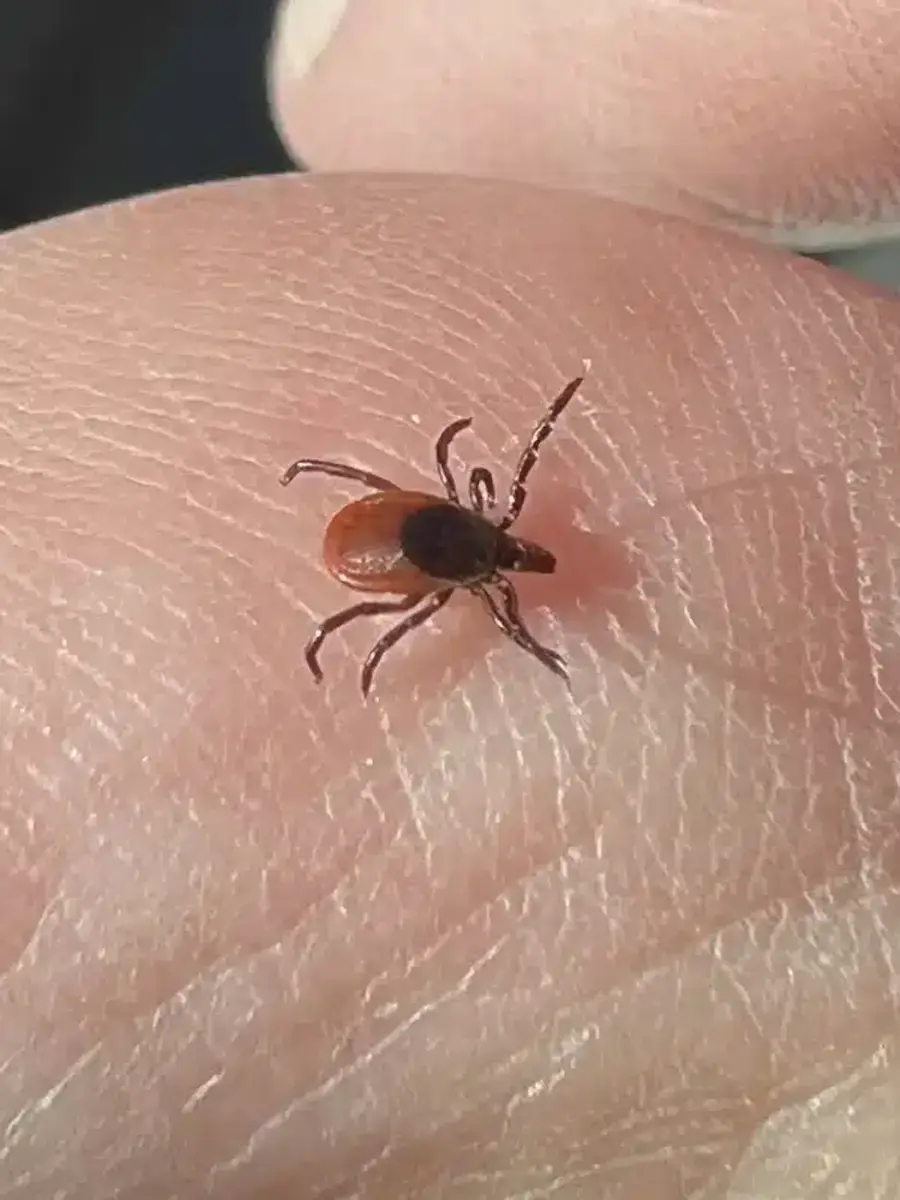
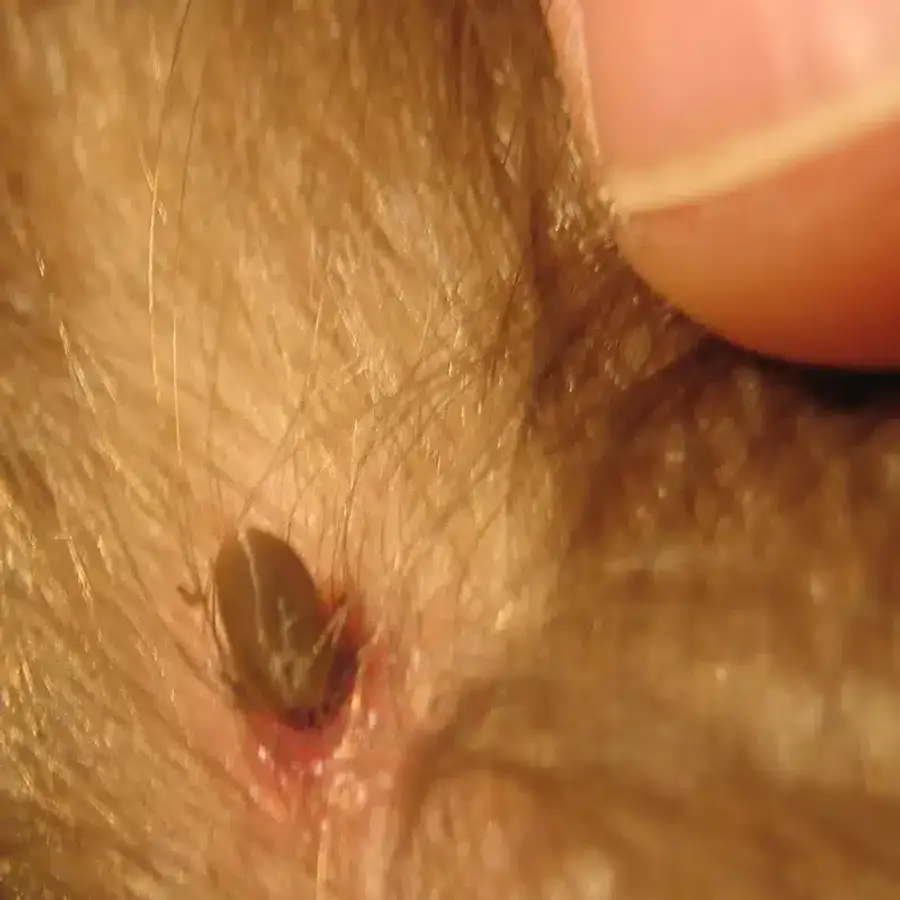
Ticks look for thin, warm skin that’s out of sight. The spots we tell people to check are the hairline and scalp, behind and inside the ears, armpits, the waistband, behind the knees, and the groin.
Ears catch people off guard. Daren, one of our technicians, had a customer whose son came home with a tick in his ear. The family was worried it came from their backyard, but they had also just been kayaking, and there was no way to know which. That’s common. You often can’t tell where a tick came from, so the check after any time outdoors matters more than guessing.
Tick Bite Pictures by Stage
People searching for tick bite pictures usually want to know one thing: is what I’m looking at normal? Here’s how a tick bite usually changes, in order.
Stage 1: Crawling, no bite yet. The tick is walking on skin or clothes. Brush or pick it off and you’re done. Most ticks crawl for a while before they settle in.
Stage 2: Attached in the first day. You’ll see a small flat tick with its head in the skin. There’s often no redness yet, and it doesn’t hurt or itch, which is why people miss it. Remove it with fine-tipped tweezers right away. Our tick removal guide walks through each step.
Stage 3: Attached for days and swollen. A feeding tick slowly fills with blood. Its body turns gray or bluish and puffs up like a small bean. A swollen tick means it’s been on for a while, so write down the date.
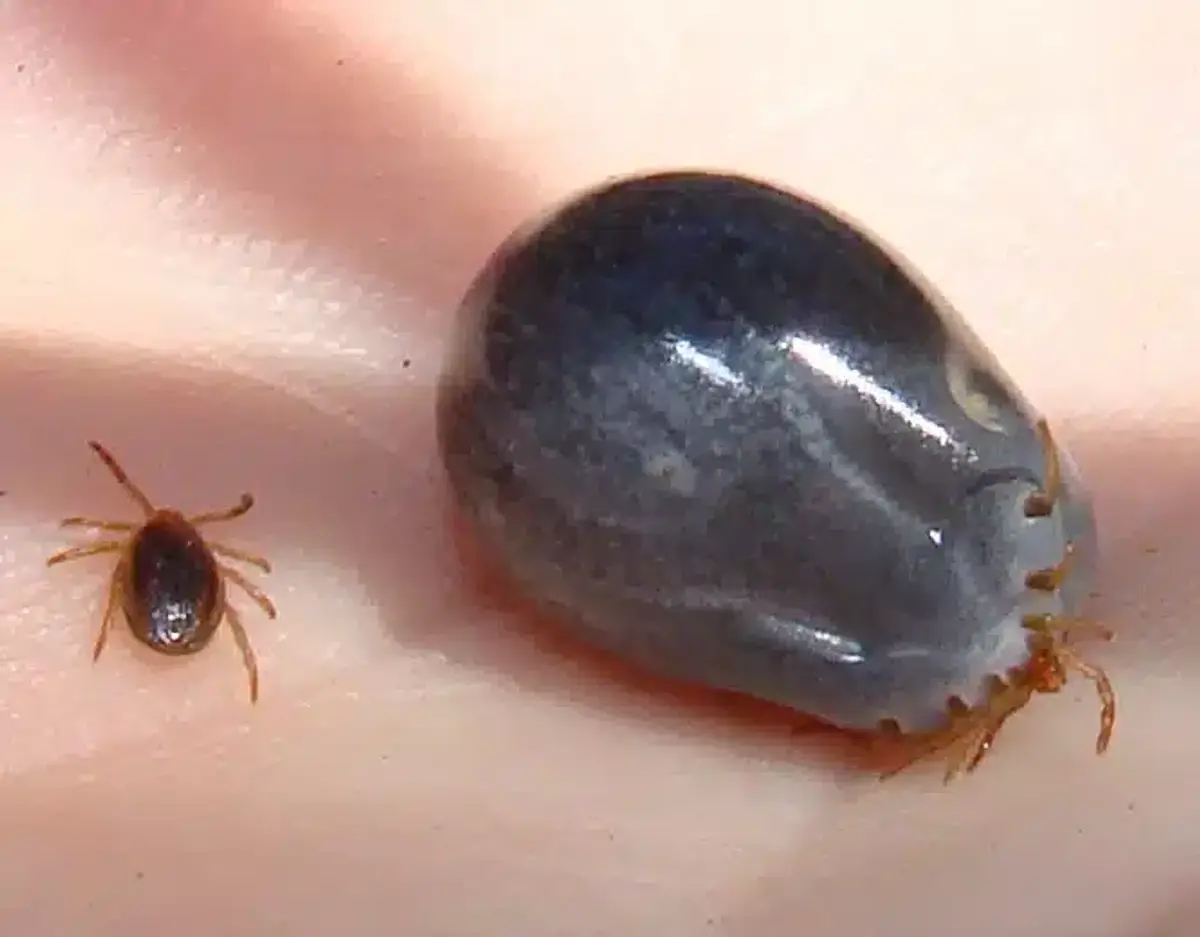
Stage 4: Right after you remove it. The bite usually leaves a small red bump or pink spot, sometimes with a dark dot in the middle. It looks a lot like a mosquito bite.
The CDC says a small bump or redness at a tick bite that shows up right away and looks like a mosquito bite is common. It generally goes away in 1 to 2 days and “is not a sign of Lyme disease.” The Lyme rash is different: it starts 3 to 30 days after the bite (about 7 days on average) and grows over several days, sometimes to 12 inches or more across.
Stage 5: Days to weeks later, a rash that grows. This is the picture to take seriously. A red patch that appears days after the bite and keeps getting bigger can be erythema migrans, the Lyme rash. It may look like a bull’s-eye, but many are solid red or pinkish ovals. On darker skin it can look brown or purple.
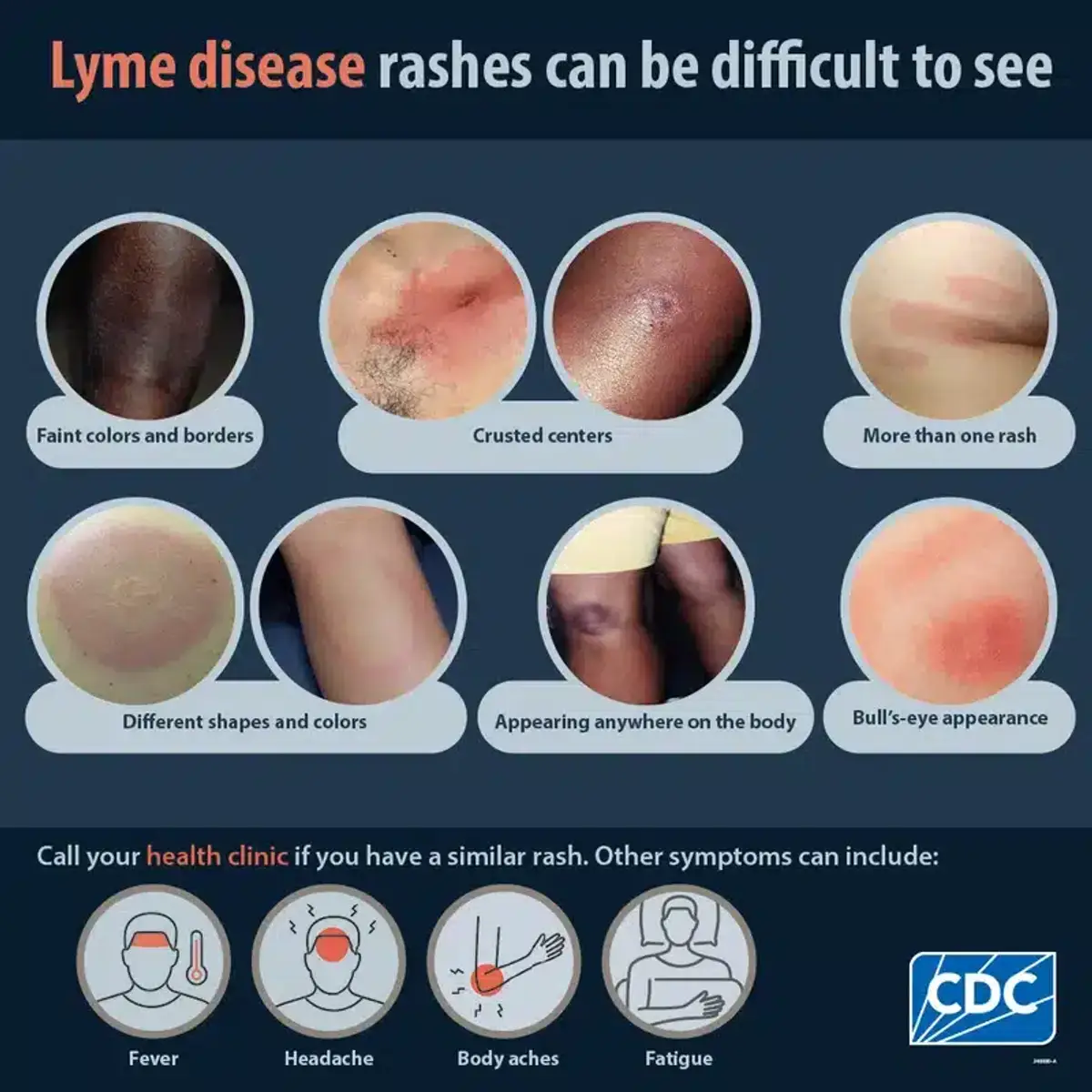
Take a photo of the bite each day with a coin next to it. If the red area is getting wider, or you get fever, chills, headache, or achy joints within a month, call your doctor and show them the photos.
Tick Biology Basics
Ticks aren’t insects. They’re arachnids, like spiders and clover mites. Adults have eight legs and mouthparts built for blood feeding.
Ticks go through four stages: egg, larva, nymph, and adult. Each stage except eggs needs a blood meal to move to the next. The full cycle usually takes about two years.
Ticks don’t jump or fly. They “quest” by climbing onto grass and leaves, then grab passing animals or people. They sense hosts through body heat, carbon dioxide, and vibrations.
Ticks at Each Life Stage
Larvae
Tick larvae are tiny, about the size of a grain of sand. They only have six legs at this stage and can look pale or almost see-through. They haven’t fed yet, so they’re much less likely to carry disease.
In photos, larvae look like specks of dirt. Most people miss them completely during tick checks.
Nymphs
Nymphs are the most dangerous stage for people. They’re active in warm months when we’re all outside. May through July is peak nymph season here. The CDC puts black-legged nymphs at about the size of a poppy seed. They now have eight legs, and unfed ones are often light tan, so they blend into skin.
An engorged nymph swells up and can look like a small grape or raisin.
Adults
Adult ticks are the easiest to spot. Females are bigger than males and can grow to sunflower seed size when full of blood. Males stay smaller and darker.
The hard shield on a tick’s back (called the scutum) has color patterns that differ by species. This is the key feature for telling species apart.
Common Tick Species in Our Area
Black-Legged Tick (Deer Tick)
The black-legged tick is our main Lyme disease carrier. Females have a brick-red body with a black shield. Males are all dark.
They stay active year-round. Adults peak in fall and spring. Nymphs surge from late spring through early summer. They live in forests and woodland edges.
Black-legged ticks spread Lyme disease, anaplasmosis, babesiosis, and Powassan virus. Any bite from this species needs careful watching.
Lone Star Tick
Lone star ticks have a white “lone star” spot on the female’s back. Males show scattered white marks. They bite aggressively.
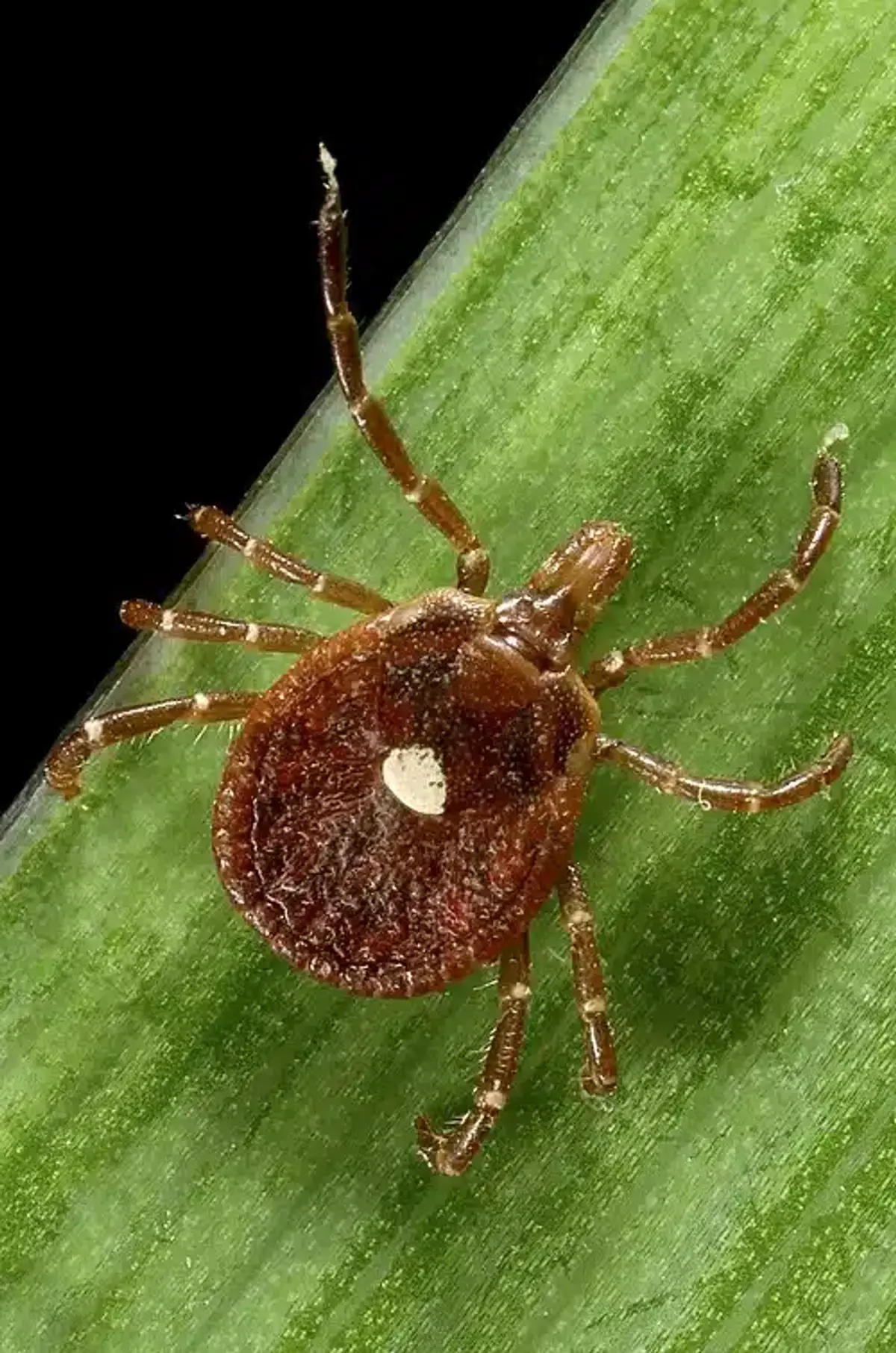
Active April through August, they prefer open areas with low tree cover. They spread ehrlichiosis and tularemia, and are linked to alpha-gal syndrome, a red meat allergy that develops after bites.
American Dog Tick
Dog ticks have ornate whitish markings on a brown shield. They’re our largest ticks and peak April through August in grassy, open areas.
They spread Rocky Mountain spotted fever and tularemia. They can also cause tick paralysis through toxins in their saliva.
Brown Dog Tick
Brown dog ticks are solid reddish-brown with no markings. They’re unique because they finish their whole life cycle indoors around kennels and pet areas. They stay active year-round in heated buildings.
Asian Longhorned Tick
This invasive species turned up in Virginia in 2017 and Maryland in 2018. They’re reddish-tan with no markings. Females can reproduce without mating, which leads to huge local populations.
Asian longhorned ticks prefer pastures and tall grass. The University of Maryland Extension says it’s still unknown whether they can pass North American germs to people. They’re a real problem for livestock.
Health Risks by Species
Lyme Disease
Our area’s top tick-borne illness. Early signs include fever, fatigue, and often a growing rash around the bite (see the stage 5 picture above). The CDC says 70 to 80 percent of infected people get that rash, so not having one doesn’t rule Lyme out.
Watching family members deal with Lyme opened my eyes to the long-term effects. Energy levels and diet changes lasted years after diagnosis.
Other Diseases
Ehrlichiosis and anaplasmosis cause flu-like symptoms. They’re spread mainly by lone star and black-legged ticks. Early antibiotics are key.
Powassan virus is rare, but the CDC says about 1 in 10 people with severe illness die, and about half of survivors have long-term problems. It’s spread by black-legged ticks.
Alpha-gal syndrome (red meat allergy) develops after lone star tick bites. Reactions to beef, pork, or lamb show up 3 to 6 hours after eating.
How to Check for Ticks
Do a full tick check within two hours of being outside. Most tick diseases need 24+ hours to spread, so finding them fast cuts your risk a lot.
Check the scalp, behind ears, underarms, around the waist, between legs, and behind knees. Use mirrors and ask family members to check spots you can’t see.
Save any removed ticks in alcohol or a sealed bag with the date. This helps with species ID and testing if symptoms show up later.
How to Remove a Tick
Use fine-tipped tweezers. Grab the tick right at the skin, as close to the mouthparts as you can. Pull straight up with steady pressure. Don’t twist or jerk.
If a bit of the mouthpart breaks off in the skin, don’t dig for it. The CDC says you can try to lift it out with tweezers, and if it won’t come easily, leave it. Your skin pushes it out as it heals.
Clean the bite area with alcohol or soap and water. Watch the site for rash or other symptoms over the next few weeks.
After a Tick Bite
Watch for symptoms 3 to 30 days after removal. Fever, expanding rash, headache, and muscle aches all call for a doctor visit. Go sooner if the tick was on for more than 24 hours and you think it was a black-legged tick.
Write down the bite location, removal date, and tick species if you can tell. This helps doctors assess your risk.
Personal Protection
Repellents
Use EPA-registered repellents with 20 to 30% DEET, picaridin, IR3535, or oil of lemon eucalyptus on skin. Apply 0.5% permethrin to clothing and gear. It lasts through several washes.
Clothing and Habits
Wear light-colored, tightly woven clothes so ticks show up. Shower within two hours of being outside. Tumble-dry clothes on high heat for 10 minutes to kill any ticks.
The combo of proper clothes, repellent, and post-activity checks gives you multiple layers of protection.
Yard Management
Keep grass at 3 inches or shorter. Remove leaf litter where ticks hide. Build 3-foot gravel or mulch borders between your lawn and wooded areas.
Put play areas at least 9 feet from tree lines. Consider deer fencing where practical. Deer are key hosts for adult ticks, and their presence increases tick numbers on your property.
Professional Tick Control
Our tick control service starts with knowing what ticks look like and where they sit on your property. We apply granular treatments in March and November when populations build. From April through October, we spray along property edges where ticks are most active.
The edge between your lawn and natural areas (called the ecotone) is the highest-risk zone. Our technicians focus treatments here to create a protective barrier around your home.
We’ve dropped 9 harsh chemicals common in the industry. All our products are EPA-approved and vetted by our research team.
With 58 years of family-owned experience in the DMV, we understand local tick populations and seasonal patterns. We offer unlimited callbacks if activity continues after treatment. No contracts required. Call us at 703-683-2000 or email info@bettertermite.com for a consultation.