Aquatic Insects
Various
Aquatic insects live in water for all or part of their lives. The main types are water bugs like water boatmen and giant water bugs, water beetles, and insects that grow up underwater, like mayflies, caddisflies, dragonflies, and mosquitoes. Most are harmless. A few bite if handled.
List of Aquatic Insects
Aquatic insects are insects that live in water for all or part of their lives. Some swim their whole lives, like water boatmen and diving beetles. Others, like mayflies and dragonflies, grow up underwater and then leave the water as flying adults.
It is a big group. Fresh water covers less than 1% of the earth. Yet nearly 100,000 insect species spend at least part of their lives in it, according to a 2014 review in the Annual Review of Entomology. Here are the 20 you are most likely to see in the eastern U.S. They fall into two groups.
Insects That Swim as Adults (Water Bugs and Water Beetles)
These spend their adult lives in or on the water. They are the “bugs in the pool” most homeowners call about.
- Water boatmen (Corixidae): small, flat, dark bugs, up to about half an inch. They swim right side up with oar-like back legs and eat algae. They don’t bite.
- Backswimmers (Notonecta): look like water boatmen but swim upside down. They hunt other insects and tadpoles and can give a painful bite if you grab one.
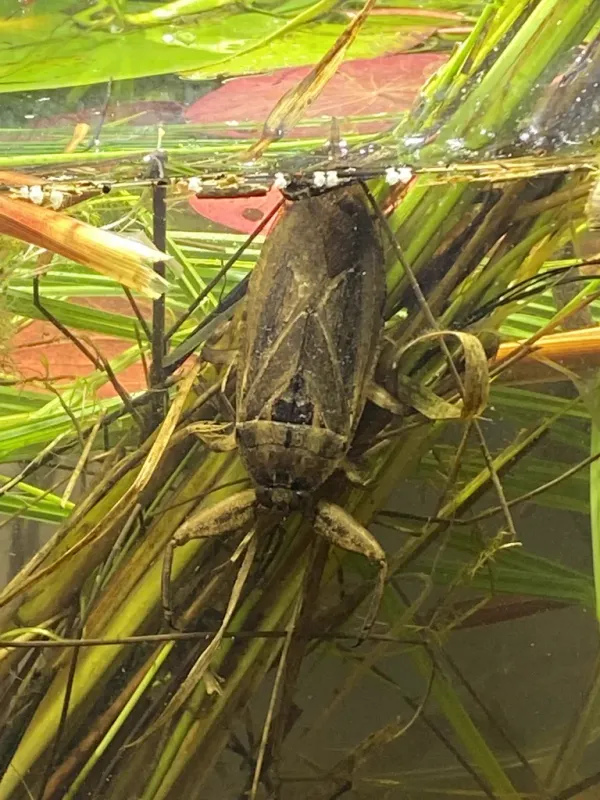
- Giant water bugs (Lethocerus): flat, brown, and 2 to 4 inches long. Also called toe-biters and electric-light bugs.
- Water scorpions (Nepidae): long, stick-like bugs with grabbing front legs and a breathing tube off the back end. They can’t sting, but they can bite.
- Creeping water bugs (Naucoridae): round, flat predators that crawl through weeds and gravel in ponds and streams.
- Water striders (Gerridae): long-legged bugs that skate on top of the water instead of swimming under it.
- Predaceous diving beetles (Dytiscidae): smooth, oval beetles that dive deep and hunt. They show up in pools with leaves and debris in them.
- Whirligig beetles (Gyrinidae): small, shiny black beetles that spin in groups on the surface of ponds and slow creeks.
- Water scavenger beetles (Hydrophilidae): dark, oval beetles that mostly eat dead plants. They look a lot like diving beetles.
Insects That Grow Up in Water (Flying Adults)
These spend their young stages underwater, then come out as winged adults. You meet the adults on porch screens and around lights, not in the water.
- Mayflies (Ephemeroptera): soft bodies, upright wings, and two or three long tails. Adults live a day or two.
- Stoneflies (Plecoptera): flat, brownish adults that fold their wings flat over the back. The young need clean, cold, well-oxygenated streams.
- Caddisflies (Trichoptera): moth-like adults that hold their wings like a tent. The larvae build little cases out of sand, twigs, or leaves.
- Dragonflies (Anisoptera): big, strong fliers that rest with their wings held out flat. The nymphs hunt underwater for a year or more.
- Damselflies (Zygoptera): thinner than dragonflies, and they fold their wings over the back when they land.
- Dobsonflies (Corydalus): one of the largest insects in North America. Males have long, curved jaws that look scary but are mostly for show.
- Hellgrammites: the dobsonfly larva. Fishermen use them as bait, and they can pinch.
- Fishflies (Chauliodes): close cousins of dobsonflies with feathery antennae and no big jaws.
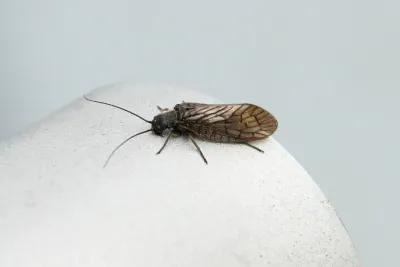
- Alderflies (Sialis): small, dark, smoky-winged relatives of dobsonflies. They stay close to the water.
- Mosquitoes (Culicidae): the larvae hang just under the surface of still water and breathe through a tube. This is the one aquatic insect we treat for on a regular basis.
- Non-biting midges and black flies: midge larvae live in the mud of ponds and creeks, and black fly larvae cling to rocks in fast water. Midges swarm but don’t bite. Black flies do.
You can click through to the full ID guide for each species in the species list further down this page.
Can Bugs Swim?
Most bugs can’t swim. A house fly, an ant, or a carpet beetle that falls into a pool will float for a while. It is light, and its body sheds water. But it can’t steer, dive, or climb out.
The insects that really can swim have special gear for it:
- Oar-like legs. Water boatmen and backswimmers have flat back legs fringed with hairs. They row with them.
- A carried air supply. Backswimmers trap an air bubble on the body so they can stay under for a while, says the Missouri Department of Conservation. Diving beetles keep air under their wing covers.
- A snorkel. Water scorpions and mosquito larvae breathe through a tube they poke above the surface.
- Gills. Mayfly, stonefly, and damselfly young have gills, so they never need to come up for air.
So if you are asking “what bugs can swim underwater,” the short list is water boatmen, backswimmers, giant water bugs, water scorpions, creeping water bugs, and the water beetles. Water striders don’t swim. They walk on the surface.
Aquatic Insects in Northern Virginia and Maryland
Our streams tell you a lot about the insects you’ll see on your porch. Mayflies, stoneflies, and caddisflies are signs of a clean stream. They need cool water with lots of oxygen. Scientists count these three groups, called the EPT index, to score water quality (NIH review of aquatic insect ecology).
That’s why our local stream counts are worth a look. Arlington County’s stream monitoring notes that stoneflies don’t currently live in Arlington’s streams. All of the county’s streams have been hurt by development. Mayflies, caddisflies, dragonflies, and damselflies still show up, and midges, which handle dirty water best, are common. Virginia Save Our Streams volunteers have counted stream insects across the state since 1989. Their counts go to the Virginia DEQ.
What does that mean at your house? If you back up to a suburban creek like Four Mile Run or Cameron Run, the bugs at your lights from late spring into fall are more likely to be midges and caddisflies. Stoneflies are pickier.
Bugs in Swimming Pools: What You’re Looking At
If you found a bug swimming in your pool, it is almost always one of these:
- Water boatmen. Small, dark, right side up, and harmless. They come for algae, even algae you can’t see yet.
- Backswimmers. Upside down, lighter colored, and the one that bites. The Missouri Department of Conservation notes they fly to lights at night and get stuck in pools because they are clumsy on land.
- Giant water bugs. Rare in pools but hard to miss at 2 to 4 inches. The University of Maine Cooperative Extension says they are the largest true bug in the U.S. and Canada and are often found under bright lights.
- Predaceous diving beetles. Show up when leaves and debris sit in the pool.
All four fly in at night. Turn off pool and patio lights after dark. Skim every day, and keep the chlorine up and the algae down. That does more than any spray. Our water boatmen guide covers how to tell boatmen from backswimmers up close.
One more thing: a lot of people around here call a big roach a “water bug.” Is your “water bug” in the basement or kitchen, not the pool? Then it’s probably an American or Oriental cockroach. Our water bug vs. cockroach guide shows the difference.
Why We Treat Your House, Not the Creek
The water itself is off limits. Pesticide labels require a buffer from creeks and ponds, so when aquatic insects are the problem we go after the adults on and around your house.
Daren, one of our registered technicians, has run into that rule on mosquito jobs. On one house there was a creek behind a wooded strip, and he explained that “you gotta stay about 25 ft away from that stuff.” At a Fort Hunt house with a culvert and a small creek on the property, he couldn’t treat the culvert or the creek at all. The yard treatment there also cut down the insects that had been keeping plant pests in check, and the customer’s ornamental plants started getting hit afterward.
So we plan around what we can treat: your foundation, your lights, your screens, and the shrubs where flying adults rest.
How We Handle Aquatic Insects Around Homes
When flying adults are piling up on your house, here’s what we do:
- Lights. We look at your outdoor lighting and suggest changes, like yellow bulbs or moving a fixture away from the door. This usually helps the most.
- Exclusion. We check screens, door sweeps, and gaps that let flying adults inside.
- Water sources. We find where the insects are coming from (a pond, a clogged drain, a low spot that holds water) and tell you what you can change.
- Perimeter treatment. For heavy, ongoing problems, we treat the outside of the home where crawling insects hide. If the real issue is mosquitoes breeding nearby, our mosquito control service is the better fit.
Types of Aquatic Insects
Click on any species below to learn more about identification, behavior, and control methods.
Alderflies
Sialis spp.
Alderflies are small, dark-winged aquatic insects often found near streams and ponds. They are harmless to humans and indicate healthy water quality.
View identification guide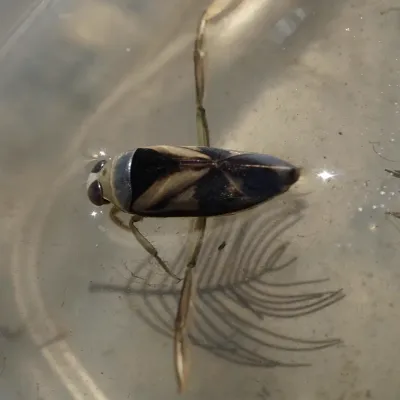
Backswimmers
Notonecta spp.
Backswimmers are aquatic insects that swim upside down just below the water surface. They are commonly found in swimming pools, ponds, and other still water and can deliver a painful bite when handled.
View identification guide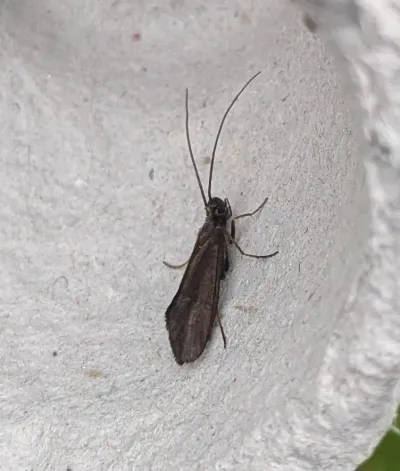
Caddisflies
Trichoptera
Caddisflies are moth-like insects with aquatic larvae that can become nuisance pests when attracted to lights near homes and water sources.
View identification guide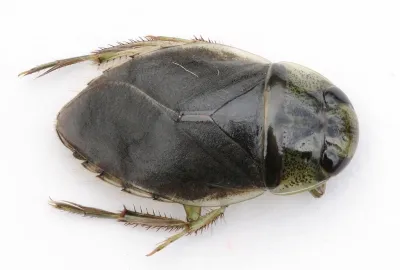
Creeping Water Bugs
Naucoridae
Creeping water bugs are flat, oval-shaped aquatic insects found in freshwater habitats throughout North America. While primarily aquatic, they occasionally appear near homes located close to water sources.
View identification guide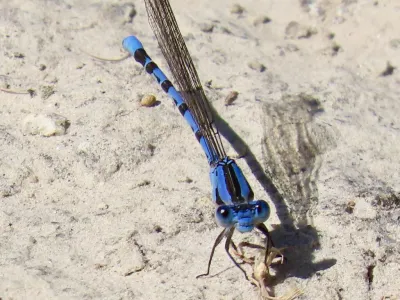
Damselflies
Zygoptera
Damselflies are slender flying insects related to dragonflies. They prey on mosquitoes and other small insects near ponds and streams.
View identification guide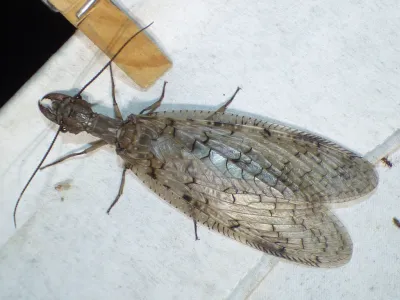
Dobsonflies
Corydalus cornutus
Dobsonflies are large, winged insects with aquatic larvae called hellgrammites. Though intimidating in appearance, adult dobsonflies are harmless to humans and indicate healthy stream ecosystems.
View identification guide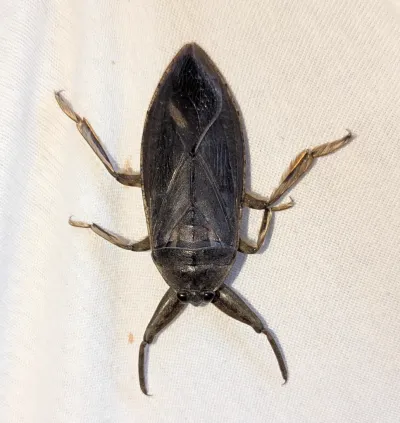
Giant Water Bugs
Lethocerus americanus
Giant water bugs are large aquatic insects that can grow over 2 inches long and deliver a painful bite when handled. They occasionally enter homes attracted to lights at night.
View identification guide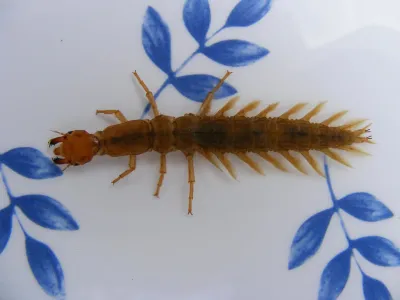
Hellgrammites
Corydalus cornutus (larva)
Hellgrammites are the aquatic larval stage of dobsonflies. These large larvae have a fierce appearance and can deliver a painful bite if handled.
View identification guide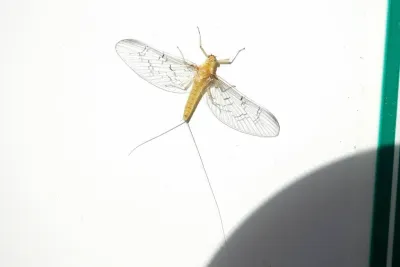
Mayflies
Ephemeroptera
Mayflies are delicate aquatic insects known for their extremely short adult lifespan and mass emergences near bodies of water during summer months.
View identification guide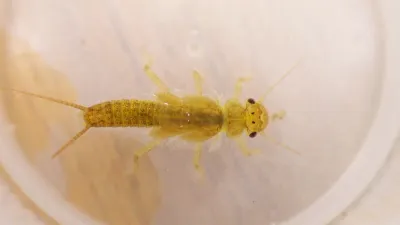
Stoneflies
Plecoptera
Stoneflies are aquatic insects that live near clean streams and rivers, occasionally appearing around homes close to water sources.
View identification guide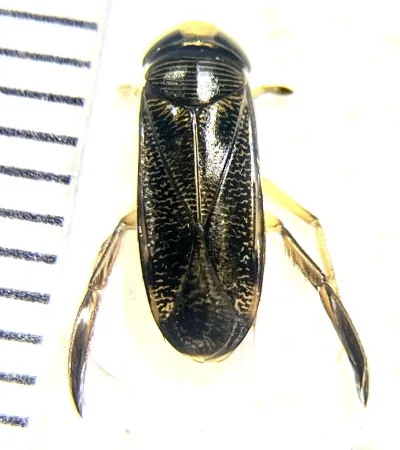
Water Boatmen
Corixidae
Water boatmen are small aquatic insects that swim right-side up in pools, ponds, and lakes. Unlike their look-alike relatives the backswimmers, water boatmen feed on algae and do not bite humans.
View identification guide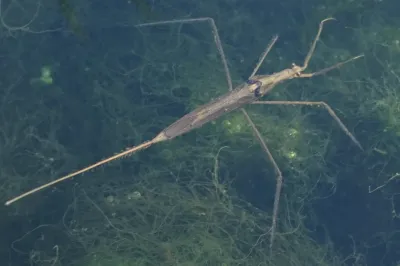
Water Scorpions
Nepidae
Water scorpions are aquatic insects with raptorial front legs and a long breathing tube resembling a tail. Despite their name, they are not true scorpions and cannot sting, though they can deliver a painful bite if handled.
View identification guideCommon Questions about Aquatic Insects
Are aquatic insects dangerous?
+
Most aquatic insects are harmless to humans. However, some like giant water bugs can deliver a painful bite if handled. They are not aggressive but will defend themselves. Most species you encounter near homes are simply nuisances attracted to lights.
Why are aquatic insects attracted to my pool?
+
Aquatic insects are attracted to pools because they mistake the water surface for a natural habitat. Lights around pools also attract flying adults at night. Some predatory species are drawn to pools that have other insects or small organisms in them.
Can aquatic insects live in swimming pools?
+
Not for long in a well-kept pool. Most of the bugs you see flew in at night and got stuck. Water boatmen keep coming back when a pool has algae, and backswimmers follow them because they eat other insects. Clean, balanced water and fewer lights at night stop most of it.
What are those large bugs flying around lights near water?
+
These are likely mayflies, stoneflies, or caddisflies that have emerged as adults from nearby water sources. The adults live only a short time to mate and lay eggs, so they tend to show up in big swarms around lights for a few days at a time.
What bugs live in water?
+
The main bugs that live in water are water boatmen, backswimmers, giant water bugs, water scorpions, water striders, and water beetles. Many more grow up in water and leave as flying adults, including mayflies, stoneflies, caddisflies, dragonflies, damselflies, dobsonflies, mosquitoes, and midges.
Is a water bug the same as a cockroach?
+
Not really. True water bugs live in ponds and pools. But many people in Virginia and Maryland call large American or Oriental cockroaches "water bugs" because they like damp basements and drains. Our water bug vs. cockroach guide, linked in the pool section above, shows how to tell them apart.
How do I keep aquatic insects away from my home?
+
Reduce outdoor lighting near entry points, use yellow bug lights instead of white lights, maintain proper pool chemistry, remove standing water sources, and ensure window screens are in good repair to prevent entry.
Explore Other Pest Categories
Browse our comprehensive pest library for identification guides and control information.



With five years of hands-on experience in the pest control industry, George Schulz is a registered technician with the Virginia Pest Management Association and a proud third-generation professional in a family business that's been protecting homes for over 58 years.
Local Aquatic Insects Help
Dealing with aquatic insects at home? Our licensed technicians provide pest control across Northern Virginia and Maryland.
Pest Control near you
- Alexandria Pest Control
- Annandale Pest Control
- Arlington Pest Control
- Ashburn Pest Control
- Bethesda Pest Control
- Bowie Pest Control
- Burke Pest Control
- Centreville Pest Control
- Chantilly Pest Control
- Chevy Chase Pest Control
- Clinton Pest Control
- College Park Pest Control
- Columbia Pest Control
- Crofton Pest Control
- Ellicott City Pest Control
- Fairfax Pest Control
- Fairfax Station Pest Control
- Falls Church Pest Control
- Fort Washington Pest Control
- Frederick Pest Control
- Fredericksburg Pest Control
- Gainesville Pest Control
- Gaithersburg Pest Control
- Germantown Pest Control
- Glen Burnie Pest Control
- Great Falls Pest Control
- Greenbelt Pest Control
- Herndon Pest Control
- Hyattsville Pest Control
- Kensington Pest Control
- Laurel Pest Control
- Leesburg Pest Control
- Lorton Pest Control
- Manassas Pest Control
- McLean Pest Control
- Oakton Pest Control
- Olney Pest Control
- Oxon Hill Pest Control
- Potomac Pest Control
- Reston Pest Control
- Rockville Pest Control
- Silver Spring Pest Control
- South Riding Pest Control
- Springfield Pest Control
- Stafford Pest Control
- Sterling Pest Control
- Takoma Park Pest Control
- Upper Marlboro Pest Control
- Vienna Pest Control
- Waldorf Pest Control
- Warrenton Pest Control
- Winchester Pest Control
- Woodbridge Pest Control
- All service areas →