Round-Headed Borers Identification Guide
Cerambycidae (larvae)
Round-headed borers are the wood-boring larvae of longhorned beetles. They tunnel in dying trees, logs, and firewood, and sometimes emerge indoors from firewood or new lumber, but most species cannot reinfest dry wood in a home.
Taxonomy
Round-Headed Borers Coloration
Common color patterns to help identify round-headed borers
Round-Headed Borers
Seasonal Activity
When round-headed borers are most active throughout the year

Where Round-Headed Borers Are Found
Hover over states to see their names. Green regions indicate where round-headed borers have been reported.
Round-Headed Borer Identification Guide
Round-headed borers are the young (larvae) of longhorned beetles. This is one of the largest beetle families in North America. The larvae spend most of their lives hidden inside wood. Most people find them in one of three ways. A beetle crawls out of firewood indoors. A beetle chews out of the walls of a new home. Or a split log shows a fat white grub. For the big picture, see our wood-boring beetles guide.
Physical Characteristics
- Size: About 1/4 inch to 3 inches (6 to 75 mm) long when fully grown. Most species found in firewood are 1/2 to 2 inches.
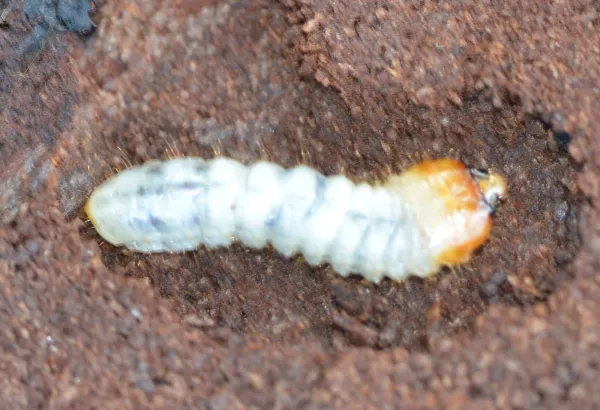
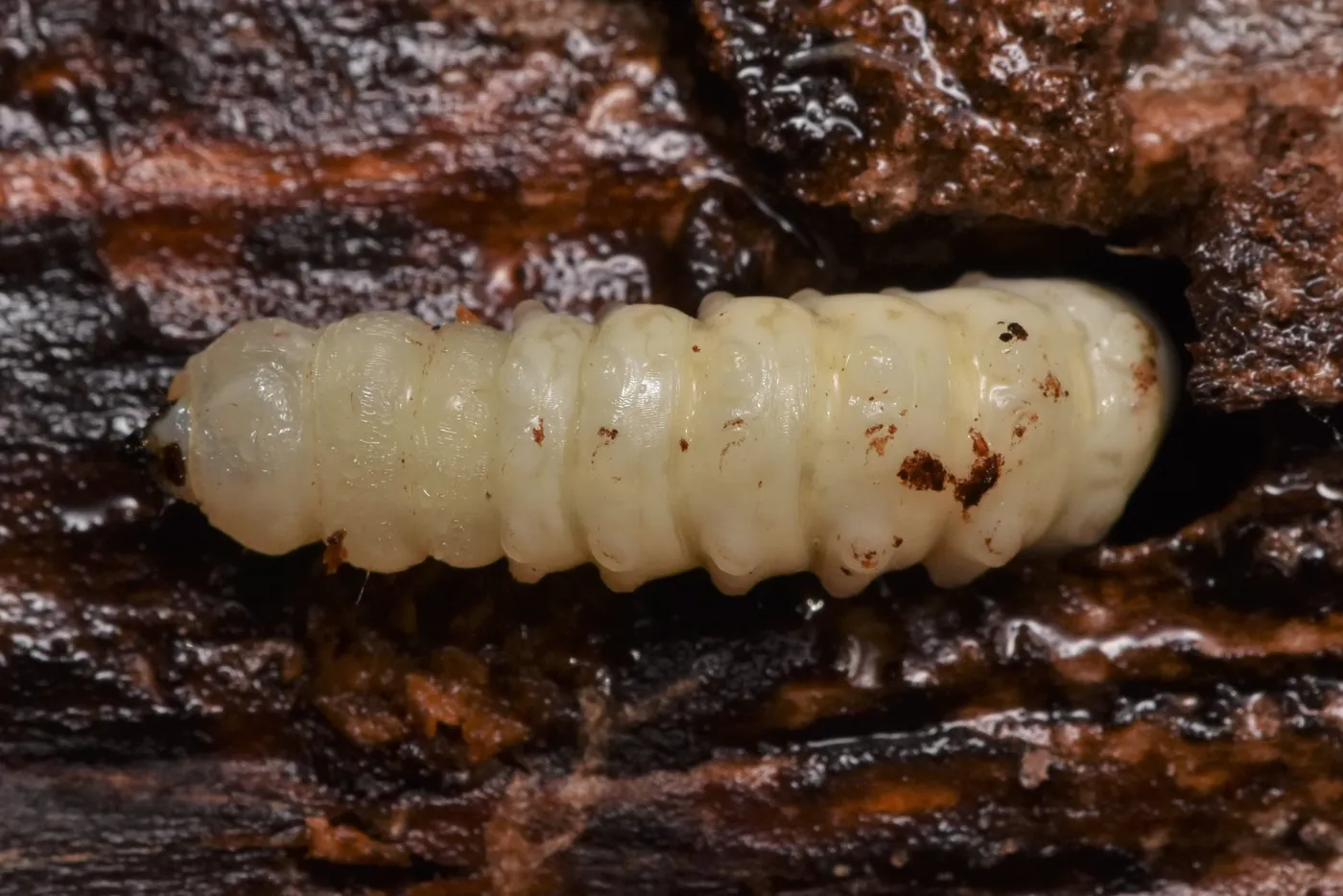
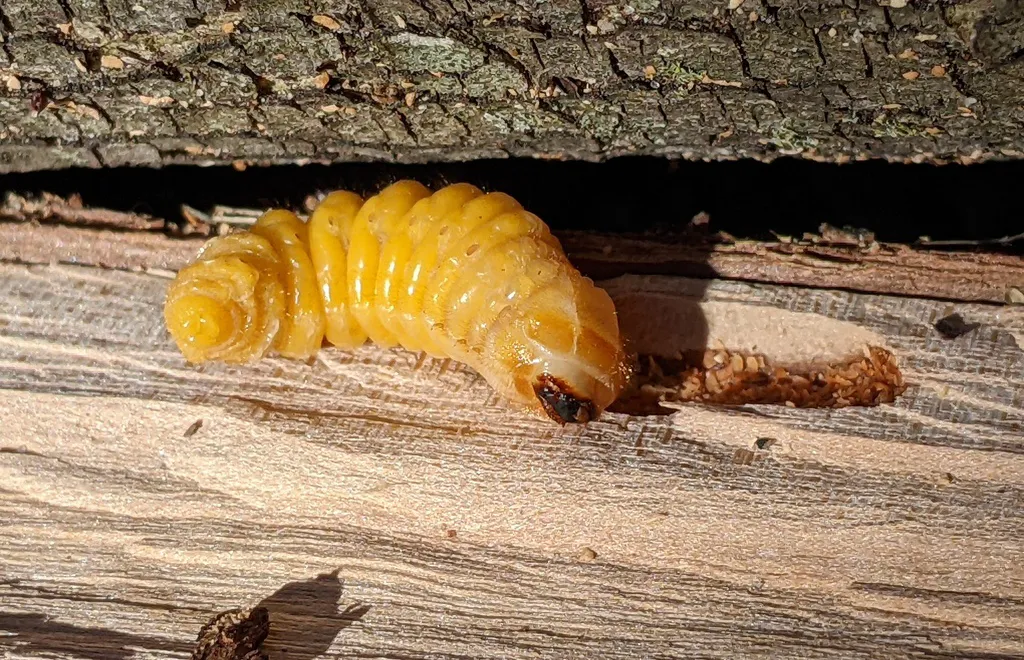
- Color: Creamy white to pale yellow, with a darker brown or black head and strong jaws.
- Shape: Long and tube-shaped, with clear ring-like segments. The first few segments behind the head are only a bit wider than the rest of the body. They are round, not flat.
- Legs: None, or tiny legs that are hard to see. They move by wriggling their segments.
The name describes the cross section. Cut a round-headed borer tunnel crosswise and it looks round or slightly oval. Adult exit holes are also round, from about 1/8 inch to more than 1/2 inch across, based on the species.
How to Tell Round-Headed Borers from Flat-Headed Borers
Flat-headed borers (metallic wood-boring beetles, family Buprestidae) live in the same trees and logs. They are the look-alike people most often mix up with round-headed borers.
| Feature | Round-headed borers | Flat-headed borers |
|---|---|---|
| Larva shape | Cylindrical, segments behind head only slightly enlarged | Very wide, flat segment behind the head, like a nail head |
| Exit hole | Round | Oval, flattened, or D-shaped |
| Gallery | Round or slightly oval in cross section, often goes deep into the wood | Flat, broad, and winding, mostly just under the bark |
| Frass | Coarse and stringy, often pushed out of holes | Fine and tightly packed in layers inside the gallery |
| Adult | Long antennae, often longer than the body | Short antennae, bullet-shaped, often metallic |
Common Species
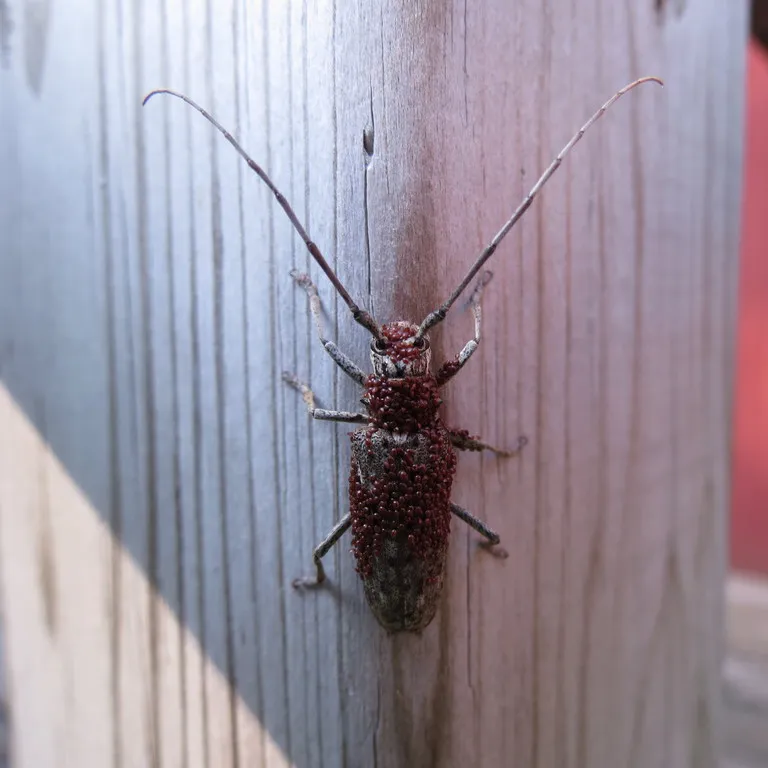
- Pine sawyers (Monochamus spp.): The most common beetles that emerge from firewood and new lumber in the eastern U.S. and Canada. Larvae feed in dead and dying pines and other conifers.
- Old house borer (Hylotrupes bajulus): The one round-headed borer that reinfests dry softwood framing. See our old house borer page.
- Asian longhorned beetle (Anoplophora glabripennis): An invasive species that attacks healthy maples and other hardwoods. Report sightings. See our Asian longhorned beetle page.
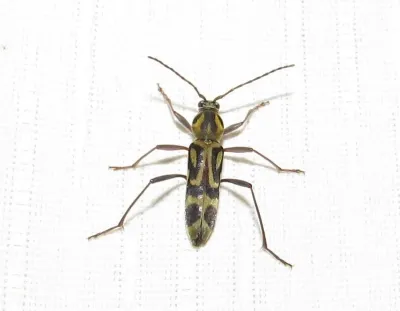
- Banded ash borer (Neoclytus caprea) and red-headed ash borer (Neoclytus acuminatus): Common in ash and oak firewood.
- Prionus root borers (Prionus spp.): Very large larvae that feed in roots of trees and shrubs.
For adult beetle identification, see our longhorn beetle page.
Round-Headed Borer Behavior and Biology
Habitat
Most round-headed borers need moist wood. Females lay eggs in bark cracks on weak, dying, or freshly cut trees. Logs, stumps, and stacked firewood work too. A few species, like the Asian longhorned beetle, attack healthy trees. Dry lumber inside a home is poor food for nearly all species.
Diet
The larvae eat the inner bark and wood. Young larvae feed just under the bark. As they grow, they bore deeper into the wood. Adults feed lightly on bark, twigs, leaves, or pollen, and some do not feed at all.
Life Cycle
Round-headed borers go through egg, larva, pupa, and adult stages. Most species take one to three years to develop. In poor, dry wood, growth can slow down a lot. That is why beetles can appear years after wood is cut. The larva builds a resting chamber near the surface to change into an adult. The adult then chews a round exit hole and leaves. Most adults emerge outdoors from late spring through summer.
Firewood Emergence Indoors
A warm house acts like an early spring. Larvae in logs stored indoors finish growing fast. Adults may come out in January or February. These beetles are a nuisance, not a threat. They cannot lay eggs in your furniture, floors, or framing. They usually die within a few days indoors. Termites in stacked wood are a different issue, covered in our post on termites in firewood.
New-Construction Lumber Emergence
Sometimes larvae are already in lumber when a house is built. This is most common in boards with bark still on one edge, or lumber that was not fully kiln-dried. Adults may chew out through drywall, trim, subfloors, or even carpet in the first year or two. It is alarming, but it is usually a one-time event. Once they leave, they do not come back to dry framing.
When It Is a Structural Problem
It is a structural problem when the beetle is the old house borer. Signs include oval exit holes about 1/4 to 3/8 inch wide in pine or other softwood framing, tightly packed frass with tiny pellets, and ticking or rasping sounds in the wood. Old house borers can reinfest the same framing for many years. Small round holes with fine, flour-like dust point to powderpost beetles instead. Mud tubes and soil-lined galleries point to termites.
Treatment Methods for Round-Headed Borers
Most round-headed borer problems do not need any pesticide in the home. The right fix depends on where the beetles came from.
- Confirm the insect: Save an emerging beetle or a photo of the exit holes and frass. Your county extension office can confirm the species. This step decides whether you have a nuisance or a structural pest.
- Firewood: Keep firewood outside, off the ground, and at least 20 feet from the house. Burn the oldest wood first, and bring in only what you will use that day. Spraying firewood is not recommended. Buy firewood locally or buy heat-treated wood, and do not carry it long distances.
- New-construction emergence: Patch exit holes after the beetles are done emerging. No treatment of the framing is usually needed, since these species cannot reinfest dry wood.
- Trees: Keep trees healthy with deep watering during drought. Remove dead and dying trees and limbs, which attract egg-laying females. Consult a certified arborist about stressed or valuable trees.
- Structural lumber: If old house borers are confirmed, options include borate wood treatments, replacing badly damaged wood, and fumigation for widespread infestations.
- Rule out termites: If you are not sure what is damaging your wood, a professional termite inspection can rule out termites and other wood-destroying insects.
References
- Longhorned Beetles, or Roundheaded Wood Borers, University of California Agriculture and Natural Resources
- Insects in Firewood (E-67), Purdue University Extension
- Wood-Boring Beetles (G7422), University of Missouri Extension
- Pine Sawyers in Virginia, Virginia Cooperative Extension
- Old House Borer, Penn State Extension
Other Wood Boring Beetles
Explore other species in the wood boring beetles family
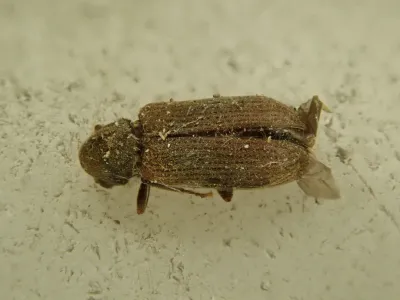
Commonly Confused With
Round-Headed Borers are often mistaken for these similar pests
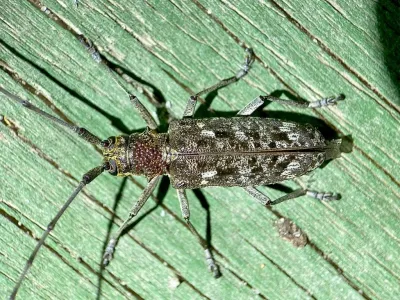
Pine Sawyer Beetles
Learn more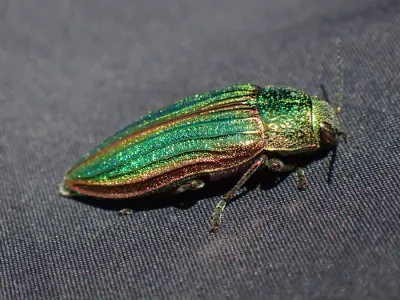
Flat-Headed Borers
Learn more
Old House Borers
Learn more
Longhorn Beetles
Learn more
Powder Post Beetles
Learn more
Asian Longhorned Beetles
Learn more
Termites
Learn more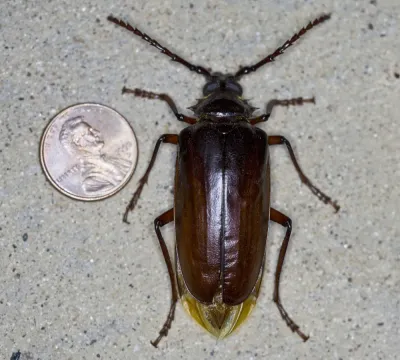
Prionus Root Borers
Learn more
White Oak Borers
Learn more
Red Oak Borers
Learn more
Locust Borers
Learn more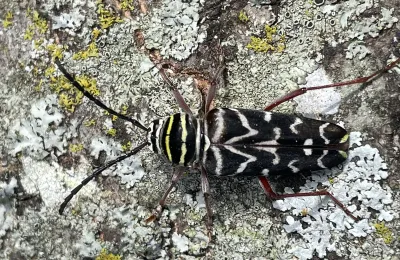
Painted Hickory Borers
Learn more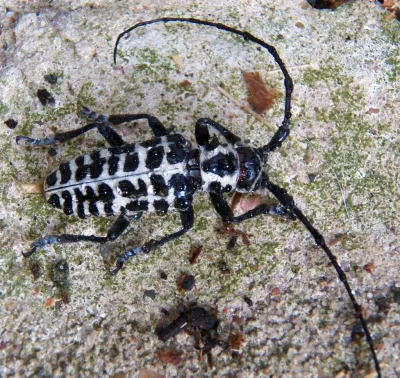
Cottonwood Borers
Learn more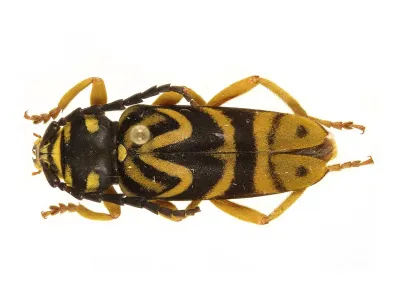
Sugar Maple Borers
Learn moreWhere Round-Headed Borers Are Found
Hover over states to see their names. Green regions indicate where round-headed borers have been reported.
Common Questions about Round-Headed Borers
What is a round-headed borer?
+
A round-headed borer is the larva of a longhorned beetle (family Cerambycidae). It is a legless, creamy white grub that tunnels through wood. The name comes from the round shape of its body and tunnels when you look at them in cross section. The adults are the long-antennaed beetles you may see on logs or porch lights.
Why are beetles coming out of my firewood indoors?
+
Round-headed borers often live inside logs that were cut from dead or dying trees. When you bring that wood into a warm house, the heat speeds up their growth, and adults chew out of the logs weeks or months early, even in winter. These beetles cannot infest the dry wood in your home. Store firewood outside and bring in only what you will burn the same day.
Beetles are chewing out of the walls of my new house. Should I worry?
+
In most cases, no. Pine sawyers and other round-headed borers can survive in lumber that was not fully kiln-dried. They may chew out through drywall, trim, or flooring during the first year or two after construction. They do not lay eggs in dry, finished framing, so the problem ends once they emerge. The exception is the old house borer, which can reinfest softwood framing and needs an expert inspection.
How can I tell round-headed borer damage from flat-headed borer damage?
+
Round-headed borers leave round exit holes and tunnels that are round or slightly oval in cross section. They often push coarse, stringy frass out of the wood. Flat-headed borers leave flattened, oval or D-shaped exit holes and broad, winding galleries packed tightly with fine, layered frass. The larvae differ too: flat-headed borer larvae have a very wide, flat segment behind the head.
Do round-headed borers damage houses?
+
Most species do not. They need moist wood from freshly cut, dying, or dead trees and cannot complete their life cycle in dry, seasoned lumber. The old house borer is the main exception in North America because it can reinfest pine, spruce, and fir framing for many years. If you find oval holes with tightly packed frass in framing, have the wood inspected.
Are round-headed borers harmful to people or pets?
+
No. The larvae stay inside wood, and the adults do not sting or spread disease. Some large adult beetles can give a pinch with their jaws if handled roughly. The main harm is to trees, logs, and lumber.
How do I get rid of round-headed borers in firewood?
+
You do not need to spray firewood. Keep the woodpile outdoors, off the ground, and away from the house. Burn older wood first, and bring in only small amounts at a time. Buy local or heat-treated firewood, and do not move firewood long distances, since that can spread invasive borers to new areas.

With five years of hands-on experience in the pest control industry, George Schulz is a registered technician with the Virginia Pest Management Association and a proud third-generation professional in a family business that's been protecting homes for over 58 years. He manages and trains a team of service pros while also leading internal research efforts—recently spearheading a deep-dive review of thousands of documents on pest control materials to hand-pick the most kid and pet friendly, most effective solutions tailored specifically for homes in the DC metro area.
Local Round-Headed Borers Help
Dealing with round-headed borers at home? Our licensed technicians provide pest control across Northern Virginia and Maryland.
