White Oak Borers Identification Guide
Goes tigrinus
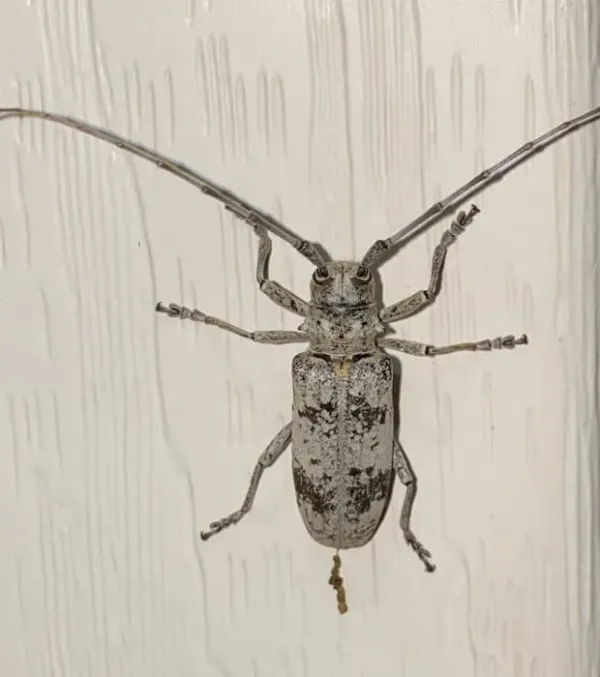
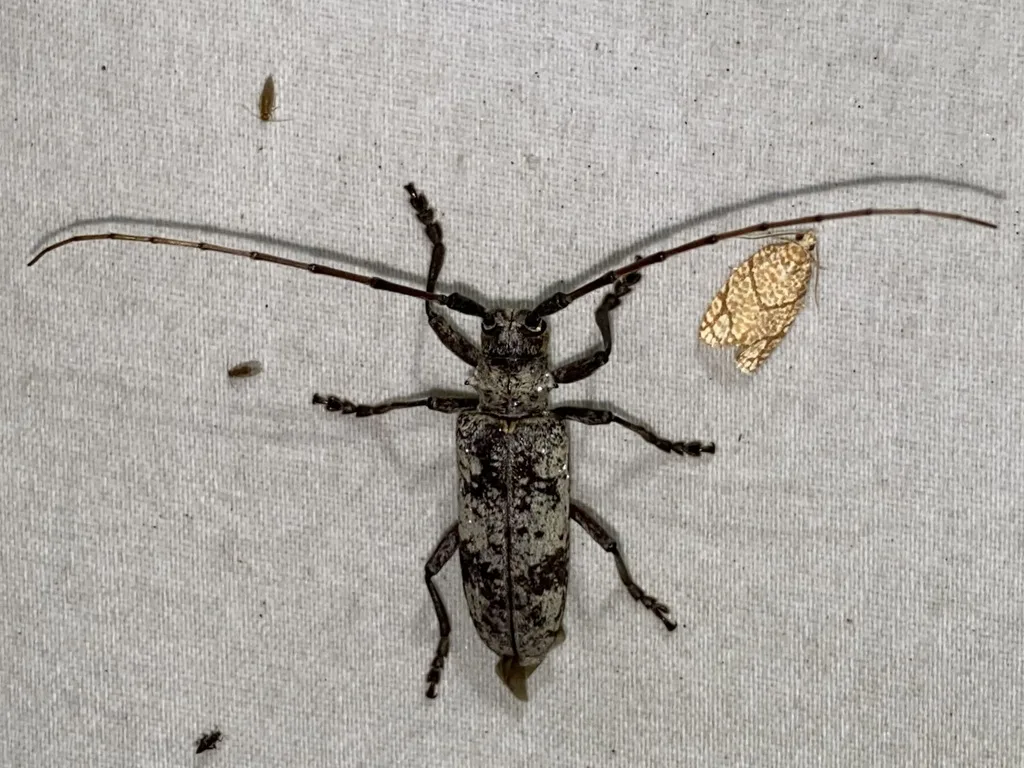
The white oak borer is a large mottled gray longhorn beetle of the eastern United States. Its larvae tunnel for several years inside the trunks of young white oaks, leaving wet frass and holes that ruin the wood.
Taxonomy
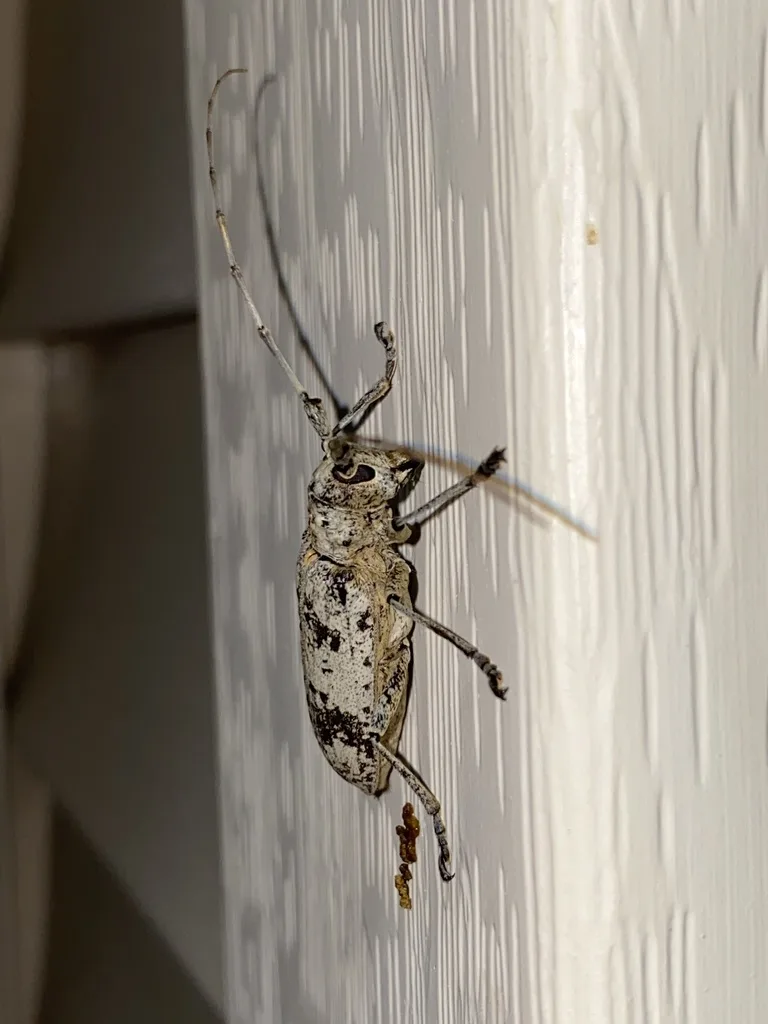
White Oak Borers Coloration
Common color patterns to help identify white oak borers
White Oak Borers
Seasonal Activity
When white oak borers are most active throughout the year

Where White Oak Borers Are Found
Hover over states to see their names. Green regions indicate where white oak borers have been reported.
White Oak Borer Identification Guide
The white oak borer (Goes tigrinus) is one of the largest native longhorn beetles you are likely to meet in the eastern United States. It is a tree pest, not a house pest. Its larvae spend three to four years tunneling inside the trunk of a young white oak, and the damage they leave behind is what foresters and sawmills care about most.
Homeowners usually meet the adult, not the larva. A big gray beetle turns up on the siding or under a porch light on a June evening. Its antennae are longer than its body. It looks alarming enough to send people searching.
Physical Characteristics
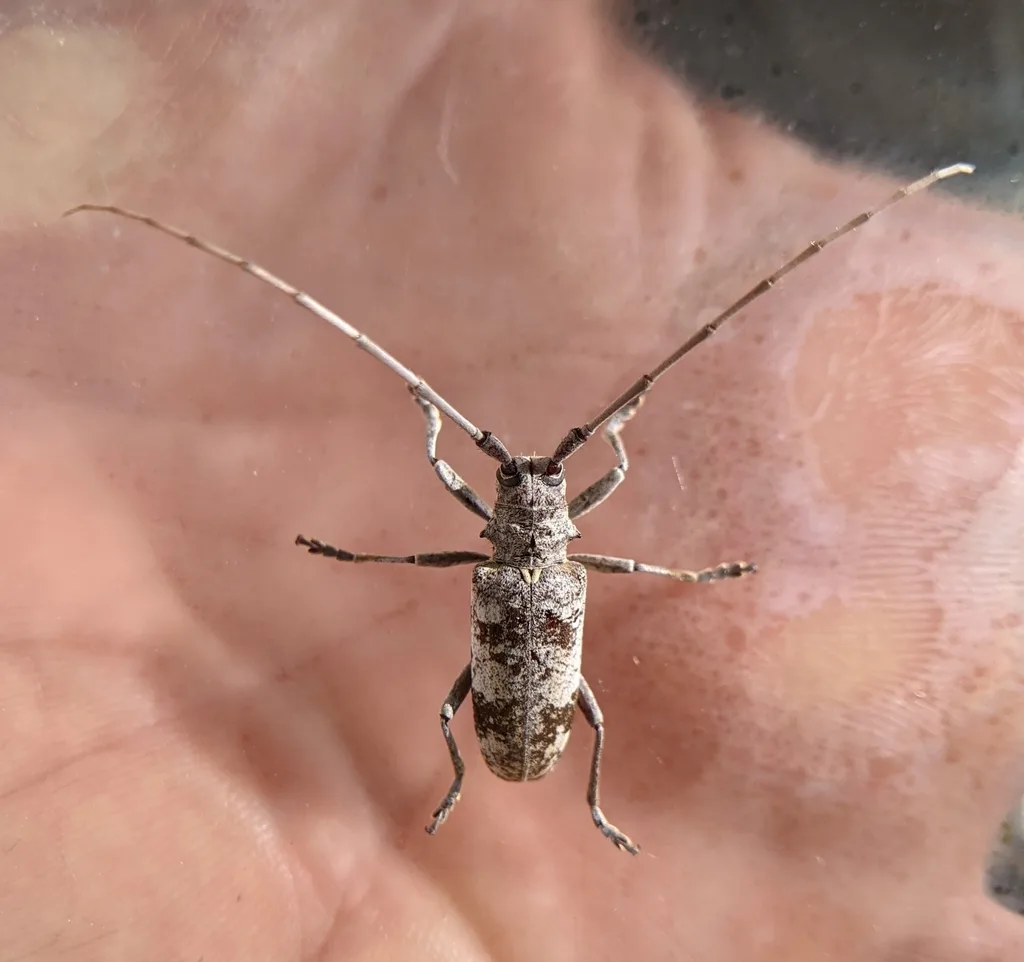
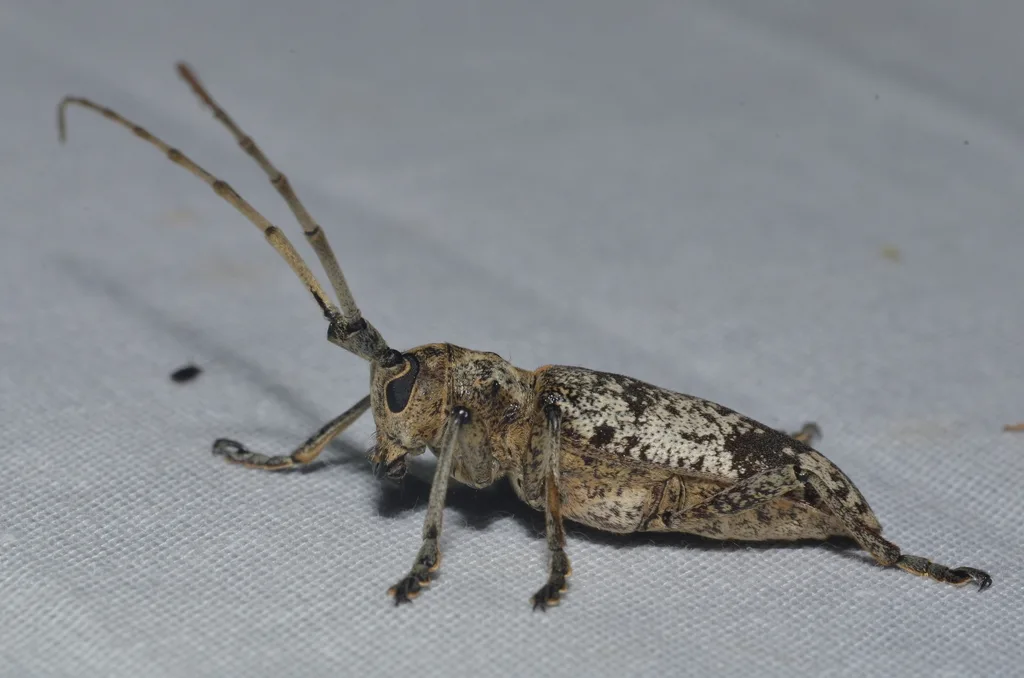
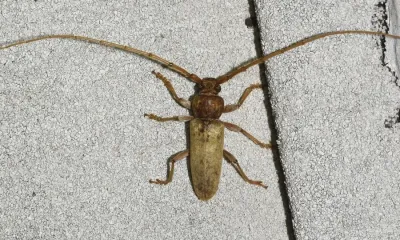
Adults measure 22 to 38mm, roughly one to one and a half inches. The body is long and cylindrical, the way most longhorn beetles are built.
Key features of adults:
- Dense white and cream scales over a dark body, giving a dusty, mottled gray look
- An irregular dark band or set of blotches across the lower half of the wing covers
- Antennae as long as the body or longer, gray with darker joints
- Legs banded in the same gray-and-dark pattern as the body
- A grainy, salt-and-pepper texture rather than any gloss or shine
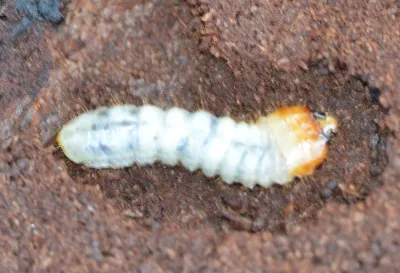
The larva is a classic roundheaded borer grub: cream colored, thick, wrinkled, and legless, with a hard brown head and heavy jaws. Grown larvae are the width of a pencil. They are almost never seen unless a trunk is split open.
Common Species
The genus Goes holds several large borers of eastern hardwoods. They look similar and are separated mostly by host tree and by the pattern on the wing covers.
- Goes tigrinus: the white oak borer. Mottled gray, tied to the white oak group.
- Goes pulverulentus: the living beech borer. Slightly smaller, grayer, found in beech, elm, and oak.
- Goes debilis: the oak branch borer. A smaller species that works in branches rather than trunks.
- Goes pulcher: the hickory borer of Goes, patterned with a pale band and found on hickory.
White Oak Borer Behavior and Biology
Habitat
White oak borers need living trees. They go after young white oaks that are growing slowly in shade, mostly trunks under about six inches across. A crowded sapling at the edge of a woodlot is a much more likely target than a big, open-grown yard oak.
Attacks cluster on a few “brood trees.” One small oak may hold several larvae of different ages. The trees right next to it may hold none. Most tunneling happens in the lowest few feet of the trunk.
Diet
The larva eats wood. It chews through the bark and into the sapwood. Then it turns and drives a round tunnel into the heartwood. That tunnel is about 12mm wide and up to six inches long. Adults barely feed at all. They nibble tender twigs and leaf stems for a week or two, then mate.
Life Cycle
The female chews a small oval pit through the bark. She lays one egg in it. Over her short life she lays only nine to fifteen eggs in all. The egg hatches within a couple of weeks. The young larva then bores inward and pushes damp frass and sap back out through the wound.
Larvae then feed and overwinter inside the trunk for three to four years. That long cycle is the defining trait of this insect. When the larva is finally grown, it pupates near the end of its tunnel. The adult chews a round exit hole through the bark in late spring.
Signs on the Tree
- Wet sap streaking down the bark from a small opening, usually the first symptom
- Moist, coarse frass packed around the wound or piled at the base of the trunk
- A swollen, cankered, or off-center patch of trunk where tissue has grown over old tunneling
- Round exit holes about 12mm across, usually within a few feet of the ground
- Small trees breaking off in wind at the weakened point
The tunnels reach the heartwood, so even a tree that survives keeps the scars for good. That is why this beetle matters so much to white oak grown for veneer, flooring, and whiskey barrel staves.
Treatment Methods for White Oak Borers
The white oak borer is a forest and shade-tree insect. It does not attack homes, and Better Termite & Pest Control does not treat for it — this is work for a certified arborist or a state forester. What follows is what forestry research and extension programs recommend against trunk borers in living hardwoods.
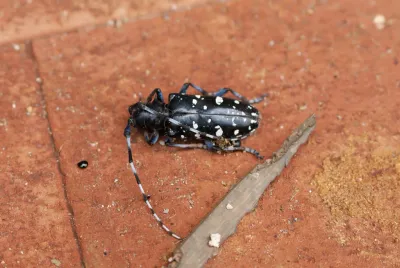
- Confirm the insect first. Wet frass and exit holes on an oak can come from several different borers. Each one calls for a different response. An arborist or a local extension office can name the species from a photo, an exit hole, or a specimen. If the beetle is glossy black with white spots, stop and report it as a possible Asian longhorned beetle.
- Remove and destroy heavy brood trees. The most effective step in the research is simple. Cut out the small oaks that hold several larvae. Chip or burn the wood before the next batch of adults comes out. That wipes out the local breeding site. In a yard it usually means taking down one badly damaged sapling.
- Keep the remaining trees growing well. Slow, shaded, stressed trunks are the ones that get attacked. Thin the canopy to let light in. Water during drought and mulch out to the drip line. Keep mowers and string trimmers off the bark, since wounds give females an easy place to lay.
- Do not count on sprays. Larvae sit inches deep in heartwood, where no surface product reaches. The adult flight window is short too. On a high-value tree, let a licensed arborist choose and apply any trunk or systemic treatment, following the product label and state rules.
- Do not confuse this with a structural problem. Borers that come out of firewood stacked indoors just leave and die. They cannot infest dry lumber. If beetles are coming out of framing or flooring, a different kind of wood-destroying insect is at work. Our termite control service covers the subterranean termites behind most structural wood damage in the Mid-Atlantic. A pest control plan handles the general pests inside the house.
Species Commonly Confused With White Oak Borers
- Asian longhorned beetles: glossy jet black with crisp white spots and black-and-white banded antennae. The white oak borer is dull, dusty gray with fuzzy blotches. Get this one right. The Asian longhorned beetle has to be reported.
- Red oak borer (Enaphalodes rufulus): a similar-sized native longhorn, but reddish brown rather than gray, and it develops in red oak group trees instead of white oaks. Host tree is often the fastest way to tell them apart.
- Round-headed borers: the general name for all longhorn beetle larvae, including this one. The grubs look alike across many species, so identification usually depends on the adult and the host.
- Old house borers: also grayish, but smaller, with two pale marks on the wing covers. They attack seasoned softwood framing, which the white oak borer never does.
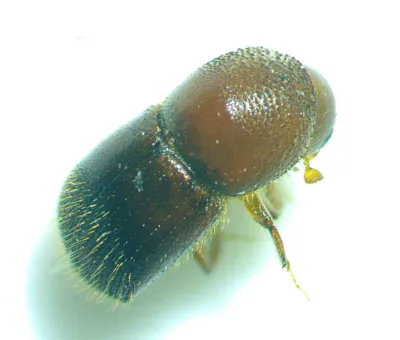
- Bark beetles: tiny, dark, and cylindrical, leaving pencil-lead-sized holes and branching galleries just under the bark. Nothing like the single large gallery of a white oak borer.
References
- Forest Pest Insects in North America: A Photographic Guide (White Oak Borer), USDA Forest Service
- Goes tigrinus, Integrated Taxonomic Information System (ITIS)
- Flatheaded and Roundheaded Borers, University of California Agriculture & Natural Resources
- Asian Longhorned Beetle, National Invasive Species Information Center (USDA)
- Wood-Boring Beetles in Homes, University of California Agriculture & Natural Resources
- Wood-Destroying Insects, University of Kentucky Entomology
Other Wood Boring Beetles
Explore other species in the wood boring beetles family
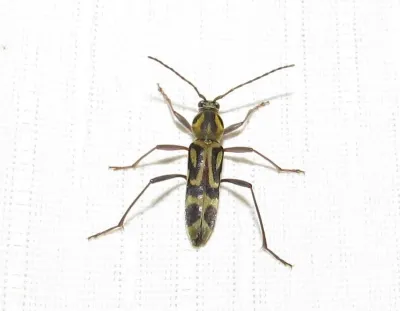
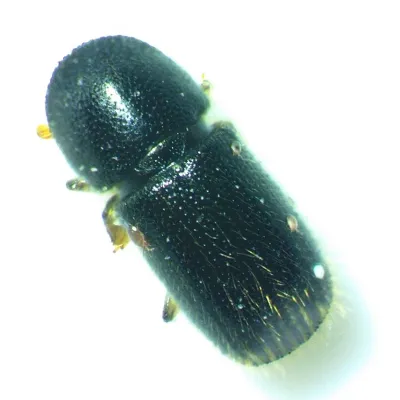
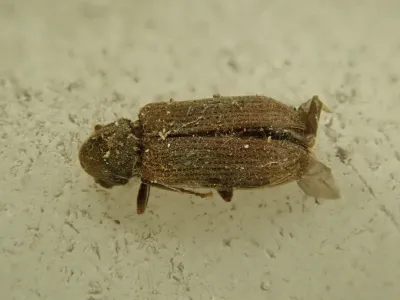
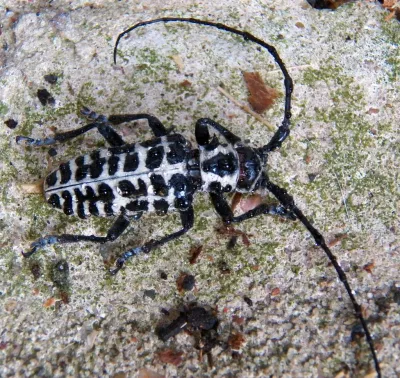
Commonly Confused With
White Oak Borers are often mistaken for these similar pests
Where White Oak Borers Are Found
Hover over states to see their names. Green regions indicate where white oak borers have been reported.
Common Questions about White Oak Borers
What is a white oak borer?
+
The white oak borer (Goes tigrinus) is a large longhorn beetle native to the eastern United States. Adults are about one to one and a half inches long and look mottled gray and white. The larvae bore into the trunks of young white oak trees and feed inside the wood for three to four years before turning into adults.
What trees do white oak borers attack?
+
They stick to the white oak group. White oak (Quercus alba) is the main host, and overcup oak (Quercus lyrata) is attacked in the South. Red oaks are used by a different insect, the red oak borer. White oak borers prefer small, slow-growing, shaded trees under about six inches across rather than big healthy ones.
How can I tell if a tree has white oak borers?
+
Look low on the trunk of a young white oak. Signs include wet sap running down the bark, damp sawdust-like frass pushed out of a small opening, a swollen or scarred area, and round exit holes about half an inch across. Small trees may snap at the weakened spot in a wind storm.
Do white oak borers damage houses?
+
No. White oak borers develop only in living oak trees, not in dried, milled lumber. They cannot re-infest framing, flooring, or furniture. If beetles are emerging from wood inside a home, the culprit is a different insect such as an old house borer or a powderpost beetle.
Do white oak borers bite or sting?
+
They do not sting and they do not carry disease. A large longhorn beetle held in the hand can give a hard pinch with its jaws, which is startling but not medically serious. Adults found on siding or porch lights can simply be brushed outdoors.
When are adult white oak borers active?
+
Adults emerge from late spring into early summer, mostly May and June in the Mid-Atlantic. Southern populations can start in April and northern ones may run into July. Adults live only a few weeks. Larvae are inside the wood all year, which is why damage keeps showing up long after the beetles are gone.
Should I spray my oak tree for borers?
+
Spraying rarely helps. Larvae sit deep in the trunk where products cannot reach, and adults are present only for a short window. Forestry research points to removing and destroying heavily infested small trees and keeping the rest of the stand growing well. A certified arborist can confirm the pest before anything is applied.
Is the white oak borer the same as the Asian longhorned beetle?
+
No. The Asian longhorned beetle is a regulated invasive pest with a glossy black body, bold white spots, and black-and-white banded antennae. The white oak borer is native and looks dusty gray with irregular dark blotches. If you believe you have found an Asian longhorned beetle, report it to your state agriculture agency.

With five years of hands-on experience in the pest control industry, George Schulz is a registered technician with the Virginia Pest Management Association and a proud third-generation professional in a family business that's been protecting homes for over 58 years. He manages and trains a team of service pros while also leading internal research efforts—recently spearheading a deep-dive review of thousands of documents on pest control materials to hand-pick the most kid and pet friendly, most effective solutions tailored specifically for homes in the DC metro area.
Local White Oak Borers Help
Dealing with white oak borers at home? Our licensed technicians provide pest control across Northern Virginia and Maryland.
