Common Furniture Beetle Identification Guide
Anobium punctatum
The common furniture beetle is a tiny brown anobiid beetle whose larvae, often called woodworm, tunnel through damp softwood and hardwood for years. Round 1/16-inch exit holes and gritty, pellet-filled dust are the telltale signs.
Taxonomy
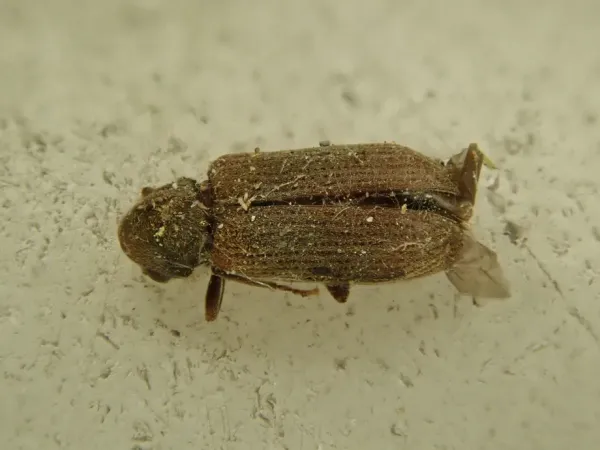
Common Furniture Beetle Coloration
Common color patterns to help identify common furniture beetle
Common Furniture Beetle
Seasonal Activity
When common furniture beetle are most active throughout the year
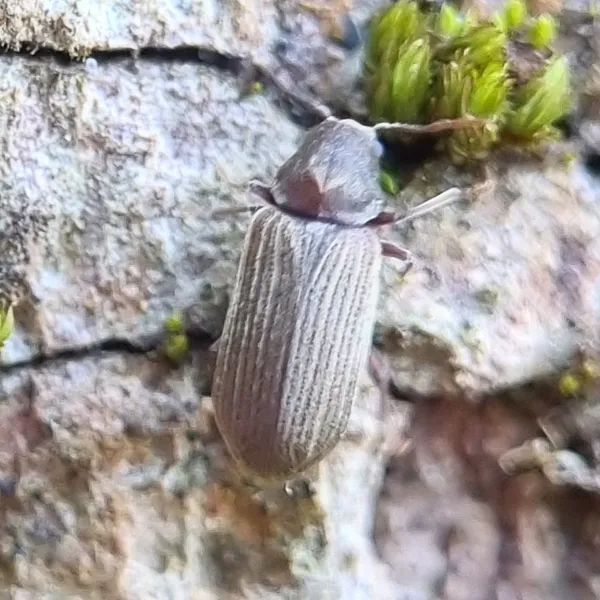
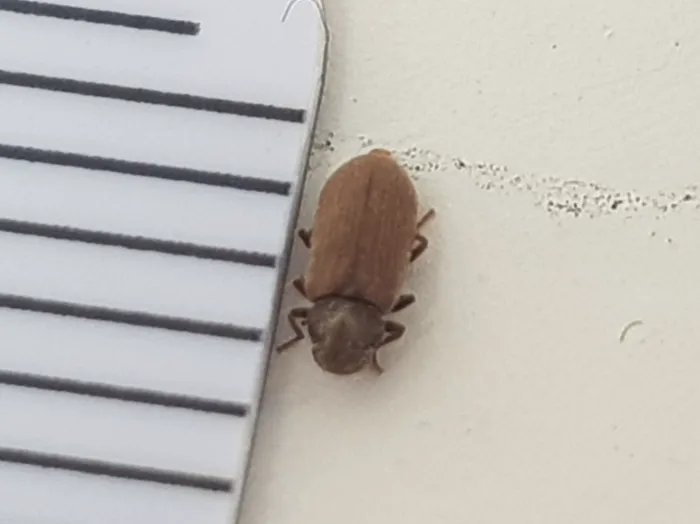

Where Common Furniture Beetle Are Found
Hover over states to see their names. Green regions indicate where common furniture beetle have been reported.
Common Furniture Beetle Identification Guide
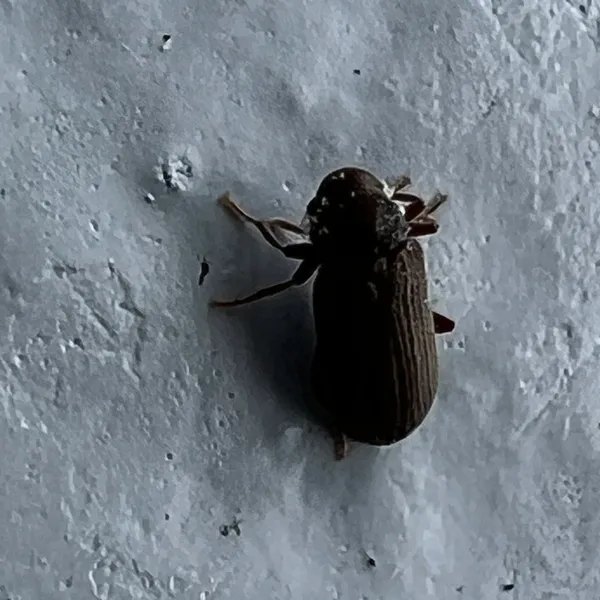
The common furniture beetle (Anobium punctatum) is one of the most widespread wood-boring beetles in the world. It came from Europe, where its grubs are called “woodworm,” and it now lives in homes across much of North America. Despite the name, it attacks far more than furniture. Floor joists, subfloors, stair treads, and wood paneling can all be infested.
Physical Characteristics
- Size: About 2.5 to 5 mm long (roughly 1/10 to 1/5 inch). Most are close to 4 mm.
- Color: Reddish-brown to dark chocolate brown, with fine, short hairs.
- Hooded thorax: From above, the head is hidden under a raised, hood-shaped thorax. From the side, the beetle looks humpbacked.
- Pitted wing covers: The wing covers have straight rows of tiny pits. This is the best field mark. Its scientific name, punctatum, means “dotted.”
- Antennae: The last three segments are long and loose, forming a club that is about as long as the rest of the antenna combined.
Larvae are creamy white, C-shaped grubs up to about 1/4 inch long. You will almost never see them, because they live their whole lives inside wood.
Exit holes are perfectly round and about 1/16 inch (1 to 2 mm) wide. Frass (the dust larvae leave behind) is gritty, with tiny lemon-shaped pellets you can feel when you rub it between your fingers.
How It Differs from Look-Alikes
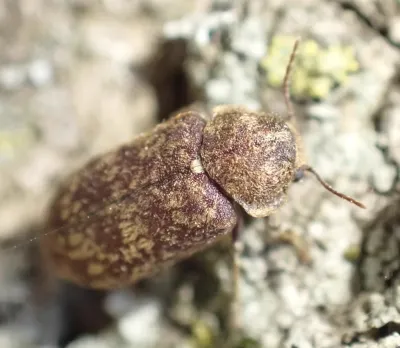
- Deathwatch beetles: Also anobiids, but larger (5 to 9 mm), with mottled patches of pale hair and no rows of pits. Their exit holes are about 1/8 inch wide, and they usually attack old, fungus-softened hardwood.
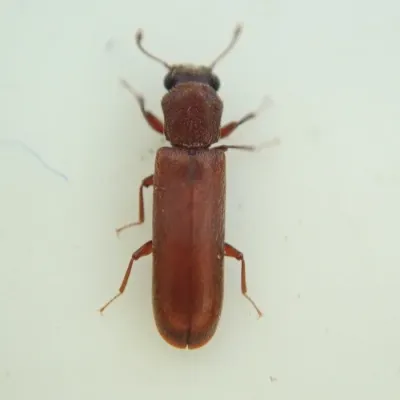
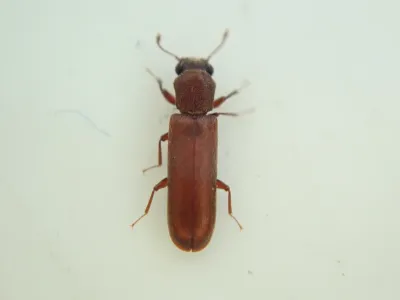
- Lyctid powderpost beetles: Flatter and longer, with the head clearly visible from above. Their frass feels like talcum powder with no grit, and they only attack hardwoods like oak and ash, never pine framing.
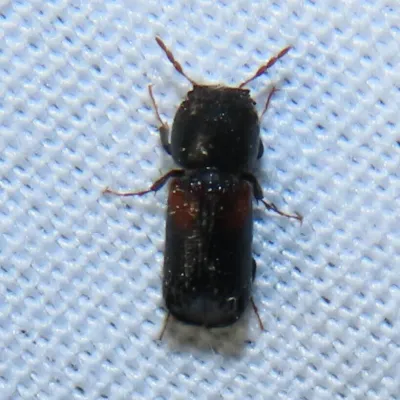
- False powderpost beetles: Also hooded, but larger, with a rough, rasp-like thorax. Exit holes are bigger (1/8 to 3/16 inch) and they favor bamboo and tropical hardwoods.
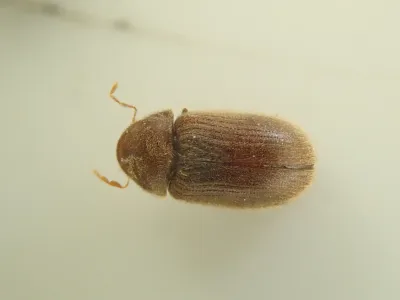
- Drugstore beetles: A close relative of nearly the same size and shape. The key difference is where you find them. Drugstore beetles live in pantry foods, spices, and dried goods, not in wood with fresh exit holes.
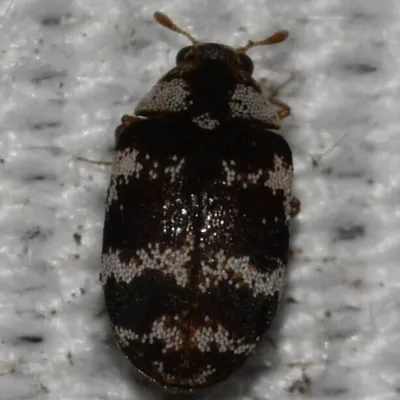
- Furniture carpet beetles: Only the name is similar. These are round, mottled beetles whose larvae eat wool and upholstery, not wood.
Common Species
The common furniture beetle belongs to the subfamily Anobiinae, sometimes still called family Anobiidae. North American relatives that damage wood include the deathwatch beetle (Xestobium rufovillosum), the eastern deathwatch beetle (Hemicoelus carinatus), and Euvrilletta peltata, a common anobiid in southern crawl spaces. Pantry relatives include the drugstore beetle (Stegobium paniceum) and the cigarette beetle (Lasioderma serricorne).
Common Furniture Beetle Behavior and Biology
Habitat and Wood Preferences
Furniture beetles feed mainly on the sapwood of seasoned wood, both softwoods like pine and fir and hardwoods like oak and walnut. Plywood, older furniture, and wicker are also attacked. Unlike lyctid powderpost beetles, anobiids can digest cellulose, so they can keep feeding in the same wood for many years.
Moisture is the key. Larvae need wood moisture of roughly 13 to 30 percent. That is why infestations cluster in damp crawl spaces, basements, garages, sheds, and unheated rooms. Wood kept below about 12 percent moisture, as in most heated, air-conditioned living spaces, rarely supports them.
In the United States, anobiid damage is most common in coastal and southeastern states, where humidity stays high. In the Mid-Atlantic, homes near the Chesapeake Bay and older homes with dirt-floor crawl spaces in Virginia, Maryland, and DC are the most likely places to find them.
Diet
Larvae eat wood fibers, starches, and sugars in the sapwood. Adults barely feed at all. They live just two to four weeks, long enough to mate and lay eggs.
Life Cycle
- Eggs: A female lays 20 to 60 tiny white eggs in cracks, joints, rough end-grain, or old exit holes in bare wood.
- Larvae: Grubs hatch in a few weeks and tunnel along the grain. This stage lasts two to four years, and longer in dry or cool wood.
- Pupae: Mature larvae move close to the surface to pupate for a few weeks.
- Adults: New beetles chew round exit holes and emerge, mostly from May through August. Adults fly short distances and are drawn to windows and lights.
Because the life cycle is so long, an antique or piece of lumber can look clean when you buy it and show exit holes years later. Beetles often lay eggs in the same wood they came from, so damage builds up slowly over many generations.
Signs of Infestation
- Round exit holes about 1/16 inch wide, often in clusters
- Small piles of gritty, cream-colored frass on floors, shelves, or crawl space soil below the holes
- Small brown beetles on windowsills in late spring and summer
- In heavy cases, wood that crumbles when probed with a screwdriver
Old, inactive damage is common. Holes with dark, dirty edges and no fresh dust may be decades old.
Treatment Methods for Common Furniture Beetles
Anobiid beetles can respond well to a mix of moisture control and targeted wood treatments. The right approach depends on whether the beetles are in loose items or in the structure.
- Inspection: Confirm the insect and whether it is active. A trained inspector checks exit-hole size, frass texture, and wood moisture, and separates furniture beetles from termites, lyctids, and old house borers. Beetle damage in joists is often first noted during a wood-destroying insect report for a home sale.
- Moisture control: Drying the wood is the most important step. Improving crawl space ventilation, fixing leaks and drainage, and covering bare soil with a 6 to 8 mil plastic vapor barrier can make wood unsuitable for larvae.
- Borate wood treatments: Borate products are sprayed or brushed onto bare, unfinished wood. They soak in and affect larvae as they feed and as new adults chew out. Paint, stain, and varnish block them, so finished surfaces may need to be stripped first.
- Treating loose items: Infested furniture, frames, and tools can be treated by controlled heating, extended freezing, or chamber fumigation, often by specialists who work with antiques.
- Structural fumigation: Reserved for widespread, active damage where other options will not reach. It kills all life stages but leaves no lasting protection.
- Wood replacement: Badly weakened joists or boards may need to be replaced or reinforced.
Prevention tips:
- Inspect antiques, secondhand furniture, and reclaimed lumber for fresh holes and dust before bringing them inside.
- Keep indoor humidity below about 60 percent and crawl space wood moisture near 13 percent or lower.
- Seal bare wood with paint, varnish, or wax to remove egg-laying cracks.
- Mark or fill old holes so you can spot new ones.
References
- Powderpost Beetles and Other Wood-Infesting Insects - University of Florida IFAS Extension
- Powderpost Beetles and Wood-Inhabiting Fungi - NC State Extension
- Powderpost Beetles - University of Kentucky Entomology
- Powderpost Beetles - University of Maryland Extension
- Furniture and Deathwatch Beetles - Texas A&M Urban and Structural Entomology Program
- Furniture Beetle Identification Guide - Natural History Museum, London
Other Wood Boring Beetles
Explore other species in the wood boring beetles family
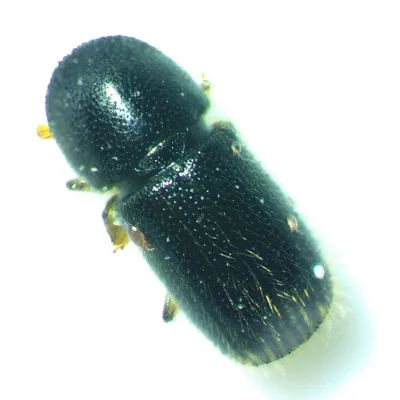
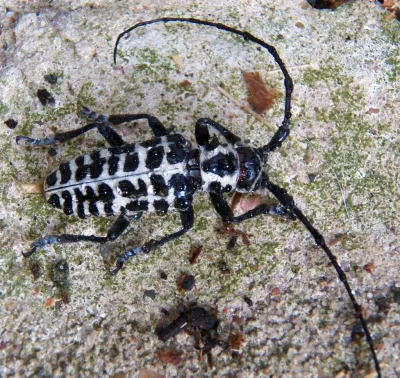
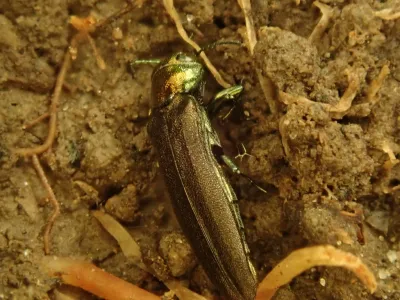
Commonly Confused With
Common Furniture Beetle are often mistaken for these similar pests
Where Common Furniture Beetle Are Found
Hover over states to see their names. Green regions indicate where common furniture beetle have been reported.
Common Questions about Common Furniture Beetle
What does a common furniture beetle look like?
+
Adults are small, about 1/10 to 1/5 inch long, and reddish to dark brown. From above, the head is hidden under a hood-shaped thorax. The wing covers have neat rows of tiny pits that look like lines of pinpricks. The antennae end in three long segments.
Are common furniture beetles the same as furniture carpet beetles?
+
No. The names are similar, but they are very different insects. Common furniture beetles bore into wood. Furniture carpet beetles are round, mottled beetles whose larvae feed on wool, upholstery, and other animal fibers. They do not eat wood.
How do I know if the infestation is still active?
+
Look for fresh, light-colored dust (frass) below round holes about 1/16 inch wide. Old holes look dark and dirty inside. Vacuum the area, then check again in a few weeks, especially from May through August. New dust or new holes mean larvae are still feeding.
Can common furniture beetles damage the structure of my house?
+
They can, but it takes time. Larvae feed for two to four years or more, and damage builds up over many generations. Serious structural damage is most often found in damp crawl spaces, basements, and older homes where joists and subfloors stay above about 13 percent moisture.
Do furniture beetles bite people or pets?
+
No. Adults live only a few weeks, do not feed much, and do not bite or sting. The problem is the wood damage caused by the larvae, not any risk to people or pets.
How do furniture beetles get into a home?
+
Most arrive inside old furniture, antiques, or reclaimed lumber, since larvae can live hidden in wood for years. Adults can also fly short distances in late spring and summer and lay eggs in cracks or old exit holes in bare wood.
What is the best way to get rid of common furniture beetles?
+
Treatment depends on where they are. Loose furniture can be heat-treated, frozen, or fumigated. Structural wood is usually dried out and treated with borate wood products, which soak into bare wood. Lowering wood moisture is the most important long-term step.

With five years of hands-on experience in the pest control industry, George Schulz is a registered technician with the Virginia Pest Management Association and a proud third-generation professional in a family business that's been protecting homes for over 58 years. He manages and trains a team of service pros while also leading internal research efforts—recently spearheading a deep-dive review of thousands of documents on pest control materials to hand-pick the most kid and pet friendly, most effective solutions tailored specifically for homes in the DC metro area.
Local Common Furniture Beetle Help
Dealing with common furniture beetle at home? Our licensed technicians provide pest control across Northern Virginia and Maryland.
