Cottonwood Borers Identification Guide
Plectrodera scalator
Cottonwood borers are big black-and-white longhorn beetles. Their grubs tunnel into the base and roots of cottonwoods, poplars, and willows, and can girdle and kill young trees.
Taxonomy
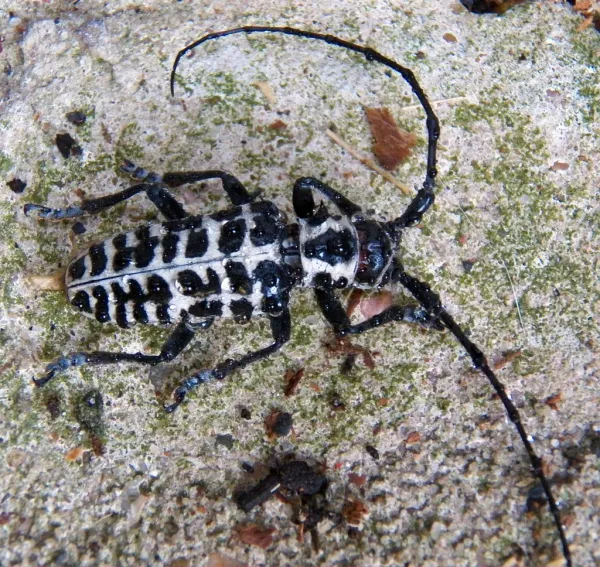
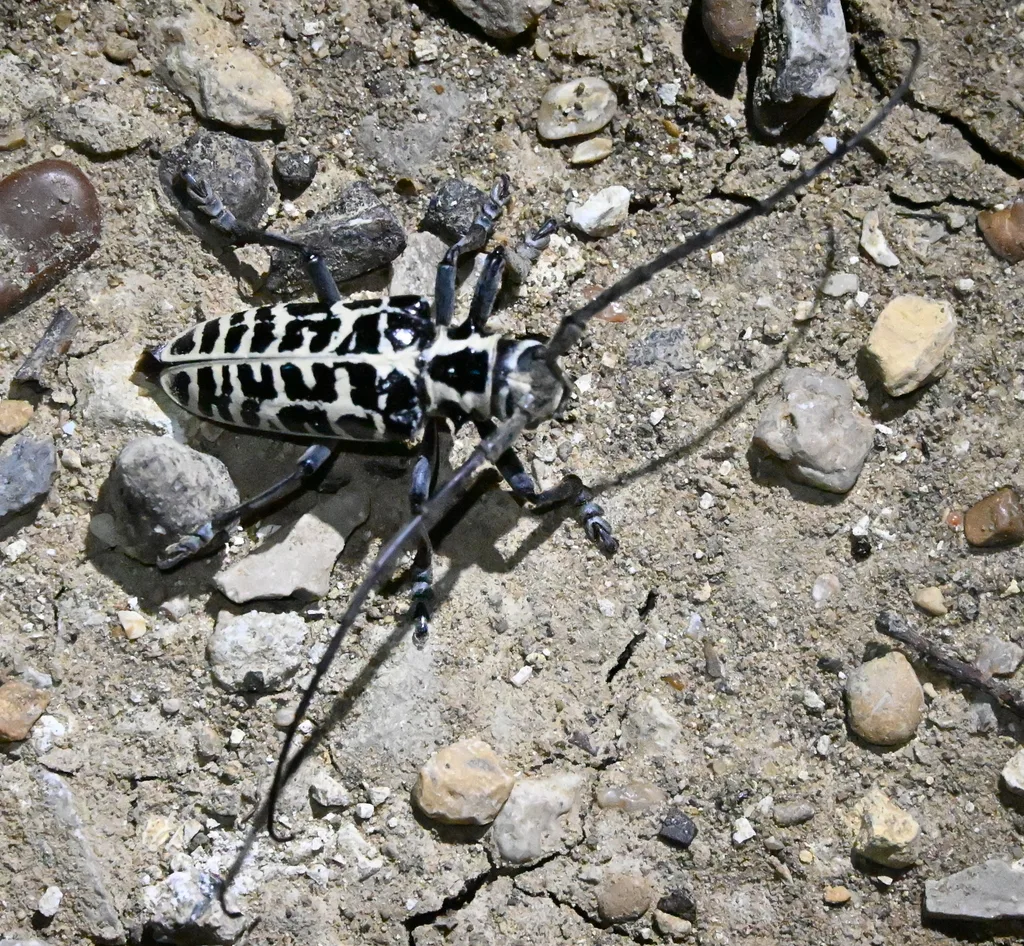
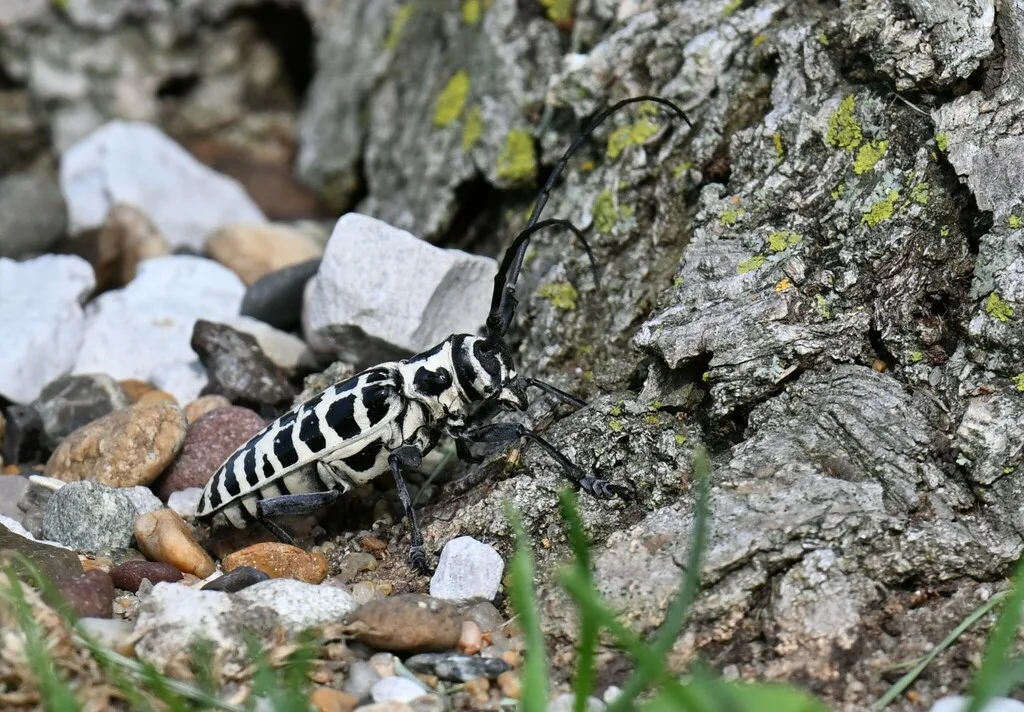
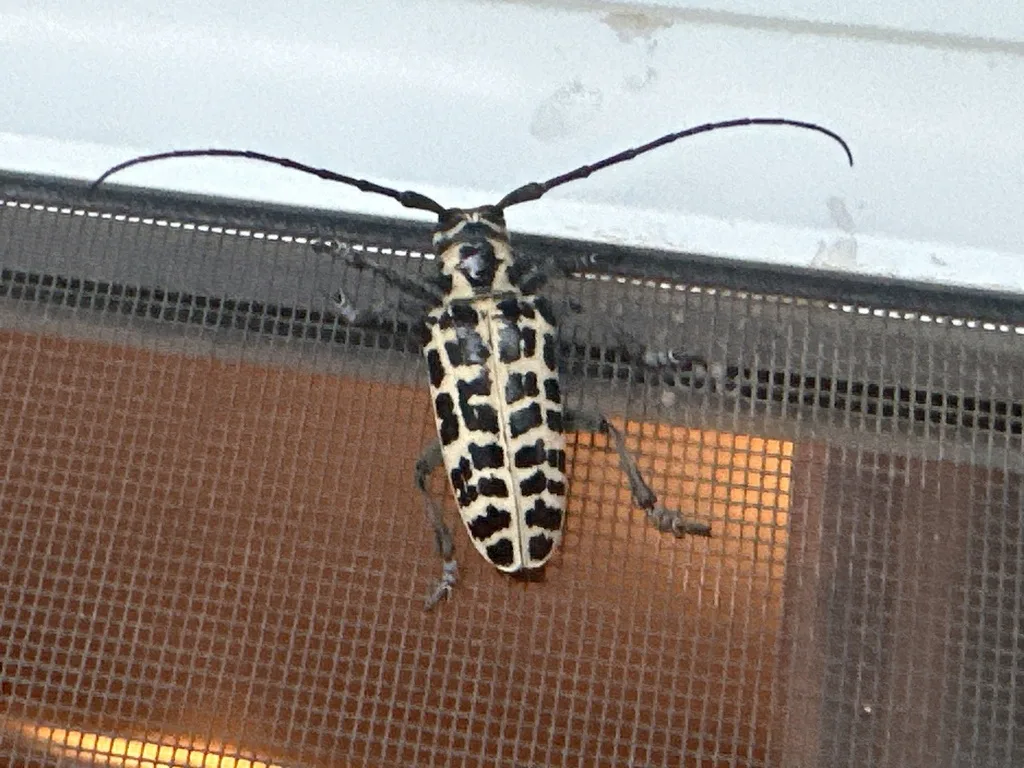
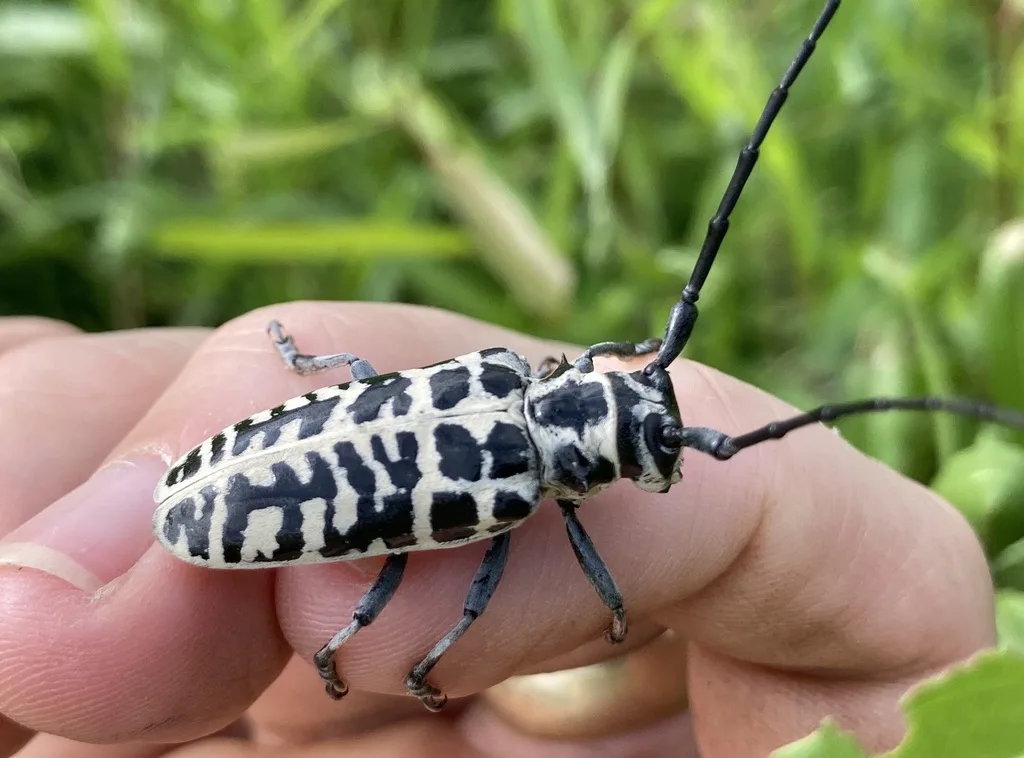
Cottonwood Borers Coloration
Common color patterns to help identify cottonwood borers
Cottonwood Borers
Seasonal Activity
When cottonwood borers are most active throughout the year

Where Cottonwood Borers Are Found
Hover over states to see their names. Green regions indicate where cottonwood borers have been reported.
Cottonwood Borer Identification Guide
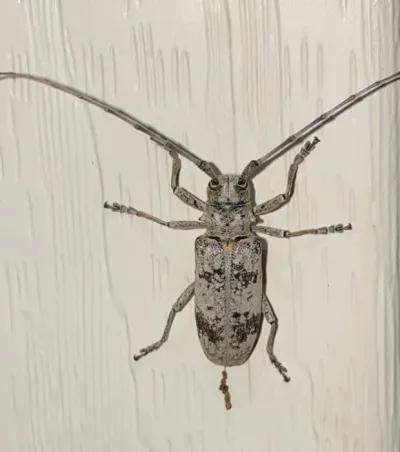
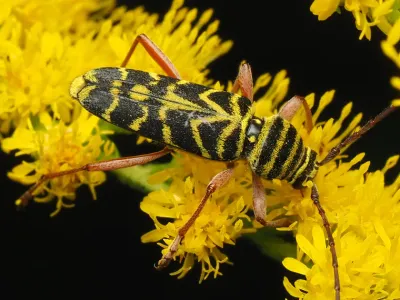
The cottonwood borer (Plectrodera scalator) is one of the largest and most striking longhorn beetles in North America. Its bold black-and-white pattern is hard to miss. In early summer, one may turn up on a sidewalk or porch.
Many wood-boring beetles attack the wood in houses. This one does not. Its grubs live underground, inside the roots of living cottonwoods, poplars, and willows.
Physical Characteristics
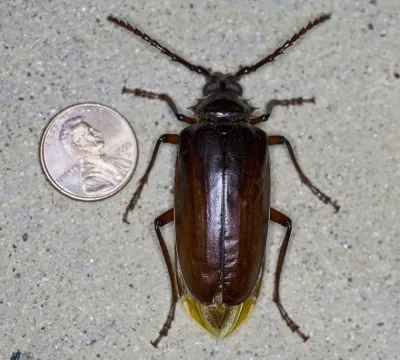
Adults are 25 to 40 mm long, or about 1 to 1.6 inches. That does not count the antennae. They are stout and heavy for a longhorn beetle.
What to look for:
- A black body with thick patches of white or cream hair. It looks like rows of black blocks on a pale background.
- A sharp spine on each side of the pronotum, the section just behind the head
- Solid black antennae, about as long as the body or a bit longer
- Black legs, often with a gray or white dusting of hair
The pale color comes from tiny hairs, not from the shell itself. On older beetles the white can look yellowish or cream.
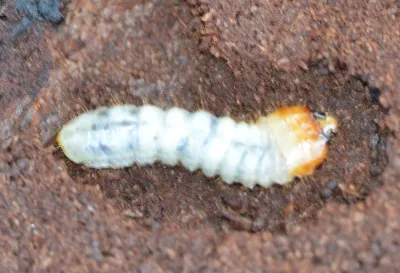
The grubs do the damage. They are legless, cream-colored, and cylindrical, with a darker head. A full-grown grub reaches about 1.25 to 1.5 inches long.
Common Species
Several other longhorn beetles share the same trees or a similar look:
- Poplar borer (Saperda calcarata). Tunnels in the trunks of aspens and poplars, higher up the tree. Adults are gray with yellow flecks.
- Cottonwood twig borer (Oberea quadricallosa). A slim beetle. Its grubs tunnel in cottonwood twigs.
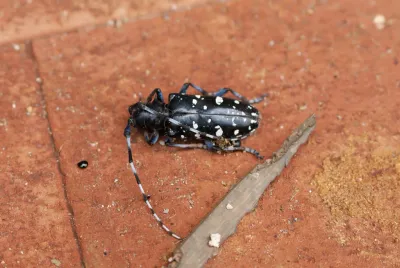
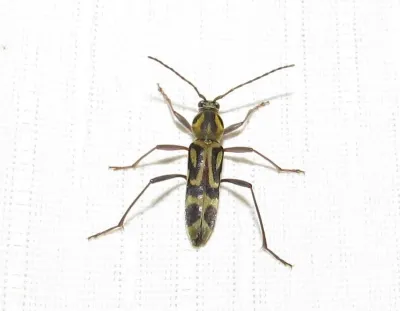
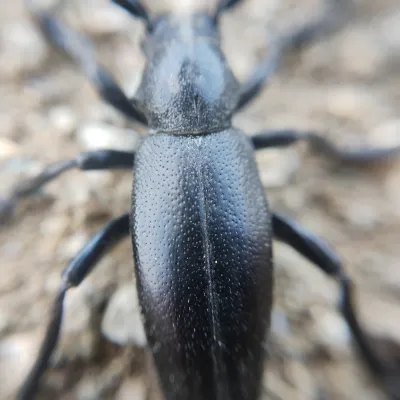
- Asian longhorned beetle (Anoplophora glabripennis). An invasive pest that must be reported. It is shiny black with white spots and has banded antennae. The cottonwood borer is mostly white with black blocks, and its antennae are solid black.
- White oak borer (Goes tigrinus). Also boldly marked with white, but it attacks young oaks, not poplars.
Cottonwood Borer Behavior and Biology
Habitat and Range
Cottonwood borers live where their host trees grow in large numbers. They are most common in the Great Plains and south-central states. That runs from Texas and Oklahoma north through Kansas and Nebraska. River bottoms, windbreaks, and poplar plantings are prime habitat.
The range reaches east through the Mississippi Valley and into the Southeast. In Virginia and Maryland, the beetle is rare. Range maps include the Mid-Atlantic, but very few real sightings come from our area. Most homeowners in Northern Virginia and suburban Maryland will never see one.
Diet and Host Trees
- Grubs feed inside the base and main roots of cottonwoods, other poplars, and willows. Hybrid poplars are hosts too.
- Adults chew the bark of tender shoots and leaf stems. A few leaves or twig tips may wilt. The grubs cause the real harm.
Life Cycle
In most of its range, the life cycle takes about two years.
- Egg laying. In early summer, females chew small pits in the bark at the base of the tree. The pits are at or just below the soil line. They lay one egg in each pit.
- Young grubs. Eggs hatch in 10 to 14 days. The grubs bore into the inner bark, then down into the roots.
- Older grubs. Over two winters, they carve wide tunnels in the tree base and larger roots. Some sawdust gets pushed out.
- Pupation. Grubs turn into pupae inside the root or trunk base in spring.
- Adults. New beetles chew their way out near the ground. They are active from late May through August. They live a few weeks and are often seen walking near host trees.
Signs on a Tree
- Coarse, stringy sawdust at the base of the trunk or pushed up through the soil
- Small chewed pits in the bark near the ground, where eggs were laid
- A loose, cracked, or swollen base
- Wilting, yellowing, or leaning in young trees
- Young trees that snap off at ground level in wind, with hollow tunnels inside
Treatment Methods for Cottonwood Borers
Better Termite & Pest Control does not treat cottonwood borers. They live inside the roots of living trees. That is tree care, not household pest control. Think a cottonwood, poplar, or willow on your property is infested? Contact an ISA-certified arborist or your county extension office. They can check the base of the tree, judge the damage, and tell you if the tree is worth saving.
These steps generally help against cottonwood borers:
- Keep trees strong. Water deeply in dry spells. Keep mowers, trenching, and construction away from roots. A strong tree copes with grubs better.
- Watch young trees. Young and newly planted poplars are the most likely to be girdled. Check the base of these trees during the summer egg-laying season.
- Remove badly infested trees. A young tree that is hollow at the base can break without warning. Remove it. Destroy the stump and big roots before the next summer so new beetles cannot come out.
- Timed trunk-base treatments. On a valuable tree, a licensed arborist may apply an EPA-registered product to the lower trunk. It is timed to the egg-laying weeks and must follow the label. Results on grubs already deep in the roots are mixed.
- Hand-pick adults. Adults are large and slow. Picking them off young trees in June and July means fewer eggs.
Are beetles or sawdust coming out of wood inside your home? That is a different problem. Start with our guides to old house borers and powderpost beetles. Then reach out about our pest control services. We also handle termites, which eat structural wood but leave no round exit holes.
Similar Species and Look-Alikes
- Asian longhorned beetles. The most important look-alike. Shiny black with white spots and banded antennae. It attacks maples and many other hardwoods. Report a suspected sighting to your state department of agriculture.
- Round-headed borers. The general name for longhorn beetle grubs, including this one.
- Prionus root borers. Their grubs also feed on roots, but the adults are plain reddish-brown to black.
- Locust borers. A black longhorn with bright yellow bands. It attacks black locust trees in late summer.
- White oak borers. Smaller, with a mottled white pattern. Found in oaks.
References
- Oklahoma State University Extension: Cottonwood Borer
- Oklahoma State University Extension: Shade Tree Borers
- Kansas State University Research and Extension: Cottonwood Borer
- LSU AgCenter: Plectrodera scalator, Cottonwood Borer
- USDA Forest Service: Forest Nursery Pests, Agriculture Handbook 680
- University of Maryland Extension: Borer Insects on Trees
Other Wood Boring Beetles
Explore other species in the wood boring beetles family
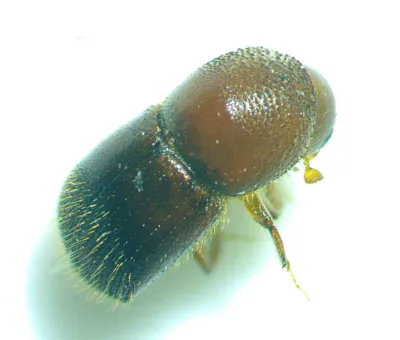
Commonly Confused With
Cottonwood Borers are often mistaken for these similar pests
Where Cottonwood Borers Are Found
Hover over states to see their names. Green regions indicate where cottonwood borers have been reported.
Common Questions about Cottonwood Borers
What is a cottonwood borer?
+
The cottonwood borer is a large native longhorn beetle. Its scientific name is Plectrodera scalator. Adults are 1 to 1.6 inches long, with a bold black-and-white checkered pattern and long black antennae. The grubs live in the base and roots of cottonwoods, poplars, and willows.
Are cottonwood borers found in Virginia and Maryland?
+
They can be, but they are uncommon here. The beetle is most common from Texas north through Kansas and the Great Plains. Cottonwoods line the rivers and windbreaks there. Very few have been reported in Virginia or Maryland. Found a big black-and-white longhorn beetle near DC? Take a clear photo. Then compare it to the Asian longhorned beetle, an invasive pest that must be reported.
Do cottonwood borers damage houses or furniture?
+
No. Cottonwood borers only grow up in the roots of living poplars, cottonwoods, and willows. They do not attack lumber, framing, decks, or furniture. A beetle that lands on your siding or porch light in June is just passing through.
Will cottonwood borers kill my tree?
+
Young trees are at the most risk. The grubs can hollow out or girdle a young tree near the ground. The tree may then snap off in a storm. Large, healthy cottonwoods usually survive a few grubs. Trees weak from drought or root damage are more likely to decline.
How can I tell if a tree has cottonwood borers?
+
Look at the base of the trunk, right at the soil line. Watch for coarse, stringy sawdust at the base. Look for small chewed pits in the bark near the ground. Wet stains and a loose or swollen base are other clues. Young trees may wilt or lean. In early summer, adults may feed on tender shoots higher up.
Do cottonwood borers bite or sting?
+
They do not sting and do not carry disease. A big one may pinch with its jaws if you grab it. Scoop it into a cup and move it outdoors.
Does Better Termite treat cottonwood borers?
+
No. Cottonwood borers are a tree health problem, not a house pest. Contact an ISA-certified arborist or your county extension office. They can check the tree and tell you if it is worth treating or should be replaced.

With five years of hands-on experience in the pest control industry, George Schulz is a registered technician with the Virginia Pest Management Association and a proud third-generation professional in a family business that's been protecting homes for over 58 years. He manages and trains a team of service pros while also leading internal research efforts—recently spearheading a deep-dive review of thousands of documents on pest control materials to hand-pick the most kid and pet friendly, most effective solutions tailored specifically for homes in the DC metro area.
Local Cottonwood Borers Help
Dealing with cottonwood borers at home? Our licensed technicians provide pest control across Northern Virginia and Maryland.
