Sugar Maple Borers Identification Guide
Glycobius speciosus
Sugar maple borers are black and yellow longhorn beetles. Their grubs tunnel under the bark of sugar maple trunks, leaving long scars that weaken trees and ruin lumber.
Taxonomy
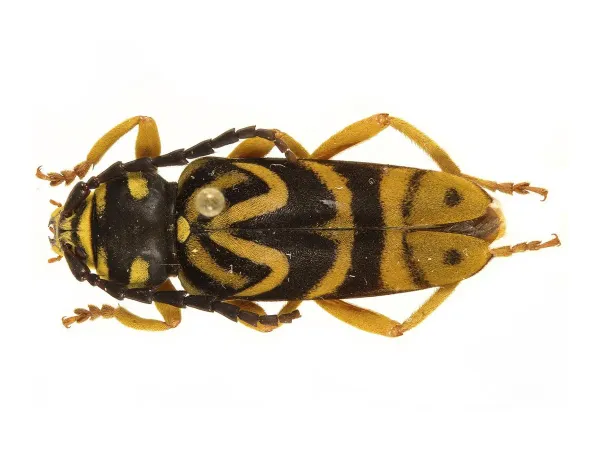
Sugar Maple Borers Coloration
Common color patterns to help identify sugar maple borers
Sugar Maple Borers
Seasonal Activity
When sugar maple borers are most active throughout the year
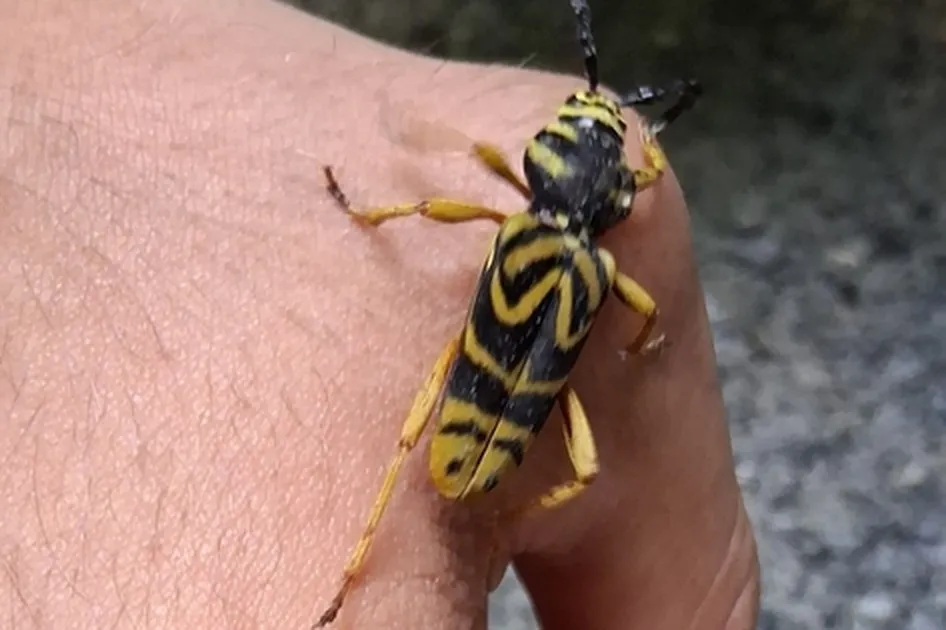
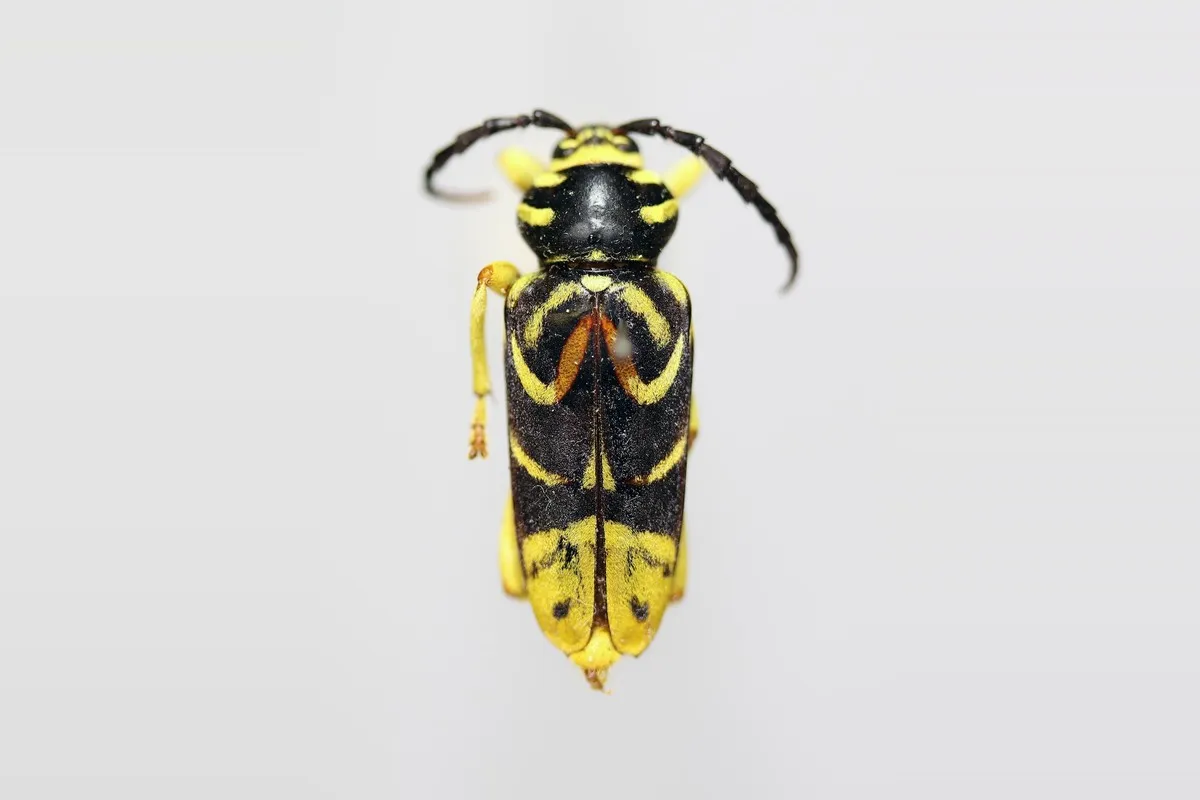

Where Sugar Maple Borers Are Found
Hover over states to see their names. Green regions indicate where sugar maple borers have been reported.
Sugar Maple Borer Identification Guide
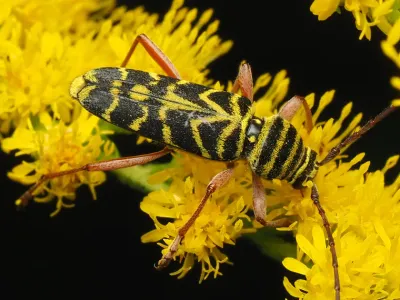
The sugar maple borer (Glycobius speciosus) is a native longhorn beetle. It grows up inside the trunks of living sugar maples. The adults are some of the most colorful beetles in eastern forests. Their black and yellow bands fool many people into thinking they are wasps.
Many wood-boring beetles cause trouble in houses and lumber. This one does not. It needs a living sugar maple to breed, so the damage shows up on the tree, not in your home.
Physical Characteristics
Adults are 22 to 27 mm long, or a bit under 1 inch to just over 1 inch. Females tend to be larger than males.
What to look for:
- A black body crossed by bright yellow bands
- A yellow head and yellow legs
- A yellow band shaped like a “W” across the wing covers, just behind the thorax
- Curved yellow bands further back, and a black dot near the tip of each wing cover
- Black antennae about as long as the body, a little longer in males
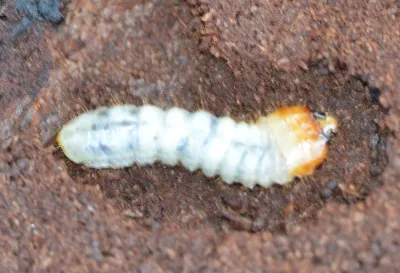
The grubs do the damage. They are cream-colored and have no legs. Full-grown grubs are 1.6 to 2 inches long.
Common Species
A few look-alikes share the black and yellow pattern:
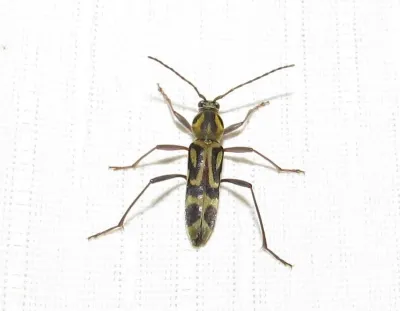
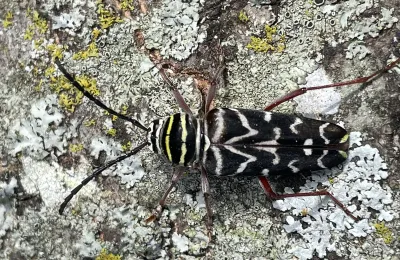
- Locust borer (Megacyllene robiniae). The most common look-alike in our area. It has a black head and reddish legs. It swarms goldenrod in September and only attacks black locust.
- Painted hickory borer (Megacyllene caryae). Nearly a twin of the locust borer. It flies in spring, from about March to May, and grows in hickory and other hardwoods.
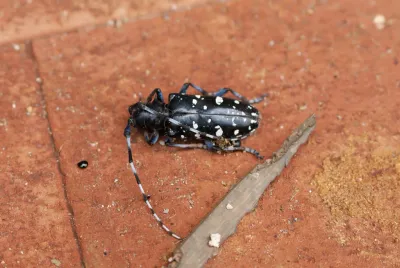
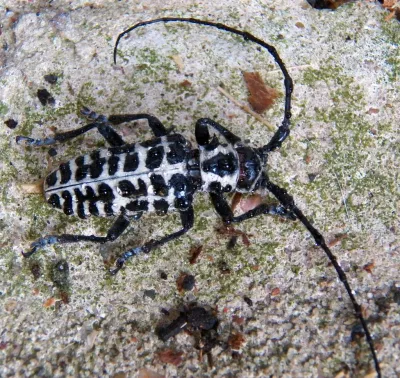
- Asian longhorned beetle (Anoplophora glabripennis). An invasive pest of maples that must be reported. It is shiny black with white spots and black-and-white banded antennae, not yellow.
A black and yellow longhorn with a yellow head and yellow legs, found on a sugar maple in July, is almost always this species.
Sugar Maple Borer Behavior and Biology
Habitat and Range
The sugar maple borer lives wherever sugar maple (Acer saccharum) grows. It is most common in New York, New England, and the Great Lakes states. It is also common in Ontario, Quebec, and the Maritime provinces. The range runs south along the mountains into West Virginia, western Virginia, and North Carolina.
In Northern Virginia and suburban Maryland, the beetle is uncommon. Sugar maple grows wild mostly in the western mountains here. Most yard maples in the DC area are red or silver maples, which this beetle does not use.
Females like trees in the open that are about 4 to 10 inches across. Roadside and yard trees fit that bill. Old roadside maples often carry old scars. Weak trees are the most likely targets. Drought, root damage, and years of leaf loss to caterpillars all weaken a tree.
Diet
- Grubs feed on the inner bark and sapwood of the lower trunk, mostly below about 30 feet.
- Adults feed very little. They spend their short lives mating and hunting for rough bark to lay eggs in.
Life Cycle
The life cycle takes two years.
- Adults come out in late spring and summer, with a peak in July. They leave through oval exit holes in the bark.
- Eggs are laid from late July into August. The female cuts a slit in rough bark or near a wound and lays one egg. Sap often weeps from the slit.
- First year. The young grub bores into the inner bark. It carves a sideways tunnel around the trunk, just under the bark. Then it spends the winter a short way into the wood.
- Second year. The grub keeps feeding under the bark, then turns inward and upward into the wood. It pushes sawdust out as it goes.
- Pupation. In the second spring, the grub cuts an exit tunnel toward the bark. Then it turns into a pupa and comes out as an adult.
Woodpeckers eat many grubs, and only about one in five survives to adulthood.
Signs on a Tree
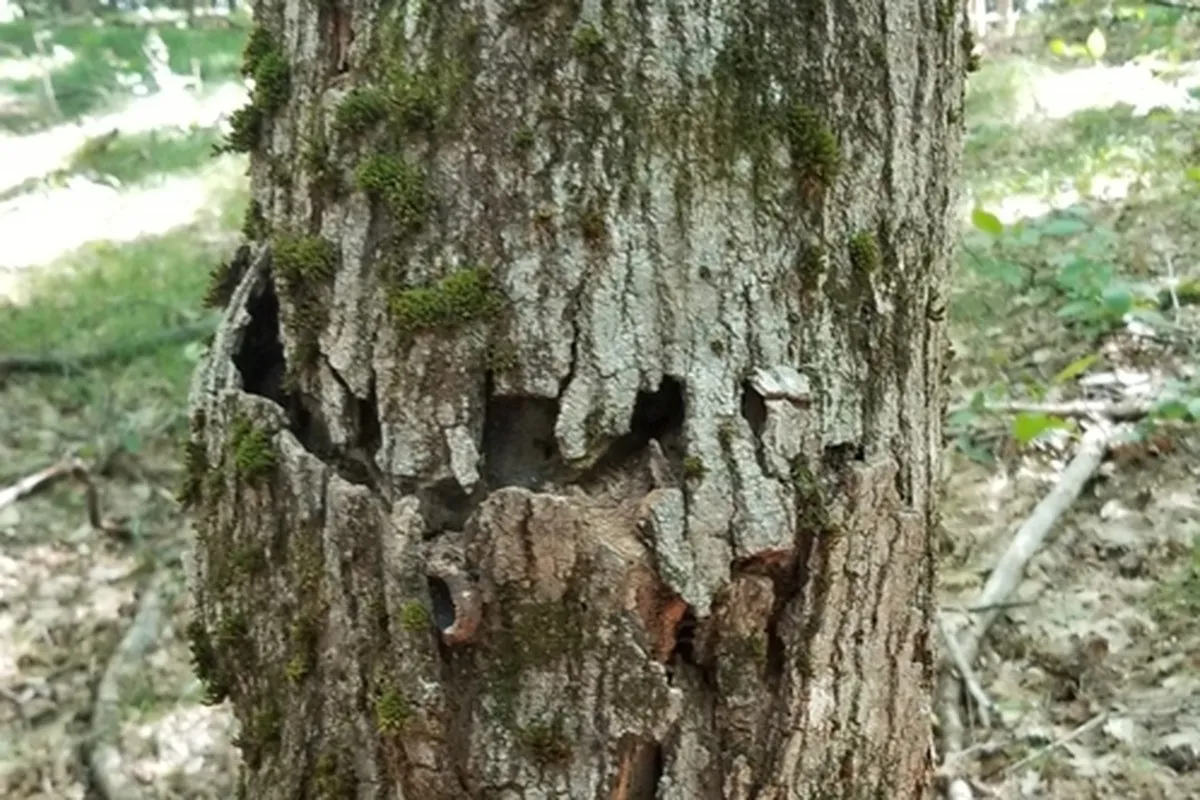
- Sap weeping from small slits on the lower trunk in late summer
- Fine sawdust in bark cracks or at the base of the tree
- Oval exit holes in the bark, about 3/8 inch wide
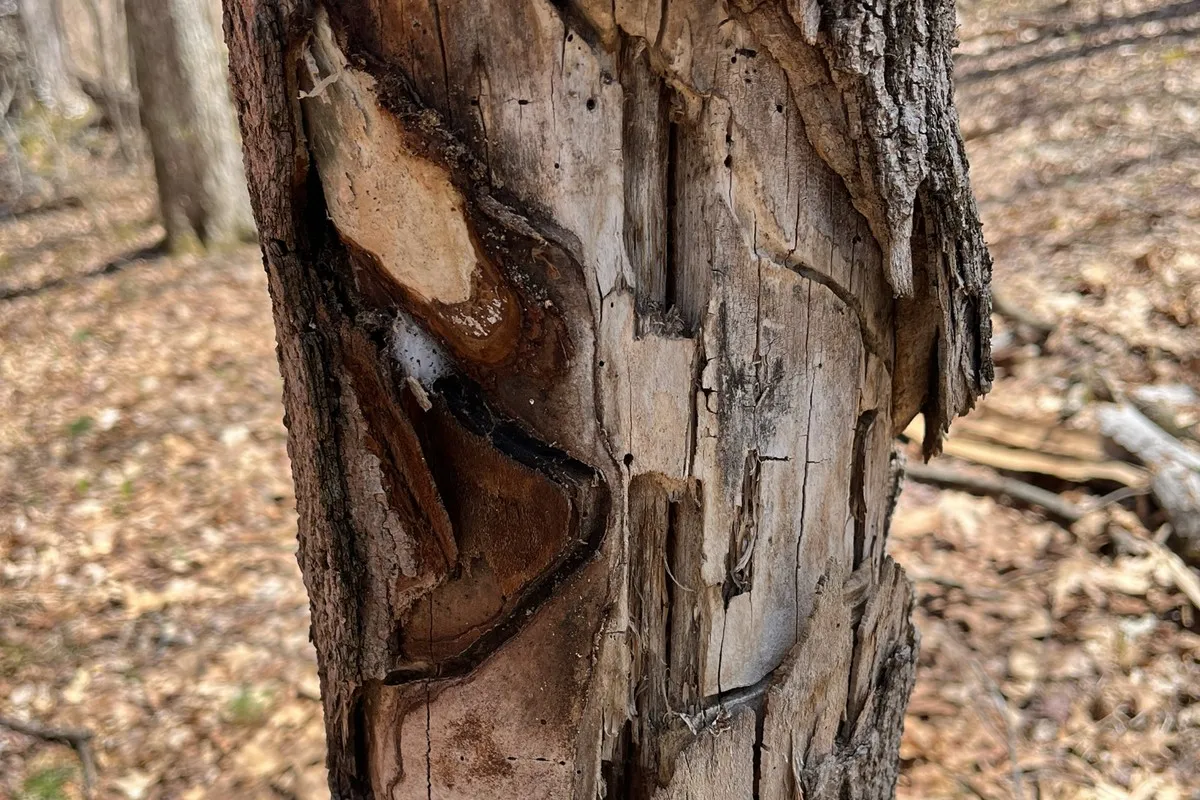
- Long bark ridges that form over old tunnels
- Loose bark that peels away to show curved tunnels in the wood
- C-shaped “cat-face” scars that can wrap a third of the way around the trunk
- Thin crowns, small leaves, and branch dieback after years of attack
Treatment Methods for Sugar Maple Borers
Better Termite & Pest Control does not treat sugar maple borers. They live inside living trees. That makes them a tree care problem, not a household pest. Think a sugar maple on your property is infested? Call an ISA-certified arborist or your county extension office. They can check the trunk and tell you if the tree is sound and if treatment makes sense.
These are the approaches that generally work:
- Keep the tree strong. Water deeply during drought. Mulch the root zone. Keep mowers, trimmers, and construction away from the trunk and roots. Bark wounds give females a place to lay eggs.
- Watch in midsummer. Check the lower trunk in July and August for weeping slits and fresh sawdust.
- Remove badly damaged trees. In woodlots and sugarbushes, foresters remove large, weak, infested trees. This lowers the local beetle population.
- Timed trunk treatments. For a high-value tree, a licensed arborist may spray the bark with an EPA-registered product during egg-laying season. Another option is a product taken up through the soil or trunk. Label rules, state limits, and bee protection all apply.
Trees are rarely killed, so extension experts say spraying is often not needed for yard maples.
Are beetles or sawdust coming out of wood inside your house? That is a different problem. Start with our guides to old house borers and powderpost beetles. Then reach out about our pest control services. If the black and yellow insects near your maple are building a paper nest, our guide to yellowjackets can help you tell them apart.
Similar Species and Look-Alikes
- Locust borers. Black head, reddish legs, and found on goldenrod in fall. Attacks only black locust.
- Painted hickory borers. Very close to the locust borer, but active in spring on hickory.
- Asian longhorned beetles. Also attacks maples, but is black with white spots. Report any suspected sighting to your state department of agriculture.
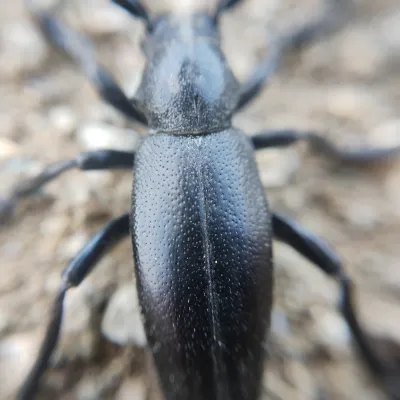
- Round-headed borers. The general name for longhorn beetle grubs, including this one.
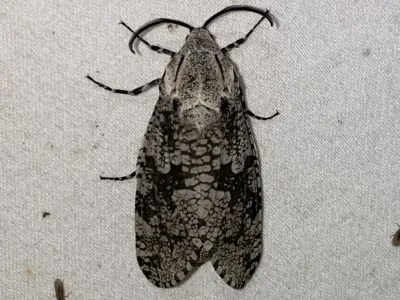
- Carpenter worm moths. A moth whose big caterpillars also tunnel in maple trunks. They leave larger round holes and piles of coarse sawdust.
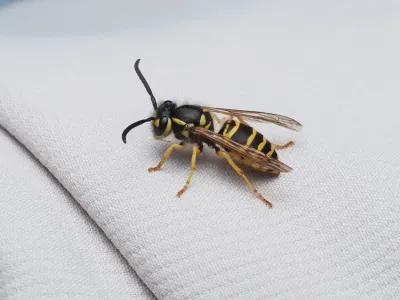
- Yellowjackets. The stinging insect this beetle mimics. Yellowjackets have a narrow waist, short antennae, and clear wings.
References
- UMass Amherst Extension Landscape Insect Guide: Glycobius speciosus
- USDA Forest Service: Cerambycid Pests in Forests and Urban Trees (Haack 2017)
- USDA Forest Service: Silvics of North America, Sugar Maple
- Adams, Allen and Stehman: Life History and Bionomics of Glycobius speciosus, Environmental Entomology (2023)
- University of Maryland Extension: Borer Insects on Trees
Other Wood Boring Beetles
Explore other species in the wood boring beetles family
Commonly Confused With
Sugar Maple Borers are often mistaken for these similar pests
Where Sugar Maple Borers Are Found
Hover over states to see their names. Green regions indicate where sugar maple borers have been reported.
Common Questions about Sugar Maple Borers
What is a sugar maple borer?
+
The sugar maple borer is a native longhorn beetle. Its scientific name is Glycobius speciosus. Adults are black with bright yellow bands and are about 7/8 to 1 inch long. The grubs live under the bark of living sugar maple trees and tunnel through the trunk for two years before they come out as beetles.
Is a sugar maple borer a wasp or a bee?
+
No. It is a beetle dressed up like a wasp. The black and yellow pattern warns birds away, but the beetle has no stinger. Look for hard wing covers over the back, long antennae, and a thick body with no narrow waist. Yellowjackets have a pinched waist and clear wings.
Do sugar maple borers bite or sting?
+
They do not sting and do not carry disease. A beetle this size can pinch with its jaws if you squeeze it, but it is harmless. If one lands on you or your porch, let it go or move it outside with a cup.
Do sugar maple borers attack other maples?
+
Sugar maple is its only known host, so red, silver, and Japanese maples are not its targets. If a red or silver maple has holes and sawdust, look at other borers, or check whether it could be the invasive Asian longhorned beetle.
Will sugar maple borers kill my tree?
+
They seldom kill a tree outright. The tunnels do weaken the trunk, and repeated attacks can thin the crown, kill branches, and let decay fungi in. Trees stressed by drought, root damage, or heavy leaf loss are hit hardest. Large scars on a yard tree are worth having an arborist look at.
How do I know if my sugar maple has sugar maple borers?
+
Check the lower trunk. Look for sap weeping from small slits in the bark in late summer, and fine sawdust in bark cracks. Older signs are long ridges in the bark, loose bark that peels off to show curved tunnels, and C-shaped scars that wrap part way around the trunk.
Are sugar maple borers found in Virginia and Maryland?
+
Yes, but they are not common here. The beetle follows sugar maple, which grows wild mostly in the mountains of western Virginia and western Maryland. The heart of its range is New York, New England, the Great Lakes, and eastern Canada. Planted sugar maples in the DC suburbs are rarely attacked.
Does Better Termite treat sugar maple borers?
+
No. Sugar maple borers live inside living trees, which makes them a tree care problem. Call an ISA-certified arborist or your county extension office. They can check the trunk, tell you if the tree is sound, and time any treatment to the beetle's egg-laying season.

With five years of hands-on experience in the pest control industry, George Schulz is a registered technician with the Virginia Pest Management Association and a proud third-generation professional in a family business that's been protecting homes for over 58 years. He manages and trains a team of service pros while also leading internal research efforts—recently spearheading a deep-dive review of thousands of documents on pest control materials to hand-pick the most kid and pet friendly, most effective solutions tailored specifically for homes in the DC metro area.
Local Sugar Maple Borers Help
Dealing with sugar maple borers at home? Our licensed technicians provide pest control across Northern Virginia and Maryland.
