Bamboo Borer Identification Guide
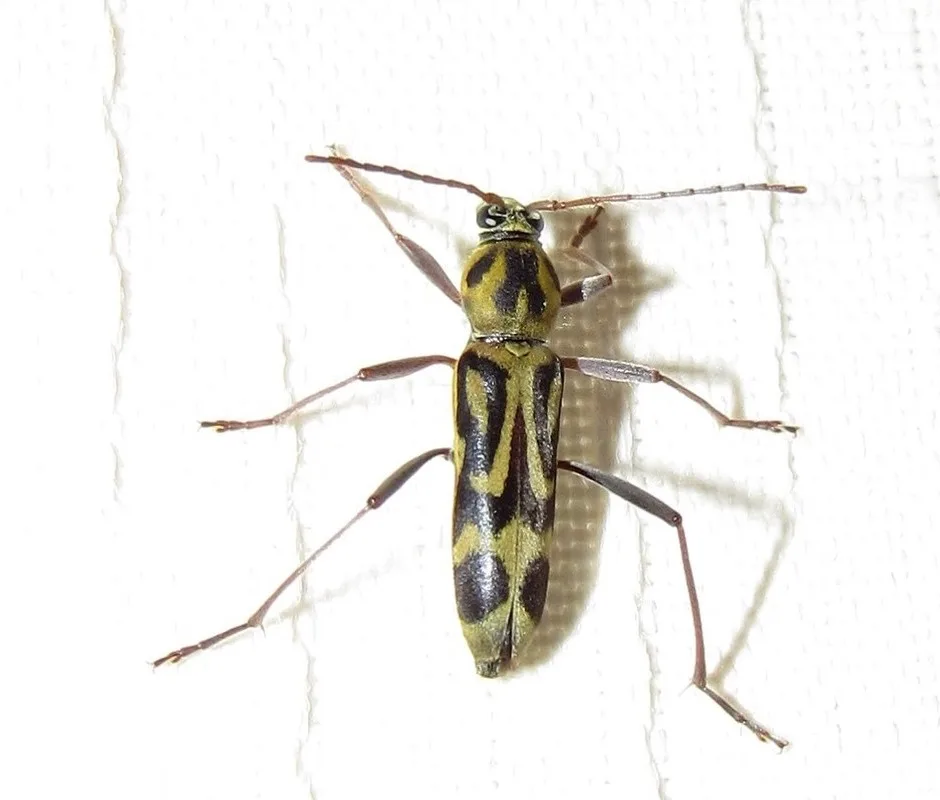
Chlorophorus annularis
Bamboo borers are wood-boring beetles that tunnel through bamboo poles, furniture, flooring, and blinds. Most North American sightings begin with an infested imported bamboo item rather than a beetle flying in from outdoors.
Taxonomy
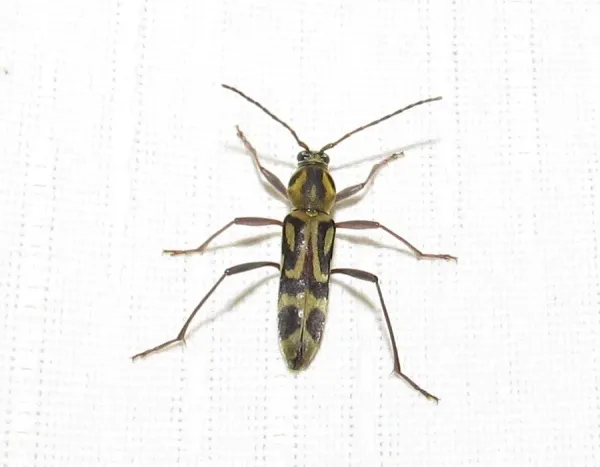
Bamboo Borer Coloration
Common color patterns to help identify bamboo borer
Bamboo Borer
Seasonal Activity
When bamboo borer are most active throughout the year

Where Bamboo Borer Are Found
Hover over states to see their names. Green regions indicate where bamboo borer have been reported.
Bamboo Borer Identification Guide
Bamboo borers are wood-boring beetles whose larvae feed on the starch stored inside bamboo culms. In North America they are almost never encountered outdoors. Instead, they turn up indoors when a beetle chews its way out of a bamboo pole, a set of window blinds, a patio chair, a garden stake, or a piece of bamboo flooring that was already infested when it was shipped.
Two very different beetles share the name. Knowing which one you have tells you how large the exit holes should be and how much bamboo is likely affected.
Physical Characteristics
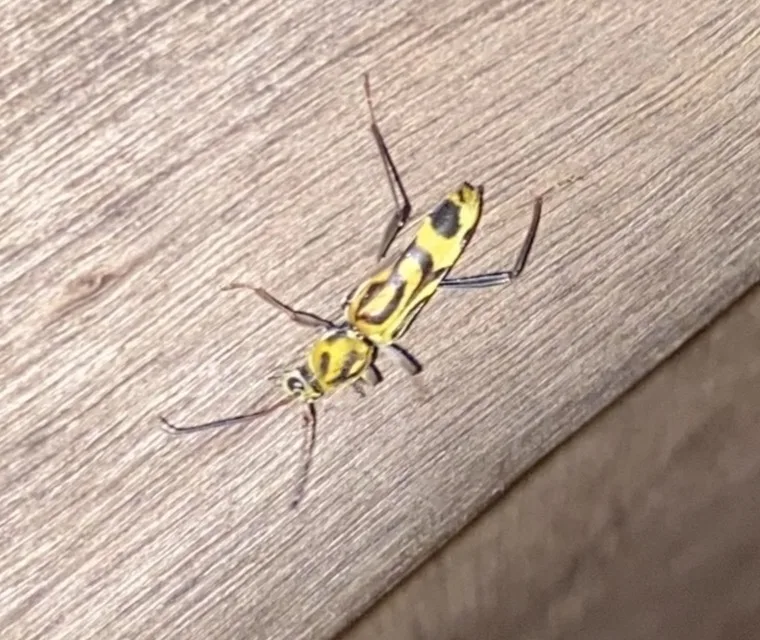
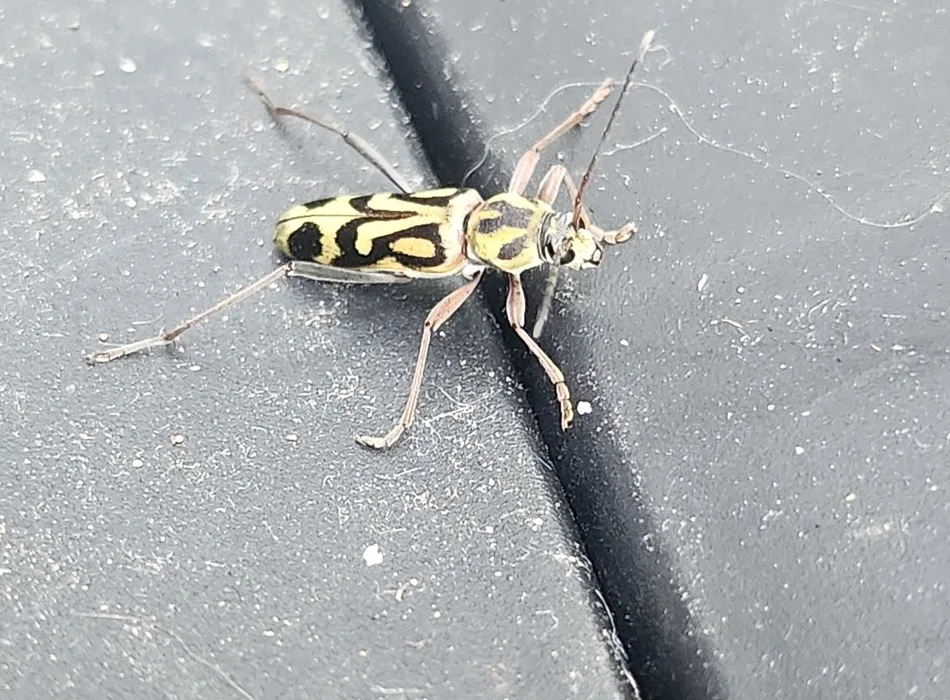
The bamboo tiger longhorn beetle (Chlorophorus annularis) is the larger and more noticeable of the two:
- Size: roughly 9 to 18 mm long (about 3/8 to 3/4 inch)
- Color: pale yellow to yellowish-tan, with bold black bands and blotches across the wing covers
- Antennae: long and thread-like, often close to half the body length — the giveaway that it is a longhorn beetle
- Body shape: slender and parallel-sided, with long legs
- Exit holes: oval to round, about 1/8 to 3/16 inch across
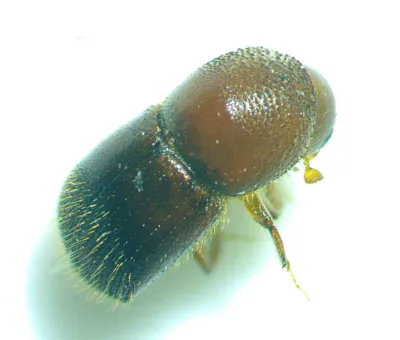
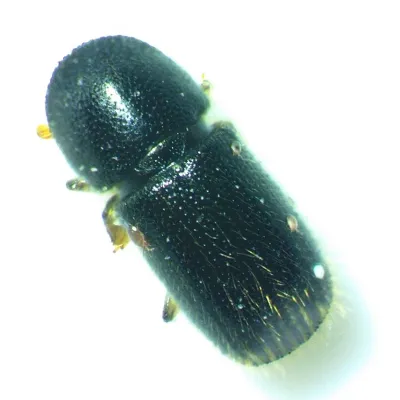
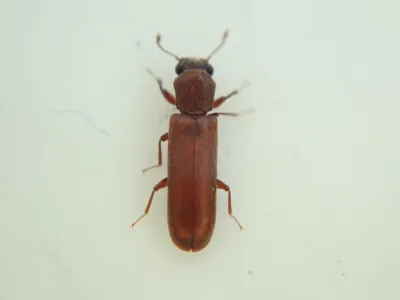
The bamboo powderpost beetle (Dinoderus minutus) is far smaller and easy to overlook:
- Size: about 2.5 to 3.5 mm long (roughly 1/8 inch)
- Color: reddish-brown to dark brown, with a nearly black head
- Head: hidden from above beneath a hood-like thorax, like other members of the family Bostrichidae
- Antennae: short, ending in a loose club
- Exit holes: round and tidy, about 1/16 inch across, with fine flour-like powder below
Larvae of both species are pale, legless or short-legged grubs that stay inside the culm and are rarely seen unless a pole is split open.
Common Species
Beyond the two main culprits, several related beetles are reported from bamboo and bamboo products in North America:
- Dinoderus brevis and Dinoderus japonicus — close relatives of the bamboo powderpost beetle, separated only by fine details of the thorax under magnification
- Heterobostrychus aequalis, the lesser auger beetle — larger than Dinoderus and more often found in tropical hardwoods and rattan than in bamboo itself
- Chlorophorus species other than annularis — similar banded longhorn beetles intercepted in bamboo shipments, though C. annularis is by far the most frequently reported
Bamboo Borer Behavior and Biology
Habitat
Bamboo borers live inside the wall of the bamboo culm. They prefer bamboo that was cut green and dried without treatment, because that material still holds the starch the larvae need. Bamboo harvested in the growing season, when starch content peaks, is the most vulnerable of all.
In a home, that means the infestation is tied to a specific object. Blinds, screens, fencing panels, tiki torches, plant stakes, baskets, cutting boards, laminated bamboo flooring, and imported furniture are the usual sources. Naturalized running bamboo growing in Maryland and Virginia yards is not a meaningful source, since these beetles are not established in local stands.
Diet
Larvae feed on starch and sugars in the culm wall, not on the tough cellulose fibers that give bamboo its strength. That is why the damage is so distinctive: the outer skin can look nearly perfect while the inside has been reduced to packed powder. Dinoderus minutus will also infest dried stored foods such as cassava chips and grain flours in tropical regions, though this is uncommon in North American kitchens.
Life Cycle
Both species pass through egg, larva, pupa, and adult stages.
- Eggs are laid in cracks, cut ends, or existing tunnels in the bamboo. Dinoderus eggs hatch in about five to six days in warm conditions.
- Larvae tunnel through the culm wall, packing the galleries behind them with frass. This stage lasts the longest and does nearly all the damage.
- Pupation happens inside the gallery, near the surface.
- Adults chew a round exit hole to the outside, then mate and look for fresh bamboo.
In tropical climates Dinoderus minutus completes three to five generations a year. In a heated Mid-Atlantic home, development is slower and emergence tends to cluster in spring and summer as indoor temperatures rise. The bamboo tiger longhorn typically takes about a year per generation.
Dispersal
Adults of both species can fly, and the longhorn beetle in particular is a capable flier that may be found at windows and porch lights after emerging. Long-distance spread, however, is almost entirely human-assisted: the beetles travel inside bamboo goods and packing material, which is why detections cluster around ports, retailers, and homes that recently bought bamboo items rather than around any particular climate zone.
Treatment Methods for Bamboo Borers
Bamboo borers are not a native Mid-Atlantic pest, and they behave differently from the beetles that attack structural wood. Control focuses on the infested object rather than the building.
- Identify the source item. Follow the powder. Place a sheet of dark paper beneath suspect bamboo and check it after a few days — fresh powder means larvae are still active. Compare the exit-hole size against the two species above.
- Isolate and treat or discard. Because larvae are sealed inside the culm, surface sprays and perimeter treatments do not reach them. Small items can be bagged and frozen at 0 degrees Fahrenheit for roughly two weeks. Commercial-scale options include kiln or heat treatment and registered borate preservatives applied by a licensed professional. Heavily damaged poles and blinds are usually replaced, and infested material should be bagged before it leaves the house so emerging adults do not find other bamboo.
- Prevent the next one. Buy kiln-dried, heat-treated, or borate-treated bamboo. Inspect poles and furniture for pinholes and powder before bringing them indoors. Seal cut ends with paint, varnish, or wax, and store spare bamboo dry and off the ground.
If the holes and powder turn out to be in structural framing, hardwood flooring, or a wood sill rather than a bamboo item, you are dealing with a different insect. That is worth a proper inspection — see our guides to powderpost beetles, false powderpost beetles, and old house borers, or read the overview of wood-boring beetles to narrow it down. Better Termite & Pest Control performs wood-destroying insect inspections across Northern Virginia, Maryland, and Washington, DC, and can tell you whether what you are seeing involves the structure or only an imported bamboo item.
References
- Dinoderus minutus (bamboo borer) — CABI Compendium
- Chlorophorus annularis (bamboo longhorn beetle) — CABI Compendium
- Powderpost Beetles and Other Wood-Infesting Insects — University of Kentucky Entomology
- Wood-Destroying Beetles — Penn State Extension
- Powderpost Beetles — Clemson Cooperative Extension Home & Garden Information Center
- Bostrichidae of the United States — USDA Forest Service / BugGuide reference records
Other Wood Boring Beetles
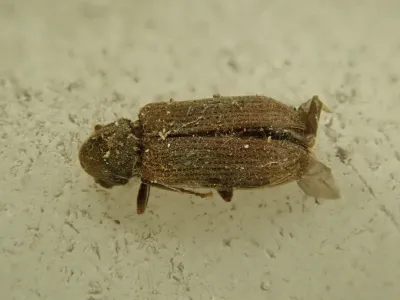
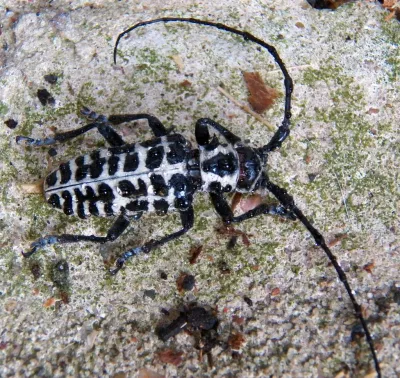
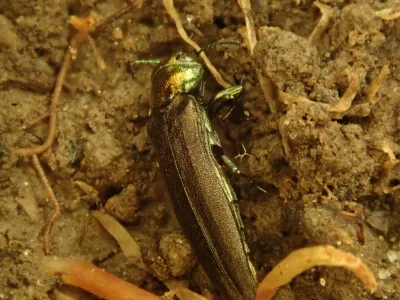
Explore other species in the wood boring beetles family
Commonly Confused With
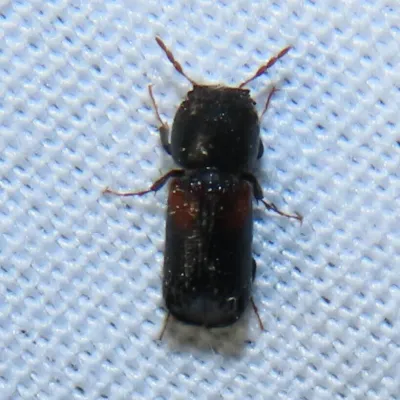
Bamboo Borer are often mistaken for these similar pests
Where Bamboo Borer Are Found
Hover over states to see their names. Green regions indicate where bamboo borer have been reported.
Common Questions about Bamboo Borer
What is a bamboo borer?
+
Bamboo borer is a common name for beetles whose larvae tunnel through bamboo. Two are found in North American homes: the bamboo tiger longhorn beetle (Chlorophorus annularis), a slender yellow-and-black beetle about 1/2 inch long, and the much smaller bamboo powderpost beetle (Dinoderus minutus), which is reddish-brown and roughly 1/8 inch long. Both arrive almost entirely inside imported bamboo goods.
How did bamboo borers get into my house?
+
Nearly always inside a bamboo item you brought home. Bamboo poles, fencing, garden stakes, patio furniture, window blinds, flooring, cutting boards, and decorative crafts are harvested and shipped while the bamboo still contains starch, and beetle eggs or larvae ride along inside the culm. Adults chew their way out weeks or months later, often after the item has been indoors through a warm spell.
What does bamboo borer damage look like?
+
Look for round exit holes in the bamboo, roughly 1/16 to 3/16 inch across depending on the species, and small piles of fine powder or gritty frass beneath the item. The powder often collects on the floor under bamboo blinds or along the base of a bamboo screen. Tapping an infested pole may sound hollow, and badly attacked culms crush easily under hand pressure.
Will bamboo borers spread to the wood framing of my house?
+
No. Bamboo borers develop in bamboo and rely on the starch stored in the culm walls. They do not attack the softwood framing, joists, or sheathing used in North American construction, and they do not attack seasoned hardwood flooring or furniture. The damage stays with the bamboo item that carried them in.
Do bamboo borers bite or carry disease?
+
No. Bamboo borers do not bite people or pets, do not sting, and are not known to transmit any disease. Adults that emerge indoors usually fly toward windows and lights and die within a few days. The concern is damage to the bamboo item, not a health risk.
How do I get rid of bamboo borers in a piece of bamboo furniture?
+
The item itself has to be treated or removed, because the larvae are sealed inside the culm where surface sprays cannot reach. Small pieces such as blinds, baskets, or place mats can be sealed in a bag and held in a freezer at 0 degrees Fahrenheit for about two weeks. Heavily damaged or low-value items are usually discarded and replaced. For larger pieces, a licensed professional can advise on heat treatment or a registered borate product.
Can I prevent bamboo borers when buying bamboo products?
+
Buy bamboo that has been kiln-dried, heat-treated, or borate-treated, and ask the seller how the material was processed. Inspect poles and furniture for pinholes and powder before bringing them inside. Sealing cut ends with paint, varnish, or wax makes the bamboo far less attractive for egg laying, and storing bamboo off the ground in a dry spot keeps starch levels from feeding a new generation.
Do bamboo borers re-infest the same item year after year?
+
Usually not for long. Each generation consumes starch, and once the culm is dry and depleted it no longer supports development. In a heated home an infestation typically runs its course over one to three years. Fresh bamboo brought in later, however, can start the cycle over with a new item.

With five years of hands-on experience in the pest control industry, George Schulz is a registered technician with the Virginia Pest Management Association and a proud third-generation professional in a family business that's been protecting homes for over 58 years. He manages and trains a team of service pros while also leading internal research efforts—recently spearheading a deep-dive review of thousands of documents on pest control materials to hand-pick the most kid and pet friendly, most effective solutions tailored specifically for homes in the DC metro area.
Local Bamboo Borer Help
Dealing with bamboo borer at home? Our licensed technicians provide pest control across Northern Virginia and Maryland.
