Flat-Headed Borers Identification Guide
Buprestidae (family)
Flat-headed borers are the larvae of metallic wood-boring beetles (jewel beetles). They tunnel under the bark of stressed trees and fresh-cut logs, and adults sometimes emerge indoors from firewood or new lumber.
Taxonomy
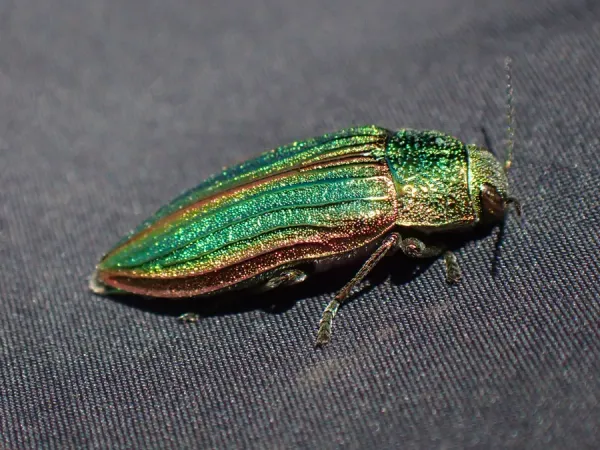
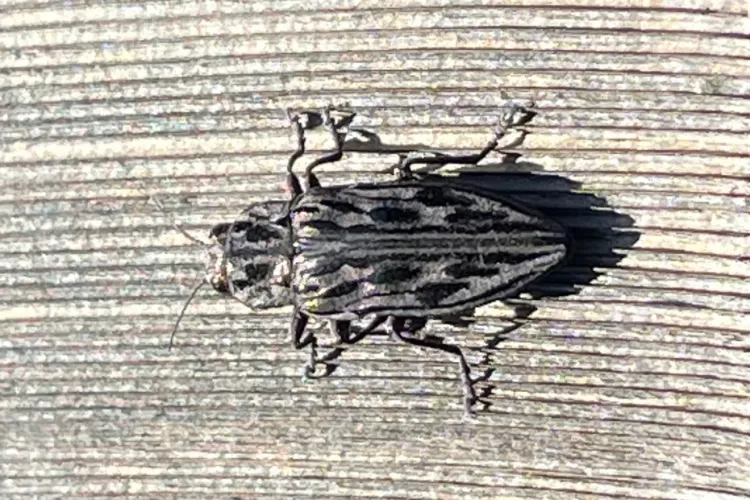
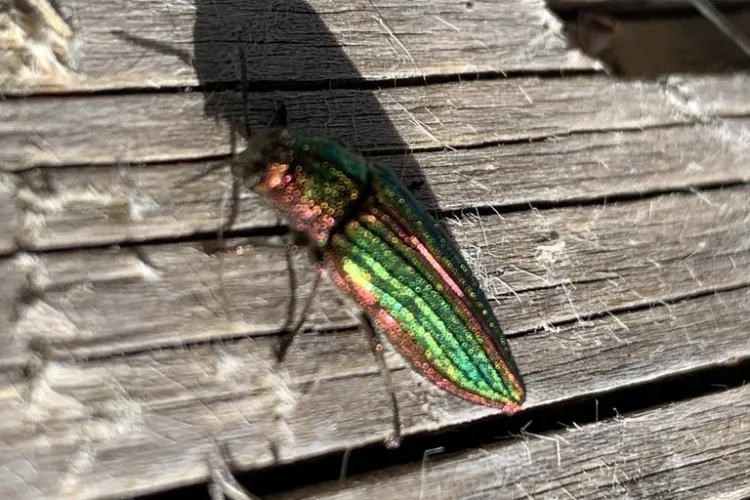
Flat-Headed Borers Coloration
Common color patterns to help identify flat-headed borers
Flat-Headed Borers
Seasonal Activity
When flat-headed borers are most active throughout the year

Where Flat-Headed Borers Are Found
Hover over states to see their names. Green regions indicate where flat-headed borers have been reported.
Flat-Headed Borer Identification Guide
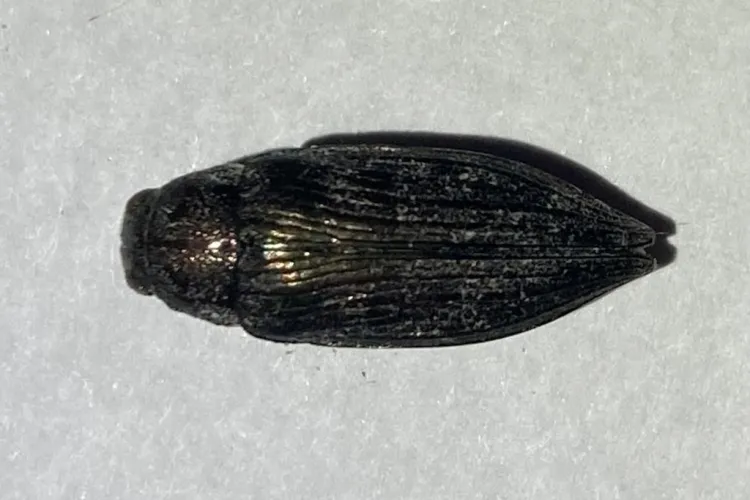
“Flat-headed borer” is the name for the larva of a metallic wood-boring beetle, also called a jewel beetle (family Buprestidae). The adults are some of the most colorful beetles in North America. The larvae live hidden under tree bark. This page covers both. Most people meet one or the other: a flat grub in a log, or a shiny beetle crawling out of firewood.
More than 750 species live in North America north of Mexico. A few, like the emerald ash borer, kill healthy trees. Most attack trees that are already stressed, dying, or freshly cut.
Physical Characteristics
Larvae (flat-headed borers):
- Legless, cream-colored to white grubs, about 1/2 to 2 inches long when grown
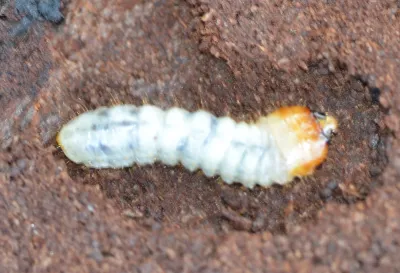
- The first body segment behind the head is wide and flat, so the larva looks like a horseshoe nail
- Tunnels are flat and oval in cross-section and packed with fine sawdust laid in wavy, arc-shaped layers
Adults (metallic wood-boring beetles):
- Hard, bullet- or boat-shaped body that tapers to a point at the rear
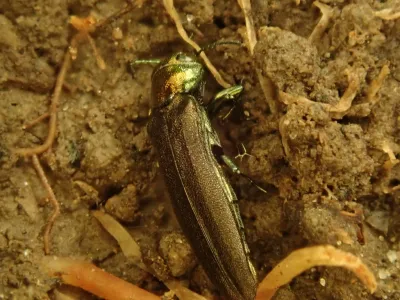
- Metallic green, blue, copper, or bronze sheen, often brightest on the underside
- Short, saw-toothed antennae and large eyes
- Size ranges from about 1/8 inch to 1 1/4 inches (3 to 35mm)
- Leave oval or D-shaped exit holes in bark or wood
Flat-Headed vs. Round-Headed Borers
The most common mix-up is with round-headed borers, the larvae of longhorn beetles. Here is how to tell them apart:
- Larva shape: flat-headed borers have a wide, flat front end. Round-headed borers are more cylindrical, with only a slightly larger front segment.
- Tunnels: flat-headed tunnels are flat and packed tight with fine powder. Round-headed tunnels are rounder, and the frass is coarse and stringy, often pushed out of the tree.
- Exit holes: flat-headed borers leave oval or D-shaped holes. Round-headed borers leave round or nearly round holes.
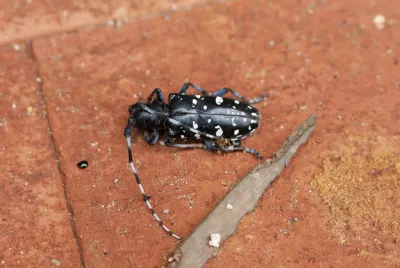
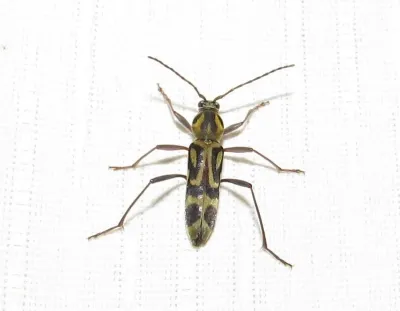
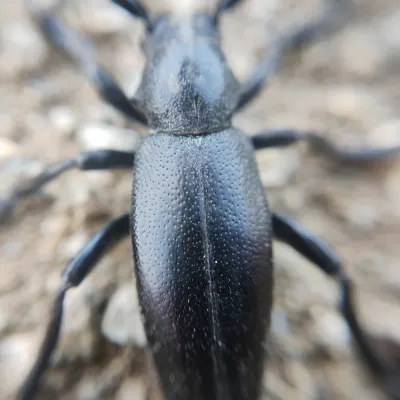
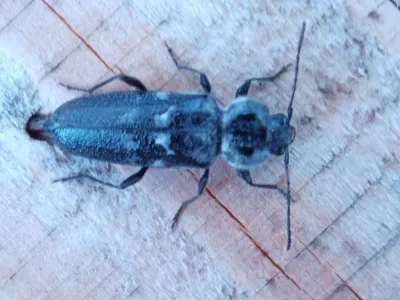
- Adults: metallic wood-boring beetles have short antennae and a shiny, compact body. Longhorn beetles have antennae at least half as long as the body, and often longer.
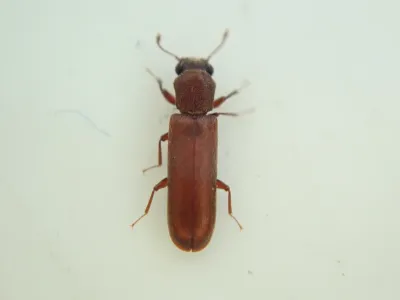
The old house borer is a round-headed borer that can reinfest dry softwood framing. That makes a correct ID important. Powder post beetles leave much smaller, pinhole-sized holes and loose, flour-like powder.
Common Species
- Flatheaded appletree borer (Chrysobothris femorata): dark bronze, about 1/2 inch; attacks young, stressed, or newly planted maples, fruit trees, oaks, and other hardwoods
- Bronze birch borer (Agrilus anxius): slender and olive-bronze; kills stressed birch trees
- Two-lined chestnut borer (Agrilus bilineatus): attacks oaks weakened by drought or defoliation
- Emerald ash borer (Agrilus planipennis): invasive; kills healthy ash trees
- Sculptured pine borer (Chalcophora virginiensis): large, gray-black, and ridged; develops in dead and dying pines and pine logs
- Golden buprestid (Buprestis aurulenta): shiny green and copper; develops in western conifers and is known for emerging from lumber years after a house is built
Flat-Headed Borer Behavior and Biology
Habitat
Flat-headed borers live wherever trees grow, from southern forests to boreal Canada. In yards, they pick trees under stress. Think new plantings, trees hit by drought, and trees with trunk wounds. Young trees with thin bark that get sunscald are also at risk. Freshly cut logs and firewood are also prime targets.
Diet
Larvae feed on the inner bark and the outer sapwood. This thin layer moves water and food through the tree. Enough tunnels can cut off a branch or the whole trunk. Adults feed lightly on leaves, bark, or pollen and do little harm.
Life Cycle
- Eggs: Females lay eggs in bark cracks and wounds, mostly from late spring through summer.
- Larvae: Larvae bore under the bark and feed for one to two years in most species. Development slows sharply as wood dries.
- Pupae: Larvae pupate in a chamber in the bark or outer wood.
- Adults: Adults chew out through oval or D-shaped exit holes, usually from May through August. They are fast fliers that love sun and warm bark.
Some adults of the genus Melanophila can sense forest fires from miles away and fly toward burned trees to lay eggs.
Surprise Emergence Indoors
Homeowners most often find these beetles inside in three ways:
- Firewood: Logs stacked indoors warm up, and larvae finish developing weeks or months early. Beetles then appear near the woodpile or on windows in winter or early spring.
- New flooring, trim, or furniture: A larva that lived through milling and drying may keep feeding slowly for years. The golden buprestid has come out of framing and floors decades after a house was built.
- Stressed yard trees: Adults may wander onto decks, siding, or into open doors in summer.
In all three cases, the beetles cannot lay eggs in dry, finished wood. A beetle that emerges from your floor or table does not mean the house is infested. Fill the hole and move on. If you find holes and sawdust and are not sure what made them, a termite inspection can rule out subterranean termites and other wood-destroying insects.
Treatment Methods for Flat-Headed Borers
Flat-headed borers are mostly a tree health problem, so control focuses on the tree and the wood, not the house.
- Keep trees healthy: Water deeply in dry spells and mulch the root zone. Keep mowers and string trimmers off the trunk. Healthy trees fight off borers far better than stressed ones.
- Protect young trees: Wrap the trunks of newly planted thin-barked trees for the first year or two to reduce sunscald, a common entry point.
- Prune and remove: Cut out and destroy infested limbs. Remove trees that are heavily infested before adults emerge in spring.
- Insecticides for valuable trees: A certified arborist can apply EPA-registered trunk injections or soil treatments. Timing matters. These work best before the tree starts to thin out.
- Handle firewood carefully: Buy firewood locally or buy heat-treated wood. Store it outdoors, off the ground, and away from the house. Bring in only what you will burn within a day or two.
- Indoor emergence: No treatment of the structure is usually needed. Vacuum up the beetles and fill exit holes with wood filler.
References
Other Wood Boring Beetles
Explore other species in the wood boring beetles family
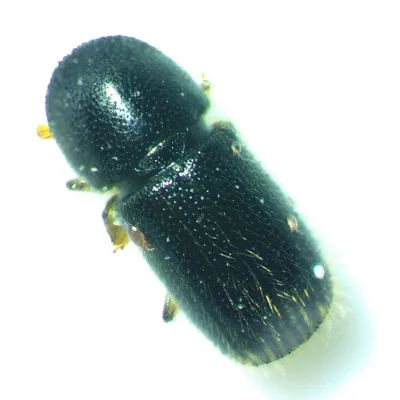
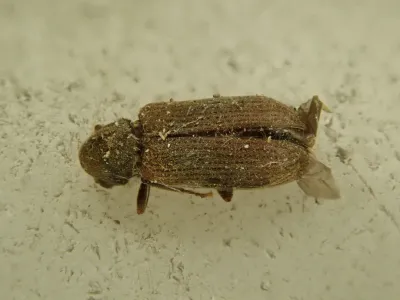
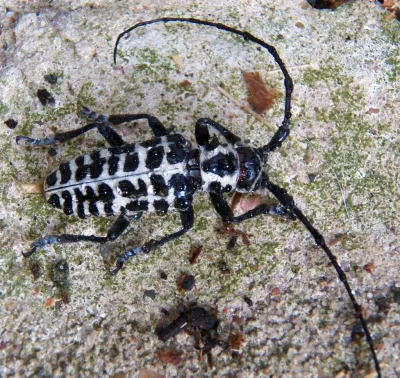
Commonly Confused With
Flat-Headed Borers are often mistaken for these similar pests
Where Flat-Headed Borers Are Found
Hover over states to see their names. Green regions indicate where flat-headed borers have been reported.
Common Questions about Flat-Headed Borers
What is a flat-headed borer?
+
A flat-headed borer is the larva of a metallic wood-boring beetle, also called a jewel beetle. It is a legless, cream-colored grub. The segment behind its head is wide and flat, so it looks like a horseshoe nail. It feeds under the bark of trees.
What is the difference between flat-headed and round-headed borers?
+
Flat-headed borers have a wide, flat front end. They carve flat tunnels and leave oval or D-shaped holes. Round-headed borers are the larvae of longhorn beetles. Their bodies are rounder, their holes are round, and the adults have very long antennae.
Why did shiny green or bronze beetles come out of my firewood?
+
Firewood from dead or dying trees often holds borer larvae. In a warm house, they finish growing and the adults chew their way out. These beetles cannot infest the dry wood in your home. Store firewood outdoors. Bring in only what you will burn in a day or two.
Can flat-headed borers damage my house or furniture?
+
Rarely. A beetle can come out of new lumber, flooring, or furniture if a larva was in the wood when it was cut. Some take years to finish growing in dry wood. They do not lay eggs in dry, finished wood, so the problem does not spread. Filling the hole is usually all you need to do.
Which trees do flat-headed borers attack?
+
It depends on the species. The flatheaded appletree borer attacks maples, fruit trees, oaks, dogwoods, and many other hardwoods. The bronze birch borer attacks birch, the two-lined chestnut borer attacks oaks, and the emerald ash borer attacks ash. Most species pick trees stressed by drought, new planting, sunscald, or injury.
How do I know if my tree has flat-headed borers?
+
Look for sunken, cracked, or dark patches of bark, often on the sunny south or southwest side of the trunk. Sap may ooze from the wounds. Under loose bark you may find winding, flat tunnels packed with fine, tightly layered sawdust. Oval or D-shaped exit holes and branch dieback in the canopy are later signs.
Are metallic wood-boring beetles harmful to people?
+
No. The adults do not sting and very rarely bite. They do not spread disease or eat food, fabric, or household items. The real concern is the harm the larvae do to stressed yard trees.

With five years of hands-on experience in the pest control industry, George Schulz is a registered technician with the Virginia Pest Management Association and a proud third-generation professional in a family business that's been protecting homes for over 58 years. He manages and trains a team of service pros while also leading internal research efforts—recently spearheading a deep-dive review of thousands of documents on pest control materials to hand-pick the most kid and pet friendly, most effective solutions tailored specifically for homes in the DC metro area.
Local Flat-Headed Borers Help
Dealing with flat-headed borers at home? Our licensed technicians provide pest control across Northern Virginia and Maryland.
