Pine Sawyer Beetles Identification Guide
Monochamus spp.
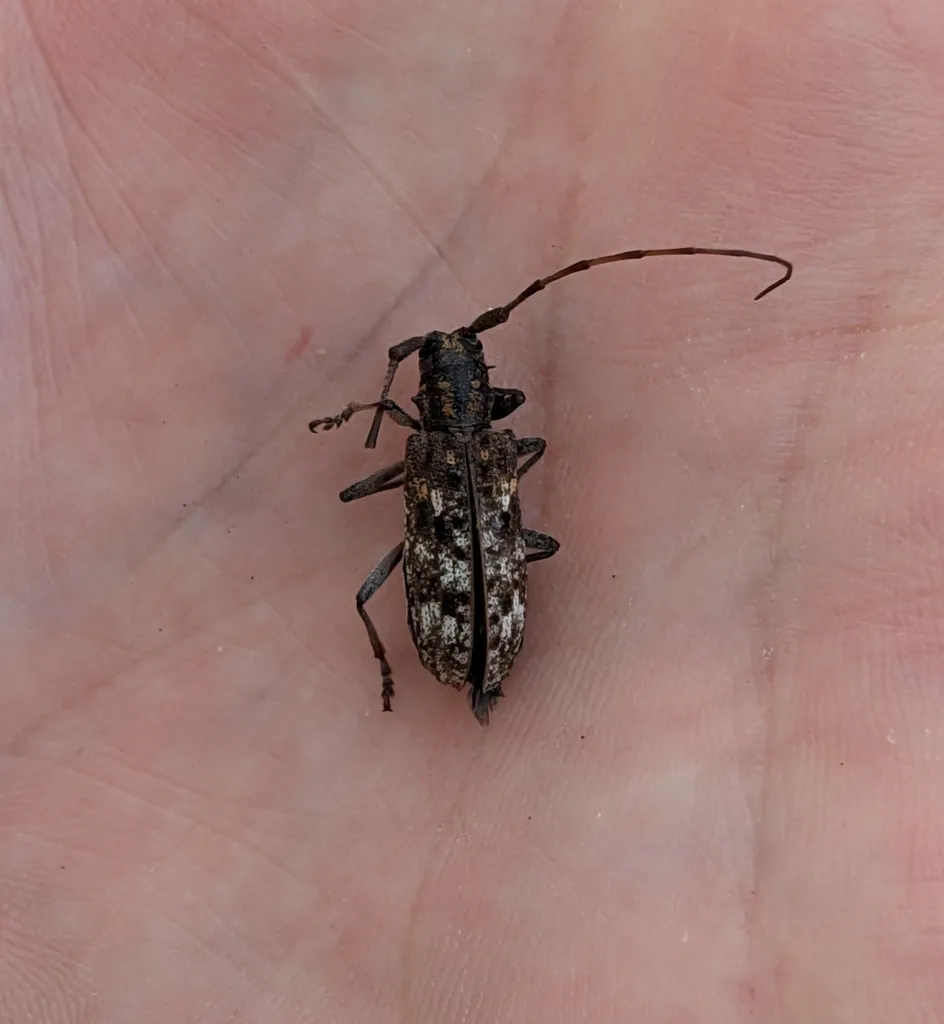
Pine sawyer beetles are large, mottled longhorn beetles with very long antennae. Their grubs tunnel through dying pines, fresh logs, and firewood, but they do not infest the dry framing in your home.
Taxonomy
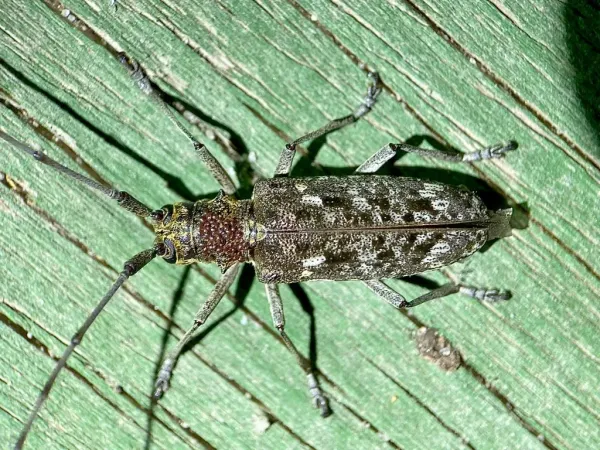
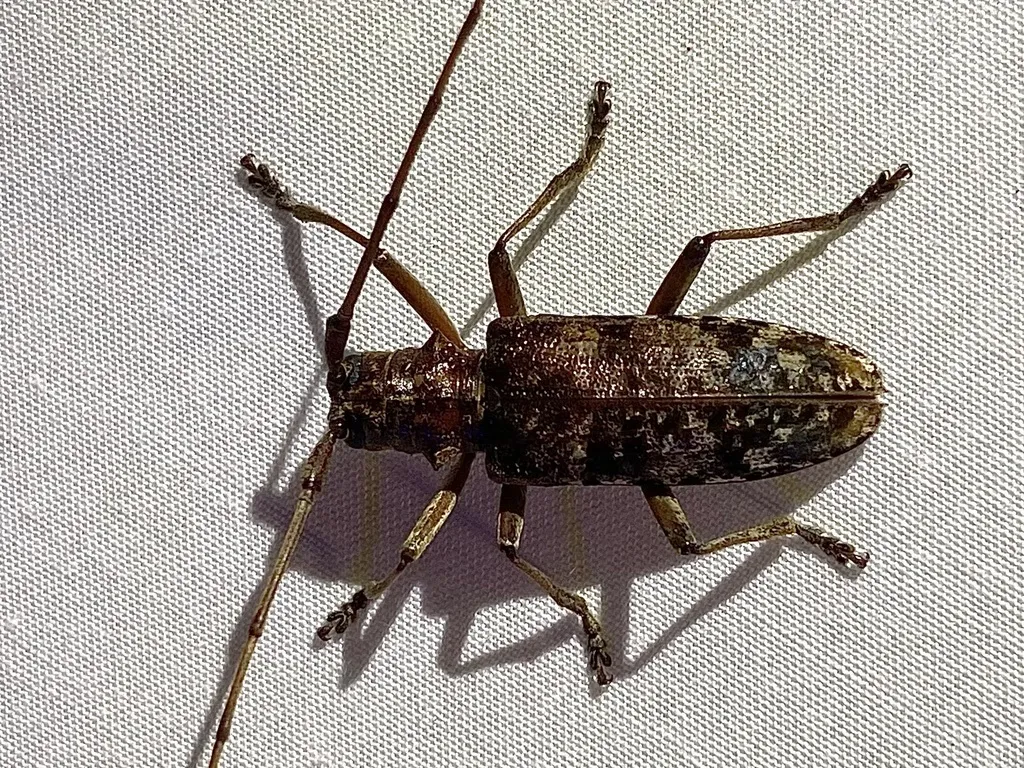
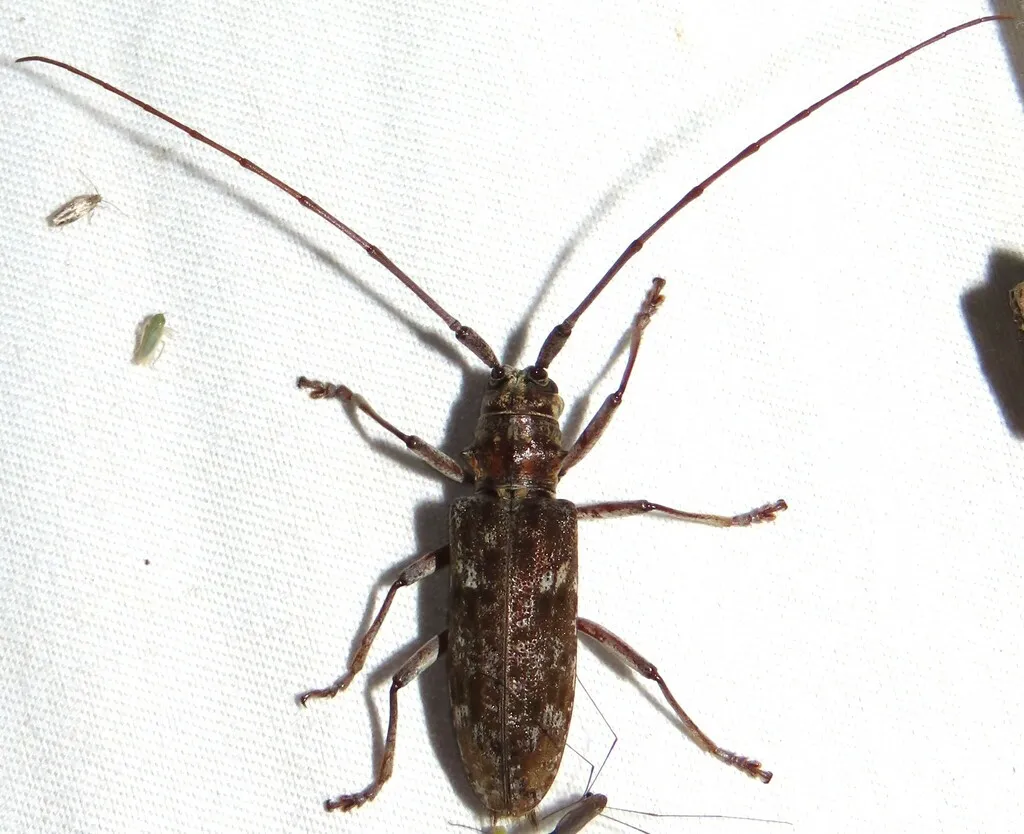
Pine Sawyer Beetles Coloration
Common color patterns to help identify pine sawyer beetles
Pine Sawyer Beetles
Seasonal Activity
When pine sawyer beetles are most active throughout the year

Where Pine Sawyer Beetles Are Found
Hover over states to see their names. Green regions indicate where pine sawyer beetles have been reported.
Pine Sawyer Beetle Identification Guide
Pine sawyers (Monochamus species) are big longhorn beetles that live in pines and other conifers. They are some of the most common large beetles people find on a woodpile, a fresh stump, or a porch light in early summer.
Their grubs are true wood-boring beetles, but they are picky. They only grow in dying trees, fresh logs, and firewood with the bark still on. They do not attack the dry framing in a finished house.
Physical Characteristics
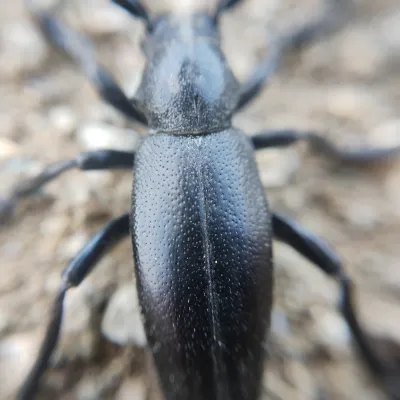
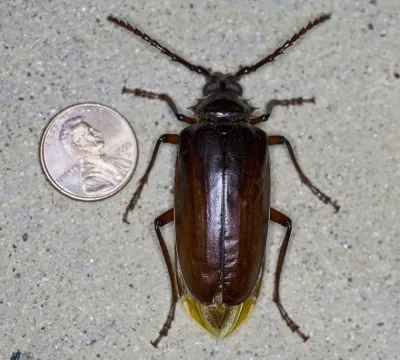
Adults are 13 to 35 mm long, or about 0.5 to 1.4 inches, not counting the antennae. The body is long and shaped like a tube.
What to look for:
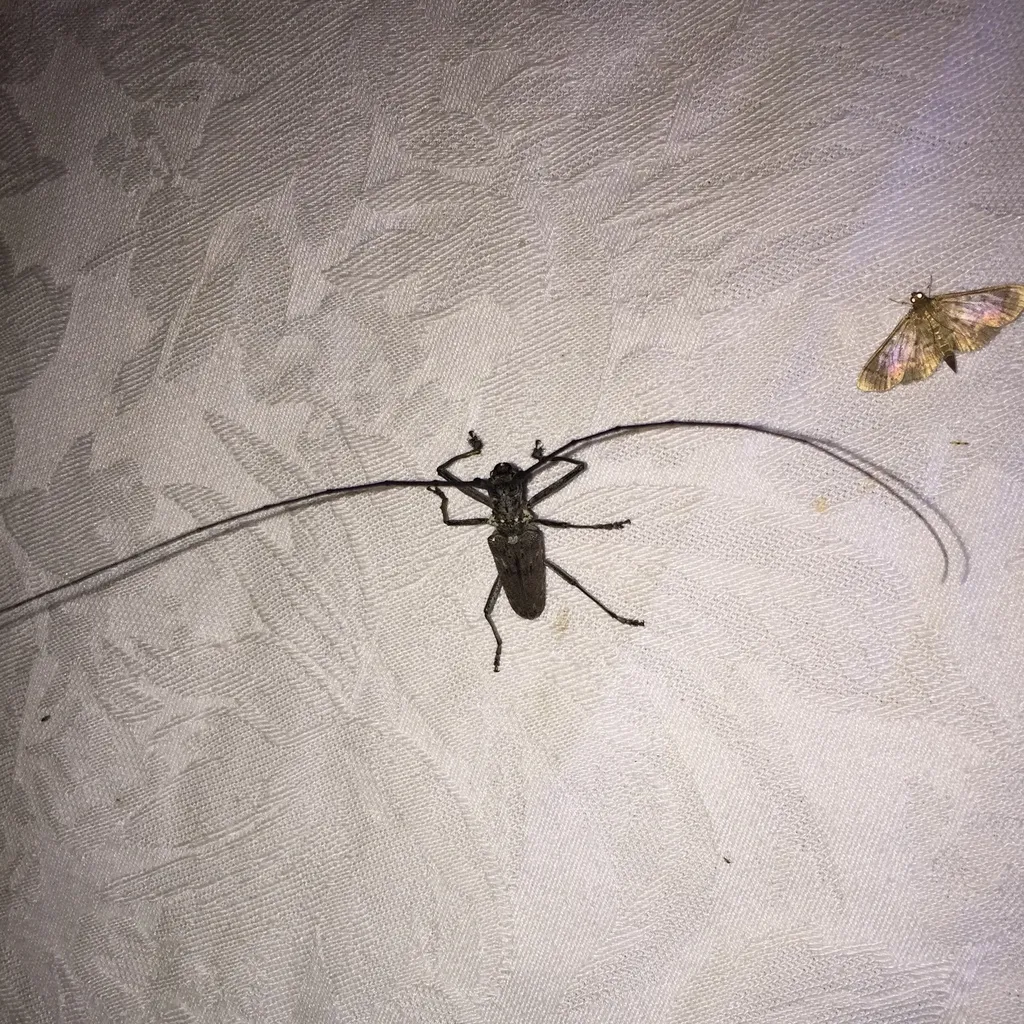
- Very long antennae. On females they are a bit longer than the body. On males they can be twice the body length or more.
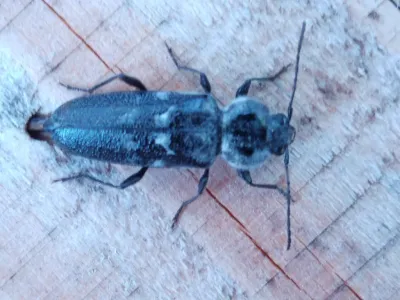
- Mottled color. Most are gray, brown, or charcoal with patches of white, cream, or tan hair. The pattern helps them blend in with pine bark.
- A spine on each side of the pronotum, the section just behind the head
- Rounded wing covers that sometimes carry one or two small white spots near the top
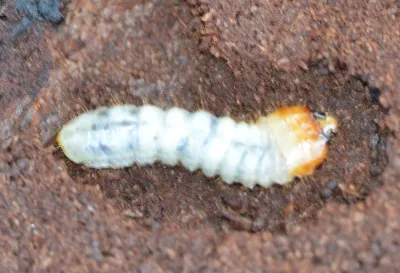
The grubs do the damage. They are legless, cream-colored, and segmented, with a brown head and strong jaws. Like all longhorn grubs, they are called round-headed borers. Big ones reach 2 inches or more.
Common Species
About ten Monochamus species live in North America. These are the ones most people run into:
- Southern pine sawyer (Monochamus titillator). A large brown-and-cream mottled sawyer. It is common across the Southeast and north into Virginia and Maryland.
- Carolina pine sawyer (Monochamus carolinensis). A gray, mottled sawyer found east of the Rockies. It is the main carrier of pine wilt in the eastern United States.
- Whitespotted sawyer (Monochamus scutellatus). Shiny black, often with a white spot at the top of the wing covers. It is found across Canada, the northern states, and the mountains. It also uses spruce and fir.
- Northeastern sawyer (Monochamus notatus). One of the largest, found in white pine country from the Great Lakes to New England and eastern Canada.
Pine Sawyer Beetle Behavior and Biology
Habitat
Pine sawyers live wherever pines and other conifers grow. They are drawn to trees hurt by drought, storms, lightning, fire, or bark beetles. Fresh logging slash, stumps, sawmill yards, and stacks of pine firewood are prime spots for egg laying.
Around homes, people see them in three places. They find them on woodpiles, at lights on summer nights, and indoors after a grub finishes growing inside firewood or an unseasoned log.
Diet
- Grubs feed first in the soft inner bark. Then they bore deep into the wood.
- Adults chew the bark of young twigs and needles on healthy pines before they mate. This feeding does little harm on its own. It is how the pinewood nematode gets into new trees.
Life Cycle
- Eggs. In late spring and summer, females chew small slits in the bark of dying trees or fresh logs. They tuck an egg or a few eggs into each one.
- Young grubs. Eggs hatch in one to two weeks. The grubs feed under the bark for about 40 to 60 days. They push coarse sawdust out of the slits.
- Older grubs. Grubs tunnel into the wood, often in a U shape. Large ones make a loud gnawing sound you can hear standing next to the log.
- Pupation. Grubs spend the winter in a chamber near the surface. They turn into pupae in spring.
- Adults. New beetles chew out through round holes. In the South this takes one year. In the North it can take two.
Pine Wilt Connection
Pine sawyers carry the pinewood nematode, a tiny worm that causes pine wilt disease. The nematodes ride inside the beetle’s breathing tubes. They enter a new tree through feeding wounds. The tree’s water flow fails, and its needles turn from yellow to reddish brown.
Most native eastern pines resist pine wilt. Scots, Austrian, and Japanese black pines often die within one season. A landscape pine that browns out all at once in late summer should be checked by an arborist.
Treatment Methods for Pine Sawyer Beetles
Better Termite & Pest Control does not treat pine sawyer beetles. They are a tree and firewood problem, and they do not infest dry lumber in your home. For a dying pine, contact an ISA-certified arborist or your county extension office.
These steps generally keep pine sawyers in check:
- Handle firewood wisely. Stack it outdoors, off the ground, and away from the house. Bring in only what you will burn in a day or two. Do not spray firewood with insecticide.
- Buy local or heat-treated firewood. Moving firewood spreads sawyers, pine wilt, and other borers to new areas.
- Deal with fresh logs fast. Mill, split, debark, or remove felled pines soon after cutting. Adults do not lay eggs on logs without bark.
- Remove dead and dying pines. Chip, burn where allowed, or haul away infested trees before the next summer so new adults cannot fly out.
- Keep landscape pines vigorous. Water in drought and protect roots from construction. A healthy tree is a poor target.
- Protect nearby high-value trees. Grubs already inside a tree cannot be saved with sprays. A licensed arborist may apply an EPA-registered trunk or soil treatment to nearby pines of value, following the label.
- Remove indoor beetles by hand. A sawyer that crawls out of firewood or a new log wall will not lay eggs indoors. Pick it up or vacuum it up and discard it.
Seeing fine powder, pinholes, or new holes in wood that is part of your home? That points to a different pest. Compare old house borers and powderpost beetles. Then reach out about our termite and pest control services. Our guide to termites in firewood covers what else can hitch a ride in on a log.
Similar Species and Look-Alikes
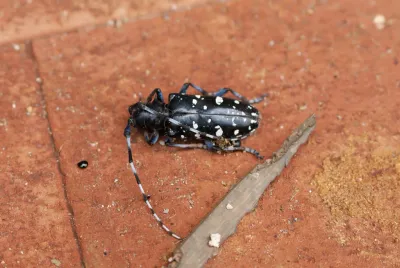
- Asian longhorned beetles. The key look-alike to rule out. Glossy black with bold white spots and black-and-white banded antennae. It attacks maples and other hardwoods, not pines. Report a suspected sighting to your state department of agriculture.
- Old house borers. Also live in pine, but in dry framing lumber. They are flatter, with two shiny bumps on the thorax and much shorter antennae.
- Longhorn beetles. The larger family that includes sawyers. Most others lack the sawyer’s mottled bark pattern and very long male antennae.
- Prionus root borers. Bulky reddish-brown to black beetles with thick, saw-toothed antennae. Their grubs feed on roots.
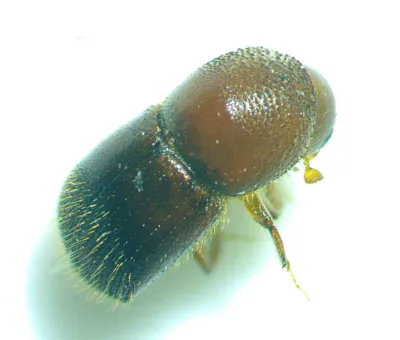
- Bark beetles. Often in the same dying pines, but only 2 to 8 mm long. They leave tiny holes and branching tunnels under the bark.
References
- Virginia Cooperative Extension: Pine Sawyers in Virginia
- Penn State Extension: Pine Wilt Disease
- University of California: Pine Wilt Nematode
- University of Maryland Extension: Borer Insects on Trees
- Missouri Department of Conservation: Longhorned Beetles (Borers, Sawyer Beetles)
- EPPO Global Database: Monochamus carolinensis
- EPPO Global Database: Monochamus titillator
Other Wood Boring Beetles
Explore other species in the wood boring beetles family
Commonly Confused With
Pine Sawyer Beetles are often mistaken for these similar pests
Where Pine Sawyer Beetles Are Found
Hover over states to see their names. Green regions indicate where pine sawyer beetles have been reported.
Common Questions about Pine Sawyer Beetles
What is a pine sawyer beetle?
+
Pine sawyers are large longhorn beetles in the genus Monochamus. Adults are about 0.5 to 1.4 inches long, mottled gray, brown, or black, with very long antennae. Their grubs tunnel through dying pines, other conifers, fresh logs, and firewood. The name comes from the loud chewing sound the grubs make inside the wood.
Why is there a pine sawyer beetle in my house?
+
Most often it hatched out of firewood you brought inside. The warmth wakes up the grub, and the adult chews its way out weeks later. Sawyers can also come out of the logs of a new log home or rustic beams that were not kiln-dried. Adults are drawn to the smell of pine resin and turpentine, so a few may fly in through an open door in summer.
Do pine sawyers damage houses or furniture?
+
No. Sawyers only lay eggs on freshly cut or dying conifers with the bark still on. They do not lay eggs on dry, finished lumber, so they cannot start a new infestation in your framing, floors, or furniture. A beetle that comes out of a log or beam is a one-time nuisance. If you see new round holes and fine powder year after year, look for a different wood borer.
Do pine sawyer beetles bite?
+
They do not sting and do not carry any disease to people. Their jaws are strong, so a large one may give a sharp pinch if you grab it. Scoop it into a cup and put it outside.
Do pine sawyers kill pine trees?
+
Usually not on their own. Pine sawyers attack trees that are already dying from drought, storm damage, lightning, or bark beetles. Their tunnels ruin the wood for lumber. The bigger concern is that sawyers carry the pinewood nematode, which causes pine wilt. Pine wilt can kill Scots, Austrian, and Japanese black pines within one season.
What does pine sawyer damage look like?
+
Look for round or slightly oval exit holes about 1/4 to 1/2 inch across in bark or logs. You may see coarse, shredded sawdust at the base of a dying tree or under a stack of firewood. Split open an infested log and you will find wide, flat tunnels under the bark that turn and run deep into the wood.
Does Better Termite treat pine sawyer beetles?
+
No. Pine sawyers are a tree and firewood problem, not a house pest, and they do not infest dry lumber. For a sick pine, contact an ISA-certified arborist or your local extension office. If you are finding sawdust or holes in wood that is part of your home, call us so we can check for termites and other wood-destroying insects.

With five years of hands-on experience in the pest control industry, George Schulz is a registered technician with the Virginia Pest Management Association and a proud third-generation professional in a family business that's been protecting homes for over 58 years. He manages and trains a team of service pros while also leading internal research efforts—recently spearheading a deep-dive review of thousands of documents on pest control materials to hand-pick the most kid and pet friendly, most effective solutions tailored specifically for homes in the DC metro area.
Local Pine Sawyer Beetles Help
Dealing with pine sawyer beetles at home? Our licensed technicians provide pest control across Northern Virginia and Maryland.
