Locust Borers Identification Guide
Megacyllene robiniae
Locust borers are black and yellow longhorn beetles that swarm goldenrod in early fall. Their grubs tunnel inside black locust trees, weakening limbs and trunks.
Taxonomy
Locust Borers Coloration
Common color patterns to help identify locust borers
Locust Borers
Seasonal Activity
When locust borers are most active throughout the year

Where Locust Borers Are Found
Hover over states to see their names. Green regions indicate where locust borers have been reported.
Locust Borer Identification Guide
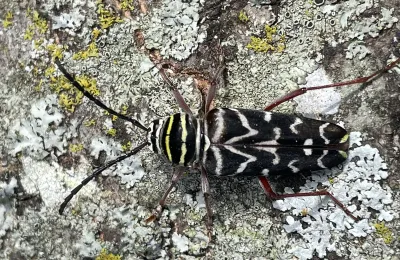
The locust borer (Megacyllene robiniae) is a native longhorn beetle that grows up inside black locust trees. Most people meet it in September, when the bright black and yellow adults crowd onto goldenrod. Many mistake it for a wasp at first glance.
Most wood-boring beetles that worry homeowners attack dry lumber in a building. The locust borer is different. It needs a living black locust, so its damage shows up in the yard, not in your house.
Physical Characteristics
Adults are 11 to 28 mm long, or about 1/2 to 1 inch. Most are close to 3/4 inch.
What to look for:
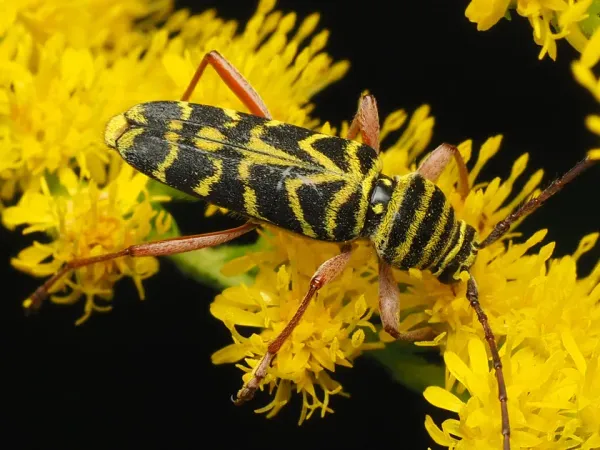
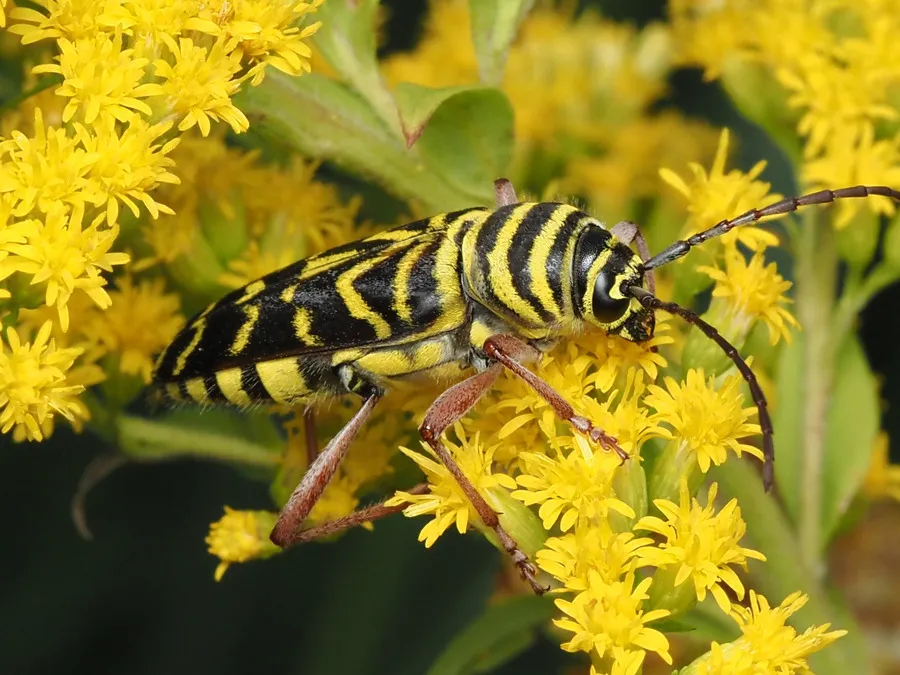
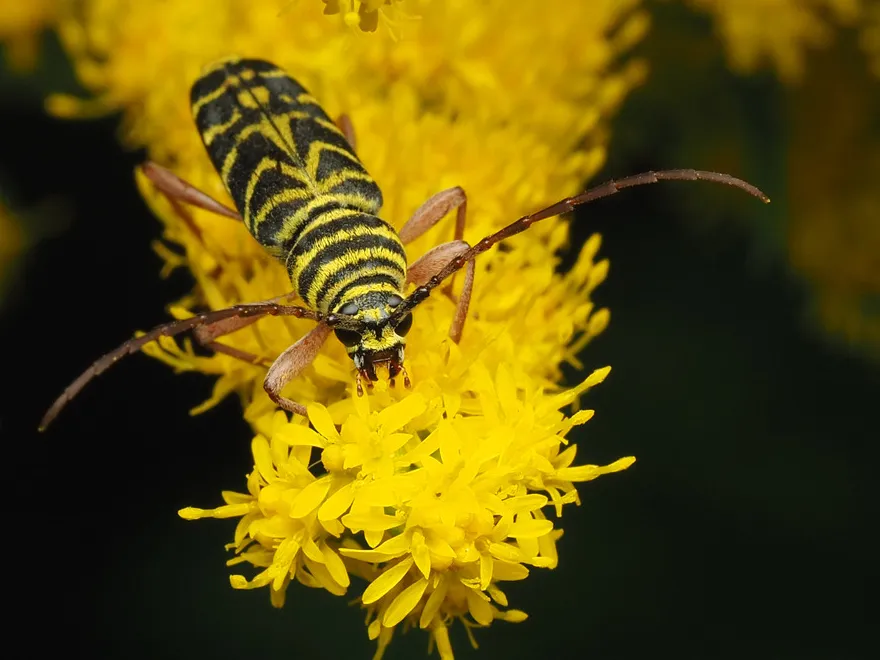
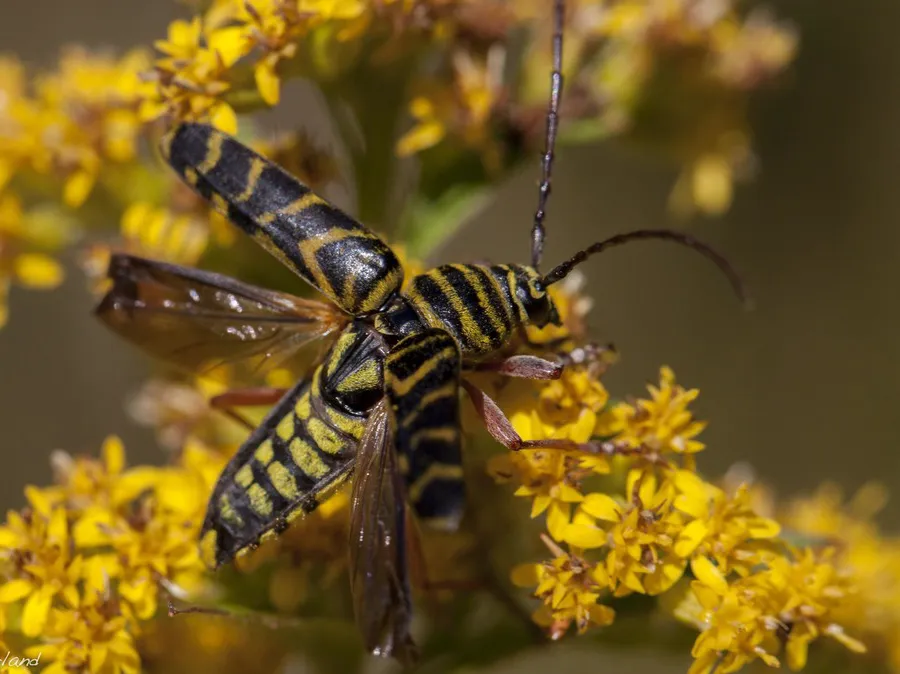
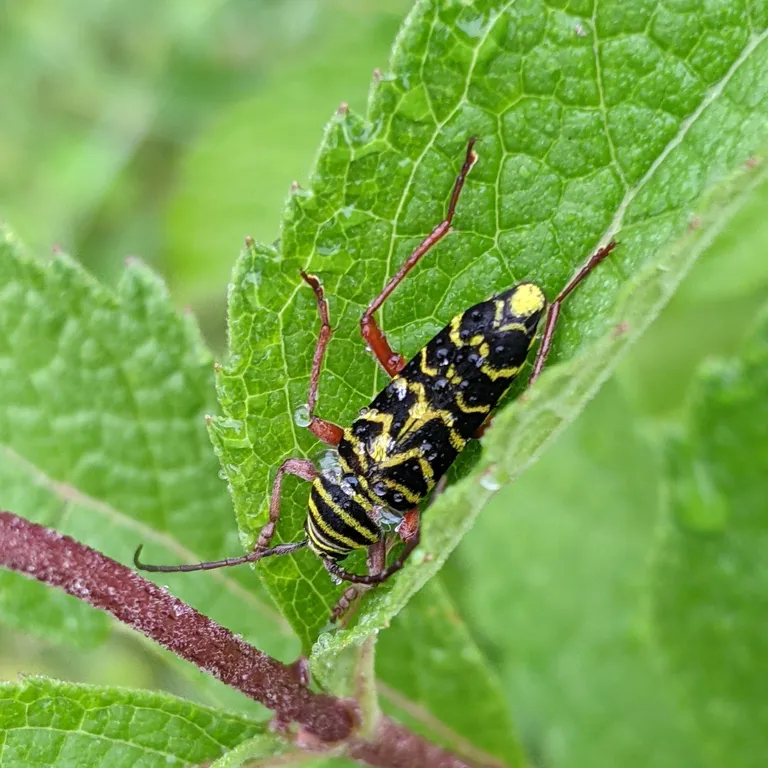
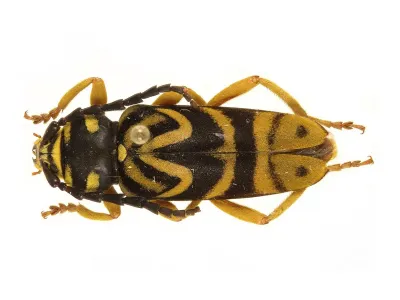
- A black, slender body crossed by bright yellow bands on the head, thorax, and wing covers
- A yellow band shaped like a “W” across the base of the wing covers, followed by V-shaped bands toward the tip
- Reddish to yellow-orange legs
- Dark antennae that reach well past the middle of the body
- Hard wing covers that hide the flight wings, unlike a wasp
This color pattern copies yellowjackets and other stinging wasps. Birds learn to avoid black and yellow insects, so the beetle gets the same protection without a stinger. It even moves in quick, jerky bursts like a wasp.
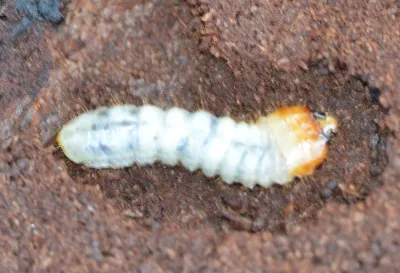
The grubs are the stage that hurts trees. They are white, legless, and a bit lumpy, with a small brown head. A full-grown grub reaches about 1 inch long.
Common Species
A few close relatives look almost the same:
- Painted hickory borer (Megacyllene caryae). Nearly a twin in color and pattern. It flies in spring, from about March to May, and grows in hickory and other hardwoods. If you see a banded beetle in April, it is almost certainly this one.
- Other Megacyllene species. A handful of related beetles in the South and West use mesquite and other hosts. They share the wasp-like banding.
- Other wasp-mimic longhorns, such as Clytus and Xylotrechus species. They are smaller, with thinner or paler bands.
For the locust borer, timing and host are the best clues. A black and yellow longhorn on goldenrod in September, near black locust trees, is almost always this species.
Locust Borer Behavior and Biology
Habitat
The locust borer attacks only black locust (Robinia pseudoacacia). It does not use honeylocust, which is a different tree. The beetle is native to the eastern United States. It has followed black locust wherever people planted it, so it now turns up across much of the country and into southeastern Canada. Western records, such as in Utah, Washington, and Colorado, come from planted trees.
In the Mid-Atlantic, black locust is common along roads, fence rows, old fields, and woodland edges. Young trees, trees in poor soil, and trees stressed by drought or shade are hit hardest. Borers favor the sunny side of the trunk.
Diet
Adults feed on pollen, mostly from goldenrod (Solidago). That is why fields of goldenrod can hold dozens of them at once in early fall. Adults do not eat wood.
The grubs feed inside the tree. They start in the inner bark and then bore into the sapwood and heartwood of the trunk and larger limbs.
Life Cycle
Locust borers have one generation per year.
- Adults come out in late August and September and stay active until the first hard frost. They mate on goldenrod and on the bark of black locust.
- Eggs are laid in September in bark cracks and around wounds. One female can lay 100 to 200 eggs. They hatch in about a week.
- Young grubs chew into the inner bark and build a small winter chamber there.
- In spring, the grubs bore into the wood, cutting tunnels 3 to 4 inches long. They push pale sawdust out of holes in the bark.
- Pupation happens inside the tunnel in July and early August. Then the new adults chew their way out.
Signs on a Tree
- Wet spots and sap oozing from small holes in the bark
- Pale, coarse sawdust in bark cracks or piled at the base of the trunk
- Yellow to brown stains on the bark where young grubs are feeding
- Knotty swellings on the trunk and limbs where the tree tried to heal old tunnels
- Broken limbs after wind or ice, often snapping right at a tunnel
- Many adults on nearby goldenrod in September
Treatment Methods for Locust Borers
Better Termite & Pest Control does not treat locust borers. They live inside living trees, which makes them a tree care problem rather than a household pest. If you think a black locust on your property is infested, call an ISA-certified arborist or your county extension office. They can judge how weak the tree is, whether any limbs are a hazard, and whether the tree is worth saving.
These are the approaches that generally work against locust borers:
- Keep the tree strong. Plant black locust in full sun and decent soil. Water deeply during drought. Mulch the root zone and keep mowers and trimmers off the bark. Healthy trees resist attack much better than stressed ones.
- Clean up infested wood. Prune out dead or heavily tunneled limbs. Remove badly infested trees and chip or burn the wood before the next late-summer emergence.
- Timed bark sprays. For a high-value tree, arborists may spray EPA-registered products on the trunk and large limbs from late August to mid-September. The goal is to hit egg-laying females and newly hatched grubs before they get into the wood.
- Systemic products. Some extension programs list soil-applied systemic insecticides for trees not yet infested. Label rules on timing matter, since goldenrod and locust flowers draw bees.
- Replace rather than fight. Where borers keep coming back, many arborists suggest replacing black locust with a species this beetle does not attack.
Nothing sprayed on the bark reaches grubs already deep in the wood. That is why timing and tree health matter more than any one product.
Is the beetle coming out of wood inside your house? That is a different insect. Start with our guides to old house borers and powderpost beetles. If you have wood-boring insects indoors, reach out about our pest control services. If the black and yellow insects you are seeing are actually building nests, our guide to yellowjackets can help you tell the difference.
Similar Species and Look-Alikes
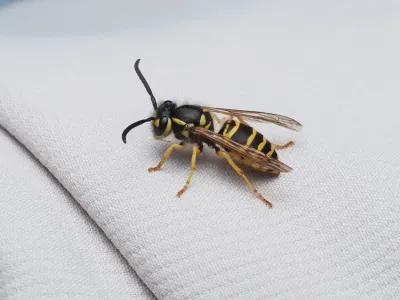
- Yellowjackets. The insect the locust borer is copying. Yellowjackets have a narrow waist, clear wings, short antennae, and a stinger. They build paper nests. The beetle does neither.
- Round-headed borers. The general name for longhorn beetle grubs, including this one. The round tunnel shape is the giveaway.
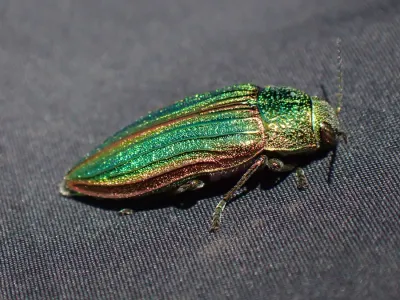
- Flat-headed borers. Metallic wood-boring beetles whose grubs make flat, winding tunnels and leave D-shaped exit holes.
- Longhorn beetles. The larger family the locust borer belongs to. Most are brown, gray, or black, not banded yellow.
- Painted hickory borers (Megacyllene caryae). Almost identical, but it flies in spring and grows in hickory.
References
Other Wood Boring Beetles
Explore other species in the wood boring beetles family
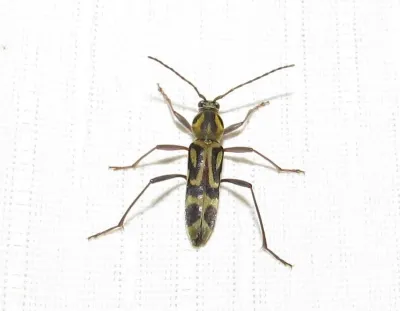
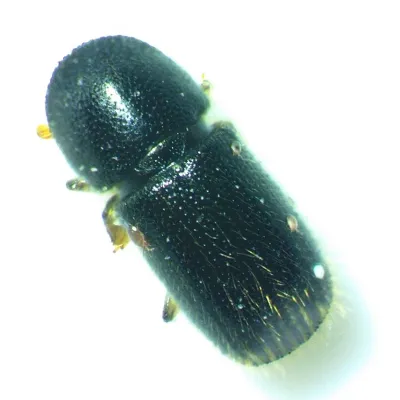
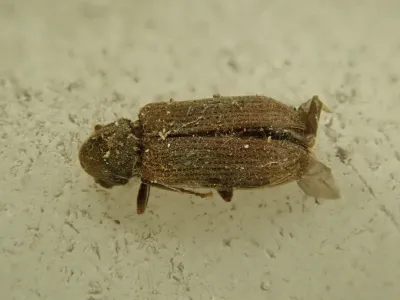
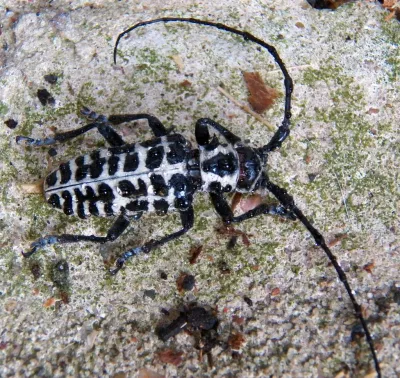
Commonly Confused With
Locust Borers are often mistaken for these similar pests
Where Locust Borers Are Found
Hover over states to see their names. Green regions indicate where locust borers have been reported.
Common Questions about Locust Borers
What is a locust borer?
+
The locust borer is a native longhorn beetle. Its scientific name is Megacyllene robiniae. The grubs live inside the trunks and branches of black locust trees. The adults are black with bright yellow bands and show up on goldenrod flowers in September. They are about 1/2 to 1 inch long.
Is a locust borer a wasp?
+
No. It is a beetle that looks like a wasp. The black and yellow bands warn birds to stay away, even though the beetle cannot sting. Look for hard wing covers over the back, long antennae, and a thick body with no narrow waist. A yellowjacket has a pinched waist and clear wings that stay visible.
Do locust borers sting or bite?
+
They do not sting. A large beetle can pinch with its jaws if you squeeze it, but that is rare and harmless. They do not carry disease and do not feed on anything in your home. If one lands on you, brush it off or move it outside with a cup.
Do locust borers attack honeylocust trees?
+
No. Locust borers only attack black locust (Robinia pseudoacacia). Honeylocust is a different tree, and this beetle does not use it. If a honeylocust in your yard is struggling, look for other causes, such as plant bugs, cankers, or root stress.
How do I know if my black locust has locust borers?
+
Check the trunk and larger limbs in late summer and fall, mainly on the sunny side. Look for wet spots or sap running from small holes. Look for pale sawdust packed in bark cracks or piled at the base. Knotty swellings on the trunk and branches that snap off in storms are signs of older damage.
Will locust borers kill my tree?
+
They can kill young or stressed black locusts. Older, healthy trees often survive for years, but the tunnels weaken the wood, so limbs break in wind and ice. Trees that are shaded, crowded, or under drought stress suffer the most. Keeping the tree strong is the best defense.
Can locust borers damage my house or deck?
+
No. Locust borers need a living black locust tree to breed. They do not attack framing, decks, furniture, or seasoned fence posts. If you find beetles coming out of wood inside your home, you likely have a different wood-boring beetle.
Who should I call about locust borers in my trees?
+
Locust borers are a tree health problem, not a household pest. Better Termite & Pest Control does not treat them. Call an ISA-certified arborist or your county extension office. They can check the tree, tell you if it can be saved, and time any treatment correctly.

With five years of hands-on experience in the pest control industry, George Schulz is a registered technician with the Virginia Pest Management Association and a proud third-generation professional in a family business that's been protecting homes for over 58 years. He manages and trains a team of service pros while also leading internal research efforts—recently spearheading a deep-dive review of thousands of documents on pest control materials to hand-pick the most kid and pet friendly, most effective solutions tailored specifically for homes in the DC metro area.
Local Locust Borers Help
Dealing with locust borers at home? Our licensed technicians provide pest control across Northern Virginia and Maryland.
