
Bronze Birch Borer Identification Guide
Agrilus anxius
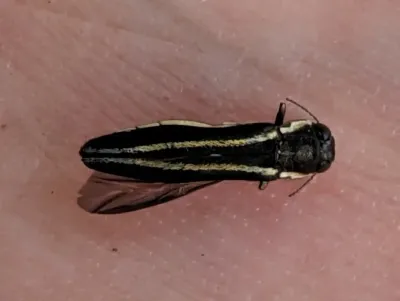
The bronze birch borer is a slender, olive-bronze metallic beetle whose larvae tunnel under birch bark. It is the leading insect killer of white-barked ornamental birches in North American yards.
Taxonomy
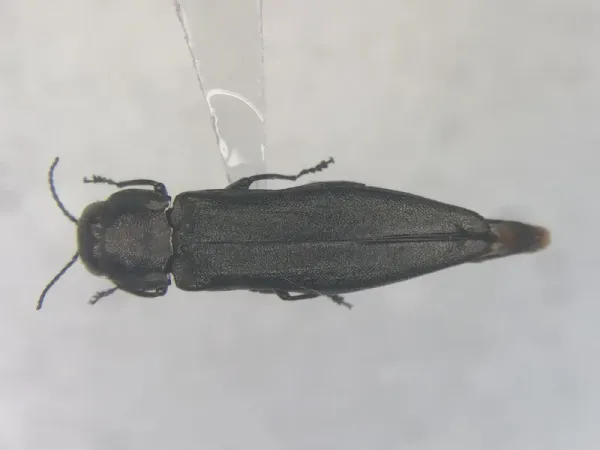
Bronze Birch Borer Coloration
Common color patterns to help identify bronze birch borer
Bronze Birch Borer
Seasonal Activity
When bronze birch borer are most active throughout the year

Where Bronze Birch Borer Are Found
Hover over states to see their names. Green regions indicate where bronze birch borer have been reported.
Bronze Birch Borer Identification Guide
The bronze birch borer (Agrilus anxius) is a native beetle with a metal-like shine. It is the main insect that kills birch trees in North American yards. It is a close cousin of the emerald ash borer, and both belong to the flat-headed borer family, Buprestidae.
Most people never see the beetle. What they see is a white birch dying from the top down. Hot, dry summers in Virginia, Maryland, and DC stress white birches and make them easy targets.
Physical Characteristics
Adults:
- Slender, bullet-shaped body about 6 to 11 mm (1/4 to 1/2 inch) long; females are usually larger
- Dark olive to copper-bronze color with a metallic shine; males often have a greenish head and females a coppery one
- Short, saw-toothed antennae and large eyes
- Body tapers to a point at the rear
Larvae:
- Flat, legless, creamy white grubs about 1 to 1.4 inches long when grown
- A wide, flattened segment just behind the small head
- Two small, hardened brown points at the tail end
Signs of Infestation
Because the larvae stay hidden under the bark, damage signs are how most people identify this pest:
- Top dieback: Leaves in the upper crown turn sparse, yellow, or small, and branches die from the top down.
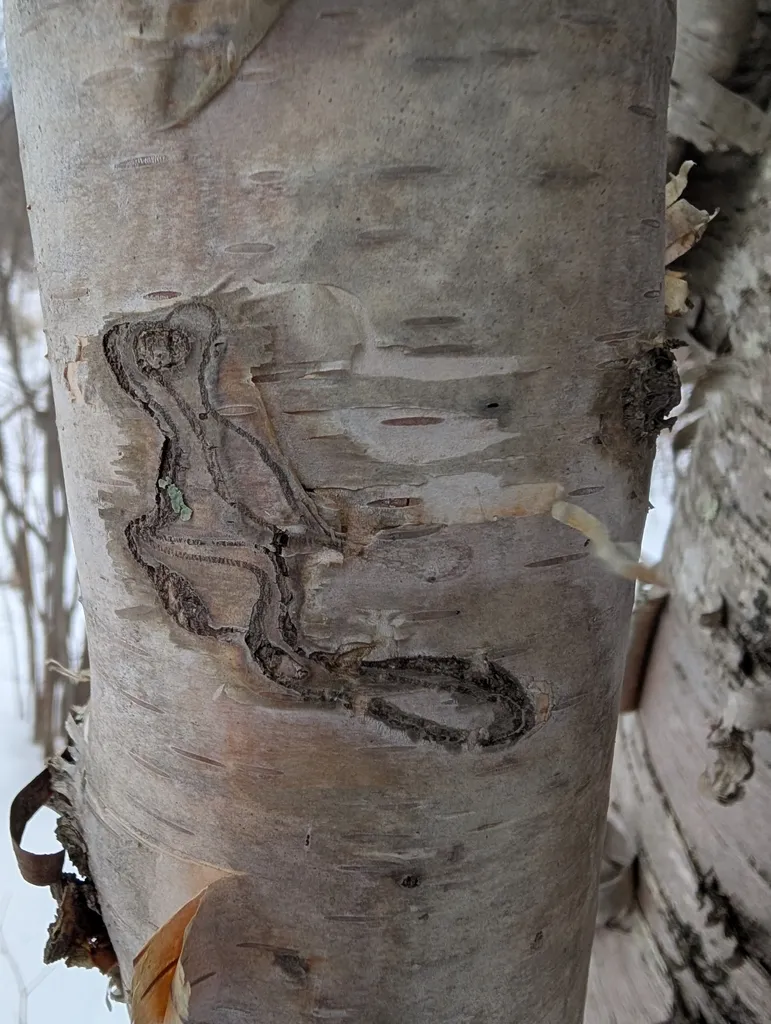
- Bark ridges: Lumpy, winding welts appear on the trunk and limbs where the tree grows scar tissue over tunnels.
- Rusty stains: Reddish-brown sap or staining can ooze from wounds on white bark.
- D-shaped exit holes: Adults chew out through holes about 1/8 to 3/16 inch wide with one flat side.
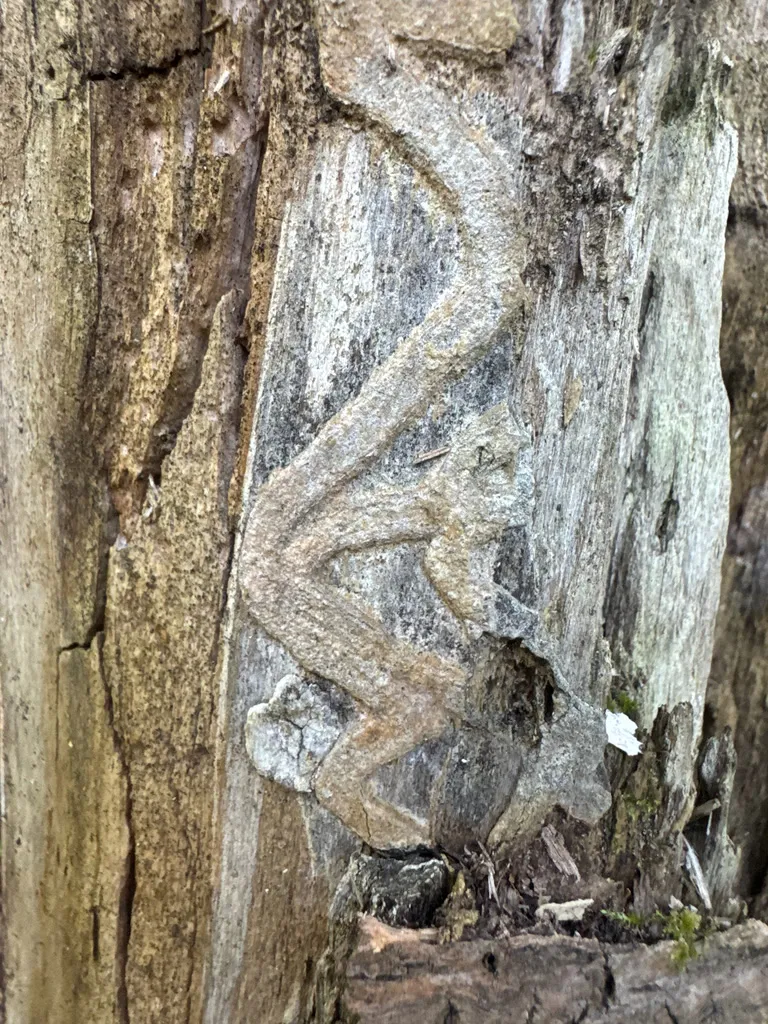
- Zigzag galleries: Under loose bark, the tunnels are packed with fine sawdust and switch back and forth.
Common Species
Several close relatives in the genus Agrilus cause similar damage to other trees:
- Emerald ash borer (Agrilus planipennis): bright metallic green, invasive, and attacks only ash.
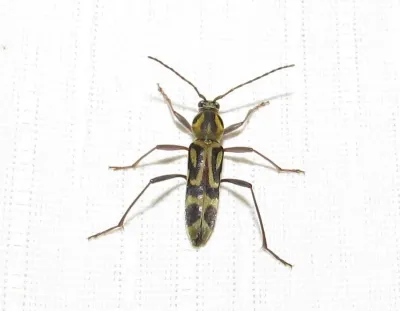
- Two-lined chestnut borer (Agrilus bilineatus): black with two thin yellow stripes; attacks stressed oaks.
- Bronze poplar borer (Agrilus liragus): nearly identical in looks, but develops in aspen and poplar instead of birch.
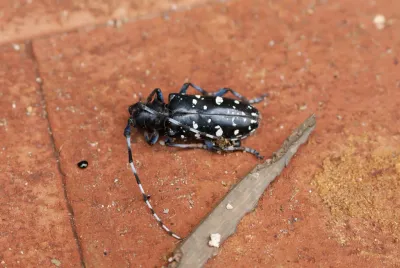
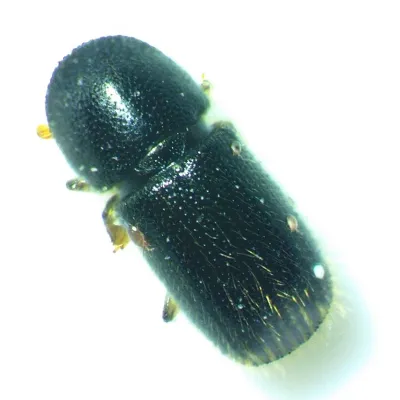
Do not confuse these beetles with bark beetles or ambrosia beetles. Those are tiny, round beetles that leave pinhole-sized holes. Round-headed borers leave round or oval exit holes and have long antennae as adults.
Bronze Birch Borer Behavior and Biology
Habitat
The bronze birch borer lives wherever birch trees grow. Its range runs from Alaska and Canada south into the Carolinas and Georgia. Yard plantings have also carried it into parts of the West, such as Colorado, Utah, and California. In yards, it targets white birches planted in full sun, in lawns, or near pavement. Birch roots like cool, moist, shady soil. Heat, drought, and root damage stress the tree. Females seek out stressed birches to lay eggs. Birches from Europe and Asia are often attacked even when they look healthy.
Diet
Adults chew small notches in birch leaves for a few weeks. This does little harm. The real damage comes from the larvae. They eat the thin living layer just under the bark. This layer carries water and sugar through the tree. When tunnels circle a limb, everything above that point dies.
Hosts
- Most susceptible: European white birch (Betula pendula) and its weeping and cut-leaf forms, plus Himalayan (whitebarked) birch
- Susceptible when stressed: Paper birch, gray birch, and yellow birch
- Resistant: River birch (Betula nigra), including the Heritage and Dura-Heat cultivars
Life Cycle
- Adults emerge from late May through June in the Mid-Atlantic, after roughly 450 degree-days (base 50°F) have built up since January 1. Adults live a few weeks.
- Eggs are laid singly or in small groups in bark cracks, often on sunny sides of the upper trunk and limbs. They hatch in about two weeks.
- Larvae bore through the bark and feed from summer into fall. They spend the winter in a cell in the outer wood.
- Pupation happens in spring, and the new adult chews out through a D-shaped hole.
In warmer areas and on weak trees, one generation takes one year. In cold northern regions or on more vigorous trees, it can take two years.
Tree Defense
A healthy birch can fight back. It grows scar tissue that seals off young larvae. So the beetle starts high in the crown, where branches are thin and most stressed. Over several years, it works down the trunk. Once the main trunk shows ridges, the tree is usually in serious decline.
Treatment Methods for Bronze Birch Borers
Bronze birch borer is a tree problem, not a household pest. The usual fix is tree care by a certified arborist, plus better growing conditions for the birch.
- Keep birches healthy: Water deeply every week or two during dry spells, especially in July and August. Spread 2 to 4 inches of mulch over the root zone, kept off the trunk. Skip routine fertilizer, which can raise the tree’s water needs.
- Shade the roots: Underplant with groundcover or shrubs so the soil stays cool. Avoid planting birch next to driveways, patios, or south-facing walls.
- Prune infested limbs: Cut out dying branches well below any ridges or exit holes during fall and winter, before adults emerge. Destroy or chip the wood.
- Systemic insecticides: A certified arborist can apply EPA-registered systemic products, such as those containing imidacloprid or dinotefuran, after the birch finishes flowering. These work best on trees with light dieback. They generally fail once 40 to 50 percent of the canopy is dead. Avoid treating soil where bee-attracting flowers grow under the tree.
- Bark sprays: Some labeled bark sprays kill adults and newly hatched larvae before they get under the bark. They must be timed to the June flight and cover the trunk and limbs fully.
- Remove badly infested trees: Dead birches turn brittle and can drop limbs. Removing them before adults emerge also means fewer beetles nearby. Do not move infested birch wood as firewood.
- Plant resistant trees: When replacing a birch, choose river birch or a non-birch species.
Bronze birch borers do not infest homes. If you find holes and sawdust in wood inside your house, a termite inspection can check for termites and other wood-destroying insects.
References
- Natural Resources Canada: Bronze Birch Borer
- University of California: Bronze Birch Borer
- University of Minnesota Extension: Bronze Birch Borer and Twolined Chestnut Borer
- University of New Hampshire Extension: Bronze Birch Borer Fact Sheet
- Utah State University Extension: Bronze Birch Borer
- USA National Phenology Network: Bronze Birch Borer Forecast
Other Wood Boring Beetles
Explore other species in the wood boring beetles family
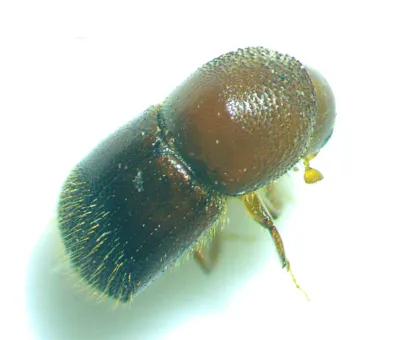
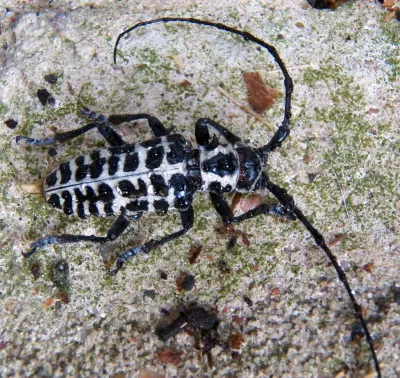
Commonly Confused With
Bronze Birch Borer are often mistaken for these similar pests
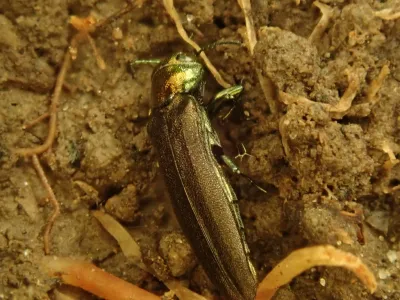
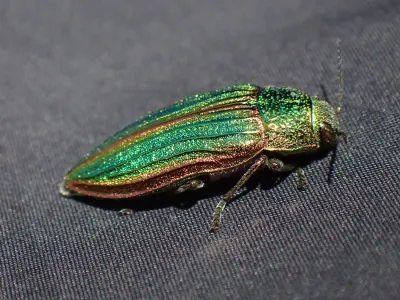
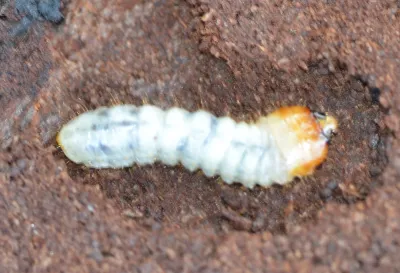
Where Bronze Birch Borer Are Found
Hover over states to see their names. Green regions indicate where bronze birch borer have been reported.
Common Questions about Bronze Birch Borer
What is killing my white birch tree?
+
If the top of a white-barked birch is thinning and dying back while the lower branches still look green, the bronze birch borer is the most likely cause. Look for bumpy ridges in the bark and small D-shaped holes about 1/8 inch wide on the upper trunk and limbs. Drought, heat, and compacted soil weaken birches first and make them targets.
What does a bronze birch borer look like?
+
Adults are slender, bullet-shaped beetles about 1/4 to 1/2 inch long with a dark olive-bronze metallic shine. Larvae are flat, creamy white grubs with a wide segment behind the head. You will rarely see either one, because the larvae live under the bark and the adults are active only a few weeks in late spring.
Which birch trees are most at risk?
+
European white birch and other imported white-barked birches are the most susceptible. Paper, gray, and Himalayan birches are also attacked, especially when stressed. River birch, including the Heritage and Dura-Heat cultivars, is highly resistant and is the best choice for hot Mid-Atlantic yards.
When are bronze birch borers active?
+
Adults emerge from late May through June in Virginia and Maryland, with June the main month. They feed on birch leaves, mate, and lay eggs in bark cracks for a few weeks. The larvae then feed under the bark from summer into fall and spend the winter inside the tree.
Can a tree with bronze birch borer be saved?
+
Sometimes. Trees with light damage often recover with deep watering, mulch, and systemic treatment applied by a certified arborist. University of Minnesota Extension notes that treatment generally stops working once about 40 to 50 percent of the canopy has been killed. Birches with heavy top dieback rarely recover and should be removed before they become a hazard.
Will bronze birch borers infest my house or firewood?
+
No. They only develop in living or freshly cut birch and cannot reinfest dry, finished lumber. A beetle may emerge from fresh birch firewood stored indoors, but it will not attack your home's framing, floors, or furniture.
Is the bronze birch borer an invasive species?
+
No. Unlike its relative the emerald ash borer, the bronze birch borer is native to North America. Native birches resisted it over time, but the European and Asian birches planted in many yards have little natural defense, which is why it kills so many landscape trees.

With five years of hands-on experience in the pest control industry, George Schulz is a registered technician with the Virginia Pest Management Association and a proud third-generation professional in a family business that's been protecting homes for over 58 years. He manages and trains a team of service pros while also leading internal research efforts—recently spearheading a deep-dive review of thousands of documents on pest control materials to hand-pick the most kid and pet friendly, most effective solutions tailored specifically for homes in the DC metro area.
Local Bronze Birch Borer Help
Dealing with bronze birch borer at home? Our licensed technicians provide pest control across Northern Virginia and Maryland.
