Red Oak Borers Identification Guide
Enaphalodes rufulus
Red oak borers are large longhorn beetles. Their grubs tunnel inside the trunks of living red oaks for two years, scarring the wood and adding stress to weak trees.
Taxonomy
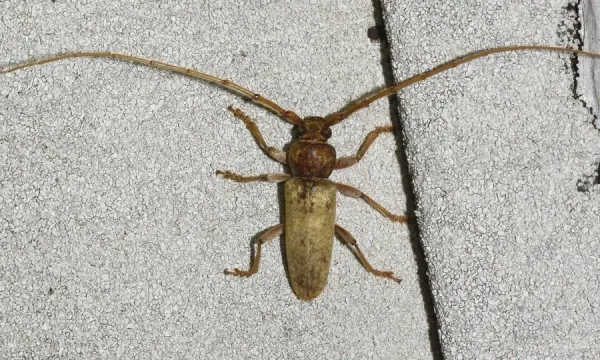
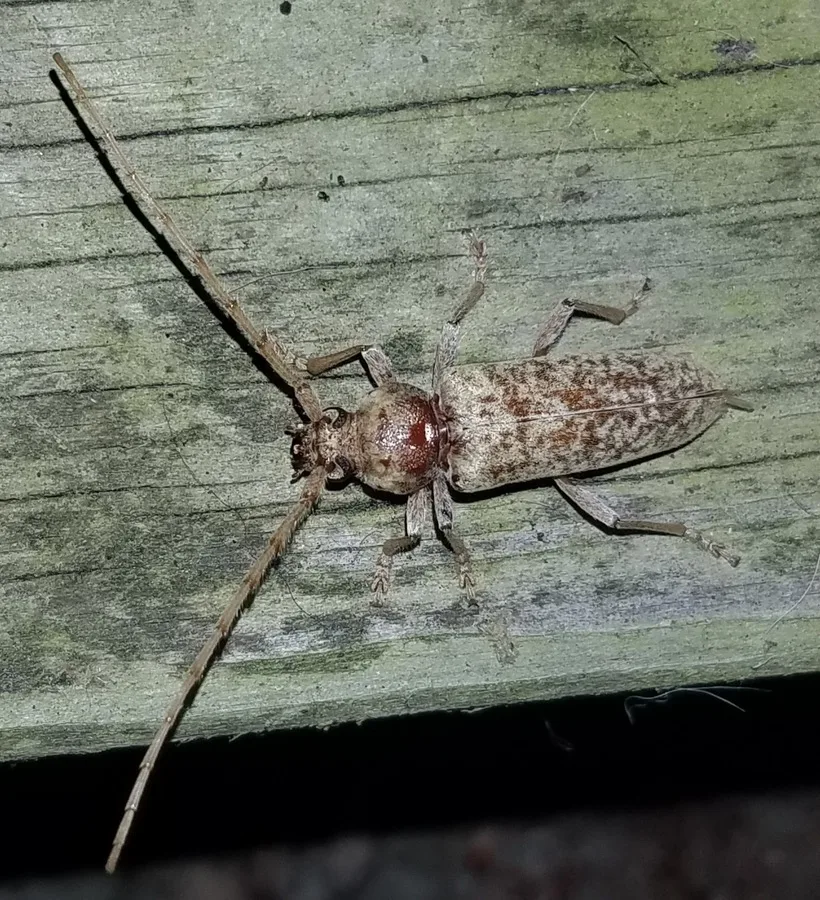
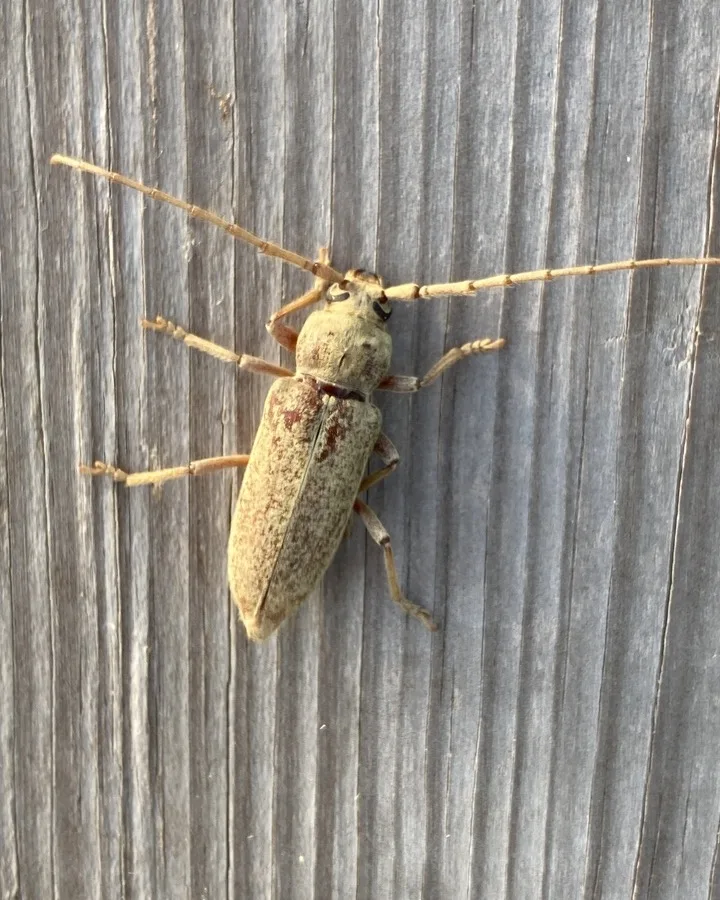
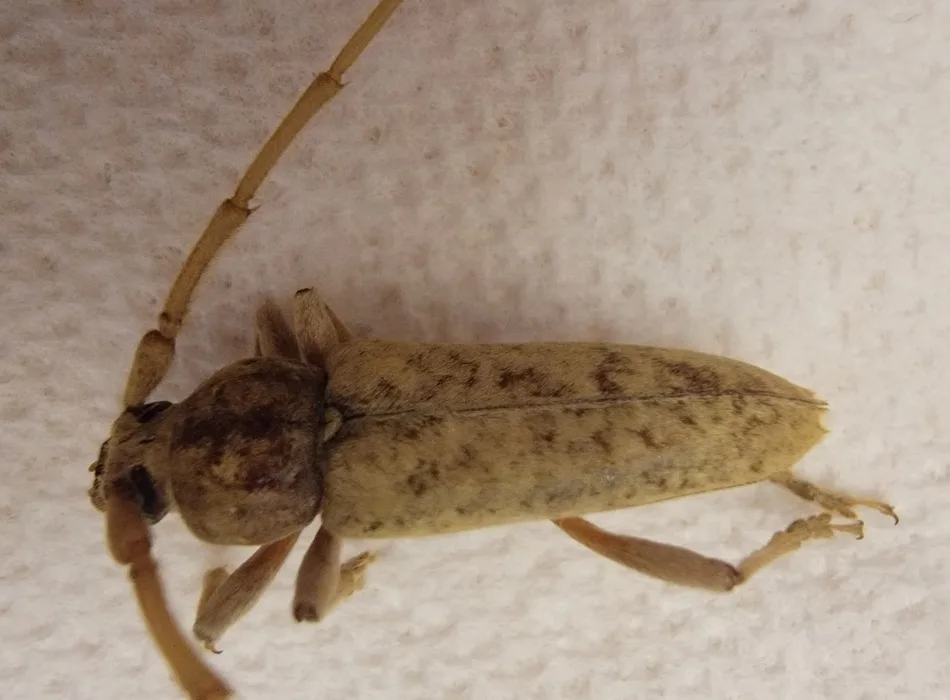
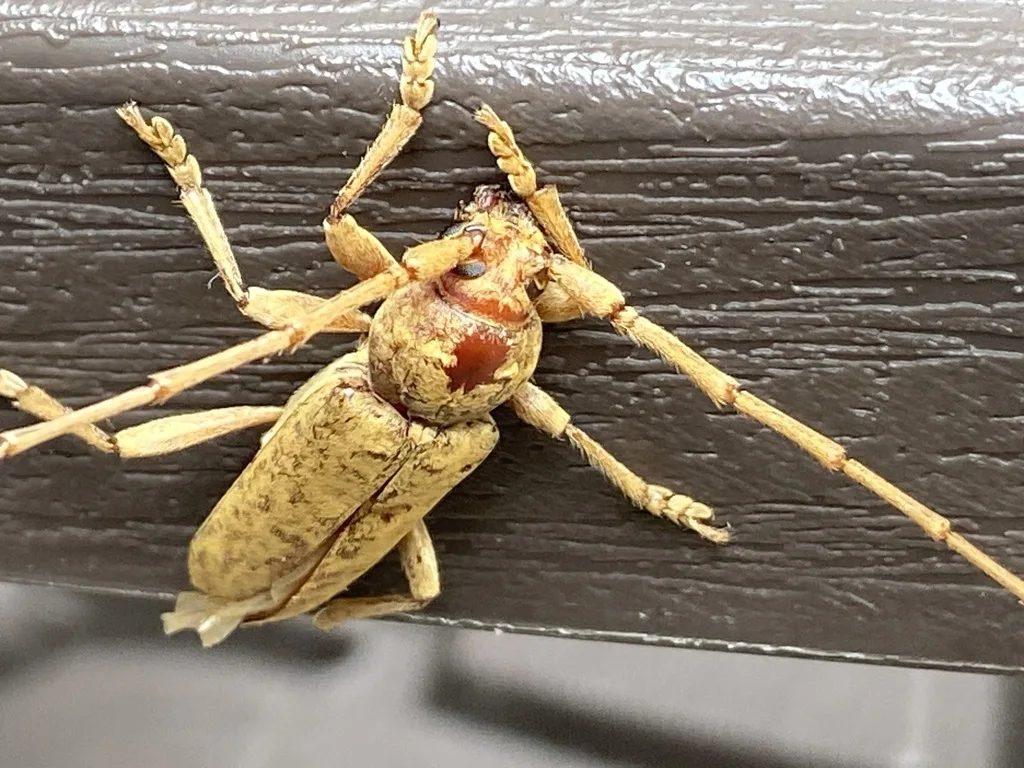
Red Oak Borers Coloration
Common color patterns to help identify red oak borers
Red Oak Borers
Seasonal Activity
When red oak borers are most active throughout the year

Where Red Oak Borers Are Found
Hover over states to see their names. Green regions indicate where red oak borers have been reported.
Red Oak Borer Identification Guide
The red oak borer (Enaphalodes rufulus) is a native longhorn beetle that grows up inside the trunks of living oaks. It is one of the biggest wood-boring beetles most homeowners will ever see. In midsummer it shows up on porch lights and siding across the eastern and central states.
Most wood-boring beetles that worry homeowners attack dry lumber in a building. The red oak borer is different. It needs a living tree, so its damage shows up in the yard, not in the framing.
Physical Characteristics
Adults are 20 to 38 mm long, or about 0.8 to 1.5 inches. That does not count the antennae.
What to look for:
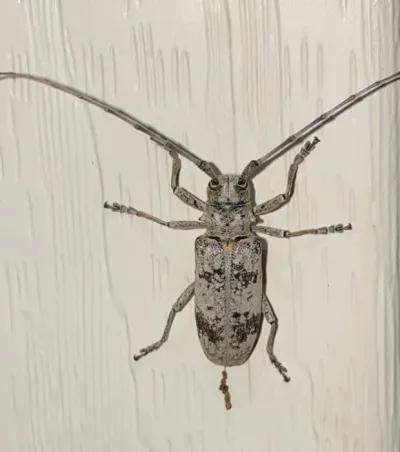
- A long, straight-sided body with fine tan or gray hairs that give it a dusty, faded look
- A reddish-brown head and pronotum, the section just behind the head. That is where the “red” in the name comes from.
- A blunt spine on each side of the pronotum
- Antennae about as long as the body on females, and up to twice the body length on males
- Pale tan legs and antennae, often with darker bands
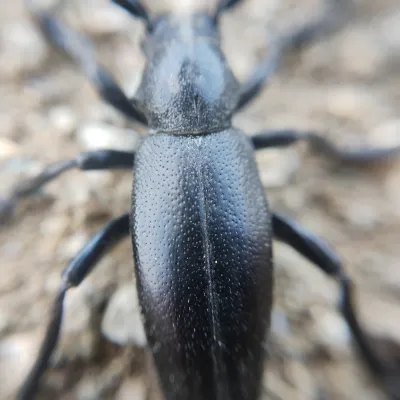
Older beetles rub off much of that hair. They then look darker and shinier, which is a common reason people misjudge what they have found.
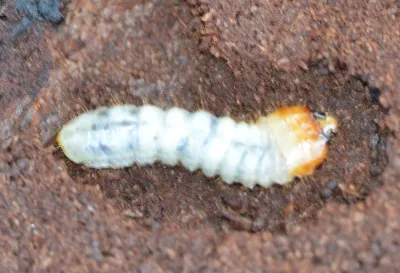
The grubs are the stage that hurts trees. They are cream-colored and heavy-bodied, with a dark, hard head and tiny legs near the front. A full-grown grub can reach 1.5 to 2 inches before it pupates.
Common Species
A few related longhorn beetles also grow up in oak and look similar at a glance:
- White oak borer (Goes tigrinus). Attacks young white oaks instead of red oaks. Adults are boldly marked with white.
- Living beech borer (Goes pulverulentus). Grows in beech and oak. Smaller and grayer.
- Oak sapling borer (Goes tesselatus). Attacks small, young oaks.
- Other Enaphalodes species, such as Enaphalodes atomarius. It is smaller and grows in dying oak limbs.
Telling these apart takes a close look at the spines on the pronotum and at the antenna segments. Extension entomologists usually ask for a clear photo or the beetle itself.
Red Oak Borer Behavior and Biology
Habitat
Red oak borers use oaks in the red oak group. That includes northern red oak (Quercus rubra), black oak (Q. velutina), scarlet oak (Q. coccinea), southern red oak (Q. falcata), and willow oak (Q. phellos). White oaks are attacked far less often.
The beetles are most common in older, crowded oak stands on dry ridges and poor soil. That is the setting of the well-known Ozark outbreak of the late 1990s and early 2000s. In yards, the trees at highest risk are mature oaks under stress. Drought, construction damage, packed soil, and repeated leaf loss all raise that risk.
Diet
Young grubs feed just under the bark, on the living tissue there. Older grubs turn inward and tunnel into the sapwood and heartwood of the trunk and large limbs. Adults barely feed at all. They live a few weeks in summer, mate, and lay eggs.
Most attacks sit in the lower 15 feet of the trunk. That makes the signs easy to check, because they are usually at eye level.
Life Cycle
Red oak borers run on a two-year cycle. In much of their range the whole population is in step, so adults come out together in the summers of odd-numbered years.
- Eggs are laid from June through August in bark cracks, under lichen, and around old wounds. One female may lay more than a hundred.
- First-year grubs chew through the outer bark and feed in flat tunnels just beneath it. Sap stains and sawdust show up during this stage.
- Second-year grubs turn inward and cut large tunnels into the wood, packing sawdust behind them.
- Pupation happens inside the wood in late spring of the second year.
- Adults chew a round exit hole about 3/8 to 1/2 inch wide and fly in midsummer. They live only a few weeks and come to lights at night.
Signs on a Tree
- Wet, dark stains running down the bark from small entry points. This is often the first thing people notice.
- Coarse sawdust that looks like damp wood shavings, caught in bark furrows or piled at the base
- Round exit holes about the size of a pencil eraser or a bit larger
- Woodpecker damage, meaning patches of chipped bark low on the trunk where birds dug out grubs
- Scarred wood inside trees that are later cut, where old tunnels lower the value of the lumber
Treatment Methods for Red Oak Borers
Better Termite & Pest Control does not treat red oak borers. They live inside living shade and forest trees, which is tree care rather than pest control. If you think an oak on your property is infested, call an ISA-certified arborist, your county extension office, or your state forestry agency. They can look at the tree, judge how much of the decline is borer damage and how much is drought or root stress, and tell you whether the tree is worth keeping.
These are the approaches that generally work against trunk-boring beetles in oaks:
- Keep the tree strong. Water deeply during drought. Spread a wide ring of mulch over the root zone instead of turf. Keep mowers, trenching, and construction traffic away from roots and bark. A strong oak shrugs off attacks that a weak one cannot.
- Avoid wounds in summer. Pruning cuts and bark injuries made from June through August draw egg-laying females. Major pruning is usually saved for the dormant season.
- Clean up infested wood. Remove badly infested or dead oaks and chip or burn the wood before the next emergence. That keeps local numbers from climbing. Burn the firewood before the following summer, and do not move it far.
- Trunk treatments on high-value trees. Arborists sometimes use EPA-registered trunk sprays or systemic products on a prized tree, timed to the egg-laying weeks. A licensed applicator following the label keeps the impact low. Nothing applied to the outside reaches grubs already deep in the wood.
- Accept some scarring. On a healthy landscape oak, a few old exit holes are a scar, not an emergency.
Are the beetles actually inside your house, in framing, flooring, trim, or furniture? That is a different insect and a different problem. Start with our guides to old house borers and powderpost beetles. If beetles are coming out of wood indoors, reach out about our pest control services. We also handle termites, which eat structural wood in a very different way and leave no round exit holes at all.
Similar Species and Look-Alikes
- Round-headed borers. The general name for longhorn beetle grubs, including this one. The round tunnel shape is the giveaway.
- Old house borers. Attack softwood framing in buildings and leave oval exit holes, not round ones.
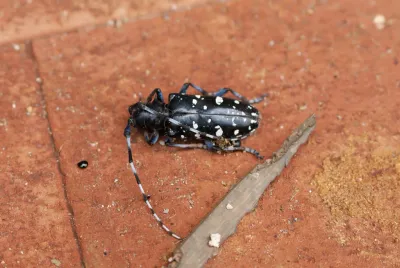
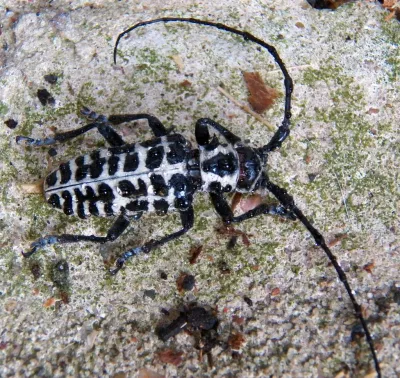
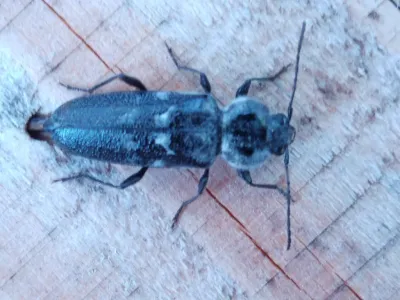
- Asian longhorned beetles. An invasive, regulated pest. Glossy black with white spots and banded antennae, so it looks nothing like the dusty tan red oak borer. Report one if you see it.
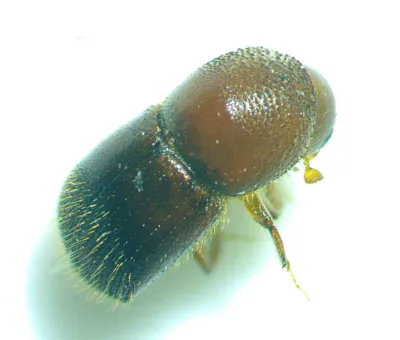
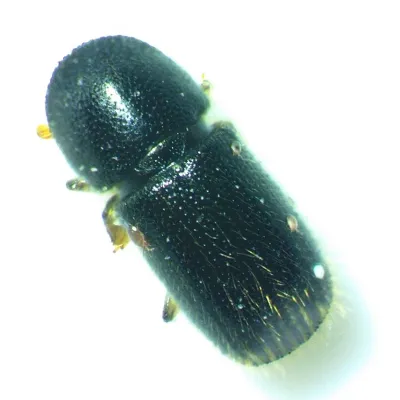
- Ambrosia beetles. Tiny by comparison. They leave pinholes and thin strands of sawdust that stick out like toothpicks.
- Two-lined chestnut borer (Agrilus bilineatus). A small flatheaded borer of stressed oaks. Its exit holes are D-shaped and about 1/8 inch wide.
References
- USDA Forest Service: Forest Insect & Disease Leaflet 163, Red Oak Borer
- USDA Forest Service: Forest Pest Insects in North America, A Photographic Guide
- University of Arkansas Cooperative Extension: Red Oak Borer
- USDA Forest Service Northern Research Station: Red Oak Borer Attack Distribution Research
- University of Maryland Extension: Borer Insects on Trees
- Purdue University Extension: Insects Affecting Hardwood Tree Plantings
Other Wood Boring Beetles
Explore other species in the wood boring beetles family
Commonly Confused With
Red Oak Borers are often mistaken for these similar pests
Where Red Oak Borers Are Found
Hover over states to see their names. Green regions indicate where red oak borers have been reported.
Common Questions about Red Oak Borers
What is a red oak borer?
+
The red oak borer is a large native longhorn beetle. Its scientific name is Enaphalodes rufulus. It lives across the eastern and central United States. The grubs bore into the trunks and big limbs of living red oaks. They feed inside the wood for about two years. Adults are about 1 to 1.5 inches long, with antennae as long as the body or longer.
Do red oak borers infest houses or furniture?
+
No. Red oak borers attack living oak trees. They do not attack dry lumber, framing, flooring, or furniture. If you see round exit holes in wood inside your home, old house borers or powderpost beetles are far more likely. A beetle that flies in an open window in July is just a visitor.
How do I know if an oak tree has red oak borers?
+
Check the lower 15 feet of the trunk. Look for wet, dark sap stains on the bark. Look for coarse sawdust caught in bark cracks or piled at the base. Look for round exit holes about 3/8 to 1/2 inch wide. Heavy woodpecker chipping low on the trunk is another clue, since woodpeckers dig out the grubs.
Will a red oak borer kill my oak tree?
+
A healthy oak usually survives a few borers. These beetles build up in trees that are already weak from drought, leaf loss, root damage, or old age. In a bad outbreak, heavy attacks plus those other stresses can lead to dieback in the crown and even tree death. Keeping the tree healthy is the best thing you can do.
Why do red oak borers seem to appear every other year?
+
Red oak borers take two years to grow up. In much of their range, the adults come out together in the summers of odd-numbered years. So you may see many beetles one July and almost none the next. The grubs are still feeding inside the trees in the off years.
Are red oak borers dangerous to people or pets?
+
They do not sting, do not carry disease, and do not feed on anything indoors. A big longhorn beetle can pinch with its jaws if you grab it. Scoop one up with a cup and a piece of paper, then let it go outside.
What should I do with firewood from an infested oak?
+
Split and burn oak firewood before the next summer. That destroys any grubs inside before the adults can come out. Store the wood outdoors, away from living oaks. Do not haul firewood long distances, since that is how many wood-boring pests reach new areas.
Who do I call about red oak borers in my trees?
+
Red oak borers are a tree health problem, not a household pest. Better Termite & Pest Control does not treat them. Call an ISA-certified arborist, your county extension office, or your state forestry agency. They can check the tree and advise you on care or removal.

With five years of hands-on experience in the pest control industry, George Schulz is a registered technician with the Virginia Pest Management Association and a proud third-generation professional in a family business that's been protecting homes for over 58 years. He manages and trains a team of service pros while also leading internal research efforts—recently spearheading a deep-dive review of thousands of documents on pest control materials to hand-pick the most kid and pet friendly, most effective solutions tailored specifically for homes in the DC metro area.
Local Red Oak Borers Help
Dealing with red oak borers at home? Our licensed technicians provide pest control across Northern Virginia and Maryland.
