Painted Hickory Borers Identification Guide
Megacyllene caryae
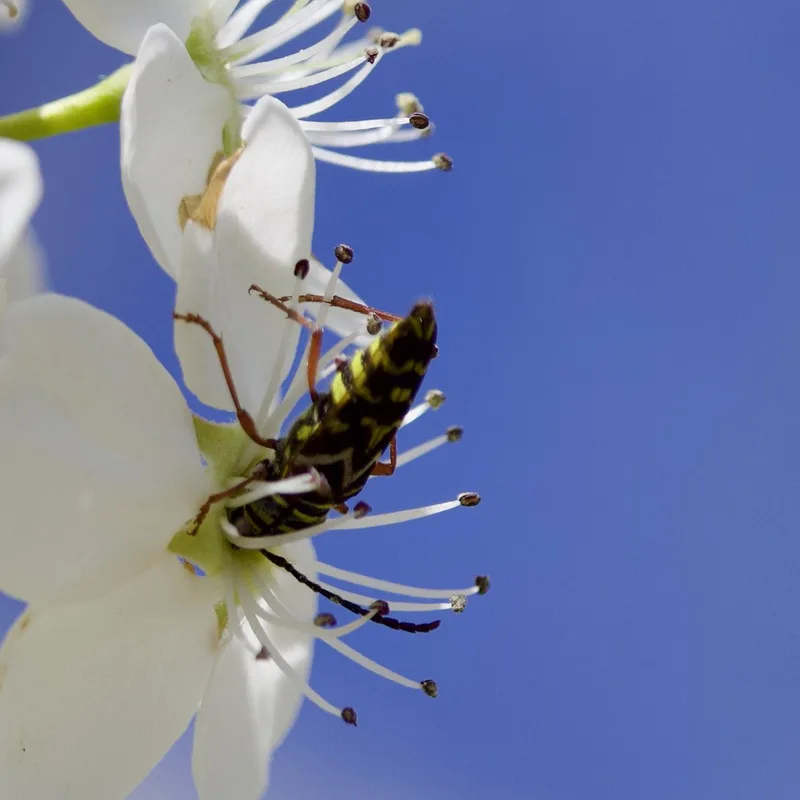
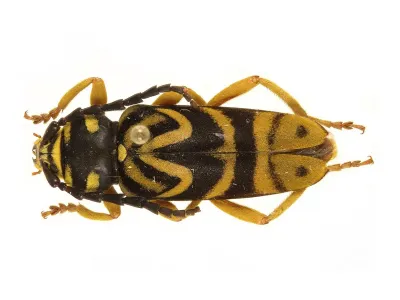
Painted hickory borers are black and yellow longhorn beetles that grow up in dead hickory wood. They often crawl out of stacked firewood indoors in late winter and spring.
Taxonomy
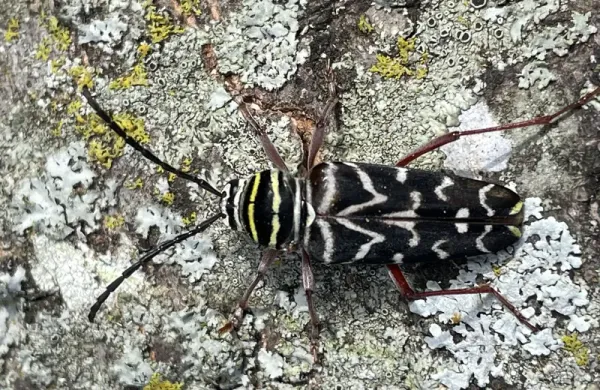
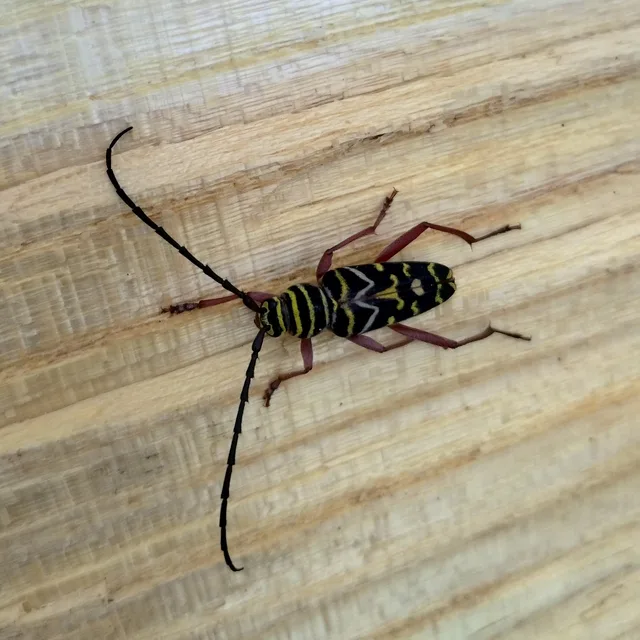
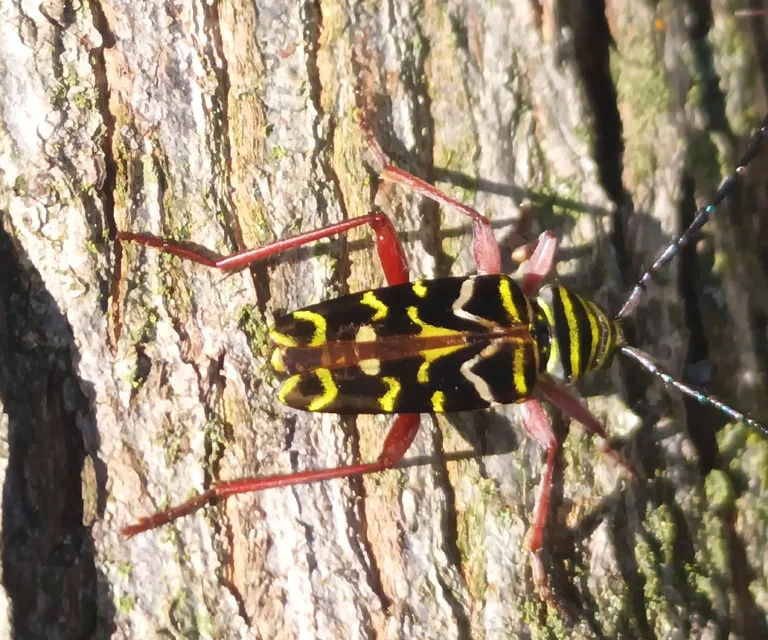
Painted Hickory Borers Coloration
Common color patterns to help identify painted hickory borers
Painted Hickory Borers
Seasonal Activity
When painted hickory borers are most active throughout the year

Where Painted Hickory Borers Are Found
Hover over states to see their names. Green regions indicate where painted hickory borers have been reported.
Painted Hickory Borer Identification Guide
The painted hickory borer (Megacyllene caryae) is a native longhorn beetle of eastern and central North America. Its grubs grow inside dead and dying hickory. Most homeowners meet it in an odd place: on the living room floor or a window near the fireplace, in the middle of winter.
That happens because the beetle rides inside hickory firewood. When the wood warms up indoors, the adults wake up early and chew their way out. It can be startling, but it is not a sign that your house has a wood-boring beetle problem.
Physical Characteristics
Adults are about 10 to 25 mm long, or roughly 1/2 to 1 inch. Males are often smaller and slimmer than females, with longer antennae.
What to look for:
- A jet-black body wrapped in bright yellow bands made of short, fine hairs
- A white or pale yellow W-shaped band across the wing covers, close to the middle of the back
- Reddish or orange-brown legs
- Long black antennae, often about as long as the body
- A narrow, wasp-like look that fools many people at first glance
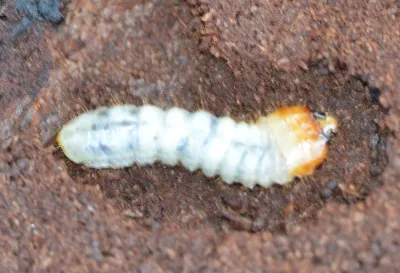
The grubs are cream-colored and slightly flattened, with a darker head and tiny legs. You will rarely see them unless you split an infested log. The adults chew round to oval exit holes through the bark, and coarse, light-colored boring dust often collects around them.
Common Species
The painted hickory borer belongs to the genus Megacyllene. Its relatives share the same wasp-like banding:
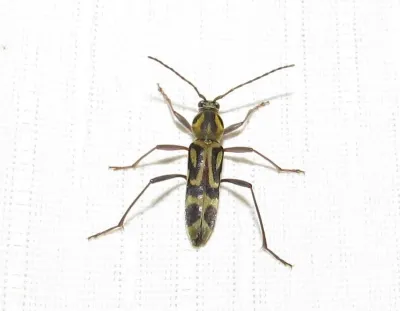
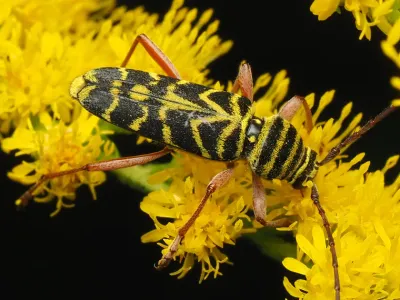
- Locust borer (Megacyllene robiniae). Nearly a twin in color and pattern. It grows in black locust trees and flies in late summer and fall, often on goldenrod.
- Other Megacyllene species. A few related beetles in the South and Southwest use mesquite, false indigo, and other hosts. Each has its own season and host plant.
Season is the quickest way to sort them. A black and yellow longhorn you see from late winter through May, or one that comes out of firewood, is almost always the painted hickory borer.
Painted Hickory Borer Behavior and Biology
Habitat
Painted hickory borers live wherever hickories and pecans grow. That covers most of the eastern United States from New England to Florida, west to Minnesota, Kansas, and Texas, plus southern Ontario and parts of northern Mexico.
Females look for hickory that is badly weakened, newly fallen, or freshly cut. Log piles, storm-damaged trees, and split firewood are all ideal. The beetle will also use black walnut, hackberry, ash, osage-orange, and grape.
Diet
The grubs feed on the inner bark first, then tunnel into the sapwood. They do not attack healthy, living trees in any serious way. They also leave dry, seasoned wood alone.
Adults are active on sunny days. They rest on bark in the sun and visit spring flowers.
Life Cycle
Painted hickory borers have one generation per year.
- Eggs are laid in spring, in groups of up to about 50, under bark scales and in bark cracks of weak trees or new logs.
- Grubs hatch and feed under the bark, moving deeper into the sapwood as they grow. They feed for about 10 to 12 weeks.
- Overwintering happens inside a chamber the grub chews in the sapwood. It changes into a pupa there and waits out the cold.
- Adults chew out in early spring, usually April to June outdoors. In a heated house, they can come out months early, as soon as January.
Why They Show Up Indoors
Firewood cut from hickory the year before is often full of resting beetles. Bring an armload inside, and the warmth triggers them to finish growing. A few days or weeks later, beetles crawl out of the woodbox, wander across floors, and fly to bright windows. They cannot breed in your home, and they do not survive long indoors.
Treatment Methods for Painted Hickory Borers
Better Termite & Pest Control does not treat painted hickory borers. They are a firewood and forest insect, not a household pest, and sprays inside the home do nothing for them. The fix is in how you handle firewood.
These steps work well:
- Store firewood outdoors. Stack it off the ground, at least several feet from the house, and cover the top to keep rain off.
- Bring in only a day or two of wood. The less time wood spends in a warm room, the less chance beetles have to come out.
- Season hickory before burning. Wood that has dried for a year or more has usually lost most of its beetles.
- Burn infested wood first. If you see boring dust or exit holes, move that wood to the front of the pile.
- Buy local. Gather or buy firewood near where you will burn it. Moving firewood long distances spreads many wood-boring pests.
- Remove stray beetles by hand. Scoop them up with a cup or vacuum them up. No insecticide is needed.
Are beetles coming out of wood that is part of your home, such as framing, flooring, trim, or furniture? That is a different problem. Start with our guides to old house borers and powderpost beetles. If you are dealing with insects in your home’s structure, reach out about our pest control services. We also handle termites, which eat wood very differently and leave no round exit holes.
Similar Species and Look-Alikes
- Locust borers. Almost identical, but active in late summer and fall and tied to black locust trees.
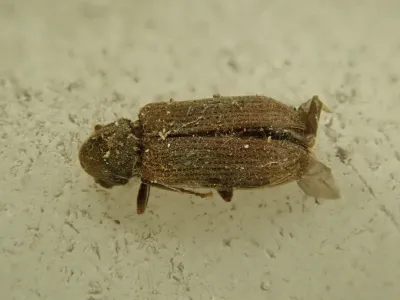
- Old house borers. Gray-brown longhorns that attack softwood framing in buildings. They are a true structural concern, unlike the painted hickory borer.
- Round-headed borers. The general name for longhorn beetle grubs, including this one.
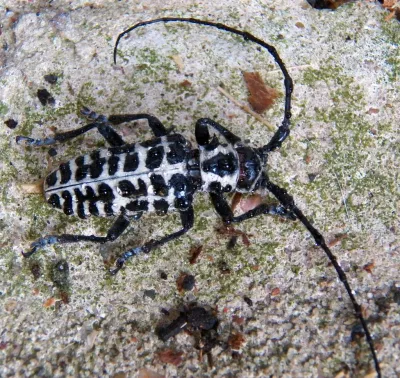
- Cottonwood borers. A bigger black and white longhorn that grows in the base and roots of cottonwoods, poplars, and willows and flies in summer, not spring.
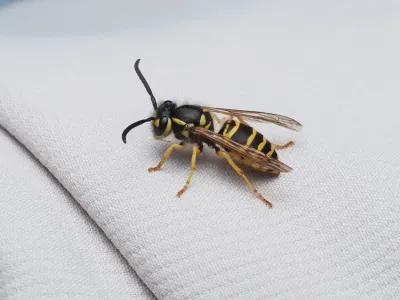
- Yellowjackets. The wasps this beetle mimics. Yellowjackets have a narrow waist, clear wings, and short antennae, and they can sting.
References
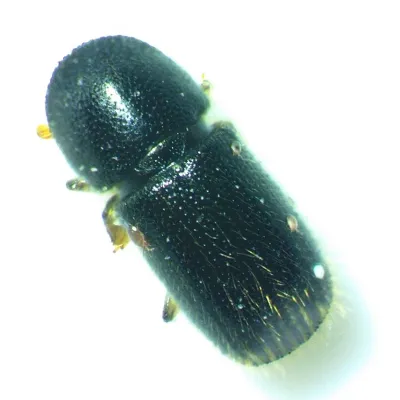
Other Wood Boring Beetles
Explore other species in the wood boring beetles family
Commonly Confused With
Painted Hickory Borers are often mistaken for these similar pests
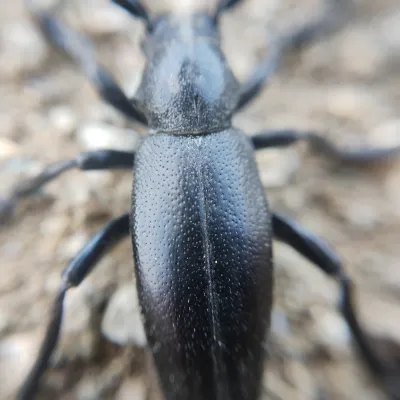
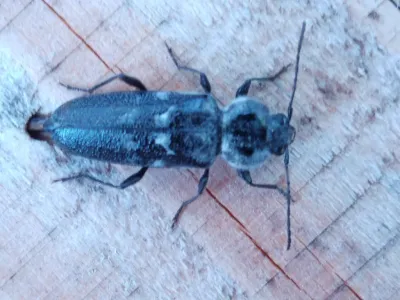
Where Painted Hickory Borers Are Found
Hover over states to see their names. Green regions indicate where painted hickory borers have been reported.
Common Questions about Painted Hickory Borers
What is a painted hickory borer?
+
The painted hickory borer is a native longhorn beetle. Its scientific name is Megacyllene caryae. The adult is black with bright yellow bands and a white W-shaped mark across its back. It has reddish legs and long black antennae. The grubs grow inside dead or dying hickory and a few other hardwoods.
Why are black and yellow beetles coming out of my firewood?
+
Painted hickory borers lay eggs on freshly cut or dying hickory. The grubs spend the summer and fall inside the wood and rest there over winter. When you bring that wood into a warm house, the beetles think spring has come and chew their way out. That is why people find them near the fireplace or woodbox from January to April.
Will painted hickory borers damage my house or furniture?
+
No. They need moist, freshly dead wood with the bark still on. They do not lay eggs in dry framing, flooring, trim, or furniture. A beetle that comes out of firewood in your living room cannot start a new infestation in your home. Just carry it back outside.
Do painted hickory borers sting or bite?
+
No. They look like wasps, but they are beetles and have no stinger. A large beetle may nip with its jaws if you squeeze it. It does not carry disease and does not feed on anything indoors.
How can I tell a painted hickory borer from a locust borer?
+
The two look almost the same. The easiest clue is the season. Painted hickory borers are active from late winter through spring, and they are the ones that come out of firewood. Locust borers show up in late summer and fall, often on goldenrod. Painted hickory borers also tend to have redder legs.
How do I keep beetles out of my firewood?
+
Stack firewood outdoors, off the ground, and away from the house. Bring in only what you will burn within a day or two. Let hickory season for a year or more before you burn it, since most beetles will have left by then. Buy or gather firewood close to home instead of moving it long distances.
Do I need an exterminator for painted hickory borers?
+
Usually not. Better Termite & Pest Control does not treat painted hickory borers. Changing how you store and bring in firewood solves the problem. If you find beetles coming out of wood that is part of your home, call a professional, because that points to a different insect.

With five years of hands-on experience in the pest control industry, George Schulz is a registered technician with the Virginia Pest Management Association and a proud third-generation professional in a family business that's been protecting homes for over 58 years. He manages and trains a team of service pros while also leading internal research efforts—recently spearheading a deep-dive review of thousands of documents on pest control materials to hand-pick the most kid and pet friendly, most effective solutions tailored specifically for homes in the DC metro area.
Local Painted Hickory Borers Help
Dealing with painted hickory borers at home? Our licensed technicians provide pest control across Northern Virginia and Maryland.
