
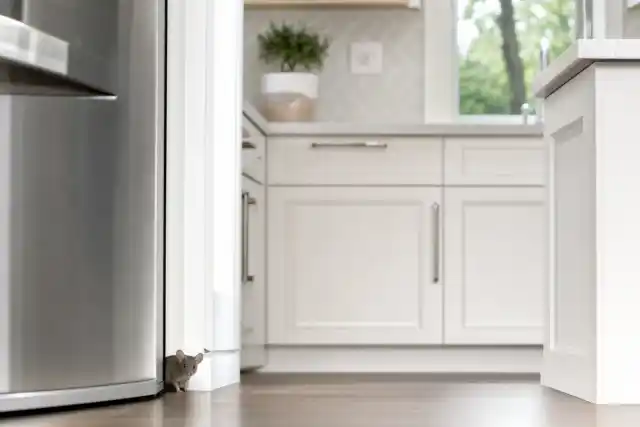

If your house is clean and you still have mice, the short answer is this: mice are looking for warmth and shelter, and they found a way in. A spotless kitchen does not stop them, because a house mouse needs very little food and can squeeze through a gap about the width of a pencil. In almost every clean house we visit, the real cause is an entry point, not a mess.
I hear this question from homeowners across Northern Virginia, DC, and Maryland every fall. Many of them feel embarrassed, as if mice were a judgment on their housekeeping. They aren’t. Below are the seven reasons mice show up in tidy homes, followed by what actually keeps them out.
7 Reasons You Have Mice in a Clean House
Mice don’t care how often you mop. They care about four things: warmth, shelter, a little food, and a way inside. A clean home can still offer all four. Here are the seven reasons we see most often.
Reason 1: It’s Getting Cold Outside
Mice are seasonal invaders. As the temperature drops in October and November, they start looking for a warm place to nest for the winter. Your house, especially the warm wall behind the fridge or the insulation in the attic, is ideal.
This happens on a massive scale. According to the National Pest Management Association, rodents invade about 21 million U.S. homes every winter as they move indoors for food and shelter. That’s why so many people first notice mice in the fall, even though their house hasn’t changed at all.

Reason 2: There’s a Gap You Can’t See
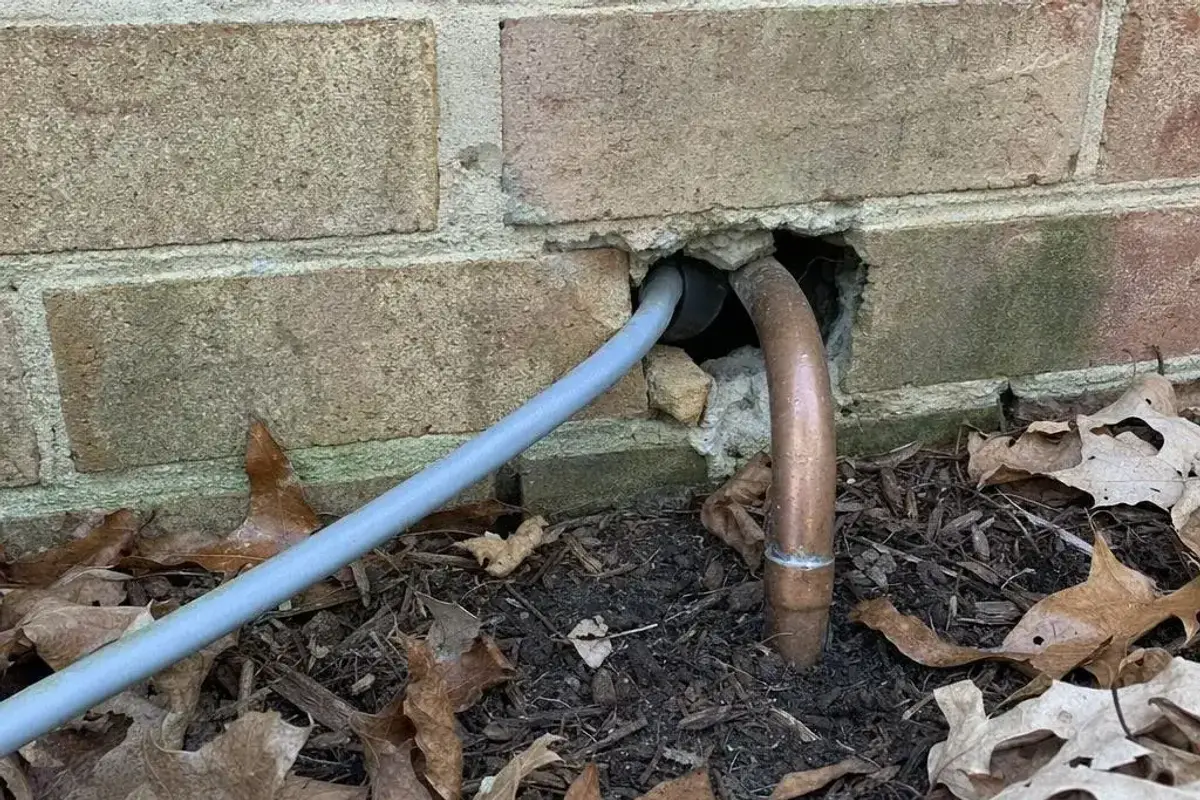
This is the big one. Mice can get through much smaller openings than most people expect. UC IPM notes that house mice can enter through openings as small as 1/4 inch.
Daren, one of our technicians, explains it to customers this way: if you can fit the tip of your pinky finger into a gap, a mouse can get in. That’s about the size of a dime. Most homeowners are shocked, because they pictured a hole much bigger than that. For a full breakdown, see our guide on how small a hole a mouse can fit through.
The most common entry points we seal include:
- Utility lines. Where pipes, AC lines, cable, and gas lines enter the house. Someone works on a line and never reseals around it.
- Garage doors. The bottom corners of the garage door trim are usually the second most common spot.
- Weep holes and crawl space vents. Small openings in brick and foundation walls.
- Old cable lines. A dead cable line often leaves a hole right next to it.
- Soffits and rooflines. Mice climb, so gaps up high count too.
Reason 3: Mice Need Very Little Food
A clean kitchen still feeds a mouse. According to the University of Nebraska–Lincoln Extension, an adult house mouse eats only about 1/10 of an ounce of food a day, nibbling as it travels. A few crumbs under the toaster or stove can cover that.
In clean homes, the food source is often somewhere you don’t think of as “the kitchen”:
- Dog or cat food in a bag in the garage or mudroom
- Birdseed and grass seed stored in the shed or garage
- Cereal, crackers, and pasta in cardboard boxes in the pantry
- Crumbs under the fridge, stove, and dishwasher, where you can’t see them
- Kids’ snacks in backpacks, cars, and playrooms
Reason 4: They Don’t Need a Water Bowl
People sometimes assume mice need a leak to survive. They don’t. House mice can get most of the water they need from their food, so a dry home doesn’t send them away. That said, a dripping pipe under the sink or a pet water bowl makes it even easier for them to settle in.
Reason 5: Clutter Gives Them a Place to Nest
You can have a spotless living room and still have perfect mouse habitat in the garage, attic, or basement. Mice build nests out of shredded paper and other soft material. Stacks of cardboard boxes, stored holiday decorations, old blankets, and attic insulation all work well.
Once they nest, they stay close. House mice usually don’t travel more than about 30 feet from their nest and food supply. That’s why a nest in the garage wall can lead to droppings in the kitchen pantry next to it.
House mice reproduce fast. A female can have 5 to 10 litters a year, with about 5 or 6 pups in each one, and the young can breed at about 5 to 6 weeks old. So two mice that get in during October can turn into a noticeable problem by winter, even in a clean house. This is also why the one mouse you see is rarely alone. Mice are active at night and stay hidden in walls and cabinets.
Reason 6: The Outside of Your House Invites Them In
What’s next to your foundation matters as much as what’s inside. Thick mulch beds against the house, firewood stacked by the back door, ivy, and shrubs touching the siding all give mice cover right next to your walls.
Daren calls mulch against the house one of the biggest pest attractors he sees. Mice will nest right under it. Pulling mulch a few inches back from the foundation and keeping the yard trimmed makes your house far less inviting.
Reason 7: Shared Walls, Neighbors, and Disturbance
Sometimes the mice aren’t coming from your house at all. In townhouses, row houses, and condos, rodents can move between units through shared walls. Daren has seen this firsthand in older row houses, where the firewall between units isn’t always intact.
Disturbance also pushes rodents into homes. Daren handled a bad rat job in an Alexandria row house neighborhood when a theater behind the homes shut down. The rats lost their food source and moved into the houses next door. Construction, demolition, or a neighbor clearing out a shed can have the same effect on mice.
What Actually Stops Mice in a Clean House
Cleaning matters. However, according to the same Nebraska Extension guide, getting rid of mice through sanitation alone is almost impossible. The fix is a combination of sealing them out and removing the mice already inside. Here’s the order that works.
Walk the outside of your house first. Check every spot where a pipe, wire, or vent goes through the wall, plus the garage door corners and the gap between the foundation and siding.
The CDC recommends filling small holes with steel wool and then adding caulk or spray foam to hold it in place. For bigger openings, use hardware cloth, metal sheeting, or cement. Our article on whether mice can chew through steel wool explains why the caulk step matters.
Move pet food, birdseed, and dry goods into sealed bins. Clean under and behind appliances. Then cut down on cardboard and clutter in the garage, attic, and basement, so mice have fewer places to nest.
Sealing alone can trap mice inside, so you also need to deal with the ones already in your walls. Place traps or bait stations along walls, since mice travel along edges. For our own service, we rely on tamper-resistant bait stations rather than snap traps and glue boards. Our guide on how to get rid of mice walks through the DIY options.
Don’t sweep or vacuum droppings. The CDC’s cleanup guidance says to spray droppings and urine with a bleach solution (1.5 cups of bleach in 1 gallon of water) or an EPA-registered disinfectant until very wet. Let it soak for 5 minutes, then wipe it up with paper towels while wearing gloves. If you’re unsure whether what you found is from mice, compare it with our mouse droppings guide.
Daren took over a home from another pest company where the mice just wouldn’t go away. The house was full of snap traps and glue boards, and there wasn’t a single bait station. He set bait, and on the follow-up visit every bit of it was gone, with droppings everywhere.
Over time, he found and sealed entry point after entry point, even getting on a ladder to seal around the soffit. The house went four months straight with no activity. Then the mice came back.
He kept looking and finally spotted a twig sticking out above where he had sealed. Squirrels had chewed a large hole in the soffit, birds had moved in, and the mice were using the same opening. Once that hole was sealed, the house went quiet.
The lesson for a clean home: one missed gap is enough. If mice keep returning after you’ve sealed what you can find, there’s usually an opening up high that you haven’t seen yet.
Is It a House Mouse or a Deer Mouse?
Most mice inside DMV homes are house mice. They’re gray-brown all over with a nearly hairless tail. If your home backs up to woods or you’re finding mice in a shed, cabin, or detached garage, you may have deer mice instead. Deer mice have a white belly and white feet, and, along with white-footed mice, they carry the hantaviruses that cause illness in the U.S. Hantavirus is very rare in our region, but careful cleanup matters even more with deer mice.
Learn how to tell them apart in our deer mouse vs house mouse guide, or see our house mouse profile for more on the species that causes most indoor problems. If you’re worried about health risks, our hantavirus cases by state data and our breakdown of the real chances of getting sick from mouse droppings put the numbers in context.
When to Call a Professional
Call a pro if you’ve sealed the gaps you can find and you’re still seeing fresh droppings, if you hear scratching in the walls at night, or if you can’t easily reach the roofline. Mice that live inside walls are often hard to reach on your own. Our article on mice in walls but not in the house covers that situation.
Our rodent control program combines an inspection, bait stations, and follow-up visits, starting around $49 per month for ongoing rodent protection plus a $200 setup fee on the first visit. When a home has gaps that need professional sealing, our exclusion services close the entry points we find. We serve homes across Northern Virginia, DC, and Maryland, including rodent control in Ashburn and nearby Loudoun County.
Better Termite has been in the pest control business for 58 years, has served over 100,000 homes, and has earned 1,800+ reviews. Our licensed technicians are members of the VPMA and NPMA. All the products we use are EPA approved and have been vetted by our internal research team. Each one is something we’d feel comfortable using in our own homes.
The Bottom Line
Mice in a clean house aren’t a reflection of how you keep your home. They’re a sign that it’s cold outside and there’s a gap somewhere. Clean up hidden food, cut down on clutter, and most importantly, seal entry points. Then remove the mice already inside.
If you’d like help finding where they’re getting in, call us at 703-683-2000 or email info@bettertermite.com for an estimate. We’re happy to answer your questions.