
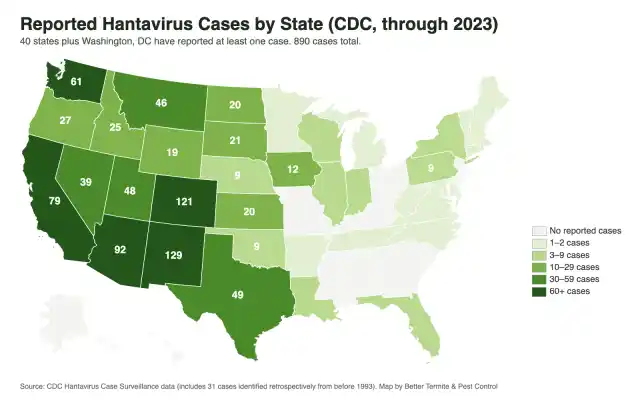

Hantavirus has been reported in 40 states plus Washington, DC. The heaviest counts are in the West: New Mexico (129 cases), Colorado (121), Arizona (92), California (79) and Washington (61). Most eastern states have only one to nine cases total. Ten states, including Ohio, Georgia and New Jersey, have never reported a case. These numbers come from CDC case data that runs from the start of national tracking in 1993 through 2023.
I’m George Schulz, a licensed technician at Better Termite & Pest Control. Hantavirus comes up a lot when I’m on rodent jobs around Northern Virginia and Maryland. So below I’ll show the full state-by-state count, explain why the West has so many more cases, and lay out what the numbers mean if you live here in the DMV.
Hantavirus Cases by State: The Map
The fastest way to answer “what states have hantavirus” is to look at a map. Each state below is shaded by its total number of reported human cases.
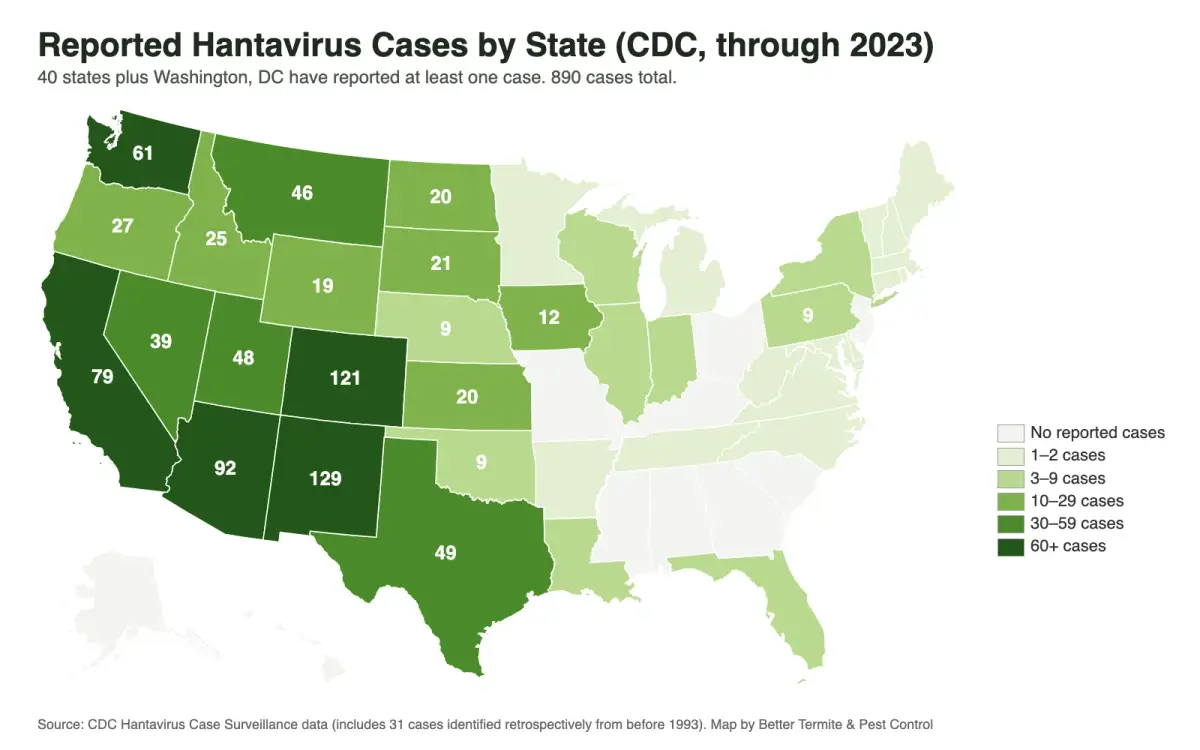
The pattern jumps out right away. The western half of the country is dark, and the East is pale. In fact, the CDC’s hantavirus case data shows that 94% of US cases happened west of the Mississippi River. The same page counts 890 cases in total, and about 35% of them were fatal.
So hantavirus is rare everywhere. However, your odds of running into it depend a lot on where you live and what you’re doing when you get exposed.
The Top 10 States for Hantavirus
These ten states account for about 78% of every case the CDC has on record. The counts below come straight from the CDC’s case surveillance map, which lists cases by state only.
| Rank | State | Reported cases |
|---|---|---|
| 1 | New Mexico | 129 |
| 2 | Colorado | 121 |
| 3 | Arizona | 92 |
| 4 | California | 79 |
| 5 | Washington | 61 |
| 6 | Texas | 49 |
| 7 | Utah | 48 |
| 8 | Montana | 46 |
| 9 | Nevada | 39 |
| 10 | Oregon | 27 |
New Mexico, Colorado, Arizona and Utah alone make up about 44% of all cases. That’s the Four Corners region, where hantavirus was first identified during a 1993 outbreak.
Every State With a Reported Case
Here is the full list, grouped by region. Click a tab to see each state’s count.
The West has about 77% of all US cases.
- New Mexico: 129
- Colorado: 121
- Arizona: 92
- California: 79
- Washington: 61
- Utah: 48
- Montana: 46
- Nevada: 39
- Oregon: 27
- Idaho: 25
- Wyoming: 19
- Alaska and Hawaii: 0
Cases cluster in the Plains states. Further east, they thin out quickly.
- South Dakota: 21
- North Dakota: 20
- Kansas: 20
- Iowa: 12
- Nebraska: 9
- Illinois: 6
- Wisconsin: 5
- Indiana: 4
- Minnesota: 2
- Michigan: 2
- Missouri and Ohio: 0
Texas holds most of the South’s cases. Everywhere else, they’re scattered.
- Texas: 49
- Oklahoma: 9
- Louisiana: 8
- Florida: 3
- West Virginia: 2
- Tennessee: 2
- Maryland: 2
- Washington, DC: 2
- Virginia: 1
- North Carolina: 1
- Arkansas: 1
- Delaware: 1
- Alabama, Georgia, Kentucky, Mississippi and South Carolina: 0
Pennsylvania and New York have the most cases in the Northeast.
- Pennsylvania: 9
- New York: 6
- Vermont: 2
- Connecticut: 1
- Maine: 1
- Massachusetts: 1 (identified from before 1993)
- New Hampshire: 1
- Rhode Island: 1
- New Jersey: 0
In other words, the further east you go, the smaller the numbers get. Most eastern states have fewer than ten cases in about 30 years.
States With No Reported Hantavirus Cases
Ten states have no human cases in CDC data through 2023:
- Alabama
- Alaska
- Georgia
- Hawaii
- Kentucky
- Mississippi
- Missouri
- New Jersey
- Ohio
- South Carolina
Half of these are in the Southeast. Keep in mind that zero reported cases is not the same as zero risk. It means no human illness has been confirmed there yet, so the same cleanup precautions still apply.
Why the West Has So Many More Cases
It mostly comes down to climate and rodents. A 2025 study of US hantavirus risk found that low rainfall and higher temperatures were the most important factors shaping where cases happen. The researchers also pointed to dry, dusty conditions. Those make it easier to breathe in dried rodent droppings and urine.
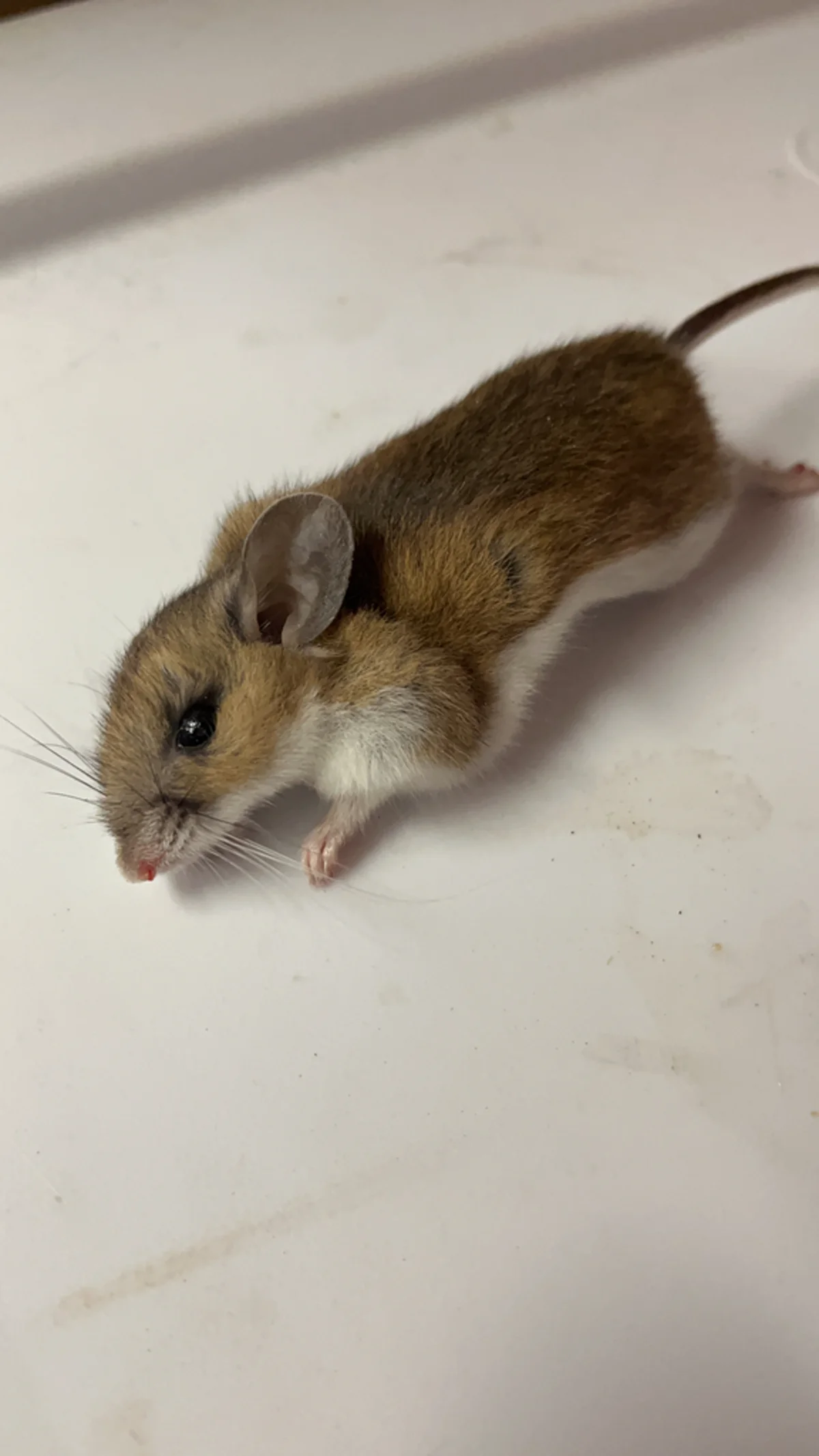
Additionally, the West has a lot of deer mice living close to people in rural homes, cabins and barns. The deer mouse carries Sin Nombre virus, which is the most common cause of hantavirus illness in the US.
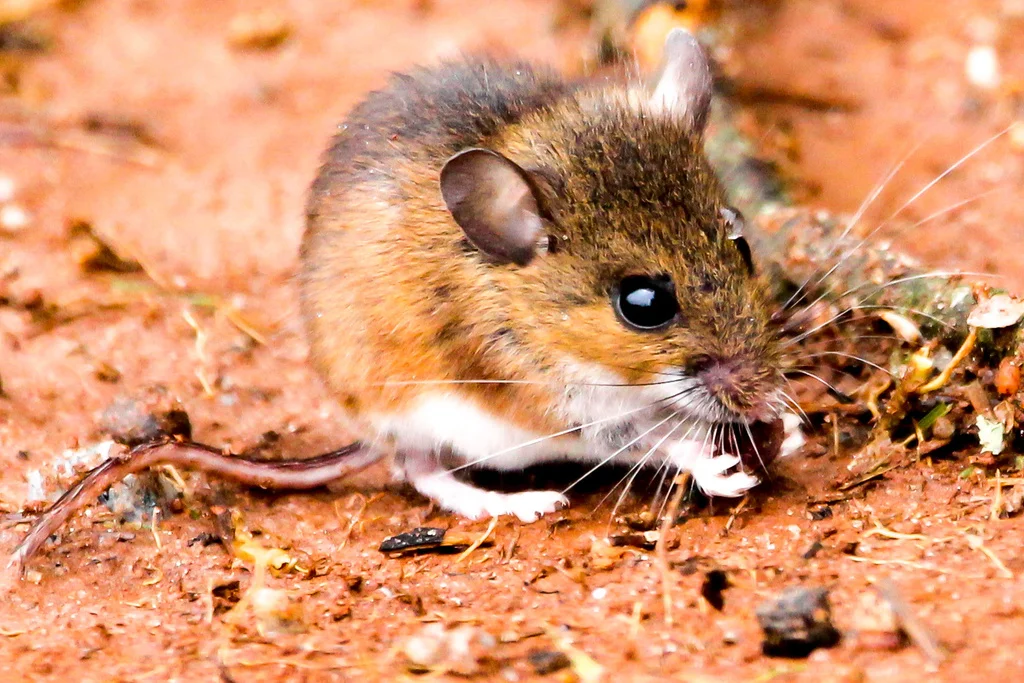
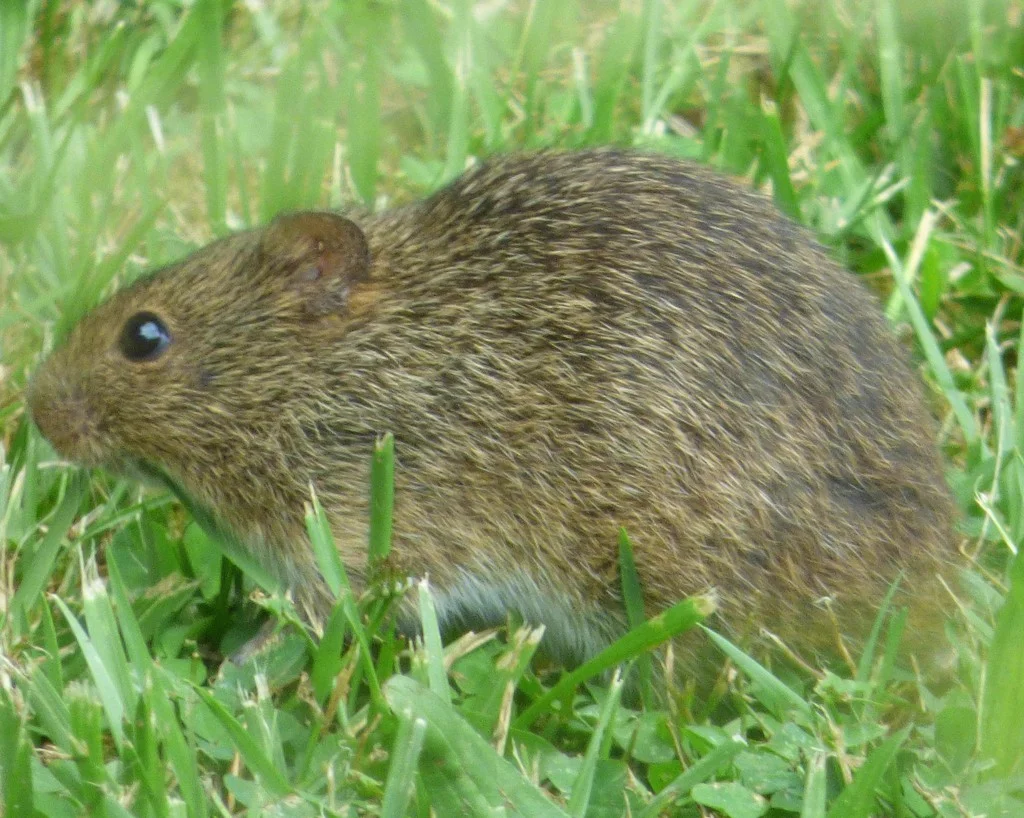
Different hantaviruses ride along with different wild rodents. According to the Maryland Department of Health, the US carriers are the deer mouse, the cotton rat, the rice rat in the Southeast, and the white-footed mouse in the Northeast. The same fact sheet calls hantavirus a rare disease and says most people are not at risk.
Here’s how that breaks down:
- Deer mouse: the main carrier nationwide, especially in the West. See our deer mouse guide.
- White-footed mouse: the key carrier in the East, including the Mid-Atlantic. See our white-footed mouse guide.
- Cotton rat: found across parts of the South. See our cotton rat guide.
- Rice rat: found in Southeastern wetlands. See our rice rat guide.
Notice what’s missing. The common house mouse is not on that list.
All four of these are wild rodents. They live outdoors in fields, woods and marshes, though they will move into sheds and cabins.


Hantavirus in Virginia, Maryland and DC
Here in the DMV, the numbers are tiny. CDC data lists:
- Virginia: 1 case (2004)
- Maryland: 2 cases (both in 2019)
- Washington, DC: 2 cases (both in 2018)
- Nearby states: Pennsylvania 9, West Virginia 2, Delaware 1
That’s five cases across Virginia, Maryland and DC in about 30 years of tracking. For comparison, New Mexico alone has 129.
The rodent that matters here is mostly the white-footed mouse, plus the deer mouse in some areas. These are wild mice. They live in woods, fields, woodpiles and outbuildings. They do move into sheds, garages, cabins and sometimes wall voids, especially on wooded lots. The mouse running across most kitchen floors in Alexandria or Arlington, though, is the house mouse. If you’re not sure which one you have, our deer mouse vs. house mouse guide shows how to tell them apart.
For a deeper look at the realistic odds in a local home, read what the chances are of getting sick from mouse droppings.
When Hantavirus Cases Happen
Timing matters as much as location. In the CDC case data, roughly 6 in 10 cases with a known onset month started between April and August. May, June and July are the peak.
That makes sense. Spring is when people open up sheds, cabins, campers and garages that sat closed all winter. Then they sweep out droppings and nests. Sweeping dry droppings kicks the virus into the air, and that’s how most people get infected.
According to the CDC, people catch hantavirus from contact with rodent urine, droppings and saliva. Symptoms of the lung illness usually show up 1 to 8 weeks after contact with an infected rodent.
What About the 2026 Cruise Ship Outbreak?
A lot of the recent “what states have hantavirus” searches started with the news in May 2026. An outbreak on the MV Hondius cruise ship was caused by Andes virus. That’s a South American hantavirus, and it’s the only type known to spread from person to person.
US passengers were flown back and monitored at a quarantine unit in Nebraska. At the time, the CDC said the risk to the American public remained extremely low. So that outbreak doesn’t change the state map above. The hantavirus cases counted in US states come from local wild rodents, not from people.
How to Lower Your Risk Wherever You Live
The steps are the same in New Mexico or Northern Virginia. The goal is to keep wild mice out of the places you spend time, and to clean up after them the right way.
- Air it out first. Open doors and windows of a closed shed or cabin for at least 30 minutes before you go to work.
- Wet it, don’t sweep it. Soak droppings and nests with disinfectant or a bleach solution, then wipe them up. Never sweep or vacuum them dry. Our mouse droppings guide walks through the full cleanup.
- Wear gloves. Then wash your hands well afterward.
- Seal the gaps. A mouse can squeeze through an opening about the size of a dime. Read more on how small a hole a mouse can fit through.
- Cut the cover. Move woodpiles and thick mulch away from the foundation.
People never think about how small a gap a mouse needs. I tell customers that if you can fit the tip of your pinky in there, a mouse can get in. That’s about the size of a dime. They’re usually shocked, because they figured the hole had to be much bigger.
The other thing I see constantly is mulch piled against the house. Thick mulch especially. Mice will nest right under it, and from there it’s a short trip inside. If a homeowner asked me for one quick change, pulling the mulch back from the foundation is near the top of the list.
Neither of those is about hantavirus specifically. However, they’re exactly how wild mice end up in garages, sheds and wall voids. Close those doors, and you’ve cut off the exposure before it starts.
If you’d rather have a professional find and seal those gaps, that’s a big part of what we do every week.
Getting Mice Out for Good
If you’re seeing droppings in a shed, garage or basement, the best move is to stop new ones from showing up. Our rodent control program does that with baiting at the lower level and by sealing the entry points. For homes with lots of gaps, our exclusion services close them for good.
We work across Northern Virginia and suburban Maryland. That includes rodent control in Arlington, Lorton, Fredericksburg, Hyattsville and Frederick.
The Bottom Line
Hantavirus shows up in 40 states plus DC, but it’s concentrated in the dry West. New Mexico and Colorado lead the country, and ten states have never reported a case. Here in Virginia, Maryland and DC, there have been five cases in about 30 years. So the risk is low. Still, the smart move is the same everywhere: keep wild mice out, and clean up after them the wet way.
If you have questions or want an estimate, call us at 703-683-2000 or email info@bettertermite.com. With 58 years in the business and 1,800+ reviews, we’re glad to help you sort out a mouse problem before it grows.