


Yes, mice in walls are dangerous, but mostly to your house and your air, not from bites. The five real risks are chewed wiring that can start a fire, ruined insulation, germs in their droppings and urine, allergens that trigger asthma, and odors from urine or a mouse that dies inside the wall. None of these happen overnight. However, every one of them gets worse the longer mice stay.
As a licensed technician at Better Termite & Pest Control, I hear scratching-in-the-walls calls all fall and winter. Most homeowners ask me the same thing first: “Is this actually a problem, or can I live with it?” Below, I’ll walk through each risk, how serious it really is, and what to do about it.
Are Mice in Walls Dangerous? The Short Answer
Mice in walls are dangerous in a slow, quiet way. A single mouse in a wall won’t hurt you tonight. However, a wall void is a perfect nest site. It’s warm, dark and protected, and it connects to wiring, pipes and the attic. So a small problem can turn into a colony before you ever see a mouse in the kitchen.
Here’s how the five main risks compare:
| Risk | What happens | How serious |
|---|---|---|
| Chewed wiring | Mice gnaw the plastic coating off wires inside the wall | Highest stakes. Rare, but it can start a fire |
| Insulation damage | Mice tunnel, nest in and soil the insulation | Common. Costs money and comfort over time |
| Germs | Droppings, urine and nests carry bacteria and viruses | Real, but mostly when mice reach living areas or you disturb a nest |
| Allergens and asthma | Mouse urine proteins build up in household dust | The most common health effect, especially for kids |
| Odors | Musty urine smell, or a dead mouse rotting in the wall | Unpleasant and hard to fix once it starts |
The mouse behind your walls in Northern Virginia and Maryland is almost always the house mouse. It’s small, gray-brown, and it lives its whole life near people. That’s what makes it such a good tenant inside a wall, and such a bad one for you.
Risk 1: Chewed Wiring and Fire
This is the risk that worries me most, because you can’t see it happening. Mice have front teeth that never stop growing, so they gnaw all the time. Wires run right through the wall voids they travel, and the plastic coating is soft enough to chew.
According to the University of California, house mice damage structures by gnawing on electrical wires and gas lines. The same guide notes that many fires of unknown origin are believed to be caused by rodents gnawing on wires.
Here’s why that matters inside a wall. When the coating is chewed off, bare wires can short or spark. Nesting material, dry wood and insulation are right there to catch. And because it all happens behind drywall, nobody notices until something goes wrong.
Watch for signs of wire damage. Call an electrician if outlets or switches stop working, lights flicker on one circuit, a breaker keeps tripping, or you smell burning plastic near a wall where you’ve heard mice. Don’t wait for the pest problem to be solved first.
I want to be honest about the odds, though. Most homes with mice in the walls never have a fire. But it’s a low-chance, high-cost risk, and it’s one of the main reasons I tell people not to live with mice for months.
Risk 2: Insulation and Structural Damage
Mice love insulation. It’s soft, warm and easy to shred into nests. They tunnel through it, pack it down, and soak it with urine and droppings. Over time, soiled and flattened insulation does a worse job keeping your house warm in winter and cool in summer.
This happens faster than most people expect. In its rodent-proof construction guide, Nebraska Extension shows insulation that mice destroyed inside a wall, and notes that damage that extensive can occur in as little as three years. The same guide lists the materials rodents can gnaw through, including wood, vinyl, plastic, rubber and even aluminum sheeting.
Inside your walls, that means:
- Wood framing and trim with gnaw marks, especially around holes where pipes and wires pass through.
- Drywall chewed open at the bottom of walls, behind cabinets or near baseboards.
- Plastic pipes and wire coatings with small, rough bite marks.
- Vapor barriers and ductwork torn up for nesting material.
Risk 3: Germs in Droppings, Urine and Nests
House mice can carry several germs that make people sick. The main one tied to house mice is lymphocytic choriomeningitis virus, or LCMV. According to the CDC, people can catch LCM when they’re exposed to fresh urine, droppings, saliva or nesting materials from infected rodents. The CDC also warns that pregnant women with LCM are at higher risk of miscarriage.
Salmonella is the other common one. Mice that leave the wall at night to forage in your kitchen can walk across counters and contaminate food with their droppings.
So how worried should you be? Here’s the key point. While mice stay sealed inside the wall, your direct contact is low. The risk goes up when:
- Mice travel from the wall into your kitchen, pantry or cabinets.
- You open a wall, pull out a nest or clean up a pile of droppings.
- Someone sweeps or vacuums droppings, which can put germs into the air.
I covered the actual odds for each disease in our article on the chances of getting sick from mouse droppings, so I won’t repeat it all here. One quick note: hantavirus is mainly linked to deer mice, not house mice. If you’re not sure which one you have, our guide to deer mice vs. house mice shows how to tell them apart.
Risk 4: Allergens and Asthma
This is the health risk most people never think about, and it’s the most common one. Mice leave a trail of urine wherever they travel. Proteins in that urine dry, break down and mix into household dust. For people with allergies, breathing that dust can trigger sneezing, itchy eyes and asthma attacks.
It’s also more widespread than you’d guess. A nationwide NIEHS housing study found detectable mouse allergen in 82% of the U.S. homes it tested. Among people with allergies, higher mouse allergen levels nearly doubled the odds of having asthma symptoms in the past year.
The study was part of the National Survey of Lead and Allergens in Housing, run by the National Institute of Environmental Health Sciences with funding from the U.S. Department of Housing and Urban Development. Researchers sampled dust from 831 homes across every region of the country, in urban, suburban and rural settings.
Two findings matter for mice in walls. First, mouse allergen is common even in homes where nobody has seen a mouse. Second, the link to asthma showed up in people who were already allergic. For non-allergic people, the researchers did not find the same link.
In plain terms, if someone in your house has asthma or allergies, mice in the walls are a bigger deal for your family than for most.
Risk 5: Odors and Dead Mice in the Wall
Mice in walls also smell. A steady population leaves a musty, ammonia-like urine odor that you may notice near outlets, baseboards or inside lower cabinets.
The worse smell comes from a mouse that dies inside the wall. That happens most often when someone puts poison out on their own. The same University of California guide points out that house mice tend to stay within about 30 feet of their nest, so a mouse that eats poison often dies inside the building. That can leave you with a strong odor you can’t reach without cutting open the wall.
That’s why, for a homeowner dealing with a few mice in the living space, I usually point people toward snap traps along the walls rather than loose poison. Our guide to how to get rid of mice walks through trap placement step by step.
What If the Mice Are Only in the Walls?
A lot of people tell me, “I hear them in the walls, but I’ve never seen one in the house.” That’s very common. Mice stick to protected paths, and the inside of a wall is the most protected path there is. They often move at night between the crawl space, basement, walls and attic without ever crossing a room. I explain why in more detail in mice in walls but not in the house.
However, “only in the walls” doesn’t mean “harmless.” The wiring, insulation and allergen risks above all happen inside the wall. And a growing colony will eventually start foraging in your kitchen. So treat scratching in the walls as an early warning, not a reason to wait.
What to Do About Mice in Your Walls
The goal is simple: remove the mice that are inside, then close the doors they used to get in. Here’s the order I recommend.
Don’t cut into the wall or spray anything into it yet. Opening a wall can stir up droppings and nesting material. Spraying usually just pushes mice somewhere else in the house.
Look for droppings or rub marks along baseboards, under sinks, behind the stove and in lower cabinets. Set snap traps flush against the wall on those runways.
Move pantry food into hard containers, clean up crumbs, and don’t leave pet food out overnight.
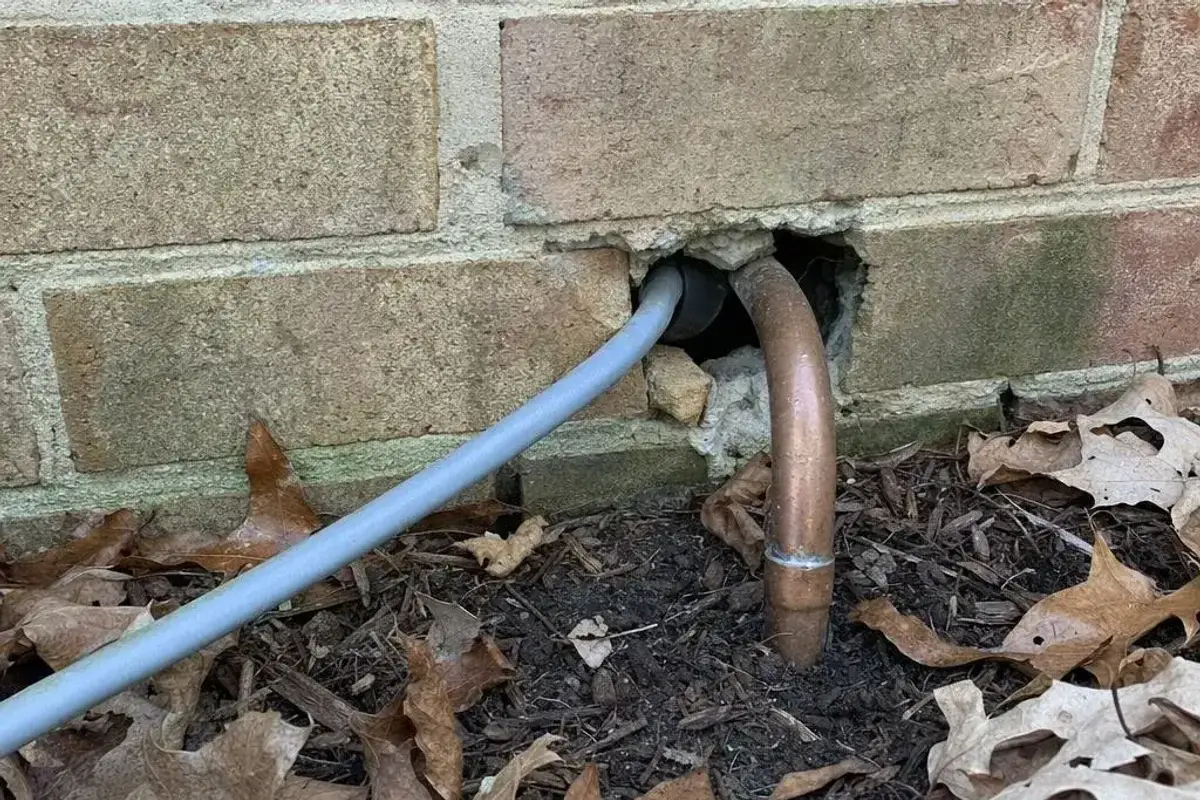
Mice can squeeze through a gap about the size of a dime. Check where pipes, wires, vents and the AC line enter the house. Our guide on how small a hole a mouse can fit through shows what to look for and which materials hold up.
Once the mice are gone, clean droppings with a disinfectant, not a broom or vacuum. See the warning below.
Most people get stuck on sealing. Trapping is fairly easy. Finding every gap is the hard part, and one missed hole is enough to keep mice coming back. Here’s a job that taught me that lesson.
I once took over a house from another company where the homeowners had been fighting mice for a long time. It was all snap traps and glue boards, and nothing was changing. We switched to a baiting program and started hunting for entry points. Over time I sealed every gap I could find, including going up on a ladder to seal around the soffit.
We got four straight months with no activity. Then the mice came back. I kept looking and finally spotted a twig sticking out above where I had sealed. Squirrels had chewed a big hole in the soffit, birds had moved in, and the mice were using that same hole to get into the walls. Once we sealed it, the house went quiet.
The lesson: when mice keep showing up in your walls, there’s almost always an entry point you haven’t found yet. It’s rarely about the trap or the bait. It’s about the gap.
When to Call a Professional
You can handle one or two mice yourself. However, I’d call a pro if:
- You keep hearing activity in the walls after a couple of weeks of trapping.
- You find droppings in more than one room or on more than one floor.
- You can’t find where the mice are getting in.
- Someone in the house is pregnant, has asthma, or has a weakened immune system.
- You notice electrical problems on a wall where you’ve heard mice.
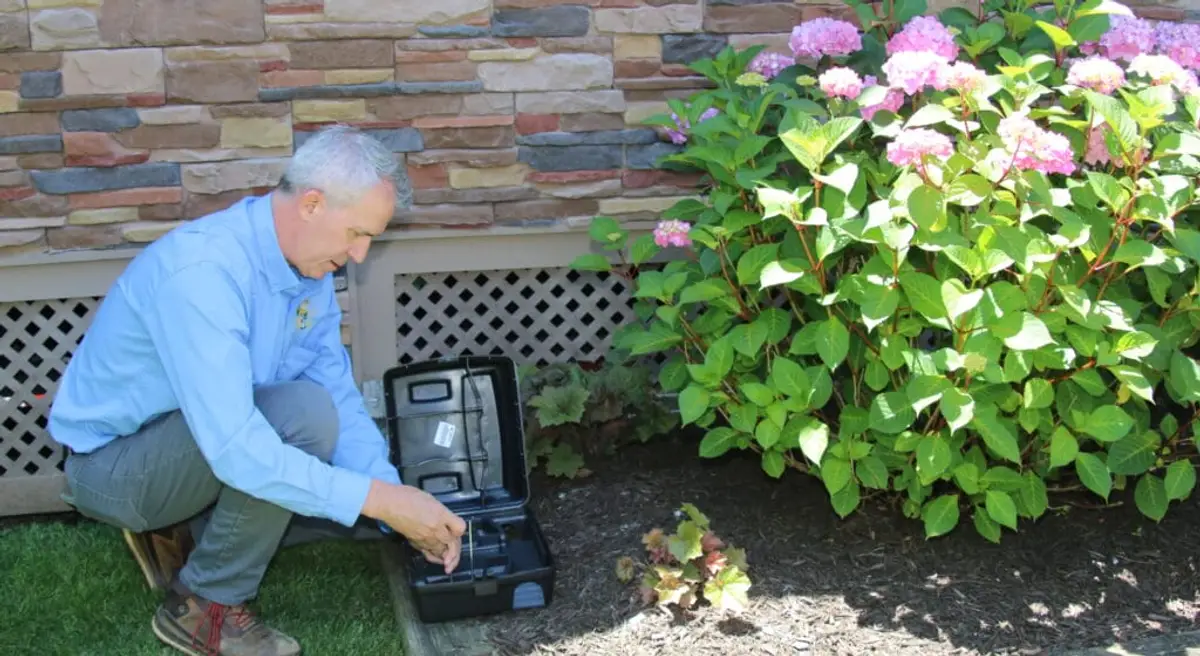
Our mouse control program is built around a four-step rodent protocol we developed for homes in this region. We inspect the whole structure, place tamper-resistant bait stations where rodents actually travel, and seal the gaps that let them into the walls. If you also want those openings closed for good, our exclusion services focus on exactly that. All the products we use are EPA approved and have passed through our internal research team. Each one is something we’d feel comfortable using in our own homes.
We’ve been at this for 58 years, and our team has earned 1800+ reviews across our locations. We handle mice in walls across Northern Virginia and suburban Maryland, including rodent control in Alexandria, Arlington, Lorton, Stafford, Fredericksburg and Hyattsville.
Conclusion: Don’t Live With Mice in Your Walls
So, are mice in walls dangerous? Yes. The biggest risks are chewed wiring, ruined insulation, germs, allergens and odors. None of them are emergencies on day one. However, they all build over time, and mice in a wall rarely leave on their own. Trap the mice inside, seal the gaps outside, and clean up carefully.
If you’d like a second set of eyes, call us at 703-683-2000 or email info@bettertermite.com. We’re happy to answer questions or set up an estimate.