
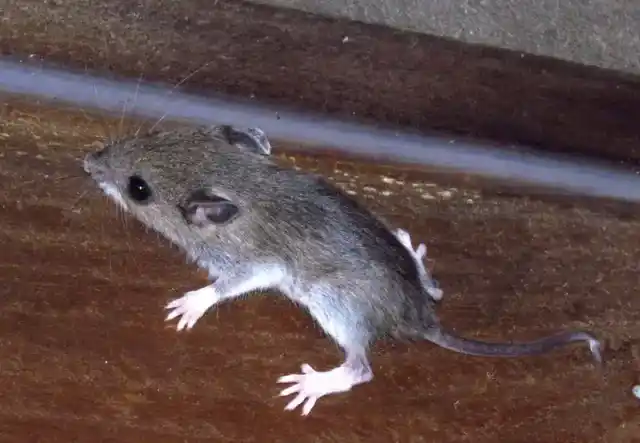

Getting rid of mice comes down to four things done in the right order: figure out where they are, take away their food, trap the ones already inside, and seal every gap they use to get in. Skip any one of these and the mice come back. That last part, sealing, is the step most people miss.
I’ve worked in pest control since 2015, and I’m a licensed technician here at Better Termite & Pest Control, our third-generation family business in the DMV area. In that time I’ve walked into hundreds of homes with mouse problems. The homeowners who beat mice for good almost never do it with one lucky trap. They follow a plan. This guide is that plan, laid out step by step.
First, Confirm You Actually Have Mice
Before you set a single trap, make sure mice are the problem. It sounds obvious, but I’ve seen homeowners chase the wrong pest for weeks. A clear read on the signs also tells you where the mice are traveling, which is exactly where your traps need to go.
The most common signs are droppings, gnaw marks, and sound. According to NC State Extension, mouse activity often shows up as small dark droppings a quarter to a half inch long, chewed food packaging, and “a musty smell associated with mouse urine as well as scratching and clawing noises within wall voids.” That scratching at night is a big one. Mice are most active after dark, so a quiet house lets you hear them move.

Here’s what to look for when you inspect:
- Droppings. Dark, pointed, and about the size of a grain of rice. Fresh ones are soft and shiny; old ones are gray and crumble.
- Gnaw marks. Mice chew constantly. Look at food boxes, baseboards, and the corners of cabinets.
- Grease marks. Mice leave dark, oily smudges along the walls and baseboards they travel every night.
- Nests. Shredded paper, insulation, and fabric tucked into quiet spots like the backs of drawers, under appliances, or in the garage.
- Sound. Scratching or scurrying in the walls and ceiling, usually right after the lights go out.
If you’re seeing larger droppings or hearing heavier movement, you may be dealing with rats instead, and the approach shifts. Our guide on telling mice and rats apart breaks down the differences. And if you’re not sure whether the mouse you spotted was a house mouse or a field mouse that wandered in, our deer mice versus house mice comparison can help you pin it down.
Why You Shouldn’t Wait
Mice are not a problem that fixes itself. Your home offers everything a mouse needs, so it has no reason to leave. Worse, the population climbs quickly. The University of Kentucky Entomology department notes that mice are “prolific breeders, producing 6-10 litters continuously throughout the year.” A pair of mice in your walls in October can become a serious infestation by spring.
There’s also a health side to this. Mice contaminate food and surfaces as they travel, and rodents are linked to diseases that can affect people. That’s reason enough to act early rather than hoping they move on.
The Four-Step Plan to Get Rid of Mice
This is the core of it. Do these steps in order. The sequence matters, because trapping without removing food is slow, and killing mice without sealing gaps just clears space for the next ones.
Start with a slow walk through the house, inside and out. Follow the signs you found earlier. Mice travel the same paths every night, hugging walls and baseboards, so droppings and grease marks line up along their runways. Those lines are where your traps go.
While you’re at it, look for likely entry points: gaps under doors, holes around pipes and utility lines, and openings where the foundation meets the siding. You’ll seal these in step four, but it helps to spot them now.
Mice stay close to their food. This is the step that makes trapping work, and the one people underestimate.
- Store pantry items like rice, cereal, and pet food in sealed glass or metal containers. Cardboard and thin plastic don’t stop a mouse.
- Clean up crumbs, wipe counters at night, and don’t leave dishes out.
- Take out the trash regularly and use a lid that closes tight.
- Clear clutter in garages, basements, and closets. Piles of boxes are prime nesting spots.
When food gets scarce, mice are far more likely to go for your traps.
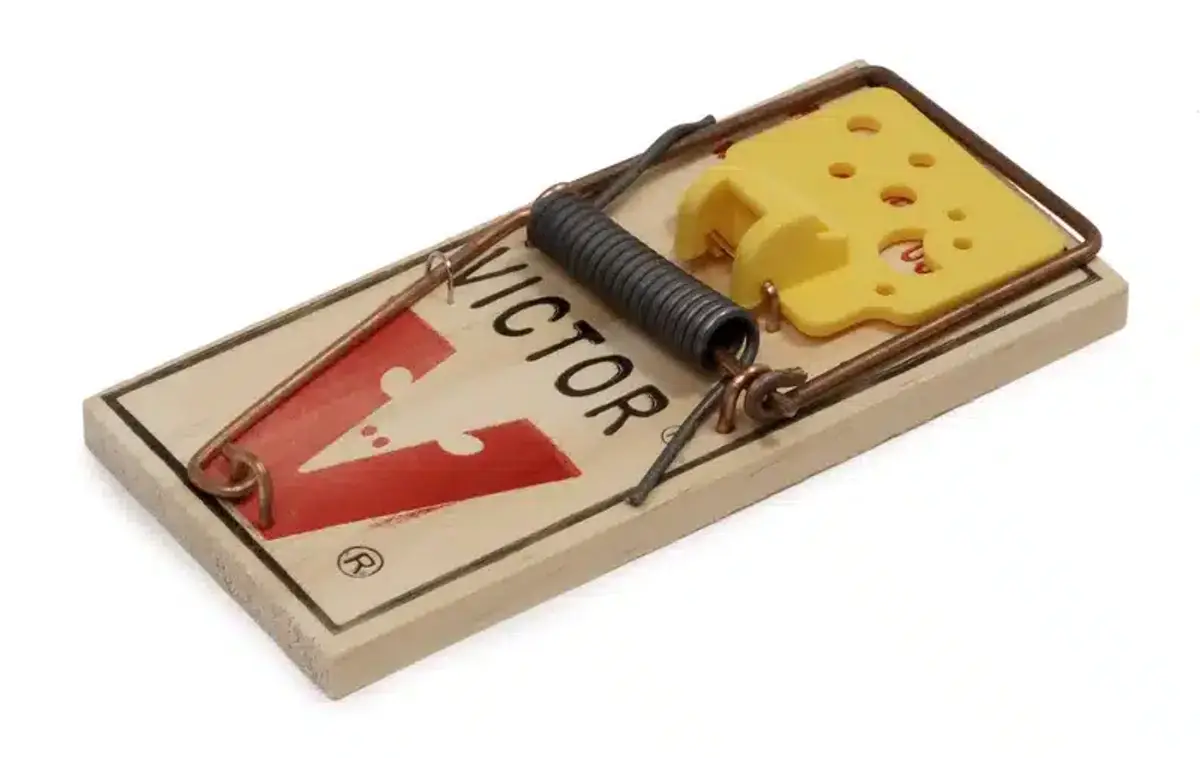
Now knock down the mice already inside. For most homeowners, simple wooden snap traps are the fastest and most reliable choice. They’re inexpensive, they let you confirm each catch, and they avoid a mouse dying somewhere inside a wall.
Placement is everything. Set traps flush against the wall, with the trigger end facing the baseboard, right on the runways you found in step one. Mice run along walls, so a trap set out in the open in the middle of the floor rarely gets touched. Use plenty of them; six to a dozen traps clustered in active areas will outperform two traps every time.
For the right bait and the mistakes to avoid, see our guide on the best mouse bait and trap options.
This is the step that decides whether mice come back. Trapping clears the current mice; sealing keeps new ones out. Go around your home’s exterior and interior and close every gap you can find.
- Stuff larger holes with copper mesh or steel wool, then seal over them. Mice can chew through foam, rubber, and plastic, so those don’t hold.
- Cover vents and larger openings with quarter-inch hardware cloth.
- Caulk cracks around pipes, wires, and utility lines. These are the gaps people miss most.
- Add door sweeps and fix gaps under exterior doors.
Our full walkthrough on keeping mice out of your home covers exclusion in more detail.
Work through those four steps in that order and you cover every angle a mouse relies on. The photo below shows the single most important detail in step three: where the trap sits.
If you’d rather hand the whole process off, we’re here for that too.
The Gap Problem: How Mice Actually Get In
If you take one thing from this guide, make it this: mice get in through openings far smaller than you’d guess. The UC Statewide IPM Program reports that mice can squeeze under gaps just a quarter inch tall. That’s about the width of a pencil, or the thickness of a dime.
I tell homeowners a simple rule I use in the field: if you can fit the tip of your pinky finger into an opening, a mouse can get through it. People walk their foundation looking for obvious holes and miss the quarter-inch gap where a cable line enters the wall. That one gap is often the whole problem.
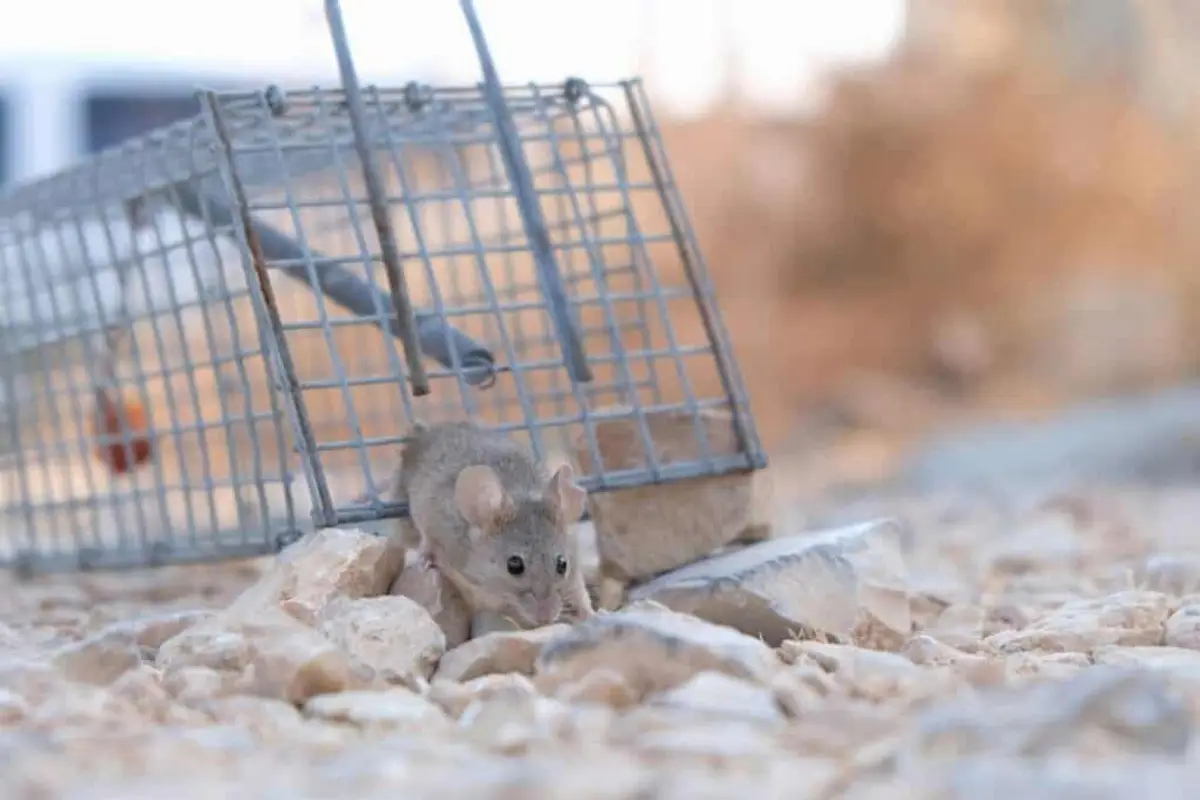
The most common entry points I seal are utility line penetrations, because someone is always out working on something and doesn’t reseal around it. Garage door corners come second. After that, it’s weep holes, crawl space vents, and old holes left around dead cable lines. Check all of them.
Traps vs. Bait: What Actually Works Indoors
People always ask whether they should use traps or poison. Both have a place, but the right answer depends on who’s doing the work and where.
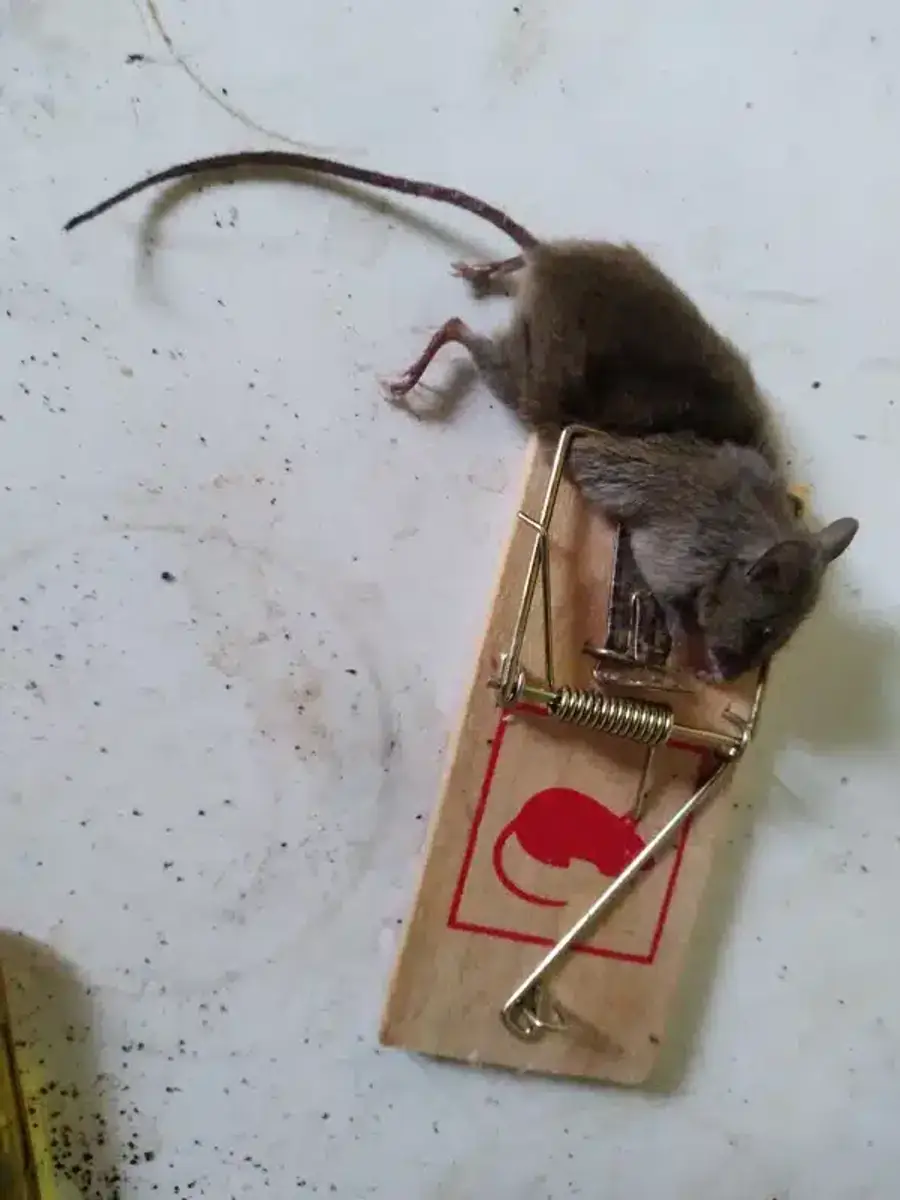
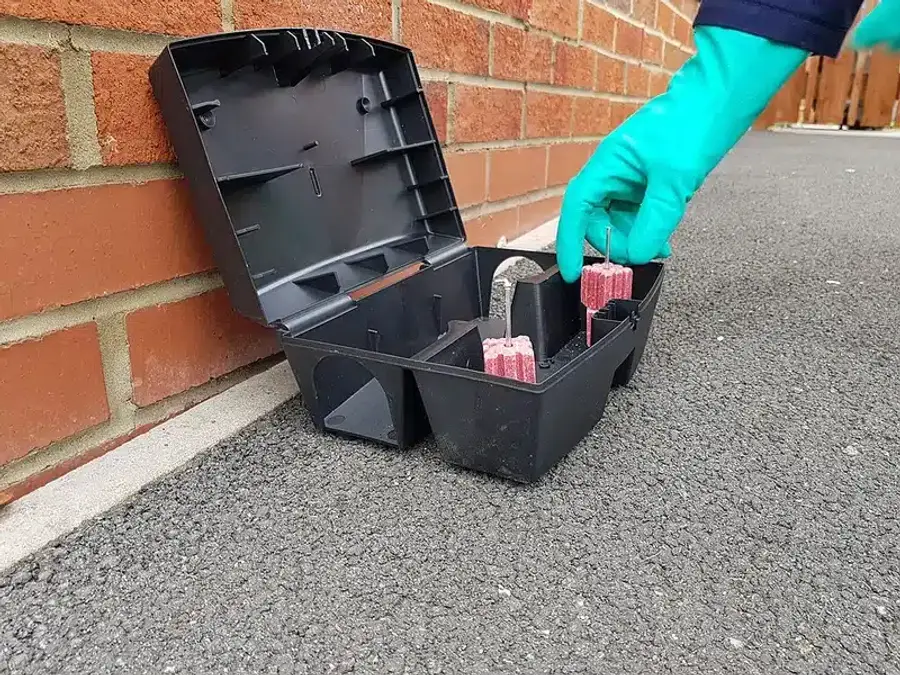
For a homeowner dealing with a handful of mice indoors, snap traps win. They’re cheap, they work, and you can see exactly how many mice you’ve caught. Loose poison bait indoors carries a real downside: a mouse can crawl into a wall or ceiling to die, and the odor that follows is hard to fix. That’s a call I get more often than you’d think.
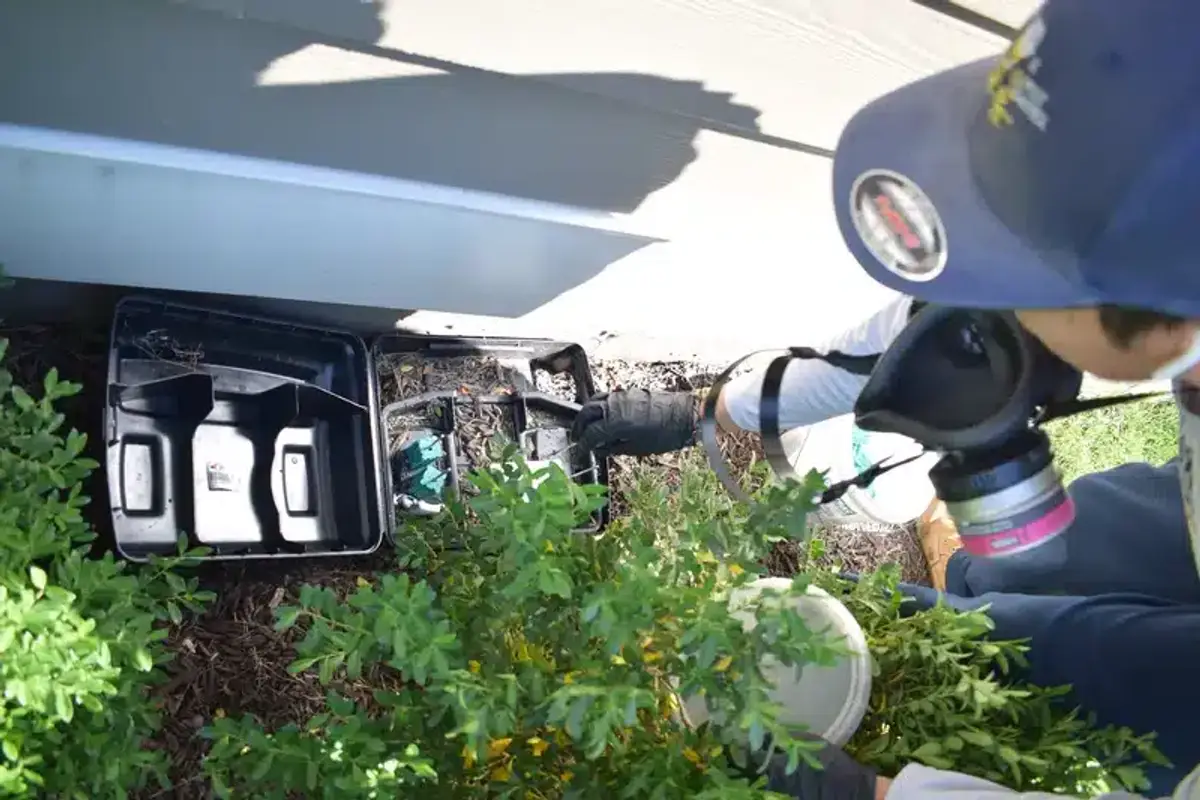
Professional control is a different tool for a different job. Our programs lean on tamper-resistant bait stations placed at strategic points, mostly at ground level where rodents actually run. That’s the heart of the four-step rodent protocol we developed for this region, and it’s where a lot of DIY efforts fall short. If you’ve tried repellents and gadgets already, our honest breakdown of what mouse repellents can and can’t do is worth a read before you spend more money.
We get a ton of calls about mice in Old Town Alexandria, which is actually why we built our four-step rodent protocol around this area. One thing I see homeowners get wrong all the time: they hear from another company that they need their entire attic re-insulated. In my experience that’s rarely necessary, and it’s often extremely expensive. A lot of the attic work other companies push, we’ve found isn’t even that effective. What really makes the difference is the lower-level baiting, placed where the rodents travel, combined with sealing the entry points. That’s the part that stops the cycle, not tearing out insulation.
That experience shaped how we handle every mouse call, and it’s the kind of judgment a licensed technician brings to a recurring problem.
Why Mice Keep Coming Back
If you’ve trapped mice and they returned, you’re not doing anything wrong on the trapping side. You just haven’t closed the door yet. This is the single most important idea in rodent control.
Extension programs are clear that traps and baits only work when you pair them with sanitation and exclusion. UC IPM puts it plainly: control tools “must be combined with preventive measures like sanitation to remove sources of food, water, and shelter, and exclusion to prevent entry.” Kill the mice inside but leave the gaps open, and new mice simply follow the same scent trails right back in.
Mice also don’t travel far. They stay within about 30 feet of their nest and food supply, which is good news: it means the source is close, and so is the entry point. When I take over a house where mice keep returning, the problem is almost always one overlooked gap. I once worked a mouse account for two years where we’d seal the house tight and get four quiet months, then activity would return. It turned out squirrels had chewed a fresh hole in the soffit above where I’d sealed, and mice were using it. One new gap was all it took.
A Note on Health Risks and Careful Cleanup
Mice aren’t just a nuisance. They contaminate the surfaces and food they touch, and rodents are tied to several illnesses. New Mexico State University Extension lists diseases that rats and mice can carry, including salmonella and hantavirus. Worth knowing for our area: hantavirus is mainly associated with deer mice, a more rural species, rather than the house mouse most people find indoors. Still, careful cleanup matters with any rodent.
The reason the cleanup advice is so strict comes down to how these viruses spread. Disturbing dry droppings, nests, or urine can push tiny particles into the air. From there, they can be breathed in. That’s why extension and public-health sources all say the same thing. Dampen the material with disinfectant first. Let it soak, then wipe it up while wearing gloves instead of stirring it up dry.
When to Call a Professional
Plenty of light mouse problems can be handled with traps, cleanup, and careful sealing. But some situations call for a pro, and there’s no shame in it. Consider help when:
- You keep seeing mice after several rounds of trapping.
- Droppings show up in more than one room, which points to a larger population.
- You can’t find how they’re getting in, or your home has hard-to-reach entry points.
- There’s contamination in an attic, crawl space, or ductwork.
Recurring mice almost always mean an entry point you haven’t found. A licensed technician can locate the source, run a real baiting program placed where rodents travel, and break the reinfestation cycle. You can see how we approach it on our rodent control page, and we serve communities across the region, including rodent control in Alexandria where a lot of our mouse calls come from.
Putting It All Together
Getting rid of mice isn’t about one clever trick. It’s a sequence: confirm the signs, take away their food, trap the mice already inside, and seal every gap they use, down to the quarter-inch ones. Do those in order and stay patient through the two- or three-week check, and you’ll clear the problem and keep it clear.
If you’d rather not chase gaps around your foundation on a ladder, or you’ve already tried and the mice keep coming back, we’re glad to help. Our team brings decades of experience with rodent problems specific to the DMV, and every product we use is EPA approved and something we’d feel comfortable using in our own homes. Call us at 703-683-2000 or email info@bettertermite.com for a plan built around your situation.