
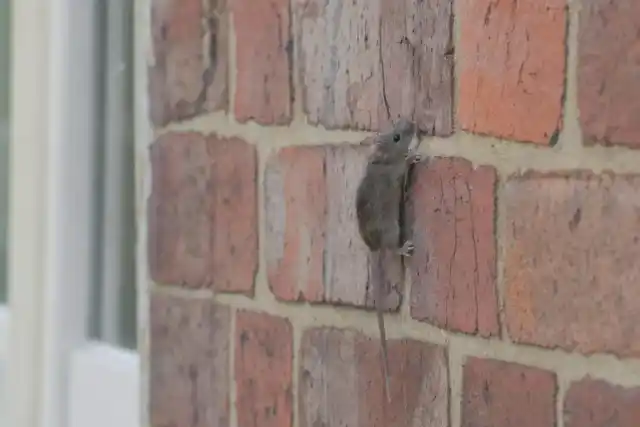

Yes, mice can climb walls. A house mouse can run straight up brick, wood, concrete block and most siding. It also climbs pipes, wires and downspouts. What stops a mouse is a truly smooth, hard surface, like a band of smooth sheet metal. However, few walls are smooth from top to bottom, so mice usually find a way around.
At Better Termite & Pest Control, homeowners often ask this after finding droppings in an upper cabinet or hearing scratching inside a second-floor wall. They want to know how a mouse got up there. Below, I’ll cover which surfaces mice can and can’t climb, how they move inside your walls, and what actually keeps them from climbing in.
Can Mice Climb Walls? The Short Answer
The mouse in most Northern Virginia and Maryland homes is the house mouse. According to the University of California, house mice are excellent climbers that “can run up any rough vertical surface.” They can also run along wire cables and ropes.
So the real question isn’t whether mice can climb walls. It’s what the wall is made of. Here’s a quick guide:
| Surface | Can a mouse climb it? |
|---|---|
| Brick and mortar | Yes, easily |
| Wood (framing, trim, siding, fences) | Yes, easily |
| Concrete and concrete block | Yes |
| Weathered sheet metal and many plastics | Yes |
| Pipes, wires, cables and downspouts | Yes, and they use them often |
| Screens and screen wire | Yes, even upside down |
| Smooth sheet metal | No. This is what rodent barriers are made of |
| Glass | Very hard for a mouse to grip |
| Flat painted drywall | Hard on the flat face. Mice use corners, trim and cords instead |
What Surfaces Can Mice Climb?
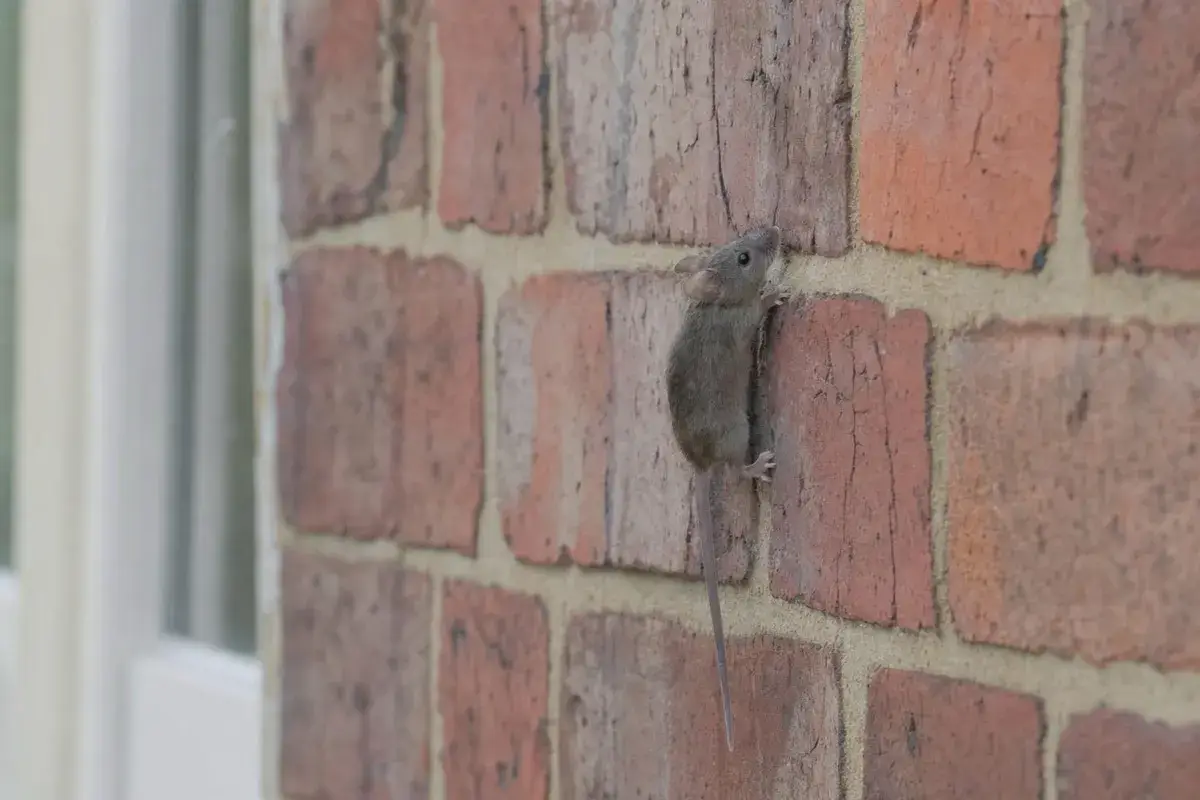
A mouse climbs by gripping small bumps and edges with its claws. Therefore, the rougher the surface, the easier the climb. A wildlife damage handbook on rodent-proof construction says rats and mice can climb almost any rough vertical surface, including wood, brick, concrete, weathered sheet metal and many plastic products.
That same handbook lists the “ladders” mice use to get into a building. They include electrical wires, pipes, fences, poles, ropes, cables, vines, shrubs and trees. It also notes that house mice can travel long distances crawling upside down along screen wire.
On the outside of a home, mice climb:
- Brick, stone and block foundations. Mortar joints are basically a ladder.
- Wood and vinyl siding. The overlapping edges give them a place to hold on.
- Downspouts and utility lines. A downspout is a straight shot to the gutter and roofline.
- Vines, shrubs and trees. Branches touching the roof let mice skip the wall entirely.
This is why entry points aren’t always at ground level. Gaps around soffits, roof vents and utility entries are all within reach.
Inside a home, mice climb:
- Cabinet sides and toe kicks. Wood gives them plenty to grip.
- Plumbing and appliance cords. Pipes under the sink and cords behind the fridge work like ropes.
- Curtains and fabric. Soft material is easy to climb straight up.
- Wall corners and trim. A corner lets a mouse brace against two surfaces at once.
If you want to know how jumping fits in, our guide on how high mice can jump covers the numbers.
The common thread is grip. Anything with texture, edges or a gap to hook a claw into is fair game for a mouse.
Mice don’t have sticky feet the way a gecko or a fly does. They rely on claws, balance and touch. A Nebraska Extension guide notes that mice keep contact with walls using their whiskers and guard hairs. That’s part of why they tend to travel along the edge of a wall rather than across an open floor.
Their tails matter too. A 2024 study in the Journal of Experimental Biology found that mice swing their tails to steady themselves when their footing tips or shifts. The researchers called the tail a core part of how mice move, especially when balance is tricky. That’s a big help on a narrow pipe, cable or ledge.
Can Mice Climb Smooth Walls?
Mostly, no. A mouse needs something to grip. A truly smooth, hard surface gives it nothing to hold, so it slides back down. In fact, that’s the whole idea behind rodent barriers.
The rodent-proofing handbook says a sheet metal band attached to a wall will keep rodents from climbing. It recommends bands at least 14 inches wide, and preferably 18 inches, placed at least 36 inches above the ground or floor. It also suggests metal cones or discs on pipes, downspouts and cables. For vents on rough walls, it recommends adding a smooth surface around the vent.

However, there’s a catch. Most smooth walls in a home aren’t smooth everywhere. A painted drywall wall has baseboards, door trim, outlets, corners and furniture against it. A glass door has a frame and often a screen. Mice will simply climb whatever rough edge is next to the smooth part.
I also want to be honest about the evidence. I couldn’t find a university study that tested mice on painted drywall or glass specifically. What the research does show is that hard, smooth metal stops them. Everything else depends on what’s around that smooth surface.
How Mice Climb Inside Your Walls
Once mice get into a wall void, they have an easy highway. Wood studs, electrical wiring, cables and plumbing all run up and down between floors. A mouse can climb from a crawl space or basement to the attic without ever showing itself in a room. That’s why so many people hear mice in the walls but not in the house.
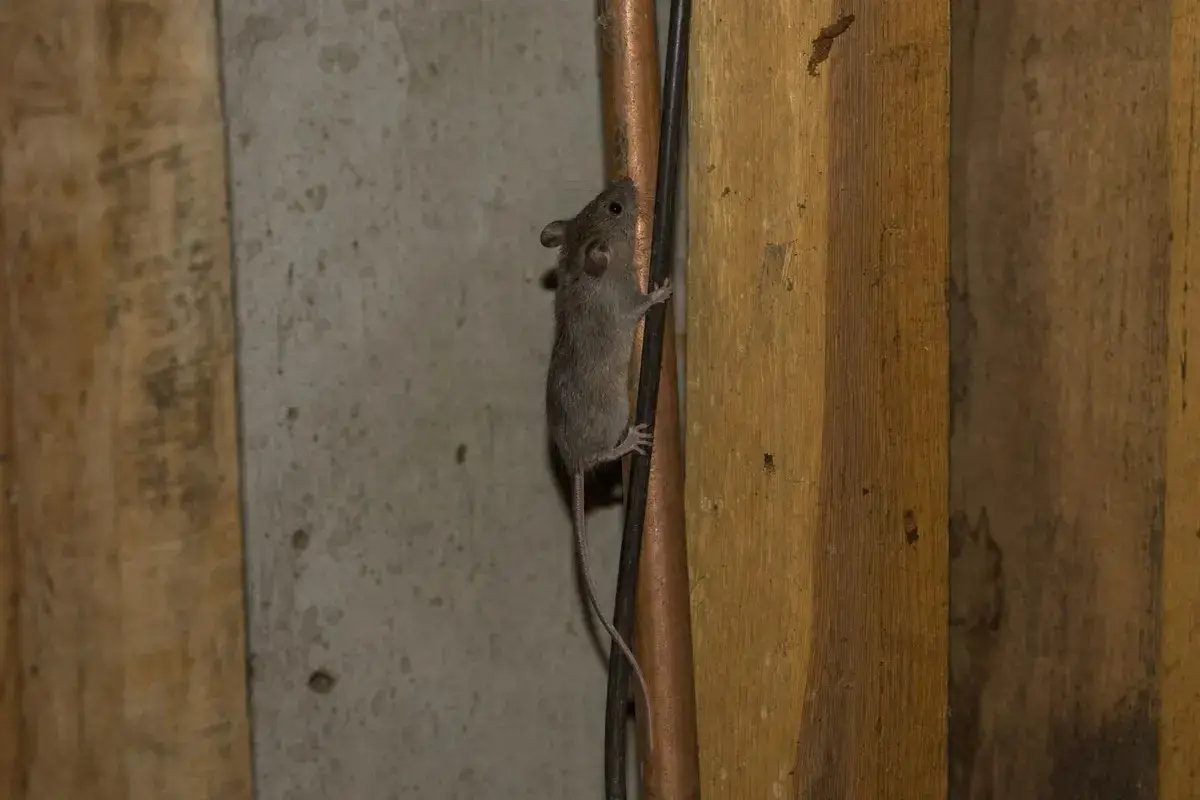
That’s also why you often hear them before you see them. According to a Cornell University fact sheet, mice nest in undisturbed spots like wall cavities and attics. You may hear scuttling, squeaking or gnawing inside the walls, especially at night. If that sounds familiar, our guide to mice in the attic covers what to do next.
That’s why we pair sealing with baiting. The bait handles the mice already inside, and the sealing keeps new ones from climbing in.
Signs Mice Are Climbing Your Walls
Because mice climb so well, the signs aren’t always on the floor. Here’s what to look for:
- Rub marks. Mice leave dark, greasy smudges where their bodies brush the same path over and over. The Internet Center for Wildlife Damage Management notes these show up on beams, rafters, pipes and walls.
- Droppings up high. Droppings in upper cabinets, on counters or on top of the fridge mean mice are climbing. Our mouse droppings guide shows what to look for.
- Scratching in walls or ceilings. Sounds are often loudest at night, when mice are most active.
- Activity in the attic. Nesting material, droppings or chewed insulation in the attic usually means mice climbed up through the walls or from the roofline.
Also, it’s worth knowing which mouse you have. Near wooded lots, you might have a deer mouse or a white-footed mouse instead of a house mouse. Both are strong climbers too. Our guide on deer mice vs. house mice can help you tell them apart.
Can Rats Climb Walls Too?
Some rats climb even better than mice, but not all of them. The Virginia Department of Wildlife Resources describes the black rat, also called the roof rat, as an adept climber found in the upper stories and roofs of buildings. However, it notes the species is declining in Virginia as the Norway rat displaces it.
Norway rats are the more common rat around here. They tend to stay low, in basements, crawl spaces and ground floors. So if something is climbing to your attic in Northern Virginia, a mouse is often a more likely suspect than a rat. For the full rat answer, see our guide on whether rats can climb walls.
How to Stop Mice From Climbing Into Your Home
You can’t make every wall smooth. Instead, focus on the routes mice use and the openings they’re climbing toward. Here’s what actually helps:
Seal entry points high and low. The Cornell fact sheet recommends sealing all entry points from ground level to at least three feet up, and to the roof if possible, because mice are good climbers. Pay extra attention to gaps around utility lines, vents, soffits and where the roof meets the wall.
Trim branches and vines. Branches touching the roof and vines growing up the siding give mice a free ride. Cut them back from the house.
Guard pipes and downspouts where it makes sense. A smooth metal band or cone on a pipe or downspout can block a climbing route, as the rodent-proofing handbook describes.
Keep things off the walls. Firewood, storage bins and stacked boxes against the house or a basement wall make climbing easier. Pull them away a bit.
Store food in hard, sealed containers. Since mice can reach upper shelves, height alone won’t protect your pantry. Our tips to keep mice out cover more of these basics.
One of our technicians, Daren, took over a house that had been fighting mice for a long time. He found every entry point he could and even got on a ladder to seal around the soffit. After that, the house went four months straight with no mouse activity.
Then the mice came back. Daren kept looking and finally spotted a twig sticking out above the spot he’d already sealed. Squirrels had chewed a big hole higher up in the soffit, and birds had gotten in too. That’s how the mice were climbing back inside. Once he sealed it, the house went quiet.
That job is a good reminder of how well mice climb. The entry point that matters can be up at the roofline, not down by the foundation.
Finding a high entry point like that often takes a ladder, a flashlight and a trained eye. It’s also where most homeowners stop looking.
When to Call a Professional
If you’re hearing mice in your walls or finding droppings up high, you likely have mice living in the house and at least one entry point you haven’t found. That’s where a professional inspection pays off, because the openings are often at the roofline or hidden behind siding.
For mice, we rely on bait placed where they travel rather than snap traps and glue boards alone. We also look for entry points, including the high ones people tend to miss. All the products we use are EPA approved and have passed through our internal research team. You can read more about our mouse control service or our broader rodent control services. If you’d rather try on your own first, our guide on how to get rid of mice walks through the basics.
Better Termite has served the area for 58 years, and our team has more than 300 years of combined experience. We have 1800+ reviews across our locations. Our licensed technicians handle rodent control across Northern Virginia and parts of Maryland, including Alexandria, Arlington, McLean, Springfield, Fairfax and Reston.

So, can mice climb walls? Yes. They run up brick, wood, concrete and siding, and they use pipes, wires and branches as ladders. Smooth, hard surfaces like sheet metal are what stop them, but most walls have a rough edge nearby. That’s why sealing high entry points and baiting along their routes works better than hoping a wall is too tall or too slick.
If you think mice are climbing into your home, call us at 703-683-2000 or email info@bettertermite.com. We’ll help you find how they’re getting in and how to stop it.