
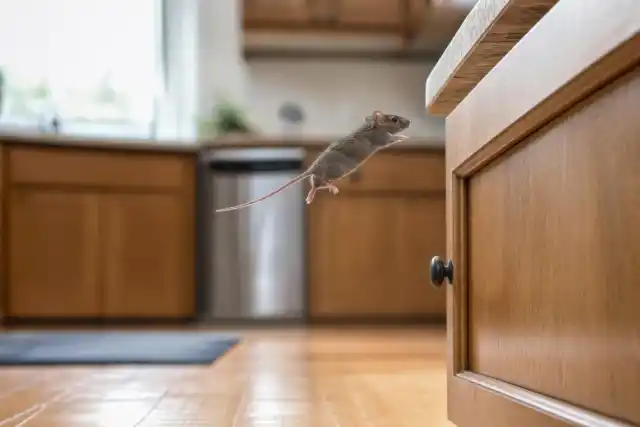

A house mouse can jump about 12 inches (1 foot) straight up from the floor onto a flat surface. That’s the number most university extension services use. Some sources put the top end at 18 inches. Additionally, mice can drop about 8 feet without getting hurt. So a mouse can’t jump from your floor to a 36-inch counter in one go. However, it can easily climb there.
At Better Termite & Pest Control, I hear this question a lot from homeowners who find droppings on a counter or a high shelf. They want to know how the mouse got up there. The short answer is that jumping is only part of it. Below, I’ll give you the real numbers, why they vary, and what they mean for keeping mice off your food.
How High Can Mice Jump? The Numbers
The mouse in most Northern Virginia and Maryland homes is the house mouse. According to the University of California house mouse guide, house mice “can jump up to 12 inches from the floor onto a flat surface.” Several other extension services use the same 12-inch figure.
However, not every source agrees. An older wildlife damage handbook on rodent-proof construction says house mice can jump as high as 18 inches (46 cm) from a floor onto an elevated surface. Other sources land in between, at 10 or 13 inches.

Here’s how those numbers stack up in a typical house:
| Height | Can a mouse jump it from the floor? |
|---|---|
| Up to 12 inches (a low step, a pet bowl stand, a bottom shelf) | Yes, this is a normal jump |
| 12 to 18 inches (a low bench, a short trash can) | Possibly. Plan as if they can |
| About 36 inches (a standard kitchen counter) | No, not in one jump. They climb there instead |
The differences mostly come from how each source measured or described the jump. “Onto a flat surface” means the mouse has to land and hold on, which is different from how high it can bounce. A mouse that jumps against a wall can also push off it, which adds height.
Additionally, most of these figures come from field guides and handbooks, not controlled lab tests of maximum jump height. I couldn’t find a peer-reviewed study that measured a house mouse’s highest possible vertical jump. So the practical way to read it is: about 12 inches is normal, and 18 inches is a reasonable upper limit to plan around.
How Far Can Mice Jump Across and Down?
Vertical height isn’t the only kind of jump that matters. Mice also jump across gaps and drop from high spots.
Extension services don’t publish a set number for how far a house mouse jumps across. The best data comes from lab research. In a 2022 eLife study, mice were trained to jump between platforms set about 4 to 9 inches (10 to 22 cm) apart. They made the jump at every distance, and the gap size had only a minor effect on success.
That study wasn’t testing their limit. So treat 9 inches across as a comfortable jump for a mouse, not a maximum. In a home, that’s plenty to hop from a shelf to a nearby box or from a pipe to a ledge.
Mice handle falls very well. According to the University of Arizona Extension, house mice can jump down 8 feet and survive.
Basically, that means a mouse can drop from a rafter, the top of a basement wall or a high storage shelf and keep going. Height works in their favor on the way down.
Mice are quick, which is part of why a jump often looks like it came out of nowhere. According to Animal Diversity Web, house mice can run up to 8 miles per hour. They also rarely travel more than 50 feet from their nest, so a mouse on your counter is probably living nearby.
Jumping Plus Climbing: How Mice Reach Your Counter
If a mouse can only jump about a foot, how does it end up on a 3-foot counter? It climbs. The same University of California guide notes that house mice “are excellent climbers and can run up any rough vertical surface.” The rodent-proofing handbook adds that they climb wires, pipes and cables, and can even crawl upside down along screen wire.
Most of the time, a mouse on a counter used a mix of jumping and climbing. Common routes I see include:
- Cabinet sides and toe kicks. Wood and textured surfaces give their claws plenty to grip.
- Cords and pipes. Appliance cords, plumbing under the sink and cable lines work like ladders.
- Stepping stones. A trash can, a chair or a stack of bags puts the counter within a 12-inch jump.
- Curtains and fabric. Soft material is easy to climb straight up.
Whether mice can climb smooth walls is its own question, and our guide on climbing covers it in detail. For now, the point is that height alone rarely stops them.
What Mouse Jumping Height Means for Your Home
Knowing that mice jump about a foot is useful, but only if you use it the right way. Here’s what actually helps.
Store food in sealed, hard containers. Moving the cereal to a higher shelf doesn’t do much if the shelf is inside a wood cabinet. Glass, metal or thick plastic containers with tight lids work much better.
Keep stored items off the floor. For pantries, basements and garages, the rodent-proofing handbook recommends storing food on shelving at least 18 inches, and preferably 30 inches or more, above the floor. It also recommends smooth metal legs that mice can’t climb. That combines jump height and climbing into one plan.
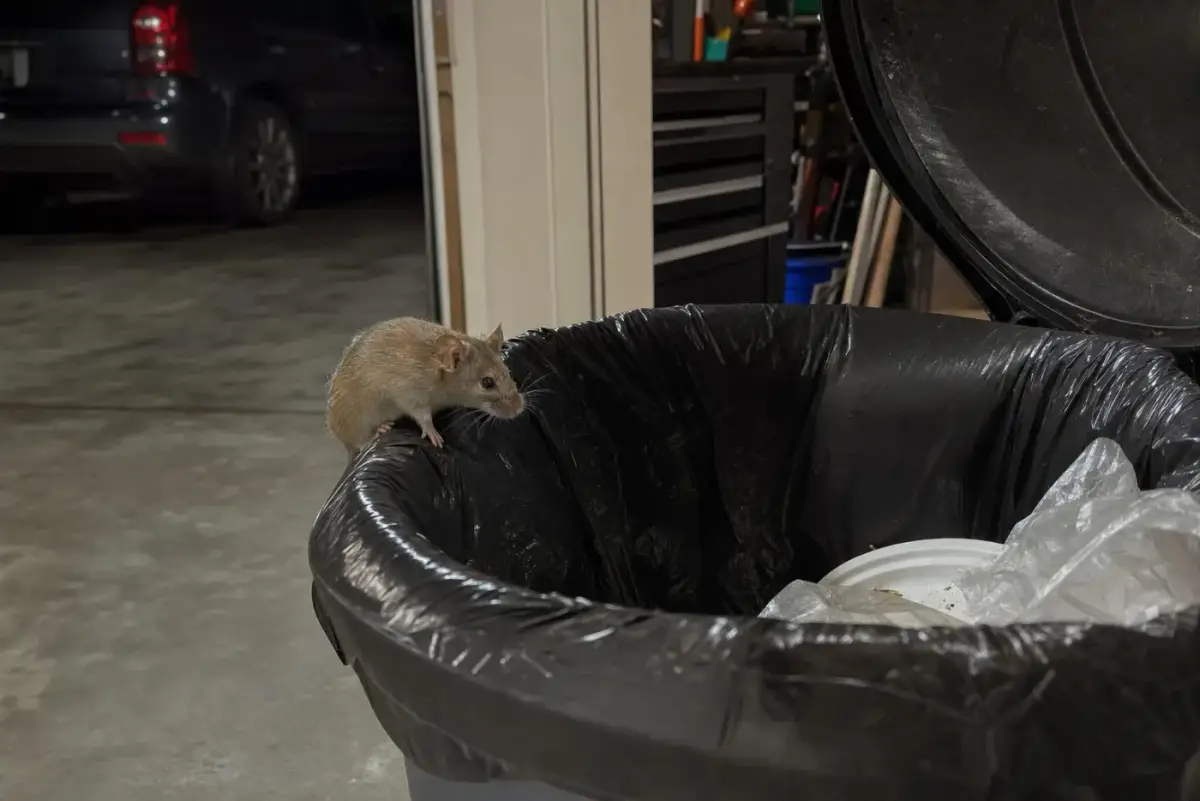
Think about the trash can. A short can with no lid is within easy jumping range. A taller can with smooth sides and a tight lid is a far better choice, especially in a garage.
Don’t rely on height as a barrier. A high shelf, a tall bin or a hanging basket slows mice down. But mice climb, so height by itself won’t keep them away from food for long.
Jumping Mice vs. House Mice in Virginia
Some people searching this question have seen a mouse make a surprisingly long leap outdoors. That may have been a jumping mouse, which is a different animal from the house mouse.
The meadow jumping mouse lives throughout Virginia, according to the Virginia Department of Wildlife Resources. It favors old fields and moist meadows and hibernates underground from early fall into spring. When startled, it can leap up to about 1 meter (roughly 3 feet) into the air, according to a University of Michigan species account. Its relative, the woodland jumping mouse, lives only in the southwestern part of the state.
These mice are built for leaping, with long back legs and very long tails. However, they’re wild field and forest animals. They aren’t the mice that end up in kitchens. The mouse in your home is almost always the house mouse, or sometimes a deer mouse or white-footed mouse near woods. If you’re not sure which one you have, our guide to deer mice vs. house mice can help.
Why Entry Points Matter More Than Jump Height
Jump height explains how a mouse moves around inside. It doesn’t explain how the mouse got in. For that, gap size matters far more. According to the CDC, a mouse can fit through a hole about the width of a pencil. We cover how small of a hole a mouse can fit through in its own guide, and also whether mice can chew through steel wool.
Because mice climb and jump, entry points aren’t always at ground level. Gaps around soffits, rooflines, vents and utility lines are all fair game.
I once took over a house that had been fighting mice for a long time. I found every entry point I could and even got on a ladder to seal around the soffit. After that, we had four months straight with no activity.
Then the mice came back. I kept looking, and finally spotted a twig sticking out above the spot I’d already sealed. Squirrels had chewed a big hole higher up in the soffit, and birds had gotten in too. That’s how the mice were getting back inside. Once we sealed it, the house went quiet.
The lesson I took from that job is simple. Mice will use any route they can reach, including ones well above the ground. Where they’re getting in usually matters more than how high they can jump.
One caution, though. Sealing a house tight while mice are still living in it can trap them inside the walls. That’s why we pair sealing with baiting, so the mice already inside are dealt with first.
When to Call a Professional
If you’re finding droppings on counters, in upper cabinets or on high shelves, you likely have mice living nearby and a route you haven’t found yet. That’s the point where a professional inspection pays off.
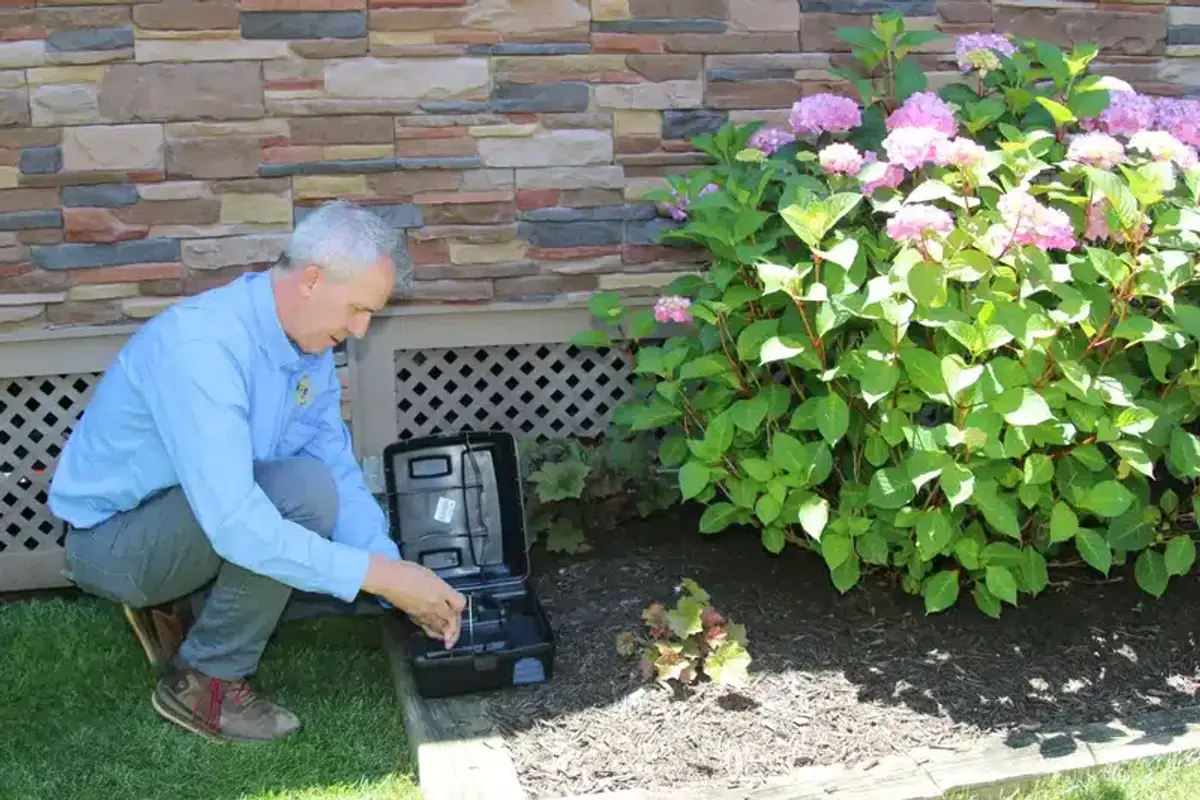
For mice, we use bait rather than relying on snap traps and glue boards. We also look for entry points, including the high ones people tend to miss. You can read more about how our mouse control service works, or see our broader rodent control services. If you’d like to try on your own first, our guide on how to get rid of mice walks through the basics.
Better Termite has served the area for 58 years, and our team has more than 300 years of combined experience. We have 1800+ reviews across our locations. Our licensed technicians handle rodent control across Northern Virginia and parts of Maryland, including Alexandria, Arlington, Fairfax and Reston.
So, how high can mice jump? About 12 inches straight up, with some sources saying up to 18. They can also leap gaps of 9 inches or more and drop 8 feet without trouble. Put that together with how well they climb, and very few spots in a home are truly out of reach. Sealed containers, sealed entry points and a good baiting plan will do far more than moving food up a shelf.
If you’re finding signs of mice in places they shouldn’t be able to reach, call us at 703-683-2000 or email info@bettertermite.com. We’ll help you figure out how they’re getting there and how to stop it.