
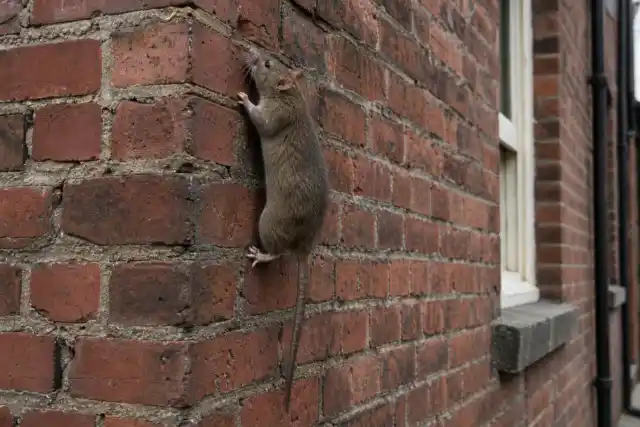

Yes, rats can climb walls. A rat can go straight up brick, wood, concrete and other rough surfaces. It can also shimmy up a downspout, run along a wire and jump about three feet. What stops a rat is a hard, smooth surface with nothing to grip, like a band of smooth sheet metal.
We get a lot of calls about rats at Better Termite & Pest Control, especially from Old Town Alexandria. Often, the caller has heard something in a wall or ceiling and can’t believe a rat got up there. Below, I’ll cover which walls rats can climb, how high they go, and what actually keeps them off your house.
Can Rats Climb Walls? The Short Answer
Rats climb with their claws. Therefore, the answer depends on what the wall is made of. Rough walls are easy. Smooth, hard walls are not.
A Nebraska Extension guide on rodent-proof construction lists what rats can physically do. According to that guide, rats and mice can climb almost any rough vertical surface, such as wood, brick, concrete and weathered sheet metal. Here’s how that plays out around a home:
| Surface | Can a rat climb it? |
|---|---|
| Brick and mortar | Yes |
| Wood (siding, trim, fences, framing) | Yes |
| Concrete and concrete block | Yes |
| Weathered sheet metal | Yes |
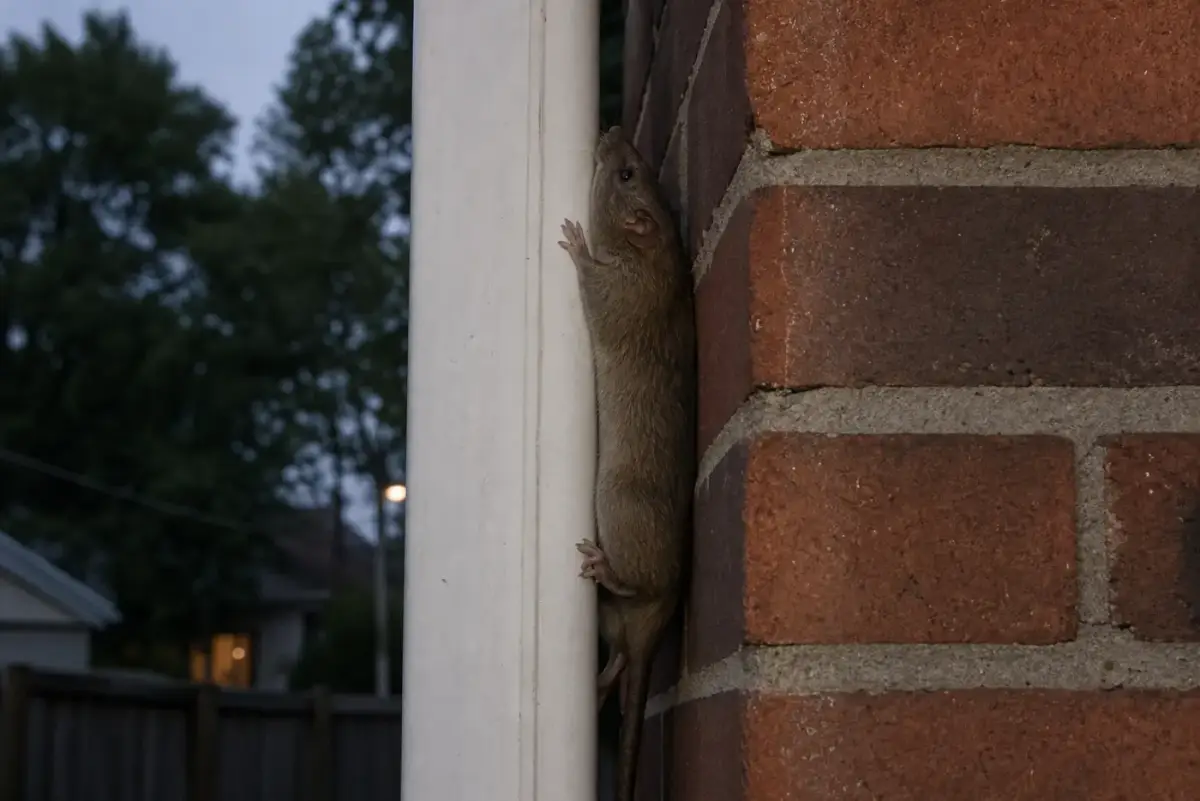
| Pipes and downspouts | Yes. Up to 3 inches wide on the outside, and wider ones if they sit next to a wall |
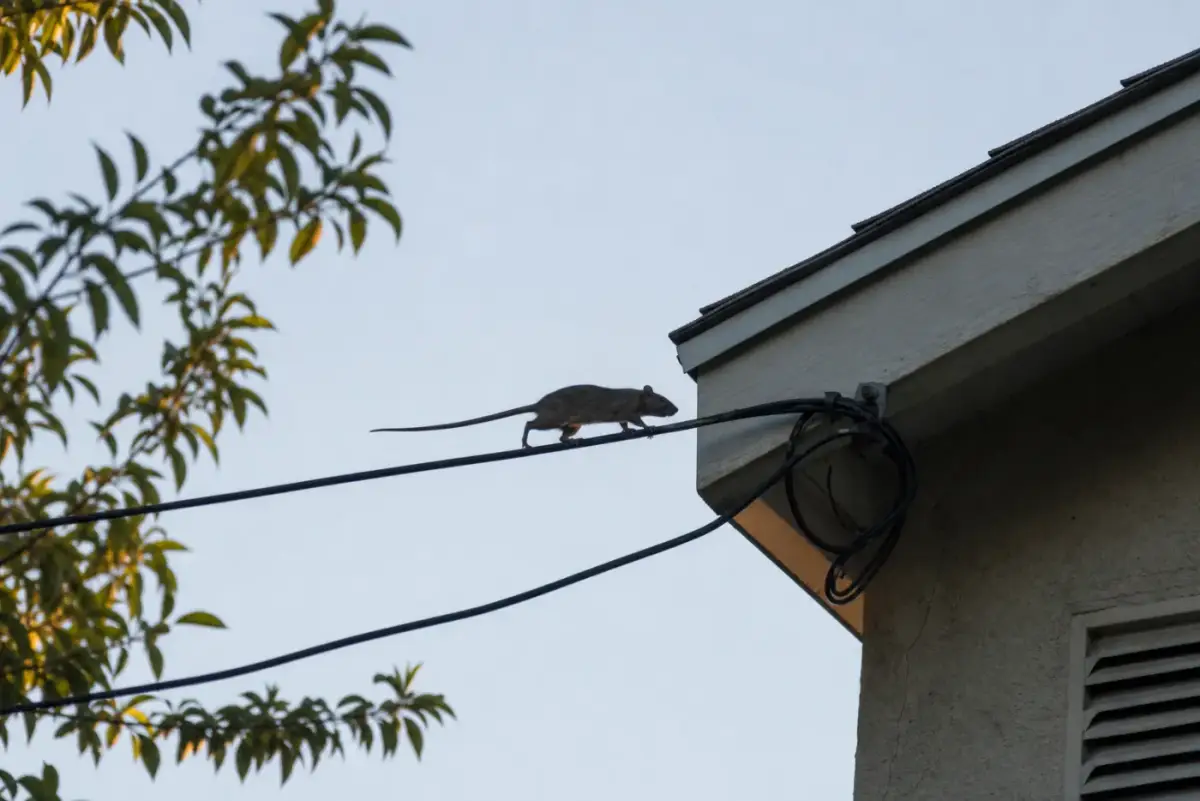
| Wires, cables and ropes | Yes, both up and across |
| Vines, shrubs and trees | Yes |
| Smooth sheet metal | No. This is what rodent guards are made of |
| Glass and other slick, hard surfaces | Very hard. There’s nothing for claws to grip |
How High Can Rats Climb and Jump?
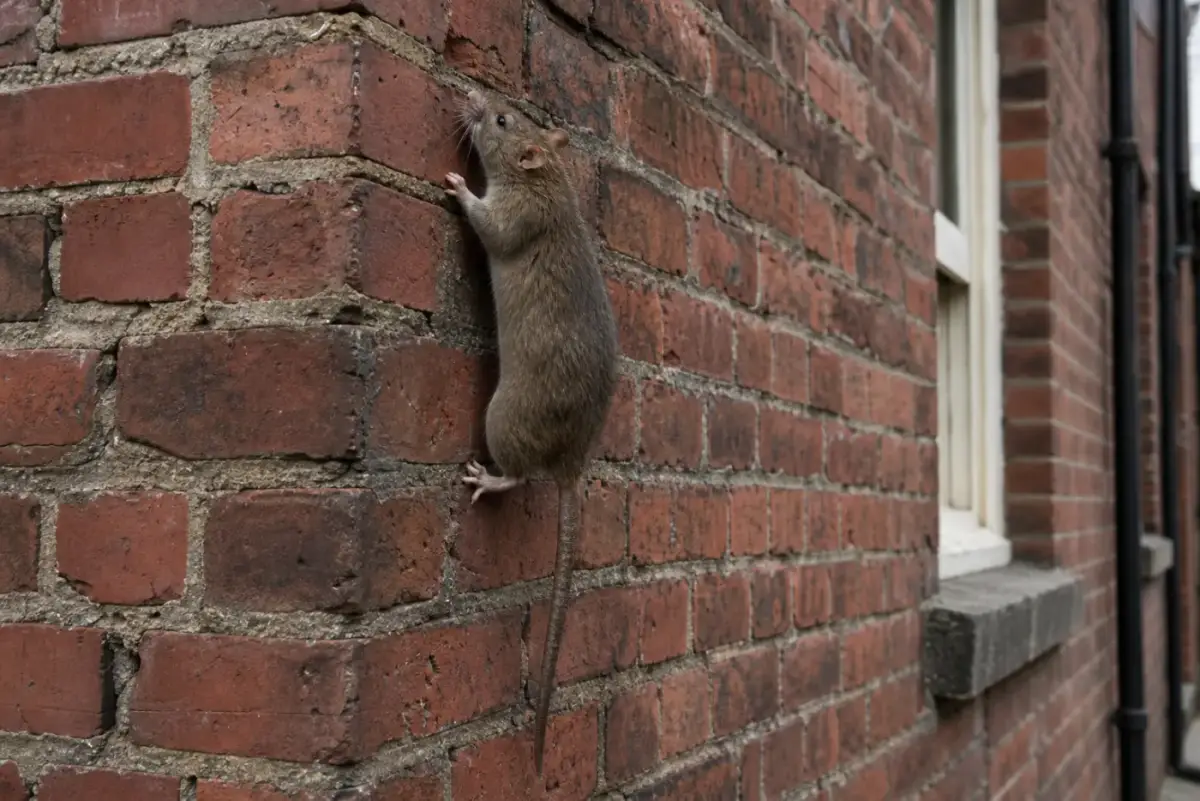
There isn’t a set height limit. If a rat has grip, it can keep going until it reaches the roofline. However, the Nebraska guide gives some useful numbers on what a rat can do along the way. Rats can:
- Jump 36 inches straight up and 48 inches across.
- Reach up to 13 inches along a vertical wall.
- Drop 50 feet without serious injury.
- Climb the outside of vertical pipes and conduit up to 3 inches wide.
- Climb larger pipes attached to a building by bracing themselves against the wall.
- Climb the inside of vertical pipes that are 1.5 to 4 inches wide.
- Scale any horizontal or vertical wire.
So a short smooth section at the bottom of a wall doesn’t do much. A rat can simply jump past it. Additionally, a fall from the second story isn’t likely to hurt it.
Which Rats Climb Walls: Norway Rats vs. Roof Rats
There are two rats that get into homes in the United States, and they climb differently.
The Norway rat is the big, stocky brown rat. It’s the common rat in Northern Virginia, DC and Maryland.
- Where it lives: The Virginia Department of Wildlife Resources calls it a burrower that lives in buildings, sewers, fields and streambanks.
- Where it shows up indoors: Usually basements, crawl spaces and ground floors.
- Can it climb? Yes. It prefers to stay low, but it can still go up brick, pipes and framing when food or shelter is up there.
The roof rat, also called the black rat, is slimmer with a tail longer than its body.
- Where it lives: Above ground, in trees, vines and dense shrubs.
- Where it shows up indoors: Attics, walls, false ceilings and upper floors.
- Can it climb? Yes, and better than a Norway rat. It’s the more agile of the two.
According to the University of California, Norway rats typically stay in the basement and ground floor while roof rats occupy the upper floors. However, it also notes that Norway rat infestations inside ceiling voids are not uncommon. In other words, a Norway rat staying low is a habit, not a limit.
That matters here, because the Norway rat is the one we deal with. A 2022 review of roof rats in Virginia found that roof rats appear to have declined in the state’s coastal cities as brown rats became more common. So if you hear a rat upstairs in Alexandria or Arlington, a Norway rat that climbed is the more likely suspect. Our guide on Norway rats vs. roof rats shows how to tell the two apart.
Can Rats Climb Smooth Walls?
Not well. A rat needs something to hook a claw into. A hard, smooth surface gives it nothing, so it slides off. In fact, that’s exactly how rodent guards work.
The Nebraska guide recommends attaching sheet metal bands to walls to prevent climbing. It says the bands should be 12 to 18 inches wide and sit 36 inches above the floor or ground. That height keeps a rat from jumping over it. The guide also describes metal cones and discs that keep rats from climbing pipes, wires and trees.
However, there are two catches:
- Smooth has to stay smooth. The same guide lists weathered sheet metal as something rats can climb. Once a surface gets rough, pitted or dirty, it gives them grip again.
- Most walls have a way around. A smooth wall usually has a corner, a pipe, a cable, a door frame or a shrub next to it. The rat will use that instead.
I also want to be upfront about the evidence. I couldn’t find a university test of rats on glass, tile or painted drywall. What the research does show is that smooth sheet metal stops them and rough surfaces don’t.
How Rats Climb Inside Your Walls
Once a rat gets into a wall void, climbing gets easier, not harder. Wood studs are rough. Plumbing and wiring run from the basement to the top floor. Therefore, a rat can travel between floors without ever stepping into a room.
In older attached homes, they can also move sideways. One of our registered technicians, Daren, saw this up close.
The worst rodent job Daren ever handled was in a row of old houses in Del Ray, right when Covid hit. A music theater behind the homes shut down. As a result, the rats lost their food source and moved into the houses.
Toward the end, Daren had 15 to 20 snap traps set in one crawl space. His estimate is that they took at least 40 or 50 rats out of there, and probably more.
His takeaway about old row houses is simple. The firewall between units isn’t always intact, so rats just work their way from one unit to the next. Once they’re inside the walls, they aren’t limited to the house they came in through.
That’s why you often hear rats before you see them. The Internet Center for Wildlife Damage Management notes that noises from gnawing and climbing may be heard, and that greasy rub marks can show up on beams, rafters, pipes and walls.
Signs Rats Are Climbing Your Walls
Because rats use the same routes over and over, they leave a trail. Here’s what to look for:
- Rub marks up high. Dark, greasy smudges on pipes, rafters and beams mean a rat has been traveling there.
- Noises in walls and ceilings. Gnawing, scratching and climbing sounds are usually loudest at night.
- Droppings above ground level. Rat droppings on a shelf, on top of ductwork or in the attic mean a rat climbed. Our rat droppings guide shows what they look like.
- Gnawed openings near the roofline. Check where utility lines enter, around vents and at the corners of soffits.
- Burrows by the foundation. With Norway rats, the nest is often in the ground outside, even when the noise is upstairs.
If the activity is mostly overhead, our guide to rats in the attic goes deeper. Also, if the droppings are small and the gaps are tiny, you may be dealing with mice instead. I cover that in can mice climb walls, and our mice vs. rats guide helps you tell which one you have.
How to Stop Rats From Climbing Your Walls
You can’t make a whole house too smooth to climb. Instead, take away the ladders and close the openings they’re climbing toward.
Trim trees and pull vines off the house. The University of California recommends removing climbing plants from buildings. It also recommends removing tree limbs within 6 feet of the roof.
Seal openings high and low. According to the Nebraska guide, a rat can enter an opening slightly larger than half an inch. Daren puts it in simpler terms: a rat needs a gap about the width of your thumb. Check where pipes and wires enter, around vents and along the roofline, not just at the foundation.
Use metal, not foam. Rats can chew through plastic, foam, wood and caulk. Sheet metal, hardware cloth and concrete hold up much better.
Add guards where there’s a clear route. A smooth metal band on a wall, or a cone or disc on a pipe or cable, can cut off a route rats use again and again.
Clean up what’s drawing them. Bird seed, pet food, open trash and clutter against the house all give rats a reason to stay. Our rodent prevention guide covers these basics.
When to Call a Professional
If you’re hearing rats in your walls or finding droppings up high, there’s an opening somewhere that you haven’t found. It’s often at the roofline, behind a downspout or under the siding. That’s where an inspection helps.
We built our four-step rodent approach around homes in Old Town Alexandria, where we get a lot of rat and mouse calls. In my experience, homeowners are often told they need the whole attic re-insulated. That’s fairly rare, and it’s very expensive. What usually makes the difference is baiting at the lower level, where the rats are coming from, followed by sealing the openings.
All the products we use are EPA approved and have passed through our internal research team. You can read more about our rat control service and our broader rodent control program. If you’d like to try on your own first, start with our guide on how to get rid of rats in your house.
Better Termite has served the area for 58 years, and our team has more than 300 years of combined experience. We have 1800+ reviews across our locations. Our licensed technicians handle rodents across Northern Virginia and parts of Maryland, including Alexandria, Arlington, Fairfax and Reston.
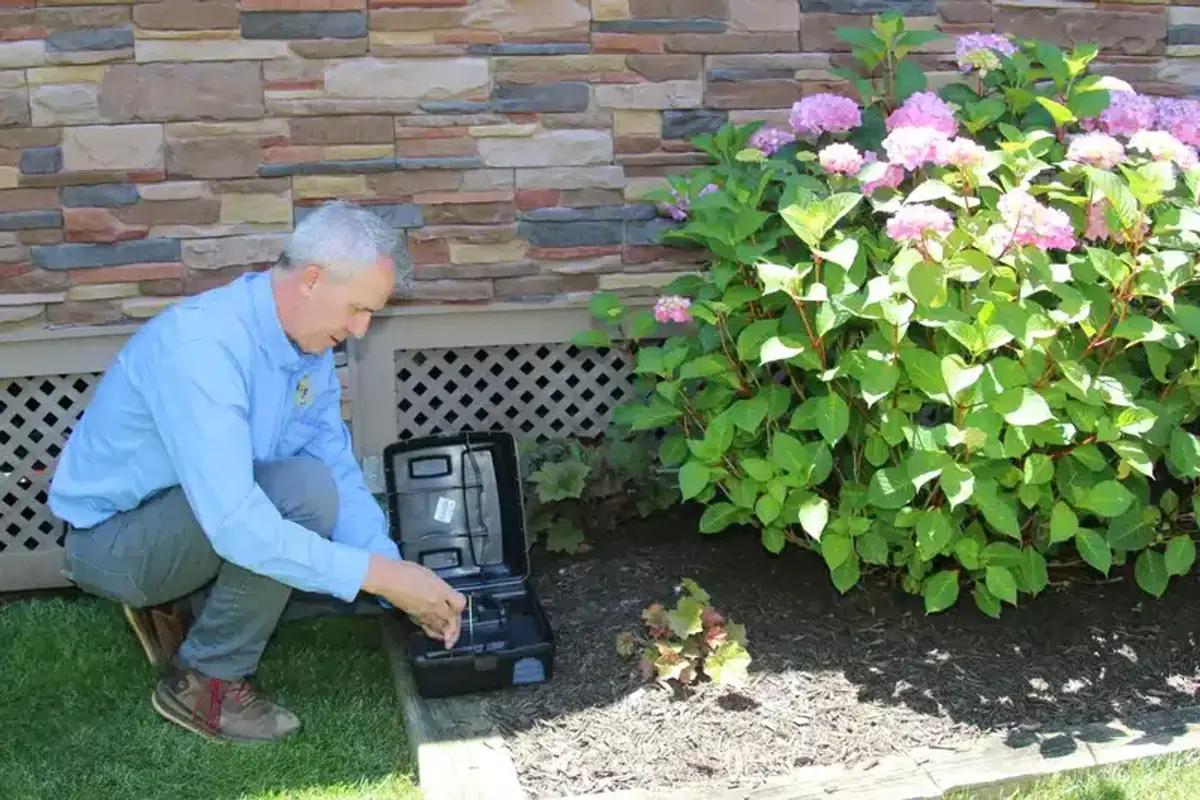
So, can rats climb walls? Yes. Rats climb brick, wood and concrete, and they use pipes, wires and tree limbs as ladders. Smooth, hard surfaces stop them, but most homes have a rough route nearby. That’s why removing the ladders, dealing with the rats already inside and sealing openings at every height works better than counting on a tall wall.
If you think rats are climbing into your home, call us at 703-683-2000 or email info@bettertermite.com. We’ll help you find how they’re getting in and what to do about it.