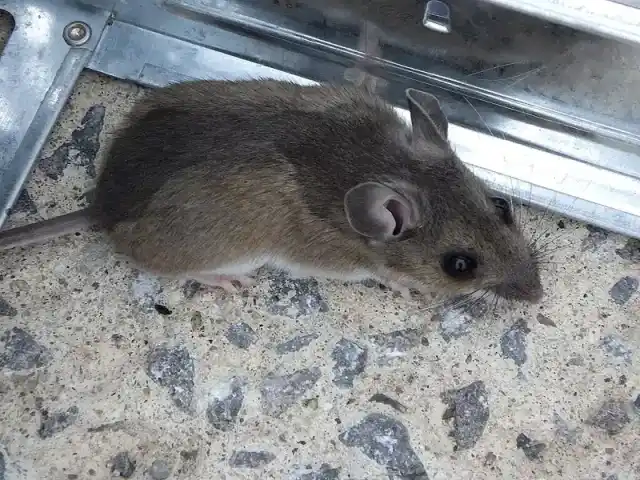

A dead mouse smells like rotting meat mixed with rotten cabbage, with a sour, sickly sweet edge and a hint of sulfur. It’s heavy and stale, and it usually hangs in one spot, like one wall, one closet or one corner of the basement. Heat speeds up decay, so the smell often gets worse on warm afternoons and fades a bit when the house cools down.
As a licensed technician, I hear this description on the phone all the time: “It smells like something died in my wall.” Basically, that’s exactly what it is. Below, I’ll walk you through how to confirm it’s a dead mouse (and not a gas leak), how long the smell lasts, and how to get rid of it for good.
What a Dead Mouse Smells Like
Most people describe a dead mouse smell in a few common ways. It’s often called a mix of rotting meat, rotten cabbage and spoiled garbage. Some people also pick up a sweet, sour note, almost like fruit that went bad. Additionally, there’s usually a sharp, sulfur smell underneath it all.
The smell changes as the mouse breaks down. Here’s what most homeowners notice over time:
Faint and sour. At first, you might only catch a whiff when you walk past one spot. It smells a little musty or sour, and it’s easy to blame on the trash can or a drain. Many people ignore it at this stage.
Strong and putrid. This is when people call us. The smell is clearly rotting meat with a sulfur, cabbage-like edge. It can fill a small room, and it’s worse on warm, humid days. This is also when flies tend to show up.
Stale and dry. As the body dries out or insects finish it off, the smell turns stale and musty and slowly fades. However, a faint odor can linger in insulation, drywall or fabric until you clean the area.
If you’re standing in a room trying to figure out where the smell is coming from, you’re not alone. Most people notice it near one wall or closet first, then spend a day or two sniffing around before they call.

Why Dead Mice Smell So Bad
When a mouse dies, bacteria start breaking down its body right away. That process releases gases, and a few of them are very strong smelling. That’s why something as small as a mouse can make a whole room stink.
A 2023 review in Frontiers in Microbiology names cadaverine and putrescine as the main compounds behind the smell of decay. Cadaverine has a putrid, rotting-flesh odor. Additionally, sulfur compounds called mercaptans, along with dimethyl disulfide and dimethyl trisulfide, add the sharp, rotten-cabbage note. The same review notes that temperature is one of the biggest factors in how fast decay happens. That’s why a dead mouse in a hot attic or a warm wall near a heat duct smells worse than one in a cool crawl space.
Dead Mouse Smell vs. Other Household Smells
Before you start pulling things apart, make sure the smell really is a dead mouse. Several other problems smell bad in a similar way. Here’s how they compare:
| Smell | What It’s Like | Where It Shows Up | What to Do |
|---|---|---|---|
| Dead mouse | Rotting meat, rotten cabbage, sour-sweet, sulfur | One wall, closet, cabinet or attic spot | Find and remove the body, then clean |
| Live mice | Musky, stale, with a sharp ammonia (urine) edge | Pantry, cabinets, under sinks, attic | Look for droppings and call for rodent control |
| Natural gas leak | Rotten eggs | Near the stove, furnace, water heater or gas lines | Leave the house and call the gas company |
| Sewer gas | Rotten eggs or sewage | Near drains, toilets and floor drains | Run water in unused drains; call a plumber if it stays |
| Mold or mildew | Damp, earthy, musty | Basements, bathrooms, around leaks | Fix the moisture problem |
The live-mouse smell is worth a closer look. According to the University of California’s house mouse guide, house mice have a characteristic musky odor that’s common in large or long-term infestations. So if the smell is musky rather than rotten, you might have living mice instead of a dead one. Our guide to mouse droppings can help you confirm it.
Signs the Smell Is Coming from a Dead Mouse
Since you usually can’t see the mouse, you have to rely on clues. These are the ones I look for first:
- The smell stays in one area. It’s strongest near one wall, cabinet, closet or ceiling spot, and it gets weaker as you walk away.
- It gets worse with heat. It’s stronger on warm days, near heating vents or after the heat kicks on.
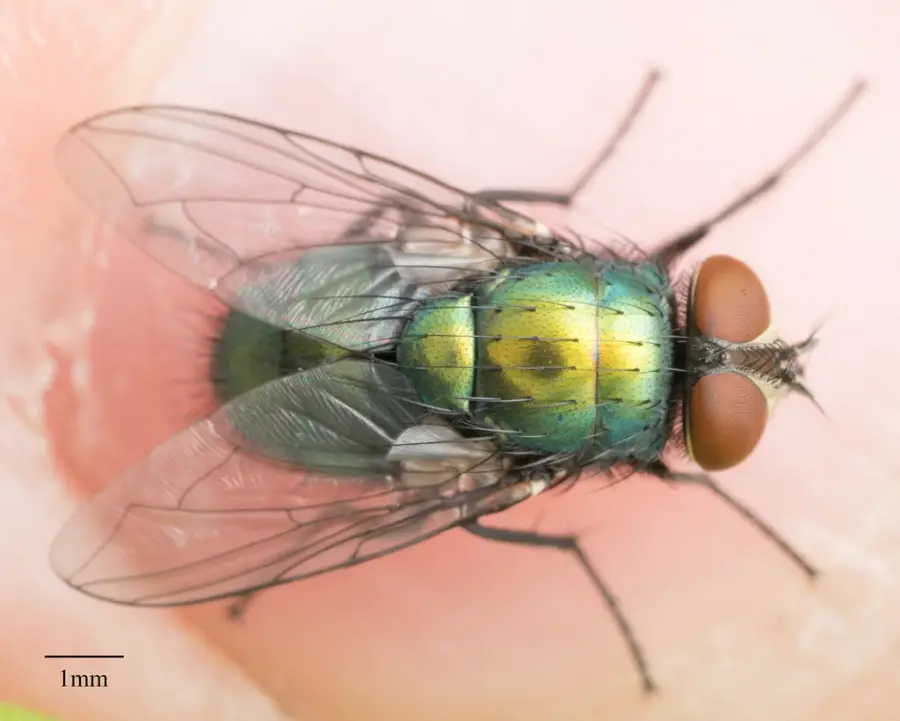
- Flies suddenly appear. A cluster of shiny green or blue flies at one window or on one wall is a big clue.
- You recently had mice. Maybe you heard scratching that went quiet, put out bait, or sealed up holes.
- Small stains or maggots. In rare cases, you may see a damp stain on drywall or ceiling, or maggots dropping from a vent or light fixture.
Flies are often the giveaway. The University of Minnesota Extension explains that when an animal dies in a wall void, chimney or ceiling, a sudden swarm of adult blow flies may appear several days later. Similarly, the UW-Madison Insect Lab says finding blow flies indoors often points to a dead mouse. A large number usually means it has been dead for a while. You can read more about these flies on our blow fly page.
Once you know the general area, you can narrow it down further without opening anything up.
How Long Does a Dead Mouse Smell Last?
A dead mouse smell lasts until the body dries out or insects finish it off. For a single mouse, that’s usually several days to a few weeks. Several things change that timeline:
- Temperature. Warm spaces speed up decay, which means a stronger smell for a shorter time. Cool spaces stretch it out.
- Humidity. Damp areas like basements and crawl spaces hold the smell longer.
- Airflow. A mouse near an air return or heat duct can spread the smell through the whole house.
- How many mice. If more than one mouse died, the smell can come back in waves.
In short, waiting it out works eventually. However, if the mouse is reachable, removing it is the fastest way to end the smell.
How to Get Rid of Dead Mouse Smell
Sprays and candles only cover the smell for a little while. The only real fix is finding the mouse, removing it, and cleaning the spot. Here’s the order I recommend:
Follow your nose and the flies. Check behind and under appliances, inside lower cabinets, in closets, around the furnace and water heater, and in the attic and crawl space. A flashlight and a small mirror help you see behind tight spaces.
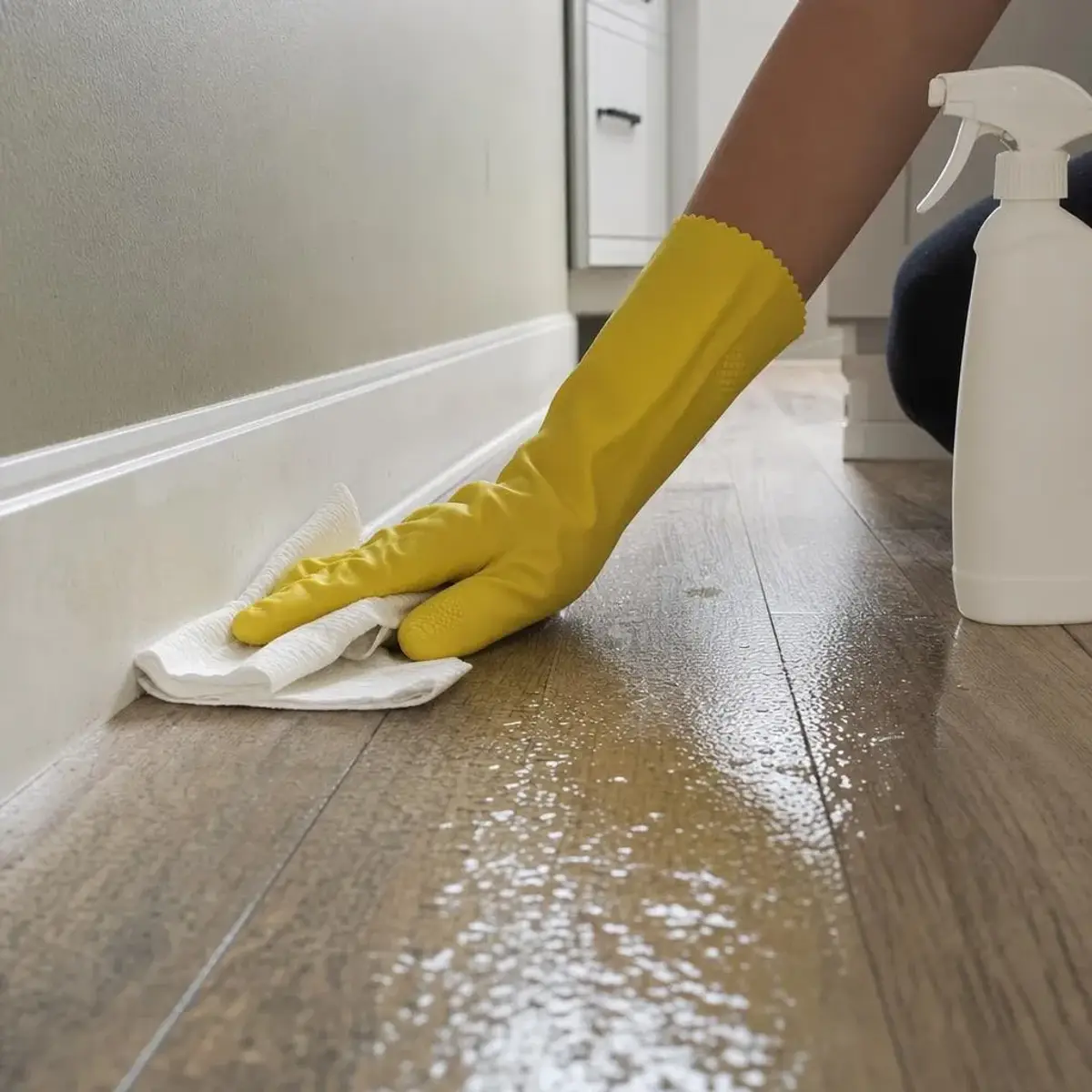
Wear rubber or plastic gloves before you touch anything. Open windows for at least 30 minutes to air the space out first. Dead mice, droppings and urine can carry germs, so don’t handle them with bare hands.
The CDC’s rodent cleanup guide says to spray the dead mouse and the area around it with a disinfectant or a fresh mix of 1 part bleach to 9 parts water. Let it soak for 5 minutes. Then put the mouse in a plastic bag, seal it, place that bag inside a second bag, and throw it in a covered outdoor trash can.
Disinfect the surface where the mouse was, plus any droppings or nesting material nearby. Don’t sweep or vacuum rodent droppings, because that can stir germs into the air. Wipe them up with paper towels instead. Finally, wash your gloved hands, take the gloves off, and wash your hands again with soap and warm water.
Run fans and keep windows open. Set out bowls of baking soda or activated charcoal near the spot to soak up what’s left. Wash any fabric, rugs or bedding that sat close to the mouse. If insulation was soaked, it may need to be replaced.
Once the mouse is out and the spot is clean, the smell usually starts to fade fast. The tricky part is when you can’t reach the mouse at all.
What If the Dead Mouse Is Inside a Wall?
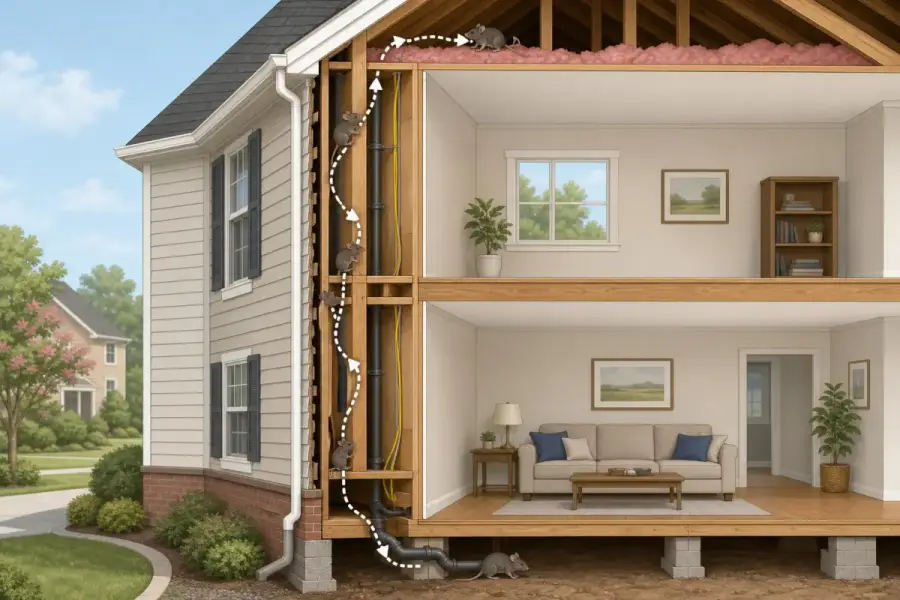
This is the hardest case. The University of Kentucky Extension points out that mice often die in wall voids and other spaces you can’t reach. When that happens, you have two choices. You can wait for the body to dry out, using fans and odor absorbers in the meantime. Or you can have a contractor or handyman cut a small hole in the drywall where the smell is strongest, remove the mouse, and patch it.
Before you cut, check easy access points first. Remove outlet covers, heat vent grilles and the access panel behind a tub. Mice often die closer to an opening than you’d think. If you need to deal with an old nest, read our guide on what happens if you disturb a mouse nest before you start.
In my experience, a dead mouse smell often shows up right after a homeowner starts fighting back. For mice, we use bait rather than snap traps and glue boards. Bait works, but a mouse can eat it and then die back in the wall where it lives.
Sealing up the house can cause the same thing. On one job, I spent a long time finding every entry point, including a chewed hole up in the soffit. Usually, when you seal a house that tight, you can seal a few mice inside. So I always tell people: a smell after treatment isn’t a sign the treatment failed. It’s often a sign it’s working. The goal is to get the activity to zero so the smell is a one-time event, not a repeat.
Why One Dead Mouse Usually Means More
Mice rarely live alone. Additionally, they don’t travel far from home. The University of Kentucky notes that mice usually stay within 10 to 25 feet of their nest. So if one died inside your wall, its nest mates are most likely close by.
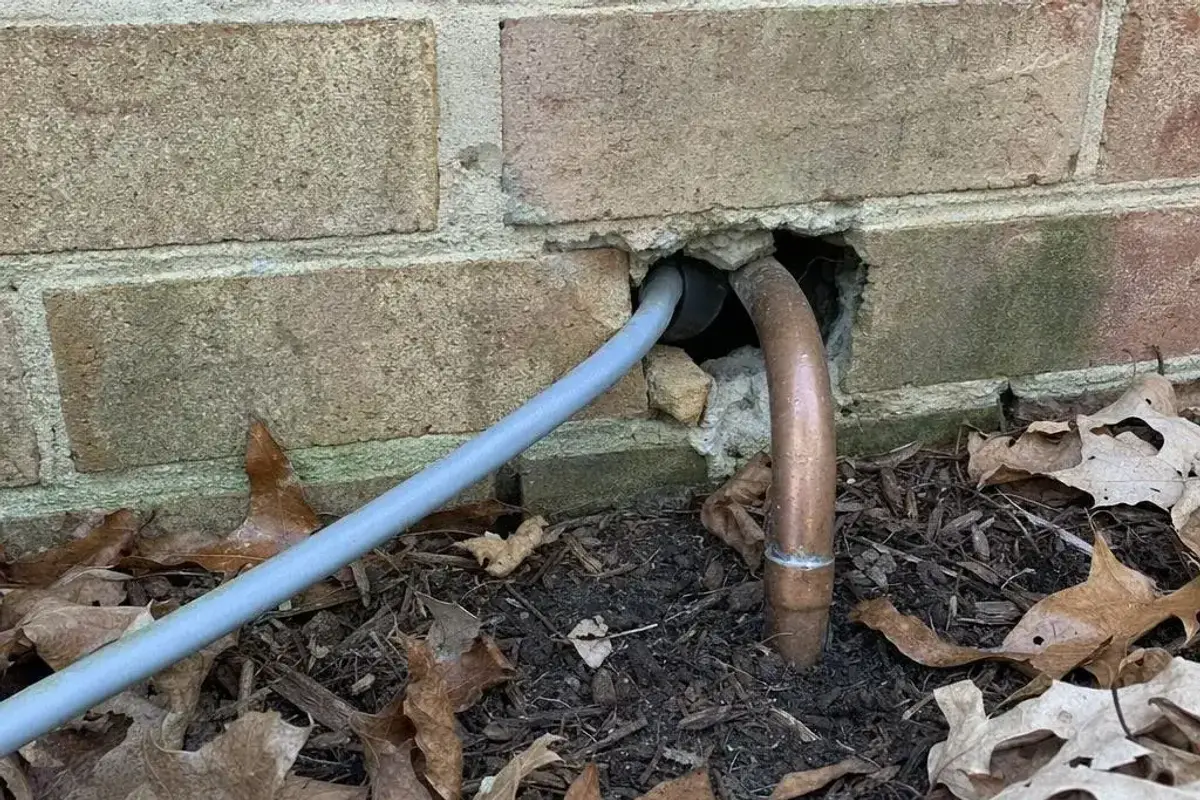
That’s why I don’t treat a dead mouse smell as just a cleaning job. It’s a sign of a mouse problem in the walls, even if you’ve never seen one in the kitchen. Look for droppings, gnaw marks, greasy rub marks along baseboards, and scratching at night. Also check for gaps around pipes, cables and garage doors. A mouse can squeeze through a hole about the size of a dime.
Living mice in the walls cause more trouble than the smell, too. They chew wiring, ruin insulation and leave droppings behind. Our article on whether mice in walls are dangerous covers those risks in detail. If you’ve been cleaning up droppings, you might also want to read about the chances of getting sick from mouse droppings.
In other words, the smell is the symptom. The mice, and the gaps they use, are the real problem.
When to Call a Professional
You can handle a single dead mouse you can reach. However, it’s time to call for help when:
- The smell keeps coming back every few weeks.
- You hear scratching or see fresh droppings after you removed the dead mouse.
- You can’t find any entry points but the mice keep showing up.
- You have asthma, allergies or young kids, and you’d rather not handle rodent waste.
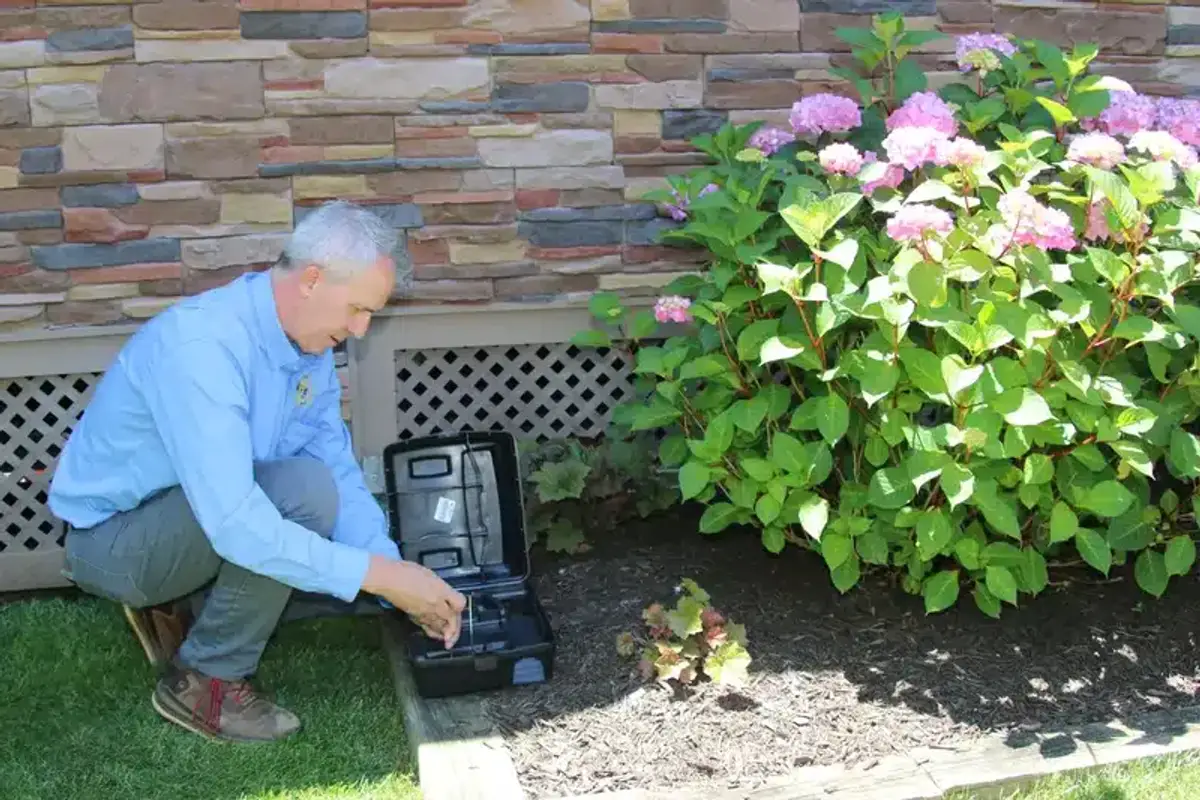
Our licensed technicians focus on stopping the mice, which is what ends the smell for good. We find the entry points, set up a plan built around baiting, and seal the gaps so new mice can’t move in. You can learn more on our mouse control and rodent control pages, or about sealing up the house through our exclusion services.
We serve homes across Northern Virginia, DC and Maryland, including rodent control in Lorton and rodent control in Laurel. Our family business has been in the industry for 58 years and has earned 1,800+ reviews from homeowners across the area.
Conclusion
A dead mouse smells like rotting meat and rotten cabbage with a sour, sulfur edge, and it usually sits in one spot. If it smells like rotten eggs, rule out a gas leak first. Then follow your nose and the flies, remove the mouse with gloves on, and disinfect the area. Most importantly, remember that one dead mouse usually means more live ones nearby.
If you’re dealing with a dead mouse smell, or you want to make sure there aren’t more mice in your walls, give us a call at 703-683-2000 or email info@bettertermite.com for an estimate. We’re happy to answer your questions.