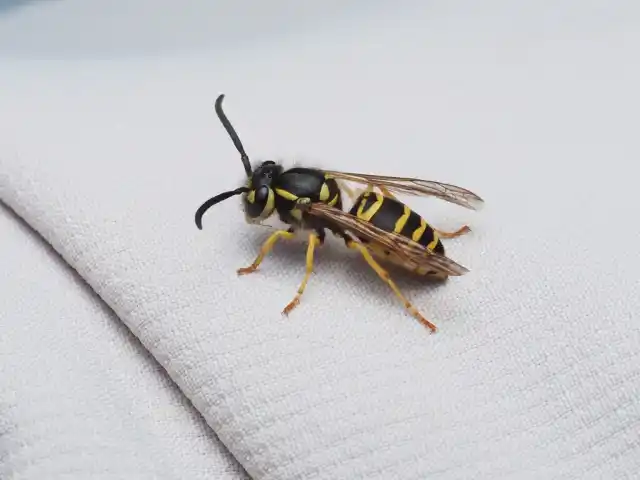

The stinging insects in Virginia you’re most likely to meet are yellowjackets, bald-faced hornets, European hornets, paper wasps, honey bees, bumble bees, and carpenter bees. Add fire ants in the southern part of the state, velvet ants in sandy yards, and a few stinging caterpillars, and you have the full list of ten below.
After five years as a licensed technician in Northern Virginia, I can tell you that only a few of these cause real trouble. Most stings happen near a yellowjacket or hornet nest. So each entry below covers what the insect looks like, where it lives, and how likely it is to sting you.
Quick Chart: Stinging Insects in Virginia by Sting Risk
Start here. Find the nest location, and you’ve usually narrowed it down.
| Insect | Where it nests or lives | Stings more than once? | Sting risk |
|---|---|---|---|
| Yellowjackets | Ground holes, wall voids, attics | Yes | High |
| Bald-faced hornets | Gray paper ball in trees or under eaves | Yes | High |
| European hornets | Hollow trees, sheds, wall voids | Yes | Moderate |
| Paper wasps | Open umbrella comb under eaves and railings | Yes | Moderate |
| Honey bees | Hives, tree cavities, sometimes walls | No, barbed stinger | Moderate near a hive |
| Bumble bees | Old rodent burrows, under decks, insulation | Yes | Low |
| Carpenter bees | Round holes in decks, fascia, trim | Yes (females only) | Very low |
| Fire ants | Soil mounds in lawns (southern VA) | Yes | High near mounds |
| Velvet ants | Bare, sandy soil | Yes (females only) | Low |
| Stinging caterpillars | Leaves of shade trees and shrubs | Spines, not a stinger | Low, but painful |
1. Yellowjackets
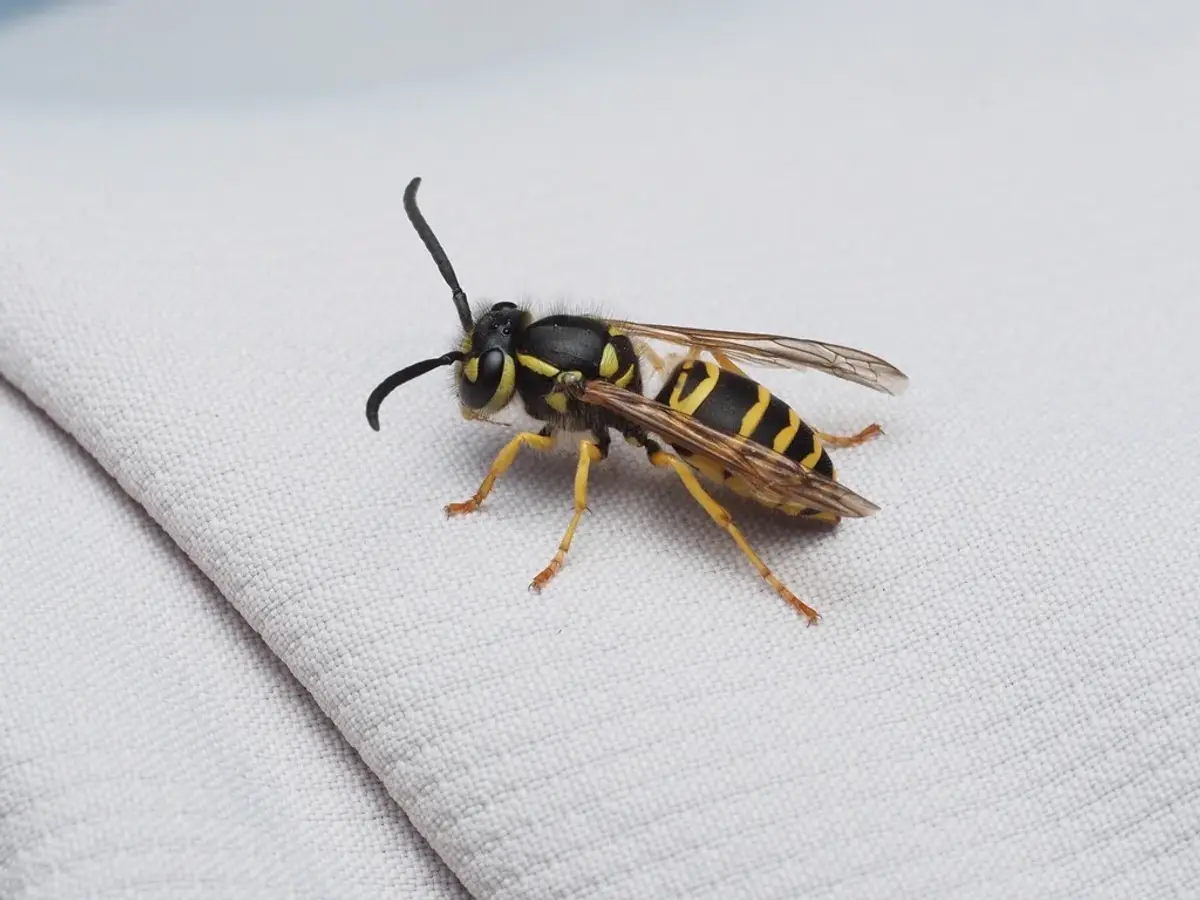
Yellowjackets are the stinging insect most Virginians get hit by. They’re short, stocky, and shiny, with sharp black and yellow bands. Most of the ones we find in Northern Virginia nest underground in old rodent burrows, mulch beds, and retaining walls. Some also move into wall voids and attics.
What makes them different is how they defend. According to Virginia Cooperative Extension, each female can sting several times, and attacking yellowjackets release an alarm pheromone that sends nestmates after you as a group. That’s why a lawn mower over a hidden nest turns into ten stings in a few seconds.
Colonies peak in late summer and early fall. If you want the full seasonal picture, see when yellowjackets come out.
Last fall I helped on a ground-level yellowjacket nest at an HOA property. Residents walked past it every day and were worried about getting stung.
We treated the underground nest at intervals instead of trying to finish it in one pass. Then we came back a few days later and dug up the dead nest. That way we could confirm nothing had moved back into the cavity.
2. Bald-Faced Hornets
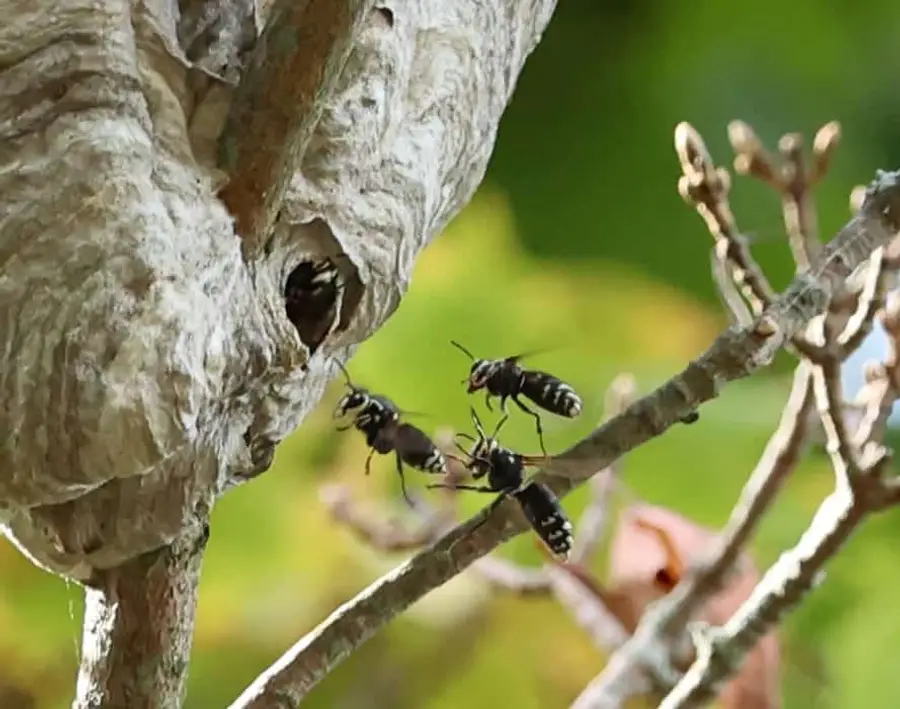
The bald-faced hornet is black with white markings on its face and abdomen. Technically, it’s an aerial yellowjacket, not a true hornet. Its nest is the giveaway: a gray, papery ball that hangs from a tree limb, shrub, or eave, often with one opening near the bottom.
Colonies are smaller than yellowjacket colonies. However, they defend the nest just as hard. Brush a branch with a nest on it, and they come out fast. For more on the two hornets here, see our guide to hornets in Virginia.
3. European Hornets
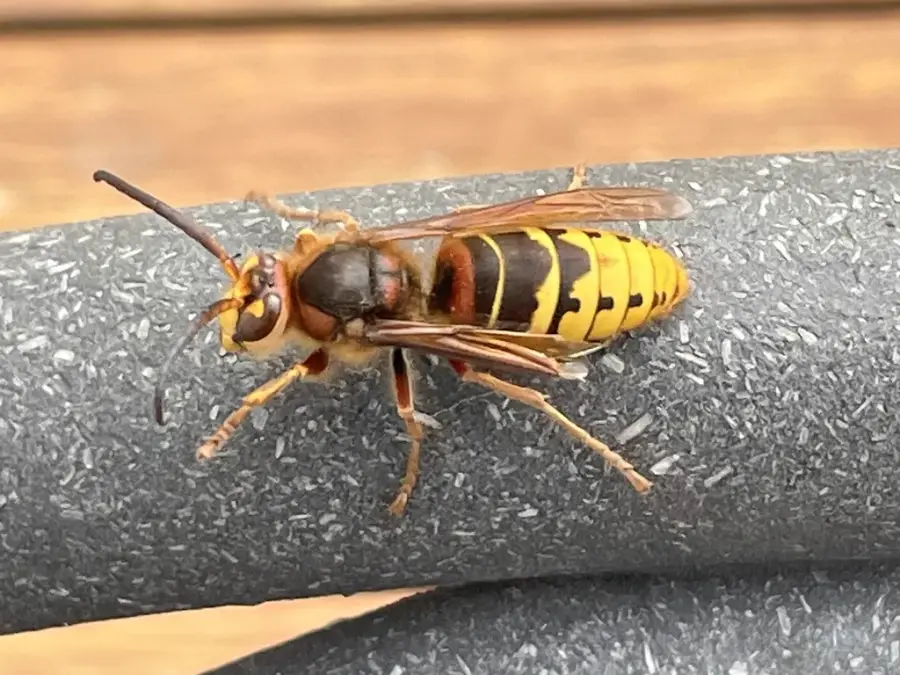
The European hornet is the only true hornet established in Virginia. It’s about an inch long, with a reddish-brown head and thorax and a yellow-and-brown abdomen. It nests in hollow trees, sheds, and wall voids.
European hornets fly at night and are drawn to lights. That’s why they bump against lit windows after dark. In my experience, they’re far less aggressive than bald-faced hornets or yellowjackets. You still don’t want to stand next to the nest, though.
4. Paper Wasps
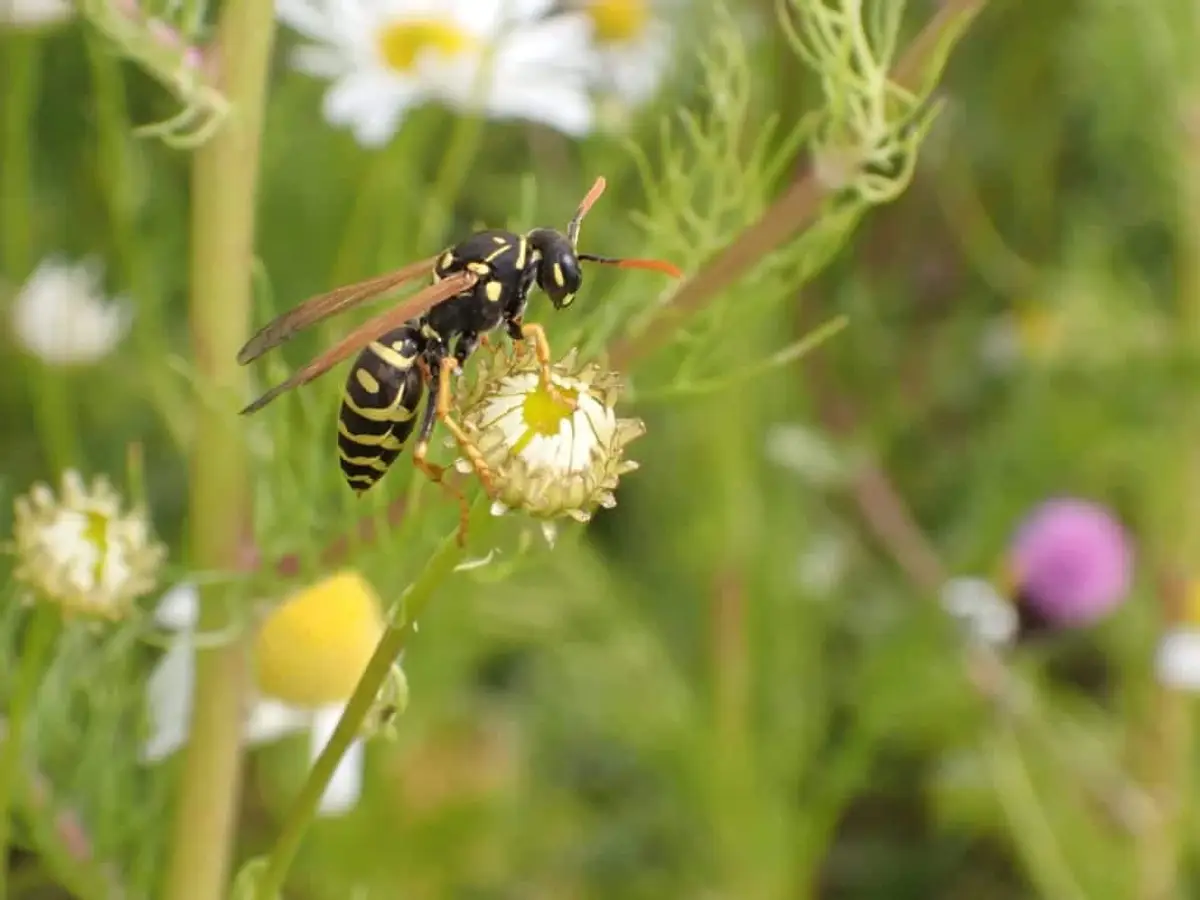
Paper wasps are the nest you’re most likely to find on your house. They build an open, umbrella-shaped comb with no outer cover under eaves, porch ceilings, railings, and grill lids. The wasps are slender, with long legs that dangle when they fly.
People often mistake paper wasps for yellowjackets. The difference matters. A paper wasp nest by the front door is something you can usually walk past, while a yellowjacket nest in the ground is not. Paper wasps will sting if you swat the nest or reach right next to it. Our yellowjacket vs paper wasp guide shows the differences side by side.
5. Honey Bees
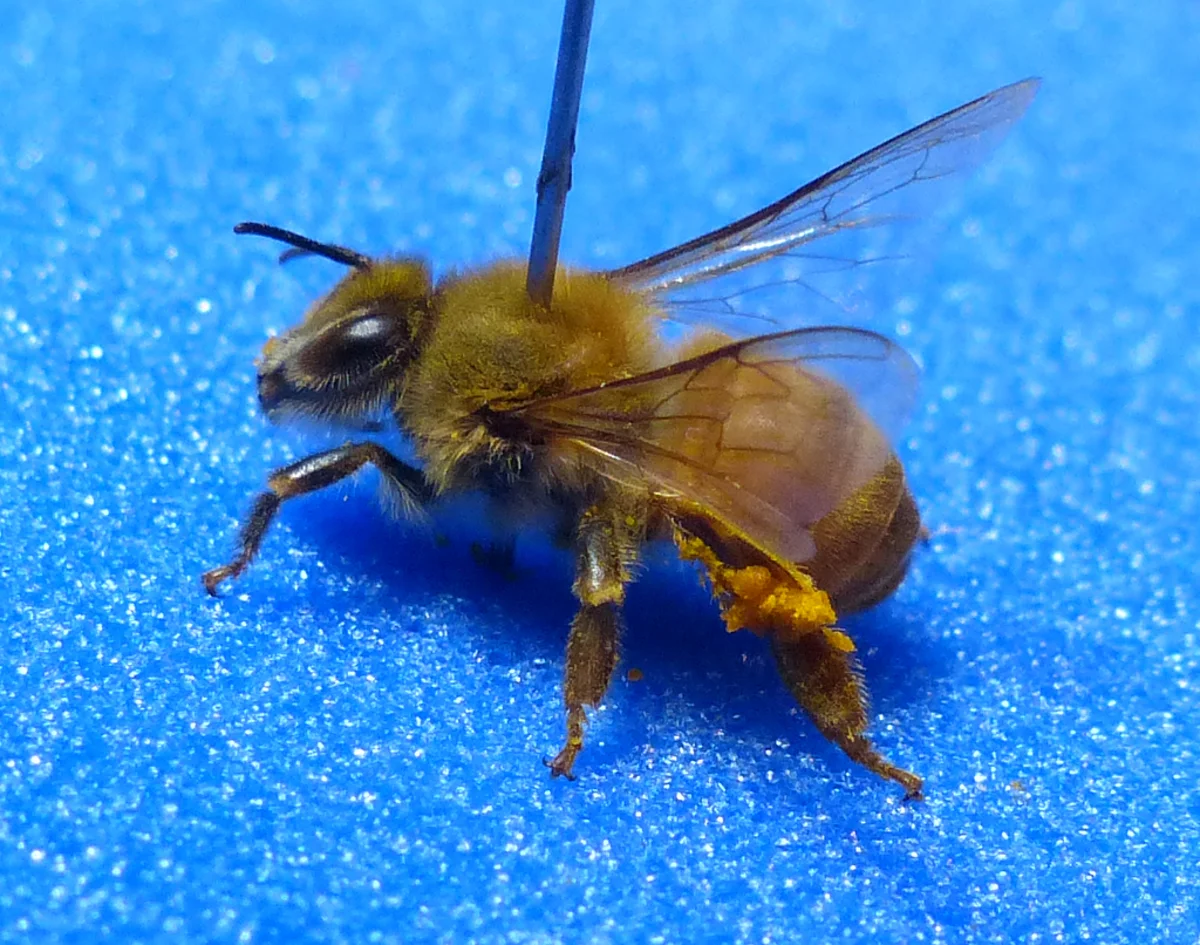
Honey bees are fuzzy, golden-brown bees that live in colonies of thousands. Away from the hive, they’re focused on flowers and seldom sting. Near a hive or a swarm, however, the risk goes up.
Honey bee workers can only sting once. According to UC Agriculture and Natural Resources, the worker’s barbed stinger stays in the skin, and she dies after pulling away. Because they’re protected pollinators, we don’t treat honey bees. We help you confirm the ID and refer you to a local beekeeper who can relocate the colony. See our bee removal page for how we handle the other bees around homes.
6. Bumble Bees
Bumble bees are large, round, and hairy, with yellow and black bands. They nest in old rodent burrows, under decks and sheds, and sometimes in insulation. Their colonies are small, usually a few hundred bees at most.
Bumble bees can sting more than once. That said, they’re gentle unless you disturb the nest directly. Most bumble bee stings we hear about come from stepping on one barefoot or pressing against one by accident.
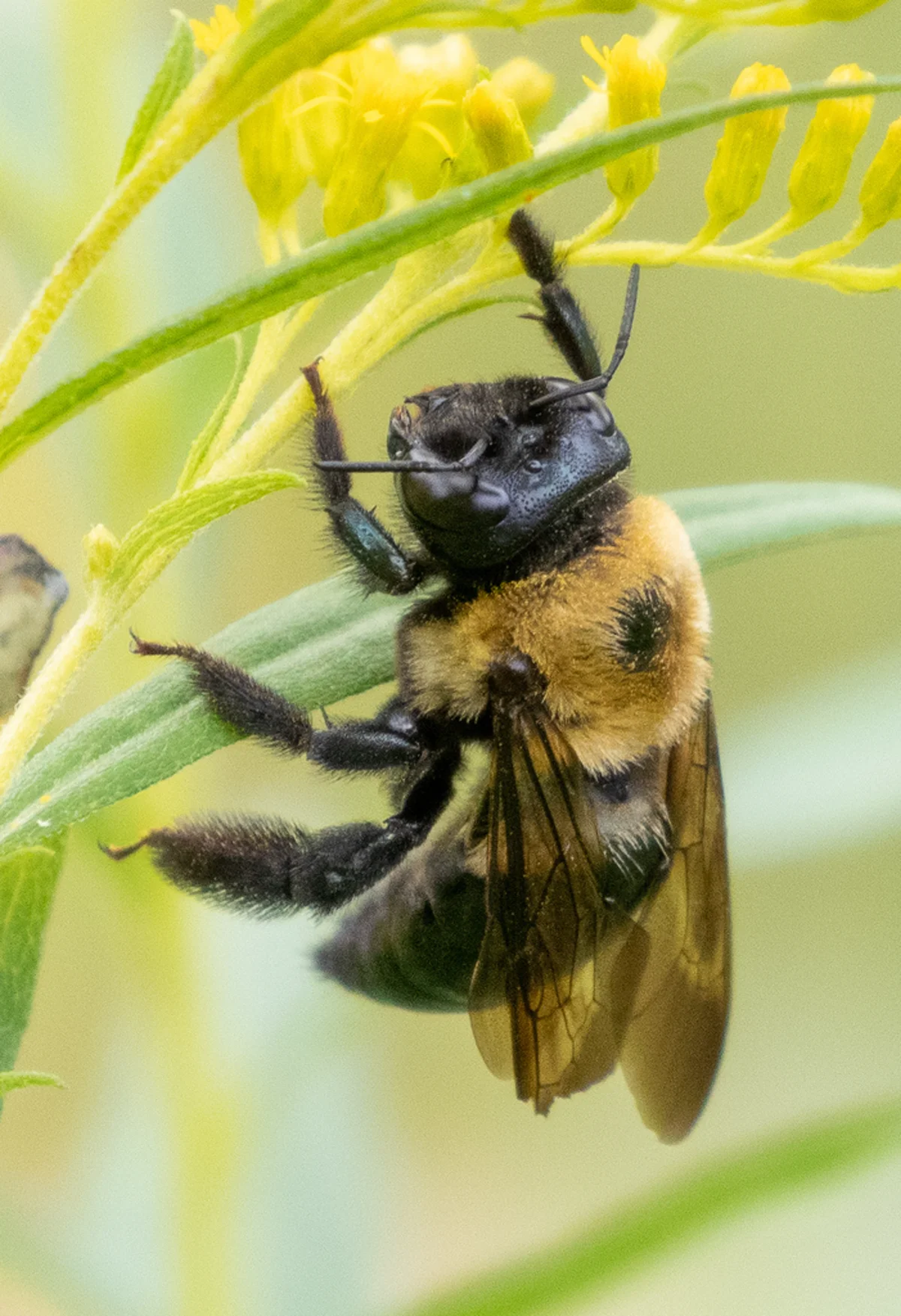
7. Carpenter Bees
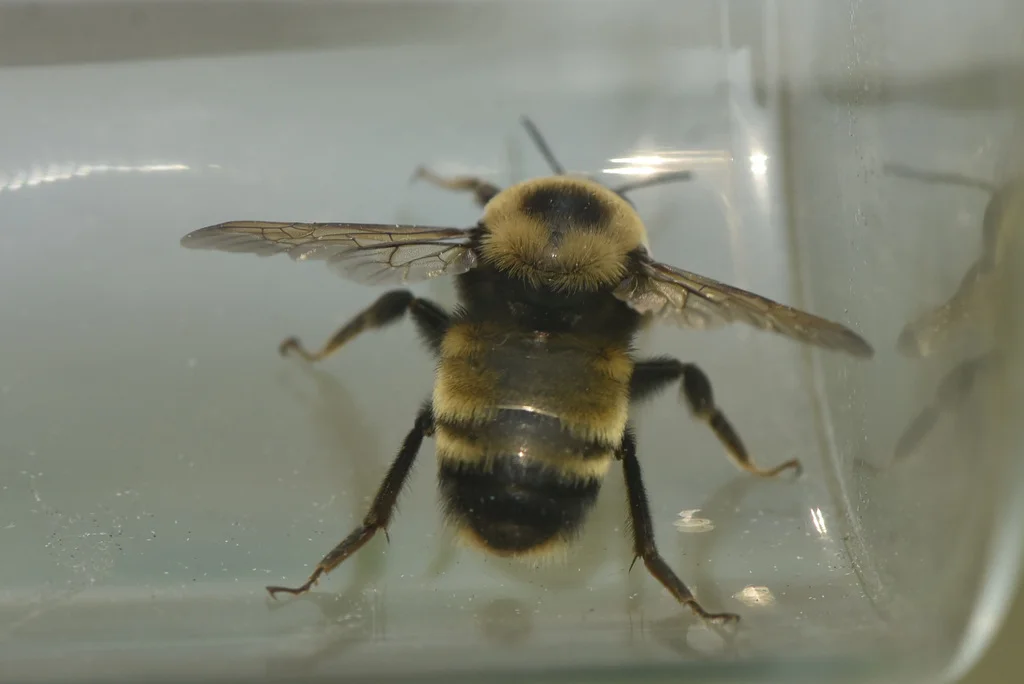
Carpenter bees look like bumble bees, but their abdomen is shiny and bald on top. They’re the ones drilling perfect round holes in deck rails, fascia boards, and trim every spring. The bees that hover in your face are usually males, and males can’t sting at all.
Females can sting but rarely do. The real issue is wood damage over time. Read do carpenter bees sting for more detail, or see our carpenter bee control service.

8. Fire Ants (Southern and Southeastern Virginia)
Fire ants are small, reddish-brown ants that build loose soil mounds in sunny lawns and fields. When the mound is disturbed, they swarm up your legs and sting repeatedly. Each sting can leave an itchy pustule.
Here’s the local piece most lists leave out. Imported fire ants are established in parts of southern and southeastern Virginia, and they aren’t established in Northern Virginia. In May 2025, the Virginia Department of Agriculture expanded its fire ant quarantine to Chesterfield, Prince George, Surry, and other southern localities, including Petersburg and Danville. So if you live in Fairfax or Loudoun, a red ant in your yard is much more likely to be a native species. Our guide to fire ants in Virginia lists every quarantined county and city.
9. Velvet Ants
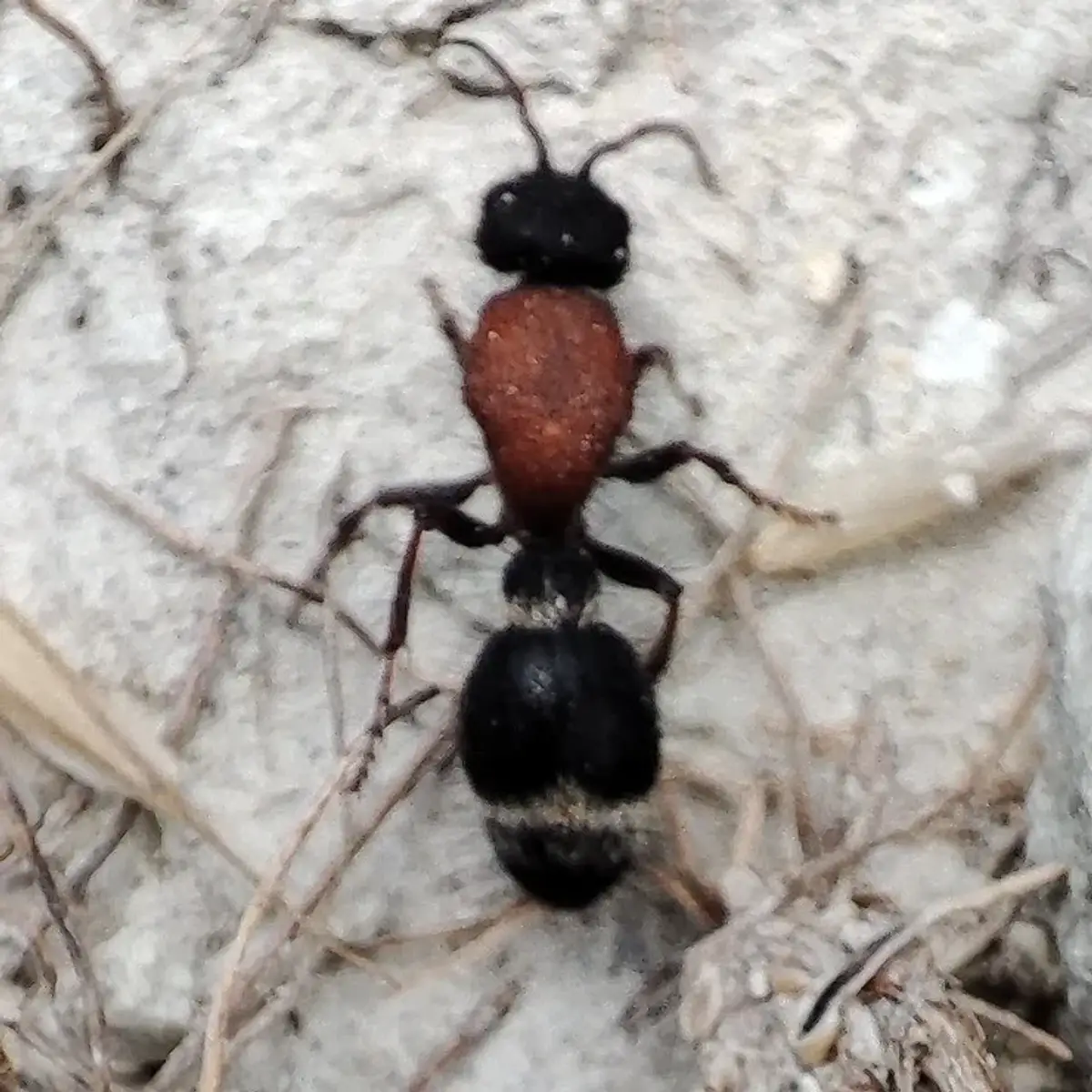
Despite the name, velvet ants are wasps. The females have no wings and are covered in bright red-orange and black hair. You’ll see them running across bare, sandy soil on hot summer days.
According to Clemson Extension, only the wingless females sting, and the winged males are harmless. The largest species earned the nickname “cow killer” because the sting hurts so much. They don’t live in colonies or defend a nest, so they pose little threat unless you pick one up or step on one barefoot.
10. Stinging Caterpillars
Some of the most surprising stings in Virginia come from caterpillars. The saddleback caterpillar has a bright green “saddle” with a brown spot in the middle. The puss caterpillar looks like a soft tuft of fur, but it hides venomous spines underneath.
Virginia Tech entomologists explain that these caterpillars have hollow spines connected to venom glands. The burning pain can last a day or two. You’ll usually run into them on shade trees and shrubs in late summer, often while gardening or pulling weeds.
When Stinging Insects Peak in Virginia
In our experience, wasp nests show up in two waves. First, queens start small nests in spring. Then colonies hit their largest size from late August into October. That late-season stretch is when stinging insects are the most aggressive, because workers hunt for sugar and defend big nests.
The first hard freeze kills off yellowjacket, hornet, and paper wasp colonies. Only new queens survive the winter, and they start fresh nests elsewhere the next spring. An empty gray nest you find in December is usually not coming back to life.
For most people, a sting means pain, redness, and swelling that fade in a day or two. For people with venom allergies, it’s more serious. According to the CDC, an average of 72 people died each year in the United States from hornet, wasp, and bee stings between 2011 and 2021, and 84% of them were male.
Most dangerous situations involve an allergy or many stings at once. That’s the main reason we don’t recommend poking at an active yellowjacket or hornet nest yourself.
How We Handle Stinging Insects
Identification comes first, every time. Our technicians treat paper wasps, yellowjackets, and mud daubers more than any other stinging insects, and each one calls for different equipment. An open paper wasp comb gets a direct treatment. A yellowjacket nest in a wall void gets a dust at the entry point, because treating it wrong can push wasps inside.
We also wear protective gear near active nests. On the other hand, some nests are already dead and can simply be knocked down with a broom. If you aren’t sure which kind you have, it’s worth a call before you get close. You can learn more on our stinging insect control page, or see the specific services for wasp control, hornet nest removal, and yellow jacket nest removal.
Better Termite has served homes across Northern Virginia, DC, and Maryland for 58 years, with 1800+ reviews. All of our products are EPA approved and have passed through our internal research team. Each one is something we’d feel comfortable using in our own homes. If a nest is recurring year after year, our home pest control plans cover wasp and hornet activity around the outside of your house.
Get Help With a Nest in Virginia
Most stinging insects in Virginia will leave you alone if you leave their nest alone. The ones to take seriously are yellowjackets and bald-faced hornets, especially in late summer. Fire ants matter if you live in southern Virginia, and velvet ants and stinging caterpillars are mostly a “watch where you step and reach” problem.
If you have a nest near a door, deck, or play area, give us a call at 703-683-2000 or email info@bettertermite.com. We’ll help you figure out what it is and give you an estimate.