

If you’ve noticed large, buzzing insects hovering around your deck or drilling holes into wood, you’re likely dealing with carpenter bees. These wood-boring insects are common in Virginia, Maryland, and DC. Many homeowners ask: do carpenter bees sting?
After four years as a registered technician with our family pest control business, I’ve handled many carpenter bee cases. The good news is that stings are very rare. But knowing how to manage these insects can protect your home from damage that builds year after year.
What Carpenter Bees Look Like
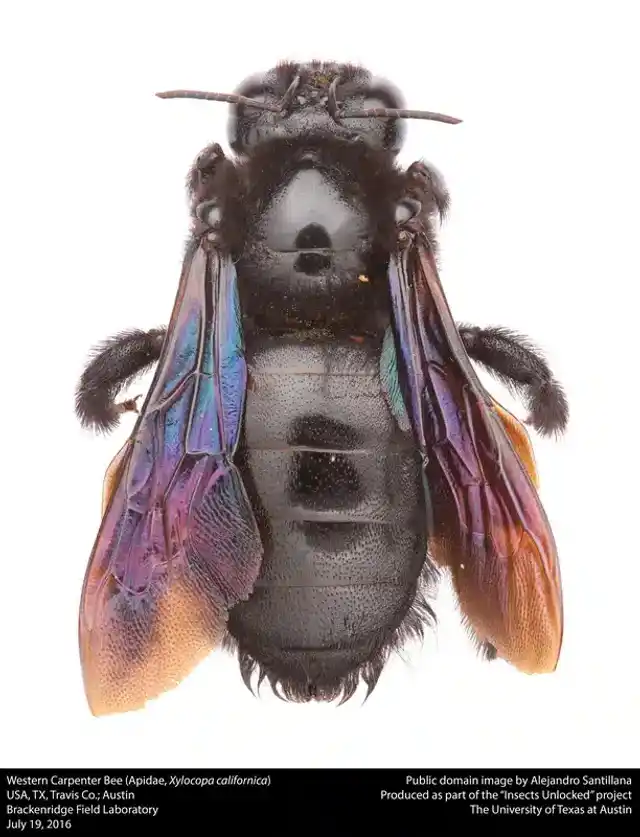
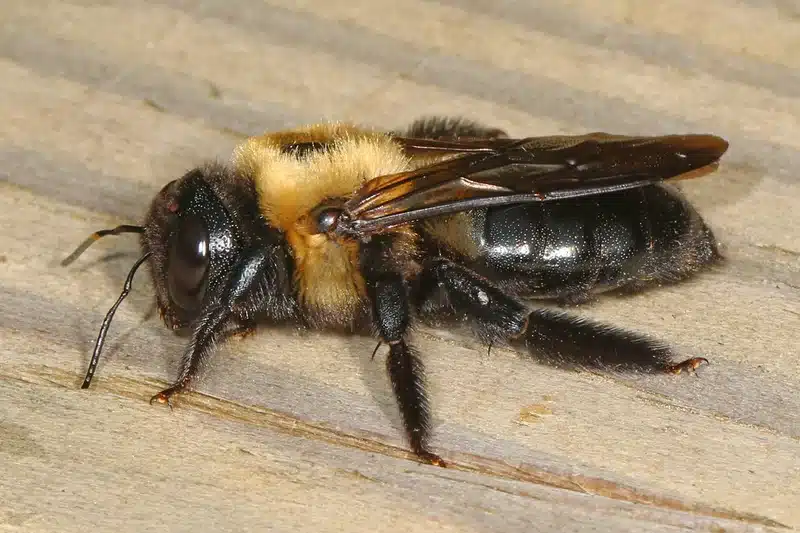
The Eastern carpenter bee is the main species in our area. They’re about 3/4 to 1 inch long with some clear traits that set them apart.
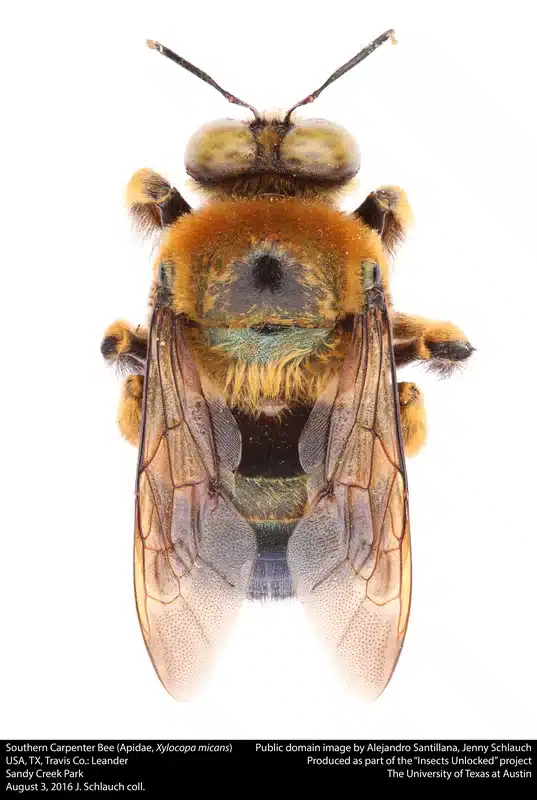
Males have a pale yellow or white patch on their face and cannot sting. Females have all-black faces and can sting, though they rarely do. Both have shiny black abdomens and yellow, fuzzy middle sections.
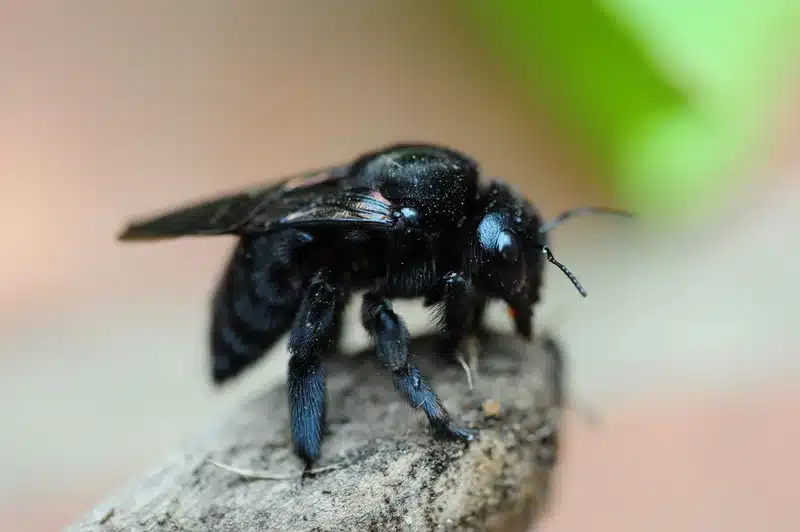
People often mix up carpenter bees with bumblebees. The easy way to tell: carpenter bees have smooth, shiny abdomens that look almost metallic. Bumblebees have fuzzy, hairy abdomens.
Unlike honey bees that live in big colonies, carpenter bees are mostly loners that make single nests in wood.


Knowing what you’re dealing with is the first step. If carpenter bees are already nesting in your wood, getting help early prevents damage from building up.
Where Carpenter Bees Nest
Carpenter bees thrive across the eastern US. According to University of Maryland Extension, they’re especially active in our Mid-Atlantic climate.
They prefer unpainted softwoods like pine, cedar, and redwood. Common targets include:
- Deck railings and posts
- Fascia boards and trim
- Fence posts
- Outdoor furniture
- Log home exteriors
In areas like Woodbridge, Virginia, with wood-lined lots, carpenter bee activity is heavy. Potomac’s high moisture and dense tree cover create ideal conditions too.
Carpenter Bee Life Cycle
Knowing their behavior helps explain why stings are so rare. These insects follow a set yearly cycle.
From April to May, females emerge and either bore new galleries or reuse old ones. They make perfectly round entrance holes about 1/2 inch wide, drill in about an inch, then turn 90 degrees to follow the grain.
In June and July, eggs hatch and larvae feed on stored pollen and nectar. New adults come out in August and September, feed briefly, then go back into the galleries for winter.
The University of Maryland Extension notes that females often work in small groups, with a lead female and several daughters sharing the same tunnel system.
Do Carpenter Bees Sting?
Here’s the simple answer: female carpenter bees can sting, but they almost never do. Males cannot sting at all, even though they look aggressive.
Males are the ones you’ll see most. They hover near nests and may fly right at you. But it’s all bluff. They have no stinger.
Females are less aggressive and stay focused on nesting. According to Animal Diversity Web research, stings happen in less than 1% of human encounters.
The few stings that do happen are usually from someone trapping or squeezing a bee by accident. Unlike bumble bees that die when they sting, carpenter bees have smooth stingers and can sting more than once.
Sting Symptoms and Treatment
When stings do happen, they’re usually mild. The smooth stinger causes moderate pain like a wasp sting, followed by swelling and redness.
Most people feel:
- Sharp pain right away at the sting site
- Swelling that peaks within a few hours
- Redness that may last 24 to 48 hours
Basic care: clean the area, apply ice, and take over-the-counter pain meds if needed.
Signs of Carpenter Bee Damage
While stings are rare, wood damage is the real concern. Unlike termites that eat wood, carpenter bees just dig tunnels for nesting.
Signs to watch for:
- Perfectly round holes about 1/2 inch wide
- Small sawdust piles (frass) below holes
- Yellow stains on wood from bee waste
- Hovering male bees in spring
At first, the damage looks cosmetic. But it gets worse when multiple generations reuse and extend the same galleries. Some tunnels reach 3 feet or more over several years.
Woodpeckers often make things worse. They chisel into galleries to reach the larvae, creating bigger gashes than the bees themselves.
How to Check for Carpenter Bees
The best time to look is on sunny days from April through June, especially between 10 a.m. and 3 p.m. That’s when males are most active and females are boring new holes.
Look for fresh sawdust below suspected nesting spots. You can push a thin flexible wire into galleries to check how deep they go.
Pay close attention to:
- Unpainted or worn wood surfaces
- Areas where end-grain is exposed
- Old holes from past years
- Rows of woodpecker holes (they follow carpenter bee tunnels)
Prevention
The best approach starts with making your wood less appealing.
Professional Treatment
When prevention isn’t enough, targeted treatments can control carpenter bees. Timing and technique are key.
Dust treatments with borate, pyrethrin, or synthetic pyrethroids work best when applied into gallery openings. We do these at night or pre-dawn when bees are inside.
The process:
- Puff dust 3 to 4 inches into each gallery entrance
- Leave holes open for 48 to 72 hours so returning bees contact the treatment
- Seal holes with wooden dowels and exterior putty
- Apply finish coats to match the surrounding surface
For hard-to-reach spots, aerosol sprays with angled nozzles can work, though they don’t last as long as dusts.
Our Approach to Carpenter Bee Control
Good carpenter bee control combines several methods rather than chemicals alone. This mirrors how we handle other wood pests like carpenter ants and termites.
Our steps:
- Confirm the pest is actually a carpenter bee
- Assess whether damage is cosmetic or structural
- Apply targeted dust treatments to active galleries
- Seal and finish treated areas to prevent reuse
- Schedule yearly spring checks for early detection
We focus treatments on nesting areas rather than broad exterior sprays. Our registered technicians use EPA-approved products vetted by our internal research team.
Cost and When to Call a Pro
Several things affect treatment cost: number of active galleries, how easy they are to reach, and which methods are used. Pest control costs vary by property size and how bad the problem is.
Professional dust treatments usually give better long-term value than DIY sprays from the store. Fixing the problem early also prevents the bigger damage from woodpeckers that comes when infestations go untreated.
We offer a no-contract approach. You’re not locked in, and you can cancel anytime with 30 days notice.
Protecting Your Home
Do carpenter bees sting? Rarely. Only females can sting, and males are all bluff. The real concern is the wood damage that builds year after year when these insects set up nesting in your home.
Professional inspection and treatment, combined with good exclusion work, give the most reliable protection. Early action prevents small cosmetic damage from becoming a structural problem.
Call us at 703-683-2000 or email info@bettertermite.com for expert carpenter bee assessment and treatment.