Velvet Ants Identification Guide
Mutillidae
Velvet ants are not ants at all. They are solitary wasps with dense, brightly colored hair, wingless females that run along the ground, and a sting ranked among the most painful of any insect.
Taxonomy
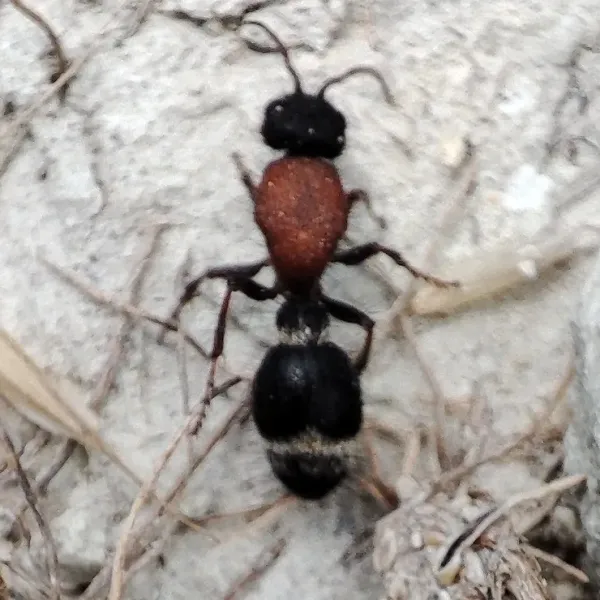
Velvet Ants Coloration
Common color patterns to help identify velvet ants
Velvet Ants
Seasonal Activity
When velvet ants are most active throughout the year
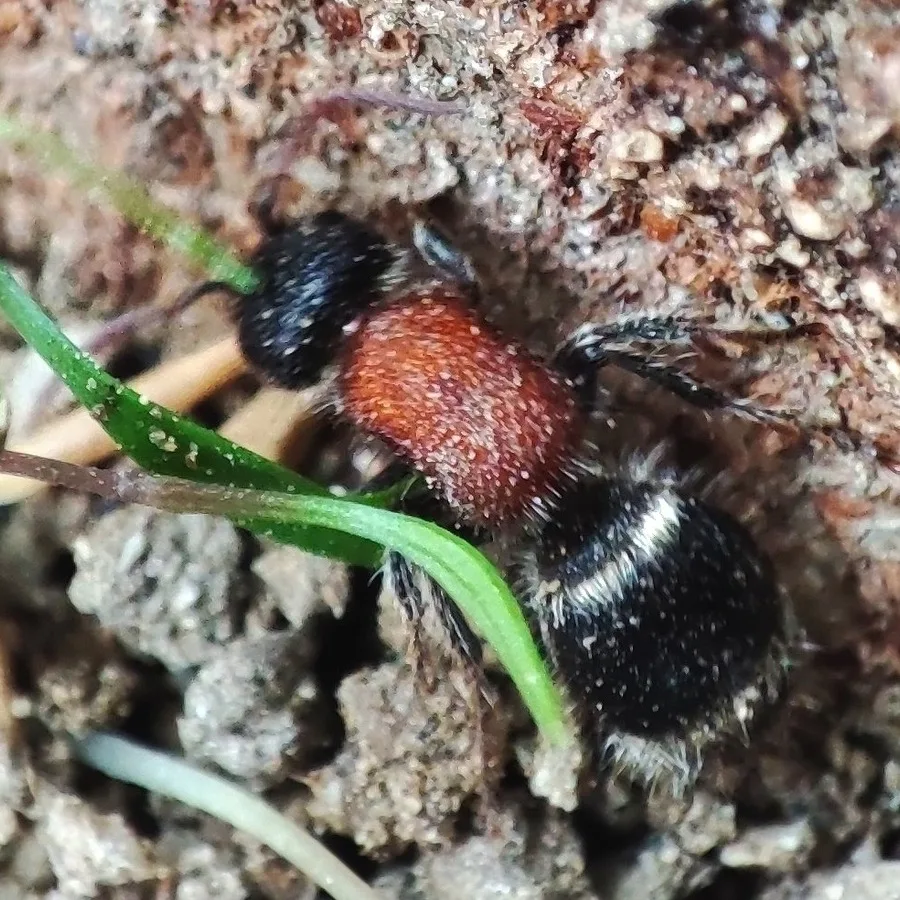
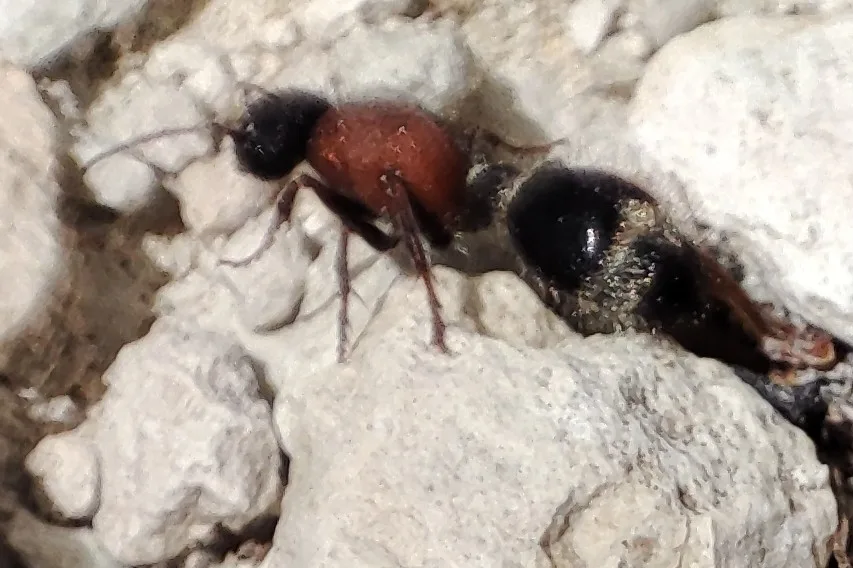

Where Velvet Ants Are Found
Hover over states to see their names. Green regions indicate where velvet ants have been reported.
Velvet Ant Identification Guide
Physical Characteristics
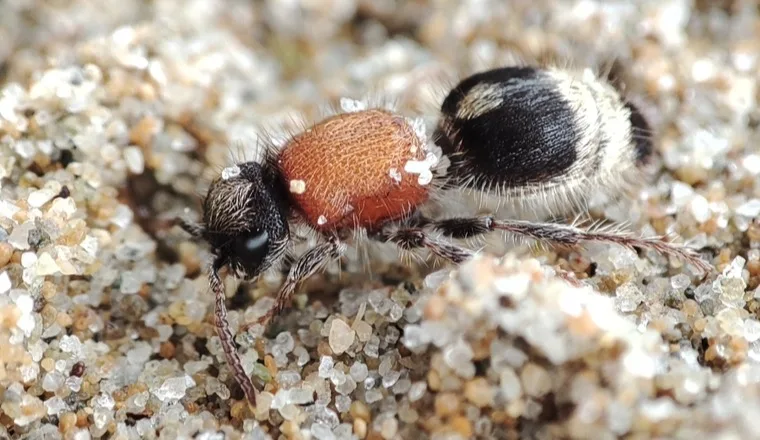
Velvet ants are some of the boldest insects in a North American yard. Almost everyone gets the name wrong. They look like fuzzy ants, but they are wasps. The females you see on the ground have no wings at all.
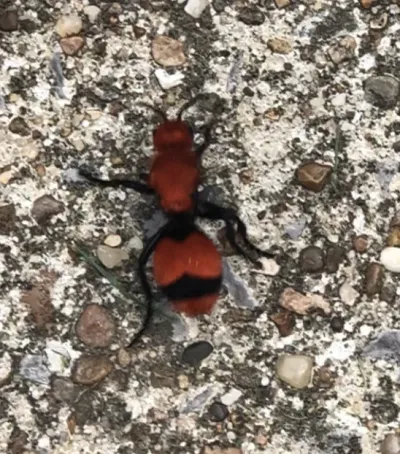
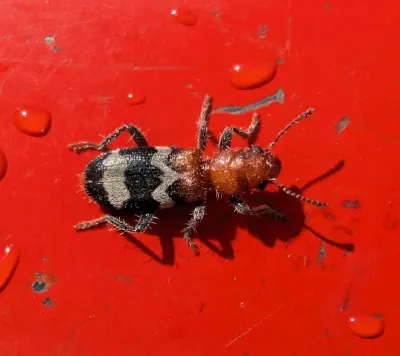
The whole body is coated in dense, plush hair. That hair carries bold warning colors. Most species are bright red or orange against black. Some are gold, and desert species can be white or cream. Adults run from about 0.25 to 1 inch long (6 to 25 mm), depending on the species.
Two features separate a velvet ant from a true ant:
- Antennae: velvet ants have straight, beadlike antennae. Ants have elbowed antennae with one long first segment.
- Waist: ants have one or two clear nodes between the thorax and abdomen. Velvet ants have a smooth, wasp-style body outline under all that hair.
Males and females look so different that they were once named as separate species. Males have two pairs of clear wings and can fly. Males cannot sting. Females have no wings, but they have a hard shell, run fast, and carry a long stinger. Almost every velvet ant people see is a female. They are the ones crossing driveways, mulch, and bare soil in daylight.
Common Species
- Eastern velvet ant (Dasymutilla occidentalis): the big red-and-black species of the eastern states, better known as the cow killer. At roughly 0.75 inch, it is the largest velvet ant in the East.
- Thistledown velvet ant (Dasymutilla gloriosa): a southwestern species covered in long white hair. It looks like a windblown seed.
- Sackeni velvet ant (Dasymutilla sackenii): a pale gold to cream species, common in California and the Great Basin.
- Timulla and Sphaeropthalma species: smaller velvet ants found nationwide. Many are under half an inch, and several are active at night.
Velvet Ant Behavior and Biology
Habitat
Velvet ants like open, sunny, dry ground. Look for them in sandy lots, pastures, dunes, dry slopes, forest edges, and the bare patches of a lawn. Numbers are highest in the dry Southwest. Even so, some species live from southern Canada down through Mexico. In the Mid-Atlantic, people usually spot one crossing a driveway or walking over mulch on a hot afternoon.
Diet
Adults drink flower nectar. Males are the ones you are likely to see on blooms, since females spend their time on the ground. The larvae eat something very different, as described below.
Life Cycle
Velvet ants are parasites of other ground-nesting bees and wasps. A female hunts through the soil for a host nest. It may be the burrow of a ground-nesting bee, a bumble bee nest, or the tunnel of a solitary wasp such as a digger wasp. She digs into a sealed cell and lays one egg on the young host inside. Her own larva hatches and eats the host. It grows up in that same cell and comes out as an adult the next summer.
That life cycle answers two common questions. First, velvet ants never build nests of their own, so there is no nest to find on your property. Second, a velvet ant in the yard means ground-nesting bees are active nearby.
Defenses
Few insects are as well defended:
- Warning colors. The red, orange, or white hair tells predators to stay back.
- A hard shell. Females are built to survive inside a bee nest that fights back. Their outer shell is very hard to crush.
- Squeaking. They rub body segments together to make a sharp squeak when bothered. The sound is called stridulation.
- A long sting. The female’s stinger is unusually long and can be aimed in almost any direction. Only females sting.
Treatment Methods for Velvet Ants
Velvet ants are solitary insects. They do not nest in or around structures, so there is no infestation to clear out and no colony to treat. These are the steps that cut down on encounters.
-
Check the ID first. Make sure it is a velvet ant and not a stinging ant. One fast, fuzzy, wingless insect crossing open ground in summer is almost always a velvet ant. If you keep seeing them, ground-nesting bees are likely using a sunny patch of soil close by.
-
Change the habitat. Thicker grass and less bare, sandy soil in play areas make the ground less useful to the host bees that velvet ants follow. This step lasts the longest.
-
Remove them one at a time. Sweep a velvet ant on the patio into a container with a long-handled tool and carry it off. Never pick one up. Extension programs advise dealing with them one by one. A broad yard spray will not reach the young, which grow up out of sight inside host nests.
-
Sting prevention. Wear shoes in sandy or mulched areas in summer. Check before you set down a bare hand or foot. If someone is stung, treat it like a wasp sting: wash the area, apply a cold pack, and use an antihistamine for local swelling. Get emergency care for trouble breathing, swelling away from the sting site, or any other whole-body reaction.
This information is for general educational purposes only and is not medical advice. Always consult a healthcare provider for medical concerns related to insect stings or allergic reactions.
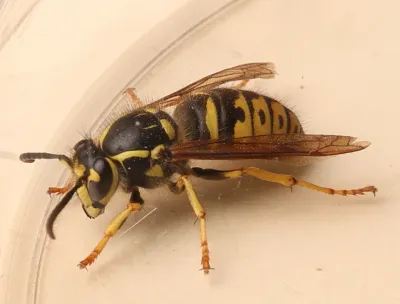
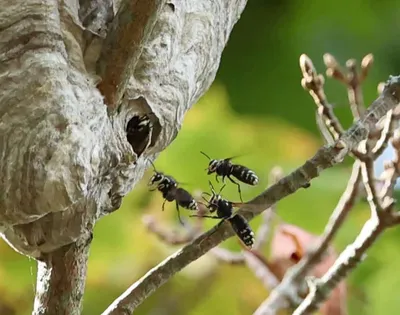
Are you seeing stinging insects around the house and are not sure what they are? Our wasp and stinging insect control covers the social wasps that do build nests on homes. Those include yellowjackets, paper wasps, and bald-faced hornets. Naming the insect is always the first step. The plan for a nest under a soffit looks nothing like the plan for one insect passing through the lawn.
References
Other Wasps
Explore other species in the wasps family
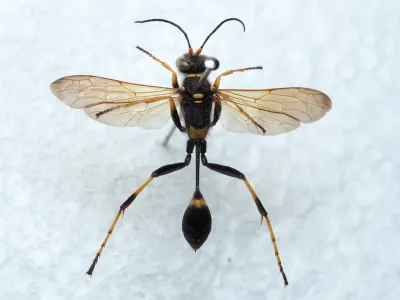
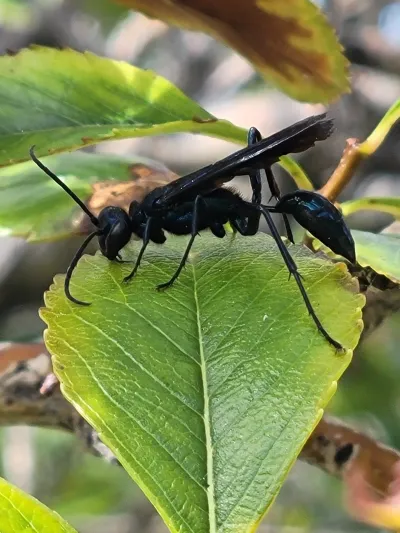
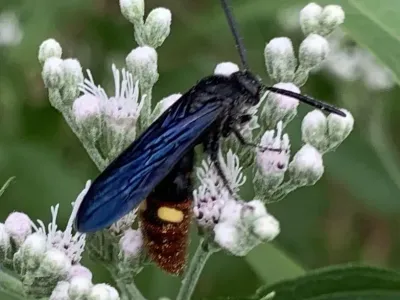
Commonly Confused With
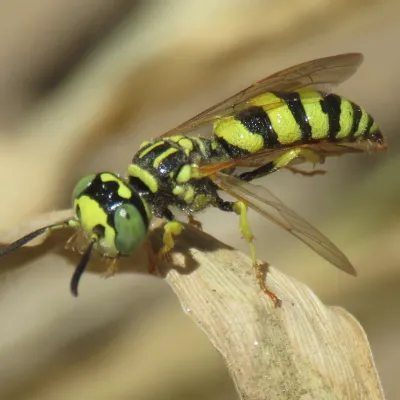
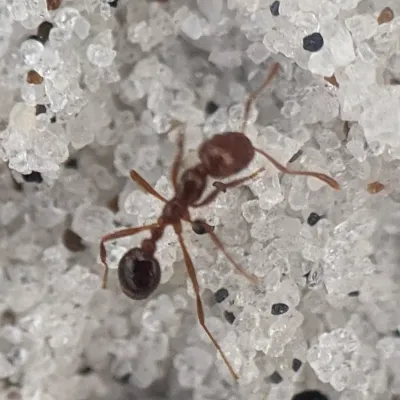
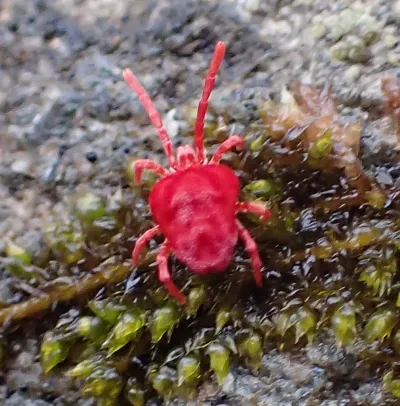
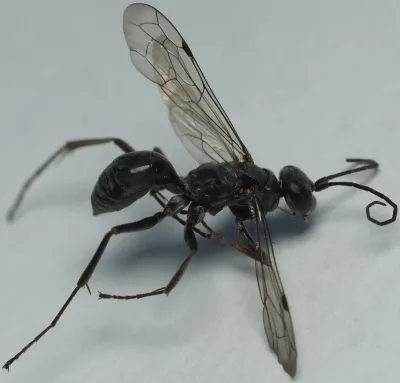
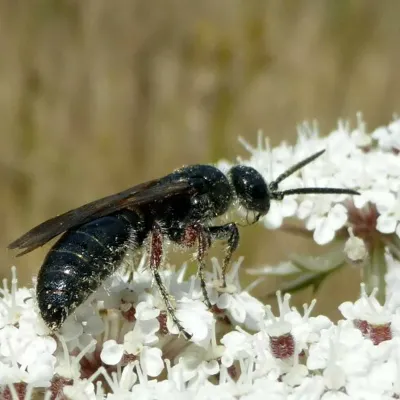
Velvet Ants are often mistaken for these similar pests
Where Velvet Ants Are Found
Hover over states to see their names. Green regions indicate where velvet ants have been reported.
Common Questions about Velvet Ants
Are velvet ants actually ants?
+
No. Velvet ants are wasps in the family Mutillidae. The wingless females run along the ground and look like large fuzzy ants, which is where the name comes from. The quickest check is the antennae: ants have elbowed antennae with a long first segment, while velvet ants have straight, beadlike antennae like other wasps.
How painful is a velvet ant sting?
+
Only females sting, and the sting is intense. The eastern species known as the cow killer rates a 3 out of 4 on the Schmidt Sting Pain Index, with burning pain that usually fades within about 30 minutes. The sting is rarely medically serious for healthy adults, but anyone with a known stinging insect allergy should seek medical care right away.
Are velvet ants aggressive?
+
No. Females sting only in defense, when they are picked up, trapped against skin, or stepped on barefoot. They spend their time running across open ground and will move on quickly once disturbed.
Do velvet ants damage houses?
+
No. Velvet ants do not chew wood, infest stored food, or build nests in structures. They are solitary insects with no colony, so there is nothing to damage your home. The only real concern is the sting risk in places where people walk barefoot.
Why do I see velvet ants in my lawn?
+
Female velvet ants search for the underground nests of solitary ground-nesting bees and wasps, which they parasitize. Lawns with bare, sandy, or well-drained patches attract those host insects, and the velvet ants follow. Seeing one usually means ground-nesting bees are somewhere nearby.
Do velvet ants make noise?
+
Yes. When handled or threatened, many velvet ants rub body segments together to produce a high-pitched squeak called stridulation. It is a warning signal and is often the first thing people notice when they trap one under a cup.
How many kinds of velvet ants live in North America?
+
More than 400 species occur north of Mexico, in a wide range of colors including red and black, orange, gold, and white or cream. Diversity is highest in the dry southwestern states, but at least a few species live in nearly every state.
Should I spray my yard for velvet ants?
+
Broad yard sprays are not an effective answer. Velvet ants do not nest on your property, and their larvae develop out of reach inside host bee nests, so a surface application never reaches the next generation. Thickening thin turf and wearing shoes in sandy play areas prevents more stings than a spray will.

With five years of hands-on experience in the pest control industry, George Schulz is a registered technician with the Virginia Pest Management Association and a proud third-generation professional in a family business that's been protecting homes for over 58 years. He manages and trains a team of service pros while also leading internal research efforts—recently spearheading a deep-dive review of thousands of documents on pest control materials to hand-pick the most kid and pet friendly, most effective solutions tailored specifically for homes in the DC metro area.
Local Wasps Help
Dealing with wasps at home? Our licensed technicians provide pest control across Northern Virginia and Maryland.
