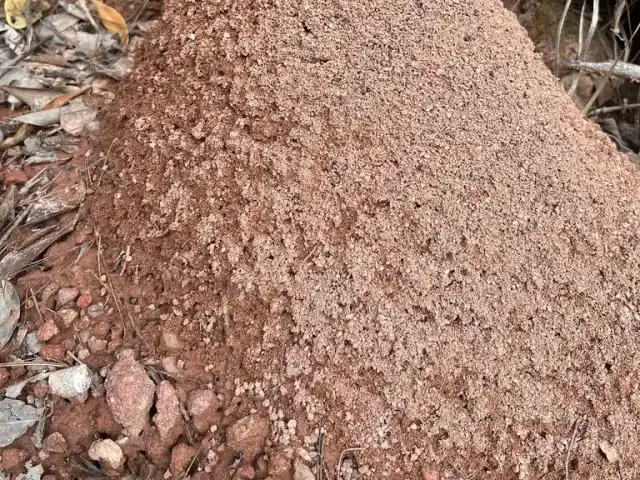

Yes, there are fire ants in Virginia. Imported fire ants are established in 18 counties and 15 independent cities, mostly in Hampton Roads, Southside, and along the North Carolina line. However, they are not established in Northern Virginia. The closest quarantined county to the DC suburbs is Chesterfield, just south of Richmond. If you find a mound outside the quarantine, report it to VDACS at 804-786-3515. Inside it, you treat mounds yourself or hire a licensed company.
I’m George Schulz, a licensed technician at Better Termite in Northern Virginia. When someone up here gets stung by a “red ant” in the yard, the first question is usually whether it’s a fire ant. Below you’ll find the full quarantine list, how far north fire ants have spread, and what to do if you think you’ve found a mound.
Where Fire Ants Are in Virginia: The Quarantine List
The easiest way to see where fire ants live in Virginia is the state quarantine. The Virginia Department of Agriculture and Consumer Services (VDACS) adds a county or city once its surveys show fire ants have become established there. Here is the current list, from the VDACS quarantine map, effective May 27, 2025.
| Region | Quarantined counties | Quarantined cities |
|---|---|---|
| Hampton Roads and Peninsula | Isle of Wight, James City, York | Chesapeake, Hampton, Newport News, Norfolk, Poquoson, Portsmouth, Suffolk, Virginia Beach, Williamsburg |
| Southside and Tri-Cities | Brunswick, Chesterfield, Dinwiddie, Greensville, Nottoway, Prince George, Southampton, Surry, Sussex | Colonial Heights, Emporia, Franklin, Hopewell, Petersburg |
| Southern Piedmont | Charlotte, Halifax, Lunenburg, Mecklenburg, Pittsylvania | Danville |
| Far Southwest | Lee | None |
A few things stand out. First, nearly all of these areas are in Hampton Roads, the Tri-Cities, or the counties along the North Carolina border. Second, Lee County is the odd one out. It sits at the far western tip of the state, and it’s where Virginia’s hybrid fire ants were found. Finally, notice what’s missing: Richmond, Fredericksburg, and all of Northern Virginia.
How Fire Ants Got Here and How Far North They’ve Spread
Fire ants are not native to Virginia. According to VDACS, the first infestation in the state was detected in 1989. The agency says the ants most likely came in on nursery stock or other plant products from infested states, or simply walked in from nearby infested areas.
That first find was in Hampton Roads. Since then, the ants have moved west and north. The state quarantine began in 2009, and it has grown several times since then. The biggest recent jump came in 2025.
The 2025 Quarantine Expansion
In May 2025, the Virginia Department of Agriculture added Chesterfield, Lee, Nottoway, Pittsylvania, Prince George, and Surry counties. It also added the cities of Colonial Heights, Danville, Hopewell, and Petersburg. That pushed the quarantine line right up to the southern edge of the Richmond metro.
Are Fire Ants in Richmond?
Close, but not officially. A 2021 Virginia Tech study found fire ants had spread north into Chesterfield, Dinwiddie, Surry, and several Southside counties. The same study noted isolated finds as far north as the City of Richmond. However, those Richmond sites were not reconfirmed in 2020, and they appear to have been isolated.
Are Fire Ants in Northern Virginia?
No established populations are known here. The Virginia Tech fire ant map places red imported fire ants mainly in the southeast and along the southern border of the state. None of the sources I checked report established colonies in Fairfax, Loudoun, Prince William, Arlington, Alexandria, or Stafford.
That said, the line keeps moving. A mound can also hitch a ride on nursery stock, sod, or a load of fill dirt. So if you see the signs below in Northern Virginia, it’s worth a closer look and a report.
After five years in the field, the most common ants I see across the DMV are odorous house ants and carpenter ants. Misidentification is one of the biggest things we deal with in this job. Customers mix up paper wasps and yellowjackets, and flying ants and termite swarmers, all the time. Ants are no different.
That’s why I always identify the ant first. Fire ants build mounds out in sunny, open ground, so where you find the ants tells you a lot. Also, the treatment for a pavement ant nest under a patio is very different from what a true fire ant mound needs.
Which Fire Ants Live in Virginia?
Virginia’s quarantine covers three kinds of imported fire ants. The two parent species came from South America.
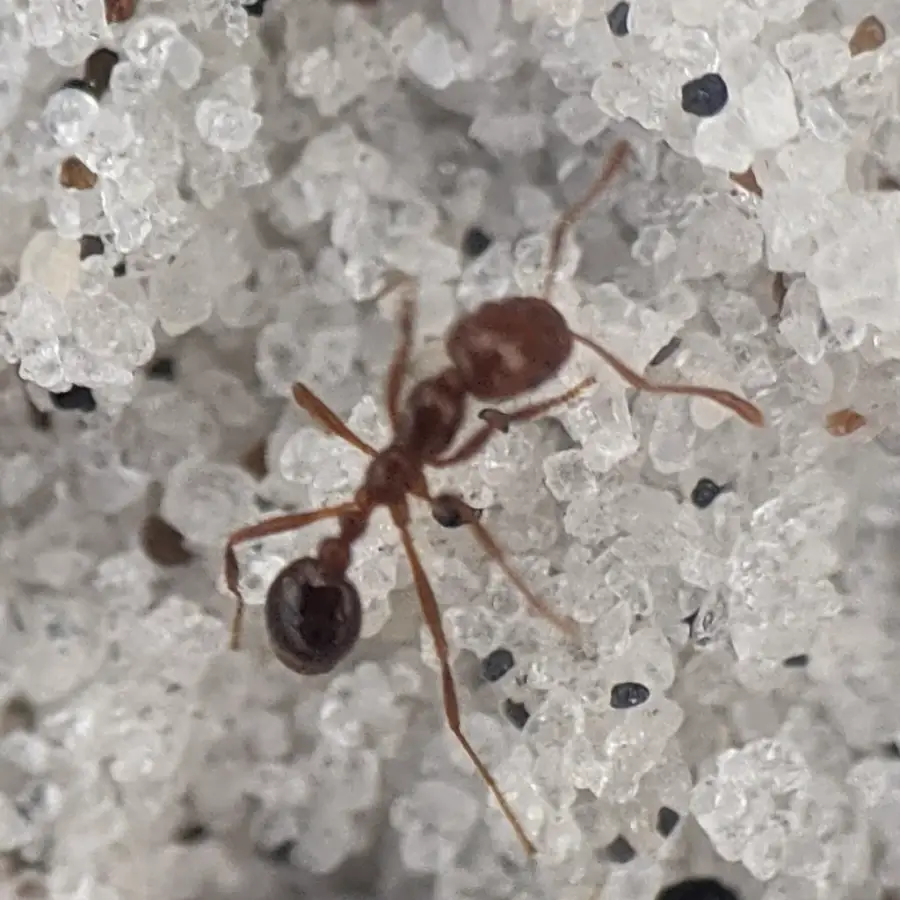
- Red imported fire ants (Solenopsis invicta) are the main species in Virginia. They’re reddish-brown, with a darker rear end.
- Black imported fire ants (Solenopsis richteri) are darker, with a brown to black body. Their main U.S. range is in northern Mississippi, Alabama, and Tennessee.
- Hybrid fire ants are a cross between the two. According to Virginia Cooperative Extension, the hybrid was first found in Lee County in 2022, and Lee County is still its only known location in Virginia. Hybrids also appear more cold tolerant than either parent species.
Also, you may read about the southern fire ant, a native species. It isn’t known to be established in Virginia. The European fire ant is a separate stinging species from Europe. It lives mainly in the Northeast, and it builds hidden nests instead of the big mounds imported fire ants make.
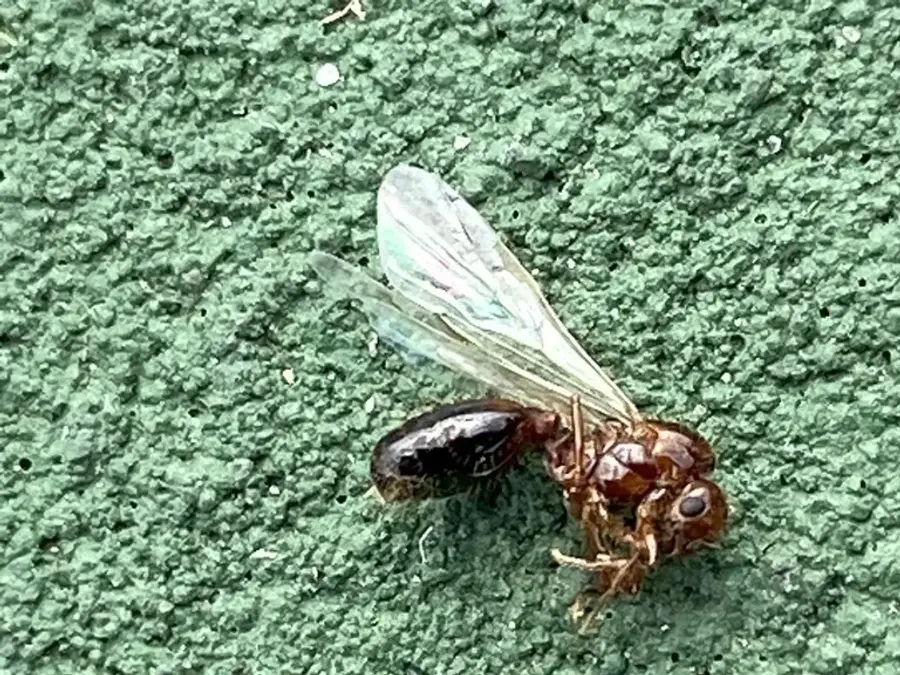
How to Tell If You Have Fire Ants
Species ID is tricky, even for us. However, the mound and the ants’ behavior give you strong clues. According to Texas A&M AgriLife, fire ant mounds have a few telltale features:
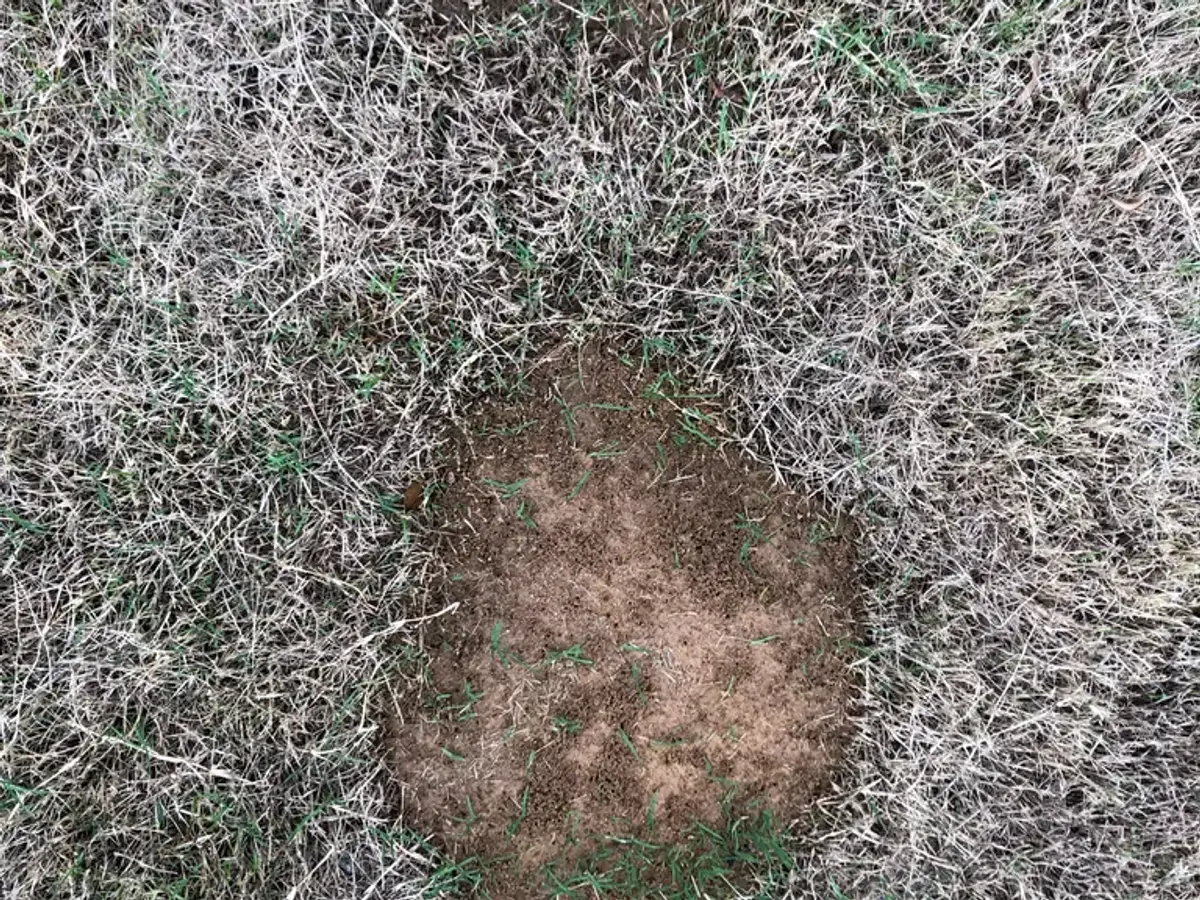
- No center hole. Most ant hills have an opening on top. Fire ants come and go through underground tunnels instead.
- Fluffy, worked soil. Mounds often pop up a few days after a heavy rain and look like loose, plowed dirt.
- Mixed worker sizes. When you disturb the mound, the workers range from tiny to about 1/4 inch long.
- Fast, aggressive defense. Fire ants pour out and climb up whatever touched the mound, and then they sting as a group.
If your ants don’t match, take a look at our guide on fire ants vs. red ants. It covers the native red ants that people mix up with fire ants most often. You can also compare the small red ants we find indoors, or learn how a fire ant compares to a carpenter ant.
Fire Ant Stings: What to Expect
A fire ant sting burns right away. Then, within about a day, a small white pustule forms at each sting. According to NIH StatPearls, those pustules last about a week. Leave them alone. If one breaks, wash it with soap and water.
Most stings are painful but not dangerous. However, StatPearls also notes that serious whole-body allergic reactions happen with about 2% of stings.
Call 911 or get to an emergency room if someone has trouble breathing, chest tightness, swelling away from the sting (like the face or throat), dizziness, or slurred speech after a sting. People with a known venom allergy should carry the epinephrine their doctor prescribed. Many stings at once, especially on a small child, are also worth a call to a doctor.
The best way to avoid stings is to know where the mounds are. So if you live in or near the quarantine, walk your yard after a heavy rain, when fresh mounds are easiest to spot.
What to Do If You Find Fire Ants in Virginia
What you should do depends on where you live. The state treats a new find very differently from an established one.
Look at the table above. If your county or city is on the list, fire ants are already established where you live. If it isn’t, a true fire ant mound could be a new introduction, which matters to the state.
Outside the quarantine, VDACS wants to hear about it. You can report a suspected fire ant find through the Virginia Invasive Species Reporting Tool, by calling 804-786-3515, or by emailing ReportAPest@vdacs.virginia.gov. A clear photo of the ants and the mound helps a lot.
Inside the quarantine, VDACS no longer treats established infestations. Homeowners are responsible for their own mounds. The state recommends contacting your local Virginia Cooperative Extension office for treatment advice.
The quarantine limits what can leave a regulated area. Soil, sod, plants with soil attached, used soil-moving equipment, hay or straw stored on the ground, and logs with soil attached need a VDACS certificate first. Bagged commercial potting mix in its original package is exempt.
How Fire Ant Mounds Are Treated
For yards in fire ant country, the standard approach is the “two-step method.” First, you broadcast a fire ant bait across the whole yard. Then, you treat individual mounds that are causing problems, like ones near a play set or a walkway.
Timing matters. According to Texas A&M’s two-step guide, bait works best when the grass is dry, no rain is expected for a day or two, and ants are actively foraging. Late afternoon or evening in warm weather is usually ideal. Baits work slowly because workers carry them back and share them with the queen. Expect weeks to a few months for full results.
Outside the quarantine, report the mound to VDACS before you treat it. That way the state has a record of the new find.
What About Maryland and DC?
Fire ants are not established in Maryland or DC either. The USDA APHIS fire ant page lists Virginia among the infested states, but not Maryland or DC. Fire ants have turned up in Maryland on potted plants and nursery stock. However, University of Maryland Extension explains that those finds get wiped out and that Maryland winters are generally too cold for colonies to take hold.
How We Handle Ant Problems in Northern Virginia
Since fire ants aren’t established here, most stinging and biting ants we see in Northern Virginia yards are native species. For example, field ants build mounds in lawns, and pavement ants nest under slabs and walkways. Both can be a real nuisance, and each needs a different approach.
That’s why our ant control service starts with identification. Better Termite has served Northern Virginia, DC, and Maryland for 58+ years, and we’ve earned 1800+ reviews along the way. All the products we use are EPA approved and have passed through our internal research team. Each one is something we’d feel comfortable using in our own homes. If ants are only one of several pests around your house, our home pest control plans cover them along with the rest. We also serve homeowners at the southern edge of our area, including Stafford and Spotsylvania.
The Bottom Line on Fire Ants in Virginia
Fire ants are firmly established in southern and southeastern Virginia, and the 2025 quarantine brought them right up to Richmond’s doorstep. Northern Virginia, Maryland, and DC don’t have established populations yet. So if you’re in the quarantine, plan on treating mounds yourself or with help. If you’re outside it, a true fire ant mound is worth reporting to VDACS.
Either way, identification comes first. If you’re finding stinging ants in your yard and want a licensed technician to take a look, call us at 703-683-2000 or email info@bettertermite.com for an estimate.