
The bees around a Virginia home sort into three groups, and the group tells you what to do about them. Wood nesters are carpenter, mason, and leafcutter bees. Ground nesters are mining, sweat, cellophane, squash, and blueberry bees. Colony bees are honey bees and bumble bees. Only the carpenter bee damages a house. Only the two colony bees really defend a nest.
I’ve worked in this business since 2015 as a licensed technician, and sorting bees by where they nest is how we work a call, because the nest location decides the answer. A hole in bare cedar siding is a different conversation than a hole in the lawn, even when the bee looks the same from ten feet away.
Types of Bees in Virginia at a Glance
Virginia has far more bee species than most people would guess. The Department of Conservation and Recreation’s provisional state list counts 477 species across six families, and only 19 of them are non-native. Most of them are under a quarter inch, nest alone, and never register as bees at all. This table covers the ones you will actually notice.
| Bee | Where it nests | What you’ll see | Stings? | Do we treat it? |
|---|---|---|---|---|
| Eastern carpenter bee | Tunnels in bare wood | Perfect half-inch holes, sawdust, a big shiny black bee | Females rarely; males can’t | Yes |
| Southern carpenter bee | Tunnels in wood, southeastern VA | Similar, but metallic blue-green all over | Rarely | Yes, same approach |
| Mason bee | Existing holes, mortar joints | Small holes capped with mud | Almost never | No |
| Leafcutter bee | Hollow stems, old beetle holes | Neat half-circles cut from leaves | Almost never | No |
| Mining bee | Individual burrows in lawns | Dozens of dime-sized holes with soil rings, early spring | Seldom | No |
| Sweat bee | Soil or rotting wood | Tiny metallic green bee landing on your arm | Mild, rare | No |
| Cellophane bee | Sandy, bare ground | Slender, wasp-like, in big loose groups | Seldom | No |
| Squash bee | Ground, under squash plants | Early-morning bee asleep in a squash blossom | Seldom | No |
| Blueberry bee | Ground, southeastern VA | Fast, dark bee working blueberry flowers in March | Seldom | No |
| Bumble bee | Ground cavities, sheds, insulation | Round, fuzzy all over, loud | Yes, repeatedly | Only if the nest is underfoot |
| Honey bee | Hives, wall voids, hollow trees | Amber and brown stripes, thousands of them | Once, defending the hive | No — call a beekeeper |
If you want the full picture behind that table, the state list is worth a look, because the proportions are not what most people assume.
The Virginia list, compiled by the Division of Natural Heritage in 2021, splits out by family: 126 species in Apidae (honey, bumble, carpenter and squash bees), 115 in Halictidae (sweat bees), 114 in Andrenidae (mining bees), 84 in Megachilidae (mason and leafcutter bees), 33 in Colletidae (cellophane bees), and 5 in Melittidae.
Two things jump out of that breakdown. First, mining bees and sweat bees together account for nearly half of Virginia’s bee diversity, and almost nobody can name one. Second, the honey bee — the insect everyone pictures when you say “bee” — is one of the 19 species on that list that is not native to Virginia at all.
Bees That Nest in Wood
This is the group that matters for your house. Three of them bore into or occupy wood, and only one causes real damage.
Eastern Carpenter Bee
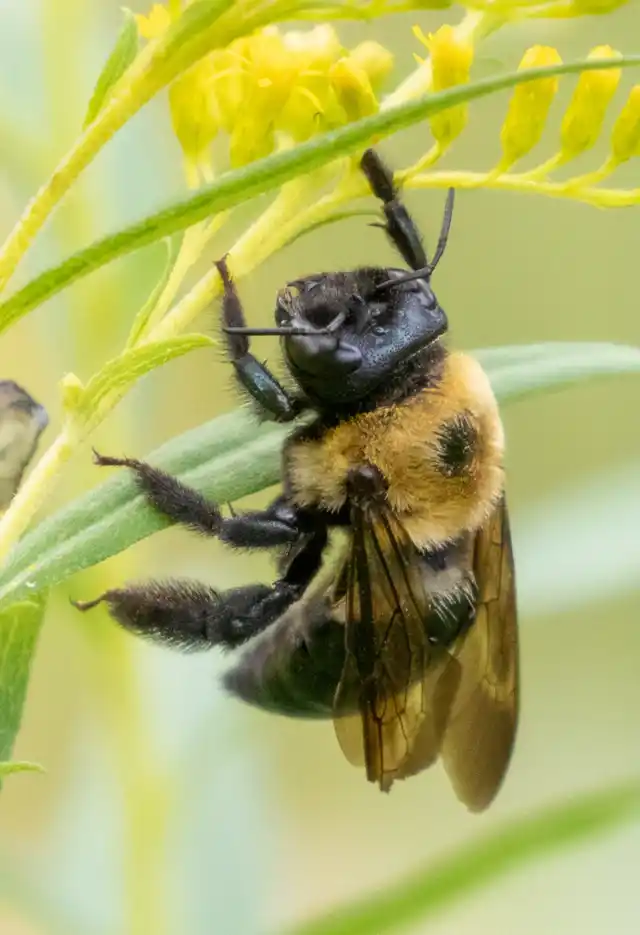
The big one. Virginia Cooperative Extension’s native bee publication describes Xylocopa virginica as a heavy-bodied bee about an inch long, covered in bright yellow or orange hair except for a shiny black abdomen. That bare, glossy abdomen is the whole test. Bumble bees are fuzzy front to back.
They cut a clean half-inch circular hole into bare wood, then turn and tunnel parallel to the surface. Favorite spots around Northern Virginia are deck rails, fascia boards, unpainted eaves, pergolas, and the underside of window trim. The damage compounds, because the same galleries get reused and extended year after year. The extension guide also notes that woodpeckers will peck out the immature bees, which turns a tidy hole into a torn-open board.
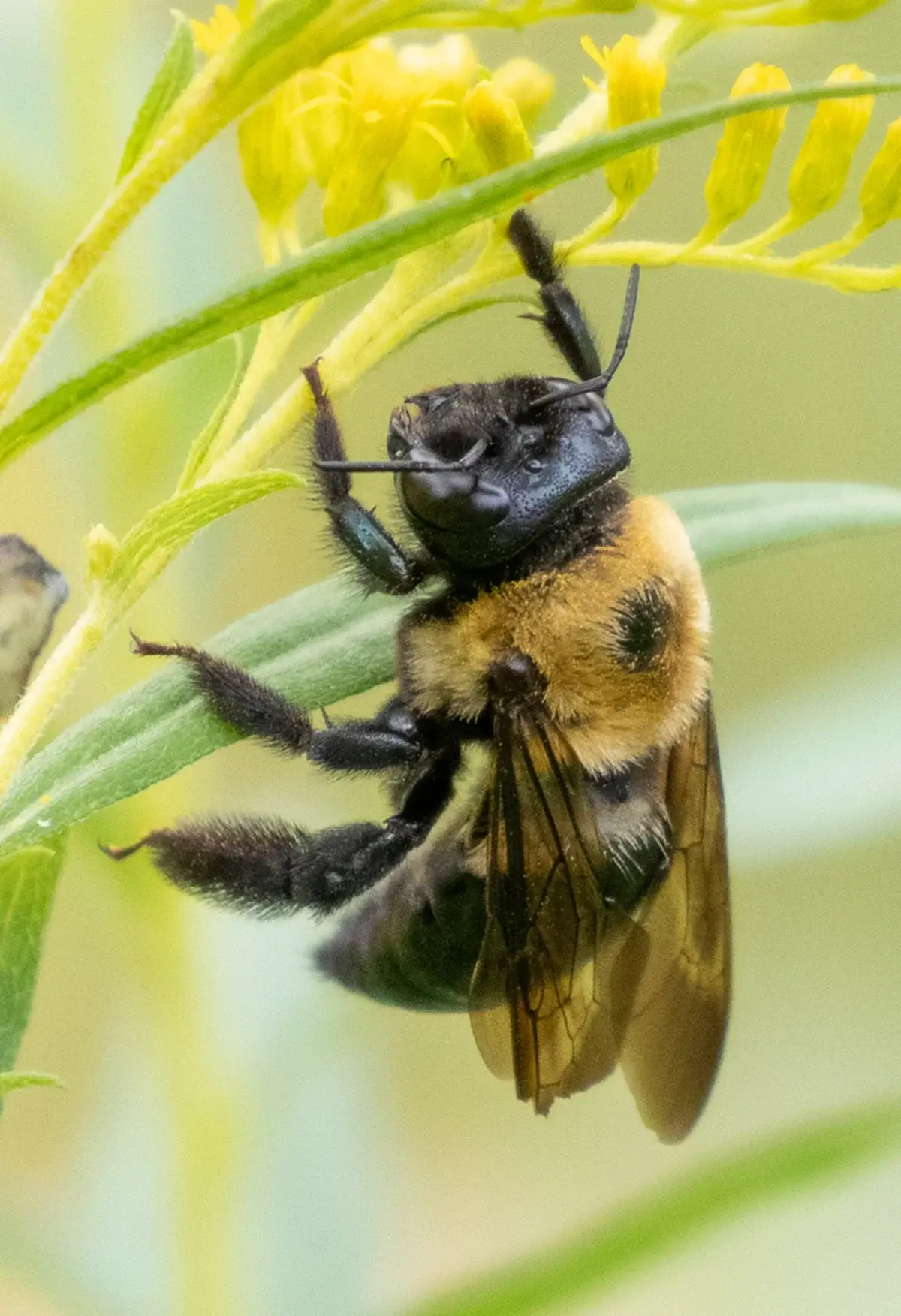
The part that scares people most about carpenter bees is the part that can’t hurt them.
For what to do about them, we go deeper in how to get rid of carpenter bees and in our guide to carpenter bee damage. The short version: paint or seal bare wood before spring, and treat the galleries rather than just plugging them.
Southern Carpenter Bee
Here’s a species Maryland homeowners basically never see. Xylocopa micans appears on Virginia’s documented list, and its range runs up the coastal southeast to about southeastern Virginia. It’s a carpenter bee like the eastern one, but noticeably more metallic — a deep blue-green sheen rather than a flat black — and a bit smaller.
If you’re in Chesapeake, Suffolk, or the Virginia Beach area and the “carpenter bee” on your siding looks weirdly iridescent, that’s likely why. The behavior and the treatment are the same. Our southern carpenter bee page has more photos.
Mason Bees and Leafcutter Bees
Both of these use wood, but neither one drills it. Mason bees move into holes that already exist: old carpenter bee galleries, gaps in mortar joints, cracks in siding. They seal the cells with mud, so a row of small mud-capped holes is the giveaway. The Virginia extension publication notes a single mason bee can visit up to 60,000 flowers in her lifetime, which is why orchardists build houses for them.
Leafcutter bees cut neat, near-perfect half-circles out of leaves (roses, lilac, redbud) and carry them off to line their nest cells. It looks alarming and it is purely cosmetic. They often nest in door and window frames, which is the only time anyone calls about them.
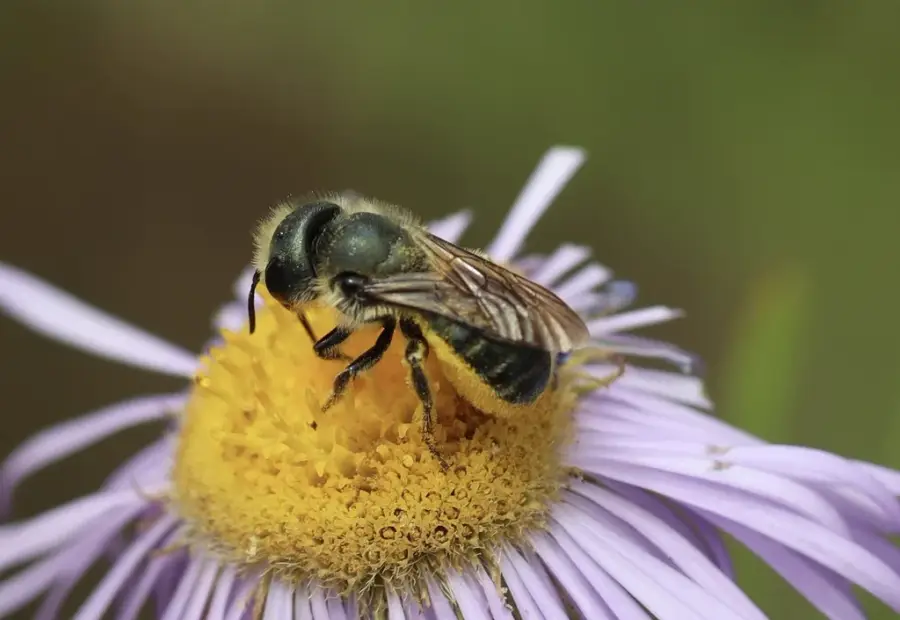
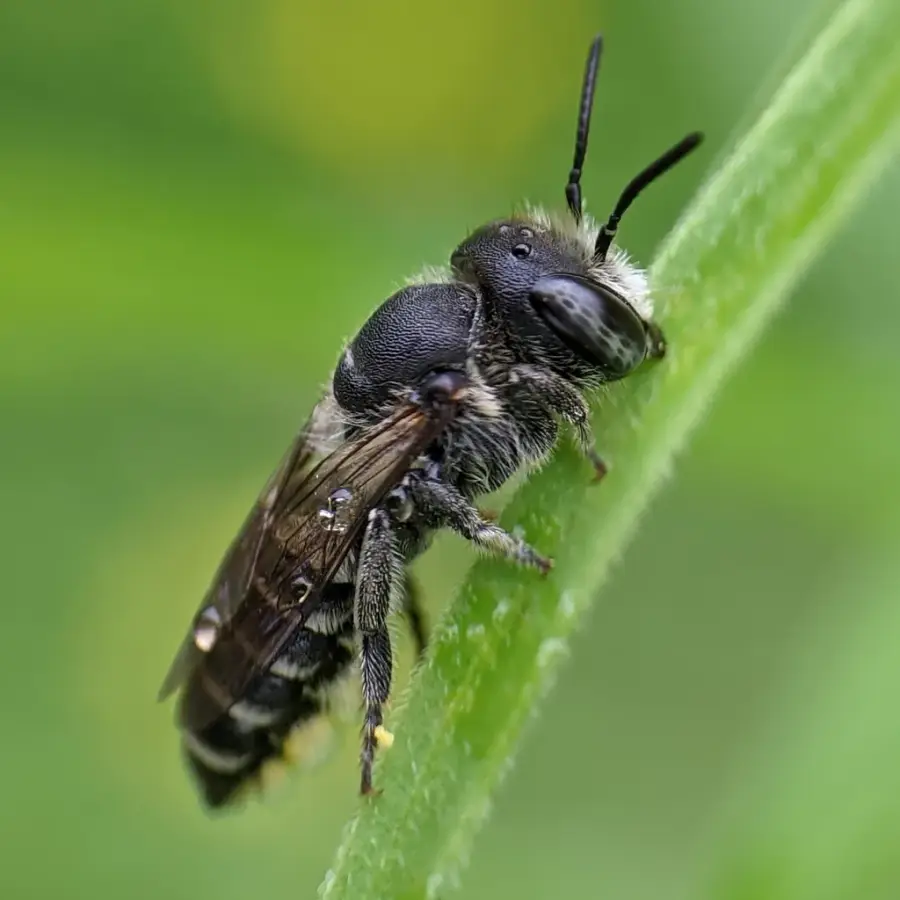
Neither one is a structural problem. A mason bee in an old carpenter bee gallery is using damage that already happened. A leafcutter bee in a window frame is using a void, not chewing one.
Daren is one of our registered technicians and has almost ten years in the field. He makes a point about this whole category that I think is worth repeating.
In his words: with stinging insects, the ones we deal with most are paper wasps, yellow jackets, and mud daubers. Identification matters every time, because how he treats and what he brings is completely different for each one.
That cuts both ways. Getting the ID right tells us what equipment a yellow jacket job needs. It also tells us when there’s no job at all. That’s the usual outcome once a “bee problem” in siding turns out to be mason bees in the mortar joints.
Which is why the first thing we ask for is a photo, not a credit card.
Bees That Nest in the Ground
Roughly speaking, most of Virginia’s bee species are solitary ground nesters. Every female digs and provisions her own burrow. There’s no colony, no queen, and nothing worth defending — which is why this entire group is close to harmless.

Mining Bees
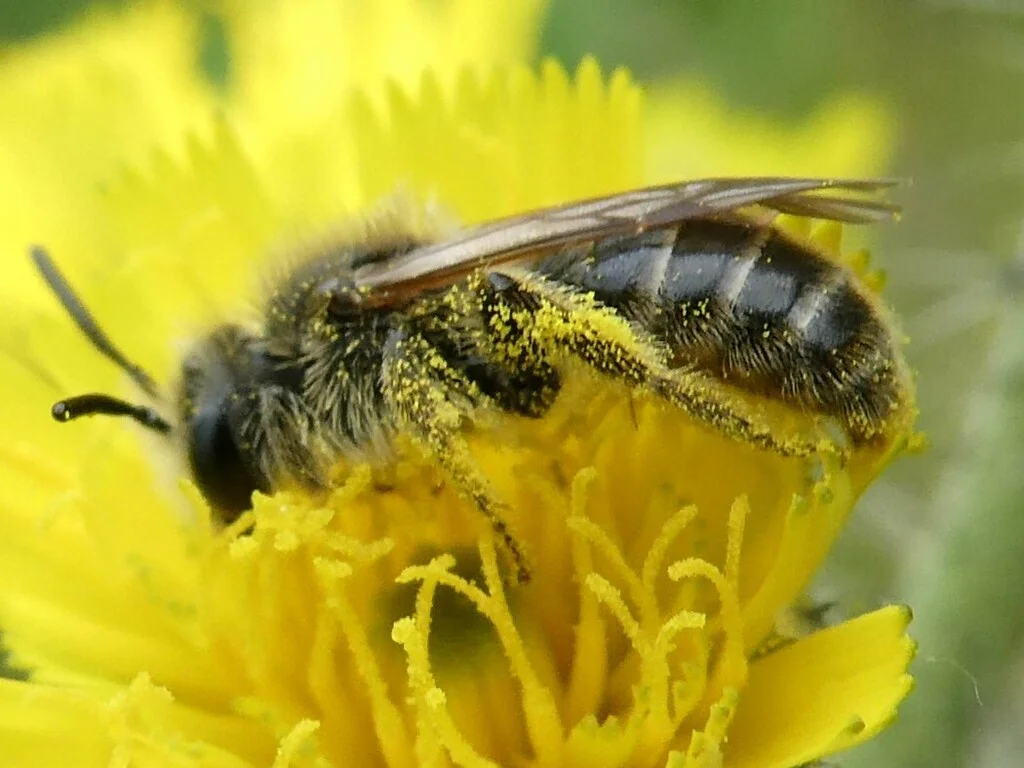
Mining bees (Andrena) generate more calls than anything else in this section. You get dozens of dime-sized holes across a thin patch of lawn, each ringed with loose soil, and a low cloud of bees drifting over it. Virginia extension calls them one of the first bees out each spring. When you walk up, they swarm over the soil. It looks like a threat. It isn’t, because they rarely sting.
The other useful fact from that guide is timing. Mining bees are active for only a few weeks a year while the females are digging and provisioning. The rest of the year they’re underground. If you wait, the problem solves itself. If you can’t wait, the extension recommendation is to water the nesting site, since they don’t like wet soil.
We cover the whole lawn-hole question in how to kill ground bees, including the cases where the culprit is actually a wasp.
Sweat Bees, Cellophane Bees, Squash Bees and Blueberry Bees
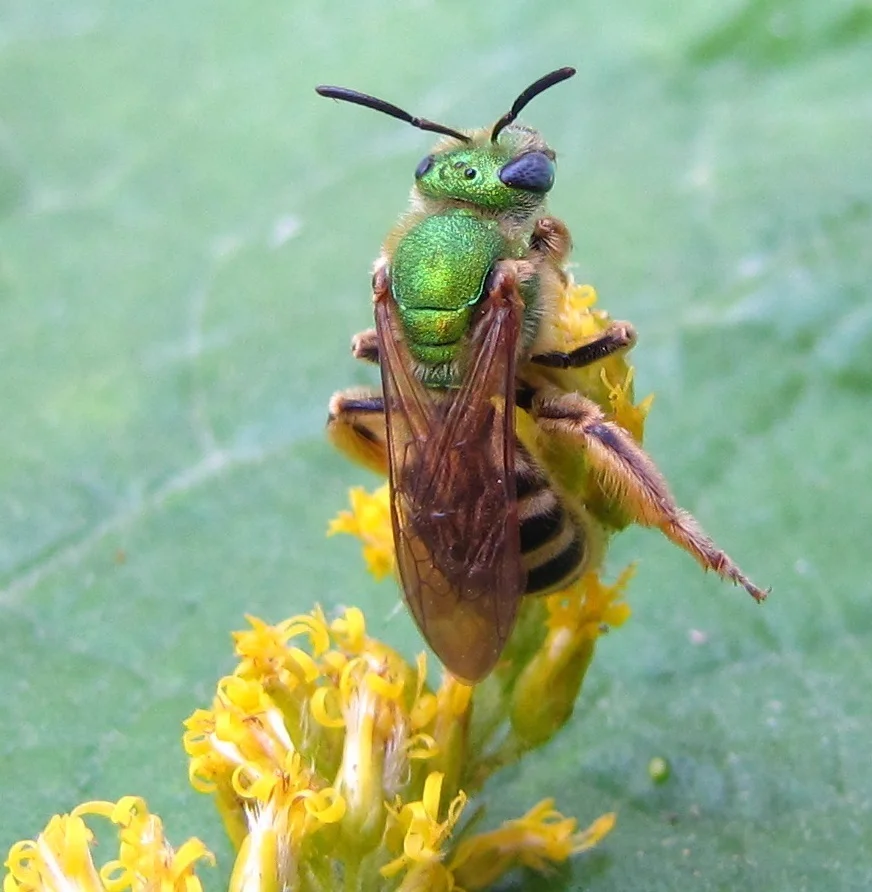
Sweat bees are the little metallic green or bronze ones that land on your forearm in July. They’re after the salt. Extension sources note they can sting if you trap one between clothing and sweaty skin, but it’s mild and it’s avoidable — just brush it off instead of swatting.
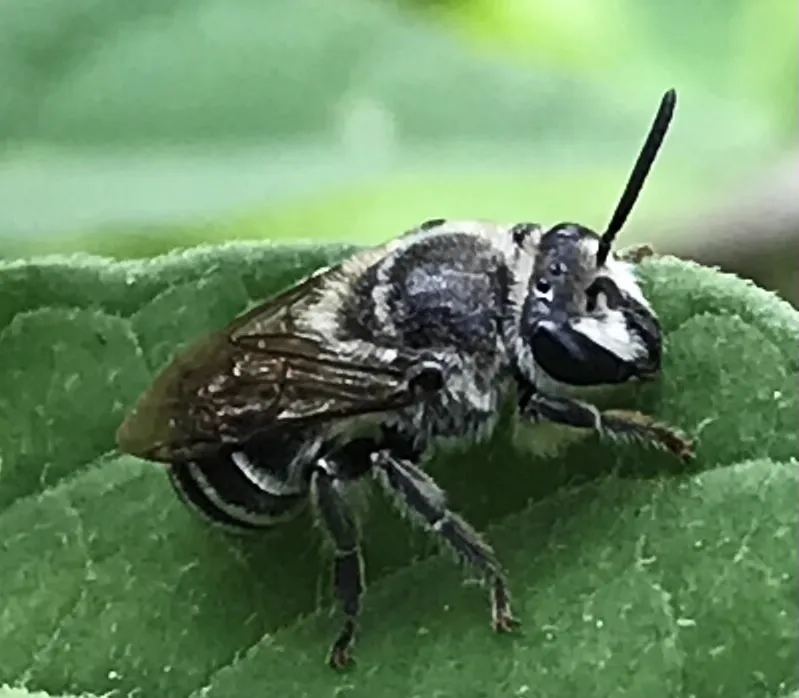
Cellophane bees (also called polyester or plasterer bees) nest in sandy, bare ground, often in large loose aggregations that look far more alarming than they are. They’re slender and a little wasp-like, and they waterproof each cell with a clear secretion.
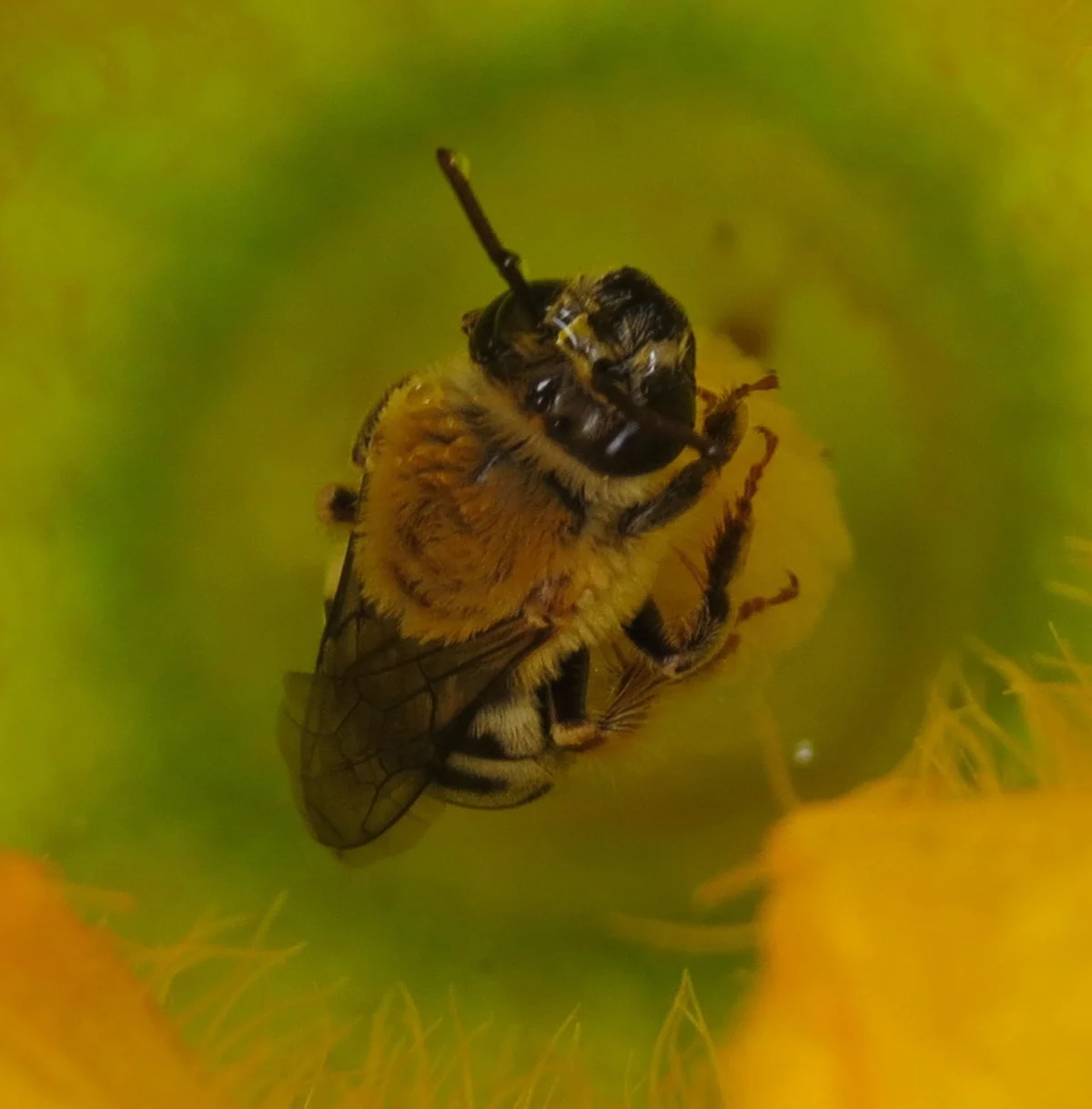
Squash bees are a nice one to know if you garden. They specialize almost entirely on squash, pumpkin, and gourd flowers, work them at first light, and then nap inside the closed blossoms. If you shake a squash flower at 9 a.m. and a bee falls out, that’s a squash bee.
Southeastern blueberry bees are another southern species that reaches Virginia. They’re fast, dark, bumble-bee-shaped bees that show up early — often in March — and buzz-pollinate blueberry flowers. You’ll find them more readily in the southeastern part of the state than in the mountains.
One caution on all of these. Ground-nesting bees bluff; yellow jackets don’t. Smooth and shiny? One hole, not dozens? Chasing you off? That’s a yellow jacket nest, and it’s a job to leave alone and call about. Our types of wasps in Virginia guide covers those species.
Bees That Live in Colonies
Two groups, and they’re the only ones that will actually defend a nest.
Honey bees (Apis mellifera) live in colonies of tens of thousands. In Virginia they’re managed livestock as much as wildlife — the Code of Virginia names the honey bee as the Commonwealth’s official state pollinator, a designation added in 2024. The tiger swallowtail, for the record, is the state insect.
A honey bee’s stinger is barbed. She can only use it once, and she dies afterward, so stinging is genuinely a last resort for her. The problem case is a colony that moves into a wall void, soffit, or chimney. That needs live removal by a beekeeper, not treatment, because the comb and honey have to come out too.
We do not treat honey bees. If you have them in a structure, we’ll tell you to call a beekeeper, and we’ll help you figure out whether it’s honey bees in the first place.
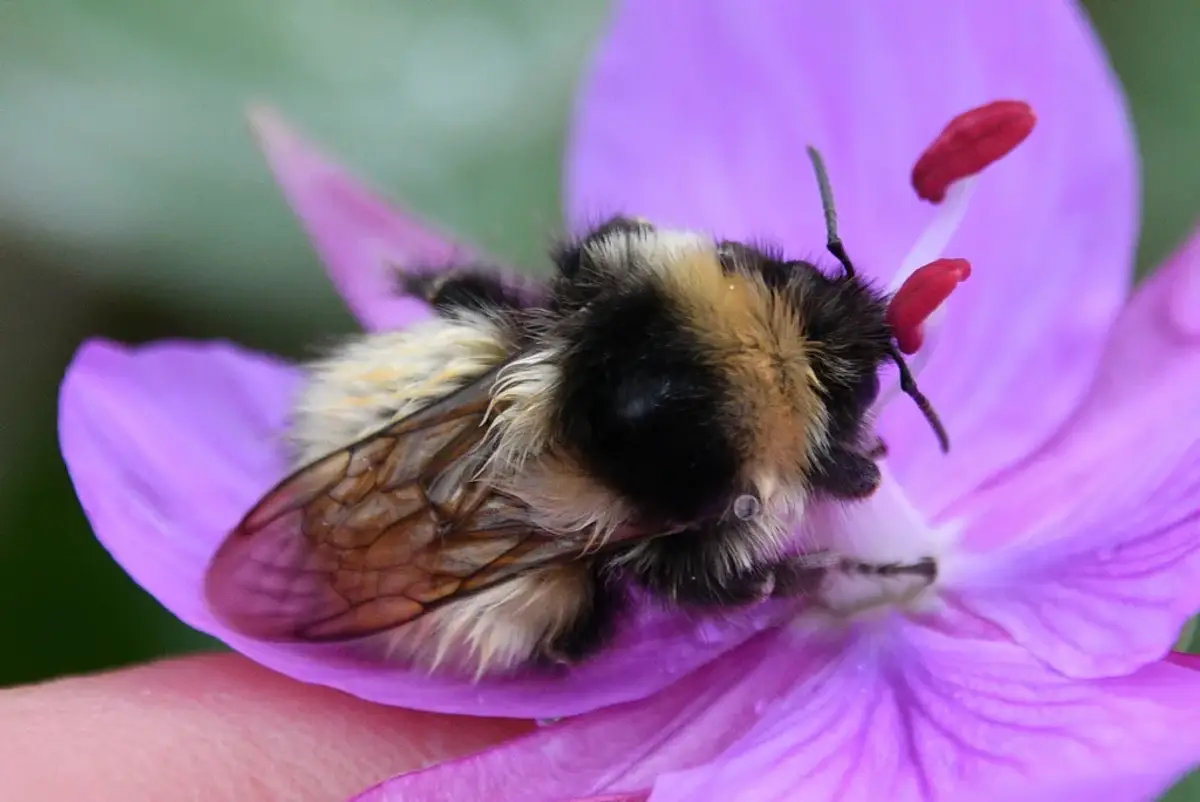
Bumble bees (Bombus) are the round, fuzzy ones. The Virginia extension publication counts 14 bumble bee species currently found in Virginia. They nest in cavities — old rodent burrows, compost piles, insulation in a shed wall, sometimes under a deck.
Colonies are small, a few dozen to a few hundred, and they die off after the first hard frost, leaving only next year’s queens. A bumble bee can sting more than once, but they’re not looking for a fight. Give the entrance a wide berth and nothing happens.
Bumble bees are excellent pollinators of tomatoes, blueberries, and clover, and the extension guidance is that control usually isn’t recommended. The exception is a nest sitting directly in a walkway or a play area.
If you only remember one test for this pair, make it the hair.
Where You Are in Virginia Changes What You See
The types of bees in Virginia shift as you move west. The state runs from barrier islands to 5,000-foot ridges, and the species list changes across that span. It’s a real difference, not a marketing line.
Tidewater and the southeast coastal plain sit at the northern edge of several southern species. The southern carpenter bee and the southeastern blueberry bee both reach Virginia and effectively stop there. Sandy soils also favor cellophane bees and other ground nesters, so lawn aggregations are more common in that part of the state.
The Piedmont, including most of the Richmond, Charlottesville, and outer Northern Virginia suburbs, is the generalist zone. Eastern carpenter bees, bumble bees, mining bees, and mason bees are all abundant. This is also where housing stock matters most — older homes with painted-over cedar and wood trim are carpenter bee magnets.
The Blue Ridge, Shenandoah Valley, and the mountain counties hold species the coast doesn’t. The clearest example is the rusty patched bumble bee. Virginia’s Department of Wildlife Resources reports that this federally endangered bee once ranged across most of the Commonwealth’s mountain region and western piedmont. Today DWR knows it from just five counties: Fauquier, Augusta, Bath, Highland, and Rockingham. July is the best month to spot one.
If you think you’ve seen one, don’t disturb it and don’t treat the nest. It carries a G2S1 rank in Virginia, meaning globally imperiled and critically imperiled in the state, and it’s protected under the Endangered Species Act. A photo sent to the state’s Natural Heritage Program is genuinely useful data.
Are There Killer Bees in Virginia?
No. Africanized honey bees have never become established in Virginia. USDA’s Agricultural Research Service has tracked their spread county by county since they entered the United States, and that expansion has stayed in southern and southwestern states. Virginia has never been on the map.
Every honey bee you’ll encounter in the Commonwealth is a European honey bee. If a swarm looks unnervingly large and active in spring, that’s normal swarming behavior — a colony splitting and relocating — not aggression.
Which Virginia Bees Sting, and Which We Actually Treat
Here’s the honest triage, which is the same one we run over the phone.
Wood nesters. Only the carpenter bees need anything. Seal and paint bare exterior wood before spring so they never start, and fill old nail holes and cracks while you’re at it. Mason and leafcutter bees reuse holes that already exist, so they need nothing.
Ground nesters. Leave every one of them. Mining, sweat, cellophane, squash, and blueberry bees are solitary, they can barely sting, and most are gone on their own within a few weeks. If the same bare patch draws an aggregation every spring, thicken the turf there and they’ll move on.
Colony bees. A bumble bee nest out of the way is fine where it is. A bumble bee nest in a walkway is worth handling. A honey bee colony inside a wall is a beekeeper’s job, not ours.
One more piece of biology settles a lot of arguments. A stinger is a repurposed egg-laying organ, so only females ever have one. No male bee can sting, period. The loud ones are all bluff.
Bees vs. the Things Virginians Call Bees
A large share of “bee” calls across Northern Virginia aren’t bees. The quick test is hair and waist. Bees are hairy, thick through the middle, and after pollen. Wasps have a hard, hairless shell, an obvious pinch at the middle, and they’re hunting meat and sugar.
Timing helps too. Virginia’s bee season front-loads: March through June is when nearly all of it happens. Yellow jacket colonies, by contrast, peak in August, which is when they’re most aggressive. Anything harassing your cookout on Labor Day weekend is a yellow jacket.
A few other impostors show up every year. The eastern cicada killer is huge, alarming, and essentially harmless. Bald-faced hornets and yellow jackets are wasps, not bees. Hover flies copy bee coloring but have one pair of wings and hang motionless in the air. Our guides to hornets in Virginia and wasp vs bee identification sort those out, and ground-nesting wasps covers the lawn-hole confusion specifically.
If you’re just over the line in Maryland, the species mix is close but not identical. Our companion guide to types of bees in Maryland covers that side.
Getting Help in Virginia
Better Termite & Pest Control has served the DC metro area for over 58 years, with more than 1,800 reviews and a team carrying roughly 300 years of combined experience. Our office is in Alexandria, and our technicians are licensed in Virginia, Maryland, and DC. We’re members of the Virginia Pest Management Association and the NPMA. Every product we use is EPA approved and has been through our internal research team, and each one is something we’d be comfortable using at our own homes.
We handle carpenter bee work and stinging insect control across Northern Virginia, including Fairfax, Springfield, Vienna, McLean, and Woodbridge. What we don’t do is honey bees. For those, VDACS runs the state’s beekeeping and apiary program and the office of the State Apiarist, which can point you toward a beekeeper near you for live removal.
Still can’t tell what you’re looking at? Text or email us a picture first. We don’t charge to look at a photo, and half the time it changes what we’d tell you to do.
Call 703-683-2000 or email info@bettertermite.com with questions or for a free estimate.