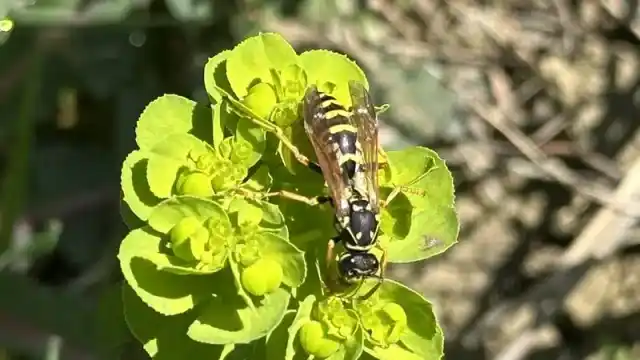

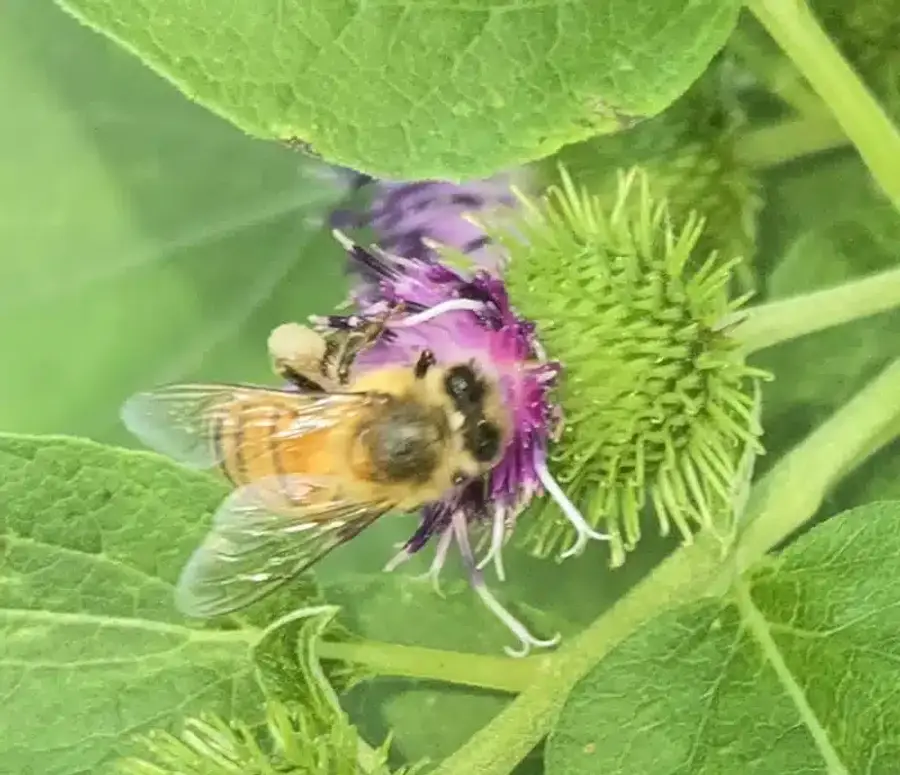
Bees are fuzzy, round, and live on pollen and nectar. Wasps are smooth and shiny, with a pinched waist, and they hunt other insects. Hornets are simply the largest wasps, so everything true of wasps is true of them too, only bigger.
That’s the short answer. The table below puts all three side by side. After that, I cover what I check on a Northern Virginia or Maryland property: the insect’s body, where the nest is, and how the colony acts as summer goes on.
Bee vs Wasp vs Hornet: Side-by-Side Comparison
| Bees | Wasps | Hornets | |
|---|---|---|---|
| Body | Fuzzy, hairy | Smooth, shiny | Smooth, shiny |
| Shape | Round, stocky | Narrow “wasp waist” | Narrow waist, bigger and heavier body |
| Size | Honey bee about 1/2 inch; carpenter bee about 1 inch | Yellow jacket about 1/2 inch; paper wasp about 3/4 inch | European hornet workers up to 1 inch, queens about 1.3 inches |
| Colors here | Muted gold, brown, black | Bright yellow and black | Brown and yellow (European) or black and white (bald-faced) |
| Diet | Nectar and pollen | Nectar plus insects they hunt | Insects they hunt, plus sap and fallen fruit |
| Sting | Honey bee: once (barbed) | Many times (smooth) | Many times (smooth) |
| Colony size | Honey bees: tens of thousands | Paper wasps: 20-75; yellow jackets: thousands | European hornets: 200-400, up to 1,000+ |
| Nest | Hives, tree hollows, ground, bare wood | Paper nests under eaves, in the ground, in walls | Paper nests in hollow trees, walls, or hanging from branches |
| Winter | Honey bee colony survives on stored honey | Colony dies; only queens survive | Colony dies; only queens survive |
| Aggression | Low | Moderate to high | Moderate (European) to high (bald-faced) |
Wasp and hornet colony sizes are from the University of Maryland Extension; hornet size is from Penn State Extension, and the honey bee colony figure from Penn State’s guide to social bees and wasps. Bee and wasp lengths are typical workers.
How to Tell Bees, Wasps, and Hornets Apart
Start with body shape and texture. It works on every one of these insects.
Bees are fuzzy with round, barrel-shaped bodies. Their branched hairs trap pollen as they move from flower to flower. Wasps are smooth and shiny with very little hair. They have a narrow “wasp waist” between the chest and the belly.
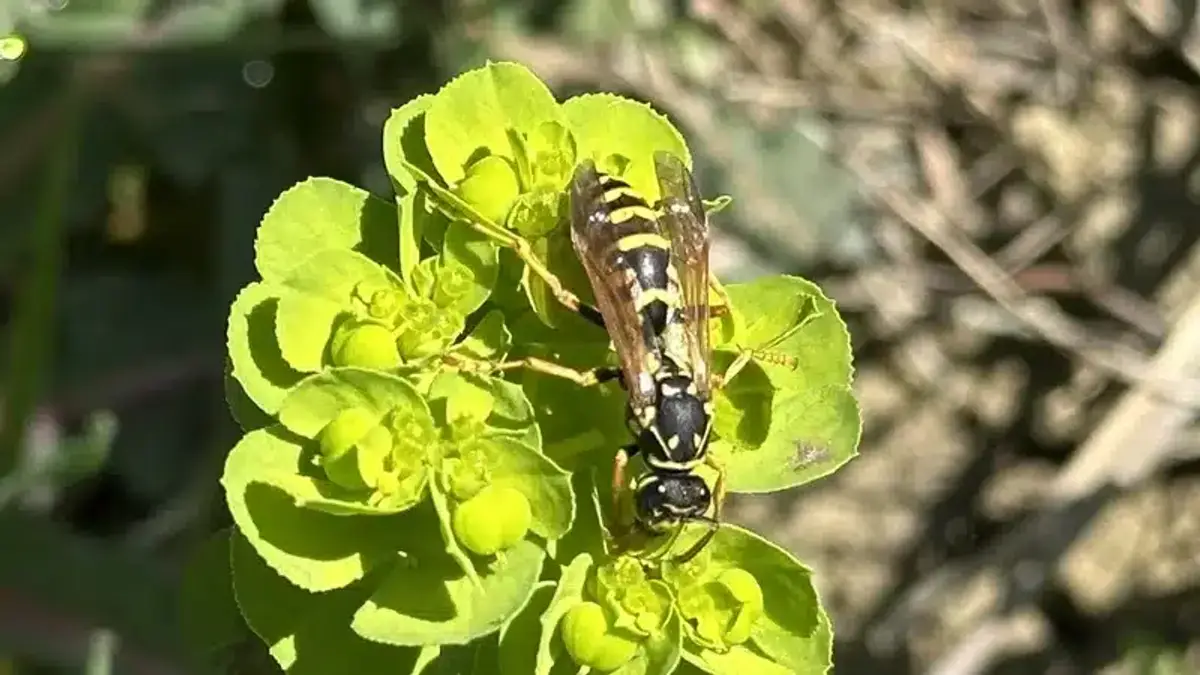
Next, watch how they fly. Bees tuck their legs in tight. Wasps let their legs dangle. Color helps a little too: bees tend to be muted brownish-yellow, while wasps usually show brighter yellow and black stripes.
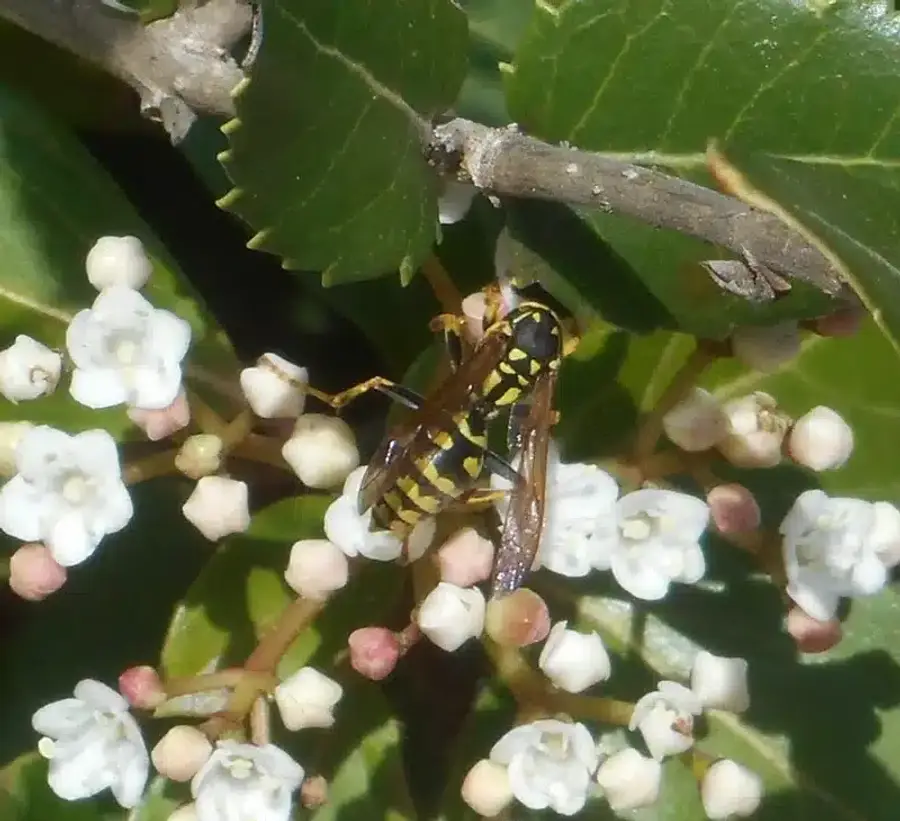
Can’t get close enough to see body hair? Use the way they move instead.
Where hornets fit
A hornet is a wasp. There is no separate hornet branch of the family tree. Only two insects called “hornets” live in Maryland, according to the University of Maryland Extension: the European hornet and the bald-faced hornet. Northern Virginia has the same two. The bald-faced hornet isn’t a true hornet at all. It’s an aerial yellow jacket, a yellow jacket that hangs its nest in the open.
The European hornet is our only true hornet. It came to North America from Europe in the 1840s. Workers reach about an inch long, and it is the one wasp here that flies at night, which is why homeowners find them bumping against porch lights and lit windows (Penn State Extension). If you want the full wasp-versus-hornet breakdown by species, see our guide to hornets vs wasps.
Yellow jackets are smaller wasps, but they cause more trouble than true hornets. They’re the ones most likely to bother you at outdoor meals.
Hornet vs bee: the carpenter bee mix-up
When someone tells us they have a “hornet” drilling into their deck, it is almost always a carpenter bee. Both are big and loud, and both show up in spring. Look at the back half. A carpenter bee has a shiny black abdomen with no stripes and a fuzzy yellow thorax. A European hornet has a banded yellow-and-brown abdomen and a pinched waist.
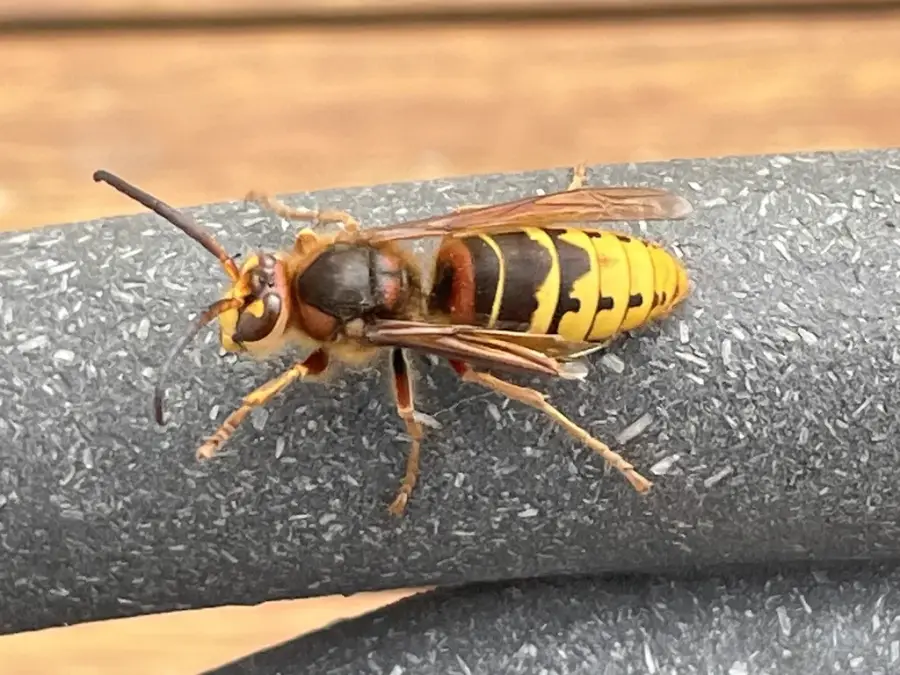
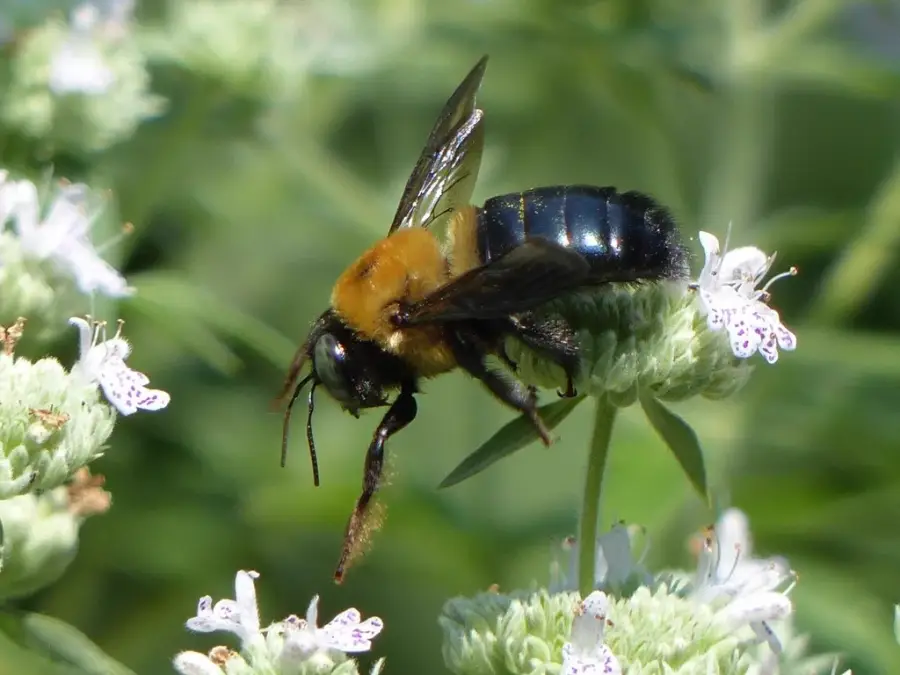
What gets mixed up most in the field
Daren, one of our registered technicians, says the most common mix-up he sees is paper wasps being called yellow jackets. Paper wasps have long, dangling legs and build open, umbrella-shaped combs. Yellow jackets are stockier and hide their nests in the ground or in walls. The difference matters, because a paper wasp nest by the front door is usually a quick job, while yellow jackets in a wall need a different plan.
He’s also seen it go the other way. One customer called about yellow jackets, and what she actually had were mason bees nesting in loose mortar joints. Mason bees live alone, not in colonies, and they won’t sting unless you really provoke them. They weren’t a stinging risk to her family, so Daren didn’t treat anything.
Where They Build Nests
Where these insects live tells you a lot about what you’re dealing with.
Bee Nests
Honey bees live in large colonies inside managed hives or natural cavities like hollow trees. These colonies last for years, with bees clustering together to survive winter.
Bumble bee nests are much smaller and usually sit underground in old rodent burrows. A bumble bee nest rarely causes problems because these bees are gentle unless you step right on the nest.
Carpenter bees bore round holes into exposed wood. Female carpenter bees rarely sting, but they can damage decks and fascia boards over time.
Wasp and Hornet Nests
Paper wasps build exposed, umbrella-shaped nests under eaves and overhangs. These nests are made from chewed wood fibers mixed with saliva. They’re abandoned after the first frost, and only queens survive winter.
Yellow jackets often nest in the ground or inside wall voids, which makes them hard to find and treat.
The European hornet builds in hollow trees or wall voids. Bald-faced hornets hang a football-shaped gray paper nest from a branch or eave. Despite their size, European hornets are less aggressive than yellow jackets.
Here’s what a wasp nest looks like. Notice the papery texture made from chewed wood fibers.
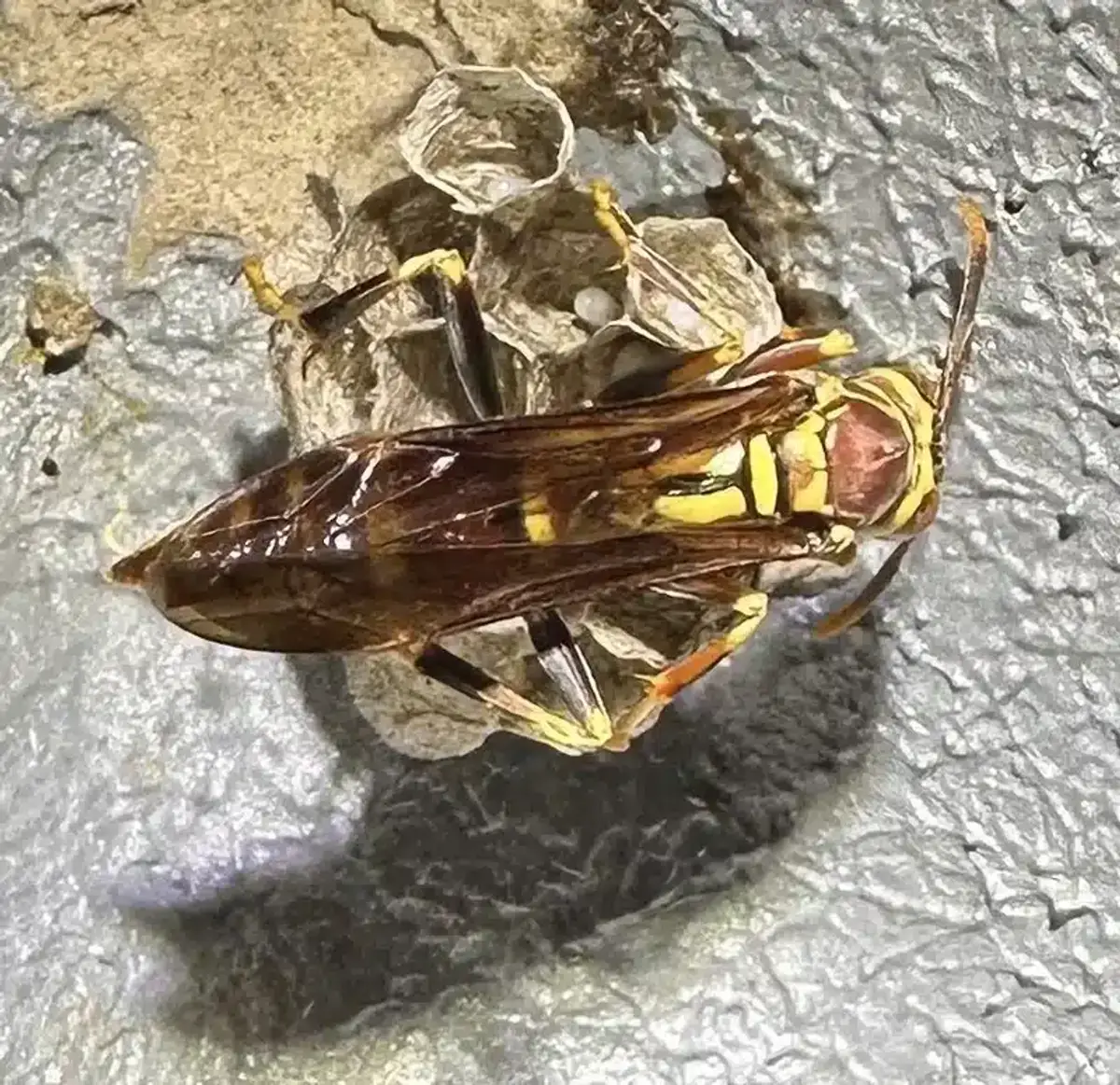
Nest location matters a lot for risk. Here’s one job I helped with that shows why.
I helped out on a yellow jacket job at a homeowners association where residents were worried about getting stung.
- What they noticed: Yellow jackets hanging around a common area people walked through every day
- What we found: A ground-level nest, with the entrance hidden in the landscaping
- The risk: Heavy foot traffic right over an underground colony that can hold thousands of workers by late summer
- Our fix: We treated into the underground nest at intervals, then came back a few days later to dig out the dead nest so a new queen wouldn’t move into it
A ground nest like this doesn’t look like much from above. A few wasps coming and going from a hole in the mulch can mean a large colony underneath.
If you’re seeing wasp activity near places where people gather, it’s worth getting a professional assessment.
What They Eat
Bees eat only nectar and pollen. They visit flowers to gather food and store honey for winter. This is why honey bee colonies survive the cold while wasp colonies die off.
Adult wasps eat sugary foods for energy, but they hunt to feed their young. Workers catch other insects, chew them up, and carry them back to the larvae. That’s why wasps check out your cookout. They go for both sweet drinks and meat.
Paper wasps feed their young mostly on caterpillars, and yellow jackets take flies and other pest insects too. Solitary wasps like cicada killers and mud daubers go after specific prey. European hornets hunt caterpillars, grasshoppers, and the occasional honey bee (Ohio State University Extension), and they strip bark from lilac branches to get at the sap.
Are Wasps Worse Than Bees? How Their Stings Differ
For most homeowners, wasps are the bigger problem. Here’s why.
A honey bee stings once. Its stinger is barbed, so it stays in your skin and the bee dies. Wasps and hornets can sting over and over. Their stingers are smooth, so one wasp can hit you several times while it defends the nest.
The University of California Agriculture and Natural Resources notes that a honey bee’s barbed stinger keeps pumping venom for 45 to 60 seconds after the bee leaves, so scrape or pull it out right away. How you remove it matters less than how fast. For most people a sting only hurts. The American College of Allergy, Asthma and Immunology puts serious whole-body reactions at about 3% of adults and 0.4% to 0.8% of children, and it counts wasps, yellow jackets, hornets, and honey bees as the source of most stings in the U.S.
Bigger doesn’t always mean worse. Penn State Extension says a European hornet sting hurts about as much as a honey bee sting. What makes a nest dangerous is how many insects defend it and how close it is to people.
Guard bees defend their hive, but they’re calmer than social wasps. Honey bees mainly get defensive when you directly threaten the hive. Carpenter bee females can sting but almost never do. Males hover around people aggressively but can’t sting at all.
Seasonal Patterns
In our region, spring brings the most bee activity as colonies come out of winter and start visiting early flowers. This is also honey bee swarm season, usually late April through May.
Wasp activity follows a different path. Queens start new nests alone in March and April. By midsummer, colonies are growing fast but focused on hunting prey and building.
Late summer is when wasps become a real problem. In August and September, colonies hit peak size but natural food gets scarce. Hungry wasps get aggressive and start checking out your food. European hornet nests peak around mid-September, and a late-summer yellow jacket nest can hold thousands of workers.
Social wasp colonies only last one year. After the first hard freeze, the workers die and only the new queens survive to start nests next spring. Honey bee colonies make it through winter by eating stored honey.
When to Call a Pro
Not every nest needs action. Daren’s rule of thumb: a hornet nest 40 feet up a tree at the back of the yard can usually stay, as long as everyone keeps away from it. A nest right against the house or next to a door is a different story.
Call a pro when:
- A nest is near where people walk, play, or sit
- The nest is in a wall void or hard-to-reach spot
- You’re not sure what insect you’re dealing with
- Anyone in the household has a sting allergy
- Yellow jackets are nesting in the ground near foot traffic
Wall voids are the one to be careful with. Daren points out that if yellow jackets in a wall are treated the wrong way, you can end up pushing them into the house instead of out. Don’t plug the hole or spray into it yourself.
Honey bee swarms need a different approach. They should be collected alive by a beekeeper, not sprayed. The Northern Virginia Beekeepers Association and the Maryland State Beekeepers Association both have volunteer beekeepers who pick up swarms.
If you’re unsure whether a nest is active or what type of insect it is, have someone look at it. A few wasps near a downspout can turn out to be a large colony in the wall. That’s why our wasp control services start with identification: the species and where the nest sits decide which method we use.
Common Species in Our Area
Bees you’ll see: European honey bees (in managed hives or wild colonies), more than a dozen native bumble bee species on Virginia’s state bee list, carpenter bees (bore round holes in wood), and mining bees (nest in the ground). Honey bees belong with a beekeeper rather than an exterminator, so bee removal in Northern Virginia mostly means carpenter bees in wood and bumble bee nests that sit somewhere people walk.
Wasps you’ll see: Paper wasps (umbrella nests under eaves), the invasive European paper wasp, several yellow jacket species (hidden nests, very defensive), mud daubers, and cicada killers.
Hornets you’ll see: The European hornet (our only true hornet, flies at night) and the bald-faced hornet (really an aerial yellow jacket with a gray football-shaped nest). For a big nest in a tree or under an eave, see our hornet nest removal page.
Prevention
The best way to manage bee and wasp issues is to make your property less inviting.
- Spring Check: Look under eaves, overhangs, and sheds for early nest starts in March and April
- Seal Gaps: Caulk gaps around utility lines and vents so yellow jackets can’t get into wall voids, and fix torn screens
- Keep It Clean: Pick up fallen fruit, clean outdoor eating areas, and secure trash can lids
- Annual Inspection: Have a pro check your property each year to catch problems early
To reduce carpenter bee activity, paint or stain all bare wood. For yellow jacket prevention, keep trash sealed and avoid leaving sugary drinks open outdoors.
If you find a nest early in the season when it’s still small, removal is usually simpler and cheaper than waiting until the colony reaches full size.
If you need help with stinging insects around your Northern Virginia or Maryland home, call us at 703-683-2000 or email info@bettertermite.com. Our registered technicians provide pest control in Derwood and communities across the region, and can identify the species, assess the risk, and handle removal while keeping your family protected.