
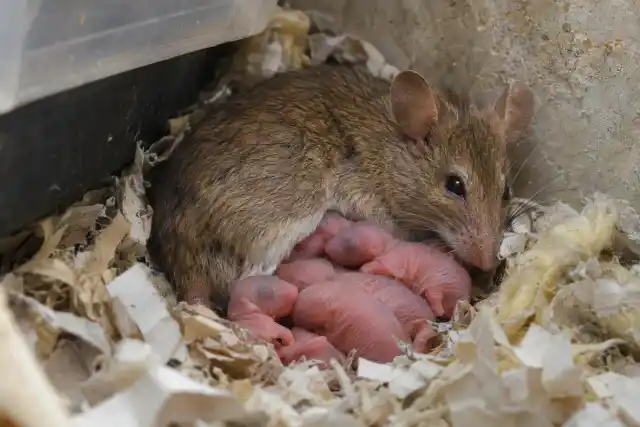

Mice reproduce extremely fast. A female house mouse is pregnant for only about 19 to 21 days, usually has 5 or 6 pups, and can get pregnant again within a day of giving birth. As a result, she can have a new litter about every three to four weeks. Her daughters can start breeding at just 5 to 7 weeks old.
I’m George Schulz with Better Termite & Pest Control, and mice are one of our most common calls across Northern Virginia and suburban Maryland. That’s especially true once fall nights turn cold. Below, I’ll walk through the real reproduction timeline, the math on how fast one mouse becomes many, and what that means for how quickly you should act.
How Fast Do Mice Reproduce? The Short Answer
Here are the numbers that matter for a house mouse, the species we find inside homes most often:
| Stage | House mouse |
|---|---|
| Pregnancy (gestation) | About 19-21 days |
| Pups per litter | Usually 5-6 (about 3-12) |
| Time until she can mate again | About 12-18 hours after giving birth |
| Litters per year | 5-10 (up to 14 reported) |
| Pups weaned | About 3 weeks old |
| Pups can breed | About 5-7 weeks old |
According to Animal Diversity Web at the University of Michigan, females generally have 5 to 10 litters per year when conditions are good, and as many as 14 have been reported. Basically, a warm house with food and nesting material counts as “good conditions.”
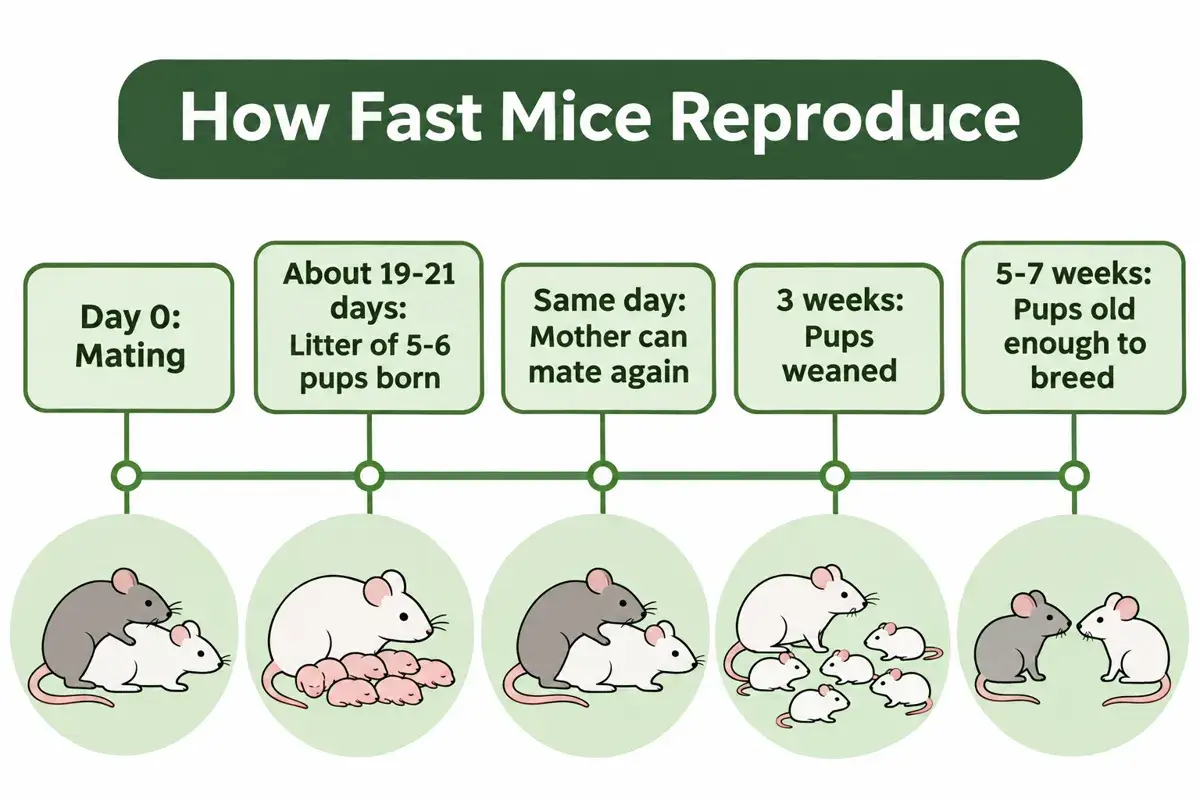
The Mouse Reproduction Cycle, Step by Step
The reason mice multiply so quickly isn’t just big litters. It’s that every stage is short, and the stages overlap. Here’s what one cycle looks like:
A female mates. Indoors, house mice don’t wait for spring, so this can happen any month of the year.
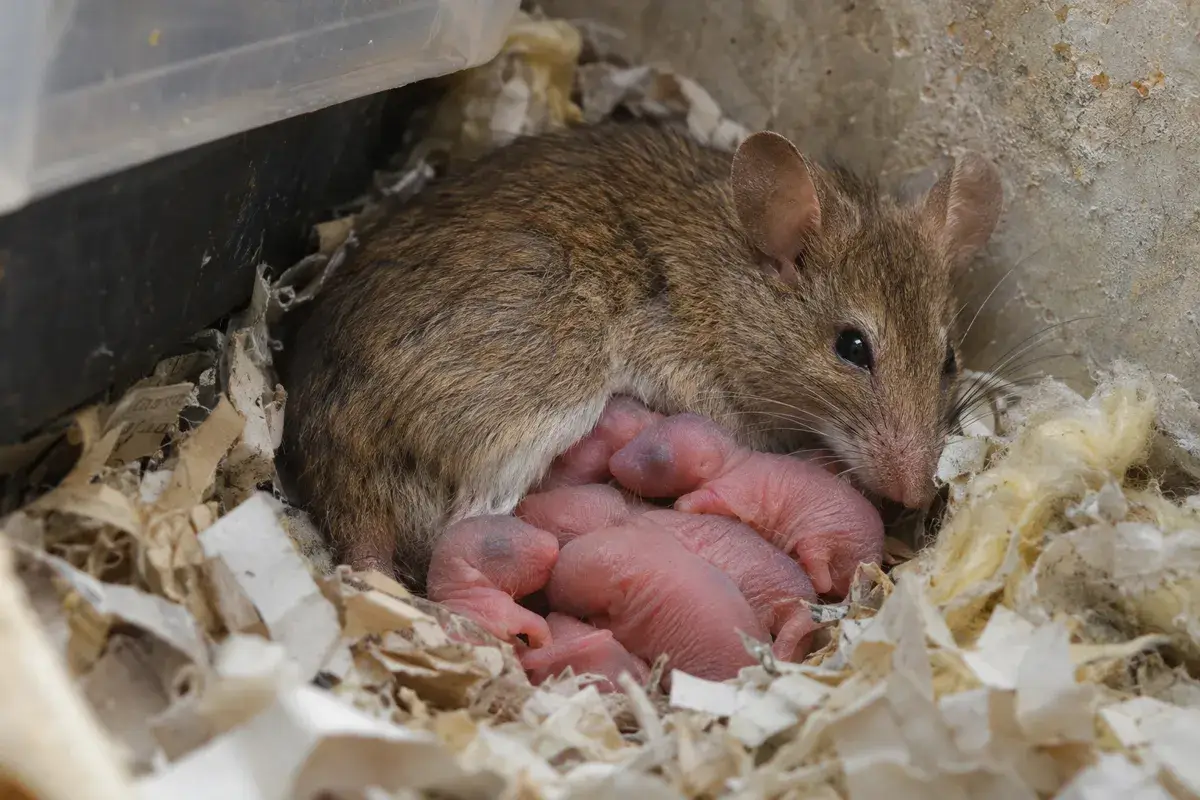
About three weeks later, she gives birth to a litter of usually 5 or 6 pink, hairless pups in a hidden nest. If you’re curious what that looks like, here’s our guide to what a mouse nest looks like.
This is the part most people don’t know. A female can come back into heat within about 12 to 18 hours of giving birth. So she can be pregnant again while she’s still nursing. Nursing can delay the next birth by several days, but the next litter is still only weeks away.
Pups are weaned at about three weeks old. Around this time, they start leaving the nest to forage. Additionally, this is often when homeowners start seeing fresh mouse droppings in new spots.
By 5 to 7 weeks old, the young females can get pregnant themselves. Now you have two generations breeding at the same time, and the growth curve gets steep.
How Many Mice Can One Mouse Turn Into?
You’ve probably seen claims that one mouse can turn into thousands in a year. Those numbers assume every single pup survives and breeds, which doesn’t happen. So I ran a more conservative version.
My assumptions: one already-pregnant female gets in. She has 6 pups per litter, and half are female. Nursing slows her down a bit, so I spaced her litters about 25 days apart. Her daughters have their first litter around 9 weeks old. No mice die or leave.
| Time after one pregnant mouse gets in | Approximate mice (on paper) |
|---|---|
| 1 month | About 7 (mom + first litter) |
| 2 months | About 13 |
| 3 months | About 35-40 (first daughters now having litters) |
| 4 months | About 80+ |
In reality, plenty of pups don’t make it. Even so, the takeaway holds. A single mouse that slips in during October can become a real population by the new year. That’s especially true because, as UC IPM notes, house mice “frequently enter homes in autumn when nighttime temperatures become colder.”
What Speeds Up (or Slows Down) Mouse Reproduction
Mice don’t breed at the same pace everywhere. Here’s what changes the speed:
- Warmth. A heated home removes winter as a slowdown. Indoors, house mice can breed year-round.
- Food. Pet food, birdseed, and pantry crumbs mean a steady food supply. More food generally means more litters.
- Nesting spots. Wall voids, attic insulation, cluttered storage, and cardboard boxes give mothers a protected place to raise pups.
- The mother’s age. Older females tend to have bigger litters.
- Crowding. Very dense populations eventually breed less. However, by the time that kicks in, you have a lot of mice.
The numbers vary a little from source to source. They also differ between lab mice and wild mice. NC State Extension lists a gestation of about three weeks, sexual maturity at 6-8 weeks, and 5-10 litters per year once mice are mature. It also notes that litter size changes with the mother’s age, food supply, and season.
Lab mice often have bigger litters than wild house mice, which is why you’ll see some sources quote 10-12 pups. For the mice living in a Northern Virginia wall or attic, 5-6 pups is the more realistic number. The National Pest Management Association sums it up simply: a female house mouse can have about a half dozen babies every three weeks.
House Mice vs. Outdoor Mice: Do They Breed the Same?
No. In our area, the mouse inside your kitchen is almost always a house mouse. But we also see white-footed mice and deer mice around wooded lots, sheds, and garages.
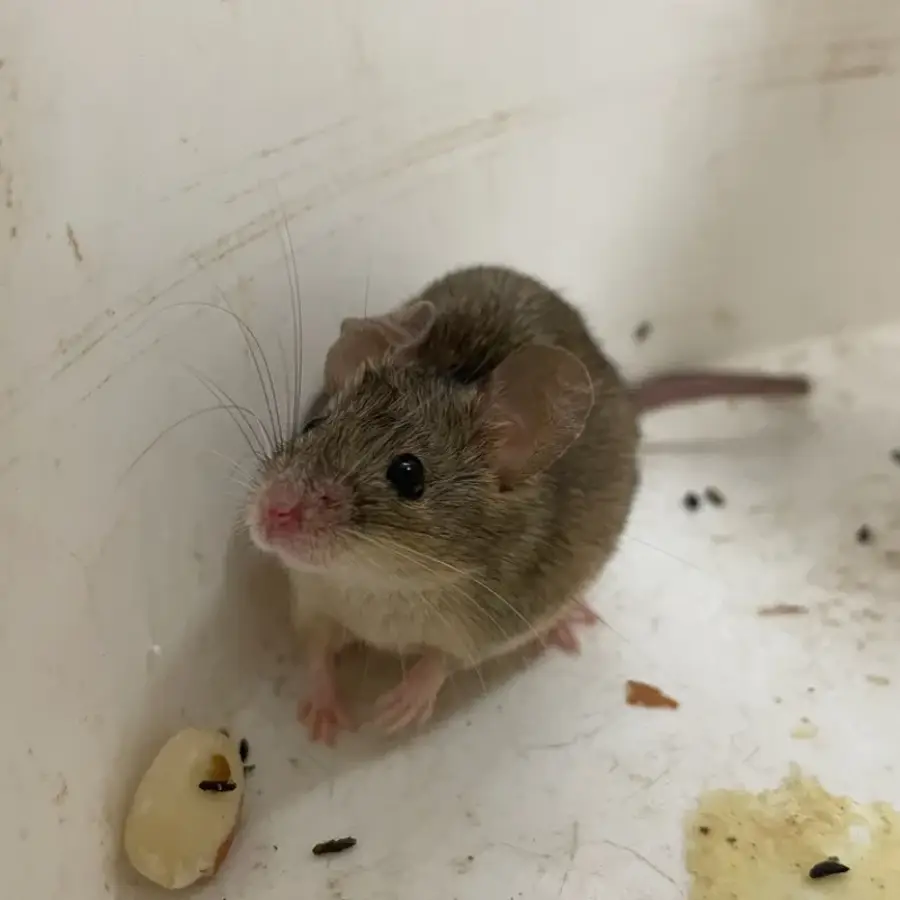

White-footed mice mostly breed from about March through October and usually have 2 to 4 litters a year. So they reproduce more slowly than house mice. They can still move into garages and attics in the fall, though. If you’re not sure which one you have, our deer mice vs. house mice guide breaks down the differences.
What This Means for Your Home
Because mice reproduce this fast, timing matters more than almost anything else. Basically, every few weeks you wait, you risk another litter. Here’s how I’d think about it:
- Find out how they’re getting in. A mouse can squeeze through a gap about the size of a dime. Our team often says that if you can fit the tip of your pinky in a gap, a mouse can too. Here’s more on how small a hole a mouse can fit through.
- Reduce the population already inside. Sealing alone isn’t enough if mice are already breeding indoors. You need to bring the numbers down too.
- Seal the entry points. The CDC recommends looking for and sealing holes around the home to prevent rodent infestations. Utility line penetrations, garage door corners, and old cable lines are the spots we seal most often.
- Cut off food and nesting material. Store pet food and birdseed in sealed containers, and clear cardboard clutter from basements and garages.
For more DIY detail, our guide on how to get rid of mice covers traps and baits, and why do I have mice covers what draws them in.
One of our licensed technicians took over a home where the previous company had only put down snap traps and glue boards, and the homeowners weren’t seeing results. He set bait instead, and on the follow-up visit every bit of it was gone, with droppings everywhere. That told us the population was much bigger than the traps suggested.
From there, it was a long process of finding every entry point, including sealing up around the soffit from a ladder. The house went quiet for four months. Then activity came back. Eventually, he spotted a twig poking out above where he’d sealed. Squirrels had chewed a hole in the soffit, birds had moved in, and mice were using the same opening. Once that was sealed, the activity stopped.
The lesson? With an animal that breeds this fast, you can’t just knock the numbers down once. You have to close every way back in.
How We Handle Fast-Breeding Mice
When mice are already breeding inside, our mouse control service does two things at once. First, we bring the population down with tamper-resistant bait stations. Second, we seal the gaps they’re using. For houses with a lot of openings, our exclusion services focus on closing up those entry points. The same UC IPM guide calls exclusion the most successful and permanent form of house mouse control, and that matches what we see in the field.
All the products we use are EPA registered and have been through our internal research team. Our rodent control plans start around $49 a month for ongoing protection. We serve homes across Northern Virginia and suburban Maryland, including Alexandria, Arlington, Fairfax, Springfield, McLean, and Reston.
Conclusion
So, how fast do mice reproduce? Faster than almost any other pest we deal with in a house. A three-week pregnancy, back-to-back litters, and pups that breed at about six weeks old mean one mouse can turn into dozens in a single season. That’s why I always tell homeowners not to wait and see.
If you’ve spotted a mouse or fresh droppings, give us a call at 703-683-2000 or email info@bettertermite.com. We’ll help you figure out how they’re getting in and get the population under control before the next litter arrives.