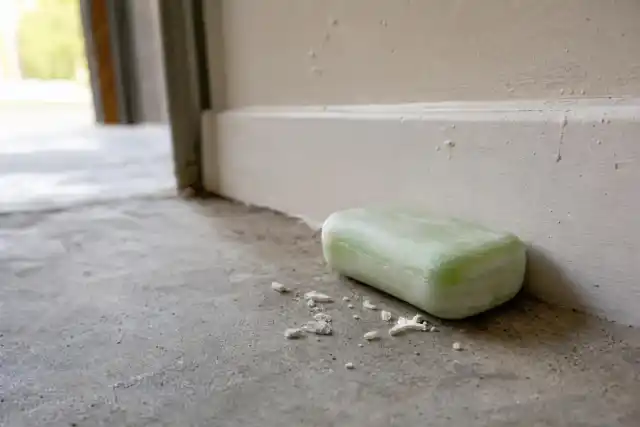

No, Irish Spring soap does not reliably repel mice. No published study has tested it on house mice. Researchers also say scent-based repellents in general are not a dependable way to keep mice out. At best, the strong smell might make a mouse pause for a few days. After that, food and a warm place to nest win.
I get this question a lot from homeowners around Northern Virginia, especially in the fall when mice start moving indoors. Usually someone has a few bars shaved in the garage or tucked in the kitchen cabinets, and they are still seeing droppings. The soap is not the problem. The open gap the mice are using is.
Why Irish Spring Soap Doesn’t Repel Mice
The idea sounds reasonable. Mice have a strong sense of smell, and Irish Spring has a strong scent. So people figure the smell will drive mice away. However, a few things get in the way.
First, there is no mouse research behind it. The soap is a cleansing bar, not a pesticide. According to Colgate’s official label, the Original bar is mostly soap salts, water, glycerin and “fragrance.” Nothing in it is registered or tested to repel rodents.
Second, scent repellents as a group do not hold up. NC State Extension says peppermint oil, mothballs and ammonia are not a reliable form of mouse management or prevention. It also notes that strong oils disappear quickly and can even make your baits and traps work worse. Irish Spring falls in the same bucket, and so does the other popular laundry-aisle trick. I cover that one in do dryer sheets repel mice.
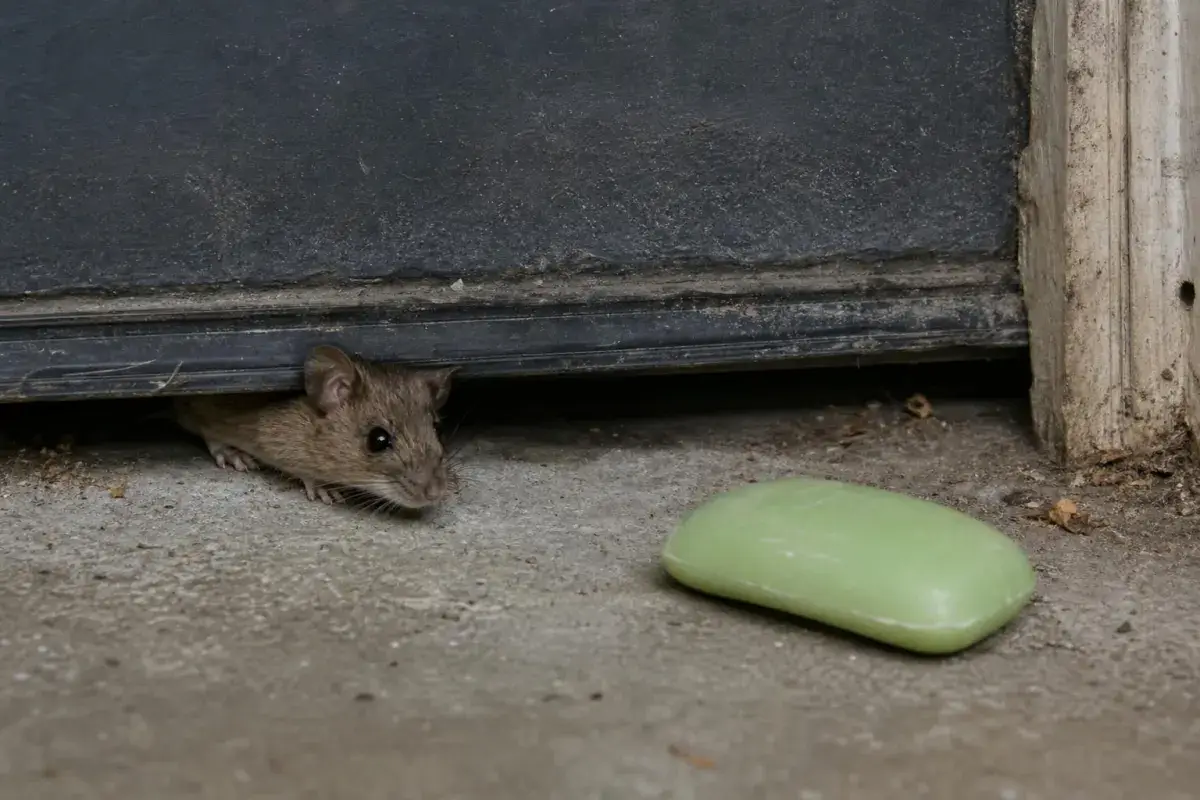
Third, a mouse’s needs beat its nose. Basically, a mouse that has found food, water and a warm nesting spot is not going to leave because of a bar of soap. Especially once the weather turns cold, shelter matters more to them than a smell they dislike.
What the Research Says About Soap and Scent Repellents
Since nobody has tested Irish Spring on mice, the closest evidence comes from two places: research on odor repellents for rodents, and research on soap as a deer repellent. Neither one is encouraging.
The one registered odor repellent only partly worked
Balsam fir oil is sold as a rodent repellent pouch. When it was registered, the EPA’s registration decision reported about 68% repellency to mice over 31 days. Additionally, the EPA noted the study design had flaws. That is the best case for a registered scent product. A bar of soap never went through that testing at all.
Soap ranked low even for deer
Most of the Irish Spring buzz started with deer, not mice. A review from Iowa State University summarizes a 1991 study where bars of soap were less effective on deer than several other repellents. More importantly, none of the repellents worked once the deer were hungry. Mice are the same way. Hunger and cold override a smell.
Any effect is temporary
A University of Georgia wildlife specialist put it simply in a UGA Extension report: deer repellents are all “temporary at best.” Fragrance fades as the bar dries out. As a result, even if the soap bothers a mouse on day one, it will not bother it for long.
Mice do react to some odors. The strongest reactions come from predator scents like cat odor, not from perfume. Even then, the effect is limited. In a 2021 PLOS One study, female lab mice visited boxes with cat odor less often, but male mice showed no significant avoidance. The authors concluded the avoidance does not last once the mouse learns no predator is there.
The Internet Center for Wildlife Damage Management reaches a similar conclusion. It says chemical repellents are seldom practical for mouse infestations, and there is little information on whether mint oil and similar products work at all.
If a predator smell does not hold mice off for long, a bar of scented soap is not likely to do better.
Why Mice Ignore (or Eat) the Soap
There are a few reasons homeowners see mice right next to the soap they set out.
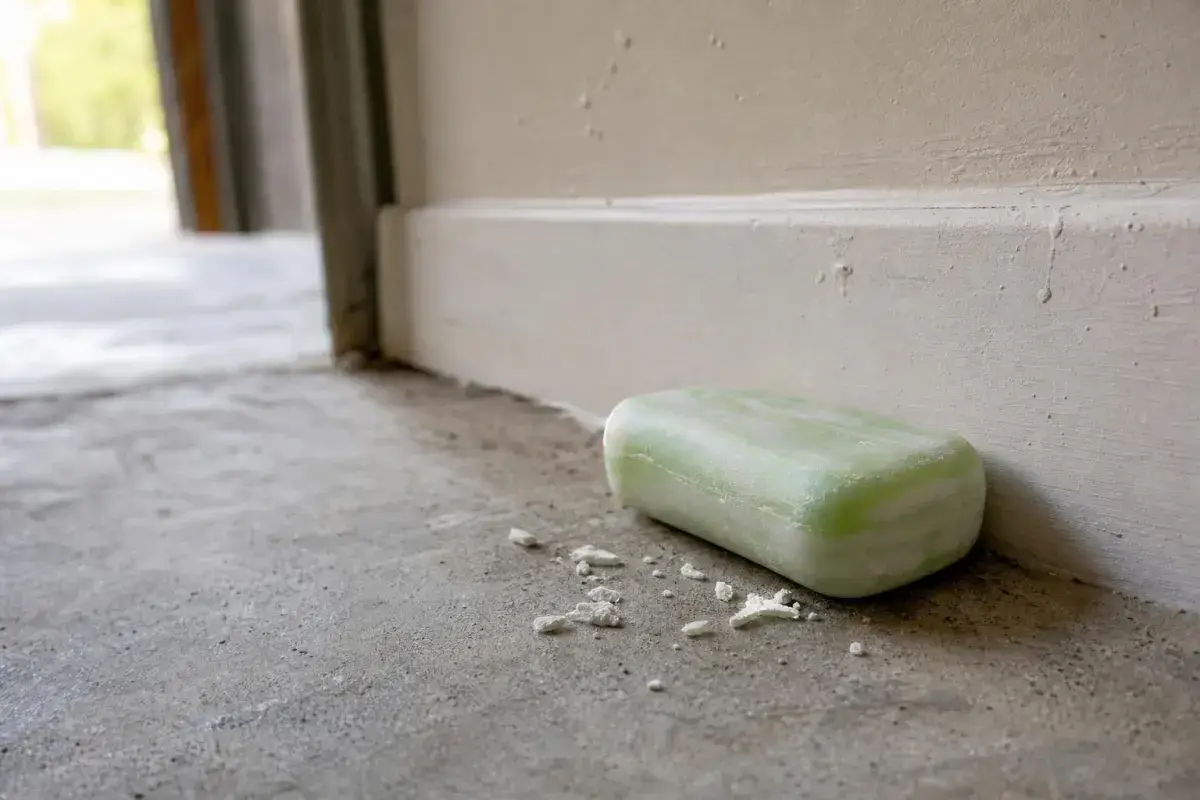
- Soap is basically fat. Bar soap is made from fatty acid salts. Rodents and other animals will gnaw on it. Gnaw marks on a bar are a clear sign the soap is not repelling anything.
- Mice live close to their food. According to the University of California, house mice seldom travel more than 30 feet from their nest and food. So if the food is in your pantry, they stay near your pantry, soap or no soap.
- They breed fast. The same University of California guide notes a female can have 5 to 10 litters a year, with 5 or 6 pups each. A few weeks of “maybe it’s working” lets a small problem grow.
- The smell fades before they give up. A drying bar loses scent over days and weeks. Mice are patient. They wait it out.
Does Irish Spring Work Better in Garages, Cars or RVs?
People often try soap in places they cannot easily seal, like garages, sheds, stored cars, boats and RVs. It makes sense to want an easy fix there. Unfortunately, the same problem applies. A stored vehicle is quiet, dark and sheltered. That is exactly what a mouse wants, and a soap bar does not change it.
In these spaces, you will get better results by:
- Moving or driving stored vehicles regularly so they are not a quiet nesting spot.
- Removing food, birdseed, pet food and nesting material like rags and cardboard.
- Covering openings, like vents and cabin air intakes, with metal mesh.
- Setting traps and checking them often.
Basically, soap is a hope, not a plan. If you are already seeing droppings or gnawing, it is time to go after the mice directly.
What Actually Keeps Mice Away
The good news is that the methods that work are not complicated. The CDC boils rodent control down to three steps: seal up, trap up and clean up. Here is how that looks in a real home.
Mice can fit through a hole the width of a pencil, about 1/4 inch. Walk the outside of your home and look at gaps around pipes, dryer vents, AC lines, garage door seals and foundation cracks. Pack small holes with steel wool and seal over it with caulk. Use hardware cloth or metal sheeting for bigger openings. Mice chew through foam, rubber and wood, so metal matters.
Store pantry food, pet food and birdseed in sealed plastic or metal containers. Clean up crumbs and spills, especially under appliances. Cut back clutter in garages and basements. Additionally, pull mulch and stacked firewood away from the foundation, since mice love to nest under both.
Sealing alone can trap mice inside, so you need to remove the ones already there. Snap traps baited with a little peanut butter work well for homeowners. Set them along walls where you see droppings, with the bait end against the wall. Keep trapping until you stop catching mice. For more options, see our guide to the best mouse bait.
Do not sweep or vacuum droppings. That can put virus particles in the air. Wet them down with disinfectant first, then wipe them up with paper towels while wearing gloves.
Cleanup is the step people most often get wrong, because sweeping feels like the natural thing to do. Here is what the CDC recommends instead.
How Small a Gap Mice Need
This is the part that surprises homeowners the most. People picture a mouse hole as something you would notice. In reality, it is tiny.
When I explain it to customers, I tell them this: if you can fit the tip of your pinky finger into a gap, a mouse can get in. That is about the size of a dime. For rats, it is about the width of your thumb. That is why a whole-house inspection matters more than any spray, pouch or soap bar. Our exclusion services focus on finding and closing exactly these gaps.
I once took over a home where the previous company had only used snap traps and glue boards. The homeowners said they had not seen results. I set bait, and on the follow-up visit every bit of it was gone, with droppings everywhere. That told me how much activity there was.
From there, it took a long time to find every entry point. I even got on a ladder and sealed around the soffit. We went four months straight with no issues, and then activity came back. I kept looking and finally spotted a twig sticking out above where I had sealed. Squirrels had chewed a big hole in the soffit, birds had moved in, and the mice were following the same path. Once we sealed that, the house went quiet.
The lesson: mice come back through the gap you missed. No scent will change that. Finding the opening is what solves it.
When to Call a Professional
A few mice in the garage in October can be a DIY job. However, it is time to call a pro if:
- You keep catching mice week after week.
- You hear scratching in walls or the ceiling at night.
- You find droppings in more than one room, or in the attic.
- You have sealed what you can find and they are still getting in.
Our mouse control service starts with a full inspection to find how mice are getting in. From there, we seal key entry points, place tamper-resistant bait stations, and come back to check activity. Plans for ongoing rodent control start around $49 a month, plus a $200 setup fee on the first visit. All the products we use are EPA approved and have passed through our internal research team. Each one is something we would be comfortable using in our own homes.
Better Termite has been in the pest control business for 58 years, and we have earned 1,800+ reviews across our locations. We serve homes across Northern Virginia, including Alexandria and Reston.
The Bottom Line on Irish Spring and Mice
Irish Spring soap will not hurt anything, and it might make your garage smell nice. But it is not a mouse repellent. No study shows it works on mice, scent repellents in general are unreliable, and mice will chew soap or simply ignore it. If you want mice gone, seal the gaps, remove the food, and trap or bait the mice already inside.
If you are dealing with mice now or just want someone to look for entry points, call us at 703-683-2000 or email info@bettertermite.com. We are happy to answer questions or set up an estimate.