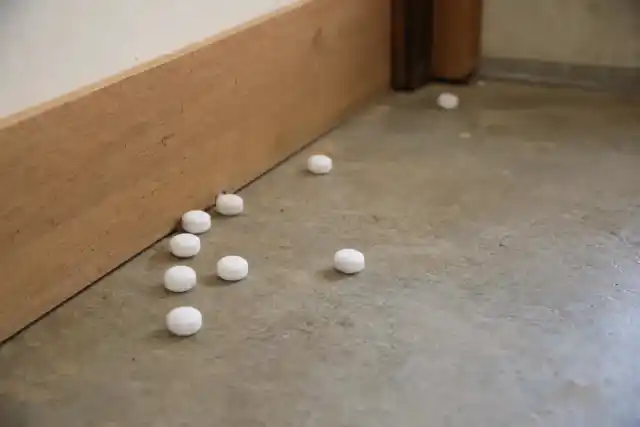

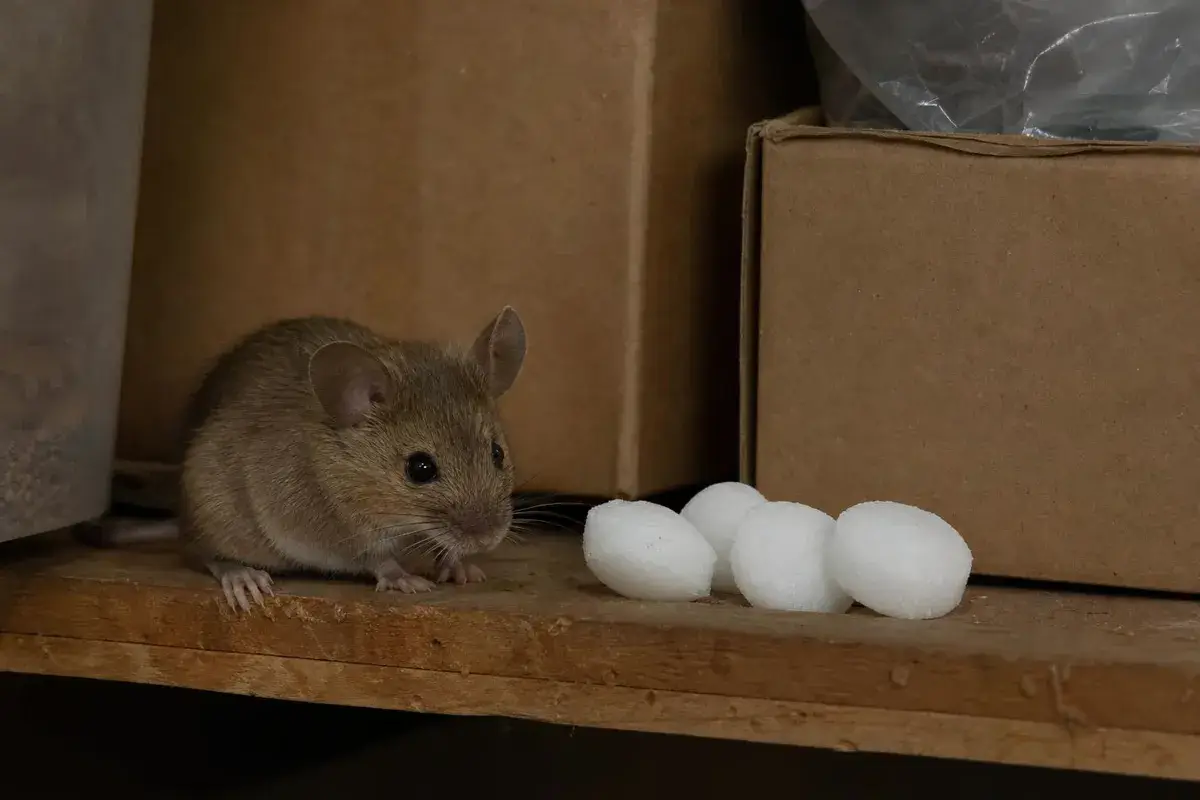
No, mothballs do not repel mice in any practical way. To drive a mouse off, the fumes would have to be strong enough to bother the people living in the house, too. On top of that, mothballs are a pesticide labeled only for clothes moths in sealed containers. So using them for mice is both ineffective and against the label.
I hear about mothballs every fall in Northern Virginia, right when mice start moving indoors. Usually someone has tossed a box of them into the attic, the crawl space or the garage, and the house smells like a cedar chest. Meanwhile, the droppings keep showing up. The mothballs are not stopping anything. The open gap the mice are using is still open.
Why Mothballs Don’t Repel Mice
The idea makes sense on the surface. Mothballs smell awful, and mice rely heavily on their noses. So people figure the smell will chase mice out. In practice, three things get in the way.
First, mothballs were never made for mice. They are designed to kill clothes moths and carpet beetles in a closed space. For example, this EPA-accepted mothball label limits use to “clean, air-tight containers,” garment bags and storage closets. It also says not to use them anywhere the vapors can escape into occupied rooms. Mice are not listed anywhere on it.
Second, the dose that would work is too strong to live with. The Internet Center for Wildlife Damage Management says mothball odor does annoy mammals, but only at high concentrations. Getting there usually means the people have to leave the house too. It also notes that wildlife pros are often called in after mothballs had no effect on the animal.
Third, scent repellents as a group are unreliable. NC State Extension lists mothballs alongside peppermint oil and ammonia, and says repellents like these are not a reliable form of mouse management or prevention. That is the same conclusion I came to with the other household tricks in this series, like Irish Spring soap and dryer sheets.
What’s Actually in a Mothball
Most mothballs sold in the U.S. contain one of two active ingredients. Both are solids that slowly turn into a gas. That gas is what kills moth larvae in a sealed chest. It is also what you breathe when mothballs sit out in the open.
Naphthalene is the older mothball chemical. According to the National Pesticide Information Center, people have developed headaches, nausea, dizziness and vomiting after breathing its vapor. Swallowing a naphthalene mothball, or heavy exposure to the fumes, can cause hemolytic anemia, where red blood cells break apart. Clothing stored with mothballs and not washed afterward has even caused anemia in infants who wore it. Both the EPA and the International Agency for Research on Cancer classify naphthalene as a possible human carcinogen.
Paradichlorobenzene, often shortened to PDB, is the ingredient in many newer mothballs and moth crystals. The label linked above is a PDB product at 99.5% active ingredient. It warns the product causes substantial but temporary eye injury, is harmful if swallowed, and should be kept away from areas children can reach. Breathing the vapor can also irritate your eyes and nose and cause headaches and nausea.
Either way, these are not mild products. Mothballs work by filling a small, sealed space with pesticide vapor. That is exactly what you do not want in a crawl space under your bedroom or an attic over your kids’ rooms.
Mice do react to strong odors. However, there is no published study showing mothballs keep house mice out of a home at the levels people actually use. The NPIC naphthalene fact sheet says the odor is only “thought to be” unpleasant enough to drive animals away. That is a long way from proven.
Here is the bigger problem. A mouse’s needs are simple: food, water and a warm place to nest. In my experience, mice also get used to smells that are not paired with any real danger. So even when a strong odor makes a mouse hesitate, it tends to come back once the smell fades or it learns nothing bad happens. Mothball vapor in an open attic fades fast, because the space is not sealed.
Why Using Mothballs for Mice Breaks the Label
Every pesticide label is a legal document. The PDB label above says it plainly: “It is a violation of federal law to use this product in a manner inconsistent with labeling.” Mothball labels cover clothes moths and carpet beetles in airtight spaces. They do not cover mice, rats, squirrels or snakes.
The National Pesticide Information Center’s guidance on mothball regulation says using mothballs in a way the label does not specify is not only illegal, it can harm people, pets and the environment. It also calls out using them outdoors to control wildlife as a common mistake.
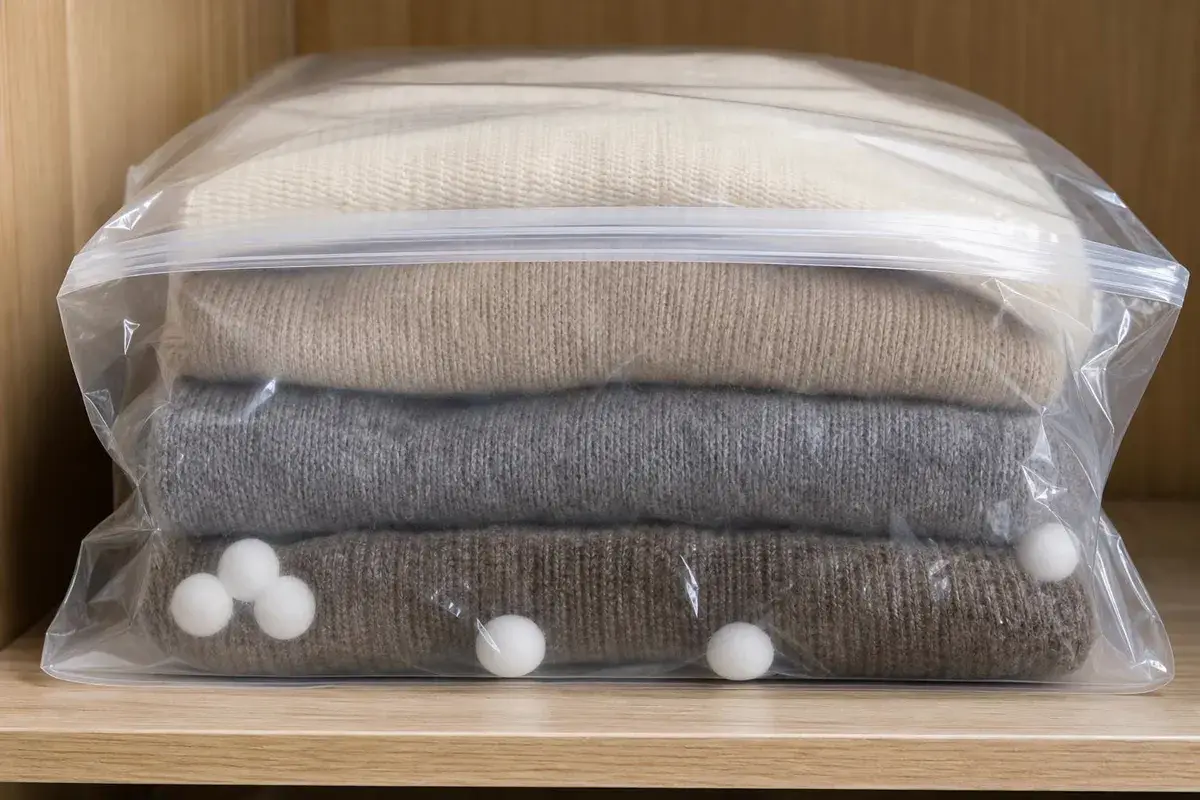
The health side matters more than most people expect. Mothballs left out in the open are within reach of the people and animals in the house, not just the mice.
Where People Put Mothballs (and What Happens)
Most mothball use I see falls into the same few spots. Here is why each one falls short.
- Attics. Attics are vented on purpose, so the vapor drifts out. Meanwhile, the smell can work its way down into bedrooms below. Mice in the attic need a sealed entry point, not a smell. See our guide to mice in the attic.
- Crawl spaces and basements. Air from a crawl space rises into the house. So the fumes end up where you live, while the mice keep using the same gap in the foundation.
- Garages and sheds. These are hard to seal, so people reach for something easy. However, a mouse nesting in a box of old rags is not leaving because of a smell.
- Cars, RVs and boats. Mothballs in a closed vehicle cabin put pesticide vapor right where you sit. Moving the vehicle regularly, removing food and covering openings with metal mesh works better.
- Outside around the foundation. This is the use NPIC calls out specifically. Mothballs outdoors can contaminate soil, plants and water, and pets or wildlife may eat them.
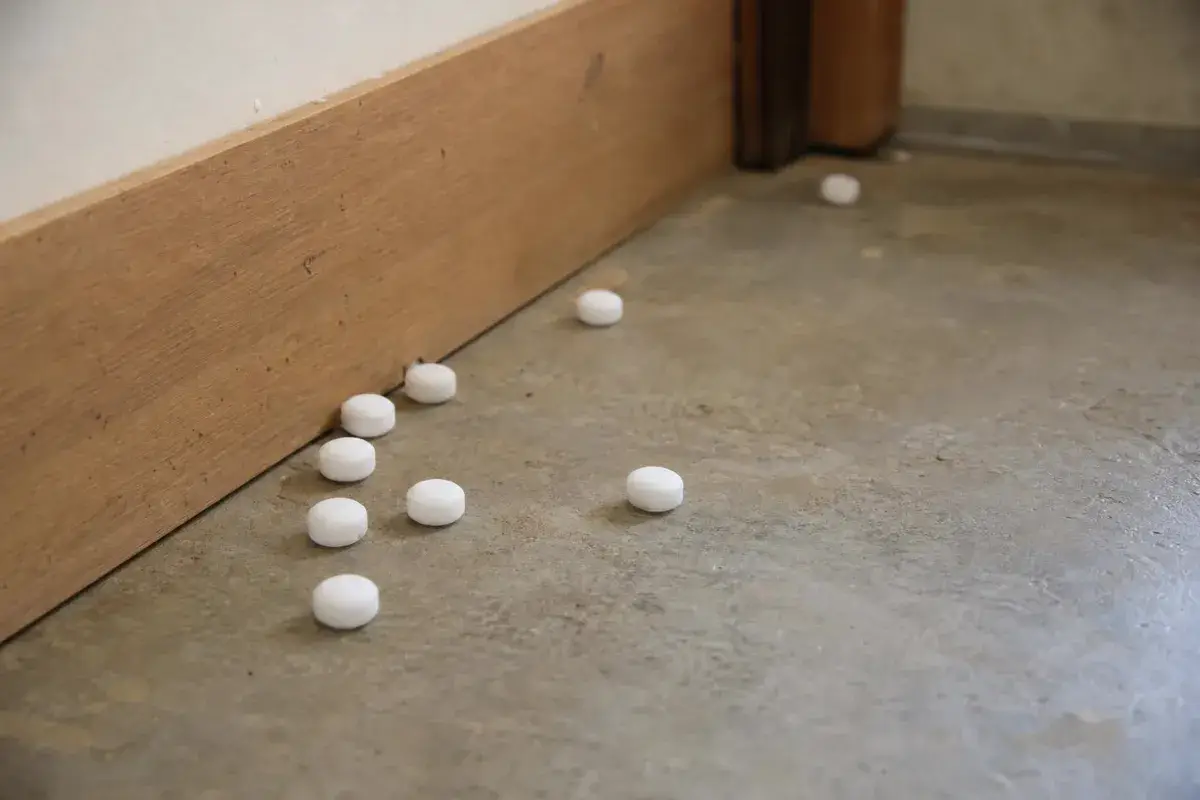
If you have already spread mothballs around the house, the fix is simple. Remove them and air the space out.
Once the mothballs are gone, put that effort into finding the gaps the mice are using.
What About Rats?
The answer is the same, and if anything, it is a clearer no. Rats are bigger and bolder than mice, and they will travel farther for food. Mothballs are not labeled for rats, and a smell will not hold back a rat that has found its way into your crawl space. Our guide to rat repellents covers the rat side in more detail.
What Actually Keeps Mice Away
The methods that work are not complicated. The CDC breaks rodent control into three steps: seal up, trap up and clean up. Here is how that looks in a real home.
Adult mice can get through gaps about 1/4 inch wide. Walk the outside of your home and check around pipes, dryer vents, AC lines, garage door seals and foundation cracks. Pack small holes with steel wool and seal over it with caulk. Use hardware cloth or metal flashing for larger openings. Here is more on how small a hole a mouse can fit through and whether mice can chew through steel wool.
Store pantry food, pet food and birdseed in sealed plastic or metal containers. Clean up crumbs and spills, especially under appliances. Cut back clutter in garages and basements. Additionally, pull mulch and firewood away from the foundation, since mice love to nest under both.
Sealing alone can trap mice inside, so you need to remove the ones already there. Snap traps baited with a little peanut butter work well for homeowners. Set them along walls where you see droppings, with the bait end against the wall. For more options, see our guide to the best mouse bait.
Do not sweep or vacuum droppings, since that can stir particles into the air. Wear gloves, spray the droppings with disinfectant or a bleach solution, let it soak, then wipe up with paper towels. Read more on the health risks of mouse droppings.
Of those steps, sealing is the one that changes the outcome long term. A smell, whether it is mothballs, peppermint or an ultrasonic repeller, does nothing about the gap the mice are using. That is why our exclusion services focus on finding and closing those gaps.
One of our registered technicians, Daren, took over a home where the previous company had only used snap traps and glue boards. The homeowners had not seen results. Daren set bait, and on the follow-up every bit of it was gone, with droppings everywhere.
It took a long time to find every entry point. He even got on a ladder and sealed around the soffit. The house went four months with no activity, and then the mice came back. He kept looking and finally spotted a twig sticking out above where he had sealed. Squirrels had chewed a hole in the soffit, birds had moved in, and the mice were following the same path. Once that hole was sealed, the house went quiet.
That is the lesson I share with homeowners who ask about mothballs. Mice come back through the gap you missed. No smell will change that.
When to Call a Professional
A mouse or two in the garage in October can be a DIY job. However, it is time to call a pro if:
- You keep catching mice week after week.
- You hear scratching in the walls or ceiling at night.
- You find droppings in more than one room, or in the attic.
- You have sealed what you can find and they are still getting in.
We get a lot of calls about mice and rats, especially in older homes around Old Town Alexandria. In our experience, steady baiting at the lower levels of the home is what makes rodent control work, paired with sealing the entry points. Our mouse control service starts with a full inspection to find how mice are getting in. From there, we seal key entry points, place tamper-resistant bait stations, and come back to check activity.
Plans for ongoing rodent control start around $49 a month, plus a $200 setup fee on the first visit. All the products we use are EPA approved and have passed through our internal research team. Each one is something we would be comfortable using in our own homes, and none of them involve filling your attic with mothball vapor.
Better Termite has been in the pest control business for 58 years, and we have earned 1,800+ reviews across our locations. We serve homes across Northern Virginia, including Alexandria and Reston.
The Bottom Line on Mothballs and Mice
Mothballs do not repel mice. They are a pesticide made for clothes moths in sealed containers. The fumes that might bother a mouse are strong enough to bother your family, and using them for mice goes against the label. Save mothballs for your wool sweaters, if you use them at all. For mice, seal the gaps, remove the food, and trap or bait the ones already inside.
If you are dealing with mice now, or you just want someone to find the entry points, call us at 703-683-2000 or email info@bettertermite.com. We are happy to answer questions or set up an estimate.