
Rats hate peppermint, eucalyptus, citronella, lemongrass, ammonia, capsaicin, garlic, and the urine of coyotes and bobcats. Those are the scents worth using, and the table below says how long each one lasts and where to put it.
Here is the part most lists leave out. The aversion fades. The University of California puts it plainly: no repellent has been found to solve a rat problem for more than a very short time. So a scent is a nudge, not a fix. It buys you a few weeks while you close the gaps the rats are actually using.
I’m a licensed technician and the third generation at Better Termite. We run rodent calls all over Old Town Alexandria and DC, and I’ve watched a lot of peppermint spray bottles come out before we got called. Below is what holds up, what washes off, and what the rodents stop noticing.

What Smells Do Rats Hate? The Full List
Rats read the world through their noses. A strong smell in a tight space really does bother them. Here are the scents with something behind them, ranked by how much reaction I’ve seen in the field. Each one has a catch.
| Scent | Why it works | Lasts | Best spot |
|---|---|---|---|
| Coyote or bobcat urine | Smells like a predator | 7-10 days | Perimeter, vents, decks |
| Peppermint oil | Menthol floods their nose | 3-5 days in, 1-2 out | Entry points, baseboards |
| Ammonia | Reads as a rival’s urine | 2-4 days | Trash areas. Never mix with bleach |
| Capsaicin (hot pepper) | Burns when they groom | 2-4 weeks (granular) | Garden beds, mulch, sheds |
| Eucalyptus, lemongrass, citronella | Same overload, new profile | 3-5 days | Rotate in after peppermint |
| Garlic and onion | Sulfur they avoid up close | 2-3 days | Small closed spaces only |
| Cinnamon and clove | Mild irritant, usually mixed | 3-5 days | Attics, storage boxes |
Two honest notes. First, the scent has to be strong and closed in to do anything. A few drops in an open yard is nothing to an animal that can smell a dumpster from a block away. Second, rats go nose-blind. Switch to a new scent every two or three weeks so they never settle into one.
The University of California states that rats “have an initial aversion to some odors and tastes, but no repellents have been found to solve a rat problem for more than a very short time.” NC State Extension adds that volatile oils “disappear quickly once introduced into the environment, and may compromise the efficacy of deployed baits and traps.” In plain terms, a heavy peppermint dose can work against traps you have already set.
That last point catches people out. If you are running traps or bait and you soak the same room in peppermint, you may be steering rats away from the thing meant to catch them. Pick one or the other in a given room. Household tricks like bar soap fare even worse. See my write-up on whether Irish Spring soap repels mice, which applies to rats too.
How Rat Repellents Work
Most repellents target a rat’s strong sense of smell or create unpleasant feelings when rats touch treated areas. Since rats have excellent noses, many repellents use scents that rodents hate.
But repellents have limits. They usually offer short-term relief while you fix the real causes. Rats can also get used to certain smells over time, which cuts how well they work.
The key point: no repellent alone will fix a serious rat problem. Good rodent control uses several methods together.
The University of California puts sealing ahead of every other method: “Seal cracks and openings larger than 1/4 inch with steel wool, wire screen, or sheet metal. Rats can chew through plastic, foam, wood, and caulk.” The same guide notes that rats “especially young rats, can squeeze beneath a door with only a 1/2-inch gap.” No scent closes a half-inch gap.
That is the whole argument for treating repellents as one tool rather than the plan. The gap is the thing that decides whether rats come back.
Natural Rat Repellent Options
Essential Oils
Peppermint oil is one of the most popular natural rat repellent choices. The strong scent overwhelms rodents’ noses and makes treated areas less appealing. Other oils like eucalyptus, lemongrass, and citronella also show promise.
To use peppermint oil, mix 10 to 15 drops with water in a spray bottle. Spray around entry points, along baseboards, and in areas where rats might hide. You can also soak cotton balls in the oil and place them in key spots.
Natural repellents lose strength quickly. You’ll need to reapply every few days, especially in damp areas like basements.
Predator Urine
Coyote and bobcat urine can trigger rats’ natural fear response, making them avoid treated areas.
According to research in Physiology & Behavior, predator urine creates real avoidance behavior in lab rats. Rats exposed to coyote and bobcat scents changed their movement patterns and spent less time in treated areas. This shows the repellent works through actual fear, not just smell.
Soak cotton balls in predator urine and place them where rats are active. Replace them every 7 to 10 days as the scent fades. This works best for outdoor use around the perimeter of your home.
Plants That Repel Rats
Some plants naturally push rodents away with their strong scents. Mint, marigolds, and garlic can help keep rats out of your garden and outdoor areas. Plant these around your foundation or where you’ve seen rat activity.


Rat Repellent for Outside: What Survives the Weather
Outdoors is a different job. Sun, rain and open air strip a scent in a day or two. And the rat has plenty of other places to go. If you are buying a rat repellent for outside, buy the kind that lasts. Then put your real effort into what is feeding and sheltering them.
What holds up outside, in order:
- Granular predator-scent or hot-pepper products. Granules sit in the soil and release slowly. That makes them last weeks longer than a spray. Spread them in an unbroken band 2 to 3 feet off the foundation, then again at burrow openings and fence lines.
- Predator urine on cotton or in a wick station. Good for a deck, shed or crawl space vent, where the smell stays penned in. Replace it every 7 to 10 days, sooner after a storm.
- Oils. Weakest outdoors. A peppermint spray on a Northern Virginia July afternoon is gone by evening. Use them in covered spots like under a porch or inside a detached garage, not across a yard.
What actually moves the needle outside is shelter. The University of California’s guidance for yards is about storage and plants, not scent: keep pipes, lumber, firewood, crates and gardening equipment tidy and off the ground; thin or remove climbing hedges such as English or Algerian ivy, star jasmine and honeysuckle, which the guide calls conducive to roof rat foraging; and remove fallen fruit and nuts under trees. Add secured trash lids and picked-up pet food and you have done more than any bottle will. On rat and mouse control in Annandale I see the same short list over and over: a woodpile against the shed, ivy running up a fence, and a bird feeder twenty feet from the back door.
The University of California notes that “tidy, off-the-ground storage of pipes, lumber, firewood, crates, boxes, gardening equipment, and other household goods will help reduce the suitability of the area for rats,” and that climbing hedges on fences or buildings “should be thinned or removed if possible.”
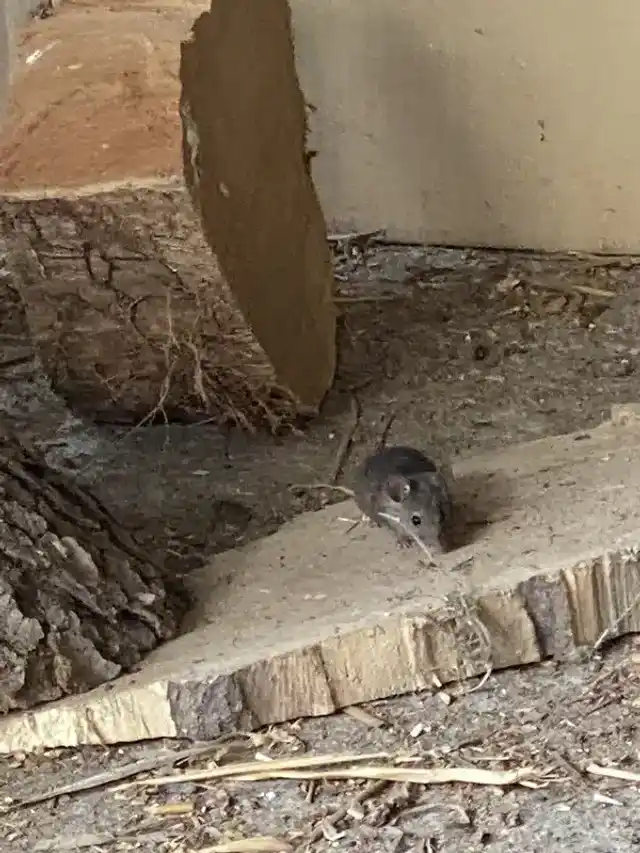
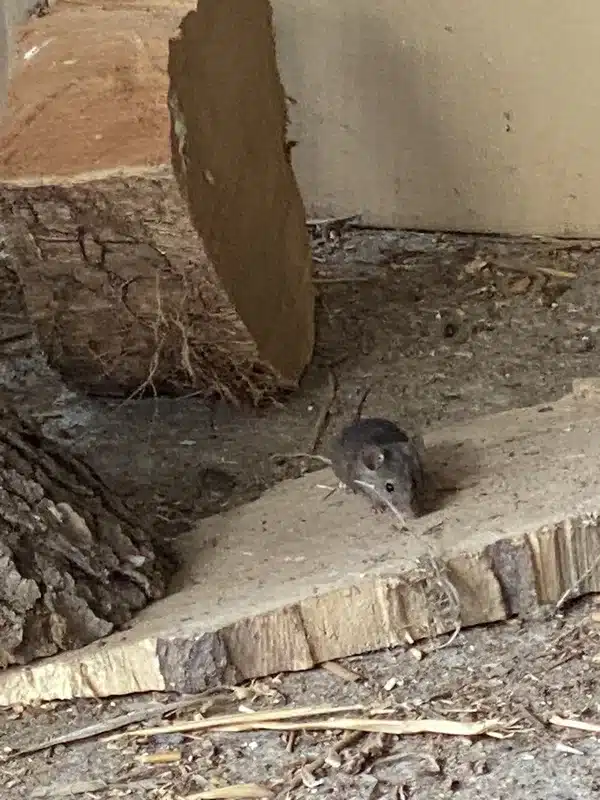
That woodpile in the photo at the top of this page is the exact setup I mean. Rat pressure in the DMV is real, and it is mostly a food-and-shelter story. DC Health’s rodent program found and treated 25,720 rat burrows across all eight wards in 2025. It had handled close to 10,000 more by the time it launched its rodent control dashboard in July 2026. Those burrows sit in alleys, under sheds and behind restaurant blocks. A scent barrier does not reach any of them.
Commercial Repellent Options
Ultrasonic Devices
Ultrasonic repellers send out high-pitched sound waves that humans can’t hear but are supposed to bother rats. These plug into wall outlets and claim to keep rats away. Save your money. (We break down the research in does an ultrasonic pest repeller work.)
Rats do jump at a strange noise. They also stop caring about it fast, usually inside two weeks. I have walked into houses with four of these plugged in and rat droppings on the floor right under them.
The University of California is direct about this. Rats “quickly become accustomed to repeated sounds,” which makes high frequency and ultrasonic devices “ineffective for controlling rats in homes and gardens.” Their guidance groups these with other scare devices that rats simply learn to ignore.
If you already own one, know that the sound will not pass through walls or furniture. It only reaches the open floor in front of it. Treat it as a small extra, never as the plan.
Chemical Repellent Sprays
Sprays with capsaicin, piperine, or other irritants can keep rats from certain spots. They work by creating an unpleasant feeling when rats touch treated surfaces.
Look for products made for outdoor use if you’re treating exterior areas. Many are EPA-approved and classed as minimum-risk products.
Granular Repellents
Granular products spread around your home’s perimeter or in problem spots. They hold scents that rats dislike and create a barrier effect.
Apply them following label directions. Focus on areas where rats could get in. Reapply after heavy rain or as the label suggests. For more, see our guide on Rat Lifespan: How Long They Live & Why It Matters.
Natural vs Commercial Comparison
| Natural Repellents | Commercial Products | |
|---|---|---|
| Cost | $5-15 per month | $20-50 per month |
| Reapply | Every 3-5 days | Every 2-4 weeks |
| Risk Level | Low risk for pets and kids | Follow label directions |
| Best For | Prevention and light problems | Moderate to heavy activity |
How to Apply Repellents
Find the Active Areas
Before using any repellent, figure out where rats are actually going. Look for droppings, gnaw marks, and grease stains along walls. Focus your efforts on these confirmed spots instead of treating at random.
Pay close attention to entry points: gaps around pipes, cracks in the foundation, and spots where different building materials meet. Rats use these over and over.
Build a Barrier
Apply repellents in solid lines, not random dots. This creates a scent wall that works better. For liquid sprays, overlap your coverage slightly so there are no gaps.
When treating around your home, go 2 to 3 feet out from the foundation. This wider barrier gives better protection.
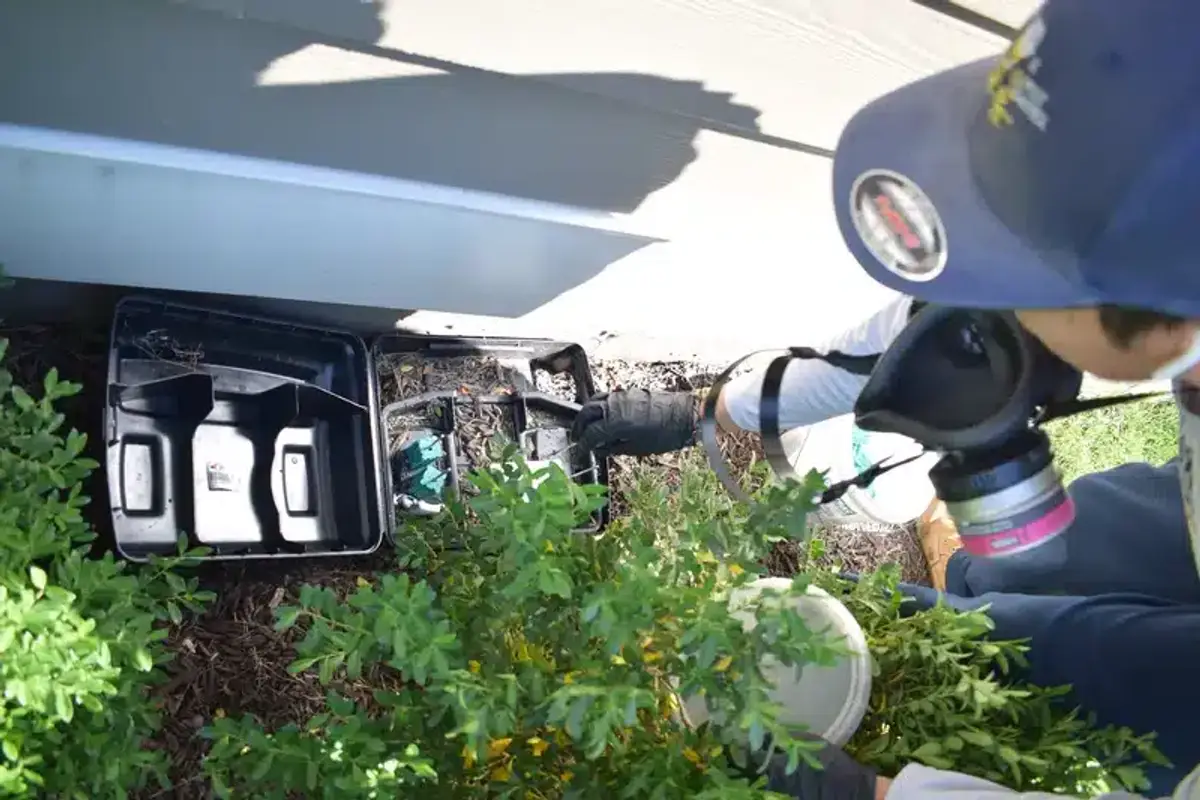
Timing and Reapply Schedule
Most repellents fade within 7 to 14 days, especially natural ones. Set reminders to reapply on schedule. Rain and humidity speed up the breakdown.
For the best results, apply repellents in the evening when rats are most active. This puts fresh scent out during peak hours.
- Target active areas: Focus on spots with fresh droppings or gnaw marks
- Build solid barriers: Apply in unbroken lines, not random spots
- Watch the weather: Apply during dry spells so rain doesn’t wash it away
- Stick to a schedule: Reapply natural repellents every 5 to 7 days
Staying on schedule with repellent application is the biggest factor in whether they work. But when repellents alone aren’t cutting it, it’s time to bring in help.
When Repellents Aren’t Enough
Active Infestations
Repellents work best for minor problems and prevention. If you have multiple rats already living in or near your home, repellents alone won’t solve it.
In my work in Old Town Alexandria, homeowners often get frustrated when repellents don’t clear out established populations. Once rats have set up territories and food sources, they’re more willing to put up with bad smells. That is the point where most of our rat control work in Alexandria starts, because baiting and sealing are what actually shrink a population that has already settled in.
Daren, one of our registered technicians, worked the worst rat job we have had. It was an old row house off Edison Street down in Delray, right when Covid hit. The music theater behind those houses shut down. The rats lost their food source and moved into the homes. Toward the end he was going out every week with 15 to 20 snap traps in the crawl space, and every week there’d be nothing but skin and bones left where the rats had eaten each other. He counted at least 40 or 50 killed down there, and thinks the real number was closer to 60 or 70. Here is why it never ended. Those houses went up in the late 1940s, and the firewall between units isn’t always intact. So the rats just worked their way unit to unit. No scent barrier touches a problem like that. It needed a contractor, and every neighbor on the row sealing up at once.
That is the honest ceiling on repellents. They are for keeping a clean house clean, not for evicting a colony.
Rats Adapt
Rats are smart and adapt to their surroundings. If they smell the same repellent for weeks, they start to ignore it.
To fight this, switch between different repellent types every few weeks. This keeps rats from getting used to any one method.
Weather Factors
Rain, humidity, and wind all affect how well repellents work. Basement areas with poor airflow may hold scents longer. Outdoor treatments face faster breakdown from weather.
Knowing these limits helps you set realistic expectations for your situation.
Combining Repellents with Other Methods
Pair Repellents with Exclusion
The strongest approach uses repellents alongside sealing work. Start by closing entry points with steel wool or wire mesh. Then apply repellents around the sealed areas to stop rats from trying again.
Focus on gaps bigger than 1/4 inch. Common entry spots include areas around utility lines, foundation cracks, and gaps under doors.
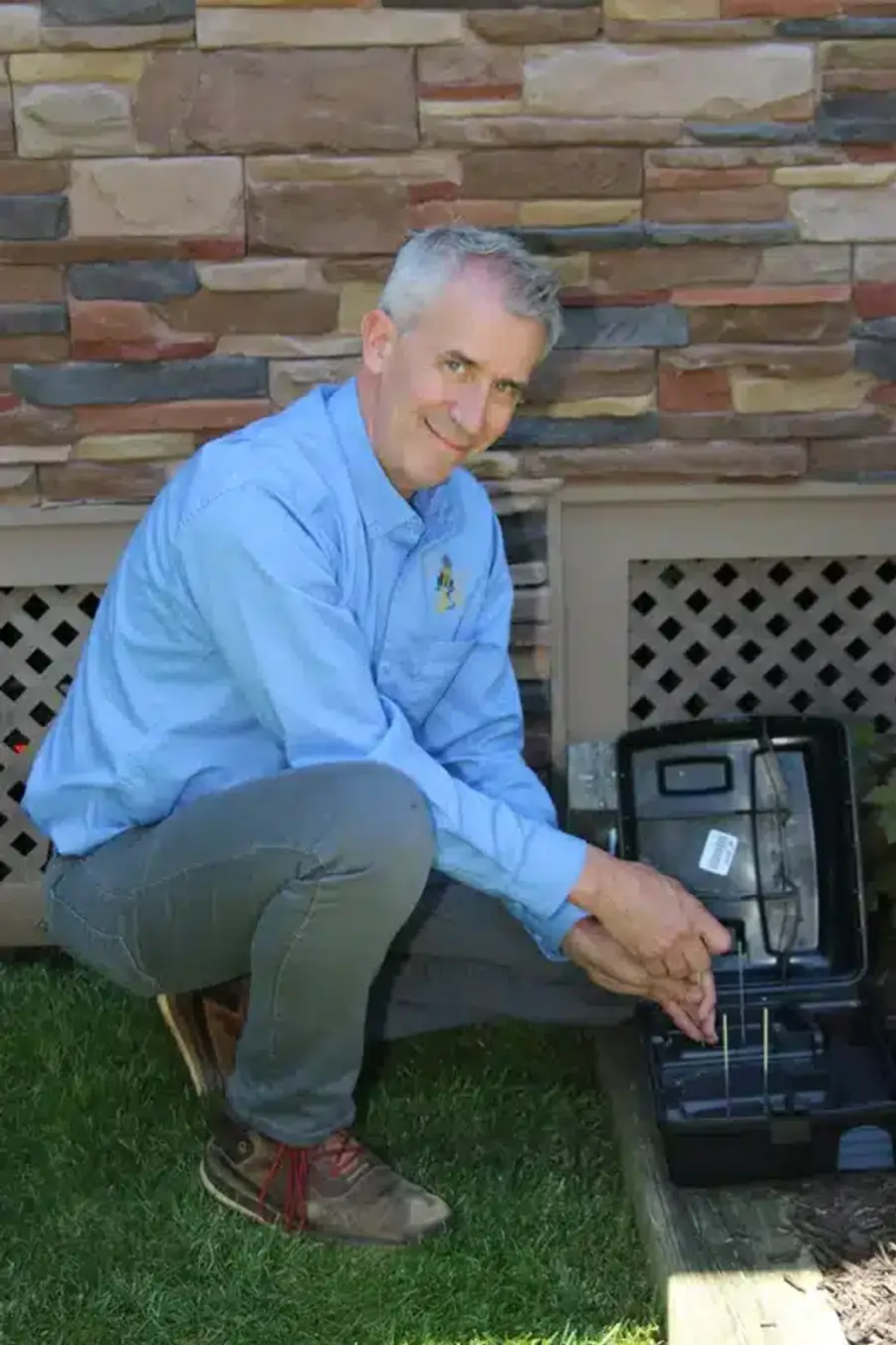
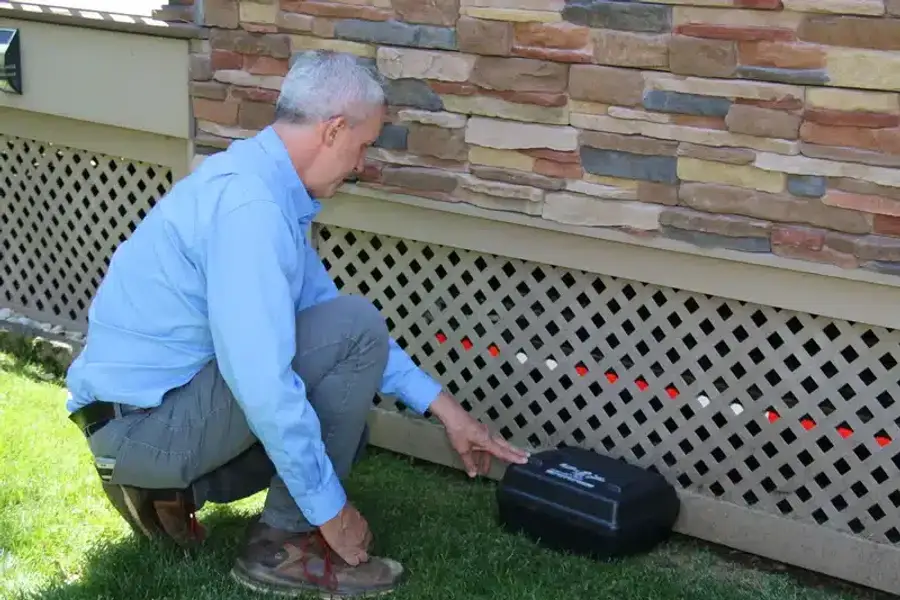
Daren gives customers a simpler test than a tape measure. If you can fit the tip of your pinky in the gap, a mouse can get in. That is about the size of a dime. For a rat, it is about a thumb’s width. People are always shocked; they assume the hole has to be much bigger. Once you start looking with that in mind, you find them fast. Check where a pipe or cable comes through, and where two building materials meet. If the activity is over your head instead, our guide to rats in the attic covers the soffit and roofline gaps that scent will never reach, and how to get rid of rats in your house walks the full removal sequence.
Clean Up Food and Water
Remove the food that draws rats to your property. Keep food in sealed containers, pick up pet food right away, and use tight-fitting lids on trash cans. Without easy food, repellents work much better.
Cut off water sources too: fix leaky pipes, remove pet water dishes at night, and dump standing water. Rats need both food and water to survive.
Professional Pest Control
For ongoing rat control, a pro can track activity and change the plan as needed. Our four-step rodent protocol is inspection, targeted baiting, follow-up checks, and long-term upkeep. It starts around $49 a month, which is about what people spend on repellents they end up replacing anyway.
The monitoring is the part that matters. Bait take tells you whether the population is going up or down, which no scent barrier can tell you. It is also how you find out you have been fighting the wrong species. A Norway rat versus a roof rat changes where the treatment goes, ground level or overhead.
Precautions When Using Repellents
Protecting Your Family and Pets
Most natural repellents pose low risk, but some care is needed. Peppermint oil can irritate sensitive skin. Keep oils away from small children and pets who might swallow them.
For commercial products, read labels and follow directions. Products with capsaicin can irritate eyes and skin if handled wrong.
Pets and Strong Scents
Dogs and cats may react to the strong smells in repellents. Apply treatments when pets are away and let the area air out before letting them back in.
Put soaked cotton balls where pets can’t reach them. If you have curious pets, use enclosed stations designed to keep repellents contained.
When dealing with ongoing rat problems, professional pest control is the most reliable path. Our work with hundreds of DMV homes, from close-in neighborhoods to newer communities where we provide rodent control in Gainesville, has shown that targeted baiting at ground level works better than attic treatments that some companies push.
If rats stick around despite your repellent efforts, call Better Termite & Pest Control at 703-683-2000 or email info@bettertermite.com for an inspection and a custom treatment plan.