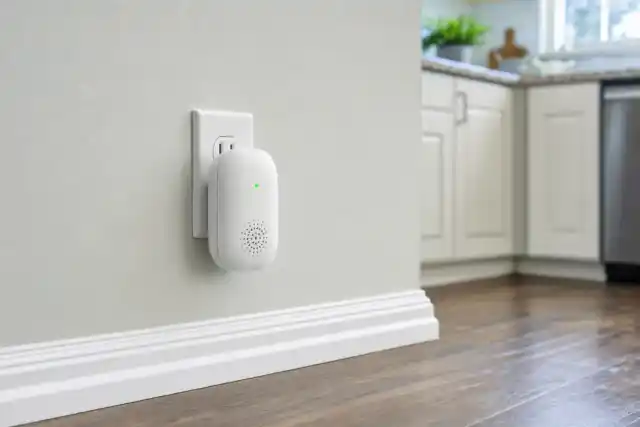

No, an ultrasonic pest repeller does not work reliably. Mice and rats may stay away from the device for a few days, but then they get used to the sound and come right back. Insects like cockroaches, ants and mosquitoes don’t respond to it at all in controlled tests.
I’m George Schulz, a licensed technician and the third generation at Better Termite & Pest Control. We get a lot of calls about mice in Old Town and across Northern Virginia, and many of them start the same way: “I plugged in those sound things, and the mice are still here.” Below, I’ll walk through what the research actually says for each pest, why these devices fall short, and what to do instead.
The Short Answer: Do Ultrasonic Pest Repellers Work?
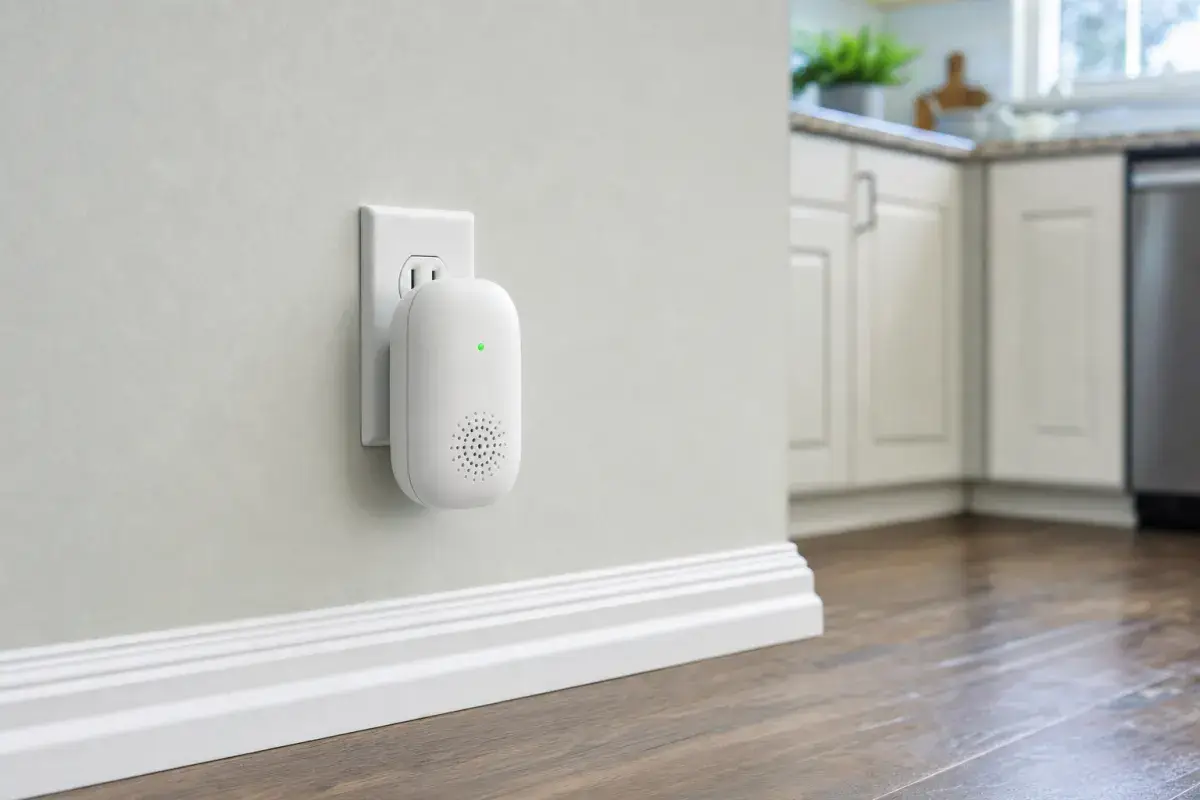
An ultrasonic pest repeller is a small plug-in box. It gives off high-pitched sound, usually above 20,000 hertz, which is too high for most people to hear. The idea is that the noise annoys mice, rats and bugs so much that they leave.
The problem is that the idea doesn’t hold up in real homes. The Federal Trade Commission warned more than 60 manufacturers and retailers in 2001 that their claims needed real scientific support. The FTC also noted that any reaction from rodents would be “temporary at best,” and that ultrasound does not control insects.
Does an Ultrasonic Repeller Work on Each Pest?
Here’s what the testing found for each of the pests we see most in the DC area.
Verdict: a short-term effect at best.
Rodents can hear ultrasound, so they may avoid the spot right in front of the device at first. However, they quickly get used to a sound that repeats over and over. After that, they go back to their nests and feeding routes.
This matters here because the house mouse and the Norway rat are two of the most common rodents in Virginia and Maryland homes. Both nest inside wall voids, ceilings and crawl spaces. Those are exactly the places a plug-in unit can’t reach.
Verdict: no useful effect.
A 2006 study in Insect Science tested three commercial ultrasonic devices against German cockroaches. None of them repelled the roaches well enough to matter.
German roaches live in tight cracks near food and water, like behind the fridge or under the sink. A device on the wall won’t push them out. Baits, growth regulators and cleanup do. If you’ve been trying home remedies, our look at whether peppermint oil repels roaches covers another popular option that falls short.
Verdict: no effect on bites.
Electronic mosquito repellers, the small buzzing units people wear or plug in, have been tested a lot. A Cochrane systematic review pulled together 10 field studies. It found no difference in how many mosquitoes landed on people with or without the devices.
For mosquitoes, dumping standing water and using an EPA-registered personal repellent work far better. For a yard problem, a targeted mosquito control program goes after the breeding sites.
Verdict: no proof they work.
A University of Arizona Extension review of the research found that devices tested on ants had no repelling effect in either the field or the lab. Tests on bed bugs found the same thing.
I couldn’t find any extension or peer-reviewed test showing ultrasonic devices repel spiders, centipedes or stink bugs. In my experience, those pests come in because of moisture, light and gaps. Sound has nothing to do with it.
In other words, the pest changes but the result does not. These findings come from many different labs over several decades.
The University of Arizona Extension summed up decades of testing in one line: commercially available sonic devices have been shown to be ineffective. Their review covers several key studies:
- German cockroaches: a 1986 test of nine devices found none of them caused a response.
- Ants: a 2002 Kansas State study found three devices did not repel ants in the field or the lab.
- Bed bugs: a 2012 test of four devices found no effect.
- Mosquitoes: one study of three devices found bite rates went up by as much as 50% with the devices running.
- Rats and mice: they showed a mild early dislike of the sound that faded as they got used to it.
Why Ultrasonic Pest Repellers Don’t Work
There are three main reasons these devices let homeowners down. Each one is a basic physics or biology problem, not a quality issue with one brand.
1. Pests Get Used to the Sound
Animals learn to ignore sounds that never lead to harm. Rodents are very good at this. The Maryland Department of Agriculture’s rodent manual notes that rodents quickly get used to repeated sounds and return to their nests and feeding routes. Additionally, it reports that about half of the sound energy from even the most powerful devices is gone within 15 feet.
2. Walls and Furniture Block the Sound
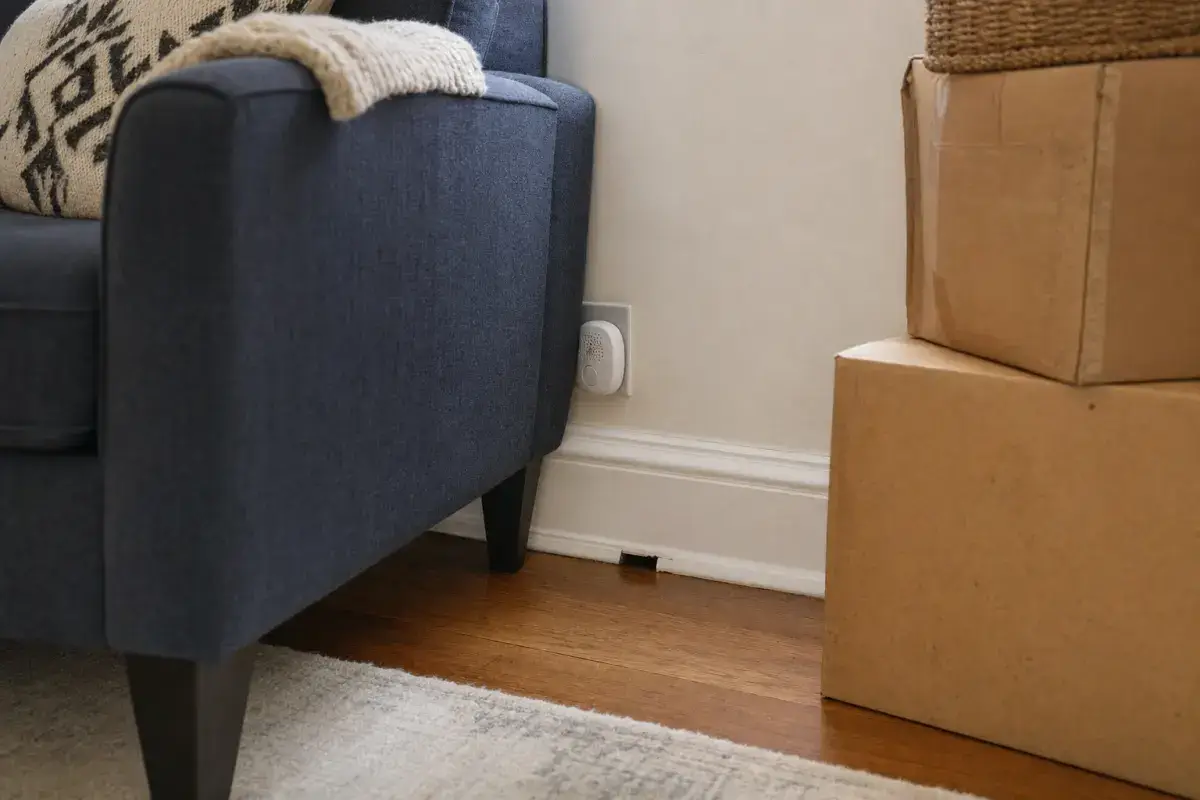
Ultrasound travels in a straight line, kind of like a flashlight beam. It doesn’t bend around corners well. As a result, every couch, cabinet and stack of boxes creates a “sound shadow” where pests can sit undisturbed. The same Maryland manual points out that any object in the room blocks the sound.
3. The Sound Can’t Reach Where Pests Live
Mice nest inside walls, under insulation and in crawl spaces. Roaches hide in cracks. Plug-in units sit in open rooms. Basically, the device is in the one spot pests spend the least time.
So if a repeller isn’t the answer, what is? First, it helps to know why these devices are so easy to buy.
Why They’re Still on Store Shelves
Many people think a product sold in a big store must have been tested. That isn’t true for these devices.
According to the EPA’s rules for pest control devices, a device does not need to be registered the way a pesticide does. It must be made in an EPA-registered facility, and its label can’t be false or misleading. However, the seller is responsible for making sure it performs as claimed. In short, no agency tests these products before they go on sale.
That’s also why a box can promise to cover a whole floor or repel every pest. Those claims come from the seller, not from a field trial in a real home.
What Works Instead of an Ultrasonic Repeller
If you bought a repeller because you have mice, here’s the approach that actually works. It’s the same basic order we follow on a rodent job.
Walk the outside of your home and look low. The most common entry points are where utility lines enter the house, the bottom corners of the garage door, weep holes, crawl space vents and old cable lines. Inside, check under sinks and behind appliances.
University of Missouri Extension advises closing any opening larger than 1/4 inch to keep out both rats and mice. Use gnaw-resistant materials like steel wool, hardware cloth, sheet metal or mortar. For bigger jobs, our exclusion services handle the sealing for you.
Place snap traps along walls where you see droppings or rub marks, since rodents travel along edges. Check them daily. For homes with kids or pets, tamper-resistant bait stations are a better fit and are best set by a professional.
Store food in sealed containers, keep trash cans lidded, and pull mulch a few inches away from the foundation. Additionally, clear clutter in garages and basements so mice have fewer places to nest.
Of these steps, sealing gaps matters most. Mice can squeeze through openings much smaller than most people expect.
Even one missed gap can keep a problem going for months. Here’s a real example.
Daren, one of our technicians, once took over a home where mice kept coming back. The previous company had relied on snap traps and glue boards alone. He switched to bait and spent a long time tracking down every entry point, even sealing up around the soffit from a ladder.
The home went quiet for four months, and then activity returned. Eventually, Daren spotted a twig sticking out above where he’d sealed. Squirrels had chewed a hole in the soffit, birds had moved in, and the mice were following that path. Once that hole was sealed, the activity stopped.
The lesson is simple. Mice keep coming back because there’s a way in. No device in an outlet can close that gap. Finding and sealing the entry point is what ends the problem.
For a deeper look at DIY options, our guides on the best mice repellent and rat repellent compare scents, sprays and other products. We’ve also looked at the old trick of using Irish Spring soap to repel mice.
When to Call a Professional
A plug-in device is often the first thing people try because it’s cheap and easy. That’s understandable. However, if you still see droppings, hear scratching in the walls, or find chewed food packages after a week or two, the device isn’t the answer.
Our rodent control plans start with an inspection to find how rodents are getting in. From there, we set bait stations, seal entry points and come back on a schedule to check activity. We have served the DMV for 58 years and have earned over 1,800 reviews from local homeowners. All the products we use are EPA approved and have passed through our internal research team. If you live near our main office, see our Alexandria rodent control page or our Reston rodent control page.
Conclusion
So, does an ultrasonic pest repeller work? The research says no. Rodents get used to the sound within days, the sound can’t get through walls or furniture, and insects don’t respond to it. The FTC has warned sellers about these claims, and the EPA doesn’t require the devices to prove they work before they’re sold.
Your money is better spent on steel wool, a few snap traps, and a careful walk around your foundation. If the problem keeps coming back, give us a call at 703-683-2000 or email info@bettertermite.com. We’ll help you figure out where pests are getting in and what it will take to stop them.