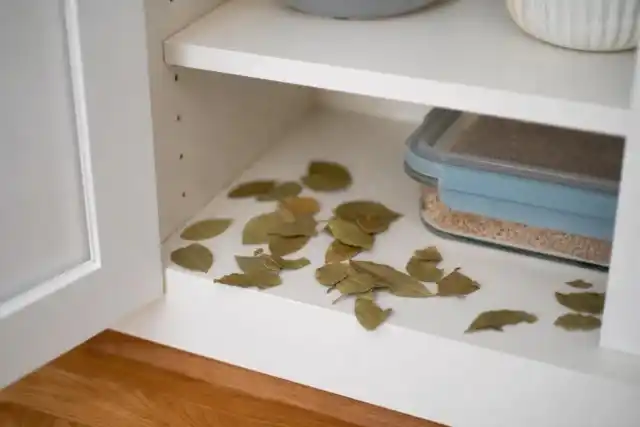

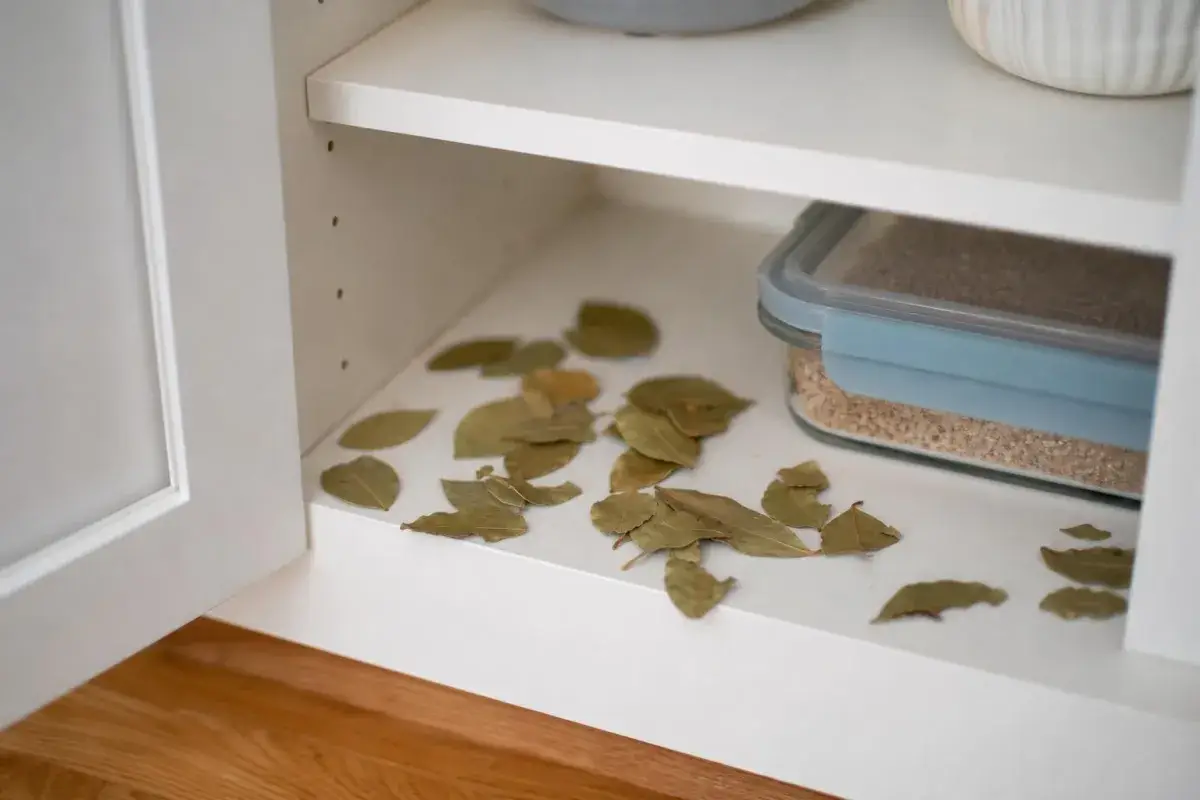
Bay leaves may nudge roaches away from one shelf for a short time, but they won’t get rid of roaches. In a lab study, bay leaf extracts repelled American cockroaches for about 80 minutes and killed none of them. Nobody has shown that dried leaves tucked in a cabinet keep roaches out of a real home.
In my experience, German, oriental and American roaches are all very common in the DC metro area. Bay leaves are a popular first try because you probably already have a jar in the spice rack. They’re cheap and they smell nice. But if you’re seeing small roaches in your kitchen cabinets, a handful of leaves is more likely to move them a few inches than to solve anything.
Do Bay Leaves Repel Roaches? What the Research Shows
The bay leaf roach idea has been around for generations. Basically, people tuck leaves into cabinets and pantries and hope the smell keeps roaches out. However, the actual research on bay leaves and roaches is thin. Here’s what it says.
Bay leaf extracts pushed roaches away in a short lab test
The main bay leaf study came out of Brazil in 1995. Researchers writing in the Anais da Sociedade Entomológica do Brasil noted that people often use bay leaves to keep roaches out of cabinets. But that habit had never been tested. So they tested it.
They made extracts from crushed bay leaves and soaked them into filter paper in small dishes. Then they added American cockroaches and counted where they went every 10 minutes for 80 minutes. The extracts did repel both adults and nymphs. However, they had no killing effect at all. Additionally, the young roaches were drawn in and excited at first before they backed away.
That’s a long way from a few dried leaves on a pantry shelf for weeks at a time.
The main compound only kills roaches at lab doses
Bay leaf oil gets most of its smell from a compound called 1,8-cineole, also known as eucalyptol. A 2017 study in Molecules found it made up about 32% of the leaf oil, followed by sabinene and linalool.
Auburn University researchers tested pure 1,8-cineole on German cockroaches. As a vapor, it was the most toxic of 12 compounds they tested. But it took several milligrams per liter of air inside a sealed chamber to kill half the roaches. Even then, no compound stopped egg cases from hatching. The authors said it would take many treatments to clear a real home.
Meanwhile, a related Auburn thesis found 1,8-cineole was only a moderate repellent. In one test, it kept about 43% of German roaches away from a treated shelter, compared to 76% for the top compound. In other words, the very compound that makes bay leaves smell like bay leaves is not a strong roach repellent on its own.
You may see a claim that a few grams of bay leaves repelled roaches for three days. That study is real, but it tested Syzygium polyanthum, a leaf called “daun salam” in Indonesia. It’s often translated as “Indonesian bay leaf.” However, it’s a completely different plant from Laurus nobilis, the bay laurel sold in American grocery stores.
So that result doesn’t tell you much about the jar in your spice rack. When you read about a bay leaf roach study, check which plant it actually used.
No study shows dried leaves work in a real home
Every bay laurel roach study we could find used extracts or oils in lab dishes or sealed chambers. We could not find a single field test of whole dried leaves in a home. That gap matters. As an Iowa State entomologist told ScienceDaily, there really are no commercial cockroach repellents. Most roach products are designed to kill, not to keep roaches away, because keeping them away is hard to do.
Why Bay Leaves Won’t Get Rid of Roaches
There are three main reasons a jar of bay leaves falls short.
First, the roaches aren’t on the shelf. Most of the population hides in wall voids, under appliances and behind cabinets. A leaf on the shelf doesn’t reach them. At best, they avoid that one spot.
Second, food and water win. Roaches will put up with a smell they don’t like when a meal is close by. As long as there are crumbs, grease or a slow drip under the sink, they’ll keep coming.
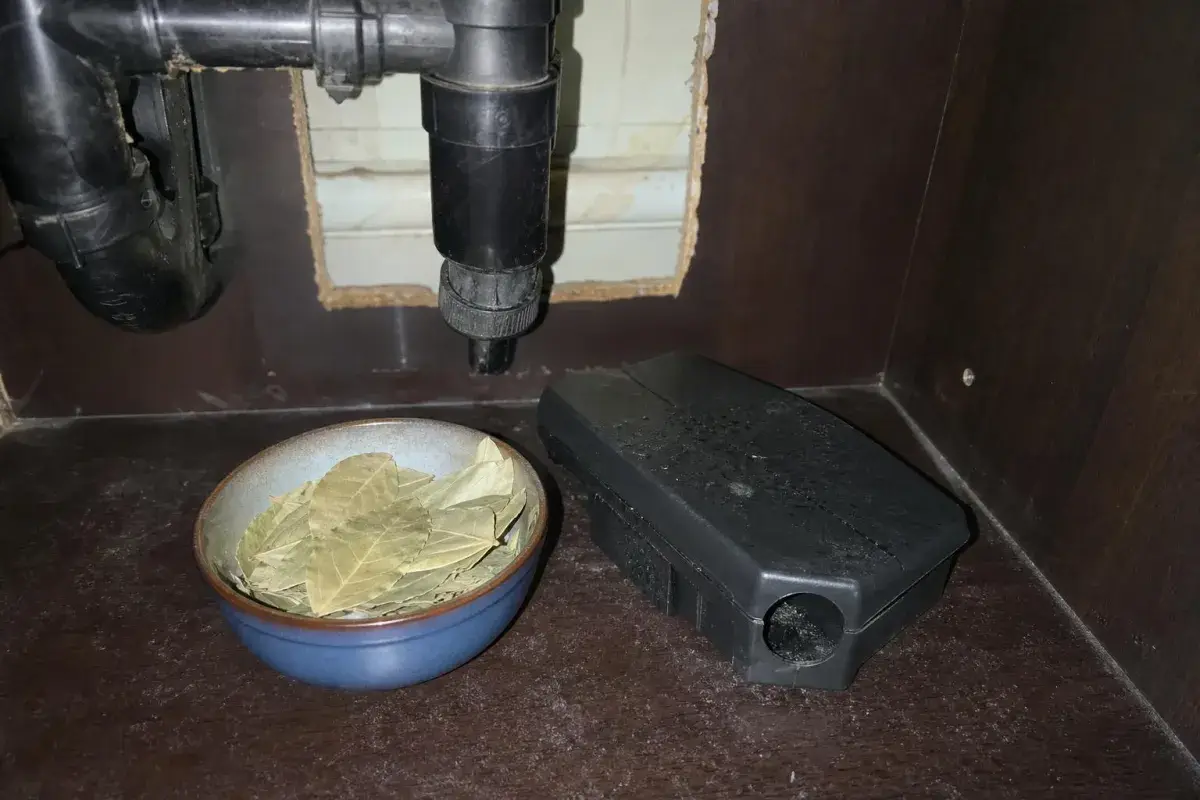
Third, a repellent can spoil your bait. Gel bait works because roaches eat it and carry it back to their hiding spots. A strong scent next to the bait gives them a reason to skip it. So if you use bay leaves at all, keep them away from bait.
That’s especially true for big roaches. With those, the real issue is usually water, not smell.
Big roaches in a house almost always point to moisture. Oriental and American roaches live outside, and they come in looking for water. Old Town Alexandria has a lot of them because so many of the older homes are damp.
I’ll tell people to run a dehumidifier. If they don’t believe they have a moisture problem, I have them set up a hygrometer. Plenty of times a customer swears the house is dry, and the relative humidity comes back at 72%. You want to be around 45–50%.
One house I serviced for years finally got a leaking water pipe replaced. After that, their American and oriental roaches went from a heavy problem to almost nothing. No scent in a cabinet would have done that.
So before you buy another jar of bay leaves, look for leaks, damp spots and open gaps. Those are what keep roaches coming back.
Do Bay Leaves Work on Every Kind of Roach?
The answer depends on which roach you have. According to Virginia Tech’s extension entomologists, American, oriental, German, brownbanded and smokybrown roaches are the species found in Virginia homes. They also point out that popular remedies like borax and baking soda do little to reduce roach numbers. Across the river, the University of Maryland Extension calls the German cockroach the most common species found in homes.
Bay leaves are the wrong tool here. German roaches are small, tan and fast. They live and breed indoors, especially in kitchens and bathrooms. A scent just shuffles them between cracks, and they breed fast enough that a few weeks of guessing lets the problem grow. Start with our guide on how to get rid of German roaches, and see our German roach profile to confirm the ID.
Bay leaves won’t fix the cause. These large roaches live outdoors and wander in for moisture, usually through basements, floor drains and crawl spaces. Drying things out and sealing gaps does far more than any leaf. Learn more about American roaches and oriental roaches. If they’re heavy inside, our American cockroach control and oriental cockroach control services focus on the moisture and entry points.
You don’t need bay leaves at all. Pennsylvania wood roaches live outside in leaf litter and woodpiles and only wander in by accident. They can’t survive and breed indoors, so a few strays usually die off on their own. Sealing gaps under doors does more than any scent.
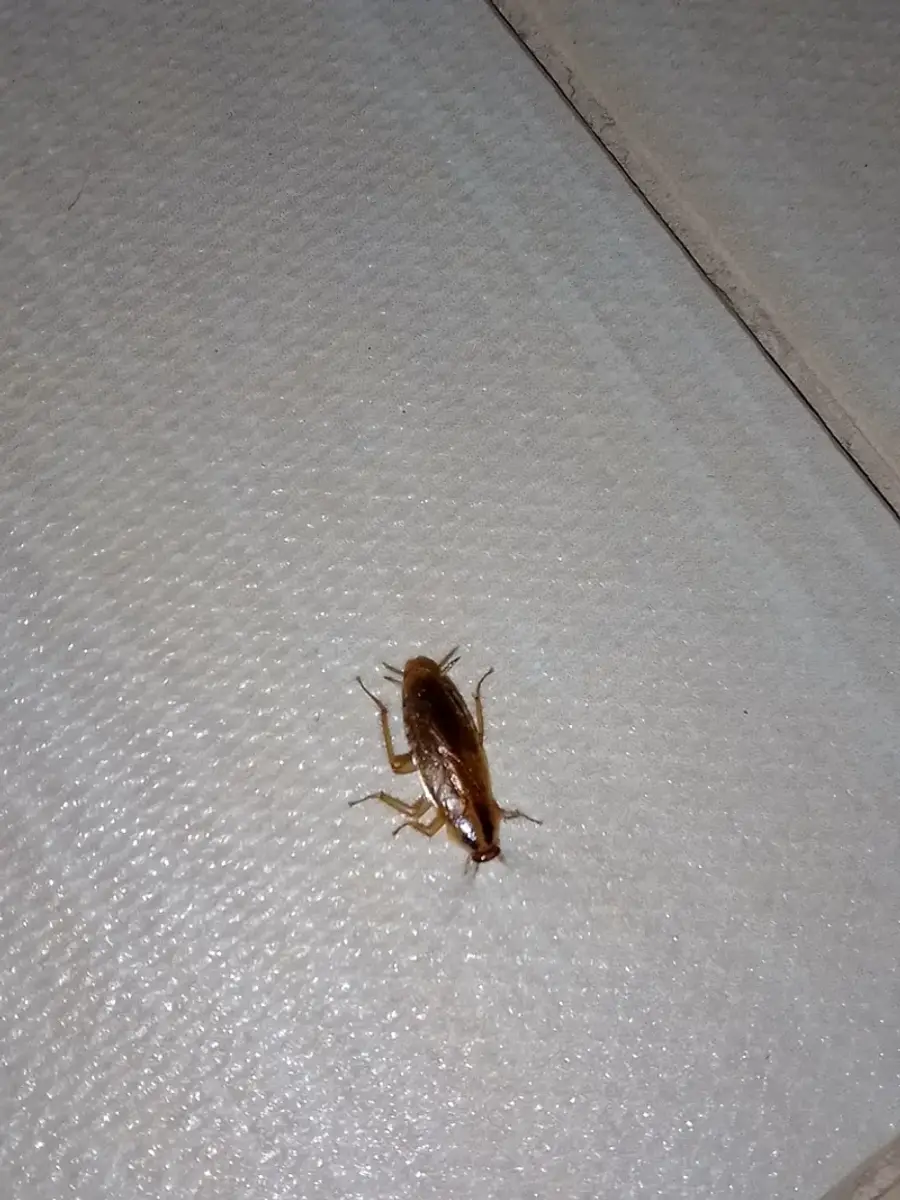
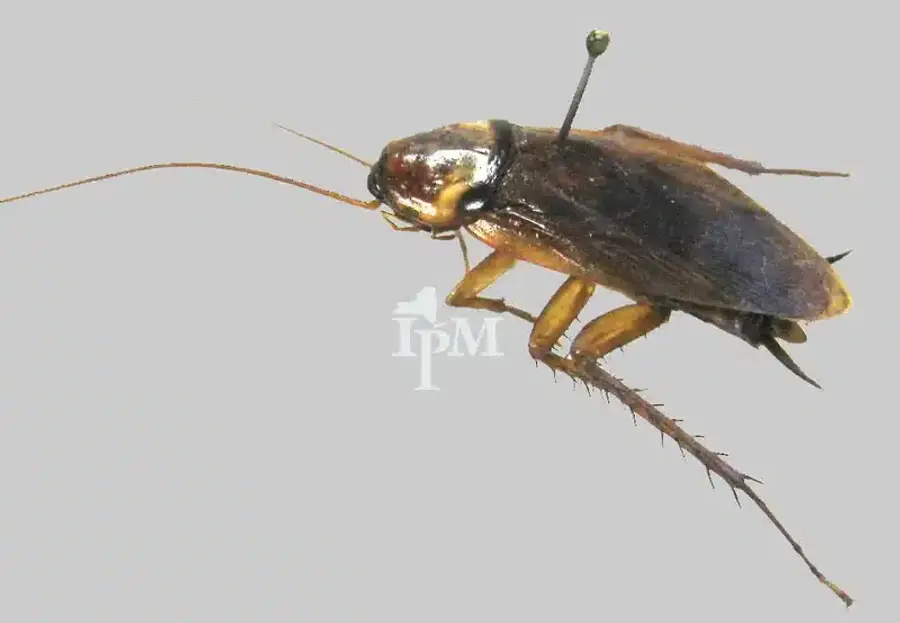
Telling these roaches apart matters, because the fix is different for each one. Size is the quickest clue. Small tan roaches in the kitchen are usually German roaches, while big reddish-brown or black roaches usually came in from outside.
How to Use Bay Leaves for Roaches (If You Want to Try)
Bay leaves won’t hurt as a small extra step, as long as you keep your expectations low and keep them away from pets. Here’s how to give them the best shot.
Wipe up crumbs and grease, empty the trash at night, and fix drips under sinks. Roaches will ignore a smell they dislike if food and water are close by. Our guide on what attracts cockroaches covers the usual culprits.
Crush or tear the leaves to release more of their oil. Fresh leaves have a stronger smell than old dried ones from the back of the spice rack.
Set small piles in cabinet corners, along the back of pantry shelves and under the sink. Basically, put them where you’ve seen roaches or droppings, not in the middle of the floor.
If you also use gel bait or bait stations, keep the leaves well away from them. You want roaches eating the bait, not avoiding the area.
The scent fades as the leaves dry out. Swap them every week or two. If you’re still seeing roaches after two or three weeks, the leaves aren’t doing the job, and it’s time for a different plan.
One more thing before you start scattering leaves around the house. If you have pets, think about where you put them.
What Works Better Than Bay Leaves for Roaches
The methods that actually work are less exciting than a kitchen spice, but they get results. The University of California pest management program calls bait the main product for treating roach infestations. It also notes that pesticides alone won’t solve a roach problem without good sanitation and sealing.
- Use gel bait and bait stations. Roaches eat the bait and carry it back to their hiding spots. In a study of 60 city homes, gel bait alone cut kitchen roach counts by 98% and brought roach allergen levels way down over a year. Our German cockroach bait guide explains where to put it.
- Try boric acid the right way. A light dusting in dry cracks and voids can last a long time. Our guide to boric acid for roaches walks through how to apply it.
- Fix moisture. Repair leaks, run a dehumidifier in damp basements and empty pet water bowls at night.
- Seal entry points. Caulk gaps around pipes, cabinets and baseboards. Additionally, break down cardboard boxes outside, because roaches often hide inside the folds of the cardboard.
- Watch the trend. Sticky traps in cabinets tell you whether your numbers are going up or down.
Bay leaves aren’t the only home remedy that comes up short. We looked at whether peppermint oil repels roaches and found a similar story: it works in a lab box, not in your walls. Plug-in gadgets don’t fare better, as our review of whether an ultrasonic pest repeller works explains. And if you’ve heard about mixing baking soda and sugar, Virginia Tech’s take above sums it up: it does little to reduce roach numbers. We dig into the details in our article on whether baking soda and sugar kills roaches.
When to Call a Professional
Bay leaves are fine as a small extra. However, it’s time for help if:
- You see roaches during the day. That usually means the hiding spots are full.
- You find small roaches in cabinets, drawers or around appliances. Those are almost always German roaches.
- You’ve tried home remedies for a few weeks and still see roaches or fresh signs of a cockroach infestation.
- Someone in your home has asthma or allergies, since roach droppings and shed skins can trigger them.
Our roach control service starts with an inspection to figure out which roach you have and where it’s hiding. For German roaches, our German cockroach control plan uses non-repellent products, growth regulators and bait. Pricing starts around $450 for the initial treatment, and ongoing service is included in our pest plans. All the products we use are EPA approved and have passed through our internal research team. Each one is something we’d feel comfortable using in our own homes. If you prefer a lower-impact approach, ask about our eco-friendly pest control options.
We’ve been in the pest control business for 58 years and have earned 1,800+ reviews across our locations. Our licensed technicians help homeowners with roaches across Northern Virginia and Maryland, including Alexandria, Reston and Fairfax.
The Bottom Line on Bay Leaves for Roaches
Bay leaves for roaches are a low-cost experiment, not a fix. Lab extracts pushed roaches away for a short time, but they killed none. No study shows whole dried leaves keep roaches out of a home. If you want to try them, crush them, keep them in dry corners and far from bait, and keep them away from pets. But if roaches keep showing up, focus on food, water, gaps and bait.
Have questions or want an estimate? Call us at 703-683-2000 or email info@bettertermite.com.