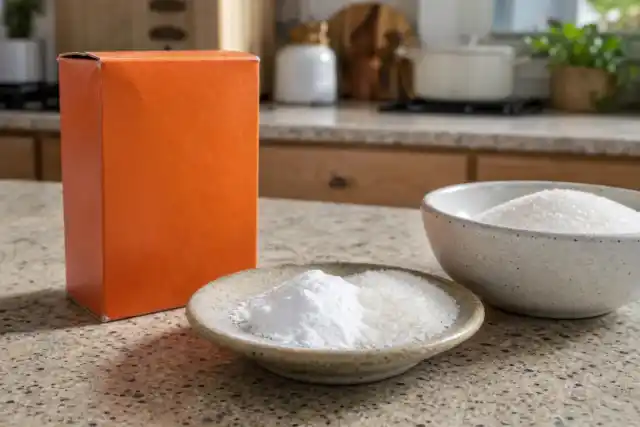

Baking soda and sugar can kill a few roaches, but it won’t get rid of them. The sugar lures roaches in, and some that eat enough baking soda die slowly. However, entomologists at Virginia Tech say baking soda does little to reduce roach numbers. Most of the roaches in your home never touch the bait, and their eggs keep hatching.
As a licensed technician here in Northern Virginia, I hear about this remedy all the time. By the time people call us, many have already put out a few lids of baking soda and sugar. Usually they’ve seen a dead roach or two, which feels like progress. But the roaches keep coming, because the real population is hiding in the walls and cabinets.
Does Baking Soda and Sugar Kill Roaches? The Short Answer
Here’s the honest version. Baking soda and sugar is a weak, slow home remedy. It can kill a roach that eats a good amount of it. But it doesn’t reach the nest, it doesn’t stop eggs, and it doesn’t compete well with the other food in your kitchen.
The clearest verdict comes from Virginia Tech. In their guide to cockroaches found in living spaces, extension entomologists say borax, baking soda and baking powder are often touted as roach remedies, but they do little to reduce cockroach populations. They also point out that people often confuse these with boric acid, which is a different product altogether.
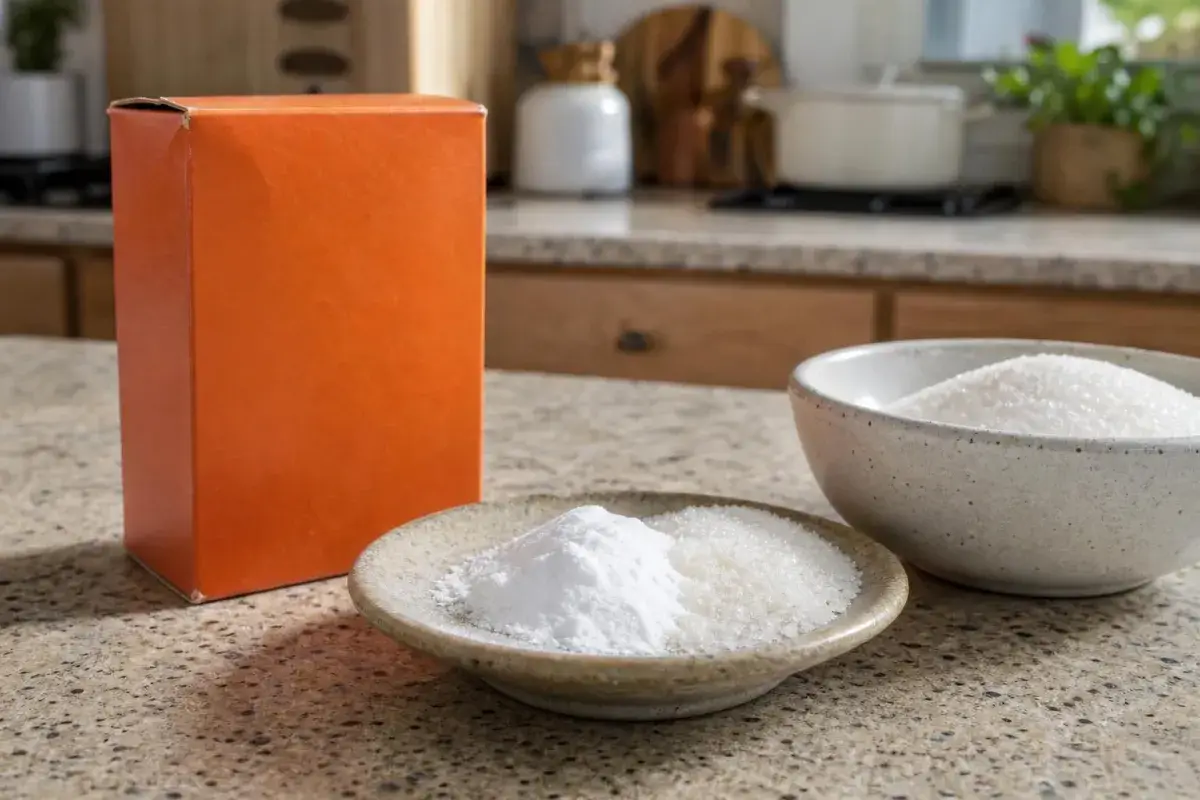
How baking soda and sugar is supposed to work
The idea is simple. Roaches love sweets, so the sugar acts as the bait. The baking soda is the poison. Once a roach eats the mix, the baking soda is supposed to upset its gut and kill it.
You’ll often read that the baking soda makes gas in the roach’s stomach until it bursts. That makes a great story. However, we couldn’t find any research showing it happens. Roaches that die from eating baking soda appear to die slowly, not suddenly.
What the lab evidence actually shows
There isn’t much of it. The one direct test we found is a 2020 study from Algeria’s University of Guelma. Researchers fed baking soda to newly grown adult German cockroaches and tracked deaths over five days. They reported that it did kill roaches. But they also noted that it acts slowly, with its toxicity showing up over the long term.
That’s a lab result, with roaches fed the baking soda on purpose. It’s not the same as a dish of powder on your counter, where roaches can simply eat something else.
Sugar has a problem of its own. In 2013, researchers at NC State published work on glucose-averse German roaches in the journal Science. They found that some German cockroach populations had evolved so that glucose tastes bitter to them. When those roaches tasted glucose, they closed their mouths and backed away. They refused to eat it even when it was placed right on their mouthparts.
This trait has a genetic basis, so it gets passed down to offspring. That’s a big reason the pest control industry moved away from glucose-heavy baits years ago.
Table sugar is made of glucose and fructose. So a homemade sugar bait may be far less tempting to some German roach populations than you’d expect. In other words, your bait may not even get eaten.
Why Baking Soda Won’t Get Rid of German Roaches
German roaches are the small, light brown roaches with two dark stripes behind the head. The University of Maryland Extension calls them the most common cockroach found in homes. They’re also the roach that baking soda is least likely to fix. Here’s why.
They hide where bait can’t compete. German roaches pack into cracks behind cabinets, under sinks, and inside appliance motors. Young roaches rarely leave those spots. A few lids of powder on the floor reach only the bold ones out in the open.
They have better food options. A lived-in kitchen offers crumbs, grease and pet food. A dish of baking soda and sugar is just one choice out of many.
They breed fast. A female carries her egg case until it’s about to hatch. So even if you kill a few adults, the next batch is already on the way. Our guide on how fast cockroaches reproduce explains why a handful of survivors can rebuild the whole population.
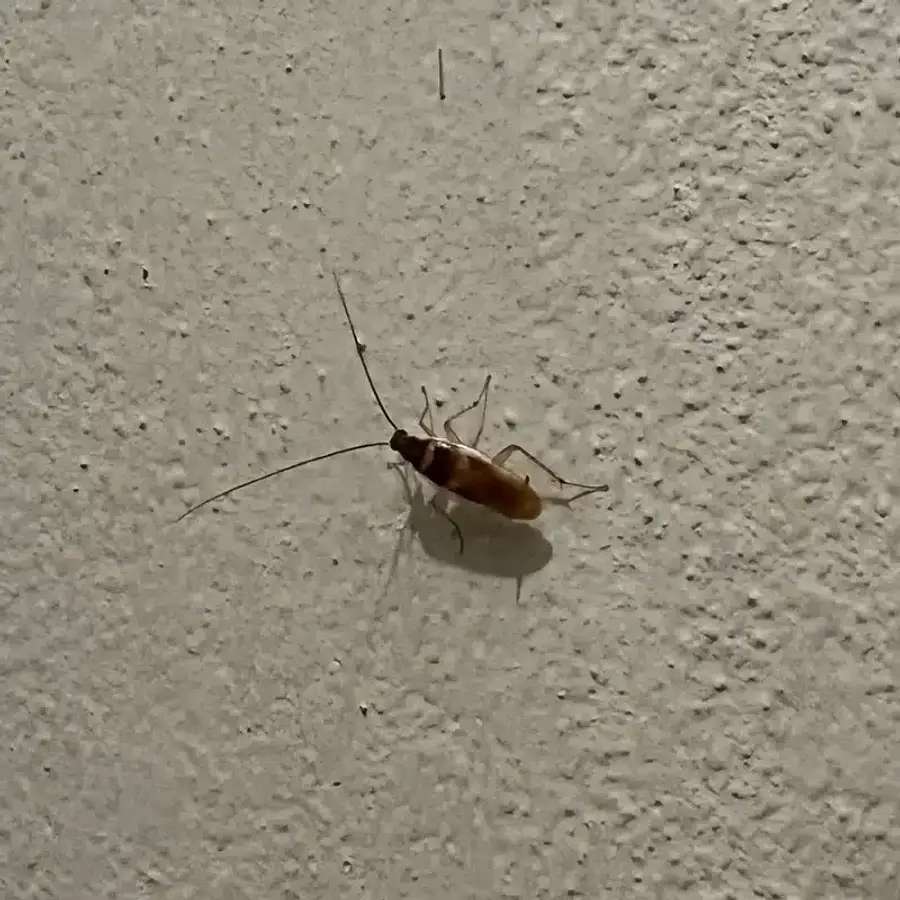
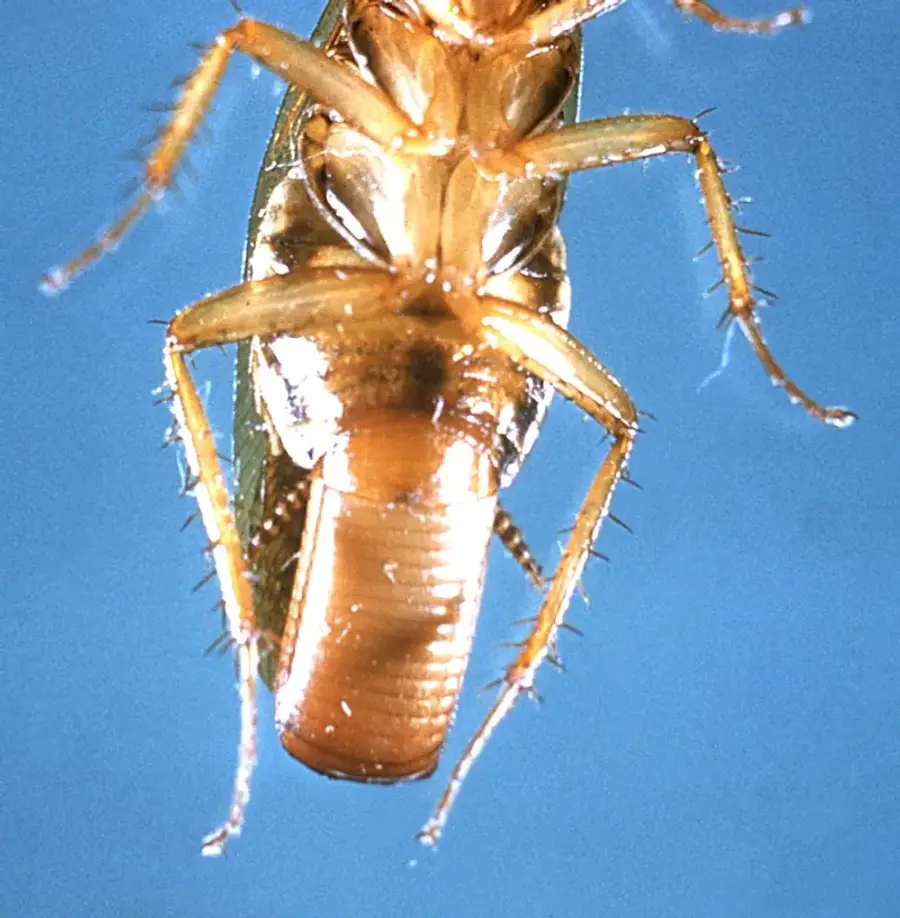
If you aren’t sure which roach you have, our page on German roaches walks through how to identify them.
Daren, one of our technicians, says his longest roach job was a house in Fort Hunt that took about a year and a half. The homeowner got the roaches under control, and then they exploded again.
It turned out he had bought a refrigerator, and the roaches likely rode in during delivery. He also kept bringing shipping boxes into the house. Roaches love to hide in the folds of cardboard, so every new box was a new way in. Once he started breaking boxes down outside and throwing them away, it still took about six more months to get control.
Daren’s approach on German roaches is to switch products every single service. He uses a non-repellent in every crack and crevice, then a growth regulator, then bait stations and glue boards. The glue boards tell him whether the population is going up or down. A home remedy that kills a roach here and there can’t keep up with a problem like that.
In short, baking soda can thin out a few roaches in the open. It can’t reach the nest, the young roaches or the eggs. That takes a plan built around bait, a growth regulator and monitoring.
Does Baking Soda Work on Big Roaches?
Large roaches are a different story, and baking soda isn’t the answer there either. Virginia Tech lists five roaches that live closely with people in Virginia: American, oriental, German, brownbanded and smokybrown. The big ones usually come in from outside.
Small, tan, two stripes behind the head. These live and breed indoors, mostly in kitchens and bathrooms. Baking soda won’t reach the hidden population or stop egg cases from hatching. Gel bait, a growth regulator and steady monitoring are the tools that work. Learn more about our German cockroach control.
Large, reddish brown or shiny black. In my experience, these are outdoor roaches. If you see a lot of them inside, there’s almost always a moisture problem. Baking soda won’t fix a leaky pipe or a damp crawl space. A dehumidifier, sealed gaps and outdoor treatment do far more. See our American cockroach control and oriental cockroach control pages.
Small, with light bands across the wings. These hide higher up than German roaches, like inside furniture, behind picture frames and in electronics. That makes a floor-level dish of baking soda even less useful. Our guide on getting rid of brown-banded cockroaches covers where to look.
If You Still Want to Try Baking Soda and Sugar
Baking soda costs almost nothing, so I understand the urge to try it. If you do, set it up so it has the best chance. Just treat it as a small extra, not your plan.
Wipe up crumbs, grease and spills, and store food in sealed containers. If roaches have a buffet, they’ll skip your bait. The University of Maryland calls sanitation the first line of defense against roaches.
Most home recipes use equal parts baking soda and powdered sugar. Powdered sugar blends in better than granulated sugar, so roaches are less likely to pick around the baking soda.
Use jar lids or bottle caps. Put them under sinks, behind the fridge and stove, and in the back corners of cabinets. Roaches travel along edges, so set the dishes flat against walls.
Kitchens and bathrooms are humid, and baking soda clumps when it gets damp. Replace the mix every few days or whenever it looks crusty or dirty.
If you’re still seeing live roaches after two weeks, especially small ones in the daytime, the remedy isn’t working. Daytime sightings often mean the hiding spots are full. Check our list of signs of a cockroach infestation to see how serious it is.
Placement matters more than the recipe. Roaches stick close to warmth, water and cover, so the area under the kitchen sink is one of the first places to try.
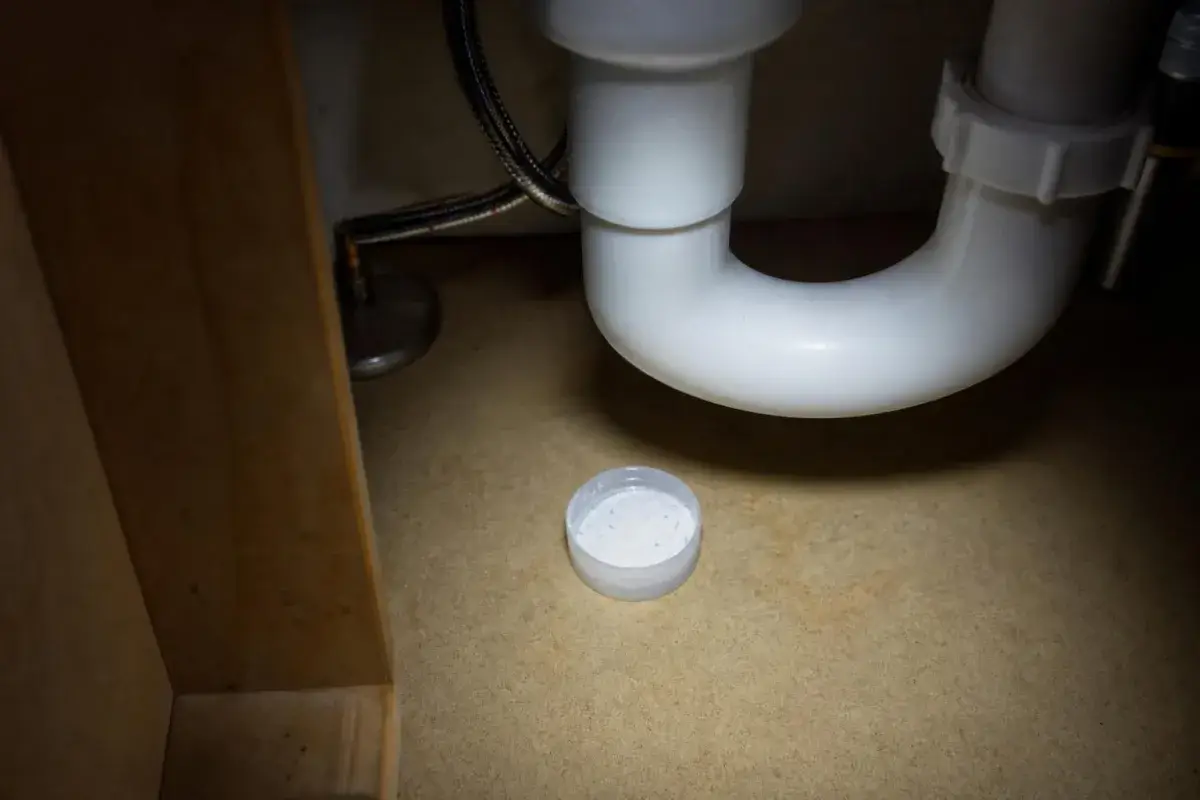
One more thing to keep in mind is where the sugar ends up.
Also think about who else in the house might find the bait.
What Works Better Than Baking Soda for Roaches
If you want a DIY step up, the product people usually mean when they say “borax” or “baking soda” is boric acid. According to the National Pesticide Information Center, boric acid kills insects that eat it by disrupting their stomach and nervous system. It’s low in toxicity to people, but infants and pets are more sensitive. So it still needs careful placement. Our guide to boric acid for roaches covers how to use it the right way.
For German roaches, baits work best of all. Here’s what makes a real difference:
- Gel bait and bait stations. Roaches eat the bait and carry it back to their hiding spots. The University of Maryland notes that bait placement is the most important factor in control. Our German cockroach bait guide shows where to put it.
- A growth regulator. This stops young roaches from maturing and breeding, which home remedies can’t do.
- Cleanup and sealing. Less food and fewer hiding spots make every bait work better. Our article on what attracts cockroaches lists the usual culprits.
- Monitoring. Glue boards show whether the numbers are going up or down, so you know if the plan is working.
All the products we use are EPA approved and have passed through our internal research team. Each one is something we’d feel comfortable using in our own homes.
When to Call a Professional
Call a pro if you see roaches during the day, if you find small roaches in several rooms, or if a home remedy hasn’t helped after a couple of weeks. Those are signs the population is bigger than what you can see.
Our roach control service starts with an inspection to find out which roach you have and where it’s living. With more than 58 years in the business and 1,800+ reviews across our locations, our licensed technicians have seen just about every kind of roach problem in the DMV. We serve homes across Northern Virginia and suburban Maryland, including pest control in Alexandria.
The Bottom Line on Baking Soda and Sugar for Roaches
Does baking soda and sugar kill roaches? It can kill a few that eat it, but it won’t end an infestation. Extension entomologists say it does little to reduce roach numbers. The lab evidence is thin, and the “exploding roach” claim isn’t backed by research. Some German roaches won’t even eat sugar baits. Use it as a cheap experiment if you like, but don’t let it buy the roaches more time. For small German roaches, go straight to bait and a growth regulator. For big outdoor roaches, fix the moisture.
If you have questions about roaches in your home or want an estimate, call us at 703-683-2000 or email info@bettertermite.com. We’re happy to help.