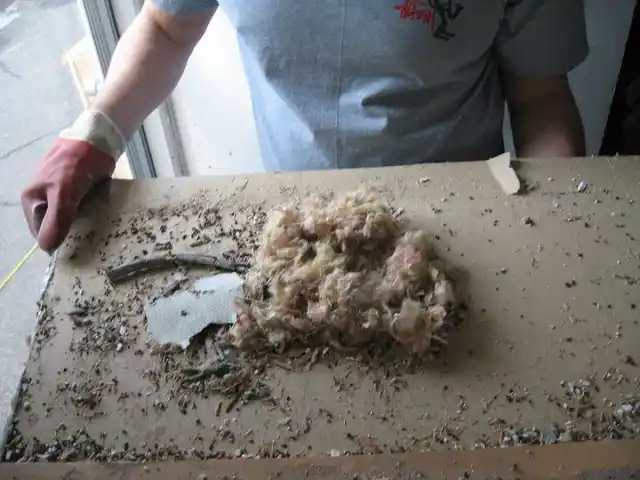

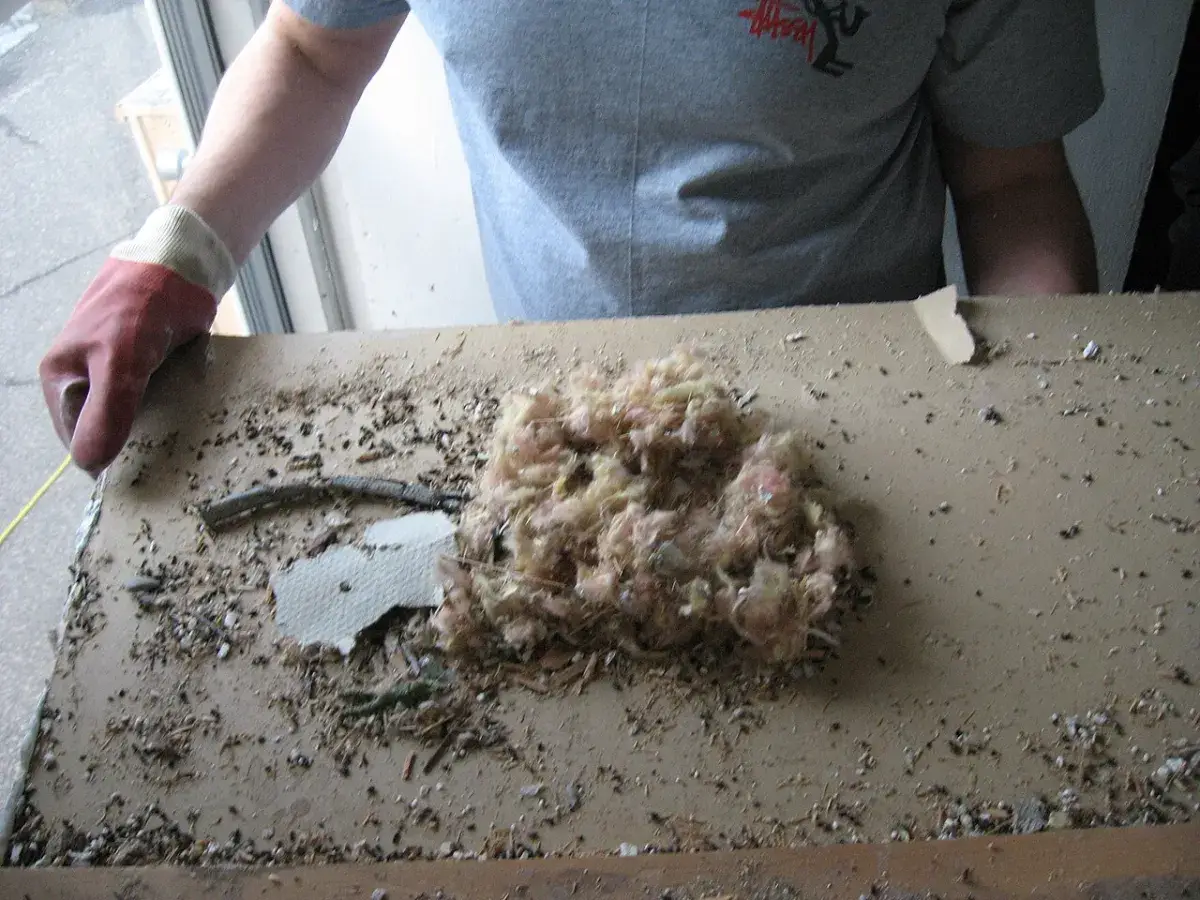
If you disturb a mouse nest, the adult mice usually scatter and hide nearby, while any babies are left behind because they can’t move on their own yet. The bigger risk is to you. A dry nest is packed with droppings and urine, and stirring it up can put that dust in the air you breathe. Mites living in the nest can also crawl out and look for a new host. Then, within days, the mice typically build a new nest close by.
So if you just pulled a nest out of a drawer or a box, don’t panic. Step back, open a window, and stop touching it until you have gloves and a spray bottle. Here at Better Termite & Pest Control, we hear about nests in wall voids, garages and storage areas across Northern Virginia and Maryland all the time. Below, I’ll walk through what happens to the mice, what happens to you, and the CDC’s steps for removing a mouse nest the right way.
What Happens to the Mice When You Disturb a Nest
When you uncover a nest, the adults almost always bolt for the nearest cover. That might be a gap behind a cabinet, the inside of a wall, or a pile of storage boxes. They don’t go far, though. According to the University of California, house mice seldom travel more than 30 feet from their nest sites and food supply.
That short range is why disturbing a nest rarely ends the problem. Basically, the mice still have the same food, the same warmth and the same way into your house. So they tend to pull new material together and start over a few feet away.
What happens to baby mice
If the nest has pups, they stay put. According to the Internet Center for Wildlife Damage Management, house mouse pups are born hairless with their eyes closed. They don’t eat solid food until about 3 weeks old. Additionally, a female can have 5 to 10 litters a year, with 5 or 6 pups in each.
Sometimes the mother comes back for the litter. Sometimes she doesn’t. Either way, a nest with pups is not something to scoop up with your hands. Treat it exactly like any other nest: gloves, disinfectant, double bag.
What Happens to You When You Disturb a Nest
This is the part that matters most. A mouse nest is more than fluff. It’s a pile of soft material soaked in urine, mixed with droppings and saliva. Disturbing it can expose you in a few different ways.
Breathing in nest dust is the main concern. According to the CDC’s hantavirus prevention page, when fresh urine, droppings or nesting materials from an infected rodent are stirred up, the virus can get into the air and be breathed in. Pulling apart a dry nest, sweeping it, or shaking it into a trash bag does exactly that.
Different mice carry different germs. Deer mice and white-footed mice are the main hantavirus carriers in the eastern US. Meanwhile, the common house mouse carries LCMV. The CDC’s LCMV page says people catch it through fresh urine, droppings, saliva or nesting materials. It’s an extra concern during pregnancy, where it can cause serious birth defects.
Mites don’t stay in an empty nest. Rodent mites live on mice and in their nests. The University of Kentucky Extension notes these mites move into the rest of the home when the host dies or abandons the nest. They often become a nuisance right after mice are cleared out. That’s why the nest itself has to go, not just the mice.
Mouse allergens can trigger asthma. The NIEHS lists rodents as a common indoor asthma trigger. It also points to a study linking airborne mouse allergens in schools to more asthma symptoms in children. A nest is a concentrated source of those allergens.
How worried should you be in Virginia and Maryland?
The odds of getting seriously sick from one nest are low here. The Virginia Department of Health says hantavirus is rarely reported in Virginia. For the full state-by-state numbers, see our breakdown of hantavirus cases by state. And for a plain look at the real odds, read what the chances are of getting sick from mouse droppings.
Low risk isn’t no risk, though. Deer mice and white-footed mice live throughout our area. They’re the ones most likely to nest in sheds, garages, cabins and outbuildings. If you can’t tell which mouse you’re dealing with, our guide to deer mice vs. house mice can help.
How to Remove a Mouse Nest the Right Way
Mouse nest removal is mostly about one rule: keep everything wet so nothing becomes dust. These steps follow the CDC’s rodent cleanup guidance, including its specific instructions for nests.
Open doors and windows and leave the area for 30 minutes before you start. This lets fresh air move through the space. In a closed shed or garage, prop everything open you can.
Put on rubber or plastic gloves. If the nest is large, hard to reach, or there are several of them, this is a good point to stop and call a professional instead. Heavy infestations call for respiratory protection.
Spray the nest and the area around it until it’s very wet. Use a product labeled “disinfectant” or a fresh bleach solution of 1.5 cups of bleach per gallon of water. Let it soak for 5 minutes, or as long as the product label says.
Pick up the wet nest with paper towels. Put the nest, the towels and any used traps in a plastic bag and tie it shut. Then put that bag inside a second bag and tie it again. Throw it in a covered trash can.
Mop or sponge the hard surfaces around the nest with disinfectant. Wipe up any droppings the same way: spray, soak, wipe. Don’t sweep or vacuum. If the nest was in fabric, like a couch or a stored blanket, check the cleanup guidance before washing it.
Already swept or vacuumed the nest before you knew better? Don’t panic, and don’t keep going. Stop, air the room out, and switch to the wet method for whatever is left. Our guide on what to do if you accidentally vacuumed mouse droppings also covers cleaning out the vacuum itself.
The CDC’s 2002 hantavirus guidance in the MMWR explains that most infections come from breathing in aerosolized saliva or droppings. It links cases to disturbing droppings or rodent nests around the home or workplace. The same guidance says nests should be soaked thoroughly with disinfectant before handling. Wetting a nest does two jobs at once. First, it keeps fine particles from lifting into the air when you pick the nest up. Second, it gives the disinfectant time to work on the germs in the nest. That’s why the soak time matters. Give it the full 5 minutes, or whatever the label says, before you touch anything.
One more note on timing. Clean up the nest soon after you find it. An empty nest left in place still holds droppings and urine, and it can keep mites around. However, a nest deep inside a wall void is a different job. Those are hard to reach without stirring up a lot of dust.
Where Mouse Nests Usually Hide
If you found one nest, there are usually more. Mice like warm, quiet, cluttered spots close to food. Look for a loose ball of shredded material about 4 to 6 inches across, with mouse droppings and a musky smell nearby.
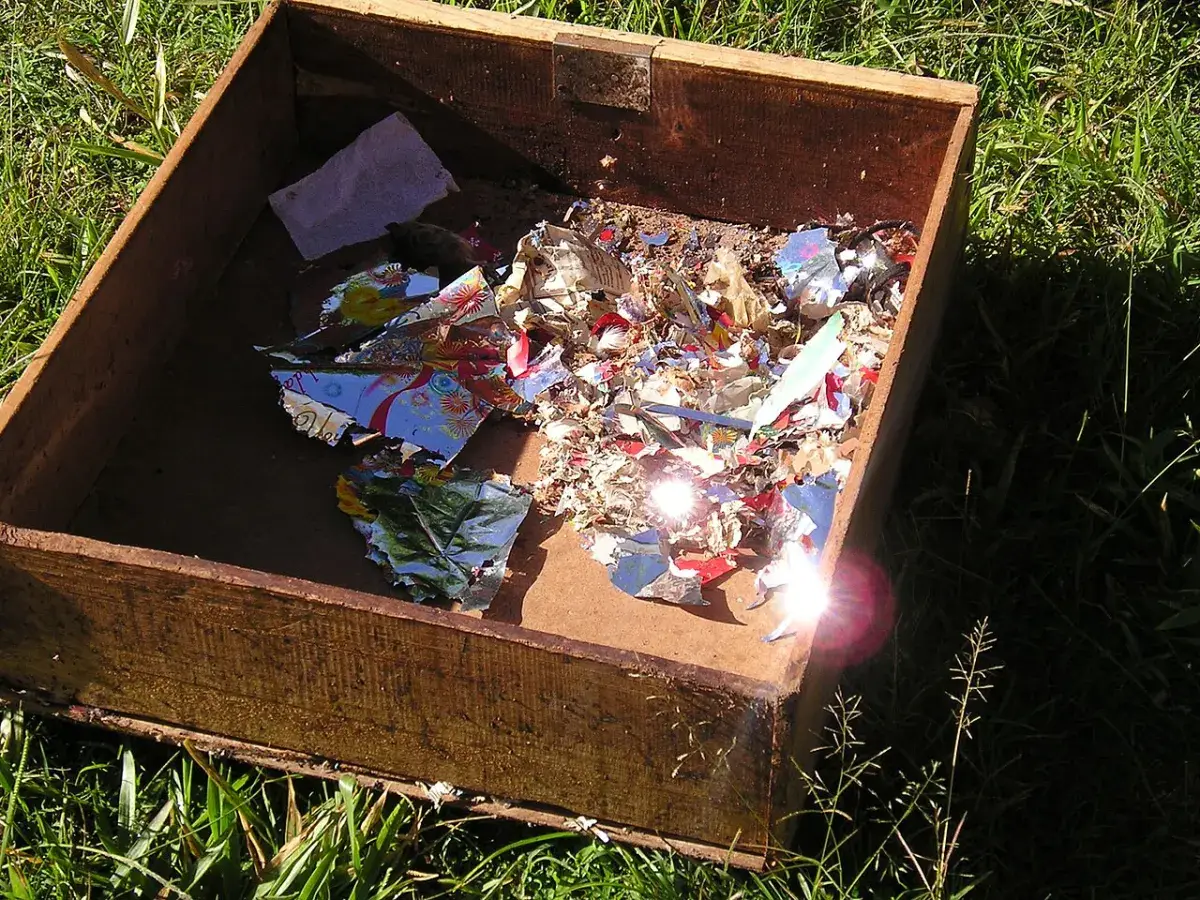
The most common spots we check include:
- Attics, especially in fiberglass or blown-in insulation. Our mice in attic tips cover what to look for up there.
- Wall voids behind kitchens and bathrooms. If you hear scratching but never see a mouse, read about mice in walls but not in the house.
- Under and behind appliances, like stoves, dishwashers, fridges and water heaters, where it’s warm.
- Drawers, cabinets and storage boxes full of paper, fabric or holiday decorations.
- Garages, sheds and crawl spaces, where deer mice and white-footed mice are more likely.
- Under thick mulch right against the foundation, just outside the house.
Daren, one of our registered technicians, says thick mulch piled against the house is one of the first things he points out to homeowners. Mice will nest under it, and once they’re living against your foundation, the house is right there. He tells customers that pulling mulch back from the house is one of the simplest things you can do to keep most pests out.
I’ll add one thing from our rodent work in Old Town Alexandria, where we get a ton of calls about mice. Homeowners who find a nest in their attic insulation are sometimes told they need the whole attic re-insulated. In our experience, that’s fairly rare and often very expensive. A full re-insulation job often isn’t what makes the difference. The work that actually solves it is finding how the mice get in and steady baiting at the lower levels of the house.
Removing the Nest Doesn’t Remove the Mice
This is where most people get stuck. They clean out the nest, everything goes quiet for a week, and then the droppings come back. The mice were never gone. They just moved.
A nest is a sign of an active infestation, not the infestation itself. To actually fix it, you need to deal with three things:
- The mice that are still there. Bait or traps placed where they travel, not just where you found the nest.
- How they’re getting in. Mice fit through surprisingly small gaps. Our guide on how small a hole a mouse can fit through explains what to look for. Daren’s rule of thumb: if you can fit the tip of your pinky finger in a gap, a mouse can get in.
- What’s drawing them. Food, clutter, soft nesting materials and mulch against the house all make your home more inviting.
For the full DIY game plan, see our guide on how to get rid of mice.
When to Call a Professional for Mouse Nest Removal
Some nests are a quick weekend cleanup. Others aren’t worth the risk or the hassle. I’d call a pro if:
- The nest is inside a wall or in a crawl space you can’t reach comfortably.
- You’ve found more than one nest, or droppings in several rooms.
- You can hear or see live mice after cleaning up.
- Someone in the home is pregnant, has asthma, or has a weakened immune system.
- You’re getting unexplained bites after a nest was removed, which can point to rodent mites.
- The nest is in a shed, cabin or outbuilding where deer mice or white-footed mice are likely.
Our rodent control program starts with an inspection to find the nests, the activity and the entry points. Then our licensed technicians set up baiting and sealing based on what we find. Better Termite has served the area for 58 years, and our team has more than 300 years of combined experience. We have 1800+ reviews across our locations. We handle mice across Northern Virginia and parts of Maryland, including Alexandria, Reston, Lorton and Laurel.
The Bottom Line
Disturbing a mouse nest won’t usually hurt you, but it won’t solve anything either. The mice scatter and rebuild close by. Meanwhile, the nest left behind can put germs, allergens and mites into your home. So don’t sweep it, vacuum it or grab it. Air the space out, glove up, soak the nest for 5 minutes, and double-bag it. Then go after the real problem, which is how the mice are getting in.
If you’ve found a nest and want help tracking down the rest of the infestation, call us at 703-683-2000 or email info@bettertermite.com. We’ll help you figure out where the mice are coming from and what it takes to keep them out.