
The most common Virginia spiders fall into four groups. Inside the house: common house spiders, cellar spiders, yellow sac spiders, and parson spiders. On the ground: wolf spiders and grass spiders. In yard webs: black-and-yellow garden spiders, spotted orbweavers, marbled orbweavers, and spined micrathenas. On walls, flowers, and near water: bold jumping spiders, crab spiders, and fishing spiders. Only two are venomous enough to matter: the black widow, which is common, and the brown recluse, which is rare outside far southwest Virginia.
I’m George Schulz, a licensed technician with five years in the field at Better Termite & Pest Control. Spiders are one of the top pests we handle across Northern Virginia. Below is a field guide with pictures. Each species is grouped by where you are most likely to find it. That way you can match what you saw fast.
How Many Spiders Live in Virginia?
Nobody knows the exact number. According to Virginia Cooperative Extension, estimates range from under 100 to nearly 900 species, and a former Virginia Tech insect identification specialist puts it at several hundred. Basically, you will never meet most of them. They live in leaf litter, treetops, and fields.
The good news is that the spiders you actually notice come from a short list. Here they are, sorted by where you’ll spot them.
Spiders Inside Virginia Homes
I’ll keep this section short, because our Virginia house spiders guide covers the indoor species room by room. These are the four you are most likely to find inside.

1. Common House Spider
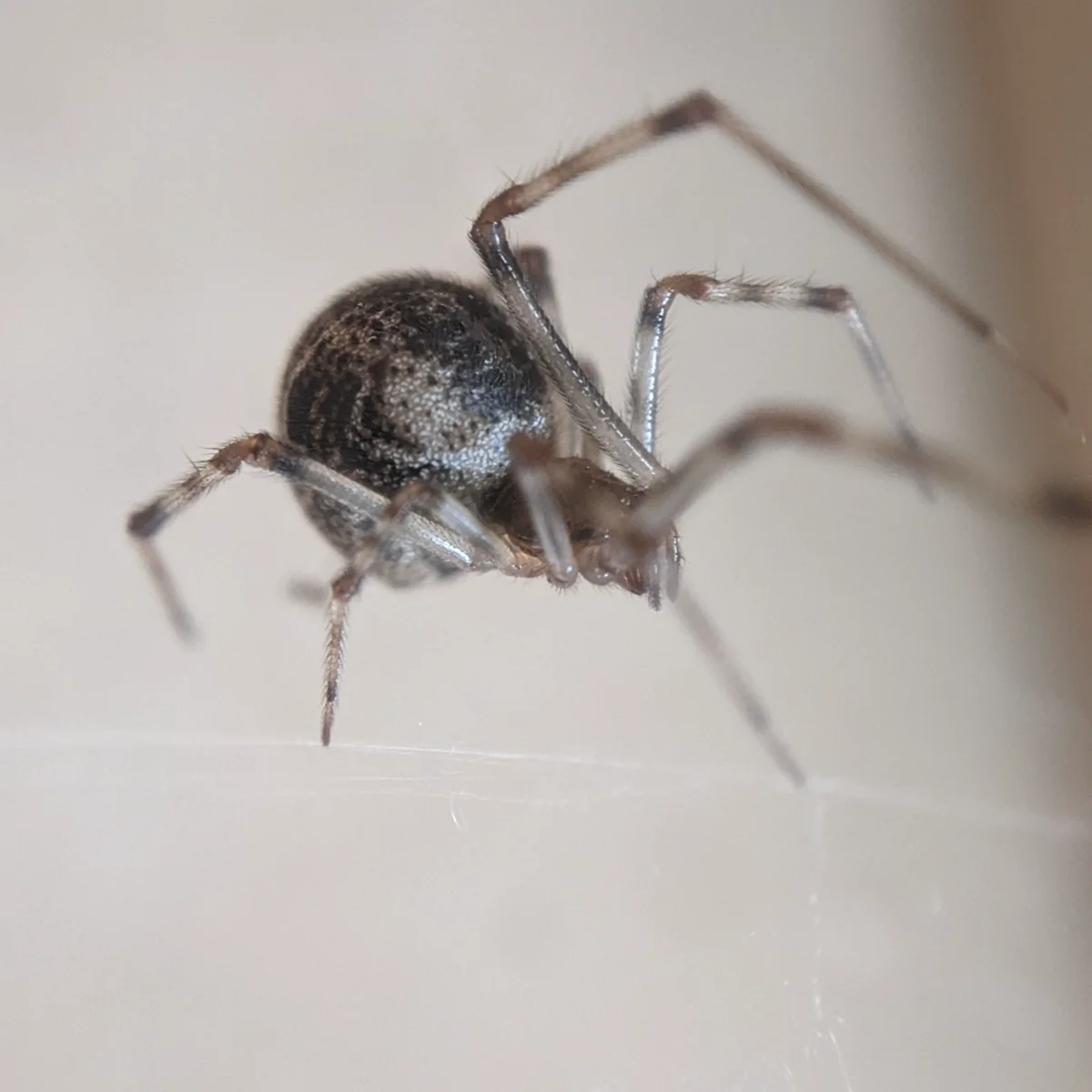
This is the spider behind most indoor cobwebs. Females are about a quarter inch long, tan to brown, with a round, mottled abdomen. They build tangled webs in ceiling corners, basements, and crawl spaces, and they live indoors all year. See our house spider page for close-up photos.
2. Cellar Spider
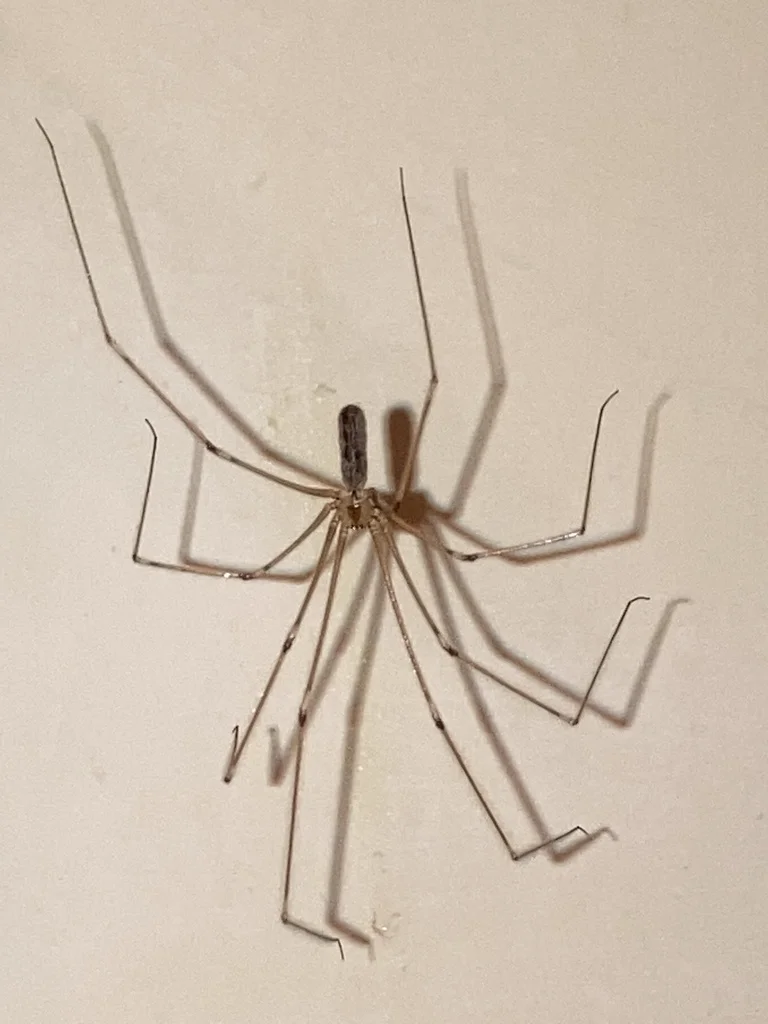
People often call these “daddy long legs.” They have a small, pale body and very long, thin legs. You’ll find them hanging upside down in basements, garages, and bathroom corners. When you bother the web, they vibrate rapidly. They are not known to bite people. Learn more on our cellar spider page.
3. Yellow Sac Spider
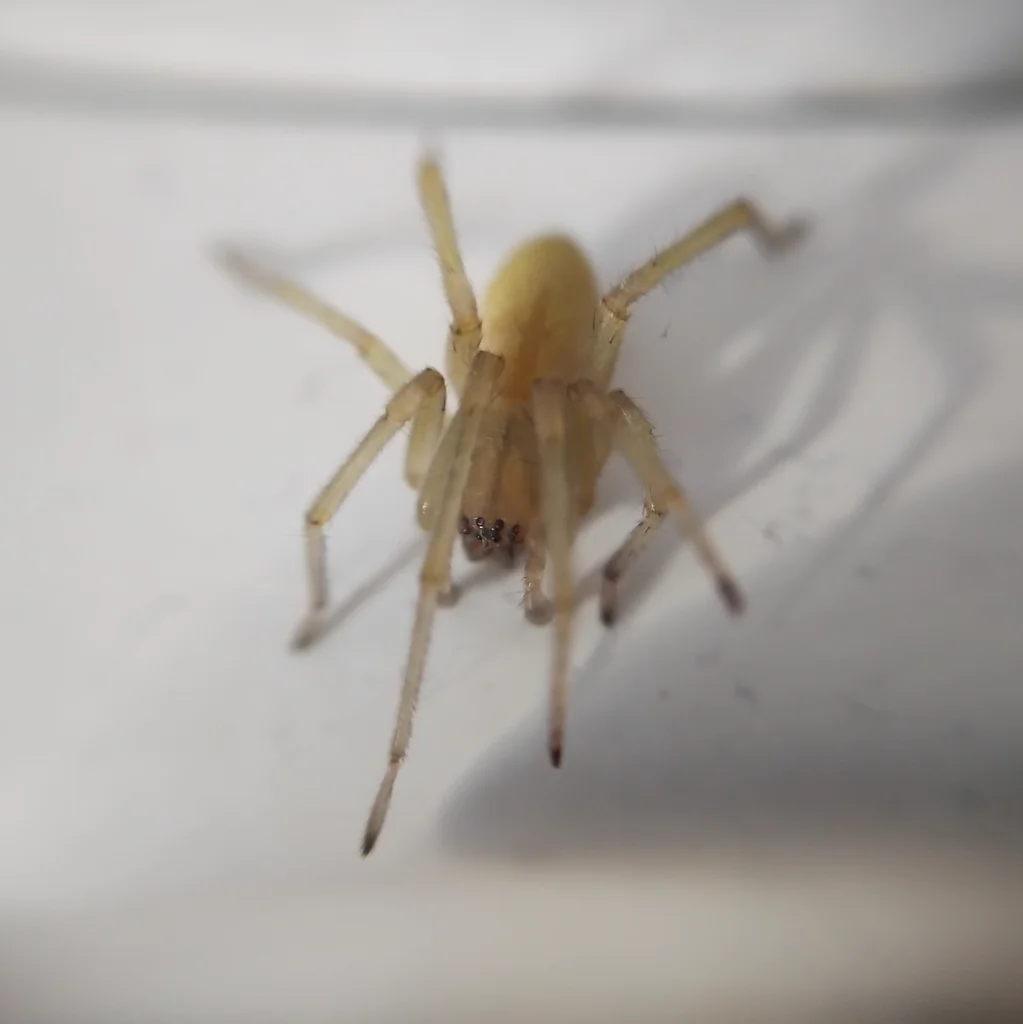
A small, pale yellow to tan spider, about a quarter inch long, that runs fast across walls and ceilings at night. They don’t build webs to catch prey. Instead, they spin small white silk sacs to rest in, often where a wall meets the ceiling. They tend to move indoors in early fall. Our yellow sac spider page has more on their habits.
4. Eastern Parson Spider
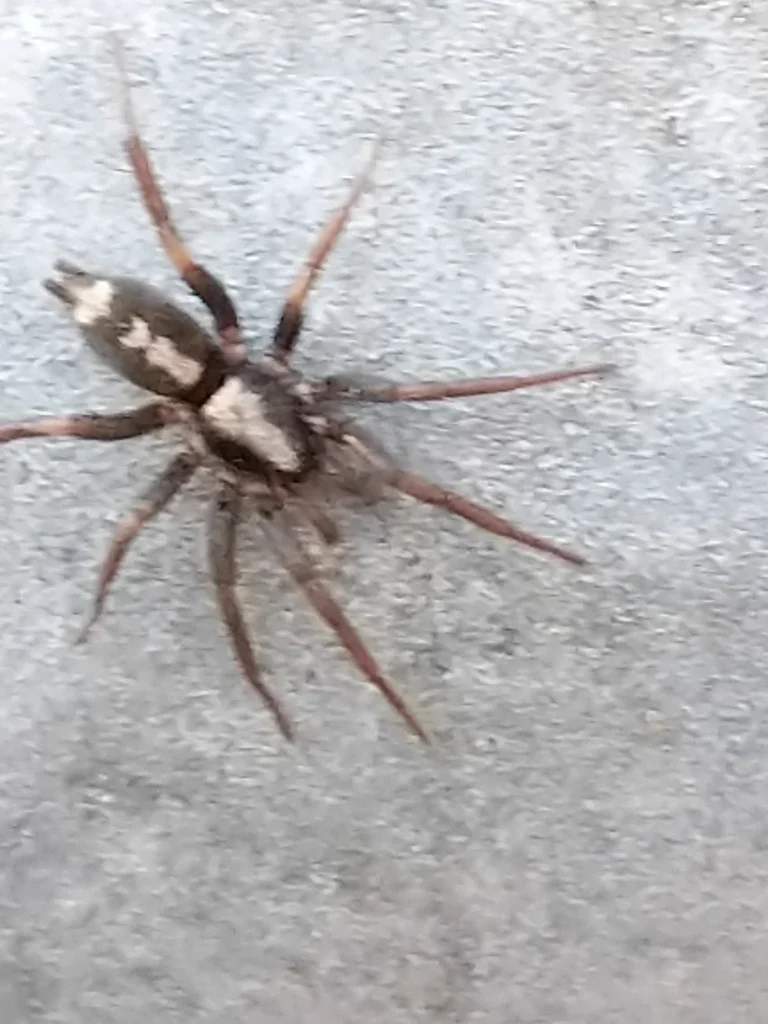
A dark, velvety spider up to about half an inch long with a white marking on its back shaped like a clergy collar. Parson spiders hide under bark, rocks, and leaves during the day and hunt at night. They sometimes come inside in the fall looking for a place to spend the winter. You can see the collar pattern clearly on our parson spider page.
Ground-Hunting Spiders
These spiders don’t wait in webs in the open. They hunt on the ground or wait at the mouth of a funnel, so you usually see them running.
5. Wolf Spider
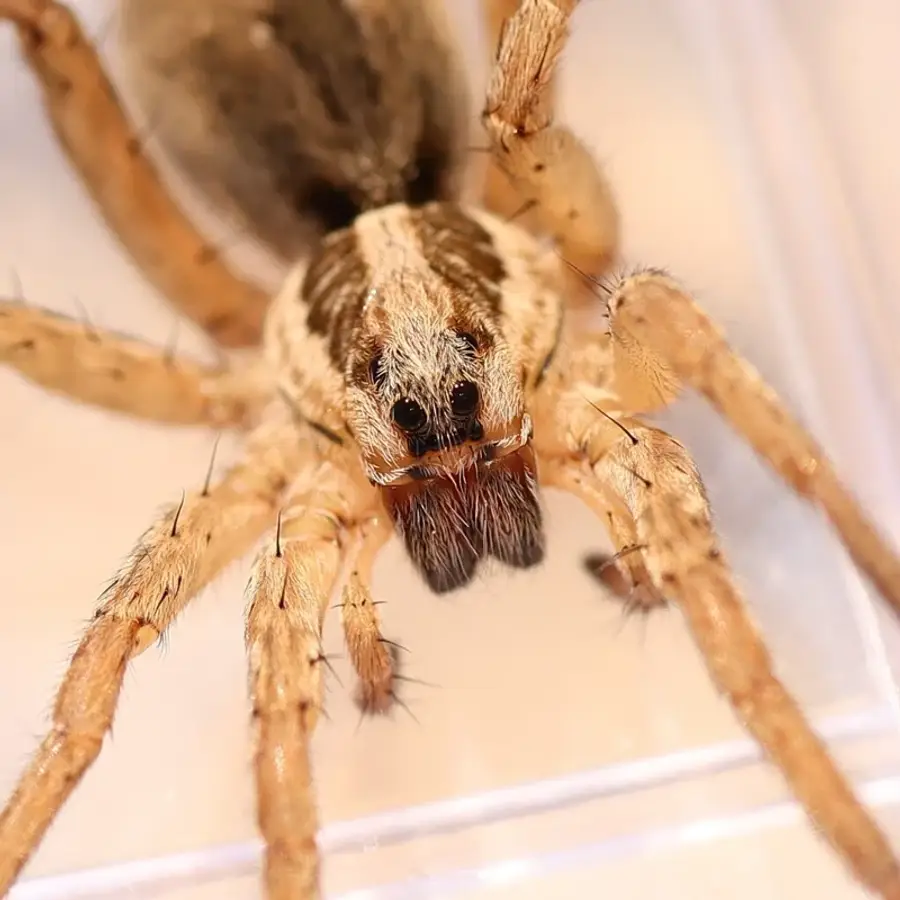
Wolf spiders are the big, hairy brown spiders that make people jump. Fairfax County’s Master Gardener volunteers note three genera are common in Virginia (Hogna, Rabidosa, and Tigrosa). Large females can stretch 3 to 4 inches with their legs. Females also carry their egg sac from their back end, and later carry the babies on their backs.
They hunt at night in lawns, mulch, and leaf litter. In the fall, they often wander into basements and garages. Their bite is not dangerous. Additionally, if you think you saw a brown recluse, read our brown recluse vs. wolf spider comparison first, because the wolf spider is by far the more likely answer here.
6. Grass Spider
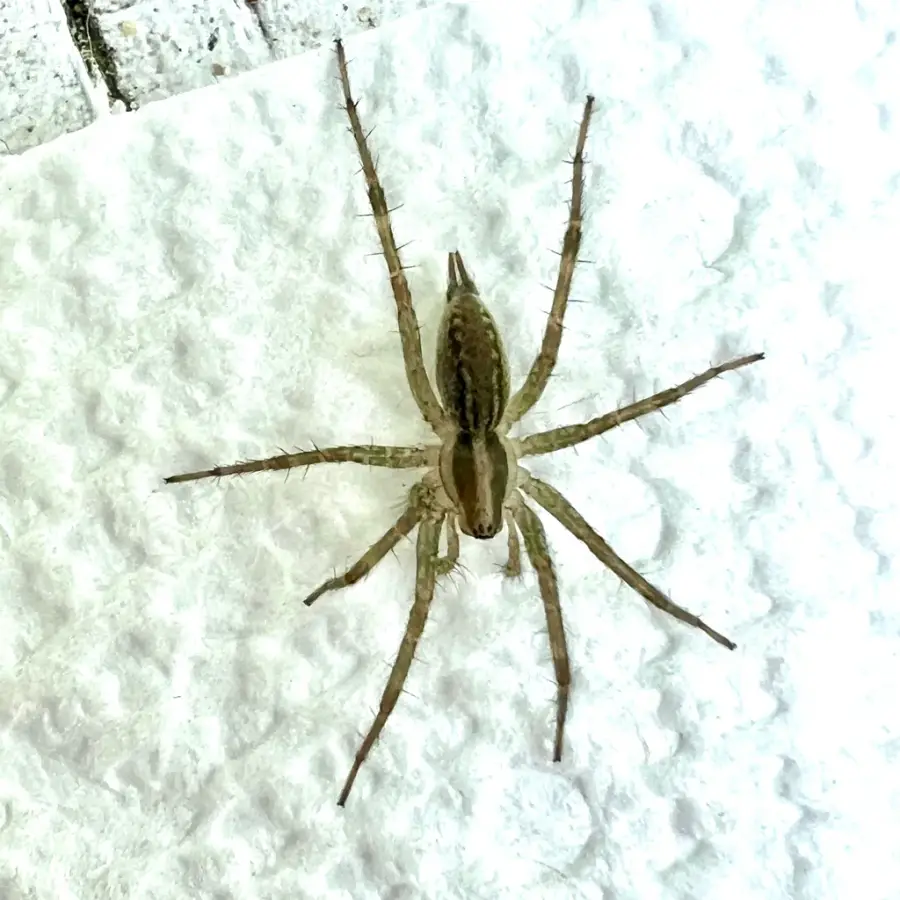
In late summer, you’ll see flat sheet webs covering your lawn and shrubs in the morning dew. Each web has a funnel off to one side where a grass spider waits. They are slender and brown, up to about three quarters of an inch, with two dark stripes running back from the eyes. They are extremely fast and shy. See our grass spider page for more photos.
Orb Weavers and Other Yard Web Builders
These are the spiders that build big, round webs across paths, porches, and gardens. They look dramatic, but they are harmless to people.
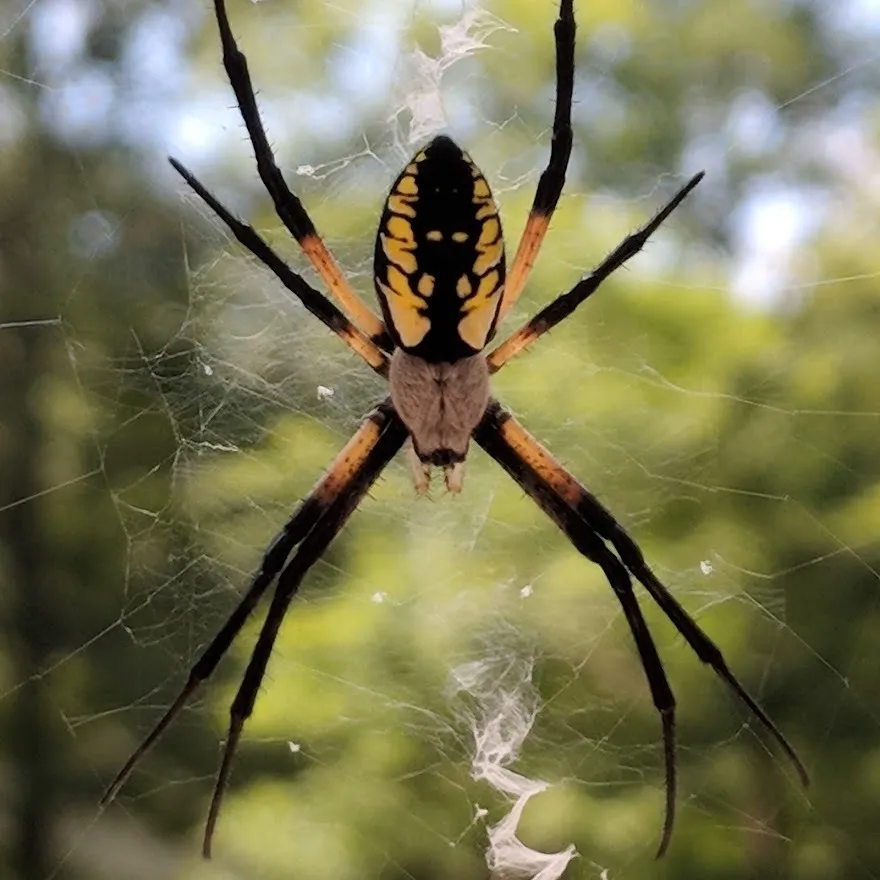
7. Black-and-Yellow Garden Spider
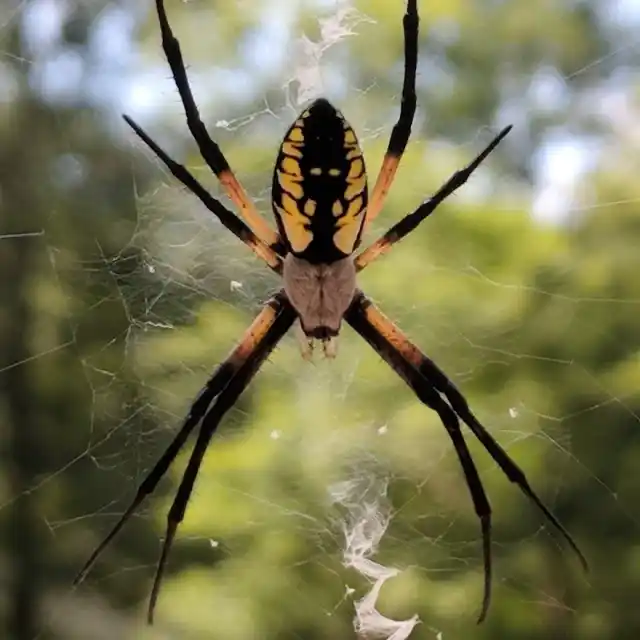
This is the one people send pictures of. The female’s body is a little over an inch long, with bold black and yellow markings. According to NC State Extension, the web usually has a thick white zigzag down the middle, and these spiders are usually noticed in late summer. They are not aggressive. Our black-and-yellow garden spider page has more photos.
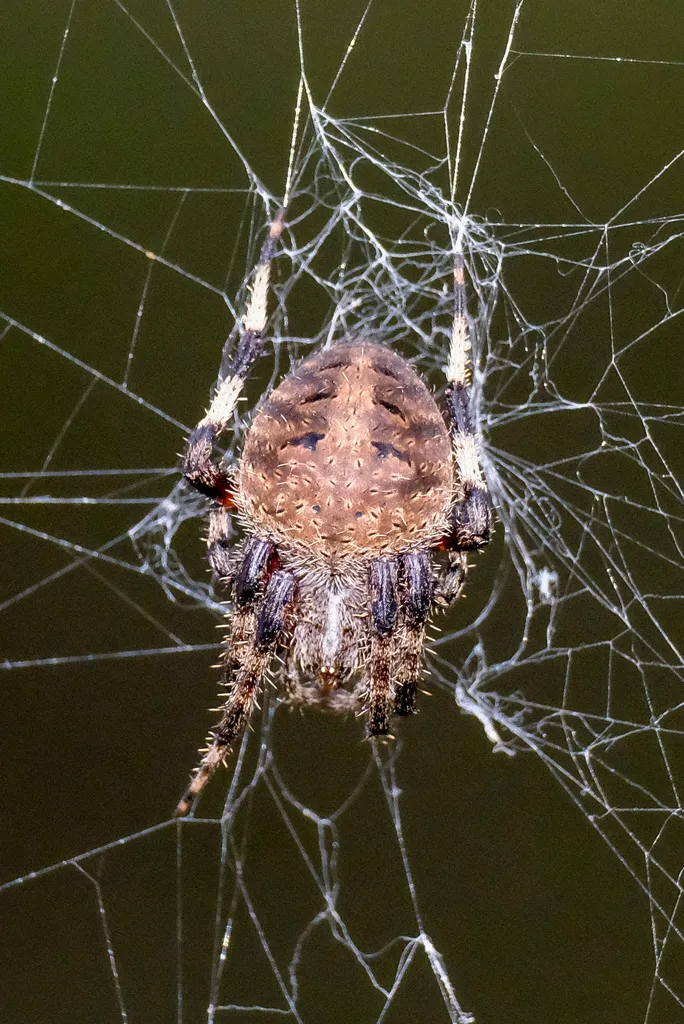
8. Spotted Orbweaver
If you walk into a web on your porch at night, this is often the culprit. Spotted orbweavers are about half an inch long, tan to brown, with a pattern on the abdomen. They spin a fresh web at dusk, often near porch lights and eaves, then take it down at dawn and hide. See our spotted orbweaver page.
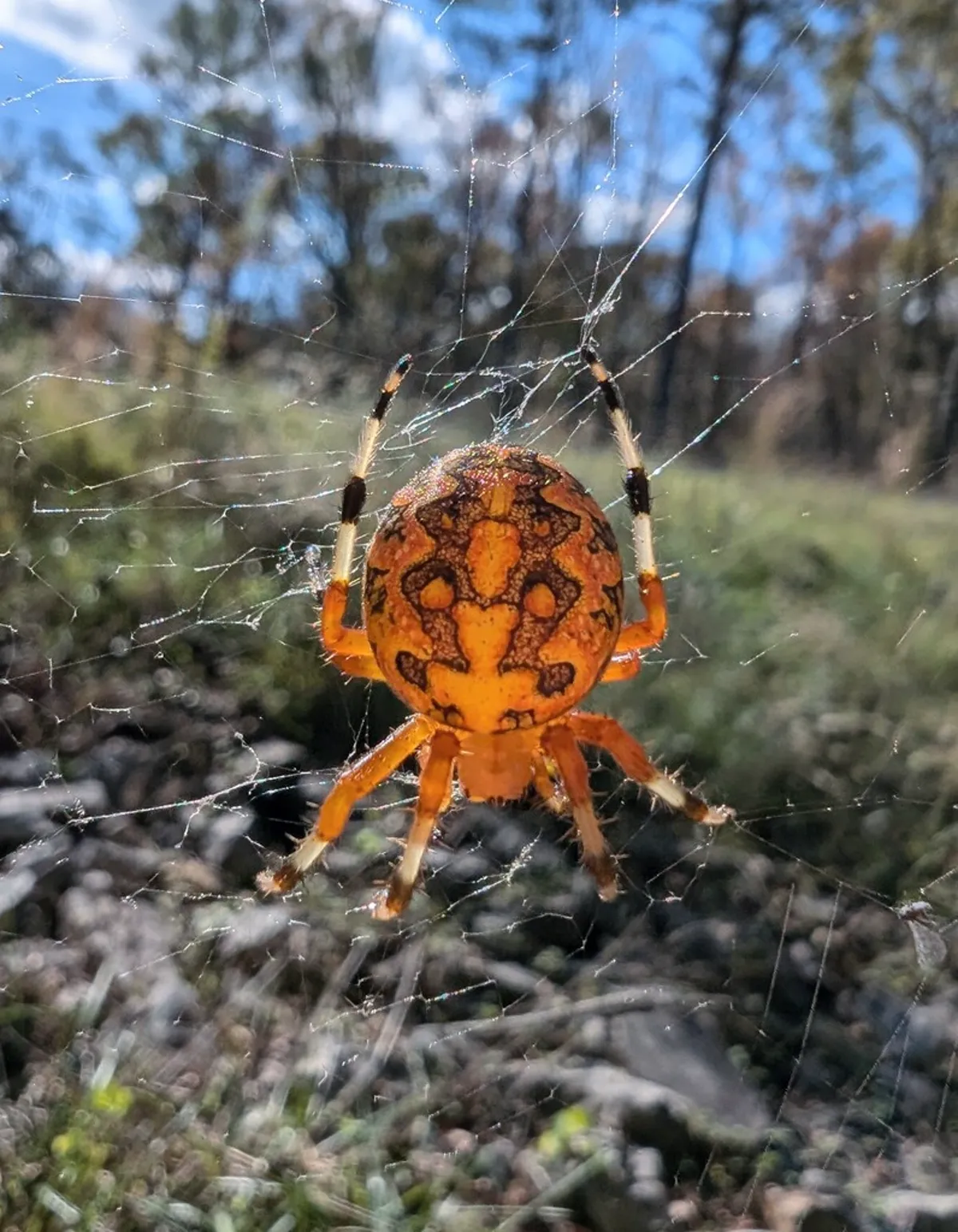
9. Marbled Orbweaver
A striking fall spider with a mostly orange abdomen marked with brown or purple, sometimes called the pumpkin spider. It lives in trees, shrubs, and tall weeds, especially in moist woods and along streams. Adults show up from mid-summer until the first hard frost. Our marbled orbweaver page has more detail.
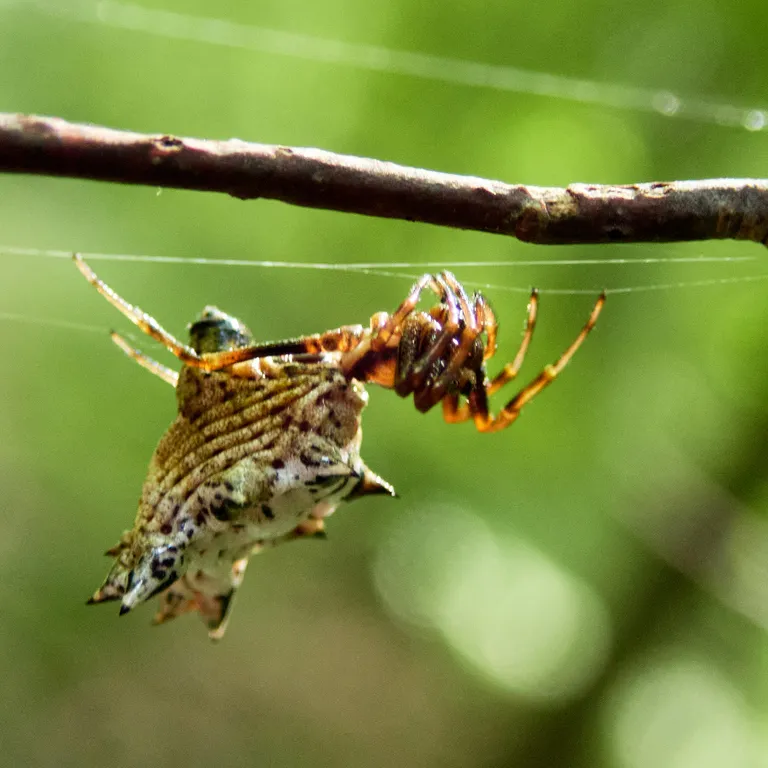
10. Spined Micrathena
If you hike or live near woods, you’ve probably walked face-first into this spider’s web. It’s small, under half an inch, with a spiky black-and-white abdomen. It builds webs across trails in wooded areas and lives only one season. See our spined micrathena page.
They don’t actually appear suddenly. According to University of Illinois Extension, most orb weavers hatch in spring, but we notice them more in fall because they and their webs have grown much bigger. Males are also on the move looking for mates. Our spider mating season article explains the timing in more detail.
If orb weaver webs are stretched across your porch and eaves every morning, the fix starts with fewer insects near your lights and regular web removal.
Spiders on Walls, Flowers, and Near Water
These three hunt without catching prey in a big web. You’ll spot them on sunny siding, garden flowers, and wooded lots.
11. Bold Jumping Spider
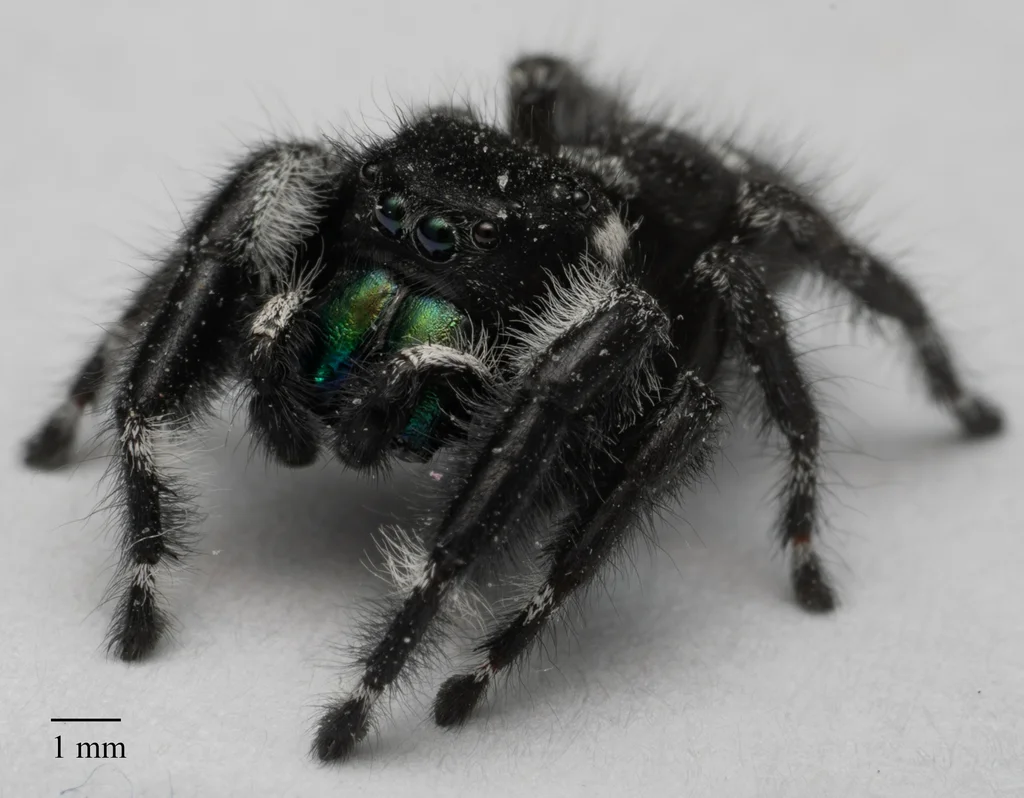
A small, fuzzy black spider with white, yellow, or orange spots on its back and shiny green mouthparts. It hunts during the day on windowsills, deck railings, siding, and tree trunks, and it jumps rather than builds a web to catch prey. It’s shy, and it’s actually one of the more likable spiders out there. See our bold jumping spider page.
12. Crab Spider
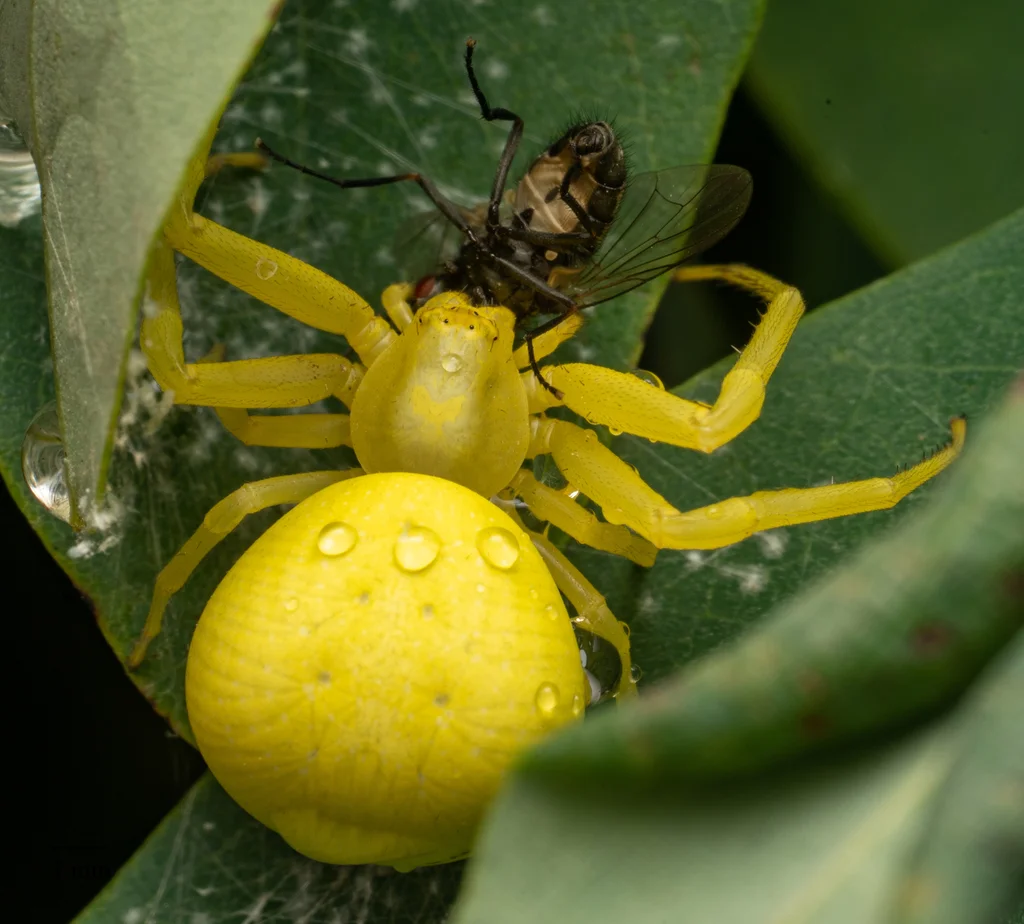
Crab spiders hold their front legs out to the side like a crab and wait on flowers for bees and flies. The goldenrod crab spider is white or yellow and can change color to match its flower. You’ll find them on flowers in your garden in summer. Our crab spider page has more.
13. Dark Fishing Spider
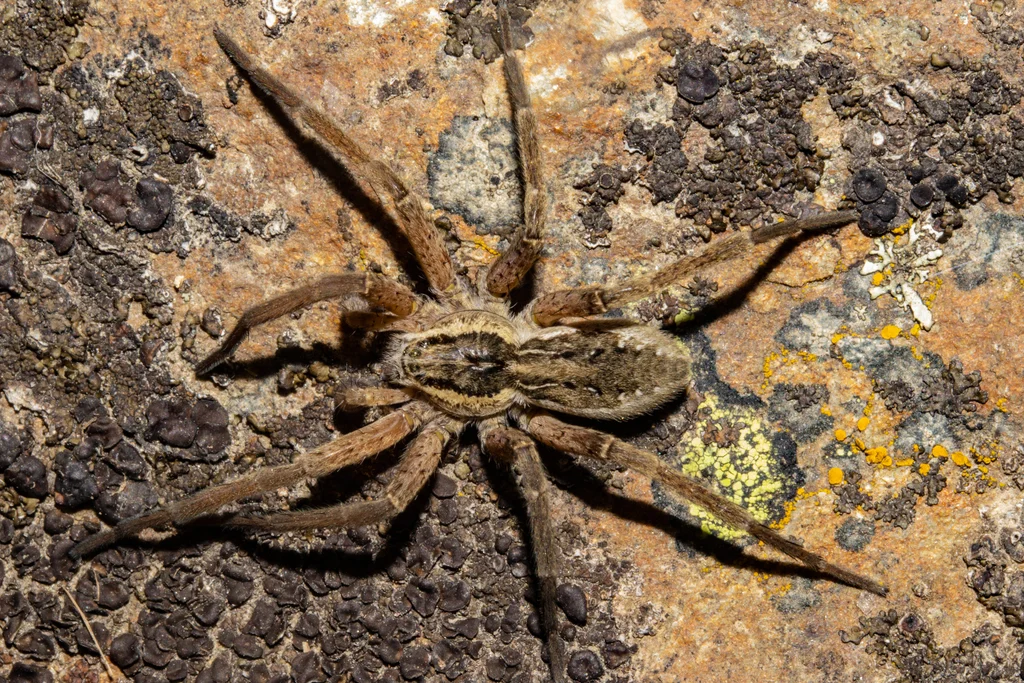
This is often the biggest spider a Virginia homeowner will ever see. See our dark fishing spider guide for ID tips. Penn State Extension lists females at up to about an inch of body length, brownish gray with banded legs. Despite the name, dark fishing spiders are often found in wooded areas away from water. They sometimes wander into homes near woods. They are very shy, and a bite is no worse than a bee sting.
Nursery web spiders look similar but are slimmer, and they build silk tents on leaves to guard their young. Our fishing spider vs. wolf spider comparison helps if you’re torn between the two big brown spiders.
The Two Spiders of Medical Concern
Two spiders in Virginia are of real medical concern. Here’s what each one looks like. For a deeper walkthrough of both, plus the harmless species people mistake for them, see our guide to poisonous spiders in Virginia.
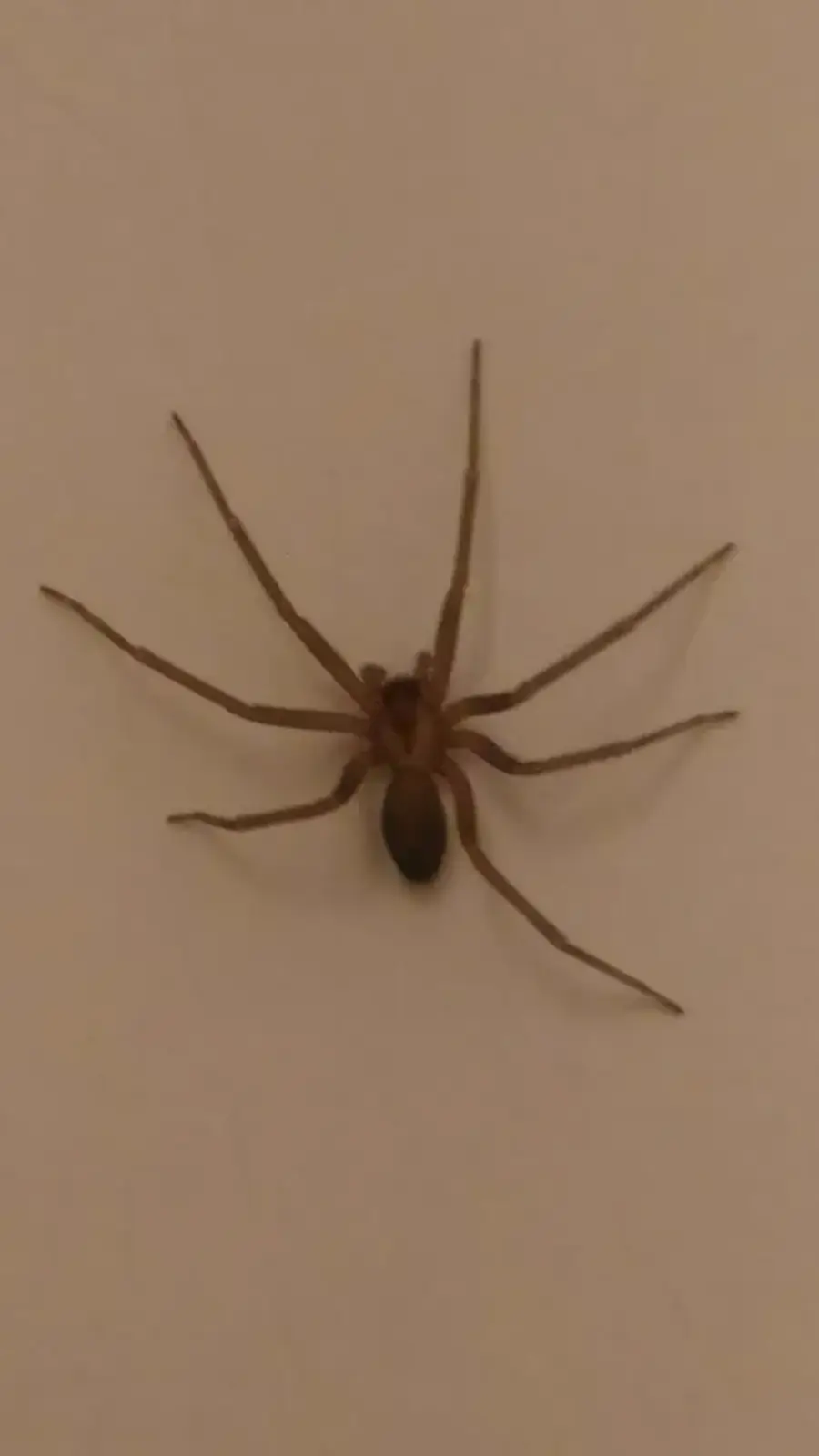
14. Black Widows
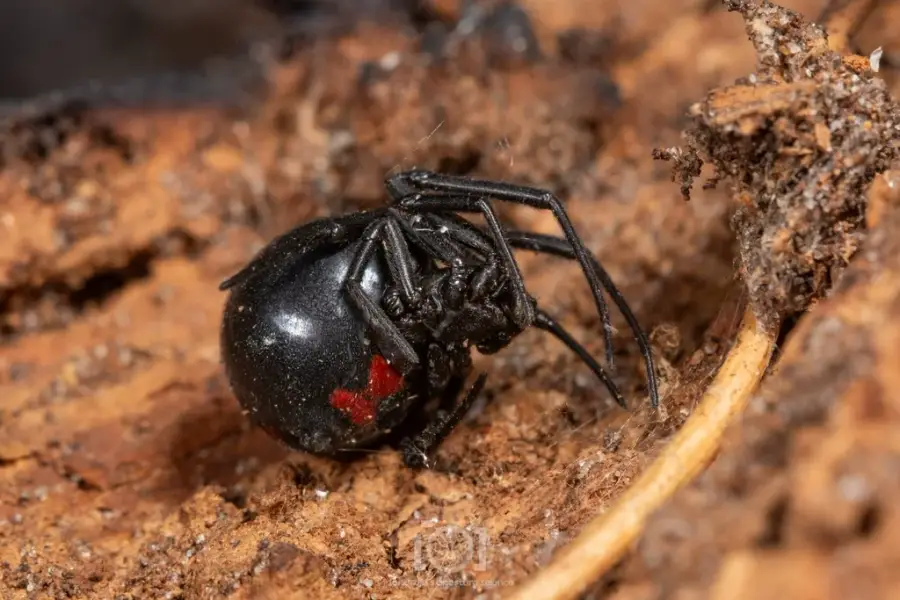
Virginia Cooperative Extension’s guide to spiders of medical concern says both the northern and southern black widow are common in Virginia. Females are glossy black, about half an inch long, with a round abdomen and a red hourglass or red marks on the underside.
They rarely come indoors. Instead, look for them in basement window wells, under porches and decks, in sheds, garages and woodpiles. Wear gloves when you reach into those spots. See our black widow page, and read should I kill a black widow spider before you deal with one yourself.
What About the Brown Recluse?
The brown recluse is the spider people worry about most, but it is not a common Virginia spider. Its natural range reaches only the very tip of southwestern Virginia. Virginia Cooperative Extension’s brown recluse fact sheet notes that isolated populations elsewhere most likely came in on household goods or firewood moved from its native range.
A real brown recluse is plain tan to golden brown with a violin-shaped mark on its front section, no stripes or bands on its legs, and six eyes instead of eight. If your brown spider has striped or banded legs, it’s not a recluse. Our brown recluse page and grass spider vs. brown recluse guide show the differences.
It also helps to know that true spider bites are uncommon.
In a study of emergency room patients who came in reporting a spider bite, only 7 of 182 (3.8%) actually had one. About 86% had skin and soft-tissue infections instead. That’s why doctors are careful about calling a wound a spider bite unless someone saw the spider bite.
A Note on Joro Spiders
Joro spiders are large yellow, blue-gray, and black orb weavers from East Asia that have spread through the Southeast and into Maryland. In a 2024 Virginia Tech Q&A, an entomologist said they had not yet been reported in Virginia, are not a medical concern, and won’t invade homes. So if one shows up, there’s no need to panic or spray your yard.
Common Virginia Spiders by Season
Bold jumping spiders are out as adults and hunting on sunny siding and railings. Orb weavers are hatching, but they’re tiny, so you won’t notice them yet. House spiders and cellar spiders stay active indoors.
Crab spiders sit on garden flowers, fishing spiders are active near woods and water, and grass spider sheet webs start showing up on lawns. Black widows are active in window wells, sheds, and woodpiles.
This is peak spider season in Virginia. Garden spiders, spotted orbweavers, and marbled orbweavers are full-grown with big webs. Wolf spiders, yellow sac spiders, grass spiders, and parson spiders wander into homes.
Most outdoor spiders die off or overwinter as eggs. What you see indoors is mostly common house spiders and cellar spiders, plus the odd yellow sac or parson spider that moved in during the fall.
Fall is when most homeowners call us about spiders, because that’s when webs and wandering hunters peak.
When Spiders Around Your Home Become a Problem
A few spiders are normal and even helpful, since they eat other bugs. It becomes a problem when webs keep coming back on your eaves, porch, and windows, or when you’re finding black widows where your family reaches, like the garage or a window well. It’s also worth asking why so many spiders are there in the first place. Spiders follow food.
In my experience, wooded areas with lots of trees and moisture, like the Mount Vernon area near Alexandria, have the highest spider populations in Northern Virginia. The webs build up quickly in the eaves of homes. Our approach is two-pronged. First, we remove the existing webs with a long-handled web brush called a webster. Then we apply a non-repellent perimeter treatment along the foundation.
Spider webs can also tell you a lot about a house. More than once, I’ve had an ant problem nobody could figure out. Then I looked at the webs and found them full of ants or swarmers, and that pointed me right to the real issue.
A few things you can do yourself make a real difference:
- Knock down webs regularly with a broom or vacuum, especially around eaves and light fixtures.
- Switch porch lights to yellow bulbs so fewer night-flying insects gather, which means less food for orb weavers.
- Seal gaps around doors, windows, and utility lines. Our exclusion services handle the bigger gaps.
- Move firewood, rock piles, and clutter away from the foundation, where widows and wolf spiders hide.
- Wear gloves when reaching into window wells, sheds, and woodpiles.
When DIY isn’t keeping up, our spider control service handles it as part of a recurring plan. We treat the outside of the home where spiders and their food come from, rather than just spraying inside. It’s also included in our general pest control plans for homes across Arlington, McLean, Burke, Woodbridge, and the rest of Prince William County.
Final Thoughts on Virginia Spiders
Most spiders in Virginia are harmless, and many of the scariest-looking ones, like garden spiders and fishing spiders, are among the gentlest. The two worth real caution are black widows, which are common, and the brown recluse, which is rare outside southwest Virginia. Learn where each one lives, and you’ll know what you’re dealing with in seconds.
Our family has been handling pests in the DMV for 58 years, with over 1,800 reviews and licensed technicians who deal with spiders every week. If you have questions or want an estimate, call us at 703-683-2000 or email info@bettertermite.com.