
Virginia has hundreds of spider species, and only a handful carry venom that matters to a person. Virginia Cooperative Extension flags two groups: widow spiders and the brown recluse. But the recluse’s range barely touches the state’s southwestern tip. So the two you will realistically meet around a home here are the southern black widow and the northern black widow.
Everything else is a different story. Wolf spiders, yellow sac spiders, the long-legged ones in the basement, the big orb weavers on the porch: none of them are a medical concern.
I have spent years treating spiders across the DC metro area, and I can tell you the gap between what people fear and what they actually find is enormous. Most of the “poisonous spider” calls we get turn out to be a wolf spider on a basement wall or a big orb weaver on the porch. So let’s go through the two that matter, then the look-alikes that scare people for no good reason.
Poisonous vs. Venomous: A Quick Correction
Nearly everyone types “poisonous spiders,” so that is the phrase we are using here. But the accurate word is venomous.
Something is poisonous if it hurts you when you eat it or touch it. Something is venomous if it injects a toxin into you through a bite or a sting. Spiders are the second kind. Virginia Cooperative Extension’s guide to spiders of medical concern puts it plainly. All spiders use venom to subdue prey. But most species are not aggressive or dangerous, and for most people a bite is no worse than a bee sting.
So the real question is not “which spiders have venom.” Almost all of them do. The question is which ones have venom potent enough, and fangs large enough, to do something to a human being. In Virginia, that is a very short list.
The 2 Venomous Spiders in Virginia
Both of Virginia’s medically important spiders are widows, and they are close relatives. Here is how to tell them apart and what they have in common.
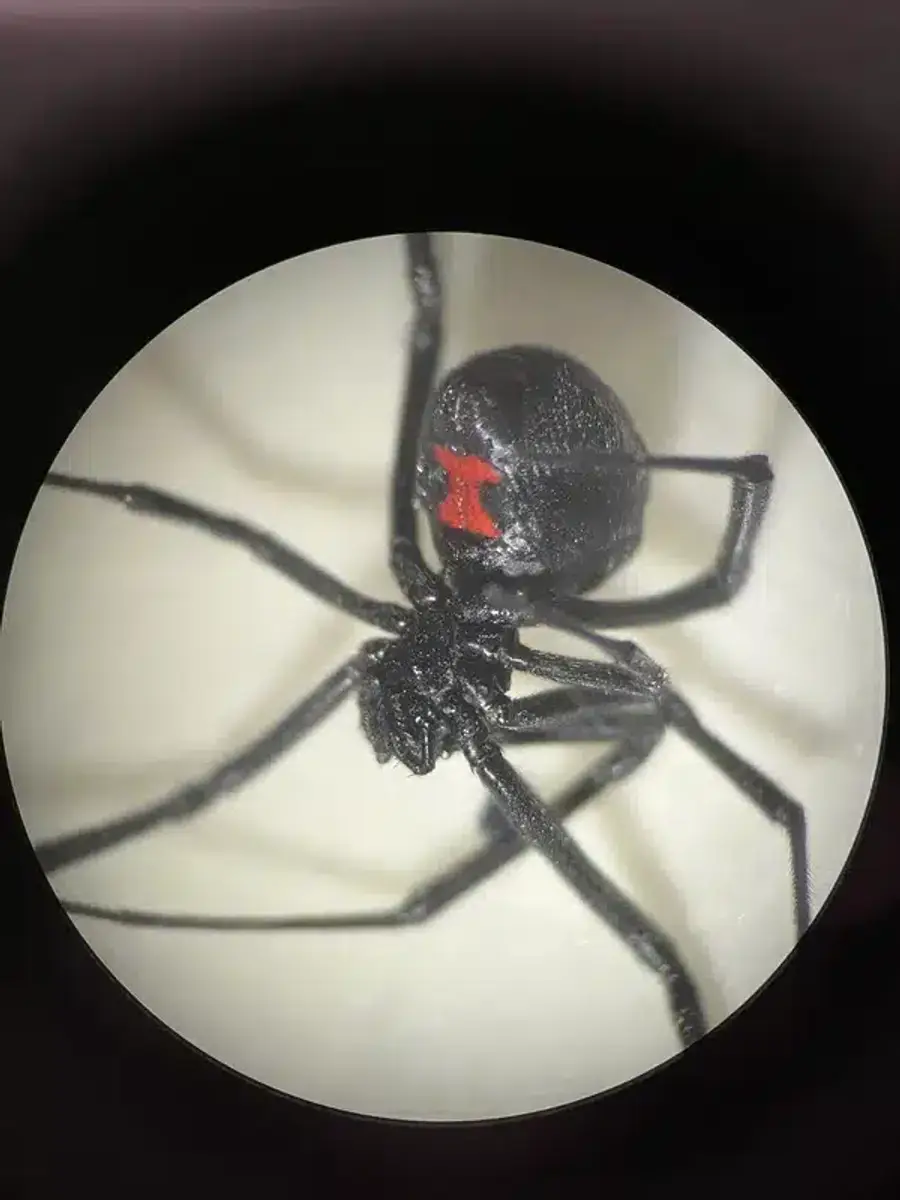
1. Southern Black Widow
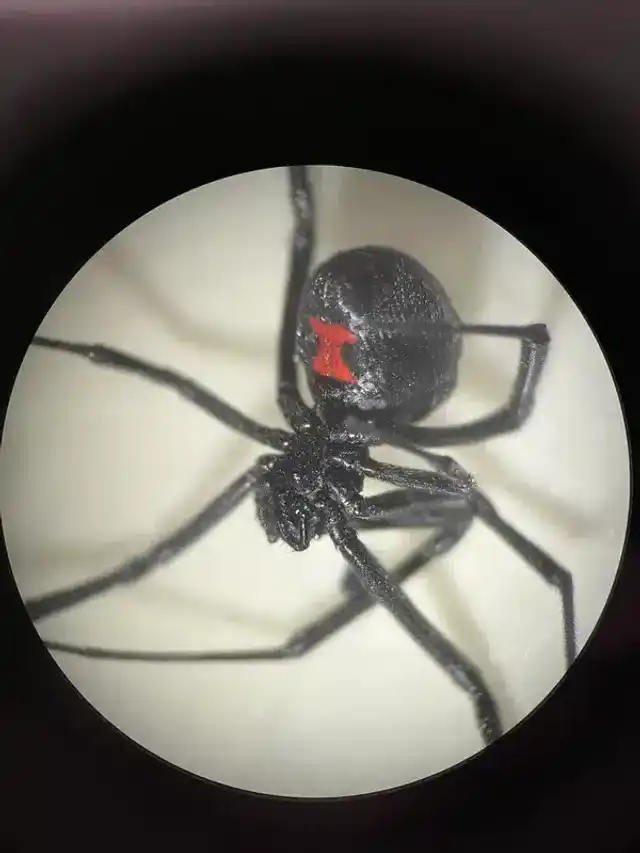
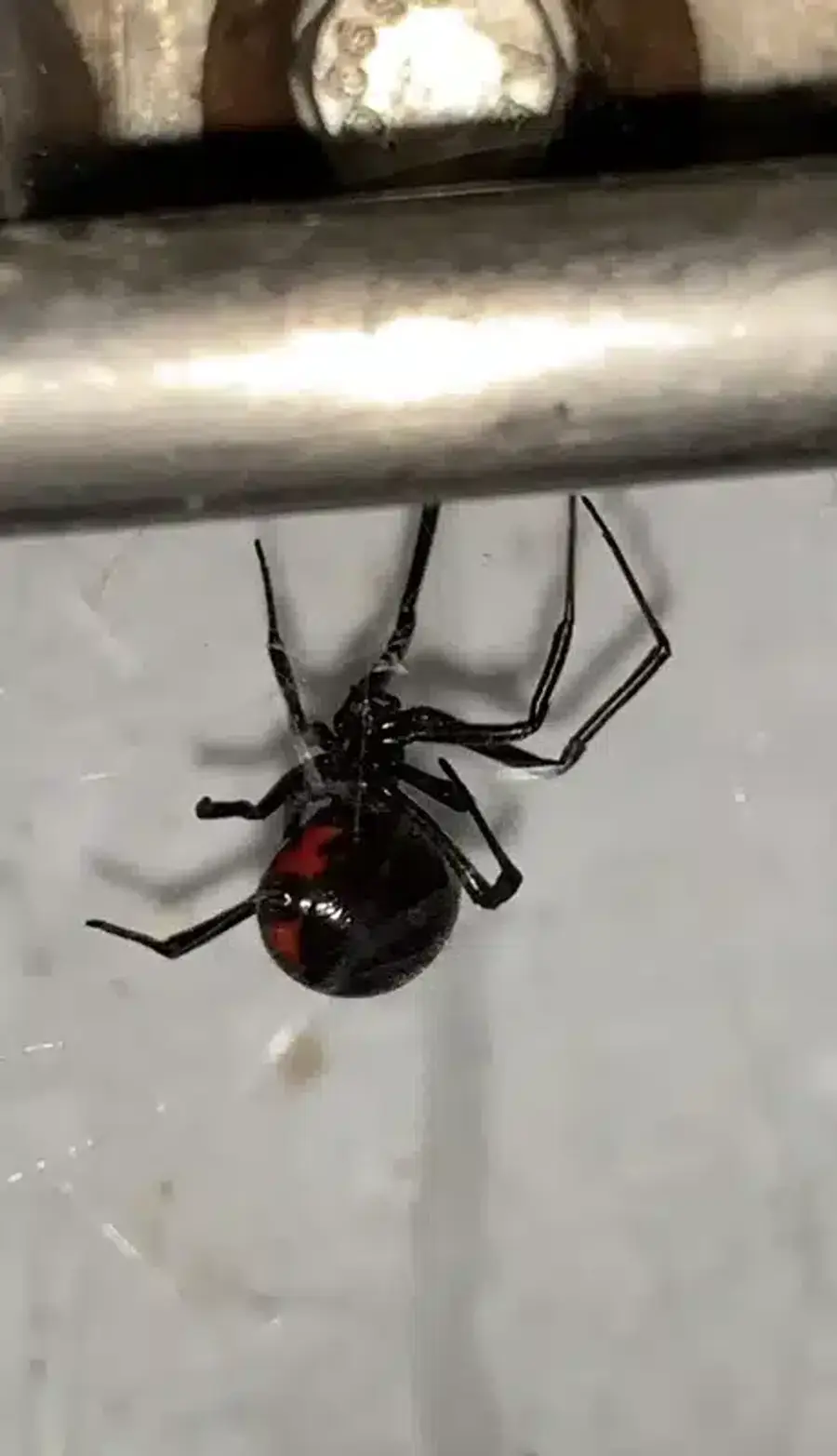
The southern black widow (Latrodectus mactans) is the one most people picture. The adult female is glossy, almost patent-leather black, with a round abdomen and a body about half an inch long. Underneath, she carries a complete red hourglass.
Her web is not the tidy wheel you see in a garden. It is a messy, tangled, irregular sheet, and it is unusually strong. If you brush a web that feels tougher than it looks, that is worth a second glance.
2. Northern Black Widow
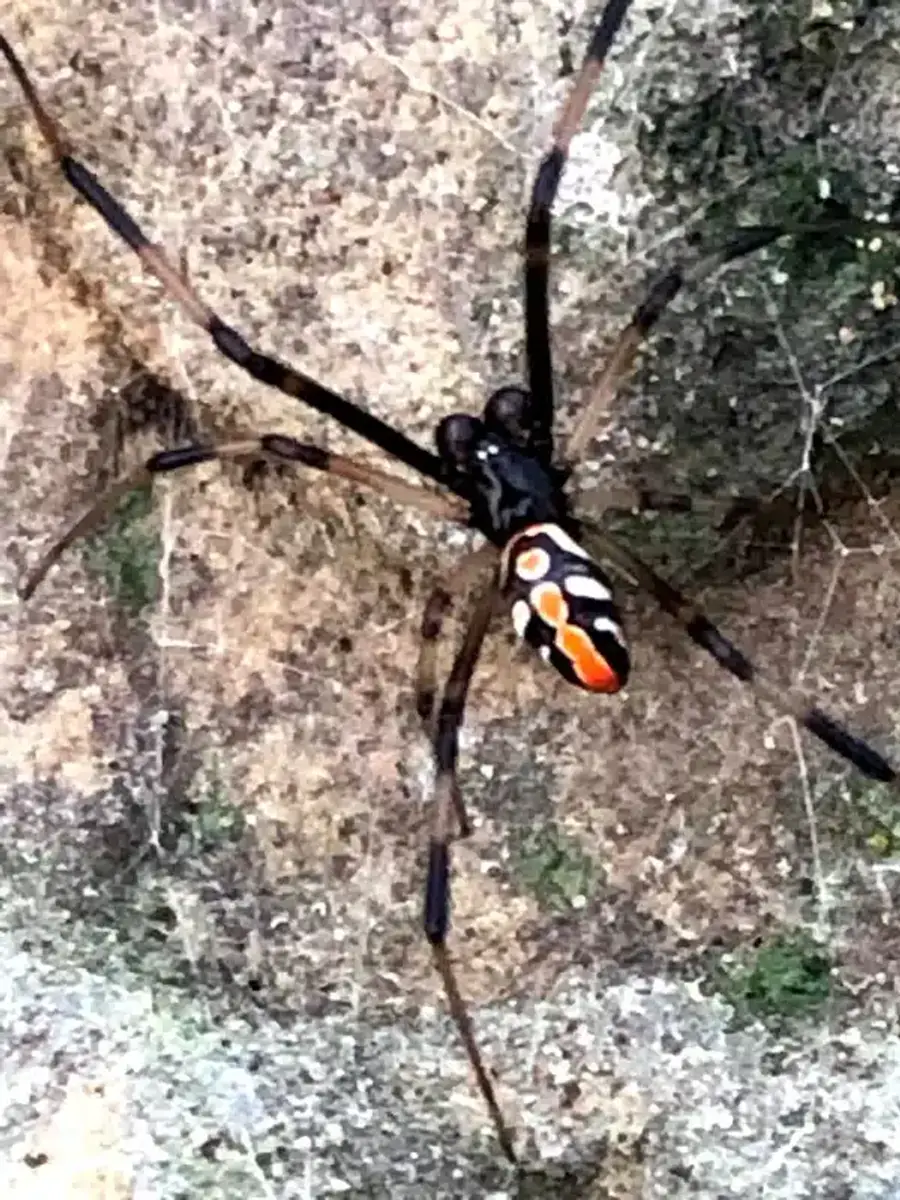
The northern black widow (Latrodectus variolus) lives here too. Extension notes that both species occur in Virginia, which surprises a lot of homeowners who assume widows are a southern problem only.
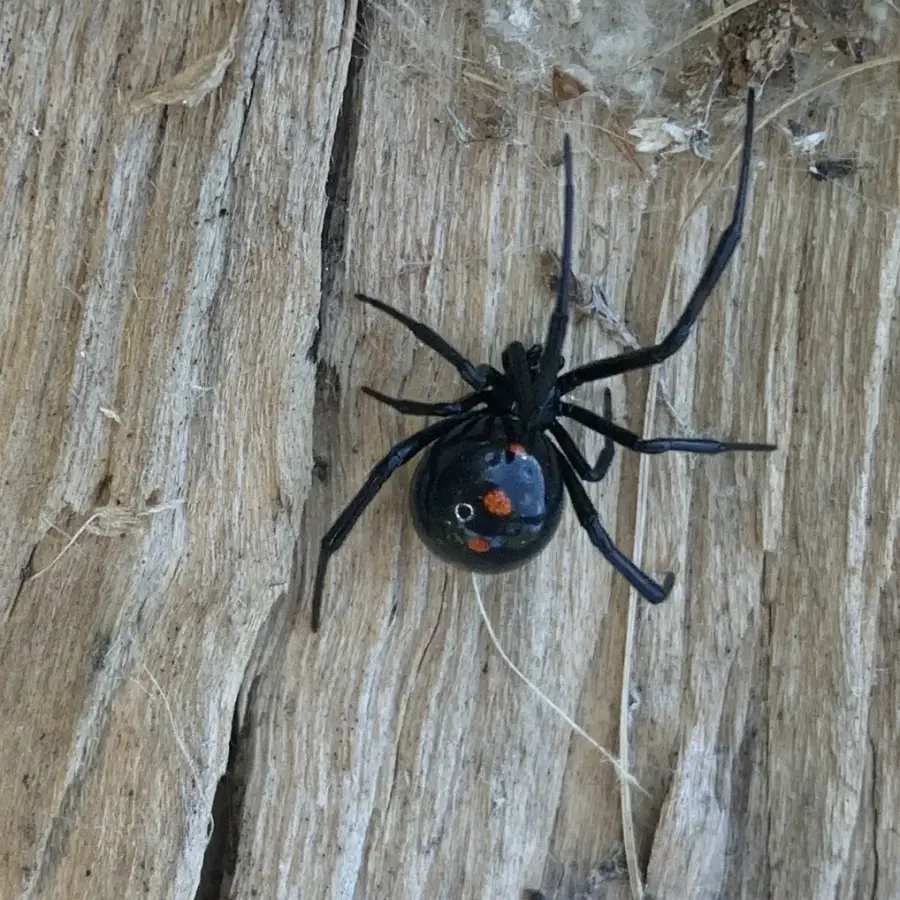
The main visual difference is the marking. Northern females often lack a complete hourglass. Instead they show two red bars, on both the top and the underside of the abdomen. Same habits, same caution, slightly different paint job.
Where Black Widows Actually Turn Up
Here is the part that should lower your blood pressure: widows are not house spiders. They are not trying to get into your bedroom. They want dark, undisturbed, protected pockets, and almost all of those are outside or at the very edge of the building.
The spots we check on a Virginia property are consistent:
- Basement window wells and the gaps behind them
- Crawl space corners, especially where the framing meets the foundation
- Under decks, porches and stoops
- Sheds and detached garages, particularly near the floor
- Stacked firewood, which is the single most common one
- Storage clutter that has not been moved in a year or more
The behavior rule is simple. If a spot is dark, dry, sheltered and rarely disturbed, treat it as widow habitat and put gloves on before you reach in. That one habit handles most of the realistic risk.
Spiders are one of our top pests in this area, and it is not evenly distributed. The wooded, damp parts of Northern Virginia are where the numbers get high. Mt. Vernon is a good example, with heavy tree cover and a lot of moisture, and those properties have some of the biggest spider populations I have worked on.
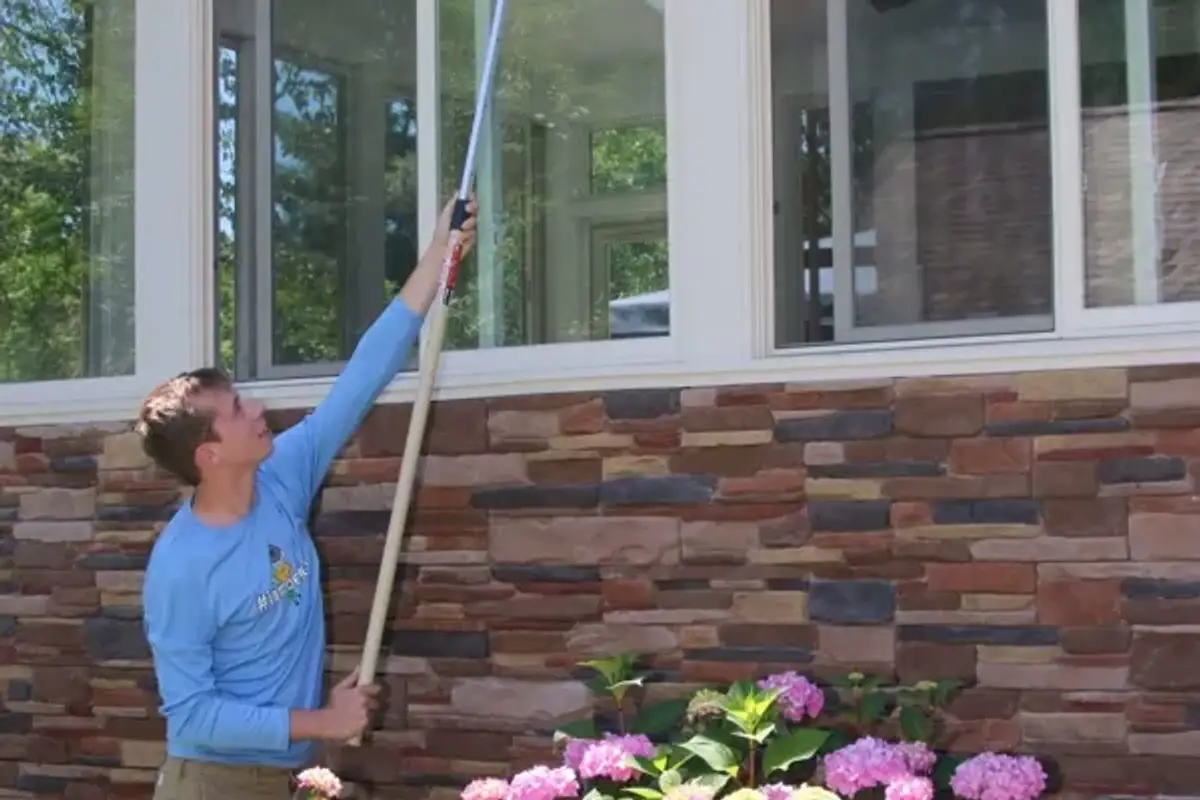
What I see there is that spiders build up fast in the eaves. A homeowner will look up one day and the whole soffit line has webbing across it. Our approach is two pronged. First we physically pull the webs down with a tool called a webster, because leaving old webbing up invites more. Second, we put a non-repellent product down as a perimeter treatment along the foundation. Non-repellent matters here, because a repellent just scatters them somewhere else on the structure.
Worth noting: the spiders in those eaves are almost never widows. They are orb weavers and house spiders. The widows are down low, in the woodpile and the window well.
What a Black Widow Bite Actually Does
A widow bite is a real medical event, and it also is not the emergency that movies suggest. Both things are true.
The venom is a neurotoxin, which means it acts on nerves rather than destroying tissue. The bite itself usually hurts right away. According to the National Capital Poison Center, muscle cramps typically begin within 15 to 60 minutes, the pain can spread outward from the bite toward the chest or abdomen, and cramping can come in waves. Sweating, nausea and elevated blood pressure are common. Recovery usually happens within 24 to 48 hours, though symptoms can linger for several days.
The best current data comes from a 2025 review in Wilderness & Environmental Medicine, written by a team at the University of Virginia School of Medicine. They examined 15,299 black widow exposures reported to US poison centers between 2012 and 2022.
Their findings put the risk in perspective. Almost half of all cases (48.6%) were managed entirely outside a healthcare facility. Hospital admission was required for 10.0% of exposures. Antivenom was given in only 3.4% of cases. The authors concluded that most black widow exposures result in minor consequences and that supportive care is the primary approach.
The study also confirms what we see in the field: exposures cluster in warm-weather states and peak during summer months.
Is the Brown Recluse in Virginia?
This is the question I get more than any other, so let’s be precise rather than reassuring.
Virginia Cooperative Extension’s brown recluse fact sheet says the species is found primarily in the Midwest and south-central states. Its natural range extends only to the very tip of southwestern Virginia. Extension does note that isolated populations have been confirmed elsewhere in the state. Those were most likely introduced on household goods or firewood moved in from the recluse’s home range.
So the honest answer is: not zero, but nothing like what people imagine. If you are in Alexandria, Arlington, Fairfax or anywhere else in the DC metro area and you found a brown spider, the odds are overwhelming that it is something else.
Three checks rule a recluse in or out quickly:
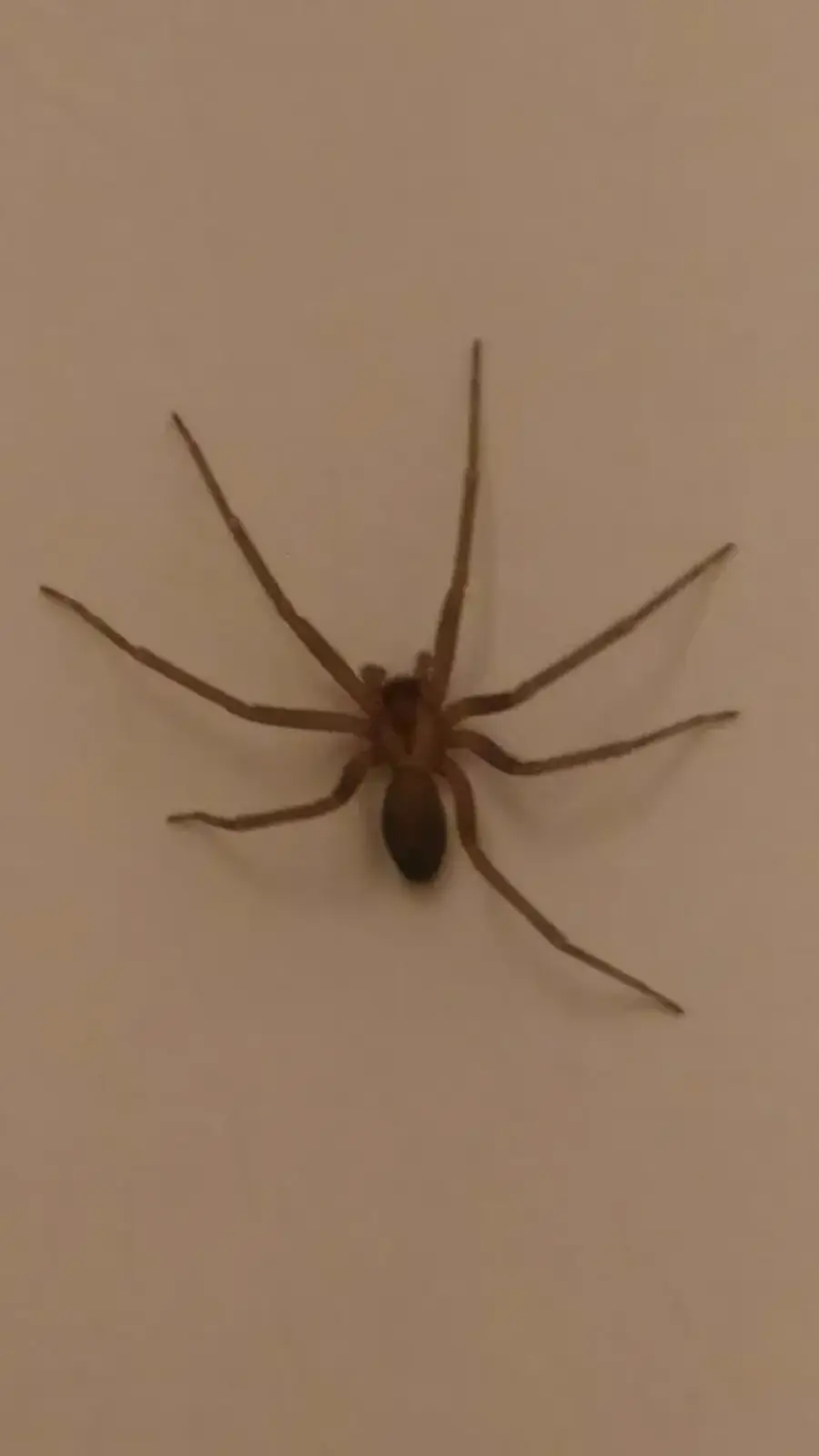
- Uniform color. A recluse is plain tan to golden brown with no pattern on the abdomen.
- Unmarked legs. No stripes, no bands, no spines. Banded or spiny legs means it is not a recluse. This one check eliminates most suspects.
- Six eyes, not eight. Arranged in three pairs. Hard to see without magnification, but definitive.
Extension also makes an important point about diagnosis. Many medical cases reported as brown recluse bites turn out to be some other wound or infection entirely. Even physicians cannot identify a wound as a spider bite from its appearance alone. Our brown recluse vs. wolf spider guide walks through the mix-up we see most often.
5 Virginia Spiders People Think Are Poisonous
These are the species that generate panicked phone calls. None of them are a medical concern.
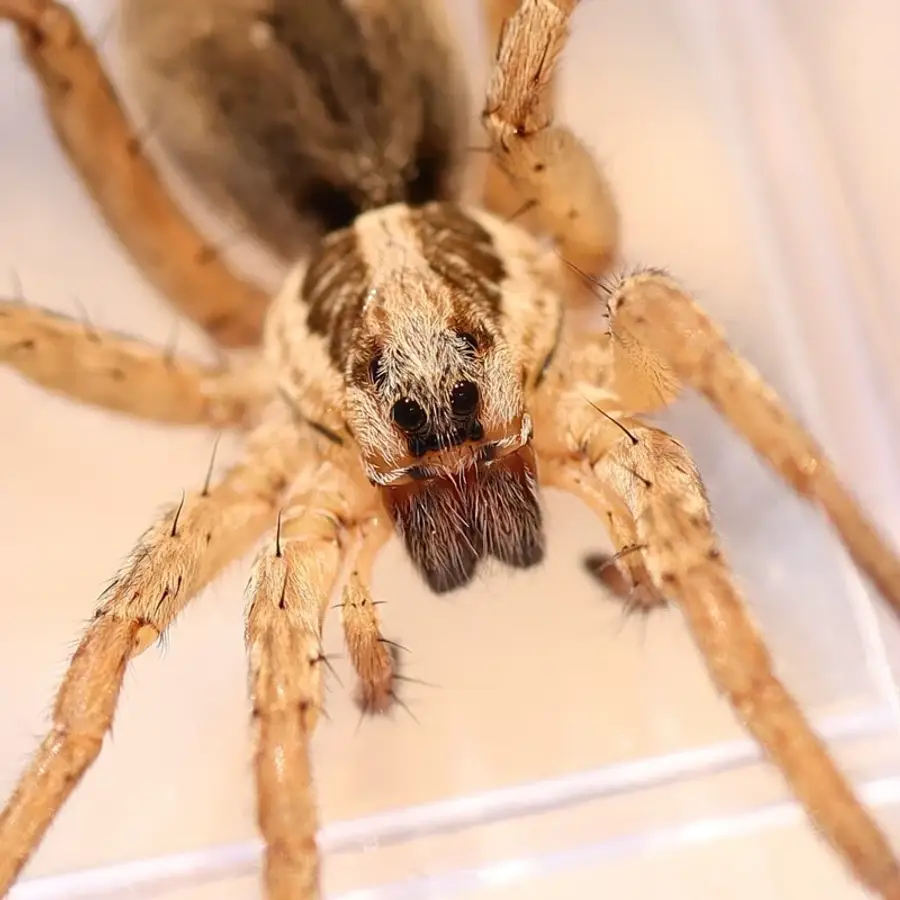
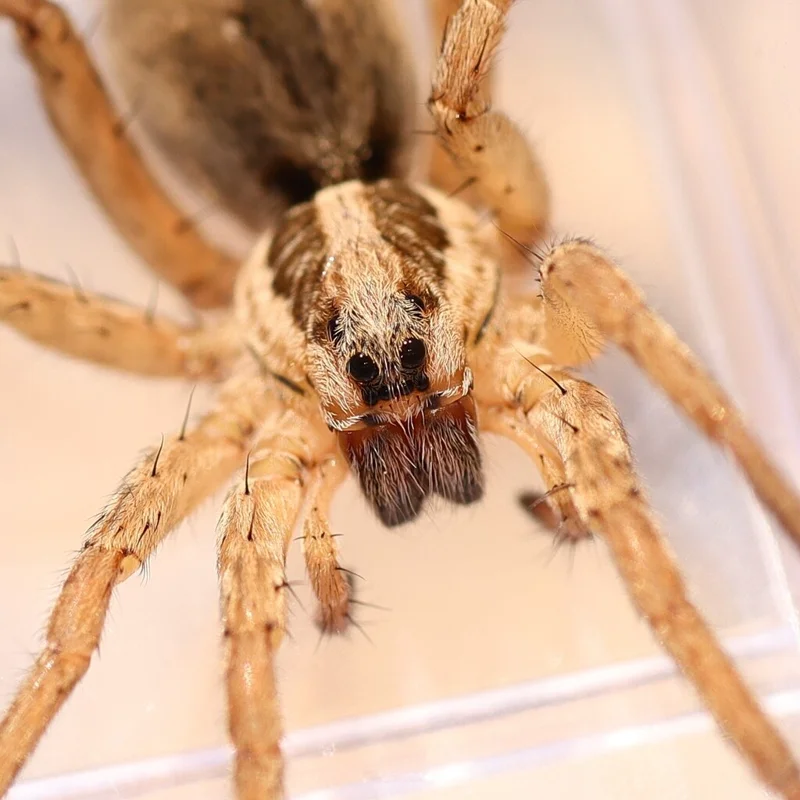
Why people panic: size and speed. A large wolf spider sprinting across a basement floor is genuinely startling, and they are often mistaken for recluses because they are brown.
The reality: Extension is direct about it. Wolf spiders and nursery web spiders use venom on their prey, but they are not considered medically important species in Virginia. They also do not build webs to catch food, so they are hunting, not settling in.
The tell: wolf spiders have a distinctly hairy body, eight eyes including two large forward-facing ones, and banded or patterned legs. A recluse has none of that.
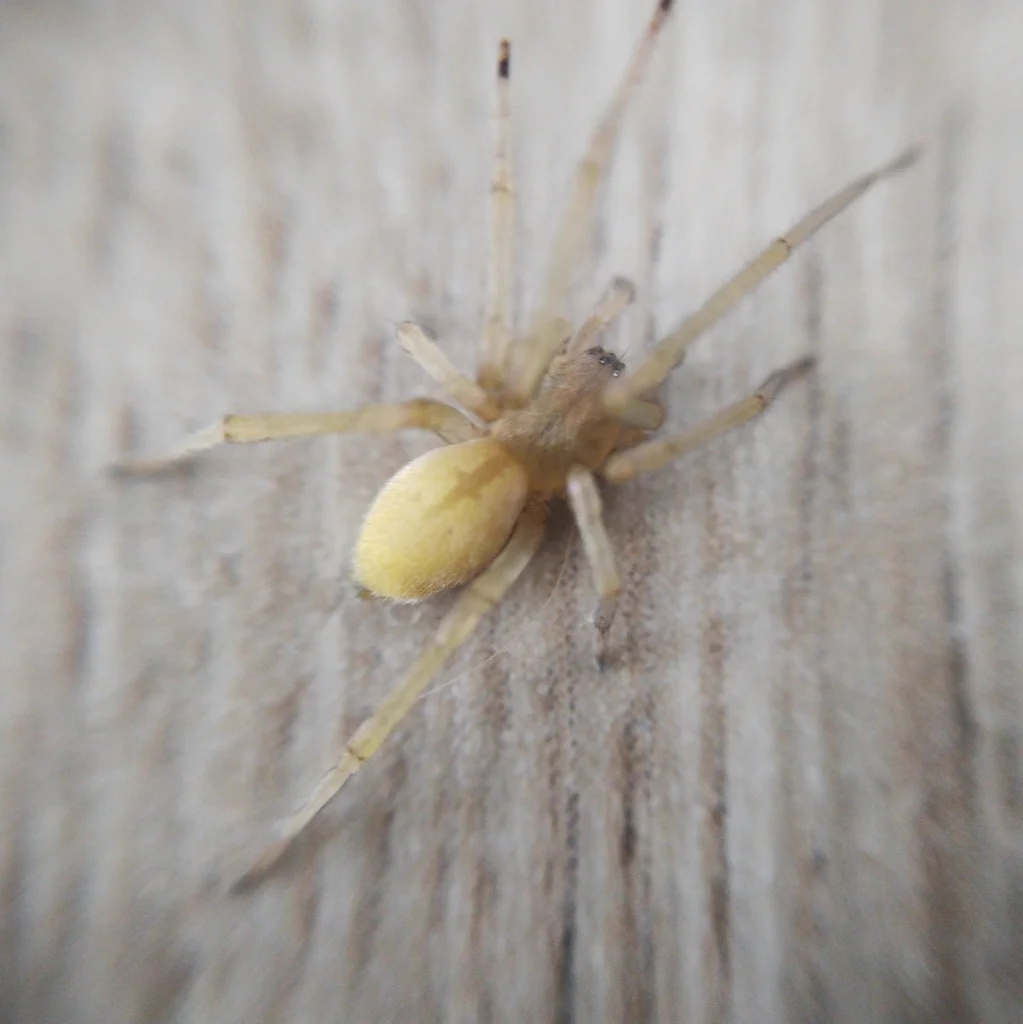
Why people panic: yellow sac spiders are the species most often blamed for an indoor bite, because they roam walls and ceilings at night and sometimes get pressed against skin in bedding or clothing.
The reality: Extension says flatly that they do not deserve the reputation they have gained for dangerously toxic venom. Bites generally heal within a few weeks if the wound is kept clean.
The tell: small, pale yellow to beige, fast-moving, and they leave a small silk retreat sac in a wall or ceiling corner rather than a web.
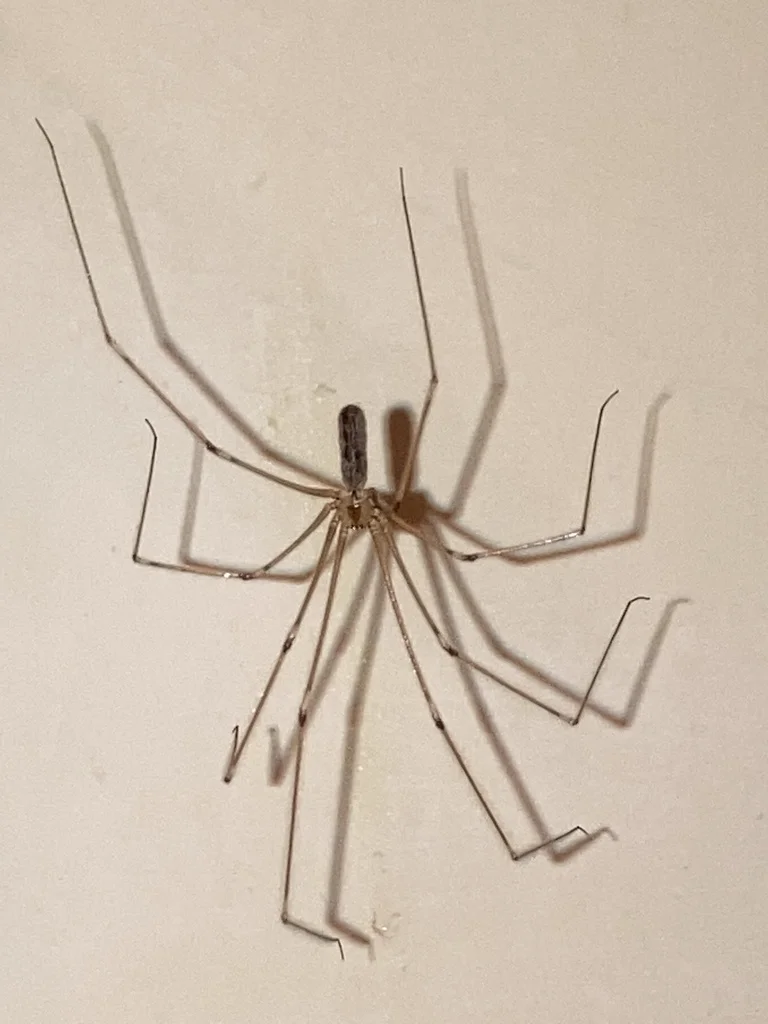
Why people panic: the daddy long legs myth, which claims these are the most venomous spider in the world but cannot bite through human skin. It is the most repeated spider claim there is, and it is wrong on both halves.
The reality: researchers at UC Riverside’s entomology department have addressed this directly. Harvestmen, the ones with a single round body, have no venom at all. Cellar spiders, the long-legged ones actually building wispy webs in your basement corners, do have venom like almost every spider, but there is nothing remarkable about it and no evidence of harm to people.
The tell: if it has two body segments and a loose, tangled web in a basement corner, it is a cellar spider. If it has one body segment and no web, it is a harvestman and not a spider at all.
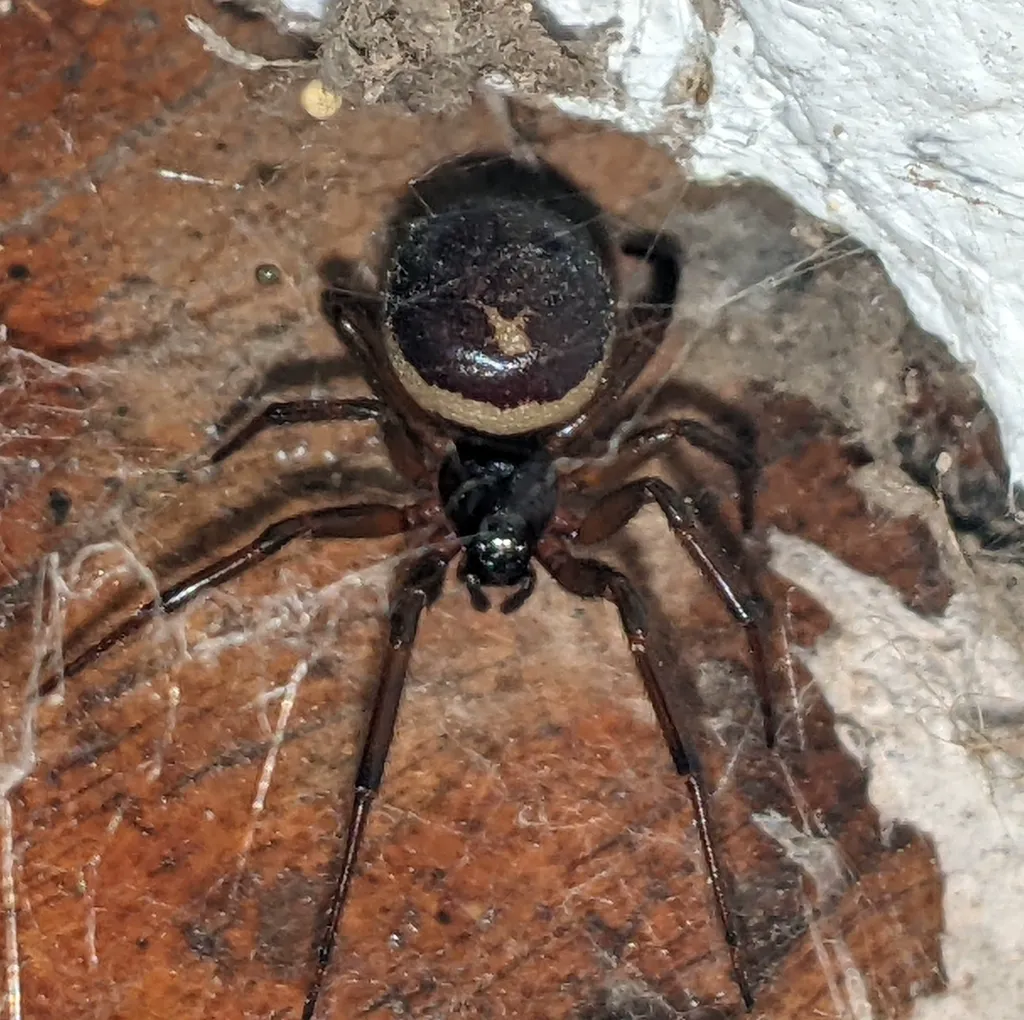
Why people panic: the name and the shape. False black widows have the same round abdomen and the same tangled web, and they often turn up in the same basements and sheds.
The reality: not a medically important species, and genuinely common in and around homes here.
The tell: color and marking. A false widow is dull purplish-brown rather than glossy black, and it has no red hourglass and no red bars. If there is no red underneath, you are not looking at a widow.
Why people panic: headlines. Joro spiders are large, brightly colored, and have been covered relentlessly as an invasive threat spreading up the East Coast.
The reality: Penn State Extension says Joro spiders do not have medically important bites. Their small fangs have difficulty piercing human skin. And their venom is weak enough that a bite is less painful than a bee sting.
The tell: they are not established in Virginia. The nearest established population is around Elkridge, Maryland, which is expanding but is still a Maryland story, not a Virginia one. A single specimen elsewhere is usually a spiderling that ballooned in on the wind.

When a Spider Problem Is Worth a Call
Since almost nothing here is dangerous, the decision to call is about volume and location, not venom.
It is worth getting help when webs keep reappearing across the eaves, porch ceiling and window frames within days of being knocked down. That pattern means there is a food source drawing them, usually insects pulled in by exterior lighting, and clearing webs alone will not change it.
It is also worth a call when you are finding adult female widows in an area you actually use, like a crawl space you store things in, a garage workshop, or a woodpile by the back door. You can manage one spider yourself. A recurring population in a space you reach into regularly is a different situation.
Our spider control service is built around the same two-part method I described above: physical web removal so the structure stops advertising itself, then a non-repellent perimeter treatment along the foundation and entry points. We have been doing this in the DC metro area for 58 years, with over 1,800 reviews across our locations. Every product we use is EPA approved and has been through our internal research team. Each one is something we would be comfortable using in our own homes.
Final Thoughts
For almost everyone in Virginia, the practical list comes down to two widows. Both of them stay out of your living space and out of your way. The brown recluse is a real species with a real range, but that range barely touches the southwestern corner of the state. Everything else you find, the wolf spiders and the sac spiders and the long-legged ones in the basement corner, is a nuisance at worst.
Learn the glossy black body and the red marking underneath, put gloves on before you reach into a woodpile or a window well, and you have covered the realistic risk.
If you are not sure what you found, or the webs around your house keep coming back no matter how often you clear them, give us a call at 703-683-2000 or email info@bettertermite.com. We will identify what you have and tell you honestly whether it needs treating.