Sheet Web Spider Identification Guide
Linyphiidae
Sheet web spiders, also called sheet weavers or money spiders, are tiny, harmless spiders in the family Linyphiidae. They spin flat, bowl, dome, or hammock-shaped sheets of silk on lawns, shrubs, and low branches, and hang upside down underneath.
Taxonomy
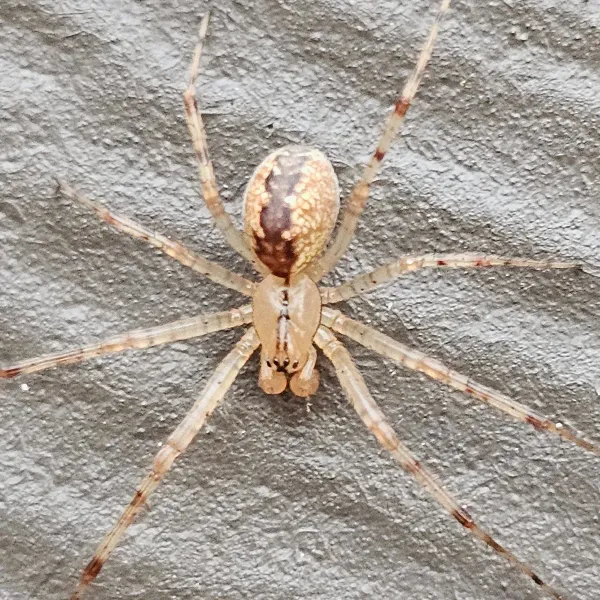
Sheet Web Spider Coloration
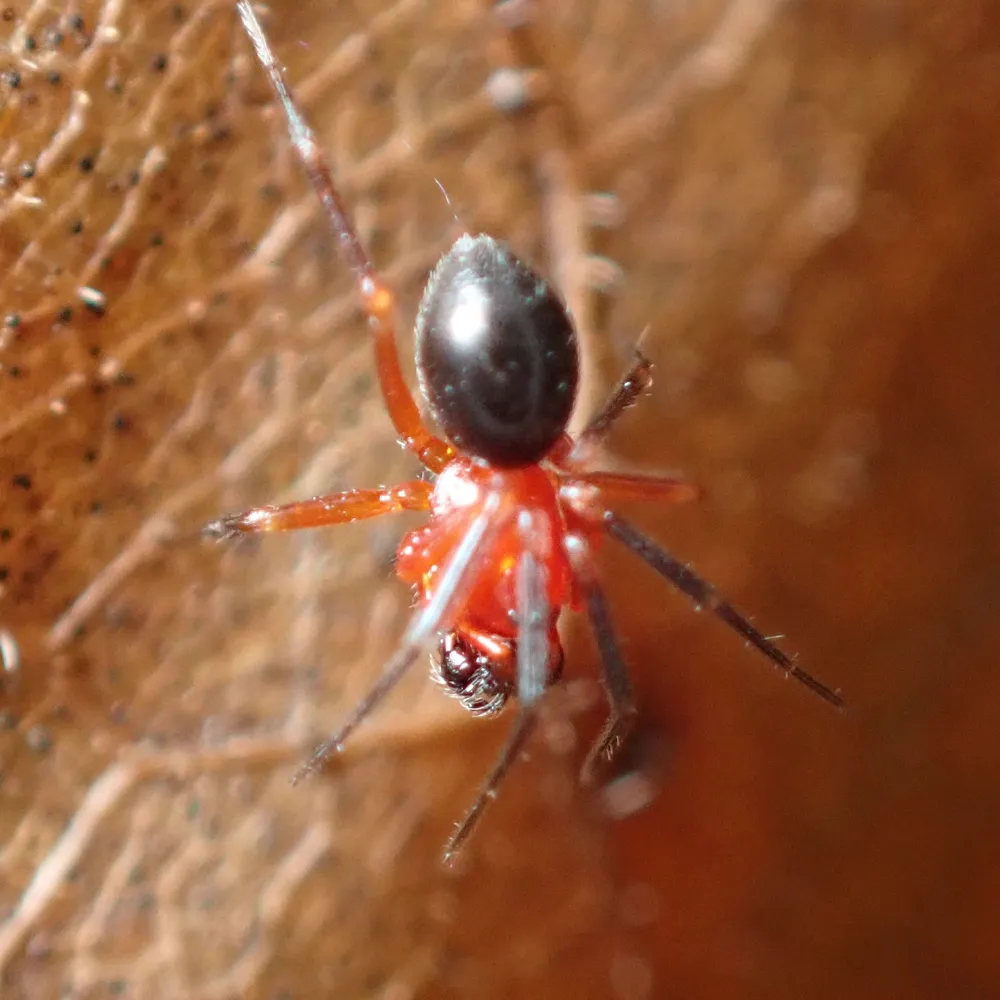
Common color patterns to help identify sheet web spider
Sheet Web Spider
Seasonal Activity
When sheet web spider are most active throughout the year

Where Sheet Web Spider Are Found
Hover over states to see their names. Green regions indicate where sheet web spider have been reported.
Sheet Web Spider Identification Guide
Physical Characteristics
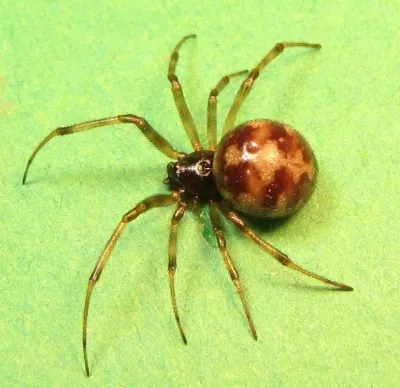
Sheet web spiders are a huge family of tiny spiders called Linyphiidae. You may also hear them called sheet weavers, sheetweb weavers, linyphiids, or money spiders. North America has hundreds of species, and they live in every U.S. state and Canadian province. Most people never notice the spider. They notice the web.
Here is what most sheet web spiders have in common:
- Size: very small. Most are 1 to 4 mm long (about 1/25 to 1/6 inch). The largest common species, the hammock spider, reaches about 7 mm.
- Body: two body parts and eight long, thin legs. The abdomen is often shiny.
- Color: black, brown, tan, cream, or red. Many larger species have pale abdomens with dark stripes or wavy bands.
- Posture: the spider hangs upside down under its sheet, not on top of it.
Telling one species from another usually takes a microscope. For homeowners, the web type is the easiest clue.
Types of Sheet Webs
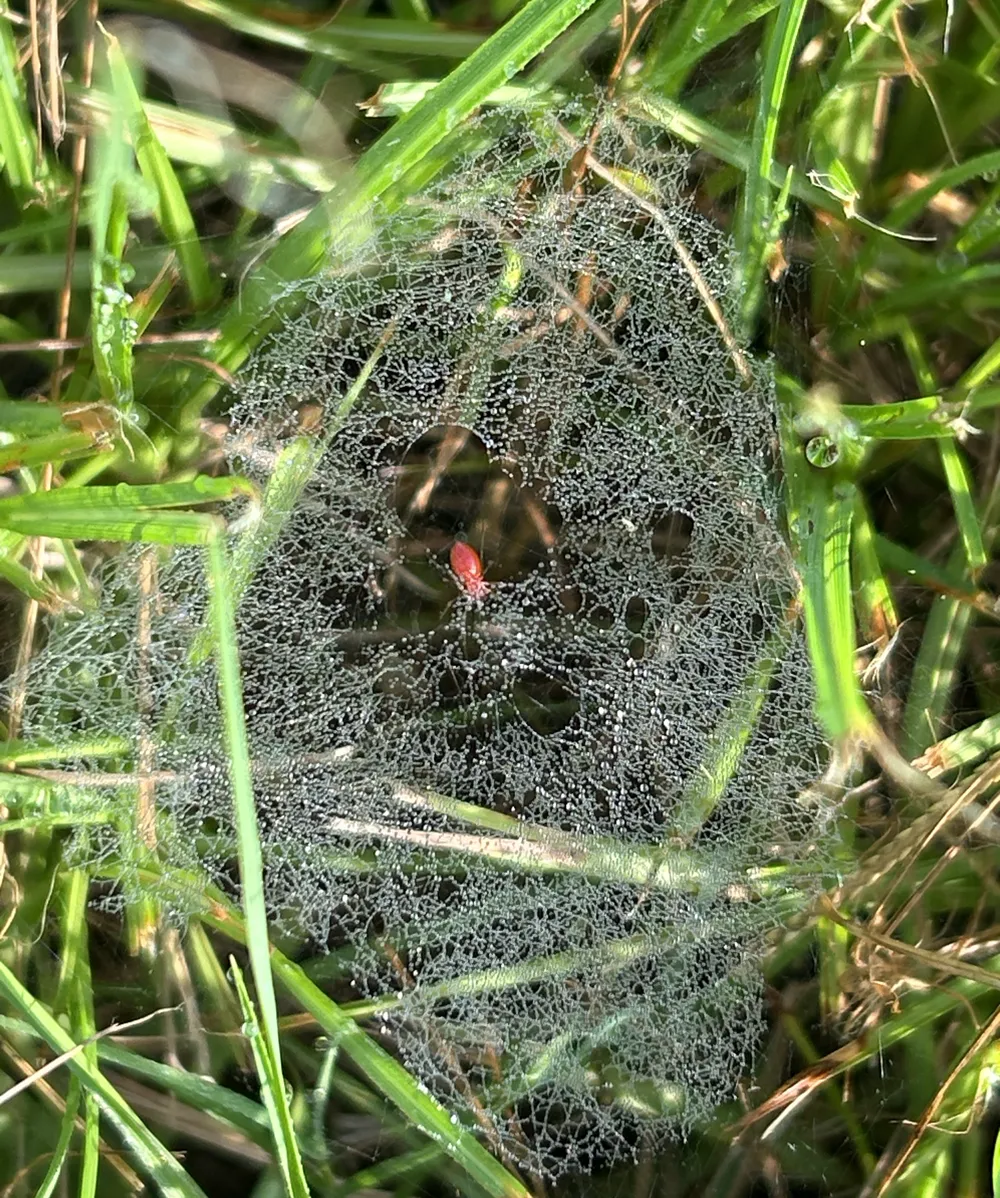
Every sheet web has a sheet of silk and, usually, a tangle of loose “barrier” threads above it. Small insects hit the barrier threads and fall onto the sheet. The spider bites them from below and pulls them through. The silk is mostly not sticky. Common web shapes include:
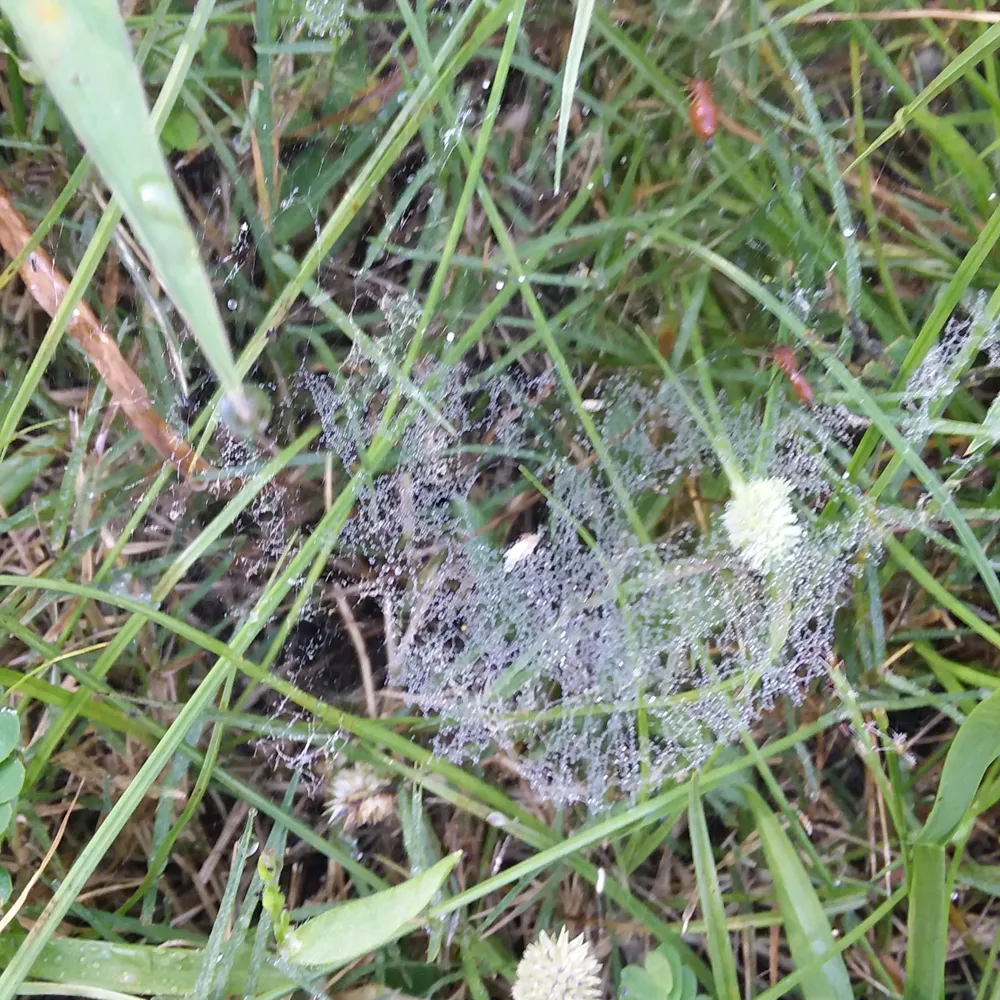
- Flat lawn sheets: small, flat sheets a few inches across, low in grass or on bare soil. These are the webs you see on dewy lawns.
- Bowl over a sheet: a silk bowl hanging above a flat “doily.” This is the web of the bowl and doily spider.
- Dome: a sheet curved upward like an upside-down bowl, made by the filmy dome spider.
- Hammock: a large, flat or slightly sagging sheet in shrubs, fences, and low branches of evergreens, made by the hammock spider.
- Tiny tangles: many dwarf spiders build webs about the size of a coin in leaf litter.
Common Species
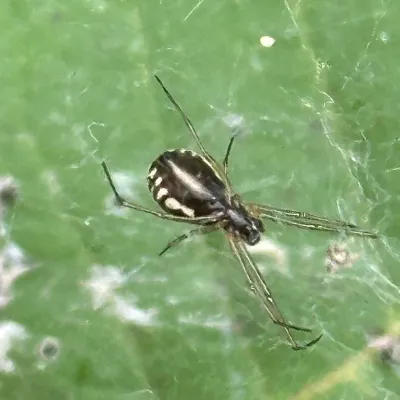
- Bowl and doily spider (Frontinella pyramitela): 3 to 4 mm, dark body with white markings. See our bowl and doily spider guide.
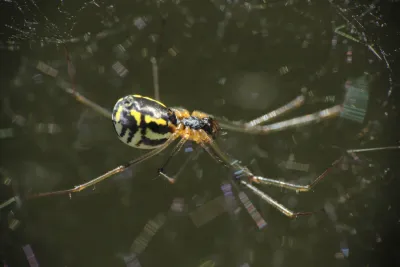
- Filmy dome spider (Neriene radiata): 4 to 6.5 mm, black with yellow-white side bands. See our filmy dome spider guide.
- Hammock spider (Pityohyphantes costatus): one of the largest North American sheet weavers, about 6 to 7 mm. It is pale tan with a dark, branching stripe down the abdomen.
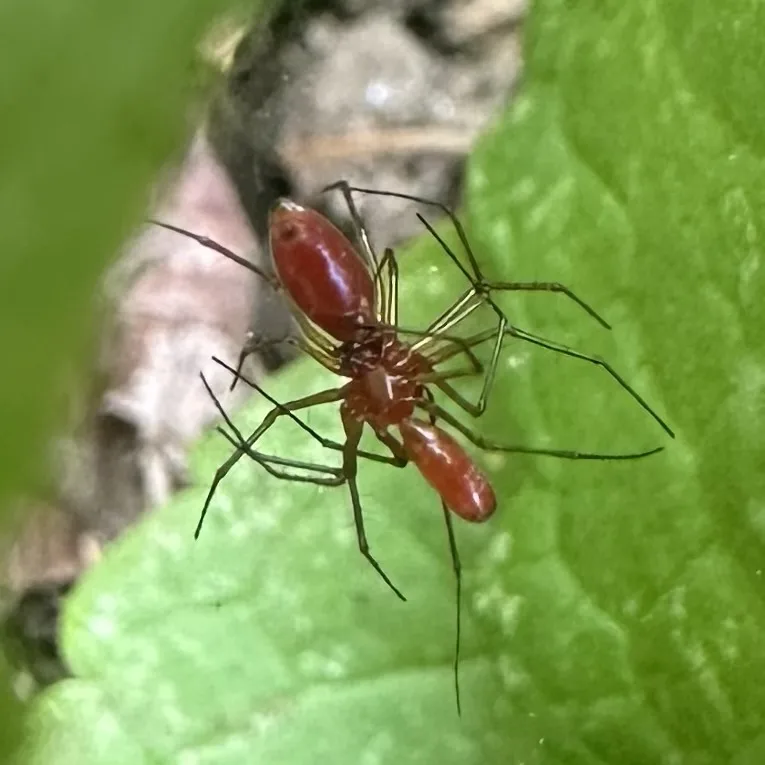
- Black-tailed red sheetweaver (Florinda coccinea): a bright red spider with a small black bump at the tip of its abdomen. It builds sheets in grass, mostly in the eastern and southern U.S., and is most common in late summer.
- Dwarf spiders (subfamily Erigoninae): the smallest members of the family, often 1 to 3 mm. Many are shiny black or brown, and some have orange-red heads.
Sheet Web Spiders vs. Look-Alikes
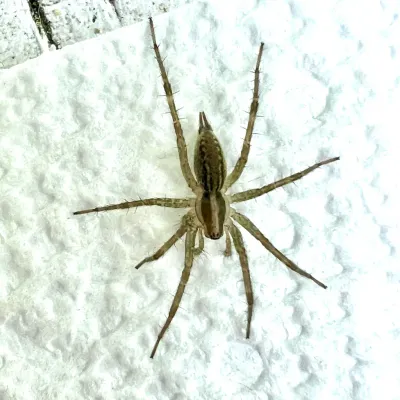
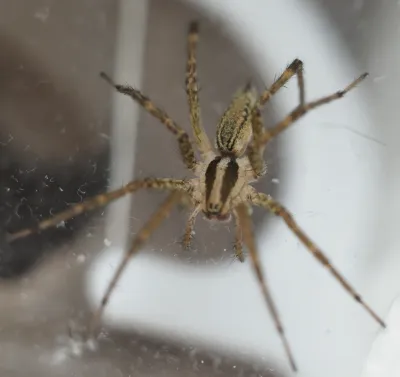
- Grass spiders and other funnel weaver spiders also build flat sheets on lawns and shrubs. Their sheet leads into a silk funnel at one edge, and the spider runs on top of the web. Grass spiders are also much bigger, about 10 to 20 mm.
- Triangulate cobweb spiders and other cobweb spiders build messy, sticky tangles, mostly indoors, with no sheet.
- Clover mites are tiny red specks that crawl on walls. A red sheetweaver is a true spider with eight long legs and lives in a web outdoors.
Sheet Web Spider Behavior and Biology
Habitat
Sheet web spiders live outdoors, usually close to the ground. Look for them in:
- Lawns, meadows, and weedy field edges
- Leaf litter, mulch beds, and moss
- Shrubs, hedges, and foundation plantings
- Low branches of evergreens such as hemlock, yew, and pine
- Fence lines, deck railings, and log piles
They are among the most common spiders in crop fields and grassy areas. They rarely live inside homes.
Diet
Sheet web spiders eat tiny, soft-bodied prey, such as:
- Aphids and leafhoppers
- Springtails in soil and leaf litter
- Gnats, midges, and small flies
- Tiny wasps and other small spiders
Because they eat so many crop and garden pests, researchers study them as natural pest control.
Life Cycle
- Eggs: females lay a few to several dozen eggs in silk sacs in the web or in leaf litter.
- Growth: spiderlings look like small, pale adults and molt as they grow.
- Lifespan: most live about one year, and some only a few months.
- Winter: eggs, young spiders, or adults shelter under bark, stones, and leaf litter. A few dwarf spiders stay active in mild winter weather.
Ballooning
Sheet web spiders are famous for ballooning. A spider climbs to a high point, lets out a silk line, and rides the wind. Unlike most spiders, adult sheet weavers balloon often, not just the young. On some fall days, so many land at once that fields and lawns look covered in fine silk, sometimes called gossamer.
Seasonal Activity
- December through February (none): few webs; spiders shelter in leaf litter.
- March and November (low): webs start in spring and fade after hard frost.
- April and May (moderate): spring species mature and webs appear in shrubs.
- June through October (high): peak season. Lawn webs are most visible on dewy mornings from August through October.
In the Deep South the season runs longer. In Canada and Alaska it is shorter.
How We Treat for Sheet Web Spiders
Sheet web spiders do not damage your home, lawn, or plants. Most people call us when webs build up on the porch, eaves, railings, or doorways. Our spider control service handles sheet weavers along with other web-building spiders. Treatment focuses on the outside of the house, where spiders and webs bother you most. Open lawn areas far from the home are not part of the treatment, and webs there come and go with the weather.
- Inspection: We look for spider hot spots around your home and for what draws them in. Bright outdoor lights pull in gnats and moths, which spiders eat. Thick shrubs against the house give webs a place to hang.
- Exterior treatment: We apply a non-repellent product to the outside of the home where spiders are active, such as windows, doorways, eaves, and corners.
- De-webbing: We knock down webs around the eaves and front porch that we can reach from the ground, up to about 6 to 8 feet.
- Ongoing service: Each recurring visit renews the outside treatment and clears new webs. You also get unlimited free callbacks between visits. The same plan covers other common household pests.
Prevention and Customer Guidance
- Trim shrubs and branches so they do not touch the house
- Rake leaf litter and move log piles away from the foundation
- Switch porch lights to yellow bug lights to draw fewer insects
- Close blinds at night so indoor lights do not attract insects to windows
- Sweep webs off railings and doorways with a broom
References
- Sheet-Weaving Spiders - University of Kentucky Department of Entomology, Kentucky Critter Files
- Sheetweavers (Family Linyphiidae) - Spiders in Ohio field guide to Ohio sheet weavers
- Spiders - University of Minnesota Extension guide to spiders around the home
- Spiders: Management Guidelines - University of California Agriculture and Natural Resources
- Spiders - National Pesticide Information Center, Oregon State University
- Linyphiidae genera list - World Spider Catalog, Natural History Museum Bern
- Linyphiidae occurrence records - Global Biodiversity Information Facility (GBIF)
Other Spiders
Explore other species in the spiders family
Commonly Confused With
Sheet Web Spider are often mistaken for these similar pests
Where Sheet Web Spider Are Found
Hover over states to see their names. Green regions indicate where sheet web spider have been reported.
Common Questions about Sheet Web Spider
What are the white webs all over my lawn in the morning?
+
Most are sheet webs made by tiny sheet web spiders, also called sheet weavers. They are there all the time, but dew makes them easy to see on cool, foggy mornings in late summer and fall. If a web has a silk tube or funnel at one edge, it belongs to a grass spider instead. Neither one harms your lawn.
Are sheet web spiders dangerous?
+
No. Sheet web spiders are not dangerous to people or pets. Most are smaller than a grain of rice, and their fangs are too small to bite through skin in most cases. The University of Kentucky notes they are not known to bite people. If you ever have a reaction to a bite, this is not medical advice, so talk to a doctor.
What is the difference between a sheet web spider and a sheet weaver spider?
+
Nothing. Sheet web spider, sheet weaver, sheetweb weaver, and linyphiid spider are all names for the same family, Linyphiidae. In the UK they are called money spiders. Very small members of the family are often called dwarf spiders.
Why are they called money spiders?
+
It comes from old British folklore. People said a tiny spider landing on you was a sign that money was coming your way, so it was bad luck to harm one. The name stuck in Europe, and some North Americans use it too.
Do sheet web spiders damage grass or plants?
+
No. They do not feed on plants. They eat aphids, leafhoppers, springtails, gnats, and other tiny insects, so many experts count them as helpful in gardens and crop fields. Webs on a lawn are only a sign that small insects are present.
Can sheet web spiders fly?
+
They have no wings, but many travel by ballooning. A spider lets out a strand of silk and the wind carries it away, sometimes for long distances. Sheet weavers balloon more often than most spiders, and adults do it as well as young ones. Fields covered in fine silk in the fall are often from mass ballooning.
How do I get rid of sheet web spiders?
+
Webs out in the lawn come and go with the weather and do no harm. If webs build up on railings, eaves, or doorways, sweep them down, trim shrubs back from the house, and switch to yellow bug lights. If webs keep returning on the house itself, a pest control plan with an exterior spider treatment and web removal can help.

With five years of hands-on experience in the pest control industry, George Schulz is a registered technician with the Virginia Pest Management Association and a proud third-generation professional in a family business that's been protecting homes for over 58 years. He manages and trains a team of service pros while also leading internal research efforts—recently spearheading a deep-dive review of thousands of documents on pest control materials to hand-pick the most kid and pet friendly, most effective solutions tailored specifically for homes in the DC metro area.
Local Spiders Help
Dealing with spiders at home? Our licensed technicians provide pest control across Northern Virginia and Maryland.
