
Seven spiders account for nearly every call I get about something crawling inside a Virginia home: the common house spider, the cellar spider, the wolf spider, jumping spiders, the yellow sac spider, the eastern parson spider, and the black widow. Only the last one is worth genuine caution. The other six are the ordinary residents of a mid-Atlantic house.
After five years as a registered technician here, I can usually name the spider before I reach the basement stairs, because where you found it narrows it down fast. A tangled web in a ceiling corner is one animal. Something sprinting across a garage floor is a completely different one. This guide covers the species that actually live inside Virginia houses, not the orb weavers and garden spiders out in the yard.
The 7 House Spiders You Actually Find Indoors
Start with this table. Find the row that matches where you saw it and what it was doing, then read that section below for the details.
| Spider | Body size | Web? | Where you find it indoors | Medically significant? |
|---|---|---|---|---|
| Common house spider | 4-8 mm | Messy cobweb | Ceiling corners, window frames, floor joists | No |
| Cellar spider | 6-10 mm, very long legs | Loose tangle | Basements, crawl spaces, garage ceilings | No |
| Wolf spider | 10-25 mm | None (hunter) | Floors, doorways, basements, garages | No |
| Jumping spider | ~8 mm | None (hunter) | Windowsills, sunny walls, door frames | No |
| Yellow sac spider | 5-10 mm | Small silk sac | Wall and ceiling junctions, behind pictures | Mild |
| Eastern parson spider | 5-13 mm | None (hunter) | Floors and walls at night, behind stored items | Mild |
| Black widow | ~13 mm | Strong messy cobweb | Garages, sheds, window wells, crawl spaces | Yes |
The rest of this guide walks each row in order, with photos and the detail that separates it from its look-alikes.
Common House Spider: The Ceiling Corner Cobweb
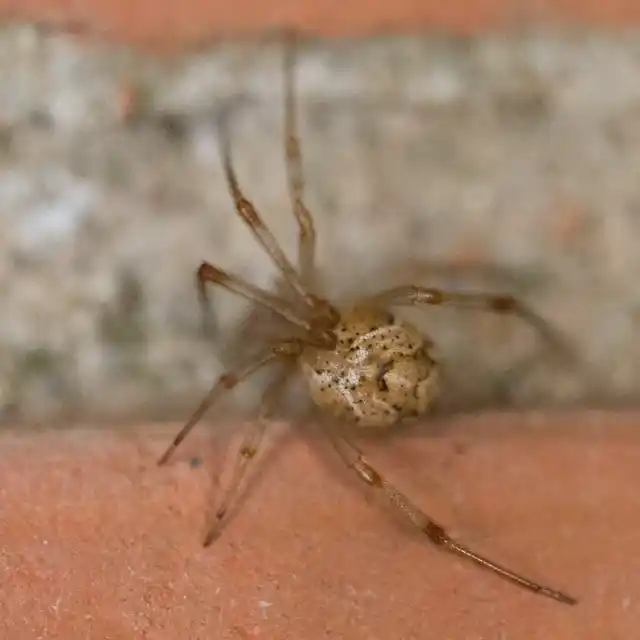
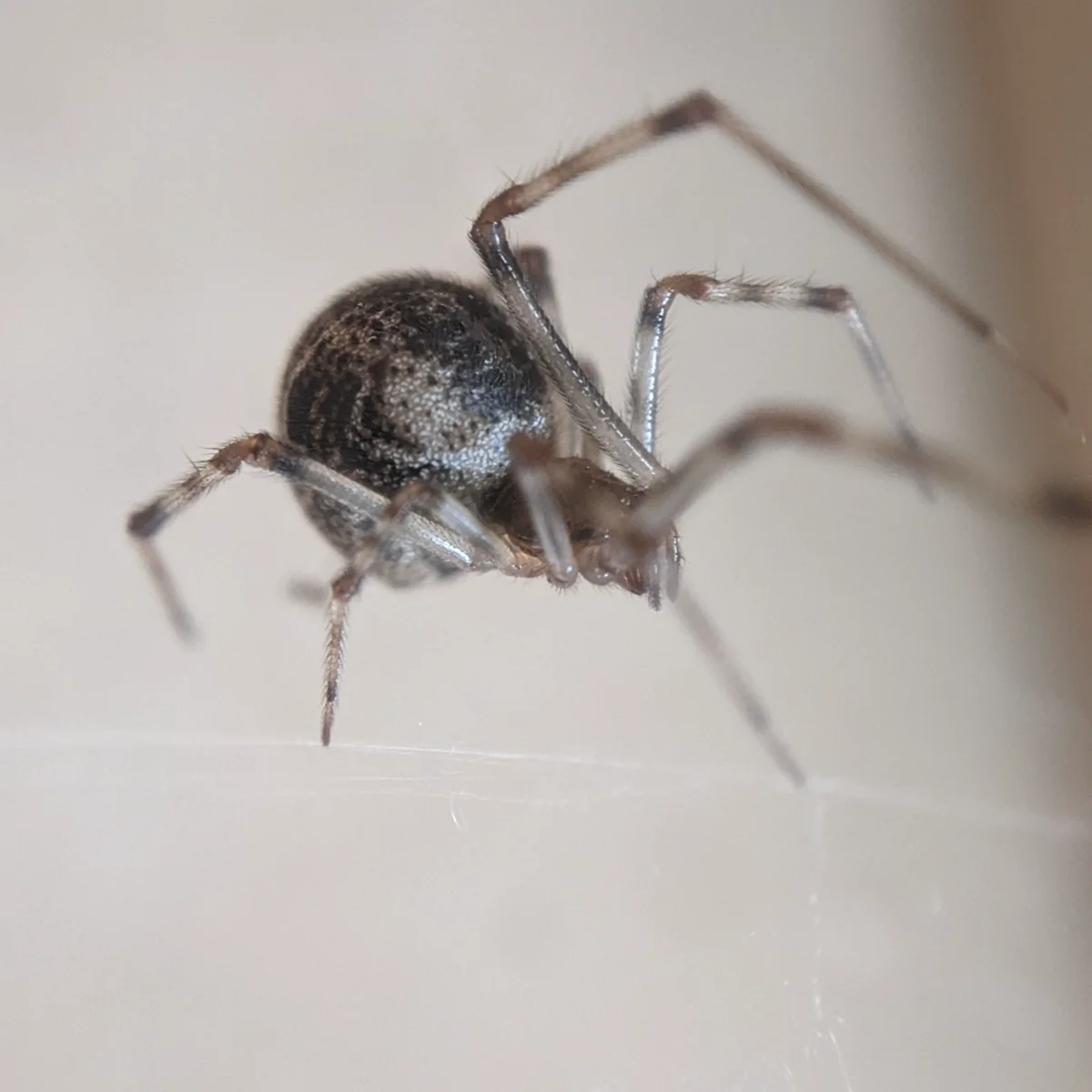
This is the spider the search term is really about. The common house spider (Parasteatoda tepidariorum) is small, tan to dirty brown, with faint gray chevrons across a round abdomen. Females run about 5 to 6 millimeters in body length; males are smaller with orange legs.
It builds a messy, three-dimensional tangle rather than the neat wheel-shaped web people picture. Penn State Extension describes it building webs in the corners of walls, floor joists, and windows. One female can lay twelve or more egg sacs in her life. Each sac holds 140 to 380 eggs. That number explains why the corners fill back in so quickly.
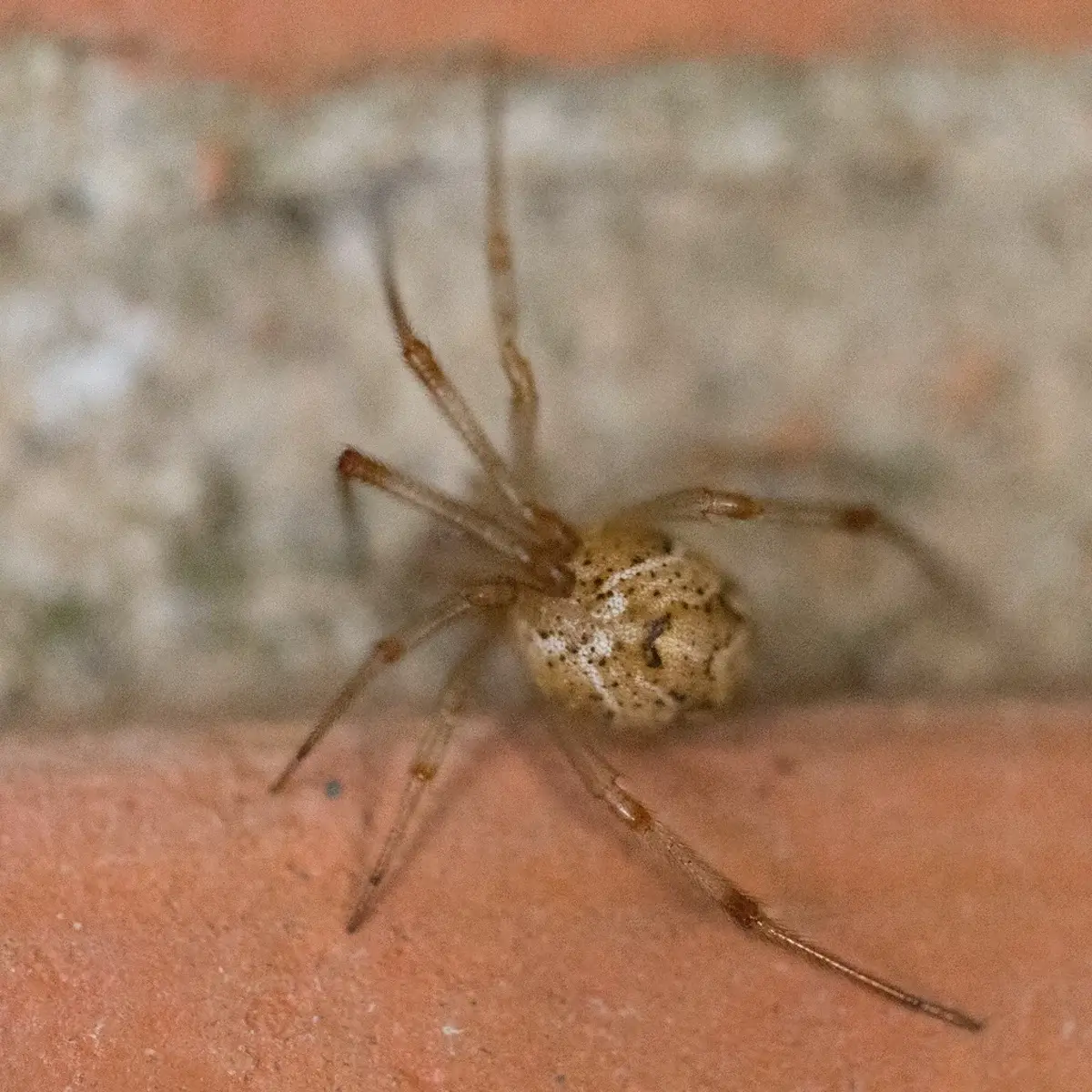
The other habit that drives homeowners crazy: it abandons webs readily and spins a new one a few feet away. So you clear a corner, and three days later there is a fresh web by the window instead. You are often watching one spider relocate, not an infestation.
Learn more on our common house spider guide, which covers the life cycle in more detail.
Cellar Spider: The Long-Legged Basement Resident
If you went into the basement and found something with a body the size of a grain of rice and legs an inch and a half across, that is a cellar spider. People call them daddy long legs, which causes endless confusion with harvestmen, a completely different animal.
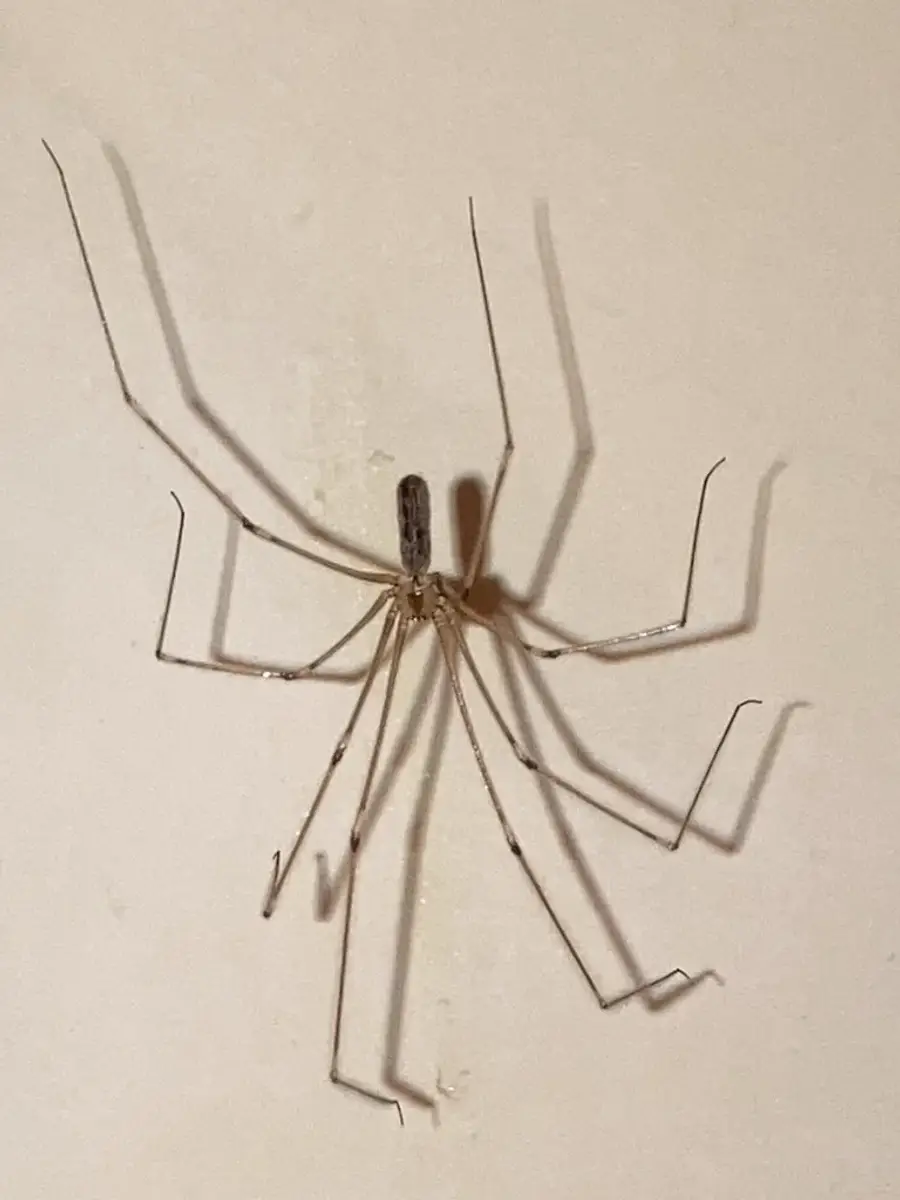
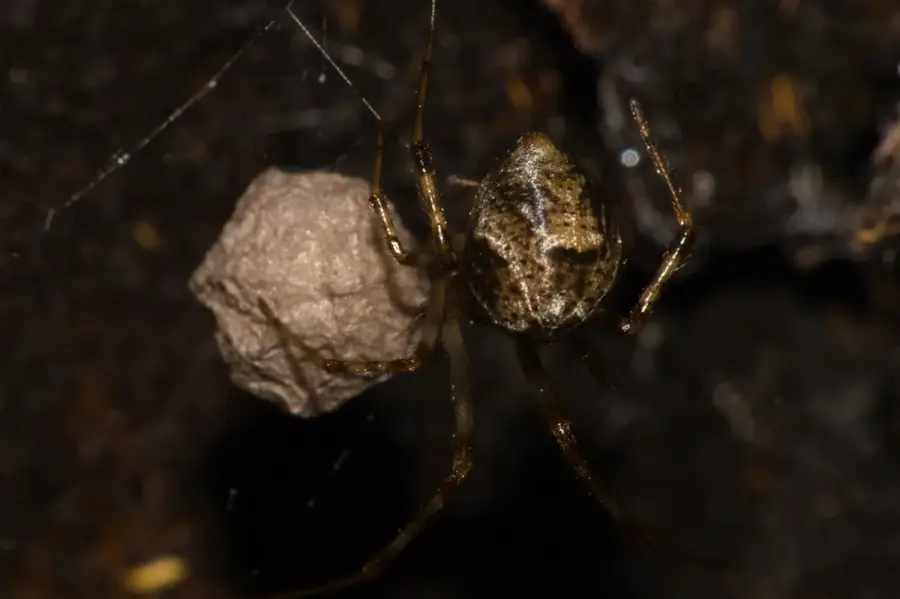
Cellar spiders want damp and undisturbed, which describes most Virginia crawl spaces perfectly. They hang upside down in loose, shapeless webs and vibrate rapidly when disturbed. They are harmless to people and they eat other spiders, so I generally tell homeowners that a few in an unfinished crawl space are doing useful work. Our cellar spider page goes deeper if you want to confirm the ID.
Heavy cellar spider numbers are a moisture signal. When I find a basement thick with them, the conversation usually turns to grading, gutters, and a dehumidifier before it turns to treatment.
Wolf Spider: The Big One Crossing the Floor
This is the spider that generates the panicked phone calls. Wolf spiders are large, hairy, brown and gray, and they move fast in the open. They build no web at all.
Virginia Cooperative Extension finds them around doors, windows, houseplants, basements, and garages. They show up indoors most often in fall, when they are looking for a warm place for winter. The same publication says wolf spiders are not considered medically important species in Virginia.
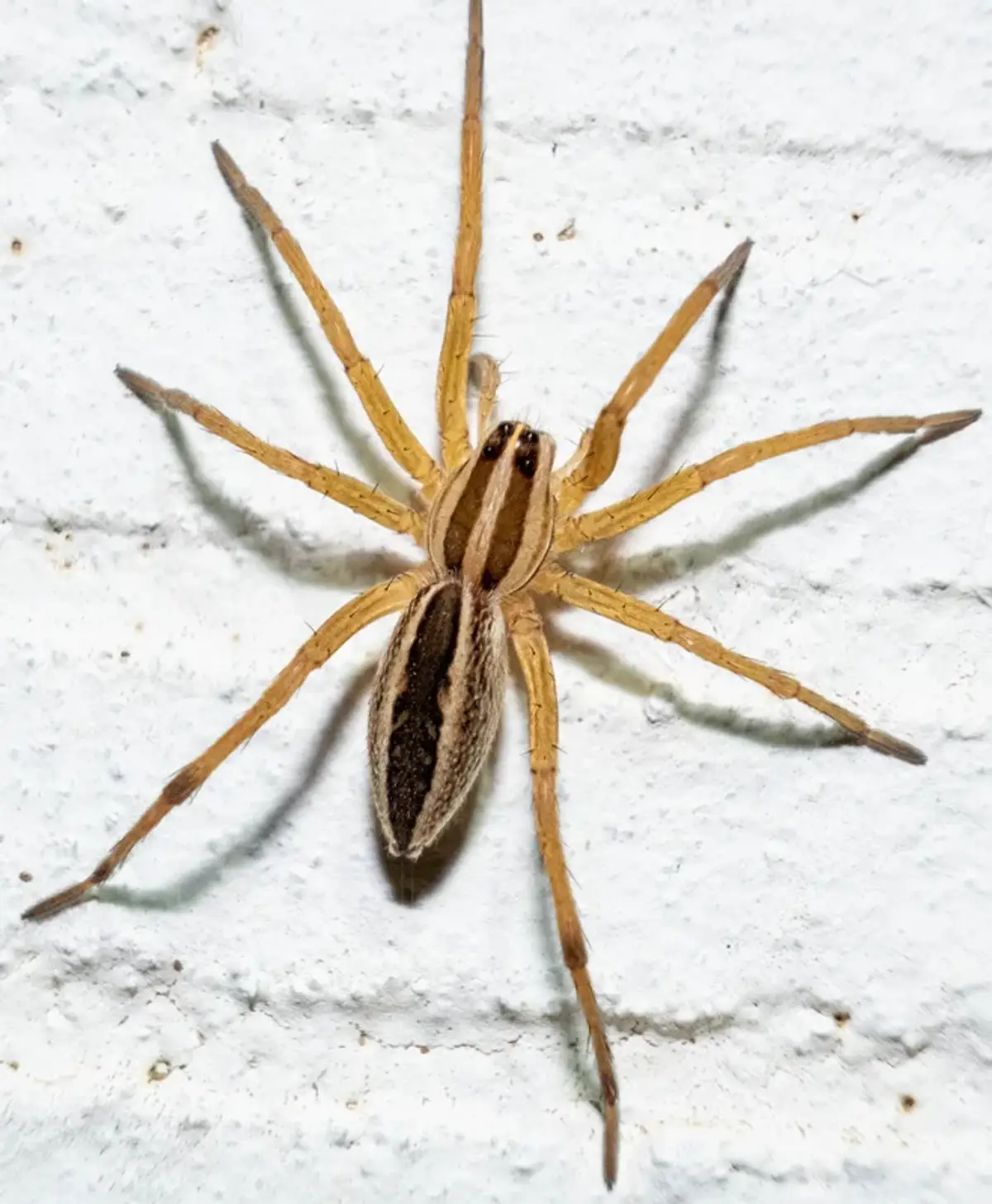
So wolf spiders are the genuine exception to the “spiders were already inside” rule. They really do come in from the yard, and they really do concentrate at ground level in fall. If you are seeing them repeatedly, the fix is at the threshold: door sweeps, garage door trim, and crawl space vents. See our wolf spider identification guide or our side-by-side breakdown of house spider vs wolf spider.
Jumping Spiders: The Windowsill Hunters
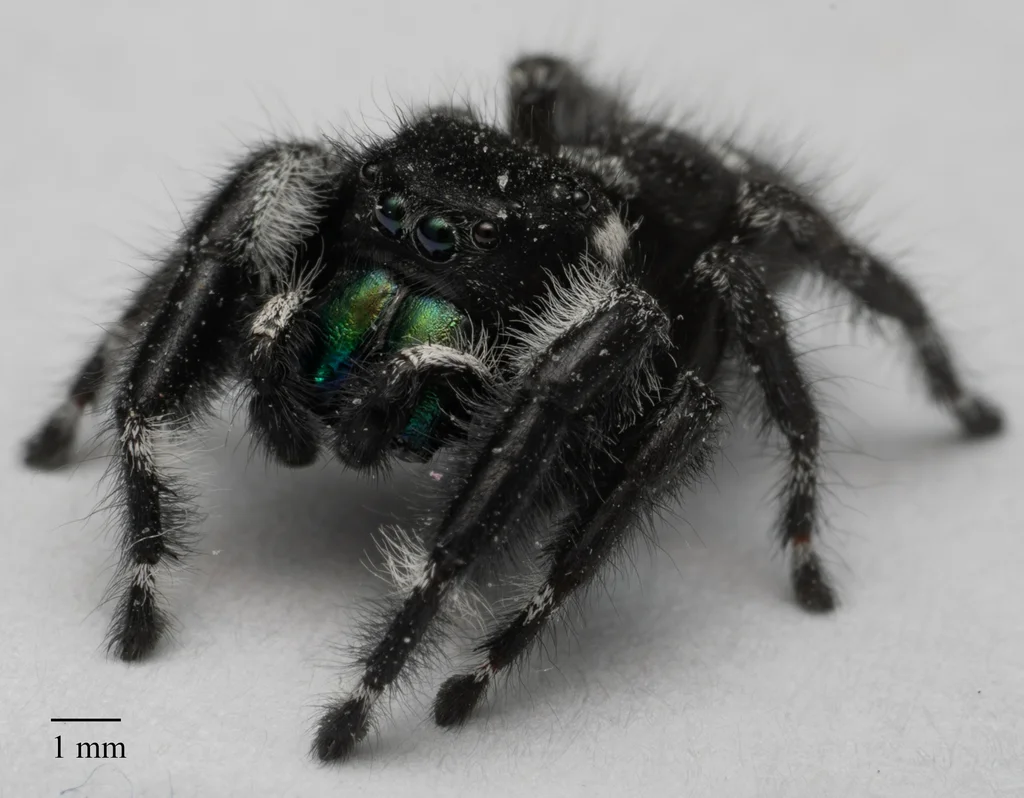
Small, stocky, and fuzzy, often black with white or orange spots, and with unmistakably large forward-facing eyes. Jumping spiders are daytime hunters that turn to watch you, which people find either charming or deeply unsettling.
They run about a third of an inch, build no web, and turn up around windows. They work windowsills, door frames, and sunny interior walls because that is where the flies gather at the glass. A jumping spider indoors is a visitor, not a resident, and removing it individually is all anyone needs to do. Our jumping spider guide and the bold jumping spider page cover the group in more detail.
Yellow Sac Spider: The Small Pale One With a Silk Blob
Yellow sac spiders are pale yellow to light green, small, and easy to miss until you notice a small white silk sac tucked where the wall meets the ceiling, or behind a picture frame. That sac is a daytime retreat, not a web for catching prey. They hunt at night across walls and ceilings.
These have a reputation for bites that outpaces the evidence. Virginia Cooperative Extension’s guide to spiders of medical concern lists yellow sac spiders as present in Virginia but says plainly that they do not deserve the reputation they have gained. A bite typically produces localized pain and redness, not tissue damage.
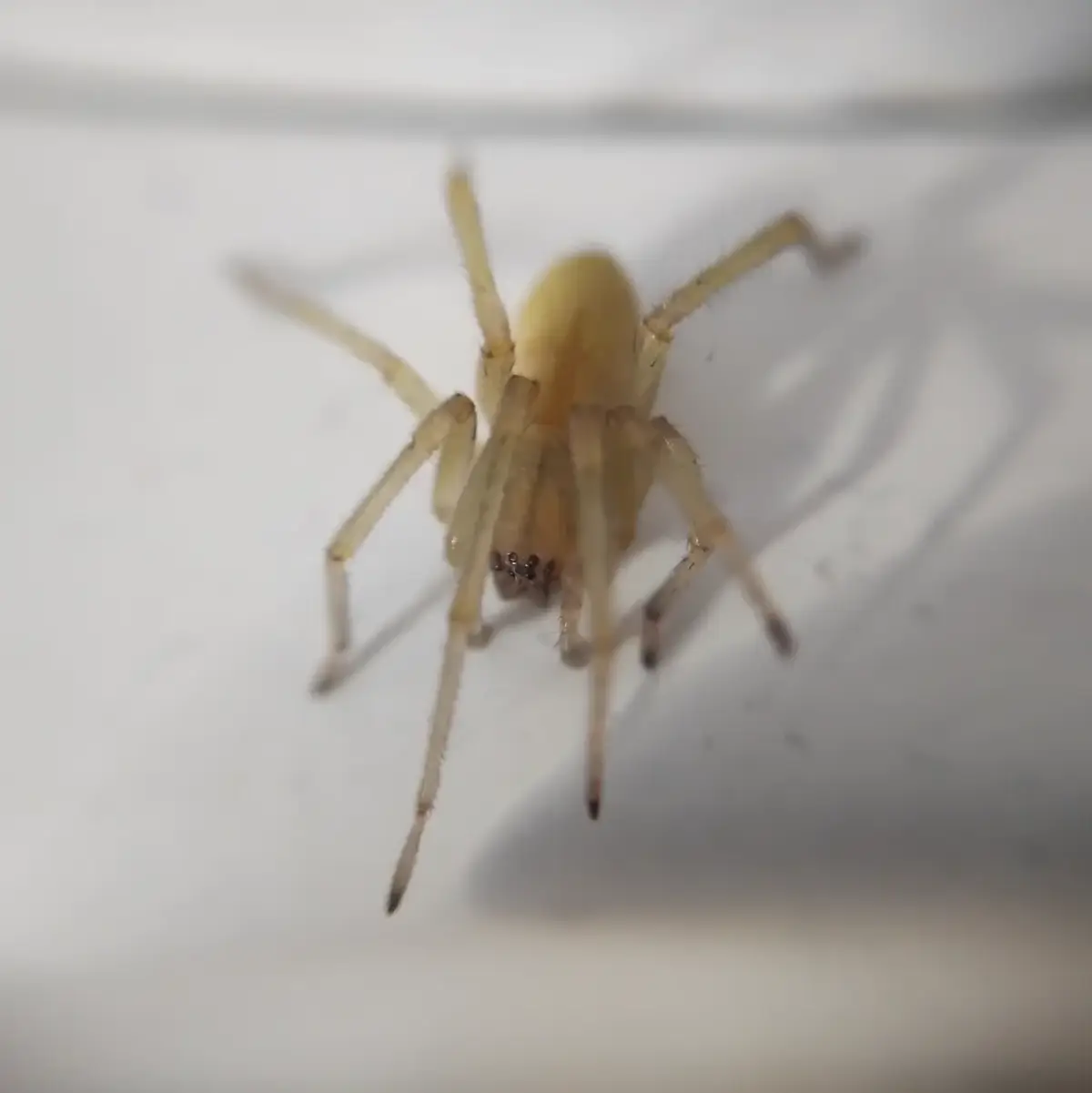
More detail lives on our yellow sac spider guide.
Eastern Parson Spider: The Dark One With the White Stripe
The eastern parson spider is dark gray to black with a distinctive white or cream marking down the middle of the abdomen that looks a bit like an old clerical necktie, which is where the name comes from. It is a ground hunter with no web, active at night, and quick.
This is the single most misidentified spider I deal with. It is dark, it is fast, it turns up in a basement, and homeowners immediately think brown recluse. It is not.
It is also, by the record, the ground spider you are most likely to meet indoors here. A Virginia Museum of Natural History survey of the state’s ground spiders found the eastern parson spider statewide, with county records including Fairfax, and noted that museum specimens of this species have been taken inside residences more than all other members of its family combined.
Our parson spider page shows the markings clearly, and the color-focused black spiders in Virginia guide is useful if dark coloring is what you are working from.
Black Widow: The One That Actually Matters
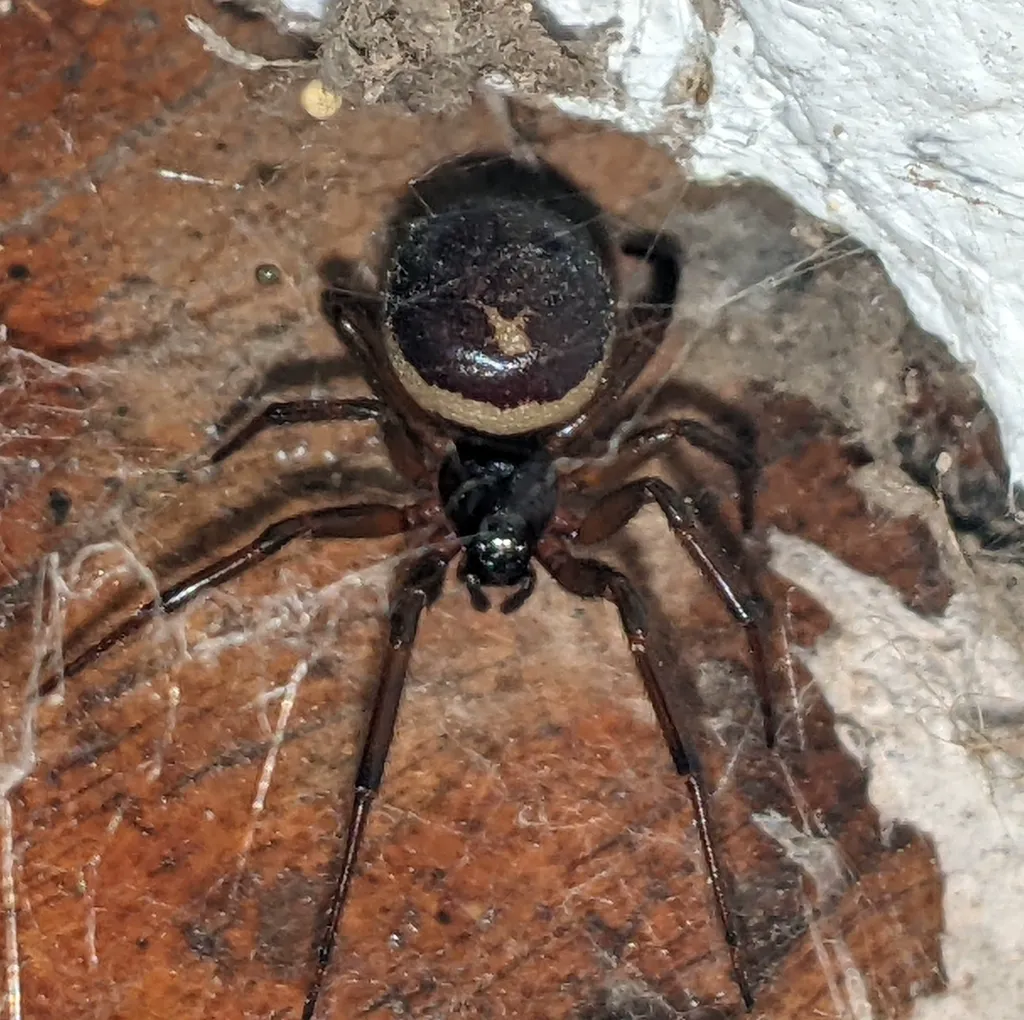
This is the exception. Both the northern (Latrodectus variolus) and southern (L. mactans) black widow occur in Virginia, according to that same Virginia Tech medical-concern publication. The female is glossy jet black, roughly a half inch in body length, and she hangs upside down in her web so the belly markings show.
The two species do not look identical, which trips people up. A southern female usually carries a complete red hourglass underneath. A northern female often lacks a complete hourglass and instead shows red bars or spots along the top of the abdomen as well as beneath it. So a black spider with red on its back is not ruled out as a widow.
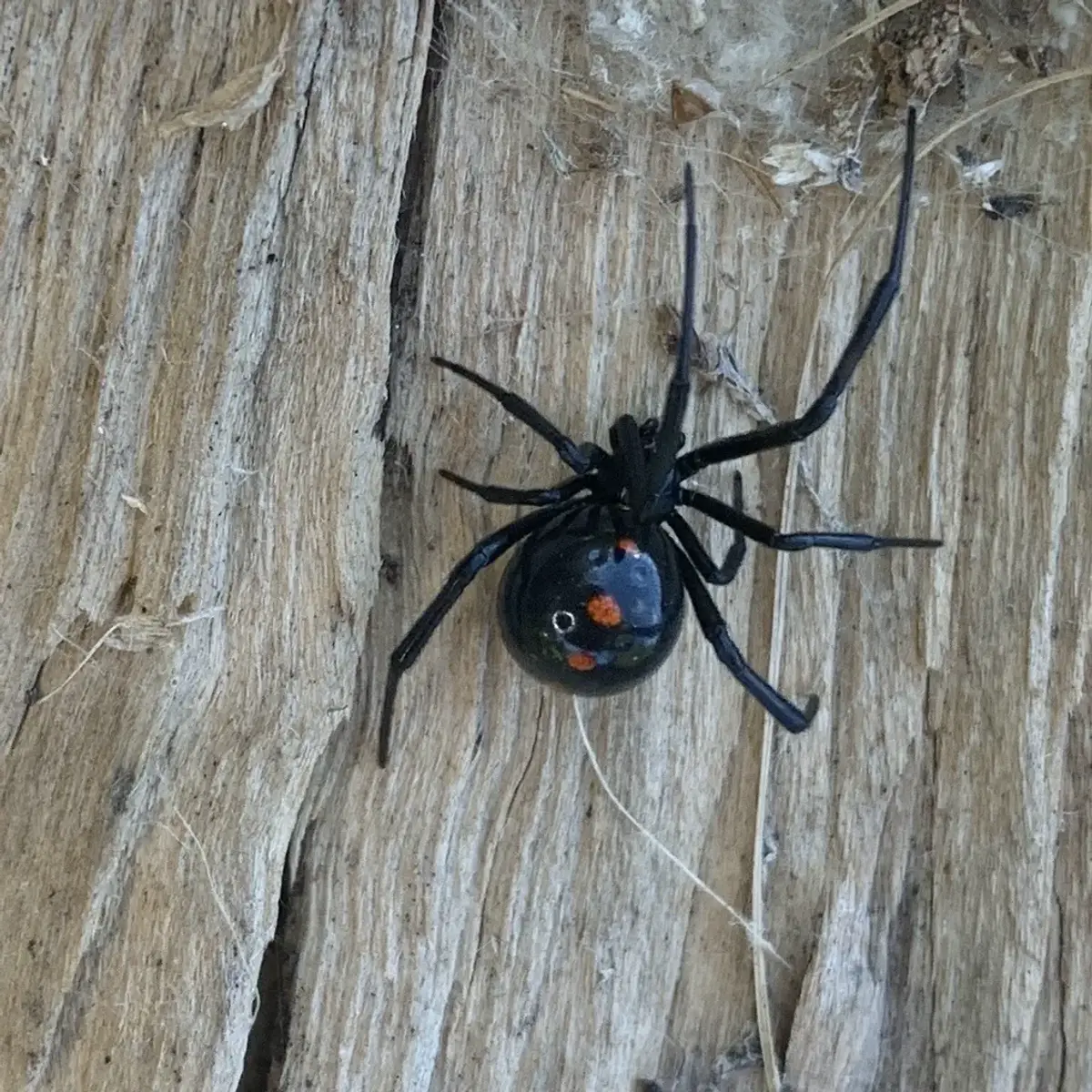
The good news is where they live. University of Maryland Extension describes black widows as common in the region but not often found indoors, turning up instead in basement window wells, beneath lawn benches and porches, and in garages, tool sheds, lumber piles, and rock piles. That is a precise list of places you reach into without looking.
Compare it against the false black widow, which lacks the red marking and shows up in the same kinds of corners, or read the northern black widow guide.
What About the Brown Recluse?
Almost certainly not what you found. Virginia Cooperative Extension’s brown recluse publication states that the spider’s natural range reaches only the very tip of southwestern Virginia, The few isolated populations confirmed elsewhere in the state likely arrived in household goods or firewood.
Note the wording, though. That is not established across the state, which is different from never present. It does mean that in Alexandria, Fairfax, or Arlington, a recluse is not a realistic first explanation for a brown spider in your basement.
Two field checks settle it quickly. A recluse has six eyes in three pairs, not eight. And its legs are a uniform tan with no stripes or bands — if the legs are banded or patterned, it is not a recluse. The same Virginia Tech publications note that wolf spiders, nursery web spiders, and funnel weavers are the ones most often mistaken for it.
Dark and fast with a pale stripe down the abdomen. Ground hunter, no web, active at night. The number one recluse look-alike in Northern Virginia basements.
Much larger and hairier than a recluse, with heavy legs and stripes running the length of the body. Eyes shine back in a flashlight beam. Runs in the open across floors.
Brown and long-legged, but it builds a flat sheet web with a funnel-shaped retreat at one edge. Recluses build only loose, irregular retreat webbing, never a funnel.
Small, tan, round-bodied, and sitting in a tangled web. Recluses do not build tangled corner webs, so a spider hanging in a cobweb is not one.
If the ID matters to you, read our brown recluse vs wolf spider comparison, which walks through the eye arrangement and the violin marking in detail.
Where House Spiders Turn Up, Room by Room
Location narrows the list faster than color does. This is roughly how I work an inspection.

- Ceiling corners and window frames: common house spider, and occasionally yellow sac spider retreats.
- Basement and crawl space: cellar spiders, wolf spiders, and parson spiders. Damp, dark, and undisturbed is the whole recipe.
- Garage, shed, and window wells: this is widow spider territory, plus wolf spiders at the door line.
- Floors and baseboards at night: hunters. Wolf spiders and parson spiders, not web builders.
- Windowsills in daylight: jumping spiders working the flies at the glass.
- Eaves, porch ceilings, and light fixtures: the exterior web factory. Most of what ends up inside starts here.
That last one is where the real work happens, and it is what our spider control service spends most of its time on.
Spiders are one of our top pests in this area, and the wooded, damp neighborhoods have the worst of it. Working around Mount Vernon, where there are a lot of trees and a lot of moisture, I have seen the heaviest spider pressure in Northern Virginia. What happens there is webs building up fast in the eaves of homes.
The two-pronged approach we use on those houses is simple. First we physically remove the existing webs with a tool called a webster. Second, we use a non-repellent product as a perimeter treatment along the foundation. Knocking webs down without treating just means they come back; treating without de-webbing leaves the homeowner staring at the same mess.
The other thing I have learned is to read the webs. I have had ant problems nobody could figure out, gone and looked at the spider webs around the house, and found them full of ants or swarmers. That has pointed me straight to the real problem more than once.
Fall Does Not Actually Push Spiders Indoors
This is the most common thing homeowners get wrong, and it changes what you should do about it.
According to the Burke Museum’s spider myth series, maintained by arachnologist Rod Crawford, generally fewer than 5% of the spiders you see indoors have ever been outdoors. House spiders are largely a separate set of species that live their whole lives inside buildings. The late-summer surge in sightings lines up with mating season, when sexually mature males wander in search of mates, rather than with falling temperatures. Most typical outdoor species that do end up inside simply die there.
There is an honest split here, and it is worth stating plainly. Crawford’s point applies to true house spiders. Those are the cobweb builders in your ceiling corners and the cellar spiders below grade, and they were already inside. The lifespans back that up. A common house spider lives a year or more after maturing, and a cellar spider can live two or more years. The animal in that corner has genuinely been in residence.
Wandering hunters are the real exception. Both Virginia Tech and Maryland Extension describe wolf spiders and yellow sac spiders moving into homes in the fall. Those are the ones worth sealing against.
So if you are seeing more spiders in August and September, you are mostly seeing the same population becoming more visible — plus a handful of genuine immigrants at the door line. For more on that seasonal timing, see our post on spider mating season.
How to Keep House Spiders Down
Three levers actually move the number, and none of them is spraying a spider you can see.
1. Cut off the food. Spiders are in your house because insects are in your house. University of Kentucky Entomology recommends installing yellow or sodium vapor bulbs at outside entrances, since they are less attractive than conventional bulbs to night-flying insects. Fix moisture problems that breed gnats and flies, and deal with any ant activity. Fewer insects means fewer spiders, every time.
That same publication is blunt about the shortcut most people try first: total release foggers, the “bug bombs,” are seldom effective against spiders. They put material on open surfaces, and spiders are in corners and voids.
2. Close the gaps. The gaps that matter are cracks around doors and windows, especially those at ground level. In my experience the gaps people miss are utility line penetrations, the bottom trim on garage doors, crawl space vents, and old abandoned cable lines. Our exclusion services page covers how we handle that work.
3. Remove harborage and webs. Pull mulch, stacked lumber, firewood, and flower pots back from the foundation. Then knock down webs on eaves, porch ceilings, and corners on a schedule. A vacuum or a broom removes spiders, webs, and egg sacs in one pass, and the egg sacs are the part that matters — each one can hold hundreds of young. Reducing clutter in basements, garages, and storage areas does the same job from the other direction.
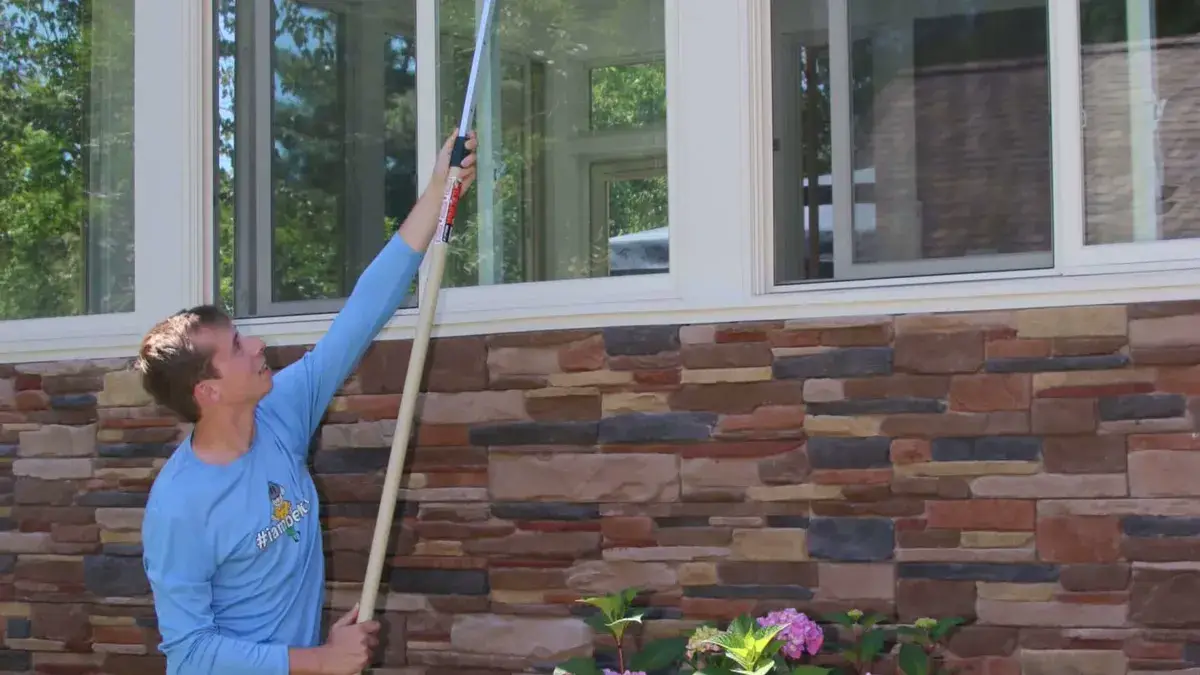
De-webbing is the step most homeowners skip, and it is the one that takes the egg sacs down along with the webs.
If you only do three things, make them these: pull mulch back from the foundation, keep the yard cut and clear along the wall line, and run a dehumidifier in any basement or crawl space. Those three do more for general pest pressure around a Virginia home than anything else a homeowner can handle themselves.
When to Call a Professional
A single spider crossing the floor is normal in any house. Call when the pattern changes.
Call us if any of these are true:
- Webs keep returning on the eaves and porch within days of clearing them.
- You are finding widow spiders where people reach, like garages and window wells.
- The spiders point to an insect problem you have not identified yet.
Persistent exterior buildup is what responds to an actual program rather than a vacuum.
Our family has been working on homes in this area for 58 years, and we are now in our third generation here in Alexandria. Our registered technicians have logged well over 1,800 reviews across the DMV, and every product we use is EPA approved. Each one is something we would feel comfortable using in our own homes.
We work throughout Northern Virginia, including Fairfax, Springfield, and Vienna.
If you want help identifying what you found, or an estimate for ongoing spider work, call us at 703-683-2000 or email info@bettertermite.com. Bring a photo if you have one. Most of the time we can tell you in a minute whether it is worth doing anything about.