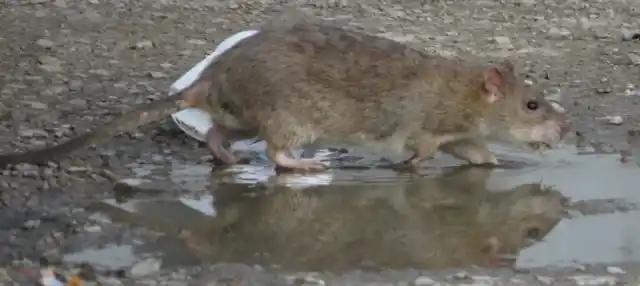

If you hear rats in your walls but never see them in the house, it’s because rats are built to stay out of sight. They avoid anything new, travel along hidden routes and move mostly at night. The wall void is their highway between the crawl space, basement and attic. Meanwhile, they’re usually eating and drinking somewhere you don’t look, like the crawl space, the garage or the yard.
So not seeing a rat doesn’t mean the problem is small. We get a lot of rat and mouse calls in Old Town Alexandria and across Northern Virginia, and “I only hear them in the walls” is one of the most common things people tell us. Below, I’ll explain why rats stay hidden, where they’re really getting food and water, how to confirm it’s rats, and what to do next.
Why Rats Stay in Your Walls but Not in the House
There are four main reasons rats can live in your walls without ever showing up in a room. Most of the time, it’s all four at once.
1. Rats Are Wary of Anything New
Rats are neophobic. Basically, that means they’re suspicious of new objects, new food and new places. An open kitchen with people, pets and moving furniture is the opposite of what a rat wants. A wall void that never changes feels much more secure.
This is also why the rats in your walls seem to ignore the traps you just put out. According to University of Nebraska–Lincoln Extension, it’s common for rats to wait two weeks before interacting with traps and toxicants.
2. They Travel Hidden Routes Along Walls
Rats rarely cross open floors. Instead, they run the same paths over and over along walls, pipes and beams. That makes the inside of a wall perfect. It links the crawl space or basement to the upper floors and the attic. In other words, a rat can travel your whole house without stepping into a room.
Over time, those routes get worn. In fact, Fairfax County’s Health Department lists worn runways, sometimes with grease stains, as a sign of rats.
3. They Come Out at Night
Rats are mostly active after dark. That’s why the scratching starts once the TV is off and the house gets quiet. During the day, they rest in the nest. As a result, you might hear them for weeks and never catch a glimpse.
4. Their Food Is Somewhere Else
Rats don’t have to eat where they sleep. Most rats stay within about 50 to 150 feet of their nest. That’s enough room to nest in your wall and feed in the yard, the garage, a neighbor’s trash cans or your bird feeder.
Pest experts at the University of California explain that rats quickly detect and avoid new objects and foods, so they often avoid traps and baits for the first several days, and maybe weeks, after they’re placed. They recommend leaving traps baited but unset until the bait has been taken several times.
They also note that rats are mostly active at night and leave smudge marks from rubbing their fur against beams, rafters, pipes and walls. Those dark smears are one of the clearest clues that a rat is using a route inside or along your walls.
Follow the Water: The Clue Most People Miss
Here’s the big difference between rats and mice. House mice can get by on the moisture in their food. Rats can’t. University of Nebraska Extension notes that rats need to drink water daily, about 1 to 2 ounces a day.
So if rats are in your walls, they’re making regular trips to water. That trip is often the route that gives them away. These are the water sources I’d check first in a Northern Virginia home:
- The crawl space. Condensation on ductwork, a leaking pipe or standing water after a storm.
- The basement. Sump pits, floor drains, a dripping water heater or a dehumidifier bucket.
- Around the HVAC unit. AC condensate lines drip all summer long.
- The yard. Bird baths, pet bowls, clogged gutters, puddles and low spots that hold water.
- Old or broken drain lines. Rats can swim through sewers and come up through broken drains.
Where the Rats Are Getting In
The type of rat changes where you should look. In Northern Virginia and Maryland, the rat county health departments focus on is the Norway rat. Even so, it helps to know both.

Norway Rats: From the Bottom Up
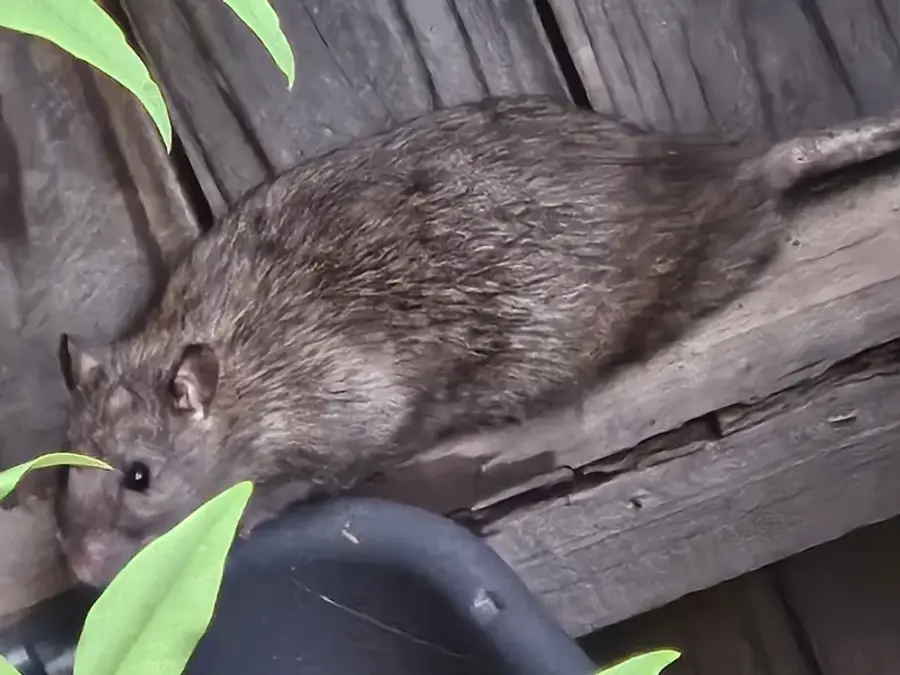
Norway rats are heavy, burrowing rats. They usually live in basements, crawl spaces and ground floors. Outside, they dig burrows along foundations, under decks and beneath woodpiles. Fairfax County notes that a Norway rat will nest underground up to 150 feet from its food. From there, they slip in through foundation gaps, crawl space vents and broken drain lines. Then they climb up inside the walls.
If the noise is low on the wall, near the floor or in a first-floor wall above the crawl space, think Norway rat.
Roof Rats: From the Top Down
Roof rats are lighter and better climbers. They tend to nest in high, enclosed spaces like attics, wall voids and ceiling voids. They often get in from the roofline or by running along utility lines. Our guide to how rats climb walls shows how they do it.
If the noise is in an upper wall or the ceiling, check the attic. Our rats in the attic guide covers what to look for up there. For a full breakdown of the two species, see Norway rat vs. roof rat.
Common Entry Points
Rats need much less room than most people think. Arlington County says rats can enter a building through any opening larger than 1/2 inch, about the size of a quarter. Our technician Daren puts it simply: if it’s about a thumb’s width, a rat can get in.
The gaps we find most often are:
- Utility line penetrations (gas, AC lines, cable and electrical)
- Gaps at the bottom of garage door trim
- Crawl space vents and foundation cracks
- Old cable lines with an open hole around them
- Gaps where decks, porches or stoops meet the house
Is It Really Rats? Other Things in Your Walls
Before you treat for rats, make sure it’s rats. Timing, sound and droppings are the best clues.
When: mostly at night.
Sound: heavy. You’ll hear thumping, running and real gnawing, sometimes loud enough to sound like a bigger animal.
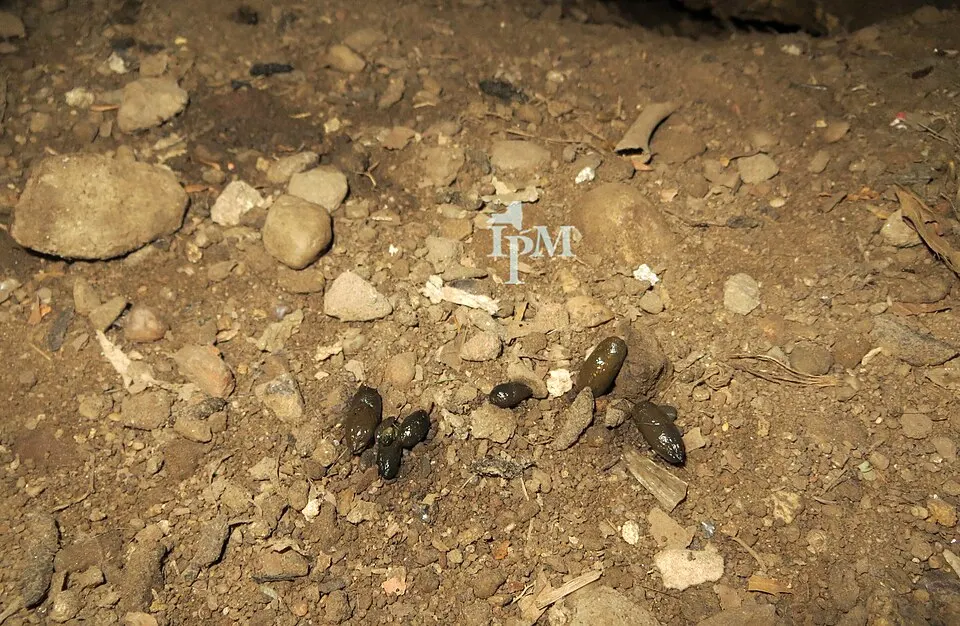
Other signs: droppings about 1/2 to 1 inch long and blunt at one end, greasy dark rub marks, and gnaw marks with wide tooth grooves. Our rat droppings guide has photos.
When: mostly at night.
Sound: light, fast scratching and scurrying.
Other signs: droppings only 1/8 to 1/4 inch long with pointed ends. If this sounds more like your walls, read our guide to mice in walls but not in the house.
When: daytime, especially early morning and late afternoon.
Sound: loud running, rolling and chewing, usually in the attic or the top of the wall.
Other signs: chewed holes in soffits or fascia. Better Termite does not handle squirrels or other wildlife, so call a licensed wildlife company for those. However, the holes squirrels chew can let rats and mice in too.
When: right after dark and before dawn.
Sound: scurrying and soft thumps in the ceiling or upper walls. They’re nocturnal, so they’re easy to mistake for rats.
Other signs: activity concentrated in the attic. Learn more about southern flying squirrels. These are wildlife too, which we don’t treat.
How to Confirm It at Home
You don’t have to open a wall. Instead, try these checks:
- Note the time and place. Write down when and where you hear it. Night noise low on the wall above the crawl space points to Norway rats.
- Check the crawl space and basement. Look for droppings, gnawed wood and dark rub marks along sill plates, pipes and ductwork.
- Look outside. Check for burrow holes and fresh dirt along the foundation, under the deck and by the AC unit.
- Do a flour test. Dust a thin layer of flour near a suspected gap in the crawl space. Check for tracks the next morning.


Why “Only in the Walls” Doesn’t Last
Rats in the walls is not a stable situation. Eventually, something changes. Their outside food source dries up, the weather turns cold or the group simply gets bigger. When that happens, the rats come looking, and the kitchen is the closest food.
Meanwhile, they’re doing damage you can’t see. Rats gnaw constantly to keep their teeth worn down. That includes wood, pipes and wire insulation. Cornell University notes that a percentage of building fires with an unknown cause might be due to rodents chewing wires.
There’s a health side too. According to the CDC, the bacteria that cause leptospirosis spread through the urine of infected animals, including rats. And rats leave urine along every route they use.
Rats are also a growing issue in our region. DC Health reports its Rodent Control Program had responded to just over 5,000 complaints in 2026 as of July.
Daren, one of our technicians, handled one of the worst rat jobs we’ve seen in the old row houses off Edison Street in Del Ray. It happened right when Covid hit. The music theater behind those houses shut down, so the rats lost their food source and moved into the homes.
Before that, the rats were living around those homes and feeding at the theater. Once the food disappeared, they came inside. In those older row houses, the firewall between units isn’t always intact, so the rats worked their way from unit to unit through the walls. Daren had 15 to 20 snap traps down in the crawl space, and the team removed somewhere between 40 and 70 rats.
The lesson: rats that are “only in the walls” are often there because of food somewhere else. When that food goes away, your home becomes the next option.
How to Get Rats Out of Your Walls
The order matters here. If you seal first, you can trap rats inside the wall. If you poison first, they can die inside it. Here’s the approach that works.
With that in mind, here are the four steps in order.
Start in the crawl space or basement and work outward. Look for droppings, rub marks and gnawing along sill plates, pipes and wires. Outside, look for burrows along the foundation. The noise in the wall is just the middle of the route. You want both ends.
Take away the easy food and water. Pick up fallen fruit, move bird feeders away from the house, lock trash cans and store pet food in sealed bins. Then fix leaks and dry out damp crawl spaces. Rats under pressure are more likely to find your traps.
Place snap traps along walls in the crawl space, basement or garage, right where the rats travel. Rats are wary of new things, so leave the traps baited but unset for several days. Once the bait is disappearing, set them. Check traps daily and wear gloves.
Once the activity stops, seal every gap bigger than about 1/2 inch from the outside. Use materials rats can’t chew, like hardware cloth, sheet metal and concrete patch. Utility lines, garage door trim, crawl space vents and foundation cracks come first.
For a deeper walkthrough of trapping and sanitation, see our guide on how to get rid of rats in your house.
When to Call a Professional
You can handle one rat on your own. However, it’s time to call a pro if:
- You still hear rats after two weeks of trapping.
- You’ve found burrows along the foundation.
- The noise is in several walls or on more than one floor.
- You live in a townhome or row house with shared walls.
- You smell something dead in the wall.
- You can’t tell if it’s rats, mice or squirrels.
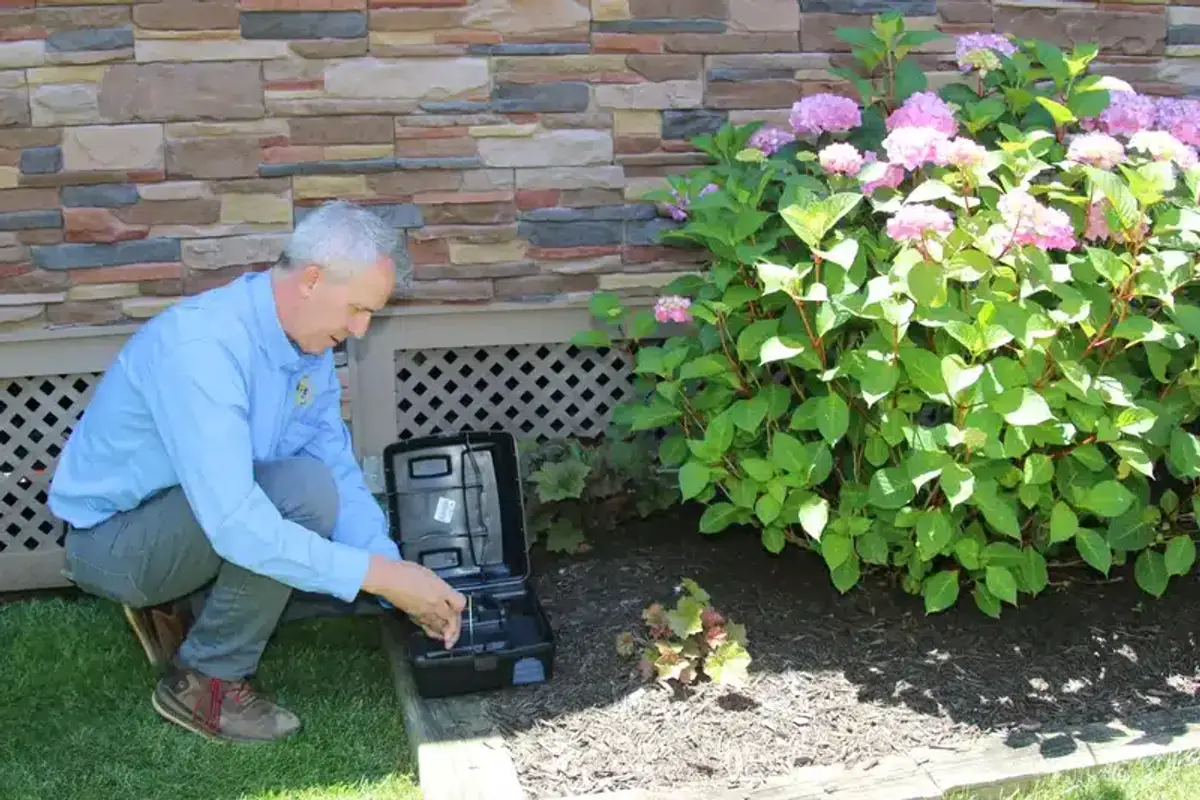
Professional rat control looks different from a few traps in the garage. In our experience, lower-level baiting is what makes rodent control work. We place tamper-resistant bait stations around the foundation and in the crawl space, where rats actually travel. Then we find and seal the gaps with our exclusion services.
We also see a lot of homeowners told they need their whole attic re-insulated. In our experience, that’s fairly rare and often extremely expensive. Most of the time, the real fix is happening down low. Our rodent control plans start around $49 a month, plus a one-time $200 setup fee on the first visit.
We’ve served the DC area for 58 years, our team has 300 years of combined experience, and we’ve earned 1,800+ reviews from local homeowners. We handle rodent jobs all over the region, including Ashburn, Annandale and Gaithersburg.
Conclusion: You Don’t Need to See Them to Fix It
If you hear rats in your walls but not in the house, you’re not imagining it. Rats are cautious, they move at night and they use your walls as a hidden highway. Basically, they’re eating and drinking somewhere else and using the wall to sleep and travel. The fix is to find both ends of that route, cut off the food and water, remove the rats, and then seal the gaps.
If you’d like help, call us at 703-683-2000 or email info@bettertermite.com for questions or an estimate.