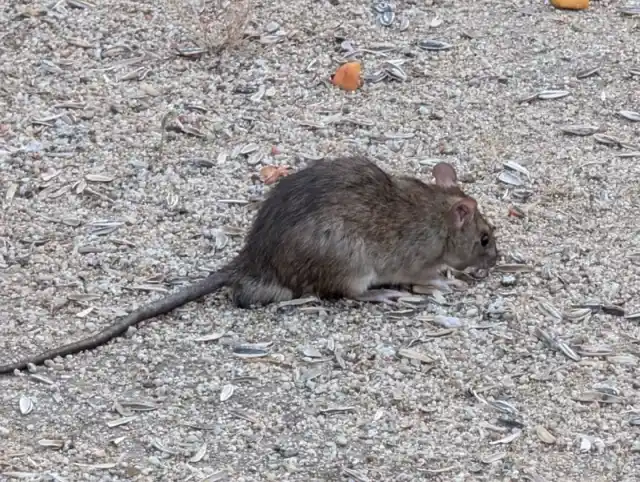

Rats in Virginia come down to five species, and only two of them care about your house. The Norway rat and the roof rat are introduced species that live alongside people. The Allegheny woodrat, hispid cotton rat, and marsh rice rat are natives that stay out in rock slides, old fields, and tidal marsh.
I’ve worked in pest control since 2015 as a licensed technician, and I’ve spent most of that time on rodent jobs in Alexandria, Arlington, and the rest of Northern Virginia. Below is the whole list, how to tell them apart, where each one actually lives in the state, and what works on the two that get inside.
The 5 Rats You’ll Find in Virginia
Here’s the whole list at a glance. The first two are the ones that end up in walls and attics.
| Rat | Where in Virginia | Gets Inside? | Quick Tell |
|---|---|---|---|
| Norway rat | Statewide, wherever people are | Yes, most common | Heavy body, short bicolored tail, burrows at ground level |
| Roof rat | Scattered coastal and rural pockets | Yes, but uncommon now | Sleek, huge naked ears, long dark tail, climbs |
| Allegheny woodrat | Blue Ridge westward | Almost never | Soft gray-brown coat, big black eyes, bicolored tail |
| Hispid cotton rat | Southeastern third of the state | Almost never | Grizzled coarse coat, dark ringed tail, lives in grass |
| Marsh rice rat | Coastal Plain marshes | Almost never | Water-repellent fur, semi-aquatic, nests in sedges |
1. Norway Rat
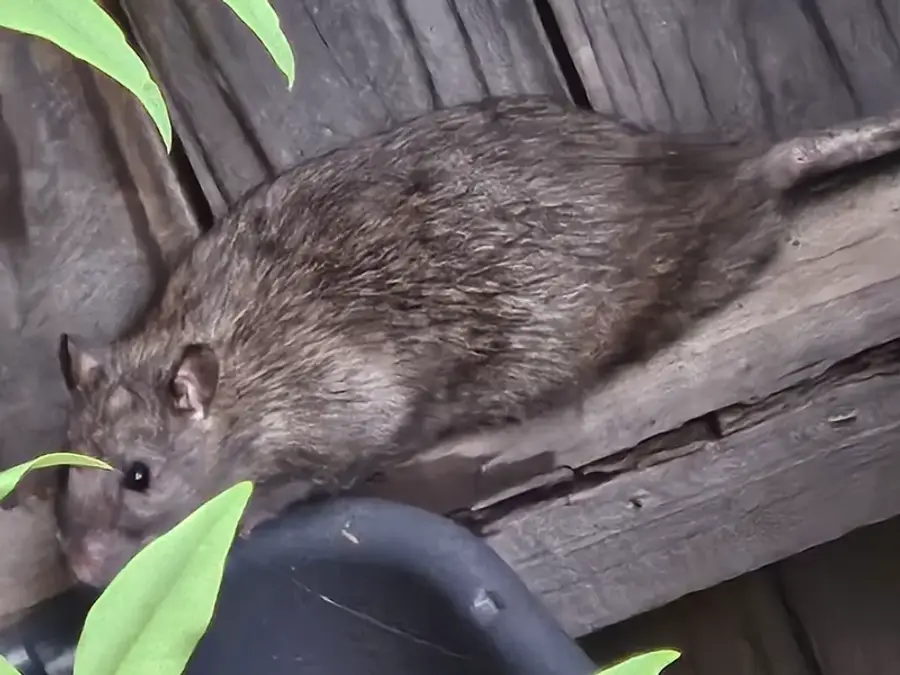
The Norway rat is the rat behind nearly every residential call I run. People also call it the brown rat or sewer rat. According to the Virginia Department of Wildlife Resources, it runs 316 to 460 mm from nose to tail tip and weighs 195 to 485 grams, breeds year round with litters of around seven, and often lives a dozen to a burrow system.
That last part matters. Norway rats are diggers, not climbers. They tunnel under sheds, stoops, woodpiles, and foundation plantings, then work their way in at ground level through a utility penetration or a rotted sill.
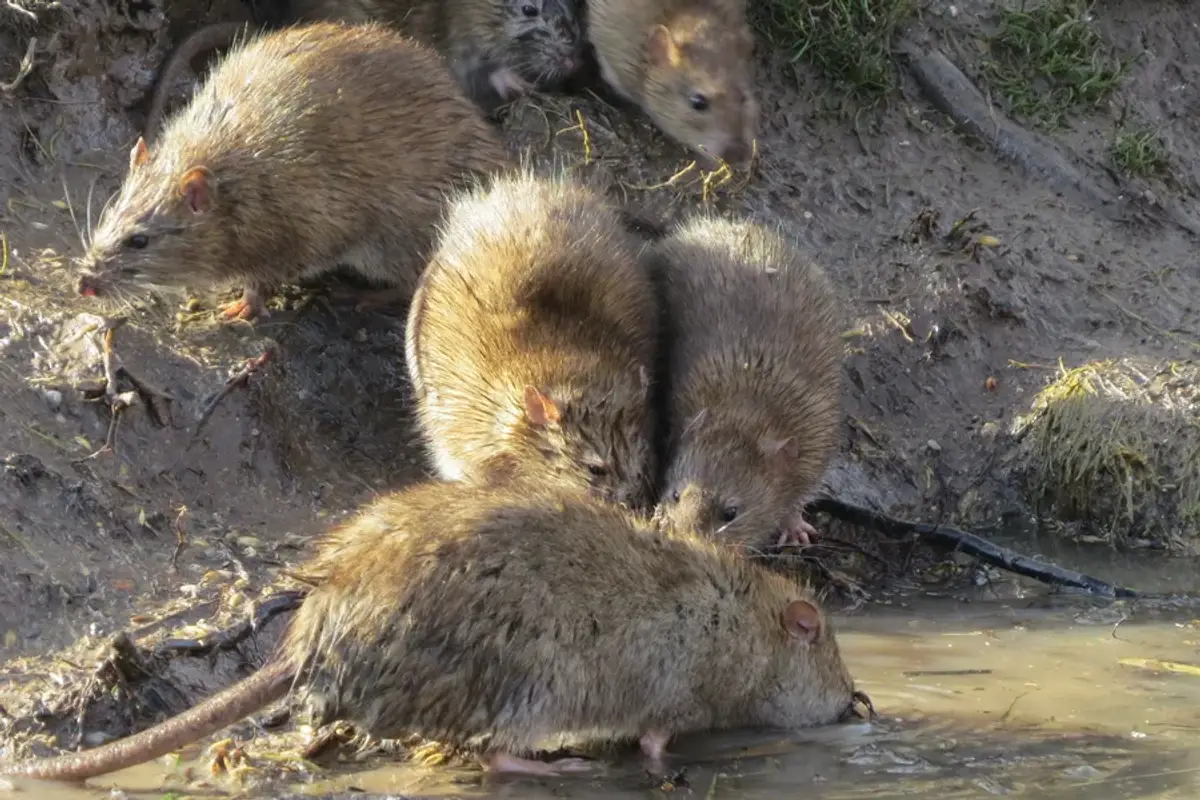
They also don’t travel far. Fairfax County’s health department says a Norway rat will nest underground up to 150 feet from its food supply. So when you find droppings, the nest is usually closer than you think.
2. Roof Rat
The roof rat, or black rat, is the climber. It has a pointed nose, very large naked ears, and a long tail that is not bicolored, which is the fastest way to separate it from a Norway rat in the hand. Virginia DWR describes it as declining in the state and being displaced by Norway rats.
It hasn’t vanished, though. In 2022, researchers reported a roof rat in Highland County in Northeastern Naturalist — a locality where the species had never been recorded. They noted roof rats have dropped off in coastal Virginia cities while hanging on in scattered rural populations.
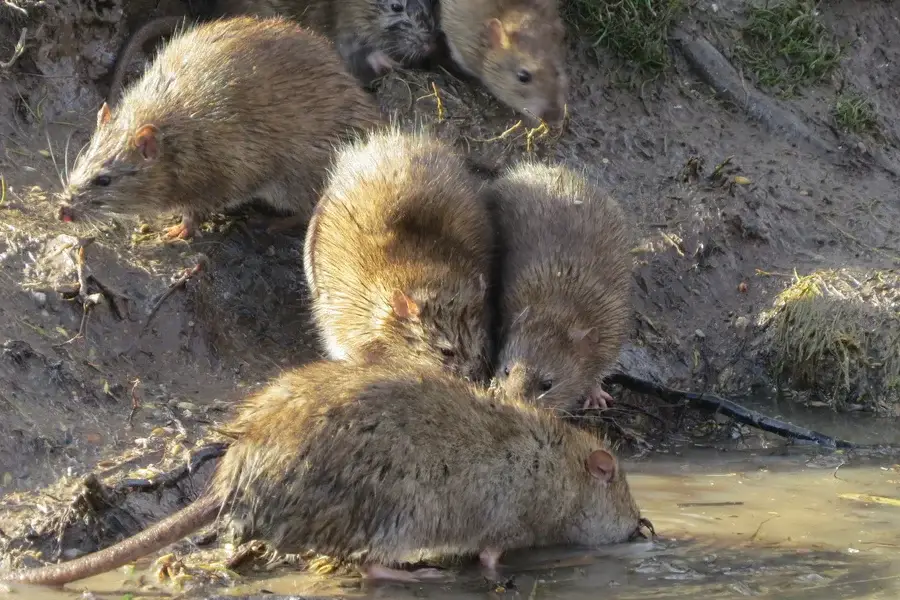
If you want the full side-by-side, our Norway rat vs roof rat guide breaks down size, color, droppings, and nesting spots.
3. Allegheny Woodrat
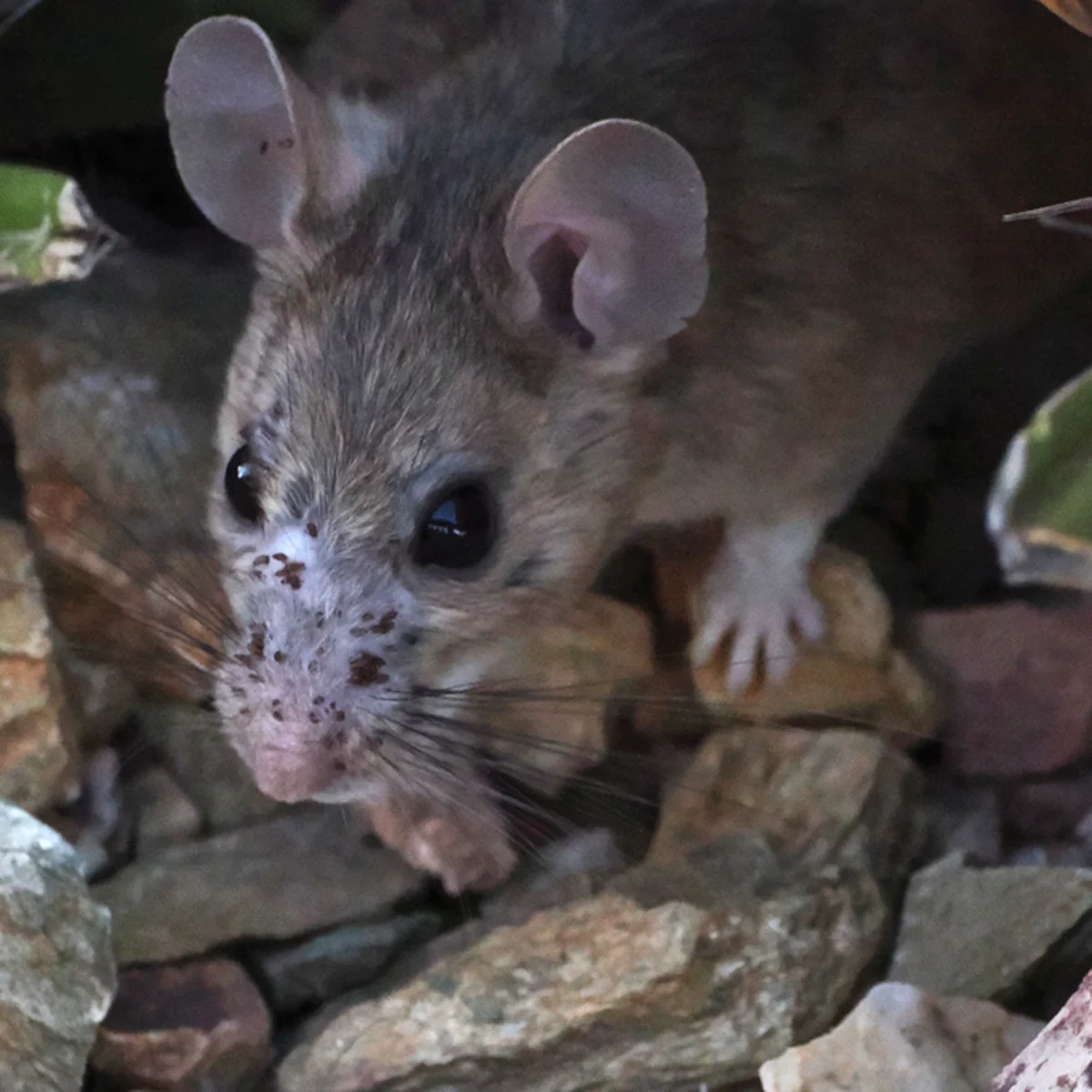
This is a native, and it’s genuinely a nice animal. The Allegheny woodrat is soft gray-brown with a white belly, big black eyes, and a bicolored tail. DWR puts it at 13 to 17 inches including the tail and lists it as a Species of Greatest Conservation Need, Tier 4a, on the Virginia Wildlife Action Plan.
You’ll find it from the Blue Ridge westward, where there are cliffs, rock slides, or caves. It eats fungi, bulbs, seeds, and fruit. It is not going to be the thing in your kitchen wall in Fairfax.
4. Hispid Cotton Rat
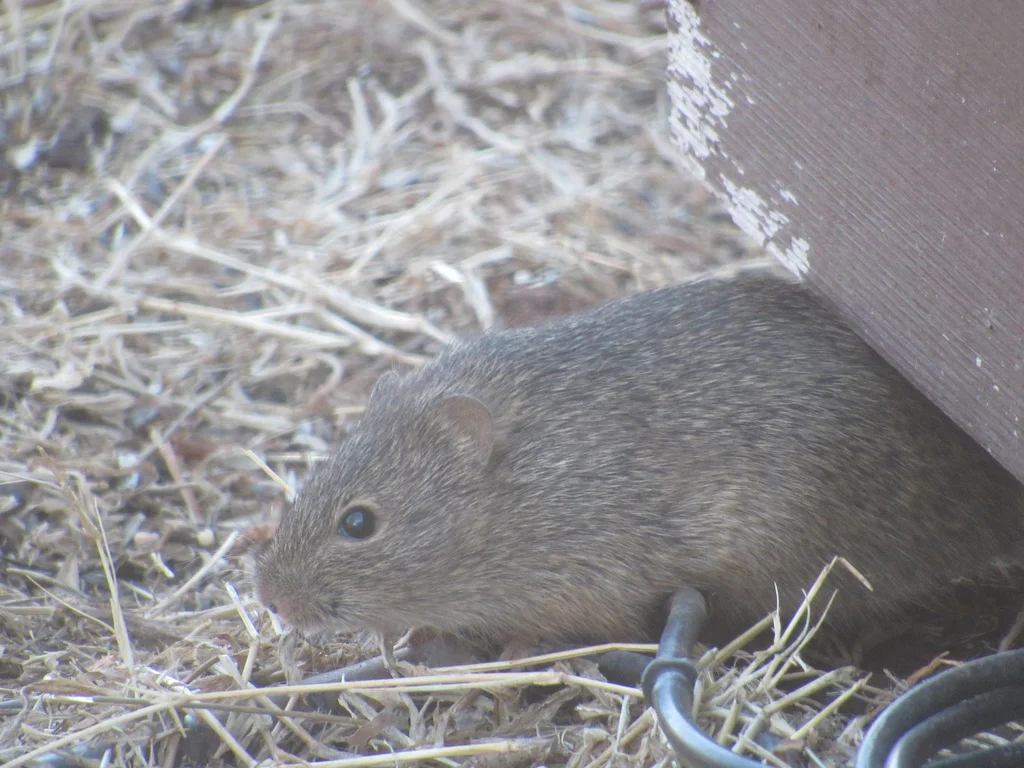
The hispid cotton rat has a coarse, grizzled coat and a dark, ringed tail. DWR places it in the southeastern third of Virginia, skipping the Eastern Shore, in grassy ground thick with broomsedge, goldenrod, and lespedeza.
Cotton rats can be hard on gardens and field crops when numbers run high. They build surface and burrow nests out of woven grass. Indoors, they’re not a factor.
5. Marsh Rice Rat
The marsh rice rat is our most specialized native rat. DWR describes it as semi-aquatic with dense, water-repellent underfur, able to swim more than 10 meters, and limited to the Coastal Plain. It weaves grapefruit-sized nests from grasses and sedges above the tide line.
If you’re on the water in Hampton Roads or the Northern Neck and something small and gray is swimming, that’s probably this.

Where Rats Are Worst in Virginia
Rats in Virginia aren’t spread evenly across the state. Pressure follows people, food, and old construction.
- Old Town Alexandria and the inner suburbs. We get a ton of calls about rats and mice in Old Town. That’s actually why we built our four-step rodent protocol around this area. The housing stock is the reason: in old row houses, the firewall between units isn’t always intact, so rats work their way from one unit to the next.
- Dense urban blocks. Alleys, dumpsters, and restaurant rows feed large Norway rat colonies. Homes on those blocks inherit the problem.
- Suburbs backing onto creeks and storm drains. Norway rats travel sewer and storm lines, then come up into yards.
- Coastal and rural pockets. This is where the last roof rats hang on, usually in barns, citrus-free fruit trees, and outbuildings rather than city rooftops.
We work rodent jobs across Northern Virginia, including Alexandria, Reston, and Sterling.
The worst rat infestation I ever handled was off Edison Street down in Delray, in one of the old row houses, right when Covid hit. The music theater behind those houses shut down, so the rats lost their food source and moved into the homes.
It got so bad that toward the end we were going every week. I had 15 to 20 snap traps down in the crawl space, and every week there’d be nothing but skin and bones left from where the rats were eating the other rats. There was a dominant female I could never catch — orange, brown and black coloring, so I really think she was somebody’s escaped pet that started her own brood. We killed at least 40 or 50 down there, probably closer to 60 or 70.
The lesson I took from it: when a nearby food source disappears, the rats don’t disappear with it. They move indoors.
Signs You Have Rats, Not Mice
The two get confused constantly, and the fix is different. Here’s what points to rats:
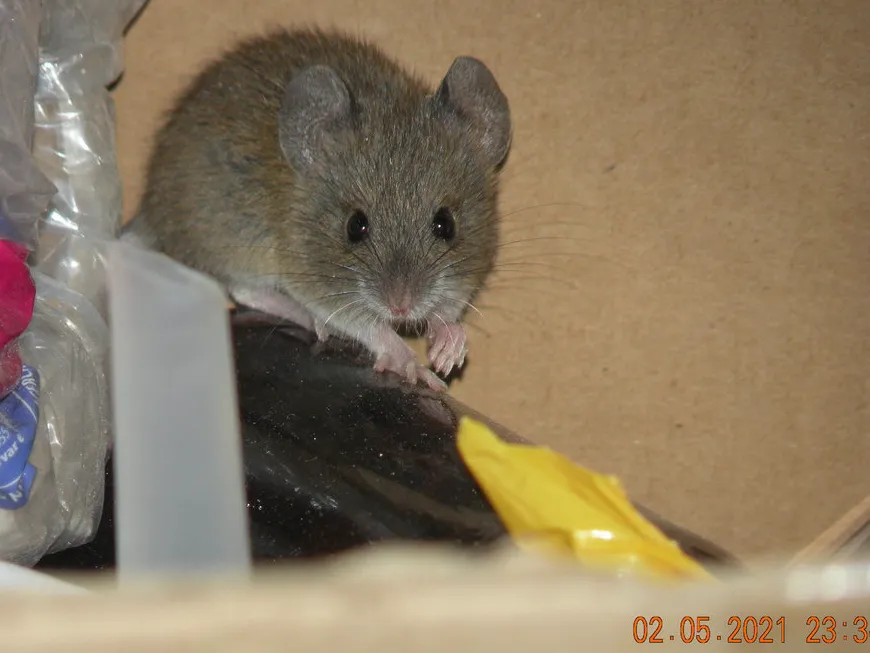
- Droppings the size of a raisin. Rat droppings run about half an inch to three quarters. Mouse droppings are closer to a grain of rice.
- Burrow holes in the yard. Two to four inch openings at the base of a foundation, shed, or stoop. Mice don’t do this.
- Greasy rub marks. Dark smudges along baseboards, joists, and pipe runs where rats travel the same route nightly.
- Big gnaw damage. Rats chew through plastic, lead pipe, and wood. The Virginia Department of Health’s Norfolk office notes rodents destroy roughly ten times more food through urination and defecation than they actually eat, and have started fires by chewing electrical wiring.
- Heavy nighttime noise. Mice sound like scratching. Rats sound like something with weight moving.
Fairfax County’s health department states that rodents can carry more than 200 germs in their saliva, fecal droppings, or urine, and that rat urine protein can trigger allergic reactions in sensitive people.
Rat-bite fever is the one most associated with rats directly. The CDC describes it as an infection caused by two different bacteria, spread through contact with rodents, and notes it is rare in the United States. Leptospirosis and salmonella are also spread by rodent urine and droppings.
The practical takeaway: don’t sweep or vacuum dry droppings. That aerosolizes them. Wet them down with a disinfectant first, then wipe up with disposable towels and gloves.
When Rat Pressure Peaks in Virginia
Rats breed all year in Virginia, so there’s no off season. But the calls follow a pattern.
Burrow activity becomes visible as yards green up. Litters born over winter start dispersing. This is the best window to seal a house, because you can see the burrow openings before vegetation hides them.
Outdoor food is everywhere — trash, gardens, bird feeders, fallen fruit — so rats mostly stay outside. Populations build quietly all summer, which sets up the fall.
The heaviest call volume of the year. Nights get cold, outdoor food drops off, and rats push toward warm harborage. Anything you didn’t seal in spring gets found now.
Activity moves indoors and concentrates. Crawl spaces, wall voids, and attached garages. Rats stay put and keep breeding, so a small winter problem is rarely small by March.
How to Keep Rats Out of a Virginia House
Order matters here. Trapping without sealing just creates a vacancy for the next rat.
This is 80 percent of the job. Fairfax County notes a Norway rat can squeeze through an opening as small as a quarter. My own rule is simpler — if I can fit my thumb into the gap, a rat can use it.
Walk the foundation and check utility penetrations, dryer vents, garage door sweeps, crawl space vents, and the gap where siding meets the sill. Seal with hardware cloth, copper mesh, and mortar. Steel wool alone rusts out and fails.
Secure trash in hard-sided cans with lids that latch. Pick up pet waste and fallen fruit. Pull bird feeders, or at least clean up the spill under them.
Then take away the cover. Keep a weed-free strip a few feet wide against the building, move woodpiles off the ground and away from the wall, and pull mulch back from the foundation. Thick mulch against the house brings everything — rodents will nest right under it.
Rats are neophobic, which means they avoid new objects for days. Set traps along their runways — against walls, behind appliances, along joists — and leave them unset for a few nights so the rats get used to them. Then set them all at once.
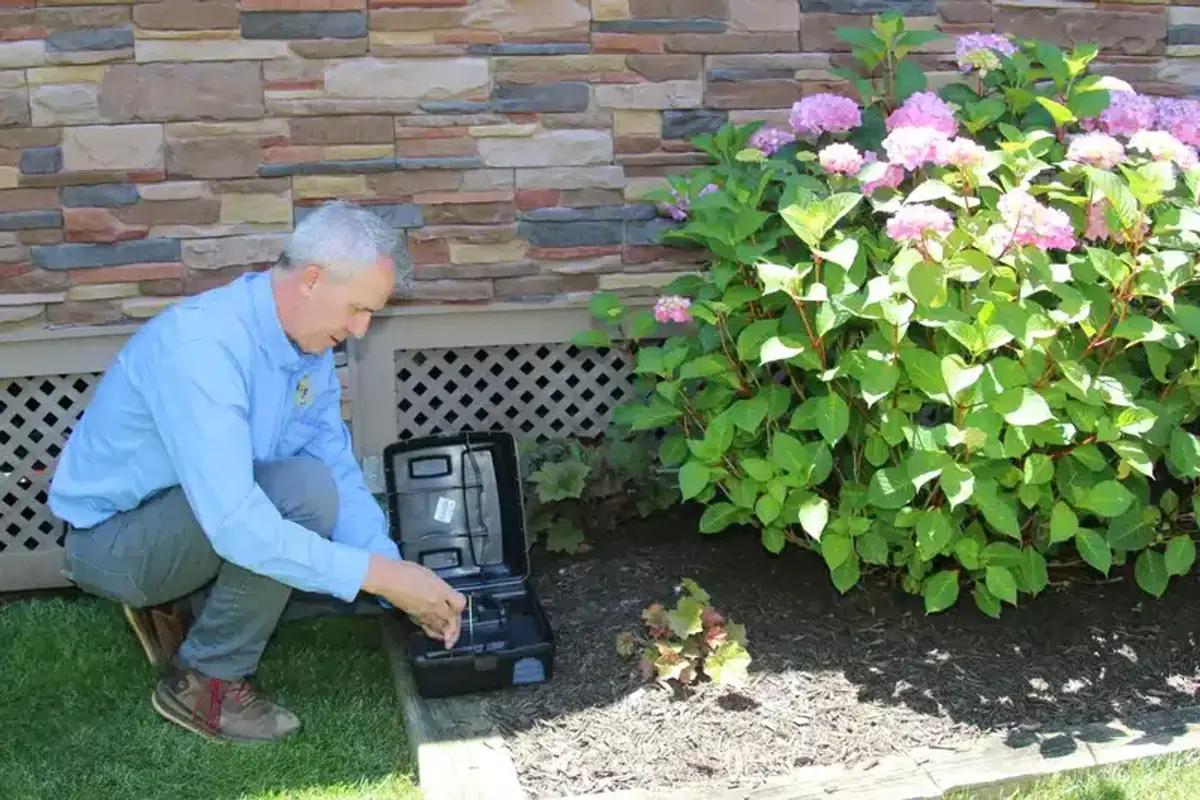
For exterior work, we use tamper-resistant bait stations secured in place along travel routes rather than loose bait. That keeps the bait where it belongs and away from kids and pets.
Re-check your seals after a month. Rats reopen weak repairs, and new gaps appear as houses settle. If activity comes back in the same spot, the entry point wasn’t the one you fixed.
Professional Rat Control in Virginia
Our licensed technicians run a four-step rodent protocol we developed out of years of work in Old Town and the surrounding neighborhoods: inspect and identify the species, seal the entry points, place secured exterior stations and interior devices, then come back and verify.
One thing worth saying, because homeowners hear it a lot: you usually do not need your entire attic re-insulated. That’s rare and extremely expensive, and in our experience a lot of the attic work other companies propose isn’t even that effective. The lower-level work is what makes the rodent approach actually hold.
On pricing, we don’t sell one-off visits. Ongoing rodent control starts around $49 per month for an average DMV home, plus a one-time $200 setup fee on the first visit. Every product we use is EPA approved and has been through our internal research team, which removed nine of the harshest products from our programs. Each one is something we’d feel comfortable using in our own homes.
The Bottom Line
Rats in Virginia come down to five species, but only the Norway rat and the roof rat are a building problem, and in most of the state it’s the Norway rat by a wide margin. The woodrat, cotton rat, and rice rat belong to the mountains, the old fields, and the marsh, and they are not what’s in your wall.
Better Termite & Pest Control has been protecting homes in the DC area for 58 years, and we’ve earned 1800+ reviews along the way. If you’re hearing something heavy in the crawl space or finding raisin-sized droppings under the sink, call us at 703-683-2000 or email info@bettertermite.com. A licensed technician will walk your property, name the species, and find the way in.