Handsome Fungus Beetles Identification Guide
Endomychidae
Handsome fungus beetles are small, often brightly patterned beetles that feed on mold and mushrooms in rotting logs and leaf litter. They are often mistaken for lady beetles and rarely show up indoors unless something is damp and moldy.
Taxonomy
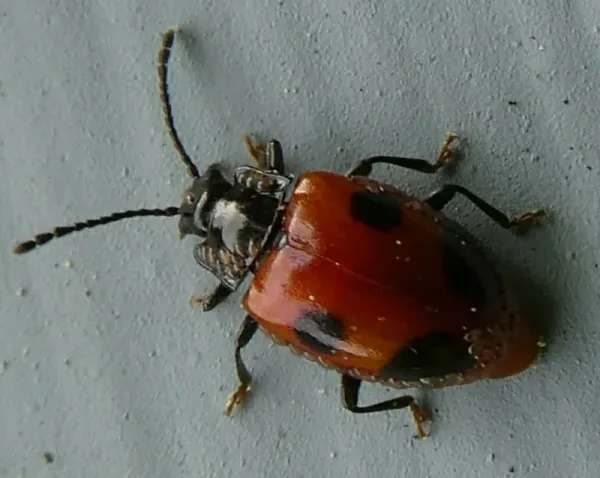
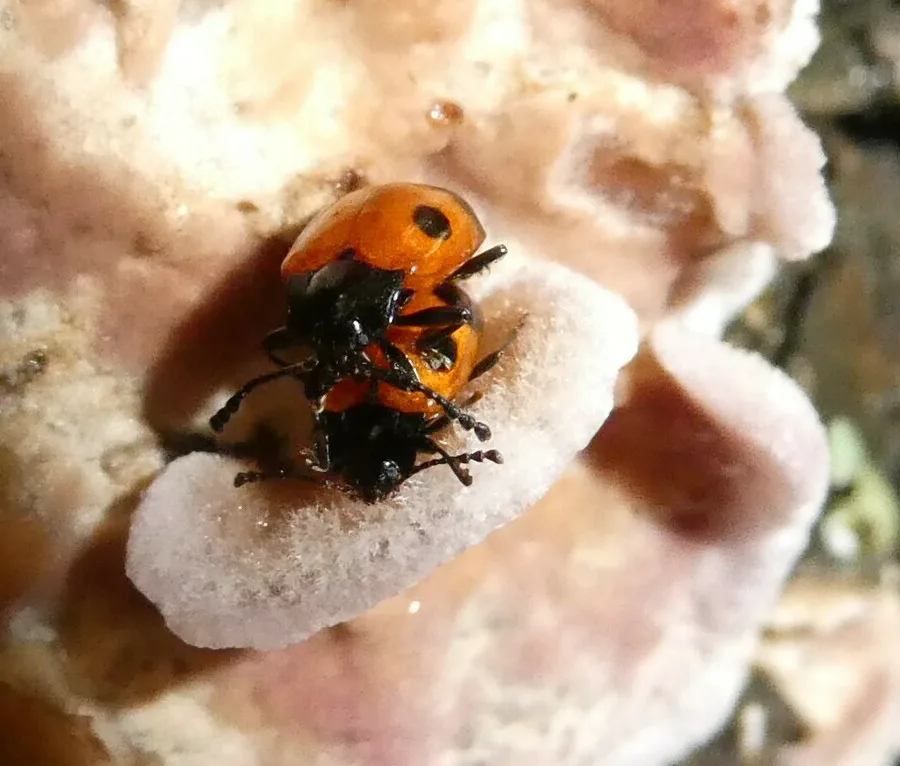
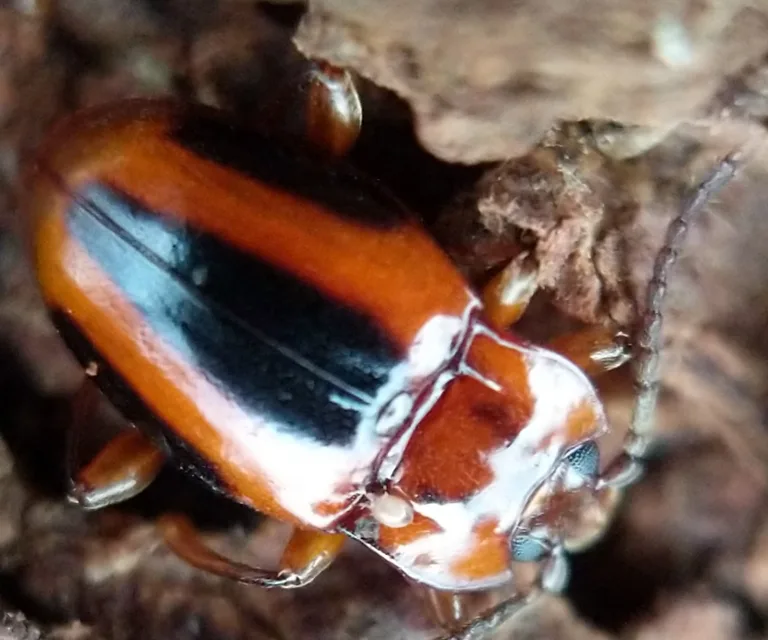
Handsome Fungus Beetles Coloration
Common color patterns to help identify handsome fungus beetles
Handsome Fungus Beetles
Seasonal Activity
When handsome fungus beetles are most active throughout the year

Where Handsome Fungus Beetles Are Found
Hover over states to see their names. Green regions indicate where handsome fungus beetles have been reported.
Handsome Fungus Beetle Identification Guide
Handsome fungus beetles are a family of small, colorful beetles that eat fungi. Scientists call the family Endomychidae. The common name comes from the bright orange, red, and black patterns many species wear. Most live outdoors on bracket fungi and under the bark of dead trees. People usually notice them on a rotting log, on firewood, or when one wanders into the house.
Physical Characteristics
- Size: Most are about 3 to 8 mm long, roughly the size of a grain of rice or smaller. A few indoor species are under 2 mm.
- Shape: Oval and slightly domed, but not as round as a lady beetle.
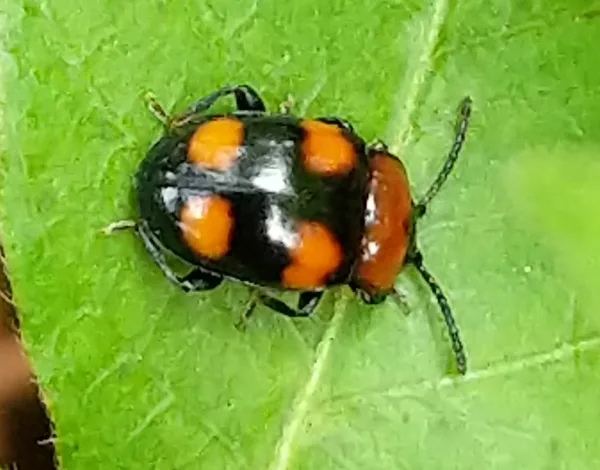
- Color: Many are shiny orange or red with black spots or bands. Others are plain brown or reddish-brown.
- Antennae: Fairly long and easy to see, with a loose, thicker club at the tip.
- Head: Visible from above, sticking out in front of the thorax.
- Thorax: Often wider at the back, with a pair of short grooves near the rear edge. You may need a magnifier to see them.
The larvae are small, flattened, and often spiny or bumpy. They live on the same fungi as the adults and are rarely seen.
How to Tell Them Apart
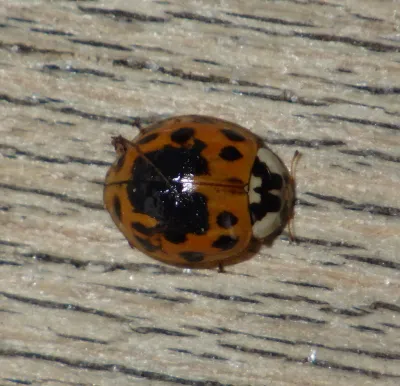
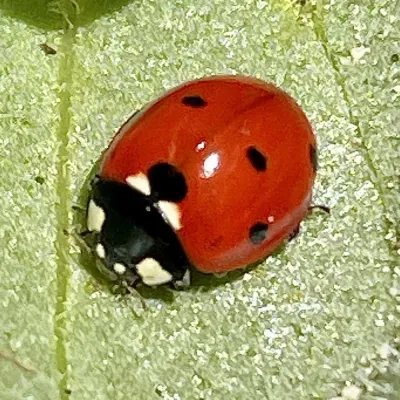
Handsome fungus beetles are most often confused with lady beetles:
- Asian lady beetles and seven-spotted lady beetles are rounder, almost like half a pea. Their antennae are very short, and their head is mostly hidden under the thorax. Lady beetles hunt aphids on plants. Handsome fungus beetles sit on mushrooms, bracket fungi, and rotting wood.
The small brown indoor species can be confused with other mold-feeding beetles:
- Hairy fungus beetles are light brown and fuzzy, with neat rows of hairs on the wing covers.
- Plaster beetles are tiny and dark, with ridged, pitted bodies.
- Foreign grain beetles are flat and have a small knob on each front corner of the thorax.
All of these point to the same thing indoors: damp conditions and mold.
Common Species
North America is home to a few dozen species. Some you may see include:
- Endomychus biguttatus: the two-spotted handsome fungus beetle. It has a black head and thorax and orange-red wing covers with black spots. It is common on bracket fungi in eastern forests.
- Aphorista vittata: orange with a broad black stripe down the back. It lives under the bark of fungus-covered logs.
- Mycetina perpulchra: shiny black with four orange spots. It is found on fungi on dead wood in the East.
- Lycoperdina ferruginea: a plain reddish-brown species that lives and breeds inside puffball mushrooms.
- Mycetaea subterranea: the hairy cellar beetle. It is tiny (about 1.5 to 1.8 mm), brown, and hairy. It is the species most likely to live indoors, in damp cellars and moldy stored grain.
Handsome Fungus Beetle Behavior and Biology
Habitat
Most handsome fungus beetles live in forests and wooded yards. Look for them:
- On bracket fungi and shelf mushrooms growing on dead trees and stumps
- Under loose bark on rotting logs
- In leaf litter and damp woodpiles
- Inside puffballs and other mushrooms
A few species live in buildings. These show up in damp, poorly ventilated basements and cellars. There, they feed on mold growing on wood, plaster, and stored products.
Diet
Both adults and larvae eat fungi. They feed on spores, the thread-like hyphae, and the tissue of mushrooms and bracket fungi. Some also eat mold and yeasts. They do not eat wood, fabric, or dry, clean food.
Life Cycle
Handsome fungus beetles go through four stages: egg, larva, pupa, and adult. Females lay eggs on or near the fungus. The larvae feed and grow on the same fungus, then pupate nearby. In temperate areas, adults are most active from late spring into fall, when fungi are fruiting. Many species spend the winter as adults under bark or in leaf litter.
Defensive Behavior
Many species are brightly colored as a warning to predators. When disturbed, some release drops of bad-tasting fluid from their leg joints. This is called reflex bleeding. Some species also gather in groups on a single fungus. These groups can catch your eye on a log or stump.
Treatment Methods for Handsome Fungus Beetles
Control for handsome fungus beetles focuses on the mold they feed on. A professional visit for fungus beetles usually starts with an inspection to confirm the ID and find the damp spot. From there, treatment combines moisture fixes, cleanup, and, when needed, a targeted insecticide. Sprays alone will not fix it, because new beetles keep coming as long as mold is there.
- Inspection: Check basements, crawl spaces, under sinks, and around windows. Look for musty smells, water stains, and moldy wood, drywall, or stored boxes.
- Remove moldy items: Throw out moldy grain, birdseed, pet food, or other stored products. Bag and discard anything with beetles in it.
- Dry things out: Fix leaks, improve airflow, and run a dehumidifier. Keeping indoor humidity below about 50 to 60 percent makes it hard for mold to grow.
- Clean up: Vacuum beetles from window sills, corners, and cracks. Wipe surfaces and let them dry before restocking.
- Store food well: Keep dry goods in airtight glass, metal, or thick plastic containers.
- Reduce outdoor sources: Stack firewood off the ground and away from the house. Bring in only what you will burn soon. Remove rotting logs and stumps near the foundation.
- Seal gaps: Weatherstrip doors and repair torn screens so wandering beetles stay outside.
- Targeted treatment: When beetles keep showing up, a licensed applicator may apply an EPA-registered insecticide into cracks, wall voids, and around doors and windows, following the label. Fogging a whole room rarely works, because the spray does not reach the voids where beetles develop.
Most indoor fungus beetle problems fade once the mold is gone and the area stays dry. If small beetles keep turning up and you cannot find the source, a pest professional can help track down hidden moisture. Learn more about our pest control in Northern Virginia and Maryland, or browse other beetles and occasional invaders. Booklice and mold mites often show up in the same damp spots and point to the same problem.
References
Other Other Pests
Explore other species in the other pests family
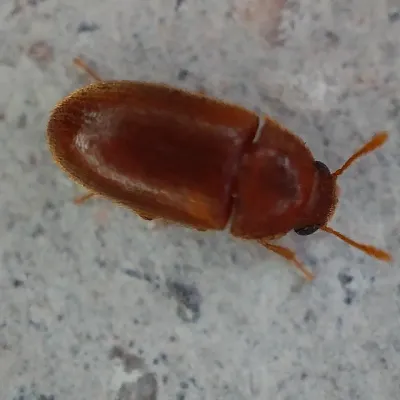
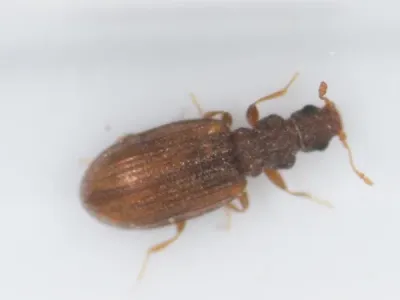
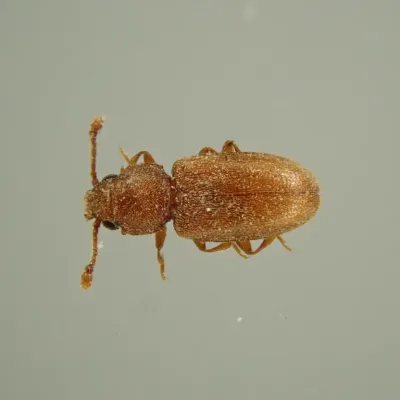
Commonly Confused With
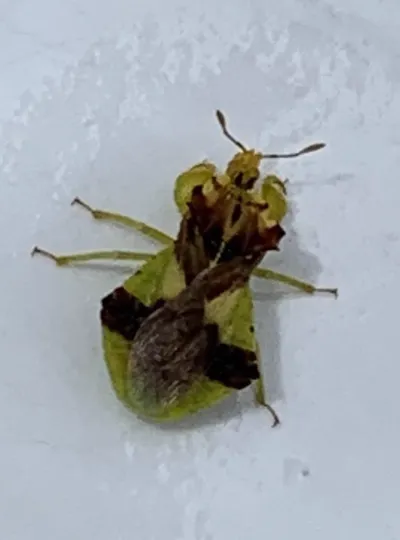
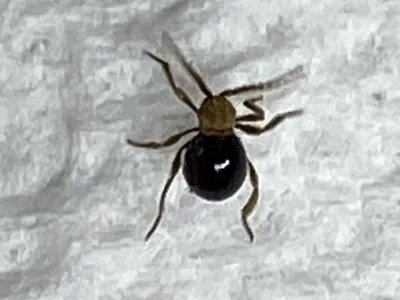
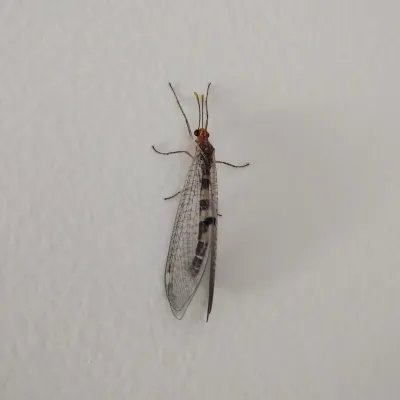
Handsome Fungus Beetles are often mistaken for these similar pests
Where Handsome Fungus Beetles Are Found
Hover over states to see their names. Green regions indicate where handsome fungus beetles have been reported.
Common Questions about Handsome Fungus Beetles
What are handsome fungus beetles?
+
Handsome fungus beetles are a family of small beetles called Endomychidae. Most are 3 to 8 mm long, and many are shiny orange, red, or black with bold spots or stripes. Both adults and larvae eat fungi, such as bracket fungi, mushrooms, and mold growing on rotting wood.
Are handsome fungus beetles ladybugs?
+
No, although they look a lot alike. Handsome fungus beetles have longer antennae you can easily see, a head that sticks out in front, and a thorax with small grooves near the back edge. Lady beetles are rounder, with very short antennae and a head mostly hidden under the thorax. Lady beetles hunt aphids on plants, while handsome fungus beetles feed on fungi.
Do handsome fungus beetles bite or sting?
+
No. They do not bite people or pets, sting, or spread disease. Some species release a bad-tasting fluid from their leg joints when handled. This defends them from predators but is not harmful to people. Wash your hands if you pick one up.
Why are handsome fungus beetles in my house?
+
Most species live outdoors and only wander in by accident, often on firewood or through gaps near doors. A tiny brown relative called the hairy cellar beetle can live indoors in damp basements and cellars where mold grows on wood, plaster, or stored goods. Finding many small beetles indoors usually points to a moisture problem.
Do handsome fungus beetles damage homes or food?
+
No. They do not eat wood, fabric, or dry, sound food. They feed only on fungi and mold. Indoors, they may show up in moldy grain or other spoiled stored products, but the mold is the real problem. Throw out anything moldy.
How do I get rid of handsome fungus beetles?
+
Indoors, vacuum up the beetles, then find and fix the damp spot that is growing mold. Run a dehumidifier, fix leaks, and throw out moldy stored items. Move firewood and rotting logs away from the house to cut down on beetles that wander in. If they keep showing up, a pest professional can find the source and treat cracks and voids with an EPA-registered product.
When are handsome fungus beetles most active?
+
In most of North America, adults are most active from late spring through early fall, when mushrooms and bracket fungi are growing. Many species spend the winter as adults under bark or in leaf litter. Indoor species in damp cellars can be active any time of year.

With five years of hands-on experience in the pest control industry, George Schulz is a registered technician with the Virginia Pest Management Association and a proud third-generation professional in a family business that's been protecting homes for over 58 years. He manages and trains a team of service pros while also leading internal research efforts—recently spearheading a deep-dive review of thousands of documents on pest control materials to hand-pick the most kid and pet friendly, most effective solutions tailored specifically for homes in the DC metro area.
Local Other Pests Help
Dealing with other pests at home? Our licensed technicians provide pest control across Northern Virginia and Maryland.
