Acorn Weevil Identification Guide
Curculio spp.
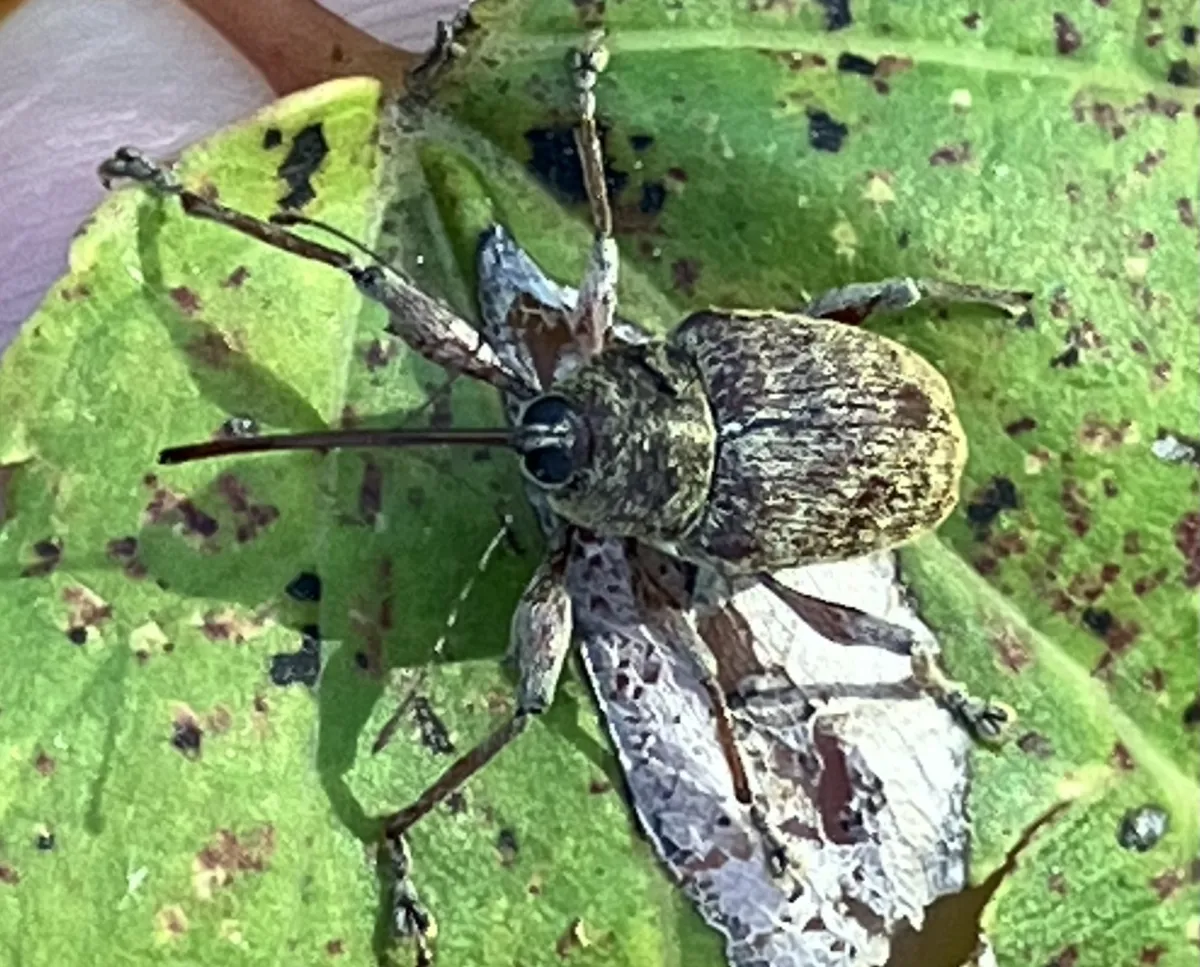
Acorn weevils are small brown snout beetles whose legless, cream-colored grubs grow inside acorns. Homeowners usually meet them in fall, when grubs chew out of acorns collected for crafts or decorations and crawl across tables and floors.
Taxonomy
Acorn Weevil Coloration
Common color patterns to help identify acorn weevil
Acorn Weevil
Seasonal Activity
When acorn weevil are most active throughout the year

Where Acorn Weevil Are Found
Hover over states to see their names. Green regions indicate where acorn weevil have been reported.
Acorn Weevil Identification Guide
Acorn weevils are small snout beetles that grow up inside oak acorns. Most people never see the adult beetle. Instead, they find pale little grubs. The grubs crawl out of a bowl of acorns, a fall wreath, or a craft bin a few weeks after a walk in the woods.
That is the main way this insect shows up in a home. It is not a pantry pest and it does not breed indoors. The grubs came in with the acorns.
Physical Characteristics
Adults
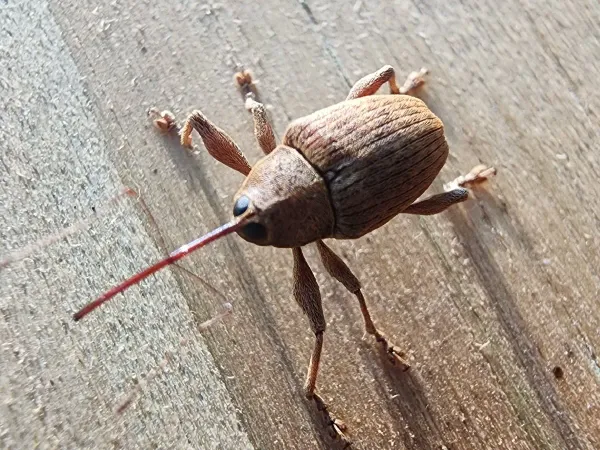
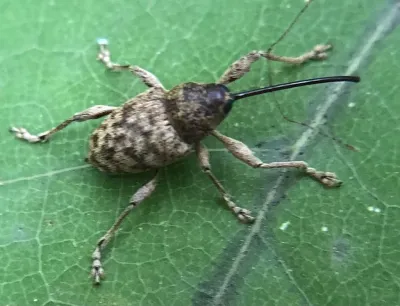
- Size: About 4 to 10 millimeters long, or up to about 3/8 inch, not counting the snout
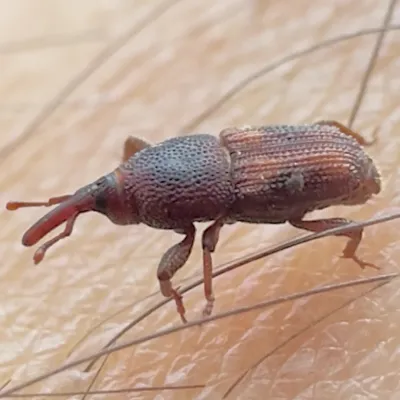
- Color: Brown, tan, or gray, often mottled with fine scales
- Snout: Very long, thin, and gently curved. On females it can be as long as the body or longer. NC State Extension notes that the female’s snout is longer than the male’s.
- Antennae: Elbowed, and they attach partway down the snout
- Wings: Hard wing covers over working flight wings. Adults can fly.
Grubs (larvae)
- Size: Up to about 3/8 inch long
- Color: Cream to white with a brown head
- Shape: Plump, curved into a C shape, and fatter in the middle
- Legs: None. The grub moves by wriggling and using ridges on its underside.
Signs in acorns
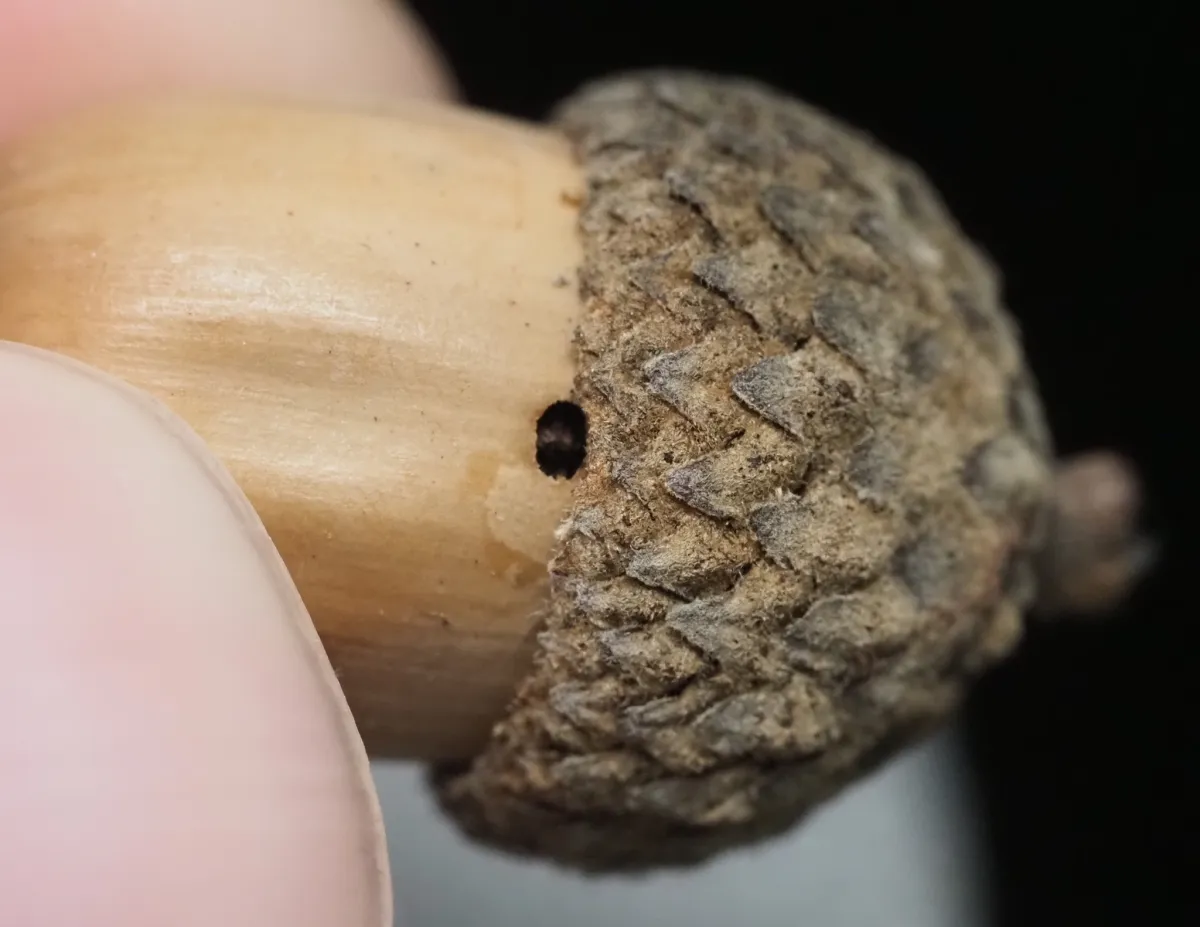
- A round exit hole about 1/8 inch wide, often near the cap
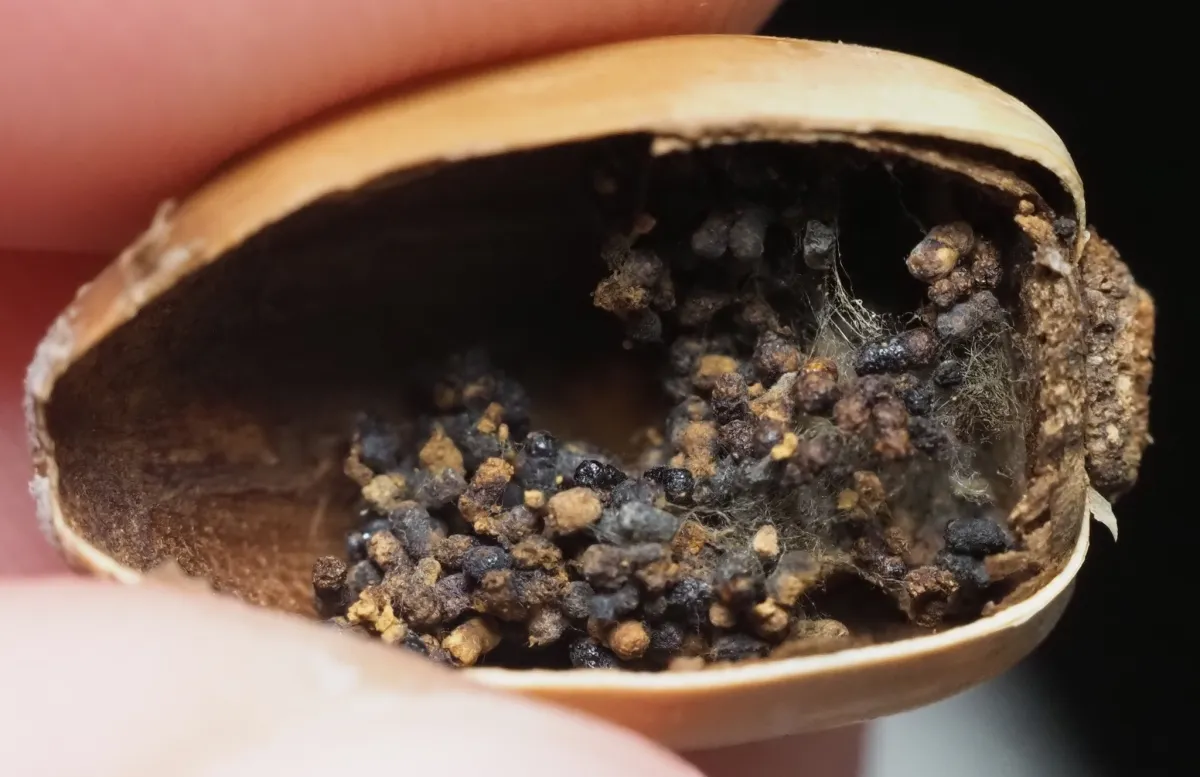
- A hollowed-out nut filled with crumbly brown droppings
- Light acorns that float in water
How It Differs From Look-Alikes
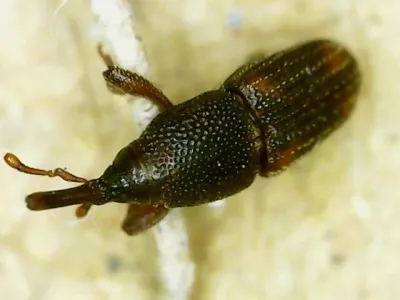
- Weevils and rice weevils: Grain weevils are about 1/8 inch long, have a short snout, and live in rice, flour, and cereal. They breed inside the pantry. Acorn weevils are larger, have a much longer snout, and only come from acorns.
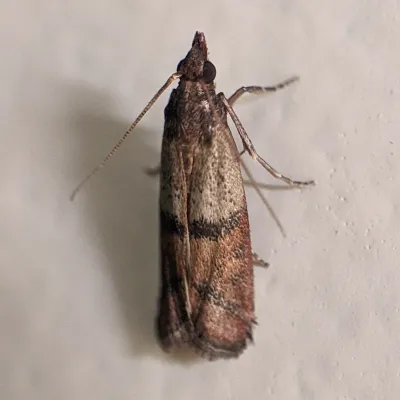
- Indian meal moth larvae: These caterpillars also show up in nuts, but they have legs near the head and spin silk webbing. Acorn weevil grubs have no legs and no silk. University of California experts use the same test for the filbertworm. That is a moth caterpillar that also feeds in acorns.
- White grubs: Lawn grubs are also C-shaped and cream-colored, but they have six legs and live in soil, not acorns.
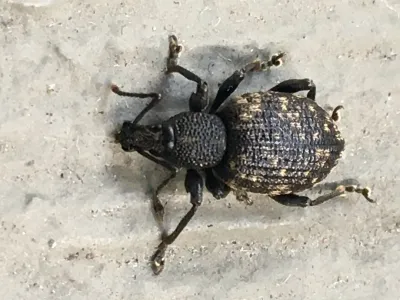
- Black vine weevils: A black, gold-flecked weevil with a short, broad snout. It wanders indoors from shrub beds, not from acorns.
Common Species
Acorn weevils belong to the genus Curculio, often called nut weevils. Several species share the same habits. They look so alike that experts often need the adult beetle to tell them apart.
- Acorn weevil (Curculio glandium): Common in Europe. It is also reported from southwestern Ontario.
- Curculio sulcatulus: An eastern species the USDA Forest Service lists among insects that damage northern red oak acorns.
- Large chestnut weevil (Curculio proboscideus): A big, long-snouted species that develops in chestnuts and oak acorns across the eastern U.S. and southern Canada.
- Western filbert weevil (Curculio occidentis): Develops in oak acorns and hazelnuts from California to British Columbia.
- Pecan weevil (Curculio caryae) and hazelnut weevils: Close cousins that use pecans, hickory nuts, and hazelnuts instead of acorns.
Acorn Weevil Behavior and Biology
Habitat
Acorn weevils live wherever oaks grow, from backyards and parks to large forests. Adults spend most of their time in oak canopies. Grubs spend the winter in the soil under the tree.
Diet
Adults feed on developing acorns. Grubs eat the nut meat inside a single acorn. They do not eat anything in a home, and they do not harm the oak tree itself.
Life Cycle
- Adults emerge from the soil in late spring and summer.
- Egg laying: In summer, a female uses her long snout to drill a tiny hole into a green acorn still on the tree. She lays one or more eggs inside.
- Grub feeding: The grub eats the acorn from the inside. The acorn often drops to the ground in early fall with the grub still inside.
- Exit: In fall and early winter, the full-grown grub chews a round hole and crawls out to find soil.
- Soil stage: NC State Extension notes that grubs stay in the soil for one to two years before they turn into adults.
Why They Show Up Indoors
Acorns picked up in September and October often hold a grub that has not left yet. In a warm house, the grub keeps feeding. Then it chews its way out. It crawls off looking for dirt and ends up on tables, shelves, and floors. Grubs can keep appearing for several weeks, even into December, until every infested acorn is empty.
Treatment Methods for Acorn Weevils
Acorn weevils do not need a home pest treatment. The source is always the acorns, so removing or treating the acorns ends the problem. Spraying the room does little, because the grubs are not living in the house.
- Find the source: Check bowls, vases, wreaths, centerpieces, and craft bins that hold acorns or other tree nuts. Look for round holes and loose droppings.
- Contain it: Seal suspect acorns in a zip-top bag or closed jar so more grubs cannot wander out.
- Clean up: Pick up or vacuum stray grubs. Empty the vacuum outdoors. They cannot start a population indoors.
- Freeze decorative acorns: NC State Extension recommends freezing collected acorns to kill the grubs inside.
- Or use a hot-water soak: NC State suggests soaking acorns for 20 minutes in 120°F water. Hotter water also works if you do not plan to plant them. Dry them well before use.
- Sort before you collect: Skip acorns with holes, cracks, or a light, hollow feel. A float test can help, since hollow acorns tend to float. But it misses some infested acorns that still sink.
- Saving acorns to plant: Collect them as soon as they fall and refrigerate them to slow the grubs. Ask your local extension office before you freeze or heat seed acorns. Too much cold or heat can keep them from sprouting.
NC State notes that spraying oak trees is not a practical fix. Adults come out of the soil over a long stretch of summer. Some acorn damage each year is normal in any oak stand.
If you are finding small grubs or beetles indoors and there are no acorns in the house, the insect is likely something else. A pantry pest such as the Indian meal moth or a grain weevil is a common culprit in fall and winter.
References
- Acorn Weevil, NC State Extension
- Nut Weevils (Acorn Weevils), Missouri Department of Conservation
- Filbert Weevils and Filbertworm, University of California Agriculture and Natural Resources
- Pests of Acorns, UC Oaks, University of California Agriculture and Natural Resources
- Insects That Damage Northern Red Oak Acorns, USDA Forest Service
- Acorn Weevils Make Acorns Float, Wisconsin DNR Forest Health
Other Other Pests
Explore other species in the other pests family
Commonly Confused With
Acorn Weevil are often mistaken for these similar pests
Where Acorn Weevil Are Found
Hover over states to see their names. Green regions indicate where acorn weevil have been reported.
Common Questions about Acorn Weevil
What are the little white worms coming out of my acorns?
+
They are almost always acorn weevil grubs. The grub hatched inside the acorn last summer and fed on the nut meat. In fall it chews a round hole about 1/8 inch wide and crawls out to look for soil. The grub is cream-white, legless, and curled into a C shape with a brown head. It is not a maggot or a pantry pest.
Will acorn weevils infest my house or my food?
+
No. The grubs only eat acorns and other tree nuts that were attacked while still on the tree. They cannot breed indoors, and they do not eat flour, cereal, wood, or fabric. Once a grub leaves its acorn indoors, it wanders until it dries out and dies. The problem ends when the infested acorns are gone.
Do acorn weevils bite or carry disease?
+
No. Neither the grubs nor the adult beetles bite people or pets, and they are not known to spread disease. They are a nuisance, not a health threat.
How do I keep acorns for decorations without bugs coming out?
+
Treat them before you bring them inside. NC State Extension suggests freezing collected acorns to kill the grubs inside. Another option is to soak them for 20 minutes in water heated to 120 degrees Fahrenheit, and hotter water works if you do not plan to plant them. Let them dry fully before use. Skip any acorn that already has a small round hole.
Does an acorn with no hole mean there is no weevil inside?
+
No. The female weevil makes a pinhole when she lays her egg, and it is very hard to see. The round exit hole only shows up after the grub leaves. An acorn can look perfect and still hold a living grub. That is why freezing or heat-treating acorns before you display them works better than sorting by eye.
Is the float test a good way to find bad acorns?
+
It helps but misses some. Acorns that float are often hollowed out by grubs, so tossing the floaters is a good first step. But some acorns with a grub inside still sink. Use the float test along with freezing or a hot-water soak, not instead of it.
Are acorn weevils the same as pecan weevils?
+
They are close relatives in the same genus, Curculio, but they use different nuts. Acorn weevils develop in oak acorns. The pecan weevil develops in pecans and hickory nuts and is a crop pest for pecan growers. Chestnuts and hazelnuts have their own nut weevils too. The grubs of all of these look almost the same, so the nut they came out of is the best clue.

With five years of hands-on experience in the pest control industry, George Schulz is a registered technician with the Virginia Pest Management Association and a proud third-generation professional in a family business that's been protecting homes for over 58 years. He manages and trains a team of service pros while also leading internal research efforts—recently spearheading a deep-dive review of thousands of documents on pest control materials to hand-pick the most kid and pet friendly, most effective solutions tailored specifically for homes in the DC metro area.
Local Other Pests Help
Dealing with other pests at home? Our licensed technicians provide pest control across Northern Virginia and Maryland.
